A Quickie With Lisa Marie: Holocaust 2000 (dir. by Alberto De Martino)


Earlier this morning, while suffering from an annoyingly persistent case of insomnia, I decided to spend 2 hours watching a classic Italian exploitation film, Alberto De Martino’s oddly effective Omen rip-off, Holocaust 2000.

In Holocaust 2000, Kirk Douglas plays a businessman who wants to build a gigantic nuclear power plant in the Middle East.  There are a few problems with this plan.  First off, the site that Douglas selects just happens to be right next to a cave that is full of religious artifacts.  Secondly, there’s a handful of angry environmentalists picketing his London office.  And, perhaps the biggest problem, Douglas’ son happens to be the Antichrist.  This fact is obvious to the viewer because not only is his son named Angel (yes, we’re in the land of irony) but he also looks and acts nothing like Douglas.  Not only does Angel have a noticeably weak chin (no cleft to be seen at all) and speak with a rather posh accent but he’s also so extremely English that he’s even played by an actor named Simon Ward.

In other words, the viewer is pretty much in on the game from the beginning.  What makes the movie work is that director De Martino understands that everyone’s going to know that Angel’s the antichrist from the minute he first appears so, as opposed to the Omen films, he doesn’t waste a lot of time playing any “is-he-or-isn’t-he” games.  Instead, in the great tradition of Italian exploitation, De Martino jumps straight into the apocalypse without worrying about things like narrative cohesion and the end result is an enjoyably chaotic film that rarely makes sense but is never boring.  Whereas the Omen films are almost tedious in their attempts to provide theological justification for all the blood that’s spilled on-screen, Holocaust 2000 has a cheerful, let’s-make-it-up-as-we-go-along feel to it that, at times, almost makes the whole thing feel like some long lost Lucio Fulci film.

Holocaust 2000 is probably best known for two sequences.  The first features a helicopter blade very graphically chopping off the top of a man’s head.  If seeing the original Dawn of the Dead made me nervous around helicopters, seeing Holocaust 2000 has ensured that I will never ever step anywhere near one of those things.  Seriously, I’ve seen a lot of gore over the past few years but the decapitation scene in this movie …. well, perhaps it’s best to just shudder and move on.  (For the record, Holocaust 2000 came out before Dawn of the Dead so the helicopter decapitation scene here was not stolen from that film.  If anything, it was simply a more graphic version of David Warner losing his head in the Omen.)

The second sequence is a scene in which a very nude Kirk Douglas (who, it must be admitted, looked a lot better at 61 than most 20 year-olds do today) has a nightmare in which he watches the world literally come to an end.  Set to Ennio Morricone’s intense and memorable score, this sequence manages to be surreal, disturbing, and entertaining all at the same time.  It epitomizes everything that makes Holocaust 2000 such a surprisingly effective work of pure cinematic exploitation.

Like many of the great Italian exploitation films, Holocaust 2000 was released under several titles.  It is currently available on DVD under the title Rain of Fire and a big bleh to Lionsgate for choosing to go with such a boring name.  Admittedly, I can see their logic.  Though the movie was first released in theaters in 1977, it took 31 years for it to show up on DVD.  During that time, 2000 came and went and the world didn’t end (or maybe it did and the last 10 years have just been an extended hallucination, the choice is yours).  But still, Rain of Fire sounds like a substandard country song about a nasty divorce that ends in murder.  On the other hand, a title like Holocaust 2000 — nakedly exploitive and borderline offensive — represents everything that we’ve come to so love about Italian exploitation films.

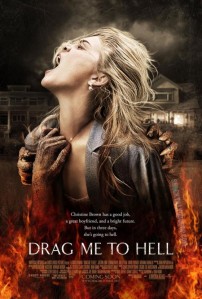
Film Review: Drag Me To Hell (directed by Sam Raimi)


There are exactly two things that keep Sam Raimi’s otherwise entertaining 2009 horror romp Drag Me To Hell from being a classic.

The first is that, about halfway through the movie, Alison Lohman murders her pet kitten.  Admittedly, Lohman’s character is trying to thwart a gypsy curse at the time and the action does show just how terrified she’s become.  But that doesn’t change the fact that it’s a cute kitten and quite frankly, I’m getting sick of seeing cats being killed in horror films.  There’s something truly hypocritical about how far most filmmakers are willing to go to assure an audience that a dog has somehow survived the end of the world while cats are continually killed on-screen without a second thought.

Am I saying that the film would have been better is Lohman had murdered a cute puppy instead?  Yes, I am.  At least that would have been unexpected.  That would have let the audience know that all the rules no longer applied.  Quite frankly, whenever you see a cat in a horror film, you know that cat is going to end up either pinned to a door or hanging in the closet.  Dogs, however, always make it to the end.

I imagine this is because there’s more “dog people” than “cat people” in the world.  People — especially men of a certain age — just love dogs and I’ve never really understood why.  I guess there’s a charm to a loud, smelly, slobbering beast eating its own fecal matter that I’ve never been able to pick up on.

The second thing that keeps Drag Me To Hell from reaching classic status is the fact that Bruce Campbell is nowhere to be found, making this the 1st Raimi film not to feature Bruce in at least a cameo.  Regardless of how well-made or entertaining the movie may have been, I sat through the entire thing waiting for Bruce to show up and, when he didn’t, it was hard not to feel as if perhaps an era in filmmaking had come to an end.

However, despite these two issues, Drag Me To Hell is probably one of the best horror movies to have been released in the past few years.  If nothing else, it proves that, even after directing three Spiderman films, Raimi is still a B-movie director at heart and a brilliant one at that.

In Drag Me To Hell, Alison Lohman plays Christine, a young bank loan officer who, attempting to impress her boss and win a promotion, refuses to give a loan to a decrepit old gypsy woman (played, wonderfully, by Lorna Raver as the type of grotesque character who could only appear in a Raimi film).  The gypsy woman responds by promptly dying but before doing so, she puts a curse on Christine.  In three days, Christine will be dragged to Hell.

What makes this is so effective is that Raimi, as opposed to a less adventurous director, sets the film up to suggest that perhaps Christine deserves to be dragged to Hell.  As disgusting as the old woman is, she clearly doesn’t deserve to be treated as badly as she is by Christine and Christine herself (even before she kills that poor kitten) is a bit of a fake, a former “fat girl” who, when she lets her guard down, reverts back to a country hick accent that she’s obviously spent a lot of time trying to lose. 

Lohman does an excellent job in the lead role, giving a likeable performance as an unlikeable character.  Speaking as a former country girl who still occasionally feels a twinge of shame when I hear myself say “git” instead of “get,” one of my pet peeves is when an actor or actress trots out an unconvincing, patronizing attempt at a rural accent.  However, Lohman captures the accent perfectly and, unlike most actors who try to play country, never allows her performance to just be about doing dialect.  Instead, both she and Raimi show how Christine’s insecurities lead to her actions without ever suggesting that they excuse them.

Though absence of Bruce Campbell is painfully obvious, Raimi still surrounds Lohman with a very strong supporting cast who all bring just the right amount of B-movie seriousness to their roles.  As Raver’s daughter, Bojana Novakovic appears in one the film’s best scenes in which she tauntingly explains the cure to Lohman.  Dileep Rao (who would be wasted later that year in Avatar) steals almost every scene he’s in as a friendly psychic who tries to help Lohman.  Lohman’s boyfriend is played by Justin Long (of the “I’m a Mac” fame) and he’s perfect as a somewhat nerdy guy who, quite frankly, seems like he might be a little bit too nice for his own good.  Plus, the film’s final scene proves that Long can shed a tear with the best of them.  Bruce Campbell would have been ideally cast as Lohman’s boss but, in Campbell’s absence, David Paymer fills the role well enough.

When Drag Me To Hell was first released in 2009, the majority of reviews described it as being an entertaining throwback to the old school horror films of the 50s and 60s.  And, in many ways, this is a totally correct assessment.  What wasn’t often mentioned was that Drag Me To Hell is one of the very few Hollywood horror films to capture the chaotic spirit of H.P. Lovecraft.  Countless filmmakers have attempted to bring Lovecraft’s Cthulhu mythos to the screen and they’ve failed because they could never translate to the screen Lovecraft’s theme of mankind as a bunch of powerless pawns, existing and dying at the whims of a bunch of “demons” whose motivations could never be understood or questioned.  Though Drag Me To Hell is not based on Lovecraft’s work, it perfectly captures the feeling of helplessness in the face of metaphysical chaos that runs through Lovecraft’s best stories.  As the movie progresses, it becomes apparent that Christine isn’t going to be dragged to Hell so much because of the gypsy curse as much as just because the movie’s demon has decided to drag her to Hell.  It’s this theme (and the way that Raimi relentlessly develops it) that takes Drag Me To Hell to a whole other level and which makes its final scene so powerful and effective.

When first released, Drag Me To Hell’s special effects were criticized by some and it is true that the film’s demon, when he does show up, is an obvious CGI creation but who cares?  If anything, the obvious fakeness of the demon adds to the film’s exploitation charm (though the demon is probably another role that Bruce Campbell could have done wonders with).  If you want perfect CGI devoid of subtext or originality, Avatar’s out on DVD.  Me, I’ll take Drag Me To Hell any day.

Paranormal Activity 2: Too Scary For Texas


According to Variety, Cinemark has pulled the trailer for Paranormal Activity 2 from several theaters in my homestate of Texas because, apparently, filmgoers (the majority of whom were apparently in the theater to see Twilight: Eclipse) complained that it was too frightening.

Uhmmm….right.

I’ve seen the trailer for Paranormal Activity 2 online and, to be honest, the scariest thing about it is that it confirms that a sequel was actually made to Paranormal Activity One. 

(As a sidenote, the PA 2 trailer recycles the old footage of viewers supposedly jumping in fright while watching the first film.  I always wondered just who exactly these idiots were and whether or not they’d ever actually seen a movie before.)

This whole thing seems to be an old-fashioned publicity stunt designed to create word-of-mouth among the type of people who probably think that the obnoxious filmmakers in Cannibal Holocaust actually were eaten by cannibals at the end of the movie.

It’s especially interesting that these complaints supposedly came from Texas.  I suppose that’s going to be the new advertising angle — Paranormal Activity 2: The Movie So Scary That Even Texans Are Afraid To Watch.  I imagine that now filmgoers are supposed to say, “Wow, it’s got to be scary!  I mean, we expect that sort of cowardly behavior from those new age hippies in Vermont but these are cowboys here!”

(By the way, I’m from Texas and I’ve never worn a cowboy hat and I don’t own a horse.  I do say “y’all” on occasion.  Seriously though, FUCK VERMONT.  Sorry, I’ve always wanted to say that.)

I have to be honest, as much as I disliked the first Paranormal Activity, this publicity stunt has won the filmmakers a very small place in my heart.  This is the type of shameless, silly stunt that would make the grindhouse proud.  Hopefully, they’ll have a nurse present at all screenings of Paranormal Activity 3.

Anyway, if you think you can handle it, here’s the trailer that’s apparently too scary for Texas:

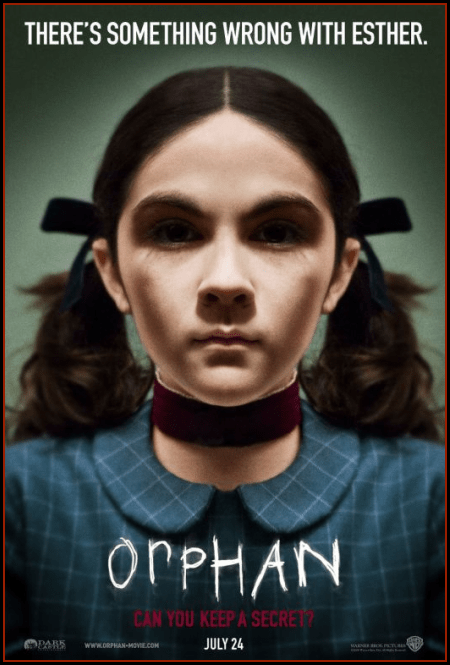
Review: Orphan (dir. by Jaume Collet-Serra)


There has been a complaint which has been getting louder and louder for the past several years from both horror and mainstream film fans. The complaint is that horror films of late have either been remakes or another sequel. While this complaint is not exclusive to the horror genre (non-horror genres have had the same problem) it is more prevalent and happens more often. Once in awhile a film will come out that tries to be different and put out an original story. Spanish director Jaume Collet-Serra has done just that with his second foray into feature filmmaking with Orphan. While the film won’t win many awards and become the critical darling the way Let the Right One In did Collet-Serra’s Orphan does bring a fresh new take on the evil child subgenre. Despite some of the flaws and script problems the film does entertain throughout most of its running time until it loses steam in the final 15 minutes.

Jaume Collet-Serra first got his start directing the 2005 remake of House of Wax. A film more famous (infamous in some people’s eye) for being the first major film of socialite Paris Hilton. A film that deservedly got panned by critics, but still did well enough in the box-office to put horror fans on notice that Collet-Serra might be a filmmaker to keep an eye on. Orphan marks his second full-lenght feature and using the screenplay by David Leslie Johnson, Collet-Serra tries a hand in the evil child subgenre which has more than it’s share of classic titles like The Omen, The Bad Seed and The Good Son. While this subgenre of horror usually means some sort of demonic-possession or some sort of mental or genetic abnormality causing for their psychotic or sociopathic behavior, in Orphan an interesting reason was given to the nature of it’s titual character.

The film begins with a harrowing and quite disturbing scene of the Vera Farmiga’s character pregnant and in labor, but also starting to miscarriage her child. The graphic nature of the scene quickly lays down the hammer that Orphan will not hold things back just because childen will be involved throughout most of it’s running time. We then see Farmiga’s Kate and her husband John (played by Peter Sarsgaard) at the local orphanage as they attempt to fix their family and ease Kate’s emotional turmoil over the miscarriage by adopting a child. They meet Esther a 9-year-old Russian orphan girl who seem to be the perfect child at first glance. Esther’s well-spoken and well-mannered at such a young age. Esther soon becomes part of John and Kate’s young family which consists of a younger deaf daughter named Max and a son named Daniel. While Max accepts Esther as a new older sister Daniel senses something just off-putting about Esther and reacts much more coldly towards his new dopted sister.

The majority of Orphan‘s second and first half of the third and final reel shows Esther’s true nature peek through the facade of Old World genteel and proper behavior. 12-year-old Isabelle Fuhrmann does an excellent job portraying the sociopathic and manipulative Esther. It is difficult to believe that a child actor of her age able to tackle such a dark role and actually pull it off without making the character too over-the-top or campy. In fact, no matter how one thinks of the performances of the rest of the film’s cast (Farmiga does a good job in the Cassandra-role with Sarsgaard an average performance as the hapless and clueless husband) this film is totally Fuhrmann’s and she sticks the landing.

While the film tries to make something original (and most of it is to a point) out of a tried-and-true model of the evil child storyline the script doesn’t hold up through the length of the film. The story itself is quite interesting when one really steps back to look at it, but there’s several leaps in logic the Kate character makes which will illicit more than a few confused reactions (running away from incoming help and into the dark, unknown being a major one). The dialogue itself is serviceable with none of it wince-inducing. There’s just a sense that the film’s reveal in the end of the film as to Esther’s true nature was just handled in a very clumsy manner. The twist is very original but the execution of that reveal after the tense and very brutal 40-50 minutes before it comes off quite flat. Orphan definitely looked like a script which was in need of several more rewrites to reconcile the first 3/4’s of the film with the final part. Yet, despite the ridiculous manner in which the final 10-15 minutes unfolds Collet-Serra manages to keep the film from dragging along through two hours. It actually plays much faster for a film with such a long running time.

In the end, Orphan marks a decidedly better effort from Jaume Collet-Serra, but one which still shows that he has some polishing to do to join the ranks of better horror directors of his generation. The film is enjoyable enough if given a chance. Most horror fans will enjoy the film and some may even embrace it because of the silly ending. Mainstream audiences looking for a change of pace from the strum und drang of the summer blockbuster season could do no worse than Orphan. It is not a perfect film and not even an above-average one, but it is a good horror film that tried to add something new to the genre, but hampered by a storyline that cannot sustain the tension it built-up and the brutality it showcased. In the hands of a much more seasoned filmmaker with a better hashed out screenplay Orphan could’ve become an instant classic.

Review: Sole Survivor (Dir. by Thom Eberhardt)


In my “which movie should I review poll” 1983’s Sole Survivor came in dead last, receiving a total of 3 votes out of the 234 cast.  I really wasn’t surprised to see that because Sole Survivor, along with having a dreadfully generic title, isn’t really that well-known.  I found the DVD at Half-Price Books where it was being sold for a dollar in the clearance section.  If not for the fact that I can’t resist a bargain, I would never have heard of this movie either.  Which is a shame because, taken on its own low-budget terms, Sole Survivor is actually a pretty effective horror film.

Written and directed by Thom Eberhardt, Sole Survivor has a plot that should be familiar with anyone who has ever seen any of the Final Destination films.  Denise (played by an actress named Anita Skinner) is a neurotic commercial producer who, as the film opens, is the sole survivor of a horrendous airplane crash.  (When we first see Denise, she’s still sitting in her seat, surrounded by the remains of her fellow passengers.)  Against the advice of just about everyone, Denise insists on dealing with the trauma of the accident by trying to return to her normal life.  This is complicated, however, by the fact that she’s still having dreams about the plane crash.  Everywhere she looks, she sees mysterious and menacing strangers watching her.  And, on top of everything else, she is now being stalked by a mentally unstable former actress who claims to be having nightmarish visions of Denise’s future.  Is Denise suffering from survivor’s guilt (as her doctor boyfriend insists) or is she instead being pursued by Death?  If you’ve ever seen a horror film, you can probably guess the answer.

As I mentioned previously, its easy to compare Sole Survivor with the Final Destination films.  However, a more appropriate comparison would be to the 1962 black-and-white classic Carnival of Souls.  Whereas the Final Destination films are largely about coming up with ludicrously convoluted ways for Death to get what he or she wants, Sole Survivor (like Carnival of Souls)  is less concerned with how Death gets the job done and more concerned with building and maintaining a growing sense of dread and hopelessness.  For the most part, director Eberhardt disdains easy shock effects in order to concentrate on building up a palpable atmosphere of doom.  As a result, the film can occasionally seem to be a little slow but it stays with you even after the final credit. 

Also, much like Carnival of Souls, Sole Survivor features an excellent lead performance from an actress who, more or less, disappeared from movie screens after the film’s release.  Carnival had Candace Hilligoss.  Sole Survivor has Anita Skinner.  Skinner gives an excellent lead performance, always remaining a sympathetic.  According to an interview with the film’s producers, Skinner was uncomfortable with the more excessive side of Hollywood and retired from acting shortly after making Sole Survivor.

Sole Survivor was released on DVD by Code Red, so now people like me can appreciate this neglected movie.  The transfer looks great.  Unfortunately, the DVD is pretty thin when it comes to extras.  Neither Eberhadt nor Skinner are interviewed nor do they contribute to the film’s commentary track.  Instead, we have to make due with the film’s producers.  In general, producers usually provide the worst DVD commentary tracks with typical insights running along the lines of “We had the same lawyer” and “So, after that, we brought in another screenwriter.”  The producers of Sole Survivor aren’t quite that bad but their commentary is still definitely lacking in insight. 

But that’s a minor complaint.  In the end, what matters is the movie and not the commentary track.  And as a movie, Sole Survivor is a an overlooked classic of the horror genre.

The Daily Grindhouse: Tomb of the Blind Dead (dir. by Amando de Ossorio)


TombsoftheBlindDeadIt is once again time for another offering of The Daily Grindhouse. This time around our latest grindhouse flick comes straight from Spain. I speak of the classic zombie flick, Tombs of the Blind Dead.

The film was shot and filmed wholly in Spain in 1971 by one of Spain’s foremost horror directors, Armando de Ossorio. His film became part of what he became famous for in the horror circles and that is his Blind Dead Tetralogy. This first film in the series I still consider the best of the bunch. While it helped bring about the renaissance of the European zombie cinema craze of the 1970’s this film by Ossorio takes on a different tack from its more gross-out and gore-laden Italian cousins.

Ossorio’s film was all about supernatural and less about zombie apocalypse. His zombies were the ressurected Templars (evil in the way the film portrays them) whose eyes were plucked out by birds during their executions by way of the gallows. The film described them as demon-worshipping knights who performed Satanic rituals to gain power and immortality (propaganda pushed by the French king of the 13th Century and the Catholic Church in Rome to paint the knightly order in a bad light). These zombie knights never did get a full explanation why they rose from their tombs during the film, but for films such as these the scant explanations were always part of their charms. One either bought into the premise in the first 10 minutes or they didn’t. I, for one, bought into it hook, line and sinker the moment the first zombie knight rose.

The film was gory but not in the flesh-eating variety most zombie flicks tended to be. Tombs of the Blind Dead in its international version also showed a lot of sexuality in some of the scenes with nudity part of the norm. The film also was quite good in establishing dread and horror by the use of a creep atmosphere not just from the dark Spanish countryside but from the way the zombies hunted. Being blind they hunted by the sound of the living victims’ breathing and heartbeat. This premise led to some very tense moments as those trying to escape the zombie knights would try to stay silent as the zombies approached their hiding places.

It’s a shame that Ossorio never got the budget to truly pull of what he envisioned with this film and the rest of the tetralogy, but for having as low-budget that he had to make them he definitely created some of the higher-quality grindhouse flicks of the 1970’s.

Review: The Descent (dir. by Neil Marshall)


Neil Marshall’s follow-up to his cult-favorite werewolf film Dog Soldiers does not disappoint. Marshall’s filmmaking has improved dramatically since his debut—the film not only cements his skill as a director but also signals the horror genre’s return to a darker, meaner, and more exploitative spirit, reminiscent of a time when filmmakers weren’t afraid to push limits.

The Descent begins with tragedy: Sarah (Shauna MacDonald) suffers devastating losses that form the emotional and psychological foundation of the film. Her grief gives the story a weight that elevates it beyond a typical survival-horror narrative, grounding it in raw emotion and human fragility. Surrounding Sarah are her close friends—Beth (Alex Reid), who travels with her to the U.S. at the invitation of their American friend Juno (Natalie Mendoza)—and newcomers to the group: Holly (Nora Jane-Noone), Sam (MyAnna Buring), and Becca (Saskia Mulder). What begins as a healing adventure for six women soon transforms into a descent not only into the depths of a cave system but into the recesses of fear, betrayal, and survival.

Led by Juno, the group embarks on a spelunking expedition in the Appalachian Mountains—Marshall’s deliberate nod to Deliverance. Though the forest scenes were filmed in Scotland, their authenticity never falters. Yet Marshall doesn’t linger long in the open air; safety and sunlight give way to shadow and claustrophobia as the women push deeper underground. The descent itself is drawn out just enough to build tension until the film snaps into full horror mode. When the inevitable cave-in comes, the sequence is nerve-shredding—an expertly shot, suffocating nightmare that will have claustrophobic viewers flinching and gasping for space.

After the collapse, the women find themselves trapped, nerves fraying and panic growing. Juno, initially portrayed as the group’s confident alpha, begins to reveal a brash, reckless streak masking her deeper insecurities. What started as a confident façade becomes a fragile disguise for fear and guilt, and Marshall uses this shift to explore how leadership and trust erode under extreme pressure.

From this point forward, The Descent becomes a masterclass in oppressive atmosphere. Gone is any trace of daylight—the cave becomes an abyss of darkness, amplifying a universal fear of entrapment and the unknown. Marshall layers internal conflict onto external terror, exposing lies, betrayals, and fragilities within the group. The result is as psychological as it is visceral; survival becomes both a physical and moral test. This is no Steel Magnolias—it’s a blood-soaked exploration of human endurance under primal duress.

Marshall, alongside cinematographer Sam McCurdy, crafts a sensory experience that manipulates both light and sound to devastating effect. The pitch-black sequences—where nothing is visible, yet everything is heard—are among the film’s most frightening moments. Every drop of water, every panting breath, every unseen shuffle echoes with menace. The sound design alone makes viewers feel trapped within the cave alongside the characters, scanning the darkness for unseen horrors.

The titular descent takes on a new layer once the film’s monsters, the Crawlers, make their appearance halfway through. Marshall wisely delays their reveal, letting claustrophobia and suggestion torment the audience first. When these pale, feral creatures finally emerge, their raw physicality and relentless hunger confirm every imagined dread. Their attacks are fast, brutal, and chaotic—filmed with a balance of restraint and brutality that gives the violence a strangely poetic rhythm. Fans of gore will be thrilled, but even skeptics of splatter cinema will find the violence purposeful, anchored by the audience’s genuine investment in the characters’ fates.

The Descent succeeds as a terrifying, pulse-pounding revival of hard-R horror. It straddles the line between primal terror and visceral gore without losing its emotional core. Marshall doesn’t reinvent the genre—the DNA of Alien and Predator is evident—but he honors it with craft and vision. The interplay of light and shadow even recalls Argento’s dreamlike intensity, while the cave setting feels nightmarishly tactile.

In an era where horror films trend toward PG-13 softness, The Descent proudly reclaims the genre’s raw, adult intensity. This is horror meant to unsettle, to overwhelm, and to make you feel the walls closing in. Neil Marshall, once known only for Dog Soldiers, proves here that he’s no fluke. The Descent solidifies him as one of the most promising horror filmmakers of his generation—a director unafraid to go deep into the dark.

[REC]2 Red Band Trailer


While the sequel to the so-called “one of the scariest horror films ever made” has already been out in Spain since 2009 and seen in other countries it still has to make its way over to the North American territories of the US and Canada. I know that many think this Spanish-made horror film is the scariest thing to be seen since ever I’m in the minority who just thought it was good horror that got lots of hype and praise due to its first-person camera narrative style.

The US remake of this film, Quarantine, only made people think the first [REC] truly was great due to the remake’s level of awful. This sequel follows the first film just minutes after it ended and looks to add more action to the mix. When I say action it looks like a live-action version of Doom 3 but minus the demons and sci-fi trappings. Instead we get SWAT team members and a secretive government official going in to handle the escalating crisis.

Some of those who have seen this sequel make an apt comparison to the Alien franchise. This sequel is this franchise’s Aliens.

Whether it make a theatrical release here in the US or just straight to video I will most likely end up watching it, but with a tempered sense of expectation. It takes a lot for a film to make my greatest horror list and this franchise just doesn’t cut it.

9 Favorite Revenge Films


Having recently seen Michael Caine’s revenge film Harry Brown I got to thinking about other revenge-themed films I’ve watched through the years and I realized that there were quite a bit of them. There’s something just primal and Old Testament about revenge flicks. It doesn’t matter whether they’re high-brow art-house films or the cheapest grindhouse flicks in the end it all boils down to one individual raining down their own version of Divine Wrath on those who wronged them.

Who hasn’t fantasized or thought about going all medieval on someone who just screwed them over. Maybe it was an infraction that was minor that one didn’t need to get overly upset over or something so heinous that only violence at its most basest was the only response. Going through with such thoughts usually stayed there: in one’s thoughts and imaginings. Revenge films seems to be quite popular because they allow even the meekest and most pacifist to secretly live vicariously through the revenge-minded leads in the film.

The list below is not the best revenge films out there but they definitely are my favorites…

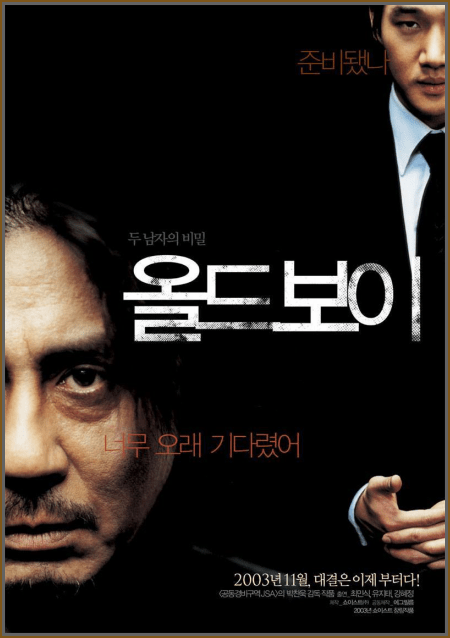
Oldboy – This revenge film by South Korean auteur Park Chan-wook wasn’t just a blast to watch but also happens to be one of the best films of the past decade. It takes a simple plot of a man imprisoned against his will for 15 years with no explanation whatsoever that he literally goes insane and back to sane during his captivity. Revenge being the one thing which keeps him going and revenge he gets to inflict on all those he discovers were responsible. The mind-twisting last act in the film takes the revenge-theme right on it’s head as we find out that the main lead wasn’t the only one on a revenge train of thought.

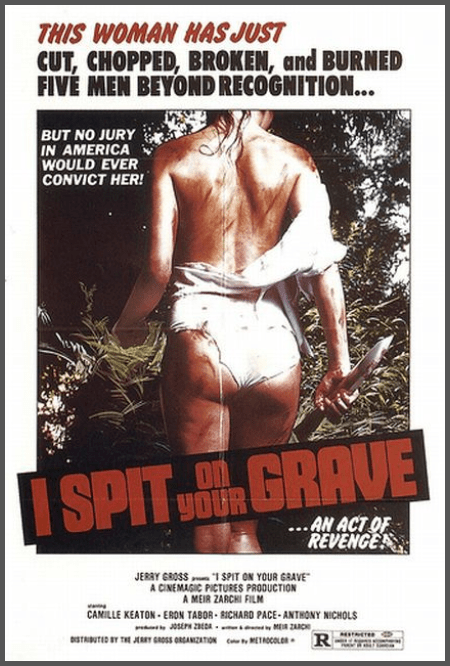
I Spit On Your Grave aka Day of the Woman – This grindhouse classic from Meir Zarchi is the epitome of the rape victim turned revenge valkyrie. The film is not very easy to sit through since there’s nothing subtle about how filmmaker Meir Zarchi filmed every exploitative scene. From the prolonged gang rape sequence to each subsequent revenge act by Camille Keaton’s Jennifer character. Some critics have blasted the film as pandering to the lowest common denominator while others have hailed it as a post-modern feminist film. I like to think that both sides are correct and that the film lies somewhere in the middle. It definitely will put a scare on any group of men who are having thoughts of shenanigans.

Death Wish – When people hear revenge flick they almost always say this iconic film by Charles Bronson from the 70’s. The film was adapted from Brian Garfield’s 1072 novel of the same name and directed by Michael Winner. While critics had mixed reactions to the film with some calling it irresponsible filmmaking, the nation as a whole embraced the film. Here was a film which screamed to the nation that the rising crime-rate in the U.S. during the 1970’s wasn’t going to go unanswered. While some people may have seen the film as a blank check to actually commit vigilantism in the end it just helped a country sick and tired of the crime they see day in and day out. Again here was art becoming a driving force in changing a nation’s collective malaise into something more positive. It didn’t hurt that Bronson was badass as Paul Kersey.

Kill Bill: Volume 1-2 – Who else but the video clerk made good would make what I would consider the greatest genre mash-up film ever made. Quentin Tarantino’s ode to kung fu, spaghetti westerns and revenge flicks became so massive that he had to split the film into two volumes. I am talking about Kill Bill. Not his greatest film ever but I definitely consider it his most geek-friendly and most entertaining. Uma Thurman as The Bride tearing a bloody and witty path of revenge on those who failed to kill her created some of the most iconic fight sequences of the generation this film came out in. Every scene almost seemed to be inspired by other films of a similar theme and genre that film geeks everywhere must’ve exploded in their pants from all the awesomeness they were witnessing. Each volume had two great action sequences that were both fantastical and brutal.

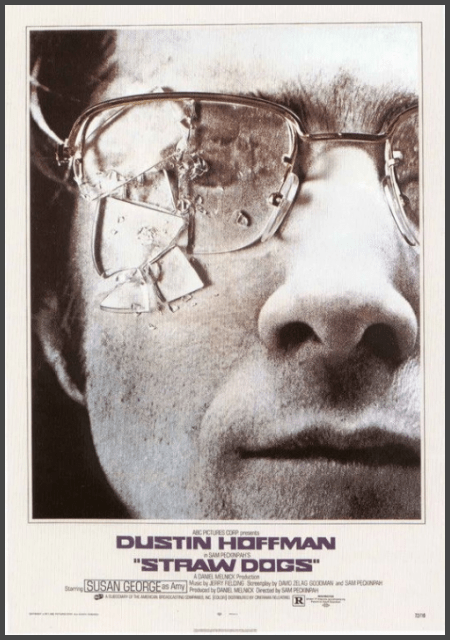
Straw Dogs – One of the most controversial films in Sam Peckinpah’s controversy-filled directing career. Released in 1971 it told the story of how even the meekest person could be pushed into dealing out extreme violent justice on those who have wrong them and those they love. Seen by critics as quite misogynistic due to the nature of the rape scene of Susan George’s Amy character the film was banned for two decades in the UK for it’s unflinching look at violence. Being a huge fan of Sam Peckinpah I had to see it and when I did it automatically became one of my favorite films ever and not just a favorite revenge film. If there was ever a modern retelling of a Biblical-level fable it is this classic from Sam Peckinpah. Every revenge-fueled act by Dustin Hoffman literally oozes Old Testament justice. Just the way I like my revenge. 🙂

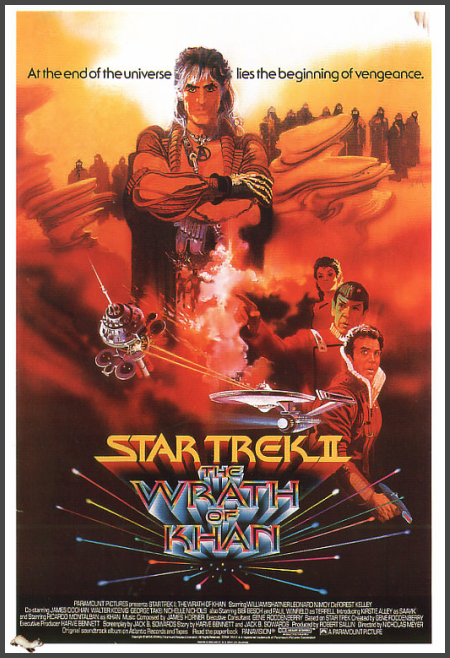
Star Trek II: The Wrath of Khan – Speaking of Biblical this first sequel in the Star Trek film franchise still considered by fans and non-fans alike as the best in the series. Hard to argue with them since it’s also an opinion I share. The sequel takes a popular episode from the original series and follows it up with all the cast of characters older and more seasoned. In the case of Ricardo Montalban’s Khan Noonian Singh quite seasoned and classy as smooth Corinthian leather. It’s a film with Shatner’s Kirk and Montalban’s Khan in an everending cycle of revenge which would culminate in what would be one of film’s most heartbreaking scenes. One could taste the revenge emanating from the two characters as age-won wisdom and genetically-engineered intellect fell by the wayside to feed the vengeance sought by Kirk and Khan. This revenge flick also has one of the most awesome death speeches by a character on film.

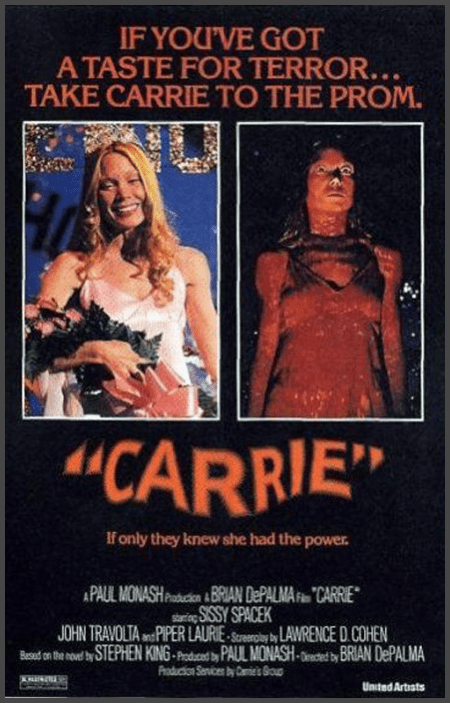
Carrie – Brian De Palma’s film adaptation of one of Stephen King’s better horror novels still seen by many as the best film adapt of a King novel. It combines the existential horror of being a girl and her body maturing in the dog-eat-dog world of high school and the horror said girl can inflict on those tormenting her. It’s high school bullying and revenge with a healthy dose of Stephen King shenanigans mixed in. Sissy Spacek was great as the titular character. One doesn’t have to be a high school girl to feel for Carrie and what she goes through. Her snapping in the last act and inflicting her psychokinetic-brand of revenge on her tormentors must’ve gotten more than a few “Hell yeah!” from some of the teens and adults who went through high school hell. It also has a classic line uttered by Carrie’s mother played by Piper Laurie: “I can see your dirty pillows. Everyone will.”

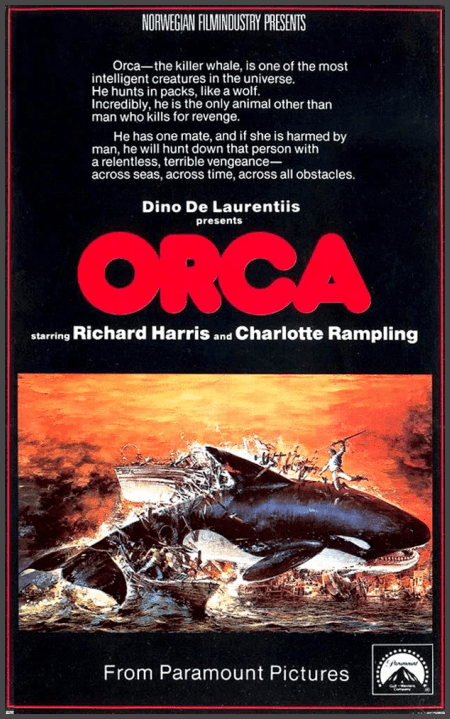
Orca – This film was to be producer Dino De Laurentiis’ attempt to capitalize on the success of Steven Spielberg’s classic man-versus-nature thriller, Jaws. Starring Richard Harris, Charlotte Rampling and Bo Derek the film wasn’t a success when it first came out. While Spielberg’s film was a modern retelling of Moby Dick this killer whale version by director Michael Anderson was Death Wish on water with Paul Kersey as the killer whale. This was one of the first films where I realized none of the people on the screen were worth rooting for to survive. I was all for the killer whale who was on a warpath to avenge his mate and unborn wee killer whale who were killed by Harris and his crew. Shamu this killer whale was not and it always brought a smile to my face whenever the killer whale outsmarted the humans and killed each and everyone in inventive ways. I’m wondering if all the killer whales in all the aquatic parks are just biding their time before they too go all Orca on their handlers and the audience. I’d pay to see that!

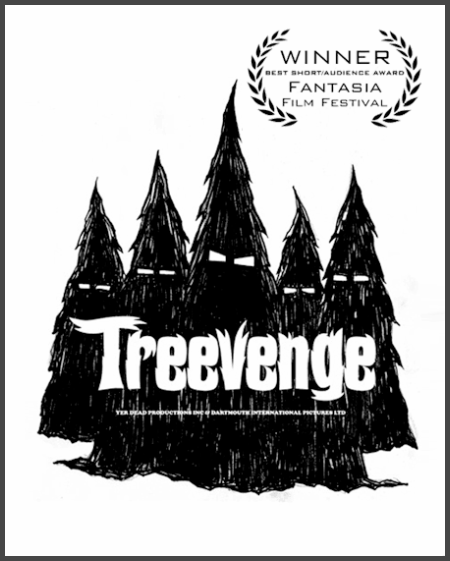
Treevenge – Last but not least the greatest film ever made!

Review: Slither (dir. by James Gunn)


James Gunn first got his chance to work in the horror-comedy genre with his time in Troma Films. His first contribution to the genre being a send up of Shakespeare’s Romero and Juliet aptly titled as Tromeo and Juliet. He next moved on to penning scripts for the major studios with his first two being the critically-panned, but profitable two Scooby-Doo live-action films. Gunn next moved on to writing a script reimagining George A. Romero’s classic Dawn of the Dead. Despite howls of protest from the original film’s legion of fans, the film went on to be a modest success and helped bring about the renaissance of the current zombie mania in all facet of entertainment. Gunn follows up the success of his Dawn remake by not just writing the script but finally getting behind the camera and directing it himself. I’m glad to say that James Gunn’s first directorial debut with Slither has turned out to be one fun, gross-out, disgustingly hilarious horror-comedy that brings to mind the splatter-comedy films of the 1980’s.

I say that Slither has alot in common with the horror-comedy during the 80’s just for the fact that we’ve not seen a film of this kind since. Slither brings to mind such 80’s B-movie shlock classics like Critters, Return of the Living Dead, and Night of the Creeps. But Gunn also pays some an homage to cult classics like John Carpenter’s The Thing. One of the character’s in the film and a store are even named after The Thing‘s badass antihero, R.J. MacReady. Then there’s the tip of the hat to Romero’s zombies, though this time around I would say that Gunn had more in mind the quickthinking and funny undead from John Russo’s Return of the Living Dead. There’s even a shout out to Invasion of the Body Snatchers as the alien slug-controlled populace are actually part of a much larger organism who thinks for all.

The story Gunn came up with for Slither was pretty straightforward and simple. Intelligent alien organism bent on world domination hitches a ride on a meteor which travel the depths of space until it falls on an unsuspecting planet. Unfortunately, the planet in question for the film happens to be Earth. Right from the get go the comedic aspect of the film begins even as the alien-laden meteor crash lands its way to one Wheelsy, N.C. A podunk town where the most interesting to happen each year is the annual Deer Cheer which signals the start of Deer Hunting season. We get to see the mundane day-to-day life of the townspeople from the pretty high school teacher Starla Grant (adorably played and with a strong sense of marital fidelity by Elizabeth Banks), the town’s obnoxious and foulmouthed Mayor MacReady (Gregg Henry’s performance was hilarious and he gets pretty much all the best one-liners), to its Chief of Police Bill Pardy (Nathan Fillion in Han Solo mode).

The alien soon finds a host in the town’s richest person who also happens to be Starla’s much older husband, Grant Grant. Michael Rooker (Henry: Portrait of a Serial Killer) plays Grant and his performance was both funny and sad. He pretty much starts morphing into a creature somewhere between Jabba the Hutt and a Lovecraftian squid-person. But through it all, Grant’s love for his wife manifests itself by way of the alien’s collective intelligence. When the townspeople all start getting infected by the large, slug-like offsprings of the main alien, it’s hilarious to find that they all share Grant’s love for Starla. It would seem that the alien collective learned abit or two from Grant about marital love and also a love of Air Supply’s syrupy ballad, “Every Woman in the World.” These zombies chant the word “Starla” instead of “brains.” The rest of the film was pretty much Starla, Bill Pardy and a small band of survivors trying to stop the Grant-alien, the slugs and the zombified townspeople from spreading out of Wheelsy and out onto the rest of the planet.

The film balances well between horror and comedy. The horror aspect of Slither comes from the many gory scenes. Trust me when I say that this film has more than its share of blood, gore and splatter. We’re shown dead and gutted pets and farm animals. Not to mention the requisite flesheating performed by the zombies. the great thing about the scenes of horror in Slither was the absence of CGI except for a scene or two and even then it was difficult to pinpoint which was CGI and which was animatronics and make-up effects. Slither‘s monster effect owes alot to the work of Rob Bottin and his crew who did the disgustingly creative effects on Carpenter’s The Thing. I’m glad to see that Gunn decided to forgo CGI for these scenes and went for more realism. Even if such realism were nauseatingly disgusting and gross. Just what a horror movie was suppose to be. The comedy part came not from the aliens and the scenes of horror, but from the characters reactions to the unfolding events around them.

Just like Shaun of the Dead, Slither’s characters stumble, bumble and trip their way through the crisis. Even Fillion’s character of Bill the Chief goes against the stereotypical hero from these type of film. He’s a smartass about his job and how he sees the people he’s suppose to protect, but when the time comes to do his job as protector he tries to do the best he can even though the best he can doesn’t measure up to what we’re suppose to get from our heroes. The dialogue was fast and wickedly sharp which made for alot of hilarious one-liners and most of them coming from the mouth of Slither’s Mr. Pibb-obssessed Mayor MacReady and his penchant for overreacting to everything and also for calling everyone cocksucker.

Slither doesn’t try to be anything but what it set out to be: a funny horror film with a large helping of slapstick, splatter and slime. In that respect, James Gunn succeeded with his writing and directing of Slither. The movie doesn’t bring any originality to the horror-comedy genre. To be honest, there’s not much originality left to bring to the genre, but Slither takes all the usual conventions from those 80’s horror-comedies and gives it a new millenium vibe. The acting by the cast was well-done and showed that they must’ve have fun doing the film. The special effects were done old-school style with nary a CGI-effect to be seen except for a few brief scenes. In the end, Slither was one fun, rollercoaster of a movie that scared the audience into jumping and recoiling in their seats and at the same time making them scream, shout and laugh when doing so. I’ve never had as much fun these last couple years watching a movie like I did with Slither.