4 Shots From 4 Films is just what it says it is, 4 shots from 4 of our favorite films. As opposed to the reviews and recaps that we usually post, 4 Shots From 4 Films lets the visuals do the talking!
This October, we’ve been using 4 Shots From 4 Films to pay tribute to some of our favorite horror directors! Today we recognize not only the talent of Edward D. Wood, Jr. but we also honor him on what would have been his birthday!
4 Shots From 4 Films
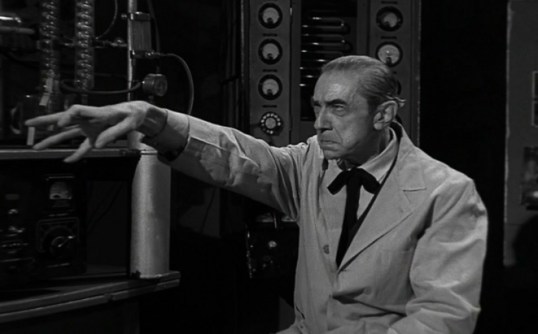
Bride of the Monster (1955, dir by Edward D. Wood, Jr.)
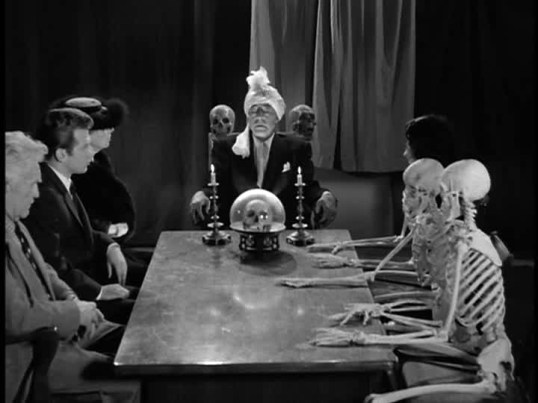
Plan 9 From Outer Space (1956, dir by Edward D. Wood, Jr)
Night of the Ghouls (1958, dir by Edward D. Wood, Jr)
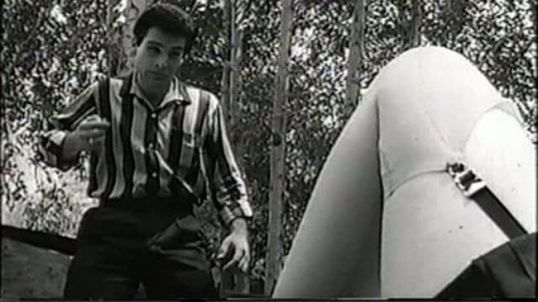
The Sinister Urge (1960, dir by Edward D. Wood, Jr.)
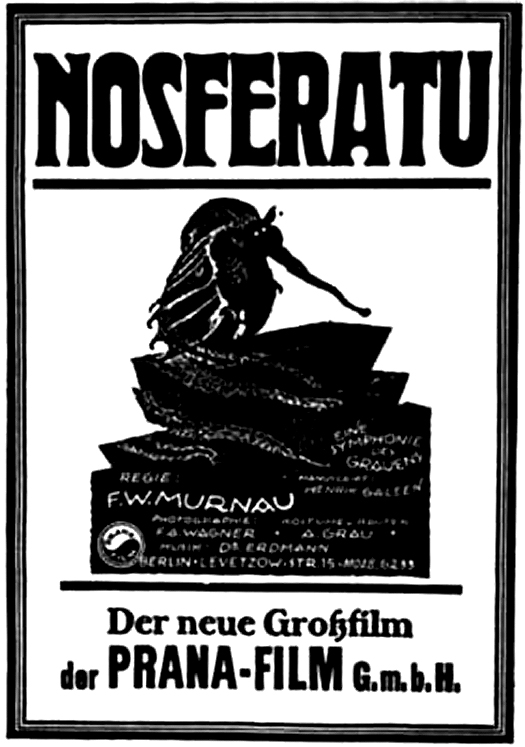
Today’s Horror on the Lens is a classic film that really needs no introduction! Released in 1922, the German silent film Nosferatu remains one of the greatest vampire films ever made. It’s a film that we share every October and I’m happy to do so again this year!
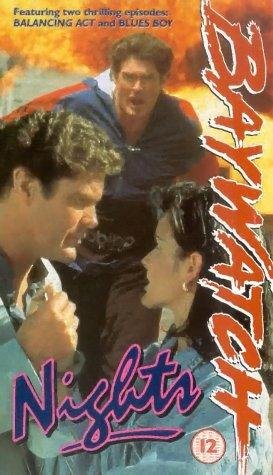
On tonight’s episode of Baywatch Nights, David Hasselhoff versus a vampire!
Yes, it’s just as silly as it sounds. I mean, Hasselhoff vs. vampire pretty much tells you everything that you know. The thing that amazes me about this show is that, even after confronting a different monster every week, Mitch still always seems to be somewhat skeptical.
“Okay, I’ll admit that sea serpents and aliens exist but vampires …. c’mon, there’s no way.”
Among some horror fans, the 1981 film, The Burning, has long had a reputation for being one of the best of the many films to come out of the early 80s slasher boom.
I have to admit that the first time I saw it, my thought process went something like this: Oh great, more campers …. I can’t wait to see all of these people die …. God, these campers are annoying …. Thank God I never went to summer camp …. Wait, is that Jason Alexander …. when is the killer going to show up …. oh hey, that is Jason Alexander …. if I wanted to sit through a bunch of silly summer camp hijinks, I wouldn’t have gone searching for a horror film …. goddammit, was it really necessary for Jason Alexander to moon the camera …. wow, this movie is boring …. I don’t know who said this was scary but seriously …. oh God, now it’s turning into a movie about rafting …. I’ve about had it …. this movie is so bor–OH MY GOD WHAT THE HELL JUST HAPPENED! AGCK! THERE GO HIS FINGERS OH MY GOD….
Seriously, The Burning is a film that requires a bit of patience. You got to sit through a lot of silliness before you actually get to the horror but once you do …. oh my God! It’s intense. The killer in The Burning is Cropsy, a former groundskeeper who was set on fire by a bunch of campers years ago. Now, he’s everyone’s worst nightmare — a madman with gardening shears. It takes a while for Cropsy to really get into the spirit of things. In fact, for a good deal of The Burning, no one is even talking about Cropsy, which is always a mistake when you’re trying to make a movie about a killer in the woods. A young camper named Alfred (Brian Backer) keeps thinking that he see Cropsy sneaking around the camp but nobody believes him, largely because Cropsy doesn’t ever do anything to let people know that he’s back and ready to demonstrate how gardening tools can be used as an instrument of revenge.
However, once Cropsy actually gets going, he is terrifying! The Burning is a good example of the type of horror movie that was made before the Nightmare on Elm Street series introduced the idea that killers could not only talk but also tell a lot of corny jokes. Cropsy doesn’t speak. Crospy doesn’t joke. All Cropsy does is kill. What makes Cropsy especially disturbing is that — much like the killer in The Prowler — he seems to get a lot of joy out of killing as brutally as possible. He’s not Jason or Michael, killers who killed because that’s all they knew how to do. Cropsy plots and calculates and hides and is basically everyone’s campfire nightmare come to life.
Now, as I said before, it does take Cropsy a while to get started. And we do end up spending a lot of time watching campers do stupid things. Yes, Jason Alexander is one of the campers. He not only has hair but I think he’s supposed to be a teenager in this film. He was 21 when the film was shot and he looks like he’s about 35. He delivers his lines in such a way that it’s impossible not to think of The Burning as being a lost episode of Seinfeld where George Costanza goes camping. On the plus side, he does get some vaguely funny lines, which is more than his co-stars get.
Speaking of co-stars, keep an eye out for Holly Hunter. She was dating Jason Alexander at the time (as well as rooming with Frances McDormand) and she makes her film debut as one of the campers. She gets one line. “What if they don’t come back?” It’s a good question. What if they don’t? (Cue dramatic music!)
Anyway, The Burning is a slasher film that requires some patience but when it needs to be scary, it gets the job done. (The gore effects are by the one and only Tom Savini and yes, they are shocking and a bit disturbing. If you’ve ever wanted to know what losing four fingers at once would look like, this is the film for you.) It’s a bit too padded for its own good but Cropsy is an effective villain and the movie actually catches you by surprise regarding who survives and who doesn’t. Amazingly, there was never a sequel to The Burning. Personally, I don’t think it’s too late. I want to see Jason Alexander return to the camp and finish Cropsy off, once and for all!
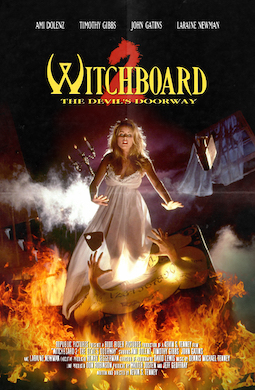
Moving out of her boyfriend’s home because he doesn’t support her desire to become an artist, Paige (Ami Dolenz) rents a large studio apartment in Los Angeles. When she finds a Ouija Board in the closet, she plays around with it and is contacted by a spirit named Susan. Susan claims that she used to live in Paige’s apartment and someone in the building murdered her.
The good news is that talking to Susan inspires Paige to start painting and investigating Susan’s death not only brings Paige closer to her cop boyfriend (Timothy Gibbs) but it also allows her to make friends with her landlady Elaine (Laraine Newman!) and a photographer named Russel (John Gatins). The bad news is that Susan is a vengeful spirit and soon people start dying. One man is taken out in a boiler room explosion. Another is taken out by an axe. Trying to drive isn’t easy when Susan decides she wants to be your co-pilot. If Paige solves Susan’s murder, will that bring peace to Susan or is Susan too obsessed with killing to stop even if her killer is brought to justice?
Witchboard 2 isn’t bad. Both director Kevin Tenney and the Ouija board return from the first film and Ami Dolenz does a good job in the role of the naïve young woman who gets possessed by spirits beyond the grave. The daughter of Monkees drummer Mickey Dolenz, Ami Dolenz appeared in several direct-to-video horror films and thrillers in the late 80s and early 90s and she had a refreshing naturalness about her as an actress. She could be both sexy and innocent without ever seeming like she was trying too hard to convince you that she was either. (Everyone who watched a lot of late night Cinemax in the 90s developed a crush on Ami Dolenz at some point and anyone who says otherwise is lying.) Kevin Tenney surrounds Dolenz with an engaging cast of eccentrics, the most memorable one being Larraine Newman of Saturday Night Live fame, who provides the same sort of spacey comic relief that Kathleen Wilhoite provided in the first film.
Though Witchboard 2 is modest in its goals and its execution, it’s still a good chiller for an October night.
In this work of Interactive Fiction, the recent death of your mother forces you and your father to come to terms with Babyface, a semi-legendary bogeyman who haunted you in the past and who may still be living in his old house, watching as people walk by.
Babyface is more of a short story than an actual game. There are things for you to click in order to move the story forward but there really aren’t any decisions for you to make. If you’re looking for a traditional IF experience, with you explore locations on your own and it’s up to you to figure out what the clues mean and how to solve all the puzzles, Babyface is not it.
Instead, it’s a story that puts you right in the head of the main character. Even though you don’t really control her actions, you still see the story through her eyes. It’s both well-written and well-designed (using Twine) and it uses both audio and photographs to create and maintain a spooky atmosphere. Inspired by a nightmare, this story does a good job of capturing dream logic and keeping the player off-balance. It may not be a traditional game but it is a good read for fans of horror.
Since it’s Guillermo Del Toro’s birthday, it just seems appropriate that today’s horror scene that I love should be one of my favorite scenes from one of my favorite Del Toro movies.
Here’s the opening of 2015’s haunting (and, in my opinion, underrated) Crimson Peak!
Seriously, that’s kind of my go-to reaction to almost any of Christopher Pike’s YA thrillers. As an author, Pike has never allowed the fact that he was writing for a young audience get in the way of coming with some truly gruesome death scenes and some macabre scenarios.
Take the 1991 novel, Die Softly. Now, technically, this is not a horror novel. There aren’t any ghosts or vampires or anything like that. Instead, this book centers on a bunch of murderous but nonparanormal high school hijinks. Herb is an awkward 18 year-old who can take amazing pictures but who has no idea how to talk to people. His best friend, Theo, is a drunk who spends his time shooting guns in the backyard. (Admittedly, Theo only went downhill because of the death of his bother Roger in a mysterious car accident.) Theo wonders if he and Herb will ever find love. Herb imagines that they’ll both find someone to marry but they probably won’t ever have the courage to actually approach anyone that they actually love. I mean, this is dark!
Anyway, Herb dreams of becoming a director in Los Angeles so he sets up a secret camera in the high school locker room so he can get a picture of the cheerleaders showering and …. wait a minute. What? Uhmmm …. what? Techically, Herb does feel guily about it but …. agck! Of course, the idea wasn’t originally Herb’s. His childhood friend Sammie suggested it because of her own general hatred for cheerleaders. Still, Herb didn’t necessarily have to go along with the idea. Even he assumed Sammie was joking when she first suggested it. But Herb, for all of his attempts to be a nice guy, is driven by crush on Alexa and his fear that he’ll never even get kissed, let alone see anyone naked. (If this book had been written today, Herb would be an incel hanging out on Reddit.)
Anyway, long story short: when Herb develops his film, he thinks that he may have accidental photographed a murder.
And things get only crazier from there! Die Softly is an enjoyably over-the-top little book, one that fully embraces the melodrama while taking a journey into the heart of high school darkness. The plot has to do with cocaine and threesomes and Herb’s own rampaging insecurity, one that ultimately makes him something of a sympathetic character, even if he is someone whom most readers will have mixed feeling about. It also ends on a far darker note than anything you’d expect to find in a book by R.L. Stine.
Die Softly is a teenage nightmare, a book about dreams that suggests that the best plan of action is abandon all hope, ye who enter here. It’s also a lot of fun. For the most part, Pike wisely eschews anything resembling subtlety. Just because you’re taking a nihilistic journey into the heart of darkness, that doesn’t mean that you can’t be entertained.




 Through the Shattered Lens