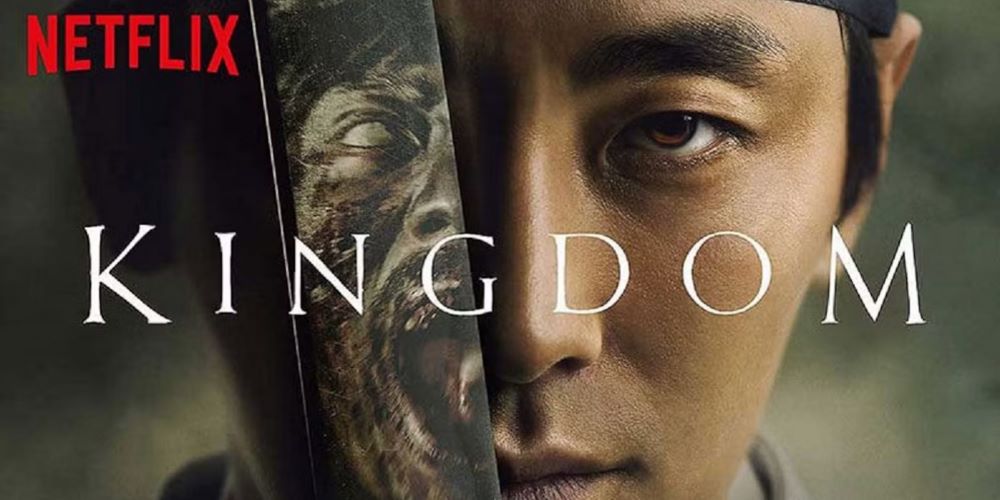
Horror Review: Kingdom


“In a world haunted by both the living and the dead, the true monsters are those who often wear the crown.”

Kingdom debuted on Netflix on January 25, 2019, riding the crest of the global Hallyu wave and building on the international success of Korean horror. The series followed a rich tradition of critically acclaimed films such as Train to BusanThe HostA Tale of Two Sisters, and notably The Wailing. These works helped elevate South Korean horror on the world stage, blending supernatural terror with intense social and psychological themes that primed Kingdom for widespread interest.

The series was adapted by playwright and writer Kim Eun-hee from her own webtoon The Kingdom of the Gods, which she created alongside artist Yang Kyung-il. This blend of popular Korean cultural imports—webtoons and horror cinema—provided a strong narrative base for the live-action adaptation. Kingdom distinguished itself by marrying the zombie genre with historical drama, setting its epidemic in the Joseon dynasty—a period marked by frequent mass deaths and epidemics. This historical backdrop provided a plausible narrative foundation for a catastrophic outbreak, grounding the series’ supernatural horror in the real dread of past pandemics and social collapse.

The Joseon era was repeatedly struck by deadly outbreaks and famines that devastated communities and challenged social structures. While Kingdom doesn’t focus on specific historical records, the knowledge of these recurring calamities creates a realistic and haunting context that informs the series’ tension—the desperation of starving peasants, societal breakdown, and the government’s inability to maintain order under extreme crisis. This setting allows the zombie outbreak to function not just as a horror element but as a powerful allegory for historical suffering and institutional decay.

Kingdom centers on Crown Prince Lee Chang, who is thrust into a deadly fight against both undead hordes and court conspiracies after the king’s mysterious illness and death are covered up by Queen Consort Cho and her father. Their selfish decision to conceal the truth and use a resurrection plant to keep the king “alive” initiates the plague, demonstrating how corruption and obsession with power directly contribute to the kingdom’s fall. The series effectively exposes the deadly consequences of political deceit and unequal society—while nobles hoard resources and betray their subjects, peasants are left starving and vulnerable. Rival political factions further sabotage any chance of a unified response, showing that human ambition is as perilous as the zombie outbreak itself.

What sets the zombies in Kingdom apart from many earlier depictions is their unique behavior and characteristics, which elevate the horror and intensify the series’ kinetic action scenes. These zombies move swiftly and aggressively, unlike the sluggish, shambling undead common in Western lore. Their speed allows them to attack with terrifying suddenness, creating relentless tension and forcing characters into frantic, dynamic escapes and battles. Additionally, the zombies in Kingdom only awaken at night and seem to revert to dormancy during daylight hours, a nocturnal cycle which adds an eerie rhythm and strategically heightens suspense.

Moreover, the infection’s origin tied to a resurrection plant introduces a quasi-vampiric element, blending horror genres and expanding the mythos beyond traditional zombie tropes. This variation not only refreshes the genre but intensifies stakes for the characters, who must navigate a world where death is no longer certain and danger lurks in shadows. The fast-moving zombies enable spectacularly choreographed action sequences, elevating visceral thrills and maintaining an adrenaline-fueled momentum distinct from more lethargic zombie narratives.

The success of Train to Busan played a crucial role in reinvigorating the zombie genre, both in South Korea and internationally, and this revitalization was a significant advantage that the creators of Kingdom skillfully leveraged. Train to Busan injected new energy into zombie cinema with its frenetic, visceral depiction of zombies—fast, aggressive, and highly reactive—breaking away from the sluggish, shambling archetypes prevalent in older Western iterations. Its influence is evident in how Kingdom’s zombies behave; they move swiftly, attack relentlessly, and operate on a nocturnal cycle, which heightens the horror and intensifies the kinetic action sequences. These zombies are not mere mindless monsters but active participants in the chaos, embodying a new standard of terrifying, kinetic undead.

Furthermore, Train to Busan‘s impact extended beyond mere behavior. It was also a culturally resonant piece that connected deeply with Korean audiences by reflecting recent national trauma—most notably the Sewol Ferry disaster—and embedding social critique within a genre framework. This powerful contextualization allowed the film to function as more than entertainment; it became a symbol of societal failure and resilience. The film’s success created a template for how Korean cinema could adapt and localize the zombie mythos, blending horror with social commentary in a way that was both emotionally impactful and commercially successful globally.

Kingdom’s creators astutely drew on this momentum, adopting the highly kinetic, fast-moving zombie model popularized by Train to Busan, but adding their own spin through the behavior and cycle of their undead. These zombies only rise at night, stay dormant during the day, and exhibit contorted, unpredictable movements—something Yeon Sang-ho himself infused into his zombies through choreographed dance routines, emphasizing their frenetic and unnatural agility. Such innovations keep the horror fresh, heighten the visceral excitement of action scenes, and differentiate Kingdom from earlier zombie fare, making its undead both terrifying and uniquely emblematic of Korean horror’s modern renaissance.

This evolution of zombie behavior—fueled by Train to Busan’s successful reinvention—enabled Kingdom to stand out in an increasingly saturated genre. It seized upon the momentum of recent Korean horror cinema, using the distinct movement and cycle of its undead to heighten suspense and deliver a new level of kinetic energy. Through this approach, the series not only paid homage to the genre’s Western roots but also created a uniquely Korean expression of zombie horror that captured global attention, cementing Korea’s place at the forefront of contemporary zombie filmmaking.

Despite its many strengths, Kingdom is not without imperfections. The first season, which premiered on January 25, 2019, unfolds unevenly, at times slowed by a deliberate pacing that prioritizes intricate political set-up and exposition over constant action. This emphasis on explanatory dialogue—essential for unfamiliar viewers of Joseon society and its complex political dynamics—sometimes weighs down character development. Characters often act as instruments for delivering background information rather than revealing themselves naturally through interaction, which can lessen emotional engagement early on. Key information about the outbreak’s origins, political rivalries, and the resurrection plant’s properties is frequently conveyed through heavy-handed dialogue rather than action or subtlety, limiting moments of tension and organic story progression.

The second season, released on March 13, 2020, builds on the first by balancing its horror and dramatics more effectively. Stunning cinematography, immersive production design, and committed performances—from Ju Ji-hoon’s strong portrayal of Lee Chang to Bae Doona’s soulful Seo-bi—deepen the emotional core. More nuanced character work and escalating stakes make the political machinations and zombie horror increasingly compelling. The zombies themselves, with their terrifying speed and mysterious biology, deliver some of the most memorable and intense action scenes in contemporary zombie media.

Adding to the lore and depth of the series is Kingdom: Ashin of the North, a special feature-length episode released on July 23, 2021. This episode acts as a prequel and sidequel to the first two seasons, exploring the backstory of the mysterious character Ashin, played by Jun Ji-hyun. It reveals the origins of the resurrection plant and how it ties into the events that drive the main narrative forward. This special enriches the overarching storyline by providing critical context for the outbreak and weaving a deeper understanding of the motivations behind some of the series’ most enigmatic characters, strengthening the ties within the Kingdom saga as a whole.

Kingdom is a series that skillfully blends the intensity of period drama with the thrills of zombie horror. It offers complex political intrigue, rich historical atmosphere, and pulse-pounding suspense wrapped in strong performances and impressive production values. As such, it comes highly recommended for viewers who enjoy either genre—or both—providing a fresh and compelling experience that stands out within contemporary television drama and horror.
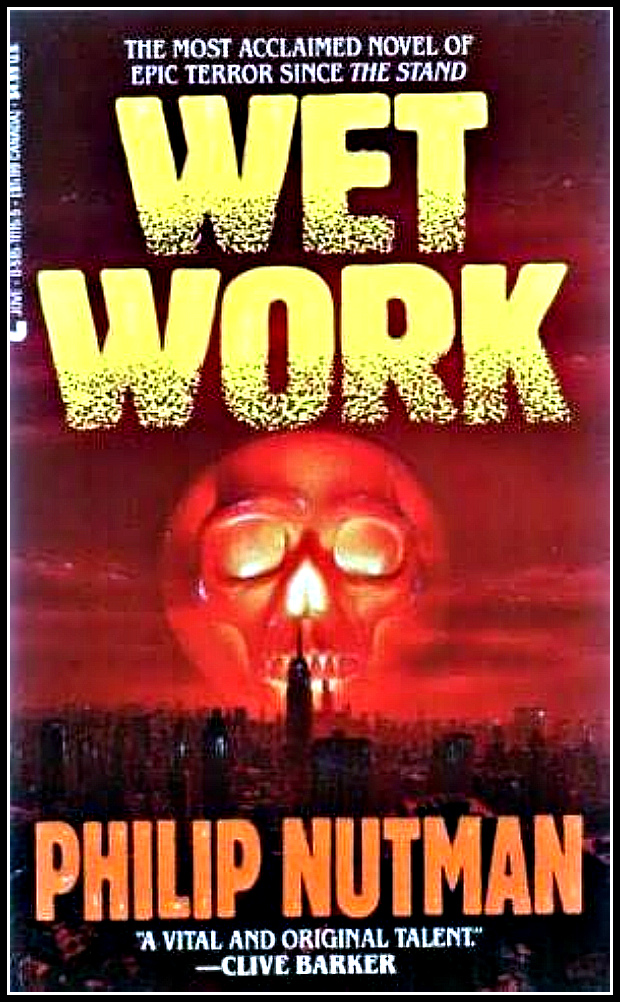
Horror Book Review: Wet Work (by Philip Nutman)


“Wet work” – intelligence community slang for covert operations involving assassination or killing, named for the ‘wet’ bloodshed such missions entail.

Philip Nutman isn’t a name most readers recognize outside of hardcore horror and zombie fiction circles, but within those communities, he’s remembered as an accomplished writer and journalist who carved out a unique space in the genre. For most of his career, Nutman worked as a freelance media journalist and film critic, contributing to magazines like Fangoria and Cinefantastique, where he covered the darker corners of cinema. As a fiction writer, he didn’t produce much in the way of novels, but the one he did publish—Wet Work (1993)—earned him lasting respect among fans who prefer their horror mixed with high-stakes action and cynical political undertones.

Wet Work began as a short story published in George A. Romero and John Skipp’s 1989 anthology Book of the Dead, a milestone collection that helped define zombie fiction as something literary rather than purely pulp. Even within that assembly of strong voices, Nutman’s story stood out for combining government espionage with apocalyptic horror. Expanding it into a full novel only amplified those elements, turning what had been a grim short tale into something closer to an action-horror epic with splatterpunk guts and a spy thriller’s pacing.

The novel opens with CIA operative Dominic Corvino, a member of an elite black-ops unit called Spiral, barely surviving a mission gone wrong in Panama City. From the start, Nutman gives the story a sense of distrust and paranoia—Corvino believes his team was deliberately sabotaged, their deaths engineered by someone inside the CIA. It’s an opening that reads more like a Cold War spy novel than a zombie tale, and that mix of tones is part of what makes Wet Work work so well. Nutman uses what he likely learned as a journalist—his knack for detail, the sense of how bureaucracies function (or fail to)—to give the early chapters an almost procedural authenticity. There’s a lived-in realism to the military and intelligence backdrop that keeps even the most outrageous elements of the story grounded.

Then comes the moment that shifts Wet Work from gritty reality into nightmarish surrealism. As the CIA plotline unfolds, a cosmic event takes place: the comet Saracen passes dangerously close to Earth and leaves behind some kind of invisible residue. It’s never fully explained whether it’s chemical, biological, or something beyond understanding, but its aftereffects begin to change life on the planet. Nutman uses the comet not just as a plot trigger but as a symbol of inevitability—a reminder that humankind’s end won’t always come from weapons or war, but sometimes from something as impersonal as celestial dust. It’s a bit of cosmic horror filtered through the lens of political and societal collapse, an end-of-days scenario that feels both mythic and strangely plausible.

Meanwhile, in Washington D.C., police officer Nick Packard becomes the reader’s main point of connection to the chaos on the ground. Packard starts the day leading a routine shift through the usual headaches of the city, but things unravel fast once Saracen’s effects take hold. Strange attacks start flooding police dispatch, cases of violence erupting in ways no one can explain, and what seem like random acts of brutality turn out to be part of something much larger. The city descends into panic as the dead begin returning to life. Nutman describes this breakdown with a sense of escalating dread that feels almost journalistic—each detail adds up, each scene observed as though through the eyes of someone trying to make sense of something senseless.

The zombies themselves are mostly what readers might expect from stories inspired by George A. Romero: slow-moving, decomposing, and relentless. But Nutman complicates things by hinting that not all of the reanimated are mindless. Some seem to retain fragments of human cunning or memory, enough to make them unpredictable and far more dangerous. This small twist gives the book a chilling edge, making it clear that intelligence doesn’t necessarily counteract monstrosity—it might even make it worse.

Corvino’s section of the novel runs parallel to Packard’s and serves as the darker, more psychological side of the story. He becomes consumed by his mission to find out who betrayed his team in Panama and make them pay. Physically, he’s battered and near his limits, operating in a world that no longer follows the rules of logic or hierarchy. Mentally, he’s trapped between loyalty, fury, and isolation—an operative trained for controlled violence now facing chaos that no training can manage. Nutman writes Corvino as a man unraveling in sync with the world around him. His search for answers feels less like a mission and more like an obsession, a desperate grasp at clarity in a world that’s literally stopped making sense.

Packard’s story, by contrast, brings everything down to a more personal survival narrative. As the crisis worsens, his only goal becomes reaching his wife, stranded in their suburban home outside the city. His journey across a collapsing Washington D.C. is one of the novel’s strongest threads, combining small moments of human connection with scenes of escalating horror. Through him, the reader gets a street-level view of societal breakdown—communications dying, infrastructure collapsing, and people reacting in unpredictable, often violent ways. What makes Packard’s arc compelling is its simplicity; amid government conspiracies and cosmic cataclysms, his is just a story about trying to save someone he loves.

Eventually, Corvino’s and Packard’s paths intersect, and both men come face to face with what’s left of the government. By this stage, authority itself has become just another form of predation. The people who once held power have adapted frighteningly well to the new world, shedding morality and decency like dead skin. Nutman doesn’t paint them as comic-book villains but as survivors whose ethics erode one decision at a time. In typical splatterpunk fashion, the line between humanity and monstrosity blurs completely.

Nutman’s writing in Wet Work is graphic, fast-moving, and unflinching. His descriptions of violence and gore are vivid without slipping into parody, and even when the pacing turns frenetic, it matches the story’s collapse into total madness. Where he stumbles is in a few awkward moments of dialogue and some stilted attempts at sexuality—scenes that read more forced than provocative. But those missteps never fully pull the story off course. If anything, they serve as reminders that Nutman, for all his journalistic precision, was still finding his rhythm in long-format storytelling.

The novel embodies everything bold about early 1990s horror fiction: big ideas, unrestrained violence, and a willingness to splice genres that didn’t normally coexist. Wet Work could just as easily sit beside Dawn of the Dead as it could a paranoid spy novel from the 1980s. Nutman understood that the systems people depend on—government, military, media—are fragile constructs that crumble the second survival becomes personal. That realism, drawn from his background in journalism, grounds the chaos he unleashes. Even at its most supernatural, Wet Work feels uncomfortably plausible because its human failures ring true.

After Wet Work, Nutman shifted back toward shorter forms, writing comics, novellas, and media journalism rather than more novels. In hindsight, that makes his one major book feel all the more significant. It’s the place where all his skills—his eye for detail, his fascination with moral gray areas, and his love of horror excess—come together.

For zombie fiction fans, Wet Work remains a hidden gem worth revisiting. It’s not just a gore-fest or survival tale but a demonstration of how horror doesn’t need to stay confined within its own walls. Nutman showed that the genre can bleed into others—melding espionage, political thriller, and cosmic dread into something distinct and alive. In a field that sometimes plays it safe, Wet Work reminds readers that horror thrives on experimentation, that it’s strongest when it’s hybridized and unpredictable. With Nutman’s death in 2013, any chance of seeing another full-length novel from him is gone, but what remains is proof that horror, when unafraid to evolve, can be far more than blood and fear—it can be reinvention itself.

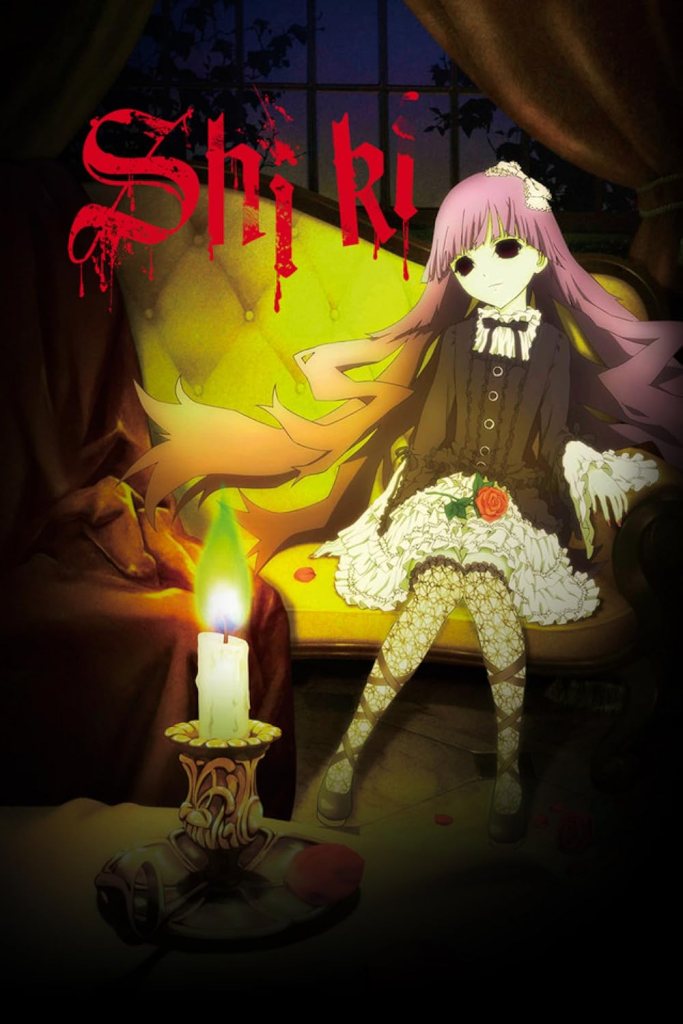
Anime You Should Be Watching (Horror Edition): Shiki (dir. by Tetsurō Amino)


The anime adaptation of Shiki, based on Fuyumi Ono’s acclaimed horror novel and directed by Tetsurō Amino, stands as a rare specimen in the horror genre. Rather than relying on quick shocks, excessive gore, or typical jump scares, Shiki unsettles its audience through atmosphere, moral erosion, and the slow, relentless unraveling of human conscience. Premiering in 2010, the series unfolds at a measured, almost meditative pace, transforming what could have been a simple vampire tale into a profound meditation on survival, faith, fear, and the delicate boundary between life and death when everything is pushed to the brink.

The story is set in Sotoba, a small, isolated village nestled precariously near a larger modern metropolis. The residents of Sotoba live tightly woven lives, their routines and social bonds preserved with careful attention over generations. This fragile peace shatters when a mysterious wave of deaths begins sweeping through the population. At first, these fatalities are dismissed as consequences of the harsh local climate—heatstroke, seasonal illnesses, and the inevitable toll of old age. Yet, as the body count rises, the truth reveals itself to be much darker: the deceased are rising as vampires, known locally as “shiki” or “corpse demons,” creatures that survive by feeding on the living.

What distinguishes Shiki from many other vampire narratives is its refusal to paint the conflict in stark black-and-white terms of good versus evil. The shiki are portrayed not as mindless monsters but as tormented souls, burdened by memories, emotions, and guilt over what they have become and the horrors they must commit to survive. Conversely, the human villagers—once caring and close-knit neighbors—succumb to suspicion, fear, and eventually cold-hearted survival instincts. The real horror emerges as morality frays and the line between human and monster becomes irrevocably blurred.

Unlike classic horror tales set in small towns—such as Stephen King’s ’Salem’s Lot, where a seemingly idyllic village hides sinister supernatural forces—Shiki offers a nuanced inward gaze. For instance, the novel They Thirst situates vampirism within a sprawling urban landscape, where anonymity accelerates chaos and alienation. In contrast, Shiki uses the microcosm of Sotoba to emphasize intimate, communal decay. The focus is not just on the physical threat, but on the erosion of social bonds and moral fabric, revealing how fragile human civility truly is under stress.

While ’Salem’s Lot depicts vampires as a pure evil contaminating a tight-knit community—highlighting themes of moral corruption and contamination—Shiki explores moral ambiguity with far greater depth. The vampires, including the enigmatic Sunako Kirishiki, retain their memories, emotions, and even remorse. Both vampires and humans carry guilt and anguish, complicating simplistic notions of villainy. The villagers—their friends, family, and neighbors—begin to see the suffering of the vampires while realizing their own brutal deeds. The narrative challenges viewers to question whether survival excuses the loss of morality or if it is possible to retain one’s spirit even amid brutal chaos.

At the heart of the series are characters who embody competing moral philosophies. Natsuno Yuki, a cynical teenager newly transplanted to Sotoba from the city, provides both an insider and outsider’s perspective. His disillusioned view highlights how fear, suspicion, and grief can unravel even the most intimate relationships. Natsuno serves as a rational voice within a community unraveling into paranoia and despair, offering a reflection of the audience’s own struggle to comprehend the incomprehensible.

Dr. Toshio Ozaki exemplifies the desperate human desire for order amid chaos. Initially, he seeks to explain away the deaths with rational, scientific explanations grounded in medicine. However, when superstition and supernatural realities intrude, Ozaki is compelled to confront truths beyond his understanding. His leadership in trying to save Sotoba begins with scientific resolve but soon descends into moral compromise. As hysteria spreads, the villagers’ collective violence explodes into ruthless slaughter, justified as necessary to preserve survival. Ozaki’s internal conflict—balancing ethical convictions against brutal necessity—reflects the series’ central question: at what point does the will to survive erode the soul?

Set against this turmoil is Sunako Kirishiki, the quiet yet profoundly troubled leader among the shiki. Though she has lived for centuries and suffers deeply from a sense of divine rejection—believing God has forsaken her—Sunako retains a core spirituality that anchors her sense of morality. Even as she is forced to kill in order to survive, she wrestles with guilt and her faltering faith. Her belief that divine rejection is not synonymous with divine abandonment acts as a form of moral defiance, preserving her fragile humanity amid brutal circumstances.

This spiritual resilience is deepened through her relationship with Seishin Muroi, a local junior monk and published author. Muroi, gentle and introspective, offers a unique perspective on the tragedy unfolding in Sotoba. His dual roles as a religious figure and a thoughtful writer allow him to interpret the crisis with spiritual depth and philosophical insight. His literary works—admired by the Kirishiki family, especially Sunako—explore mortality, suffering, and the search for meaning beyond pain. As a monk, Muroi embodies faith and compassion; as an author, he grapples with existential ambiguities, granting him a rare wisdom in navigating the village’s descent.

Muroi’s role makes him both observer and actor in Sotoba’s unraveling. His spiritual duties compel him to provide comfort and guidance, while his writings deepen his understanding of human and supernatural suffering. This duality shapes his interactions with Sunako and others, serving as a pathway for faith and empathy to endure amid horror and despair.

Sunako’s friendship with Muroi becomes central to her moral endurance. In contrast to Tatsumi, the Kirishiki family’s pragmatic and ruthless jinrō guardian who views survival through a cold, utilitarian lens, Muroi offers a moral counterpoint grounded in mercy and hope. Through his compassionate presence and reflective insights, Sunako finds a way to renew her faith. Although she feels forsaken, Muroi’s influence rekindles the fragile spark of belief in her that prevents her humanity from being swallowed by despair.

The thematic contrast between Muroi and Tatsumi becomes a fulcrum for Shiki: survival devoid of soul versus survival with spirit. Muroi’s continuing faith—soft, tentative, but persistent—demonstrates that even in the bleakest conditions, moral conviction need not fade entirely. His dual lens as monk and author enriches the narrative, bridging theology and philosophy while threading through the story’s core existential dilemmas.

Amino’s direction amplifies these themes through patient pacing and subtle storytelling. The mounting tension grows slowly through quiet, contemplative moments and lingering visuals—the hum of cicadas, shifting light through leaves, the barely audible footsteps in the dark. Ryu Fujisaki’s stylized character designs convey unease with elongated features and a surreal sheen, while Yasuharu Takanashi’s sparse, mournful score melds choral lamentations with haunting silences. Together, these elements create an immersive atmosphere steeped in dread and melancholy.

By the series’ climax, the distinction between human and shiki dissolves into near indistinguishability. Both sides bear the scars of survival—physical, psychological, and spiritual. The violence ceases, but the damage lingers, leaving survivors hollow, burdened by guilt and loss. Yet amidst the ruins of a shattered community, Sunako’s renewed faith, forged under Muroi’s guidance, flickers faintly—an emblem of hope that refuses to be extinguished.

The final scene distills this weighty truth without grandiosity or closure. There are no victors, no absolutes—only profound loneliness in survival. The living bear wounds deeper than any inflicted by fang or bullet. But in this quiet aftermath, Sunako’s fragile faith, buoyed by Muroi’s steadfast compassion, pulses as the last vestige of what it means to remain human: choosing faith and empathy even when everything else seems lost.

Shiki closes not with resolution but with a haunting reminder: survival is incomplete without humanity, and faith—however delicate—is the courage to hold onto that humanity when all else has fallen away.

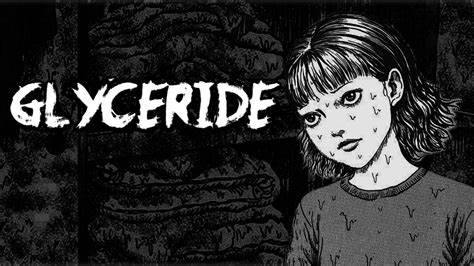
Horror Review: Glyceride by Junji Ito


Junji Ito Glyceride

While Junji Ito’s work has been done both in long-series format and novella-style stand-alone, most of his work has been through short story collections which has been collected in tanboko collections. It’s with some of his short stories that themes really shine through despite their short length. He’s able to disturb unnerve, disgust and horrify a reader with a quick read than most horror writers and filmmakers have tried using much longer formats.

One such short tale is “Glyceride.”

“Glyceride” is chapter 5 of his collection of one-shot stories in the collection Yami no Koe (Voices in the Dark). It tells the tale of a girl named Yui whose family owns a barbecue restaurant (city or town never mentioned other than it has a clear view of Mt. Fuji) in town. The place is always dark, dirty and there’s a heavy atmosphere of grease permeating everything in the place.

It’s this sense of grease both literal and figuratively which creates that sense of otherworldly horror and uneasiness. Ito’s artwork makes one feel the very grease the tale’s protagonist speaks about to such a level that, at least for me, one would need to take a thorough shower once done.

While the story is quite brief it leaves a definite imprint on the reader. Below is the anime adaptation of the short story.

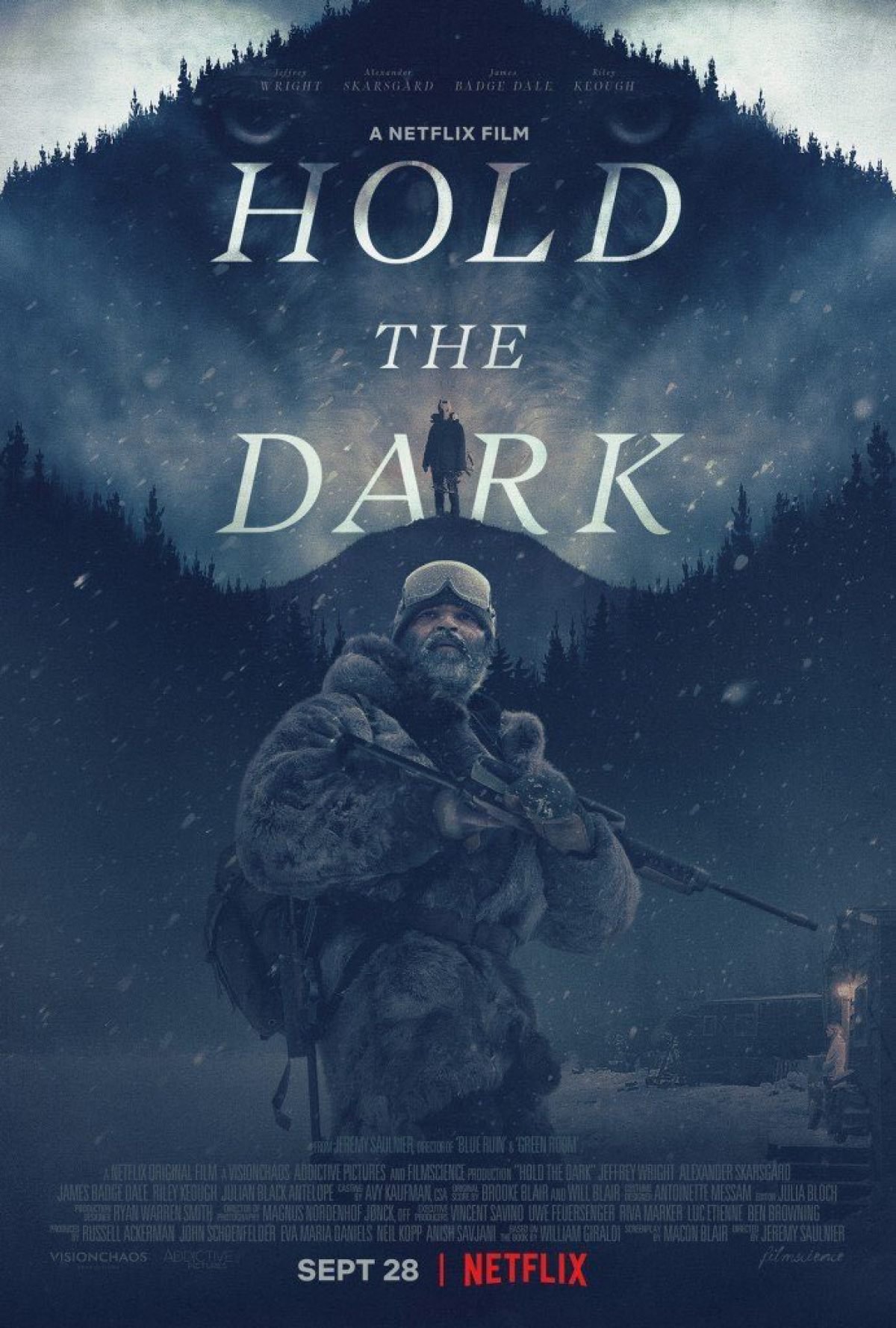
Horror Review: Hold the Dark (dir. by Jeremy Saulnier)


Hold the Dark

Jeremy Saulnier, writer and director of Blue Ruin and Green Room, invites the brave and the curious to experience his latest creation steeped in the dark, foreboding Alaskan wilderness with a hint of the supernatural and folklore mysticism.

One could never accuse Saulnier of being timid when it comes to on-screen violence. While there’s countless other filmmakers who can and have put on the screen much more dynamic and violent sequences, Saulnier is more of the Peckinpah school of film violence instead of the Michael Bay. His films portray violence at its most unglamorous. His study of the sort of violent means man can inflict on another man are neither titillating or exploitative.

He sees man’s tendency towards violence as primal and something inherent in every man with the veneer of civilization the only thing holding it back. Man, in how Saulnier sees him, is not a civilized species but one playing at one and who feels more at home practicing such violent means.

Whether it’s as an itinerant caught up in an old school blood feud or a hardcore punk band fighting to stay alive against some Northwest backswood Neo-nazi skinheads. They all dig down deep to find that inner primal self that revels in the bloodletting even when they try to hold on to that small slice of civilized behavior they’ve been taught was necessary to survive.

With Hold the Dark, Jeremy Saulnier veers away from the much more straightforward narrative of his last two films and more like an ambiguous campfire tale that may seem obtuse for some. The very ambiguous nature of the plot will definitely confound some viewers who prefer their thrillers to be easy to follow with well-defined roles of protagonist and antagonist. While Hold the Dark veers from that very linear narrative focus of Saulnier’s last two films, it does share those films study of the blurred lines of who is good and who is bad.

The film starts off with retired naturalist Russell Core (played by Jeffrey Wright) being summoned by grieving mother Medora Slone living in a remote village in the northern reaches of Alaska. She’s just lost her young son to what she says are a pack of wolves who have also taken two other children prior to her own. She knows that he is also a wolf expert and has hunted and put down wolves in his past. She wants the animals who killed her son found and killed in order to have an answer and closure for her husband who is currently deployed in Iraq.

From the moment Russell arrives in Medora’s village of Keelut, Alaska the film slowly,  but surely moves from being a man-vs-nature story to something that’s more a dark fairytale whose ending will definitely not be happily ever after. This is where Hold the Dark will either grab a viewer and tell them to just hold on and experience the violent, albeit sometimes confusing, happenings in this grim and dark corner of the world or they will fail to hold on and remain confused to what’s transpiring. Wanting to know whats going on in concrete, by-the-numbers facts and story beats.

Like Saulnier’s previous two films, Hold the Dark doesn’t shy away from showing how brutal man can be when it comes to inflicting pain and damage on another human being. The violence comes sudden, brutal and horrifically efficient in how a body can fall apart.

The screenplay, this time written solely by fellow collaborator Macon Blair, does bring some very interesting questions as to whether violence (or darkness) is inherent in man that is held at bay by the “light” of civilization or is it something that is learned, picked up like disease and passed on from generation to generation. Is violence a natural cycle that is just part of what makes humanity human or is it one that can be broken and left behind and cured of. These are some questions that sometimes has no easy answer and that lends the film’s obtuseness that may frustrate some viewers. Yet, it’s the film’s very ambiguousness that allows the viewer to marinate on the questions and ideas proposed. Whether there’s an answer to these questions will be up to the viewer.

Where the film’s story may frustate, the performances by the cast is excellent from start to finish. Whether it’s Jeffrey Wright’s Russel Core who is the stand-in for the viewer and one who also shares some of the viewers befuddlement at the situation he has found himself in but unable to break free from. Then there are Riley Keough and Alexander Skarsgard playing the Slone’s. One the grieving mother and the other the husband away at war whose reaction to news of his son’s death pushes the film’s narrative from a whodunit and straight into horror territory (some would say slasher film trope with creepy mask included).

Hold the Dark may not be a straight progression from what Jeremy Saulnier has done before with Blue Ruin and Green Room, but it is one that shares similar themes and ideas. It’s a film that allows for Saulnier to dabble in the more esoteric but nonetheless still keep his signature style as an auteur of raw, primal violence. There’s nothing light or hopeful in this latest dark fairytale from Jeremy Saulnier, but then again fairytales were never happy and hopeful to begin with, but tales to try and explain the encroaching darkness and something to help one hold it at bay.

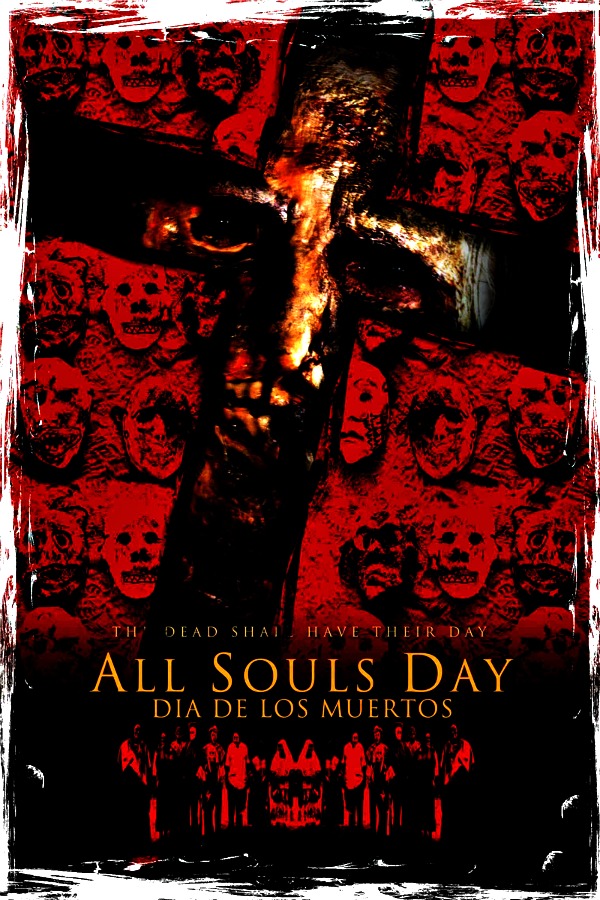
Horror Review: All Souls Day (dir. by Jeremy Kasten)


AllSoulsDay

All Souls Day was part of the wave of zombie films that continues to flood the direct-to-video (and at times straight to cable) market. This particular zombie movie was written by Mark A. Altman who also wrote the campy and very B-movie-like House of the Dead 2. This was a  zombie flick which actually improved on Uwe Boll’s own House of the Dead that doesn’t really come as a surprise. All Souls Day was Altman’s second try at another zombie movie and while this second attempt wasn’t as fun as his previous one it still managed to be a watchable and interesting zombie movie.

The film’s set in a dusty Mexican town that hides a dark secret from its past. A young couple (played by Marisa Ramirez and Travis Wester) happen upon what seems like an abandoned town. They soon come across a funeral procession and when they inadvertently interrupt the ritual all hell literally breaks loose. It doesn’t help the couple that the only person who seems to be real in this town was the sheriff whose own past ties in with the secret of the town. It was very good to see genre veteran David Keith in the role of the town sheriff. His limited time in the movie was pretty good.

When the town’s people (who by now have shown themselves to be zombies) begin to lay siege on the young couple in the town’s only hotel the rest of the movie gradually shows more of what made this particular Mexican town a death trap for any passerby who happen to come across it on All Souls Day. Soon enough help comes in the form of the young couple’s two friends who arrive in town only to get themselves stuck in the same dire situation the original couple find themselves in.

The resolution of the movie was handled well and it brought a nice supernatural origin and reason as to why the town’s population has turned into flesh-eating zombies. The performances in the film could be seen as being mixed. The more veteran performers like Jeffrey Combs, David Keith, Danny Trejo (as the town’s manipulative patriarch) and Laura Herring perform their roles well without being too over-the-top. The actors playing the pair of young couples on the other hand go from very good to awful in the span of moments in some of the scenes. It’s really this mixed bag in the cast’s performance which keeps All Souls Day from turning into one of those hidden gems in a hill of crap that most zombie flicks turn out to be.

The gore effects in this film was pretty good in the small amount of sequences where the zombies end up doing what they do best once they get a hold of someone. While I was hoping for more of the grue in this particular zombie movie I wasn’t too surprised why it didn’t have more. Other than the pair of young couple there really wasn’t much living people for these zombies to munch on. The film itself show’s it’s low-budget origins in that it looks like something one would see premiere on a random Saturday night on the SyFy Channel. The film actually did premiere on that channel when it was still called SciFi. It’s a look that says TV instead of film, but despite that little nitpick it doesn’t distract much from the experience.

Now, most zombie films of the low-budget variety tend to just have badly done make-up effects. With All Souls Day the filmmakers seem to have done an end-around that budgetary problem by taking a page out of the classic Italian zombie flicks of the 1980’s by making these undead dry, decayed creatures. It’s something that worked well for the Fulci zombies and here it works as well.

All Souls Day was not a great zombie film by any stretch of the imagination, but it had enough entertaining moments and some genuine scary sequences to make it an enjoyable hour and a half of horror viewing on any October night.

Quick Horror Review: John Carpenter’s The Fog


I have something of a tradition with John Carpenter’s The Fog. Every year, I try to watch the film on the date and time where the story starts – April 20th, at around 11:55pm. It’s not the scariest of stories, but it does have a spooky atmosphere that lends itself well to Halloween – or any late quiet night. I love this movie.

The Fog marked the first film that John Carpenter worked on after Halloween, collaborating with the late Debra Hill, who also produced the movie. She’d go on to also produce both Escape From New York and Escape from L.A for Carpenter. While it didn’t really have the impact of Halloween, it held up until Escape from New York came out the following year.

Here’s the story:

In the town of Antonio Bay, an old captain (John Houseman) explains to some children about the ill-fated Elizabeth Dane (what a beautiful name, I might add), a ship that belonged a rich of crew of lepers led by someone named Blake. The heads of the town conspired to steal the gold by setting up the ship to crash against the docks. It works out for the Conspirators, as they are “aided by a unearthy fog” that blinds the Leper ship’s navigators. and the gold they collect helps to form the great town the kids play in to this day.

What they don’t realize is that vengeance is coming in the form of that very same fog, as the ghost of the Lepers have come to claim the lives of the six conspirators…or their direct descendants.

As a kid, I had a problem with that. You mean because my great great grandparents messed up somewhere ages ago, I have to get killed for it? I remember thinking that it really wasn’t fair, but I’m kind of diverging from the topic here. The story gives you four points of view. You have Nick (Tom Atkins, sans his signature mustache) and a hitchhiker he picks up played by then scream queen Jamie Lee Curtis. You have Curtis mother, Janet Leigh, who’s character is working on the anniversary party for the town and her assistant, Sandy, played by Nancy Loomis (who appeared in the first three Halloween films). The third comes from Adrienne Barbeau’s character, Stevie Wayne, who works for the local radio station. Her character acts as the warning voice for the town and she starts to notice that something’s going on when her son gives her a piece of Driftwood that later echoes Blake’s warning. The final viewpoint comes from Father Malone (Hal Holbrook), who discovers Blake’s diary and learns the truth about what happened 100 years ago. His character helps to piece the mystery together, somewhat.

Carpenter and Hill gathered many of their friends, who went on to work on other films for this. Tommy Lee Wallace went on to direct Halloween III: Season of the Witch (and coincidentally did the voice of the Silver Shamrock ad-man in the commercial) and Vampires: Los Muertos. Wallace’s name was given to Carpenter fan favorite Buck Flower. Nick Castle’s name was given to Tom Atkins character. Makeup Wizard Rob Bottin (who also played Blake in the film) went on to do some of the effects in The Thing.

The makeup effects in this film were okay. The lighting and fog did more to obscure than to actually help one see what was doing the attacking, but it really worked for some of the shadowing in the film. If the movie has any drawbacks, it’s that there’s a really low body count to the film. In essence, there are only 6 people the ghosts are after, so these are only the ones they actually get. It would have been interesting if there were a few random deaths, or more individuals in danger, but I supposed it worked out well for the time period.

The Fog is a nice film to catch late at night. You won’t find it at the upper rankings of top horror films, but it’s one to try, at least. Don’t even bother with the Remake for this one. It’s not even work talking about.