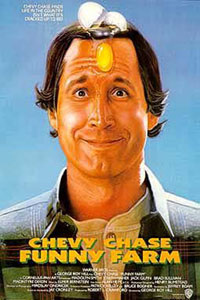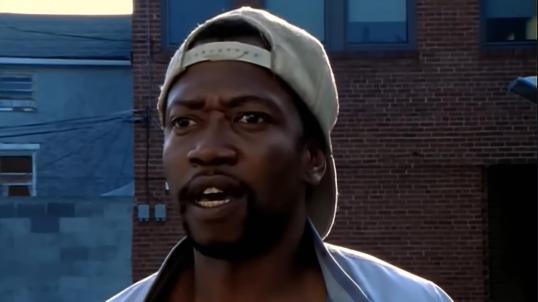
Funny Farm (1988, directed by George Roy Hill)


Andy Farmer (Chevy Chase) is a New York sports writer who leaves the city and moves to the small town of Rosebud, Vermont so that he can work on his novel.  He and his wife, Elizabeth (Madolyn Smith), struggle to adjust to living in a small town.  The delivery of their furniture is delayed by the collapse of a covered bridge.  When they try to make a phone call from inside their own house, the local operator tells them to deposit ten cents.  They were expecting a Norman Rockwell-type town and instead, they find themselves having to pay for the funeral of a man who was buried on their property long before they moved in.  When Elizabeth makes more progress writing a children’s book than Andy does with his heist novel, their marriage starts to feel the strain.

Chevy Chase is now so much better known for the stories of his unprofessional and diva-like behavior on film and television sets that it’s easy to forget that he was, at his peak, a very funny actor.  Chase may be playing a variation of his put-upon everyman but, compared to the first two Vacation movies, most of the humor in Funny Farm is very mild.  George Roy Hill was a classy director who had been making movies since the 50s and Funny Farm feels like a throwback to the type of family-friendly comedies that Disney would make in the 60s.  That I laughed as much as I did was largely due to Chase’s performance.  Whether he was tripping over a Dutch door, reacting to his wife’s dislike of the first few chapters of his new novel, or offering to pay the townspeople $50 to pretend to be nice for a weekend, Chase was consistently funny and even likable.  I don’t know if this is the type of performance that Chevy Chase could give today.  There’s a bitterness that’s now integral to screen persona and it’s made him into someone who audience want to laugh at instead of with.  It’s too bad because Funny Farm is a reminder of the type of comedic actor that Chevy Chase used to be and who he probably still could be if not for the failed talk show and the infamous Friar’s Club roast.

As for Funny Farm, it’s an amusing and likable comedy and it still holds up well today.  Chase is the key to the film’s success but he’s not the only reason that the film works.  I liked the scene where Mike Starr and Glenn Plummer, as the two movers, watch as the bridge they tried to drive over collapses.  I even liked the running joke about the two ducks who refused to leave the Farmers’s property.  Funny Farm may not have been a hit when it was first released but it’s since built up a cult following.  There will always be a place for a funny comedy that leaves you in a good mood.

#SundayShorts with WEDLOCK (1991)!


Since Sunday is a day of rest for a lot of people, I present #SundayShorts, a weekly mini review of a movie I’ve recently watched.

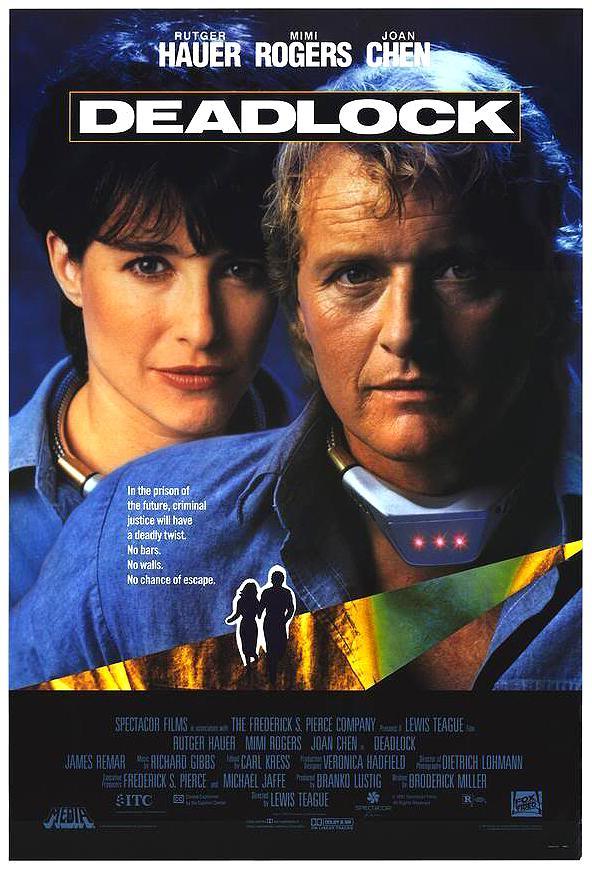
Master diamond thief Frank Warren (Rutger Hauer) pulls off a big job with the help of his fiancé Noelle (Joan Chen) and his best friend Sam (James Remar). Unfortunately, after the job is finished, Noelle unceremoniously ends her courtship with Frank when she shoots him multiple times because she’s now hooked up with Sam. The next time we see Frank, who somehow survived the close-range shootings, he’s on a bus to a prison called Camp Holliday, which is run by Warden Holliday (Stephen Tobolowsky). Camp Holliday is a high-tech prison where each inmate is gifted a collar containing an explosive device that also happens to be electronically connected to another inmate. As long as the two prisoners are within 100 yards from each other, it’s all good. If they are separated by more than 100 yards, their collars will explode leaving a bloody nub where their head used to be. And since nobody knows who their “wedlock partner” is, trying to escape is not a strong option. One day fellow prisoner Tracy Riggs (Mimi Rogers) comes to Frank and tells him that she’s his wedlock partner. Through a variety of circumstances, the two are able to escape, but they still must maintain their 100-yard proximity as the authorities try to track them down. Meanwhile, Sam and Noelle, and even Warden Holliday, have all teamed up to try to find where Frank stashed the diamonds prior to heading to prison. And what about Tracy, who’s side is she really on?

I didn’t have the Home Box Office channel when I was growing up, so I wasn’t aware of this film until it premiered on home video as “DEADLOCK.” Of course, being a huge fan of Rutger Hauer, I rented it as soon as possible. The key to lower budget, made-for TV movies working will always be tied to three things: an entertaining premise, a game cast, and a director who can put the movie together. I’m happy to report that WEDLOCK has each of these things. Even though we had seen exploding neck collars in prison before in THE RUNNING MAN (1987), I like the way this film ties one prisoner’s fate to another’s. That extra dimension makes for some exciting moments in the film. Rutger Hauer is especially good in WEDLOCK. If any other actor was in the lead, I honestly doubt I would have enjoyed it as much, but with him it becomes a fun movie. And the fact that he’s tied to the beautiful Mimi Rogers for most of the movie makes it that much more fun. The remainder of the cast goes pretty far over the top, but that’s okay because subtle character portrayals are not part of the equation in these types of movies. James Remar and Joan Chen are fun as the initial betrayers and current pursuers, Basil Wallace is effectively evil as a bully and fellow inmate, and Stephen Tobolowsky is his usual fun self as Warden Holliday.  Director Lewis Teague has a pretty nice resume of interesting films leading up to WEDLOCK, including ALLIGATOR (1980), FIGHTING BACK (1982), CUJO (1983), CAT’S EYE (1985), and NAVY SEALS (1990). He does a fine job here, as the movie has many well executed scenes that play out at a nice pace. Overall, I’ve always been a fan of low budget action movies that are done well. This one fits the bill for me.  

Five Fast Facts:

  1. Rutger Hauer and Joan Chen worked on 3 films together, including WEDLOCK. I have a soft spot in my heart for their film THE BLOOD OF HEROES (1989) and recommend it. I thought their other movie, PRECIOUS FIND (1996) was pretty bad. I watched it one time in the 90’s and haven’t watched it since.
  2. WEDLOCK received a Primetime Emmy nomination for “Outstanding Individual Achievement in Sound Editing for a Miniseries or a Special.”
  3. Even though WEDLOCK was set “in the future,” early in the film we see a movie theater marquee showing the Steven Seagal movie MARKED FOR DEATH (1990). I found that interesting considering that Basil Wallace is a bad guy in WEDLOCK, and he played twin brother bad guys in MARKED FOR DEATH. Danny Trejo also has small parts in both WEDLOCK and MARKED FOR DEATH.
  4. Mimi Rogers starred in another film in 1991 called THE RAPTURE. It’s a thought-provoking film that some people love, and some people hate. I personally found it intriguing, and it features a really strong performance from Rogers.
  5. In 1995, the film DEADLOCK 2 was released. It’s not a sequel as it doesn’t build on the events of the first film or bring back any of the characters, but it is set in a world of exploding prison collars. The film stars Esai Morales and Nia Peeples.  

When I rented the film in the early 90’s, it was called DEADLOCK. I’m sure I owned it on VHS at one point in my life.

Check out the trailer below:

14 Days of Paranoia #6: Lockdown 2025 (dir by Mike Hall)


2021’s Lockdown 2025 tells the story of a neighborhood on the edge.

Clarence McGee (Glenn Plummer) has a got a nice house in the suburbs.  He has a nice view of the city in the distance and, even though we don’t learn much about what he does for a living, he appears to be very well off.  He has a wife named Carmen (Marie-Francoise Theodore) and three children, conspiracy theorist Junior (Marcus T. Paulk), daughter Crystal Marie (Parker McKenna Posey), and youngest Evan (Cristian Fagins).

To the outsider, it might look like Clarence has the perfect life but the reality is far different.  As a father, Clarence has been neglectful and, as his own wife points out, Evan is the only one of the kids with whom he  seems to have a strong connection.  Meanwhile, Crystal is pregnant and, while she’s told her boyfriend Marcos (Stewart Flores), neither one of them is quite sure how they’re going to tell Clarence.  And what is one to make of the burly police detective (James Black) who is sitting in his car and watching Clarence’s home?

Clarence is excited because he’s convinced that he’s finally going to win the lottery and become a billionaire.  However, just as the lottery numbers are about to be announced, the broadcast is interrupted by the National Alert System.  “This is not a test,” a voice says, before going on to explain that the president has declared a national emergency.  The country is under martial law.  There will be a 24-hour curfew.  No one is to leave their houses.

Suddenly, the skies are glowing and lightning bolts are streaking from the sky to the ground.  Explosions are heard in the distance.  The streets are full of “police soldiers” and anyone caught outside is subject to execution.  When Clarence’s neighbor tries to flee his house, he is executed on the spot.  Both Marcos and Junior suggest that maybe it’s all because of an online terrorist group known for being “pill-popping, weed-smoking, new age religious fanatics!”  Clarence says you can’t believe anything you see on YouTube.  For one thing, they let Junior on YouTube!

Meanwhile, a countdown clock appears on the television and starts to slowly tick down, from 80:00 to zero.  What happens the clock hits zero?  That’s what everyone is wondering.

As you can probably guess, things don’t go well for the McGees.  Being stuck in the house together not only makes them paranoid but it also leads to them revealing all of their deep, dark family secrets.  Soon, Clarence is loading a rifle.  When the detective finally enters the house and reveals his own secret, it leads to a violent confrontation.  Have you ever wondered how many people can accidentally get shot by two men firing guns at each other in a small enclosed space?  This film will tell you!

The plot description probably makes all of this sound more intriguing than it is.  Sadly, It’s not a very good movie, one that is marked by bad acting and bad special effects.  Not even the talented Glenn Plummer can do much with his role.  The initial apocalypse scenes are actually effective but soon, the Birdemic-style visuals kick in.  Worst of all, the film’s ending is the type of cheat that makes you feel stupid for getting in any way invested in the story.  An ending like this might have worked for a 15-minute short film but not for a film that drags on for 90 minutes.

This film was apparently produced by the Jehovah’s Witnesses and one of the final images is of a chastised, former doubter letting two Jehovah’s Witnesses into his home.  (Seriously, on the rare occasion that any of them are in my neighborhood, I hide in my room and don’t make a sound.)  I doubt this inspired anyone to pick up a copy of The Watch Tower.

14 Days of Paranoia:

  1. Fast Money (1996)
  2. Deep Throat II (1974)
  3. The Passover Plot (1976)
  4. The Believers (1987)
  5. Payback (1999)

Retro Television Reviews: South Central 1.5 “Men” and 1.6 “Dad”


Welcome to Retro Television Reviews, a feature where we review some of our favorite and least favorite shows of the past!  On Thursdays, I will be reviewing South Central, which aired, for 10 episodes, on Fox in 1994.  The entire show is currently streaming on YouTube!

This week, James Mosely returns to South Central!

Episode 1.5 “Men”

(Dir by Stan Lathan, originally aired on May 10th, 1994)

Because Tasha has a babysitting job and Andre is sneaking out of the house so that he can check in on Nicole, Joan finally has a night to herself.  She goes next door, where Sweets (Paula Kelly) is throwing a party.  Sweets thinks that Joan should hook up with Dr. Ray McHenry (Ken Page), who is Andre’s mentor and who also brings in a $100,000 a year and who is also obviously in love with Joan.

Joan, however, is more interested in Isaiah (Michael Beach), who is a local food distributor who comes to the Co-Op on a daily basis and demands to be paid for the food that he’s dropped off.  Isaiah and Joan start talking and Joan is impressed to learn that Isaiah is also an independent building contractor and that he manages two apartment buildings.  When Joan mentions that there are still cracks in her bedroom from the last earthquake, Isaiah offers to come over to her house and take a look at them.  Joan takes him up on his offer.

Just when Joan and Isaiah are starting to get romantic, Tasha comes home from babysitting and see Joan and Isaiah kissing.  Tasha, who still believes that her father is going to come back into her life at any minute, gets upset and runs out of the house.  (As the child of divorced parents, this scene hit pretty close to home for me.)  Tasha does eventually return, as does Andre.  They both demands to know how Joan could bring some other man into the house.  Andre shouts that Joan should stop leading on Ray.  (Ray, of course, is standing in the room when he does so.)  Joan tells both of her children that her personal life is her business and that she doesn’t owe them any explanations.

Of course, the next day, Joan tells Isaiah that she doesn’t feel like she can get into a relationship with him or anyone else.  Her life is too complicated.  Isaiah promises to wait until it’s less complicated.

This episode was a good example of what made South Central far more interesting than other sitcoms.  Joan loves her children and she has sacrificed a lot to take care of them.  But, as this episode shows, she’s not always happy about that fact.  Having gotten married young and also having had to drop out of college after her divorce, Joan feels that she’s missed out on a lot of experiences.  At the same time, I can understand why both Tasha and Andre felt upset.  Andre doesn’t want anyone taking his role as “man of the house,” (though it’s not a role for which Andre is well-suited) and Tasha doesn’t want anyone replacing her father.  And then you have poor old Ray, who is the nicest character on the show and who, if we’re going to be honest, allows himself to be taken advantage of by both Joan and Andre.  None of the characters are all good or all bad.  Instead, they’re all very human.

That said, this episode suffers a bit because Michael Beach, who is normally a very good actor, gives an oddly stiff performance as Isaiah.  He’s handsome enough that it’s believable that Joan would want to invite him back to her room but the character doesn’t really have enough of a personality for one to feel that Joan is missing out by not having a long-term relationship with him.

Episode 1.6 “Dad”

(Dir by Stan Lathan, originally aired on May 17th, 1994)

Tasha is celebrating her 14th birthday but she’s not happy.  She’s not happy about the decorations that Joan has hung in the backyard for her party.  (“It looks like Deion did them,” she snaps about the decorations that Joan was up until four in the morning preparing.)  She’s not happy when she discovers that the meat for the hamburgers was purchased at the Ujamaa co-op.  (I agree.  Co-op food is the worst.)  She’s especially not happy because she has yet to receive a present in the mail from her father, James.  Andre says that she’ll be grown and working at the post office herself before she ever receives anything from their father.  Joan is upset over Tasha’s resentful attitude but she keeps repeating, “It’s her day.”

As opposed to his sister, Andre is happy because Nicole comes to the party with her friend, Candi (Madlina Williams).  Though Andre’s friend, Rashad, originally dismisses Nicole as being “bougie,” he changes his mind as soon as he sees Candi.  As for Nicole, she seems to be excited about finally seeing Andre’s house but it’s hard not to feel that Rashad has a point.  In many ways, Nicole comes across like the type of rich activists who are convinced that they know what it’s like to struggle because they spent a week “living the wage.”

Halfway into the party, Tasha and Andre’s father, James (Glenn Plummer), shows up in the backyard.  While Tasha is overjoyed to see her father, neither Joan nor Andre are happy to see him.  James turns out to be very charismatic and soon, for everyone but Andre, he’s the life of the party.  He even manages to get Joan to dance with him.  When two gang members show up, uninvited, and nearly get into a fight with Andre, James is the one who is able to talk them into leaving the party.  Everyone treating James like a hero is too much for Andre and the two of them argue.  James accuses Joan of not properly raising Andre and says that Joan only cares about money and material things.  James reveals that it was Joan who kicked him out of the house and demanded a divorce.  James also suggests that Joan’s bad parenting is what led to Marcus’s death.  Joan slaps James and orders him to leave but then she can only watch in horror as Tasha leaves with him.

Six hours later, Tasha returns home.  When Joan asks Tasha what she and her father did for six hours, Tasha just says that they talked and had dinner and that they returned one of Joan’s presents so that James could use the money to buy a new jacket for Tasha.  Joan says that Tasha can love her father but it would be nice if she could occasionally show some appreciation for everything that Joan does for her on a daily basis.  The episode ends with the sound of Tasha sobbing.

Happy birthday!

Once again, I found myself very much relating to Tasha in this episode.  On the one hand, it’s easy to see that, underneath James’s charm, he’s basically an immature man who can barely take care of himself.  Tasha has idealized him, largely because she doesn’t have to deal with him on a day-to-day basis.  He’s just someone who sends her gifts and tells her that her mother is the reason why they can’t be a family.  At the same time, Joan may want to be thanked but how often has she thanked Tasha for taking care of Deion?  Joan has sacrificed a lot for her kids but Tasha is often expected to sacrifice a lot as well.  Andre gets away with everything because no one expects him to be responsible.  Tasha, meanwhile, is expected to always be the responsible one.  In the end, both James and Joan are guilty of making Tasha’s birthday about themselves instead of allowing it to be about Tasha.

That’s a pretty heavy theme for a sitcom but that’s what set South Central apart from other shows of the era.  It’s also probably the main reason why South Central only lasted 10 episodes.  As well-acted and well-written as this episode is, it’s still a birthday episode that ends with a 14 year-old girl sobbing in her living room.  There’s not a laugh track in the world that’s going to lessen that pain.

Next week: Andre gets a gun!

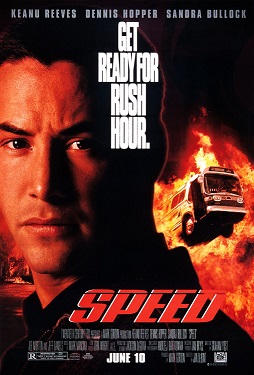
Film Review: Speed (dir by Jan De Bont)


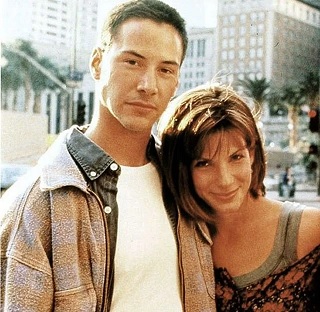
“Awwwww, Keanu and Sandra are so cute together!”

That was my main thought when I recently rewatched the 1994 film, Speed.  There’s a lot of reasons why Speed remains popular 28 years after it was initially released but I think a huge (if underrated) factor is that it’s just a good love story.  At this point, everyone knows that the film is about a bus that has been wired to explode if it goes under 50 miles per hour.  Most people know that Dennis Hopper plays Howard, the mad bomber, Keanu Reeves plays Jack, the cop who jumps on the bus and tries to figure out how to defuse the bomb, and Sandra Bullock plays Annie, the passenger who takes over driving the bus after the driver is incapacitated.  (If you’re fan of the work of John Hughes, you might also know that Speed was the film where Ferris Bueller‘s Alan Ruck broke free of his Cameron typecasting and established himself as a dependable character actor.)  Most people remember what the cops do in an attempt to trick Dennis Hopper and, for that matter, they also remember the one mistake that led to Hopper figuring out their ruse.

And yet, even though most viewers will know exactly what is going to happen, the film remains a fun watch because of the chemistry between Keanu Reeves and Sandra Bullock.  This was one of Sandra’s first major roles.  This was also one of Keanu’s earliest attempts to helm a big budget, major studio action picture.  (Director Jan de Bont insisted on casting him after seeing him in the film Point Break.  The studio preferred Tom Cruise.)  In Speed, both Keanu and Sandra are young, likable, attractive, enthusiastic, and they have smiles that light up the screen.  As soon as Sandra takes over driving and Keanu tells her that she cannot allow the bus to slow down under any circumstances, the two of them just seem to belong together.  The film’s enduring popularity is about more than just watching a bus try not to go under a certain speed.  The popularity of Speed is also about watching the characters played by Keanu and Sandra fall in love.

Who would have guessed it?  Well, certainly not whoever put together the film’s original theatrical trailer.  Check this out:

As you can see, the original trailer doesn’t feature much of Sandra Bullock.  For that matter, it’s not quite as Keanu-centric as you might expect it to be.  Instead, the trailer is dominated by things exploding and Dennis Hopper’s over-the-top performance as the bomber.  And make no doubt about it, Dennis Hopper is definitely an entertaining part of the film.  There’s not a subtle moment to be found in his performance and that makes him the perfect for the role of a man whose response to a cheap retirement present is to go on a bombing spree.  That said, the film belongs to Keanu and Sandra.

That said, it would be a mistake to ignore the other people on the bus.  One of the things that I like about Speed is that the other passengers on the bus come together to survive their ordeal.  They may start out as weary commuters but, by the end of the film, they’ve become a family.  They may get annoyed with each other but, when it comes time to climb from one bus to another, they hold on to each other and they hug one another on the other side.  The bomber, like all terrorists, thought that he could turn people against each other through his threats and his violence.  Instead, the people came together provided one another with comfort and protection.  There’s an important lesson there, one that’s even more important in 2022 than it probably was in 1994.

(On a personal note, I’m not usually a public transportation person.  However, in high school, I would occasionally catch the DART bus — that’s Dallas Area Rapid Transportation — if it was raining.  The buses were often not in particularly good shape.  One that I boarded actually had a hole in the floor and, since it was raining, the passengers would have to hold up their feet whenever the bus splashed through a puddle.  Personally, I was kind of amused by the weirdness of it all but I think I was the only one.  Would the passengers of that bus bonded together to defeat a mad bomber?  One can only hope.)

Speed may be a film about a bomb on a bus but, ultimately, it’s also a film about humanity at its best.  And that’s why, after all this time, it remains a classic.

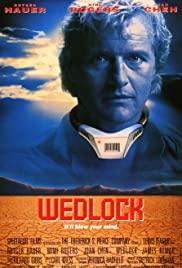
Wedlock (1991, directed by Lewis Teague)


This HBO film opens with a shot of an urban skyline and a title card that reads “somewhere in the future.”  However, the city looks like a present-day city and the cars don’t fly and all of the clothing is 90s fashionable and the people in the movie use pay phones.  Since Wedlock was made in 1991, I guess the movie takes place in … 1992?  Maybe 1993.

Frank (Rutger Hauer), Noelle (John Chen), and Sam (James Remar) are professional thieves who have just managed to make a big score.  They’ve stolen several million dollars worth of diamonds.  Unfortunately, Sam tripped an alarm during the theft so Frank had to make off with the diamonds.  After he hides them, Frank goes to the rendezvous point to meet up with Sam and Noelle.  His partners betray him, shooting Frank and, after discovering that he doesn’t have the diamonds him, leaving him for dead.

However, Frank survives.  He ends up getting sent to Camp Holliday, a prison run by Warden Holliday (Stephen Tobolowsky, who you’ll recognize as Ned Ryerson from Groundhog Day). The Warden explains that his prison is more progressive than most.  Not only is the prison co-ed but prisoners are allowed more freedom to move around.  The only catch is that all the prisoners wear an explosive dog collar.  Each prisoner has a randomly selected mate, someone to whom they are wedlocked, if you will.  Move more than 100 yards away from your partner and boom!  Both collars go off and two prisoners end up losing their heads.

The Warden wants to know where the diamonds are hidden so he sets about torturing Frank (who has been given the prison name of Magneta) but he soon discovers that it won’t be easy to break Frank Warren.  Even after Frank gets locked in a sensory deprivation tank, he just laughs and says the diamonds are with Santa at the North Pole.  Another prisoner, Ivory (Mimi Rogers) approaches Frank and says that she’s figured out that she’s his partner.  She wants to escape and she needs Frank to come with her.  But can Frank trust her and, if she’s wrong, won’t both of their heads explode?  Then again, who in the near future of the 1990s would turn down a chance to run off with Mimi Rogers?  Meanwhile, Frank’s partners are waiting for him to escape from the prison so that they can follow him to wherever the diamonds are located.

Though the plot may be ludicrous, Wedlock works because it has a good cast (even Danny Trejo has a small role) and it was directed by Lewis Teague, who started his directorial career under Roger Corman and who has always understood how to put together a good B-movie.  The prison scenes are more interesting than the scenes that take place in the outside world but the exploding head effects are cool and Rutger Hauer, James Remar, and Mimi Rogers are always enjoyable to watch no matter what they’re doing.

Spring Breakdown: 7 Deadly Sins (dir by Glenn Plummer)


Before I really get started on this review, I think I should make clear two things:

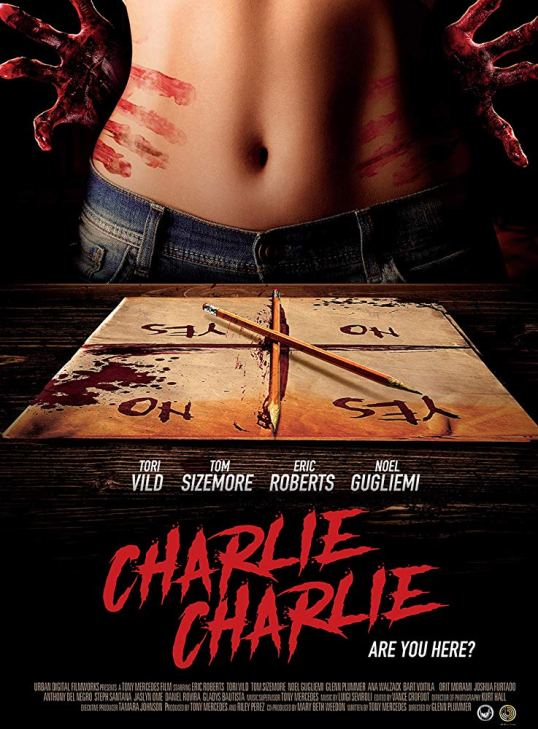
First off, this film can be found, for free, on Amazon Prime under the title 7 Deadly Sins.  That’s also the title under which it’s listed on the imdb.  However, all of the poster art that I’ve found for this film indicates that this film was originally entitled Charlie Charlie.  It makes sense, as the whole point of the film is that 7 idiots play a game called “Charlie Charlie,” where the point is to talk to some dead guy who never went to church and was therefore never cleansed of his sins.  Apparently, playing Charlie Charlie gets you killed.  Who would have guessed contacting an evil spirit would have such dire consequences.

Secondly, I tend to be forgiving of low budget horror films.  Some of my favorite films are low-budget horror films.  I respect any director who can create a frightening scene or maintain an ominous atmosphere on a low budget.  If you can make the paranormal seem real even when you can’t afford CGI, I have a tremendous amount of respect for your filmmaking skills.  My point is that when I tell you that this is not a good film and that it’s actually one of the worst horror films that I’ve seen in  while, I’m not just saying that because of the low budget.  I’m saying it because the movie freaking sucks.

7 Deadly Sins takes place at a Spring Break house party being thrown by the least likable teenagers on the planet.  Most of them are celebrating because it’s their last Spring Break before college.  Jamal (Steph Santana), on the other hand, is celebrating because it’s his last weekend before he starts a five year prison sentence.  At the start of Spring Break, Jamal was pulled over by a cop who discovered a huge amount of weed in the trunk of his car.  Apparently, in the world of 7 Deadly Sins, the justice system moves a lot quicker than it does in the real world because it only takes Jamal a few days to be found guilty and sentenced to prison.

Jamal’s girlfriend, Kim (Tori Vild), was in the car as well.  However, because she’s rich and she’s white, she’s only sentenced to a few months of house arrest.  She has to wear an ankle bracelet and listen to her racist mom and her pervy stepfather complain about her boyfriend. Kim swears to Jamal that she’ll wait for him to get out of prison.  Jamal suggests a threesome to help him prepare for life behind bars.  Kim kicks him out of her room.  It’s that type of party.

Sara (Gladys Bautista) has been hired, by Kim’s stepfather, to keep an eye on Kim for the weekend.  Kim is upset because Sara is Mexican and they’re both the same age.  Sara is upset because everyone screwed up the Charlie Charlie game.  “You have to play the game,” she repeats, “You have to repent your sins.”

“Shit’s fucked up,” Jamal says at one point and he’s probably right.

Anyway, 7 Deadly Sins is one of those films that tries to be both a horror film and a comedy but it doesn’t work as either, largely because the characters aren’t sympathetic enough to care about and none of the actors are particularly comedic.  You don’t care when they die and it’s hard to be amused when someone says that Sara should be selling oranges along the freeway.

7 Deadly Sins does feature two semi-celebrity cameos.  Tom Sizemore plays a dude in an mental hospital while Eric Roberts plays the judge who sentences Jamal and Kim.  Eric Roberts has a lot of fun with his role, railing about how much he hates drug dealers and marijuana.  Unfortunately, Roberts only gets one scene and then he’s out of the film.

Anyway, 7 Deadly Sins is pretty dumb.  It takes forever to get to the “Charlie Charlie” game and it doesn’t do anything particularly creative with any of the sins.  (At one point, we see written in blood: “Envy is a sin.”  Well, no shit.)  As far as Spring Break horror films go, you could just go down to Galveston and shoot your own and the end results would probably be superior to this one.

A Movie A Day #337: Colors (1988, directed by Dennis Hopper)


Los Angeles in the 80s.  Beneath the California glamour that the rest of America thinks about when they think about L.A., a war is brewing.  Bloods vs Crips vs the 21st Street Gang.  For those living in the poorest sections of the city, gangs provide everything that mainstream society refuses to provide: money, a chance to belong, a chance to advance.  The only drawback is that you’ll probably die before you turn thirty.  Two cops — veteran Hodges (Robert Duvall) and rookie McGavin (Sean Penn) — spend their days patrolling a potential war zone.  Hodges tries to maintain the peace, encouraging the gangs to stay in their own territory and treat each other with respect.  McGavin is aggressive and cocky, the type of cop who seems to be destined to end up on the evening news.  With only a year to go before his retirement, Hodges tries to teach McGavin how to be a better cop while the gangs continue to target and kill each other.  The cycle continues.

Colors was one of the first and best-known of the “modern gang” films.  It was also Dennis Hopper’s return to directing, 17 years after the notorious, drug-fueled disaster of The Last Movie.  Hopper took an almost documentary approach to Colors, eschewing, for the most part, melodrama and instead focusing on the day-to-day monotony of life in a war zone.  There are parts of Colors that are almost deliberately boring, with Hodges and McGavin driving through L.A. and trying to stop trouble before it happens.  Hopper portrays Hodges and McGavin as being soldiers in a war that can’t be won, combatants in a concrete Vietnam.  Colors is nearly 20 years old but it holds up.  It’s a tough and gritty film that works because of the strong performances of Duvall and Penn.  The legendary cinematographer Haskell Wexler vividly captures the harshness of life in the inner city.  Actual gang members served as extras, adding to the film’s authentic, documentary feel.  Among the actors playing gang members, Don Cheadle, Trinidad Silva, Glenn Plummer, and Courtney Gains all make a definite impression.  In a small but important role, Maria Conchita Alonso stands in for everyone who is not a cop and who is not a gang member but who is still trapped by their endless conflict.

One person who was not impressed by Colors was future director John Singleton.  Boyz ‘n The Hood was largely written as a response to Colors‘s portrait of life in South Central Los Angeles.

Embracing the Melodrama Part II #90: Showgirls (dir by Paul Verhoeven)


ShowgirlsWell, this is it!

Showgirls in the 1995 film that, 20 years after it was first released, is still held up as the standard by which all subsequent bad films are judged.  The story behind the production is legendary.  Screenwriter Joe Ezsterhas was paid a then-record sum to write a script that ripped off All About Eve and featured lines like, “Come back when you’ve fucked some of that baby fat off,” and “You’re the only who can get my tits poppin’ right!”  (And let’s not forget the heroine’s oft-repeated catch phrase, “It doesn’t suck.”)  A major studio specifically hired Paul Verhoeven with the understanding that he was going to give them an NC-17 rated film.  And finally, the lead role was given to Elizabeth Berkley, an actress whose previous experience amounted to co-starring on Saved By The Bell.

(And, let’s be honest, the only reason Jessie Spano was a tolerable character was because she wasn’t Screech.)

Berkley plays Nomi Malone, a sociopath who wants to be a star.  She hitchhikes her way to Las Vegas where, as is destined to happen to anyone who shows up in Vegas or New York with a clunky suitcase, she is promptly robbed of all of her possessions.  “Fuck!  Fuck!  Fuck!  Fuck!” she yells, showing off the very expensive dialogue that was written for her by Joe Ezsterhas.  Eventually, Nomi starts to take her frustration out on a random car.  The car, it turns out, belongs to sweet-natured Molly (Gina Revara), who is a seamstress for a tacky Vegas show called Goddess.  

(Seriously, Goddess makes Satan’s Alley from Staying Alive look like a work of quiet genius.)

Soon, Nomi is living in Molly’s trailer and working as a stripper at the Cheetah Club.  The Cheetah Club is owned by Al, who is amazingly sleazy but who is also played by Robert Davi.  Robert Davi is one of those actors who knows how to make terrible dialogue interesting and it’s instructive to watch him perform opposite Elizabeth Berkley and the rest of the cast.  Whereas the majority of the cast  always seems to be desperately trying to convince themselves that their dialogue is somehow better than it actually is, Davi knows exactly what he’s saying.  Watching his performance, it’s obvious that Davi understood that he was appearing in a bad film so he figured that he might as well enjoy himself.

The same can be said of Gina Gershon, who plays Cristal Connors, the star of Goddess.  Sexually voracious Cristal is basically a male fantasy of what it means to be bisexual.  Cristal hires Nomi to give a lapdance to her sleazy boyfriend, Zack (Kyle MacLachlan, giving a good performance despite having to spend the entire film with hair in his eyes) and then arranges for her to be cast in the chorus of Goddess.  There’s absolutely nothing subtle about Gershon’s performance and that’s why it’s perfect for Showgirls.  It’s been argued that Showgirls is essentially meant to be a huge in-joke and, out of the huge cast, only Gershon, Davi, and occasionally MacLachlan seem to be in on it.

Certainly, it’s apparent that nobody bothered to tell Elizabeth Berkley.  Berkley gives a performance of such nonstop (and misdirected) intensity that you end up feeling sorry for her.  She’s just trying so hard and she really does seem to think that she can somehow make Nomi into a believable character.  And it’s actually a bit unfair that Elizabeth is always going to be associated with this film because I doubt any actress could have given a good performance in a role as inconsistently written as Nomi.  One second, Nomi is a wide-eyed innocent who is excited about living in Las Vegas.  The next second, she’s screaming, “FUCK OFF!” and threatening strangers with a switch blade.  She may be a survivor (and I imagine that’s why we’re supposed to root for her) but she’s also humorless, angry, and apparently clinically insane.

Hilariously, we’re also continually told, by literally everyone else in the movie, that she’s a great dancer, despite the fact that we see absolutely no evidence of this fact.  Check out this scene below, where Nomi dances with a lot of enthusiasm and little else.

Once Nomi is cast in Goddess, she promptly sets out to steal both the starring role and Zack from Cristal.  Nomi’s cunning plan, incidentally, amounts to fucking Zack in his pool and shoving Cristal down a flight of stairs.  Nomi’s finally a star but when a Satanic rock star named Andrew Carver (William Shockley) comes to town, Nomi is confronted with the sordid truth about Las Vegas and, because this long film has to end at some point, Nomi must decide whether to take a stand or…

Well, you can guess the rest.

(Incidentally, I like to assume that Andrew Carver was meant to be a distant cousin of the great short story writer Raymond Carver.)

There seems to be two schools of thought when it comes to Showgirls.

Some critics claim to Showgirls is just crap.  They say that it’s a terrible film with bad dialogue, bad acting, and terrible direction.  These critics view Joe Eszterhas as being the villain of this tale, a misogynist who conned the studios into paying two million dollars for a terrible script.

And then other critics claim that Showgirls is crappy on purpose.  They claim that Verhoeven meant for the film to be a satire of both American culture and Hollywood showbiz dramas.  For these critics, Verhoeven used Eszterhas’s terrible script and Elizabeth Berkley’s inexperience to craft a subversive masterpiece.

Myself, I fall somewhere in between.  Based on Verhoeven’s other films — Starship Troopers comes immediately to mind — I think his intent with Showgirls probably was meant to be satirical and subversive.  But, at the same time, I would argue that Verhoeven’s intent doesn’t change the fact that Showgirls is a surprisingly boring film.  For all the sex and the nudity and the opulent costumes and sets and all of the over-the-top dialogue, Showgirls is never really that interesting of a film.  It barely even manages to reach the level of being so-bad-that-it’s-good.  Instead,  it’s slow, it’s draggy, and — satiric or not — the bad performance, the bad dialogue, and the nonstop misogyny get a bit grating after a few minutes.

Of course, that’s why you should never watch Showgirls alone.  Showgirls is a film that you have to watch as a part of a group of friends so that you can all laugh together and shout out snarky comments.  The first time I ever saw Showgirls was at a party and it was a lot of fun.  But, for this review, I rewatched the film on Netflix and I was surprised by how much of a chore it was to sit through the entire running time.  This is one of those films — like Birdemic and The Room — that you have to watch with a group.  You watch for the experience, not the film.

Guilty Pleasure No. 10: The Substitute (dir. by Robert Mandel)


the-substitute-movie-poster-1996-1020204941

The most recent entry in the Guilty Pleasure series had Lisa Marie waxing poetically about the idealistic teacher in the “jungle” film The Principal. I counter and follow this up with a similar-themed film called The Substitute that came and went very quickly in the theaters (I’m not even sure if it did or just went straight to video) in 1996.

The Substitute stars veteran actor Tom Berenger (you may remember him in such films as Platoon, Major League and Sniper) as a Vietnam vet mercenary who ends up substituting as the substitute teacher for his girlfriend’s high school class as she recovers from an attack that has left her unable to teach. The girlfriend was played by one Diane Venora who in the very same year was in another little film called Heat by Michael Mann. These two polar opposite films in terms of their “quality” just shows you that when it comes to acting, unless one was a recognizable name then any role is a good role it seems.

Getting back to the film, Berenger’s character is the titular substitute in one of Miami’s worst inner-city high schools where, as the film’s tagline proudly proclaims, the most dangerous things about it was the students. That is until Berenger’s character shows up to find out who attacked his girlfriend and bring down the wrath of God himself (or at least Berenger’s character and members of his old mercenary team).

The film isn’t what one would call very subtle. We clearly see either two types of teachers in this school. There’s Berenger and his girlfriend who care for the young teens (the former woth tough love and the latter going about it in a more liberal sense) and then there are those who have given up on the school and just cashing in on a paycheck. This goes to the extreme with the school’s principal (played by Ernie Hudson) who begins to suspect that the new substitute might be more than he appears.

It’s the passive-aggressive interaction between the two roles played by Berenger and Hudson that made for some of the more hilarious sequences in the film.

Oh, another thing the film also involves a dangerous high school gang that uses the school as if it’s their own little fiefdom and the local drug kingpin using it as a way station to move heroin into the Miami inner-city school system. Oh, did I happen to mention that Marc Anthony plays the leader of the high school gang, because he sure does.

The Substitute almost plays out like how a teacher fed up with the inattentiveness of his students and the stress of doing a thankless job imagines the perfect scenario to “clean-up” the high school. It’s not through coddling and talking things out with the students. It’s about using military tactics to take out the dangers of gangs and drug dealers and tough love on those who are still worth saving.

Some have called the film as blatantly racist while others have pointed out how it is just an extreme version of the longstanding storyline of the educated and civilized white man saving the “natives” from themselves. What this film has over other school films of similar themes is how it doesn’t try to sugarcoat and hide behind ideals when it comes to it’s story. Plus, it’s such a guilty pleasure to see a typical 80’s action flick dressed up to be a late 90’s film. They really don’t make films like this anymore.