Review: Thanksgiving (dir. by Eli Roth)


“This year, there will be no leftovers.” — Sheriff Eric Newlon

Thanksgiving (2023) is Eli Roth’s ambitious take on the slasher genre, blending elements of gory horror, dark comedy, and social commentary rooted in the holiday’s American origins. The film follows a masked killer, inspired by the historical Plymouth Colony governor John Carver, who stalks the small town of Plymouth, Massachusetts, weaving a path of violence around the Thanksgiving festivities. The movie opens strongly with a tense, chaotic Black Friday mob scene that effectively captures the frenzy of consumerism and sets a sharp tone of societal critique through horror. However, as the film progresses, it drifts more into a conventional slasher revenge plot that lacks the depth expected from its promising premise.

Visually, Thanksgiving is sharp and well-crafted, abandoning the low-budget aesthetic of Roth’s original 2007 fake trailer and adopting a slick, modern horror style reminiscent of recent elevated slashers. The kills are signature Roth—extremely graphic and creatively brutal—offering plenty of gore that will satisfy fans of extreme slasher violence. The cast delivers solid performances, portraying a range of characters that touch on themes from corporate greed to family tension. While some characters feel underdeveloped, the film does maintain a whodunit element that keeps the mystery alive until the later stages, engaging the audience in the killer’s identity.

The film attempts a tricky balance between paying homage to nostalgic slasher films and delivering dark social satire. This tonal uncertainty emerges as its main weakness; the mix of campy horror and dramatic narrative sometimes feels disconnected and uneven. Although the premise hints at a sharp critique of consumerism and the problematic legacy of Thanksgiving, these themes remain superficially explored. The clashing tones—between over-the-top murder scenes and serious town investigations—can disengage viewers, leading to a jarring experience that affects overall cohesion.

The film leans heavily on extreme violence and a parade of signature kills, but it lacks the sharp wit or cohesive satire needed to maintain sustained interest. It tries to balance being both artful and absurd, yet ends up feeling off-balance and somewhat numbing, stretching a brief satirical concept into a 106-minute feature without clear follow-through or a unified purpose. While it delivers plenty of gore and horror moments, Thanksgiving ultimately falls short of being a polished homage or a compelling modern reinvention of the slasher genre. The result is entertaining mainly for fans who appreciate relentless slasher violence but may leave others feeling the film is uneven and overstuffed without fully satisfying either as a tribute or as a fresh take on the genre.

In terms of entertainment value, Thanksgiving offers a chaotic mix of gore, dark humor, and missed opportunities that make it an uneven but occasionally thrilling watch. It delivers a fresh avalanche of horror and inventive kill sequences packed with kitschy Thanksgiving references and humorous touches, especially in its opening Black Friday massacre. Fans of Eli Roth’s style will recognize his penchant for mixing intense violence with comedic timing, and the film does a respectable job reviving the feel of classic ’80s slashers with a modern twist. However, it’s a film best suited for devotees of graphic slashers rather than casual horror viewers seeking strong narrative or thematic depth.

Ultimately, Thanksgiving stands as a gutsy effort buoyed by bold kills and nostalgic flair, but one that struggles to find a fully satisfying balance between homage, horror, and social commentary. Its impact is intense but uneven, making it a film that may carve out a cult following among gore enthusiasts while leaving others wishing for a sharper, more cohesive final product.

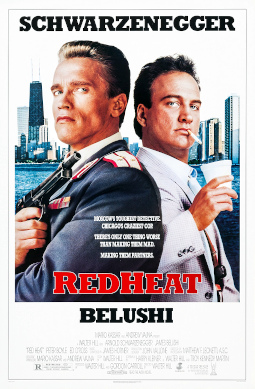
Red Heat (1988, directed by Walter Hill)


Ivan Danko (Arnold Schwarzenegger) is a Russian who lives in Moscow.  Art Ridzik (James Belushi) is an American who lives in Chicago.  They have two things in common.  They’re both cops and they both recently lost their partners while pursuing Russian drug lord Viktor Rostavali (Ed O’Ross).  When Danko comes to Chicago to bring the recently arrested Rostavali back to Moscow, Ridzik is assigned to be his handler.  When Rostavali escapes from custody, Ridzik and Danko team up to take him down.

Directed by Walter Hill, Red Heat may not be as well-remembered as some of Arnold Schwarzenegger’s other action films from the 80s but it’s still a good example of Schwarzenegger doing what Schwarzenegger did best.  Danko may not have been the quip machine that Schwarzenegger usually played but the movie gets a lot of comedic mileage out of his straight-to-the-point dialogue and the culture clash that Danko, a proud Soviet, experiences in Chicago.  It’s also an exciting action film, featuring a classic bus chase that perfectly complements Schwarzenegger’s bigger-than-life persona.

It gets a lot of mileage from the comedic chemistry of Arnold Schwarzenegger and James Belushi.  The always-talking Belushi provides a good comic foil to the steely Schwarzenegger.  Made in the waning years of the Cold War, Red Heat featured Belushi learning that the Russian cops didn’t worry about Miranda warnings and Schwarzenegger learning about “decadent” capitalism.  Belushi does a good job defending the honor of America.  Schwarzenegger, an anti-communist in real life, does an equally good job defending the Soviet Union.  Ultimately, they put aside their differences and show that even people on opposite sides can work together.

(We all know who won ultimately won the Cold War, though.)

Walter Hill specialized in buddy action movies.  Red Heat isn’t up to the level of 48 Hrs but it’s still an entertaining East-meets-West action film that packs a punch.

14 Days of Paranoia #6: The Player (dir by Robert Altman)


1992’s The Player tells the story of Griffin Mill (Tim Robbins).

It’s not easy being Griffin Mill.  From the outside, of course, it looks like he has the perfect life.  He’s a studio executive with a nice house in Hollywood.  He’s young.  He’s up-and-coming.  Some people, especially Griffin, suspect that he’ll be the president of the studio some day.  By day, he sits in his office and listens to pitches from respected screenwriters like Buck Henry.  (Henry has a great idea for The Graduate II!)  During the afternoon, he might attends dailies and watch endless takes of actors like Scott Glenn and Lily Tomlin arguing with each other.  Or he might go to lunch and take a minute to say hello to Burt Reynolds.  (“Asshole,” Burt says as Griffin walks away.)  At night, he might go to a nice party in a big mansion and mingle with actors who are both young and old.  He might even run into and share some sharp words with Malcolm McDowell.

But Griffin’s life isn’t as easy as it seems.  He’s constantly worried about his position in the studio, knowing that one box office failure could end his career.  He fears that a new executive named Larry Levy (Peter Gallagher) is after his job.  Two new screenwriters (Richard E. Grant and Dean Stockwell) keep bugging him to produce their downbeat, no-stars anti-capitol punishment film.  His girlfriend (Cynthia Stevenson) wants to make good movies that mean something.  Even worse, someone is sending Griffin threatening notes.

It doesn’t take long for Griffin to decide that the notes are coming from a screenwriter named Dave Kahane (Vincent D’Onofrio).  Griffin’s attempt to arrange a meeting with Dave at a bar so that Griffin can offer him a production deal instead leads to Griffin murdering Dave in a parking lot.  While the other writers in Hollywood mourn Dave’s death, Griffin starts a relationship with Dave’s artist girlfriend (Great Scacchi) and tried to hide his guilt from two investigating detectives (Whoopi Goldberg and Lyle Lovett).  Worst of all, the notes keep coming.  The writer, whomever they may be, is now not only threatening Griffin but also seems to know what Griffin did.

After spend more than a decade in the industry wilderness, Robert Altman made a critical and commercial comeback with The Player.  It’s a satire of Hollywood but it’s also a celebration of the film industry, featuring 60 celebrities cameoing as themselves.  Everyone, it seems, wanted to appear in a movie that portrayed studio execs as being sociopathic and screenwriters as being whiny and kind of annoying.  The Player both loves and ridicules Hollywood and the often anonymous men who run the industry.  Largely motivated by greed and self-preservation, Griffin may not love movies but he certainly loves controlling what the public sees.  In the end, only one character in The Player sticks to her values and her ideals and, by the end of the movie, she’s out of a job.  At the same time, Griffin has a social life that those in the audience can’t help but envy.  He can’t step out of his office without running into someone famous.

The Player is one Altman’s most entertaining films, with the camera continually tracking from one location to another and giving as a vision of Hollywood that feels very much alive.  Tim Robbins gives one of his best performances as Griffin Mill and Altman surrounds him with a great supporting cast.  I especially liked Fred Ward as the studio’s head of security.  With The Player, Altman mixes melodrama with a sharp and sometimes bizarre comedy, with dialogue so snappy that the film is as much a joy to listen to as to watch.  That said, the real attraction of the film is spotting all of the celebrity cameos.  (That and cheering when Bruce Willis saves Julia Roberts from certain death.)  Altman was a director who often used his films to explore eccentric communities.  With The Player, he opened up his own home.

Previous entries in 2025’s 14 Days Of Paranoia:

  1. The Fourth Wall (1969)
  2. Extreme Justice (1993)
  3. The Lincoln Conspiracy (1977)
  4. Conspiracy (2007)
  5. Bloodknot (1995)

Happy 71st Birthday, John Travolta!!


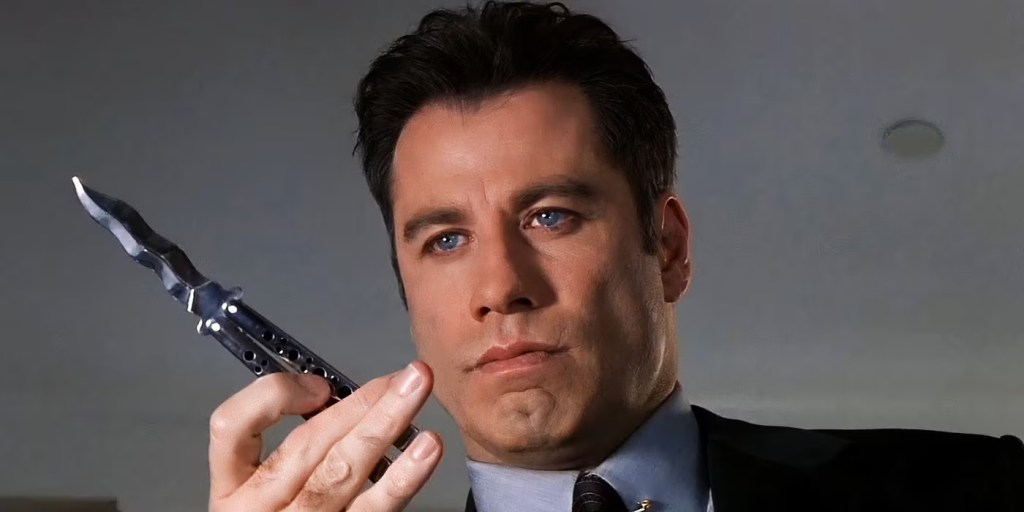
I couldn’t let today go by without recognizing John Travolta. I’ve enjoyed so many of his films over the years, especially movies like GREASE, BLOW OUT, PULP FICTION, and GET SHORTY. But the movie I probably love the most is FACE/OFF. I remember watching it at the movie theater back in 1997 and thinking it was the best movie ever. It came out at a perfect time when I was obsessed with John Woo, and I was still enjoying Travolta’s mid-90’s comeback. I still watch FACE/OFF at least once every year.

Enjoy this excellent scene from John Woo’s FACE/OFF!

Lisa Marie Reviews An Oscar Nominee: The Insider (dir by Michael Mann)


In the 1999 Best Picture Nominee, The Insider, the American media takes a beating.

Al Pacino plays Lowell Bergman.  Bergman is a veteran newsman who, for several years, has been employed as a producer at 60 Minutes.  He is a strong believer in the importance of the free press and he’s proud to be associated with both 60 Minutes and CBS News.  He’s one of the few people who can manage the famously prickly correspondent, Mike Wallace (Christopher Plummer).  When we first see Bergman, he and Wallace are in the Middle East and arranging a tense interview with the head of Hezbollah.  It’s easy to see that Bergman is someone who will go anywhere and take any risk to get a story.  It’s also apparent that Bergman thinks that the people that he works with feel the same way.

That all changes when Bergman meets Jeffery Wigand (Russell Crowe), a recently fired tobacco company executive who initially agrees to serve as a consultant for one of Bergman’s story but who leaves Bergman intrigued when he reveals that, due to a strict confidentiality agreement, he’s not allowed to discuss anything about his time as an executive.  As the tobacco companies are currently being sued by ambitious state attorney generals like Mississippi’s Mike Moore (who plays himself in the film), Bergman suspects that Wigand knows something that the companies don’t want revealed.

And, of course, Bergman is right.  Wigand was fired for specifically objecting to his company’s effort to make cigarettes more addictive, something that the tobacco industry had long claimed it wasn’t doing.  Wigand’s pride was hurt when he was fired but he knows that breaking the confidentiality agreement will mean losing his severance package and also possibly losing his marriage to Liane (Diane Venora) as well.  However, Wigand is angered by the heavy-handed techniques that his former employer uses to try to intimidate him.  He suspects that he’s being followed and he can’t even work out his frustrations by hitting a few golf balls without someone watching him.  When Wigand starts to get threats and even receives a bullet in the mail, he decides to both testify in court and give an interview to Wallace and 60 Minutes.

The only problem is that CBS, after being pressured by their lawyers and facing the risk of taking a financial loss in an upcoming sell, decides not to run the interview.  Bergman is outraged and assumes that both Mike Wallace and veteran 60 Minutes producer Don Hewitt (Philip Baker Hall) will support him.  Instead, both Wallace and Hewitt side with CBS.  Left out in the cold is Jeffrey Wigand, who has sacrificed almost everything and now finds himself being attacked as merely a disgruntled employee.

Directed by Michael Mann and based on a true story, The Insider is what is usually described as being “a movie for adults.”  Instead of dealing with car chases and super villains and huge action set pieces, The Insider is a film about ethics and what happens when a major media outlet like CBS News fails to live up to those ethics.  (No one is surprised when the tobacco company tries to intimidate and silence Wigand but the film makes clear that people — or at least people in the 90s — expected and hoped for more from the American press.)  Wigand puts his trust in Bergman and 60 Minutes largely because he believed Bergman’s promise that he would be allowed to tell his story.  It’s a promise that Bergman made in good faith but, in the end, everyone from the CBS executives to the tobacco companies is more interested in protecting their own financial future than actually telling the truth.  Wigand loses his family and his comfortable lifestyle and Bergman loses his faith in the network of Edward R. Murrow.  It’s not a particularly happy film but it is a well-made and thought-provoking one.

Pacino and Crowe both give excellent performances in the two lead roles.  Pacino, because he spends most of the film outraged, has the flashier role while Crowe plays Wigand as a rather mild-mannered man who suddenly finds himself in the middle of a national news story.  (Crowe’s performance here is one of his best, precisely because it really is the opposite of what most people expect from him.)  Crowe does not play Wigand as being a crusader but instead, as an ordinary guy who at times resents being put in the position of a whistleblower.  (Director Mann does not shy away from showing how Bergman manipulates, the reluctant Wigand into finally testifying, even if Bergman’s motives were ultimately not malicious.)  That said, the strongest performance comes from Christopher Plummer, who at first seems to be playing Mike Wallace as being the epitome of the pompous television newsman but who eventually reveals the truth underneath Wallace’s sometimes fearsome exterior.

The Insider was nominated for Best Picture.  Somehow, it lost to American Beauty.

Late Night Retro Television Review: Monsters 2.7 “Jar”


Welcome to Late Night Retro Television Reviews, a feature where we review some of our favorite and least favorite shows of the past! On Wednesdays, I will be reviewing Monsters, which aired in syndication from 1988 to 1991. The entire series is streaming on YouTube.

This week, Monsters brings together horror and noir!

Episode 2.7 “Jar”

(Dir by Bette Gordon, originally aired on November 1st, 1989)

Having been hired to find a missing woman, cynical private investigator Jack Bateman (Richard Edson) begins his investigation at the seedy bayou motel where the woman was last seen.  However, Mr. Hallet and Jack are not the only people at the hotel.  Ann Spiros (Gina Gershon) arrives with her loutish husband, the wealthy George (Ed Kovens).  Ann wants to get rid of her husband and she and Jack seem to share an immediate attraction to each other.  Does Mr. Hallet have something hidden away in all of his mason jars that could help Ann with that?  Of course, he does.  The show is called Monsters.  This episode is called Jar.  One doesn’t have to be a genius to figure out that something pretty extreme is about to happen in that isolated hotel and that it’s going involve something in a jar.

(Someday, remind me to write a post about all of the historical figures who had certain body parts preserved in a jar.  I don’t know why that would happen but no matter.  You can still see a few inches of Napoleon if you want to, though it might not be the part of him that you want to see.)

From the sultry saxophone on the soundtrack to the shadow visual style, this episode announces itself from the start as being an homage to film noir.  It works far better than I think anyone would have any reason to expect.  The bayou hotel is wonderfully atmospheric and steamy location.  One can literally feel the humidity that runs through this episode.  Though he was a bit young for the role, Richard Edson is a convincing hard-boiled detective.  Gina Gershon, as always, is a perfect femme fatale and seems to relish the opportunity to keep the audience guessing as to he motivations.  Ed Kovens is properly unsympathetic as the wealthy husband.  (Can you imagine how unpleasant noirs like this would be if the husbands were decent guys who just minded their own business?  It’s a good thing that they’re always louts.)  Finally, Fritz Weaver gives a nicely eccentric performance as old Mr. Hallet.  This episode is full of schemes and forbidden passions.  Fans of noir will appreciate the episode.

What’s especially surprising is just how well the supernatural and the monsters are all integrated into the noir format.  The monsters feel as if they belong in the story just as much as the hard-boiled detective and the sultry wife.  It takes a while for the monsters to do their thing but when they do, they definitely make an impression.

Monsters can be a bit of uneven show.  But Jar is definitely a triumph.

Vault Hunters rejoice!? The Borderlands trailer is here!


It looks like everyone’s favorite Vault Hunters are taking Pandora by storm in Eli Roth’s trailer for the Borderlands movie. I’m a little biased on this one. Gearbox (the makers of the Borderlands game) once came under fire for supposedly using the funding Sega gave them to make an Aliens game to push Borderlands 2. Sega was left with the terrible Aliens: Colonel Marines. We may forgive, but we haven’t forgotten.

Still, it looks like we have 4 adventures in search of a great treasure while trying to fend off all the dangers in a wasteland. Cate Blanchett (Tár) plays Lilith, with a mix of gunplay and hopefully elemental abilities. Claptrap (Jack Black, Kung Fu Panda 4) is in the mix along with Tiny Tina (Ariana Greenblatt, Barbie) and Kevin Hart (Jumanji) as Roland. I’m kind of curious about what Eli Roth (Thanksgiving) has up his sleeve here, but it definitely feels like they’re dipping in the Guardians of the Galaxy marketing style.

Catching Up With The Films of 2022: Emily The Criminal (dir by John Patton Ford)


An hour or so into Emily the Criminal, there’s a scene in which Emily (Aubrey Plaza) goes to what she thinks is a job interview with a prestigious ad agency.  For the second time in the film, Emily is forced to tell a potential employer that she has a felony conviction.  In this case, it doesn’t seem to matter.  Alice (Gina Gershon), the head of the agency, explains that she is looking for an intern to work in the design department.

Emily asks if Alice is asking her to take an unpaid internship.

Alice replies that everyone starts as an intern and that, if they do a great job, they might get a paid position in five to six months.

Emily asks how Alice can expect anyone to work regular hours without getting paid.

Alice replies that Emily will paid in experience.  “When I began in this industry,” Alice says, “I have no intention of just being a secretary….”

“But secretaries get paid!” Emily snaps.

Alice replies with an obviously well-rehearsed anecdote about how, when she started, there were no women in the executive office.  When Emily cuts her off again, Alice drops the Pelosiesque facade and accuses Emily of being spoiled.  When Emily tells her off before storming out of the office, you’ll want to cheer.  It doesn’t matter how you may feel about some of Emily’s earlier life decisions or Emily as a person.  When Emily calls out Alice for expecting people to work for free, you will totally be on Emily’s side.

You’ll also understand why Emily would chose to be, as the title makes clear, a criminal.

When we first meet Emily, she is a part of the gig economy, delivering food for a catering company.  There was a time when she dreamed of becoming a professional artist and living in South America.  Now, she’s just trying to figure out how to pay the huge amount of student loan debt that she owes, despite the fact that she never graduated from college.  When she learns of an opportunity to make $200 in one hour, she takes it.  As Youcef (Theo Rossi) explains it, all she has to do is use a fake credit card to buy a flat-screen TV so that Youcef and his associates can then sell it.  (In a nice bit of irony, it later turns out that Youcef is basically an unpaid intern for his cousin.)  After her first job is a success, Youcef starts to trust Emily with making bigger and riskier purchases.  Soon, Emily is making her own fake credit cards and running her own scams.  She’s still an independent contractor but now she’s making a lot more money.

Emily the Criminal takes a matter-of-fact approach to Emily’s activities.  There’s none of the condemnation that one might expect as the result of having seen other movies and, regardless of how dangerous things get for her, there’s never a moment where Emily herself reconsiders whether or not she wants to be a criminal.  The film doesn’t necessarily celebrate criminality but it does ask why Emily should care about the rules of society that obviously doesn’t care about her.  If Emily remains law-abiding, she’ll be stuck in a demeaning job and she’ll never pay off her debts, which means that she’ll just become a criminal by default.  (And, let’s be honest, we all know that all the talk about canceling student debt is just something that gets trotted out during an election year.  We’ll hear it again in 2024 and again, nothing will happen.)  As a criminal, the only risk is that Emily could be arrested or attacked by another criminal but, as the film makes clear from the start, Emily already has a criminal record so what’s one more charge?  As for being attacked, Emily continually proves herself to be tougher and far more ruthless than the other criminals around her.  Alice might brag about how she’s found success in an industry dominated by men but Emily actually does it.

Emily the Criminal is a relentlessly-paced journey through the shadows of the gig economy, a world where the only law is that everyone is looking out for themselves.  Aubrey Plaza gives a career best performance as Emily, playing her as someone who not only turns out to have a natural talent for being a criminal but who occasionally shocks herself with how ruthless she can be.  Emily may be a criminal but its hard to judge her.  It’s just a job.

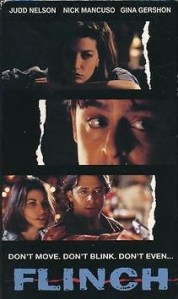
A Movie A Day #248: Flinch (1994, directed by George Erschbamer)


Harry (Judd Nelson) is a law student who has failed the bar exam three times.  Daphne (Gina Gershon) is an aspiring actress who has an unfaithful boyfriend.  With neither of them making much headway in their chosen careers, they end up working as living mannequins in a department store display window.  If they flinch even the least little bit, they will lose their jobs.  At first, it does not seem that there is much of a romantic future for Harry and Daphne.  But when Daphne breaks up with her boyfriend, Harry invites her to join him in breaking into the store after hours and partying.  But while Harry and Daphne are celebrating, they witness a crazed artist (Nick Mancuso) strangling one of his models.
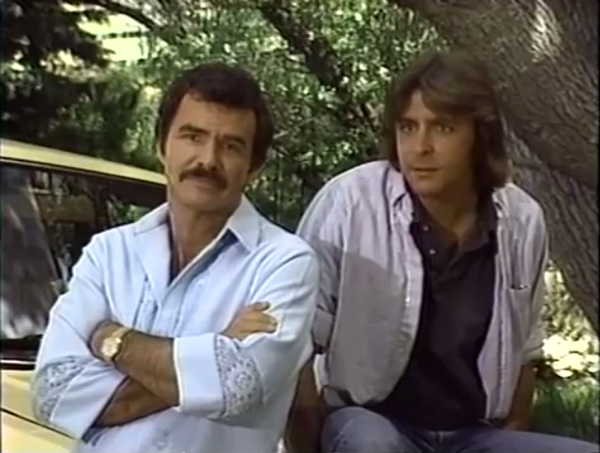
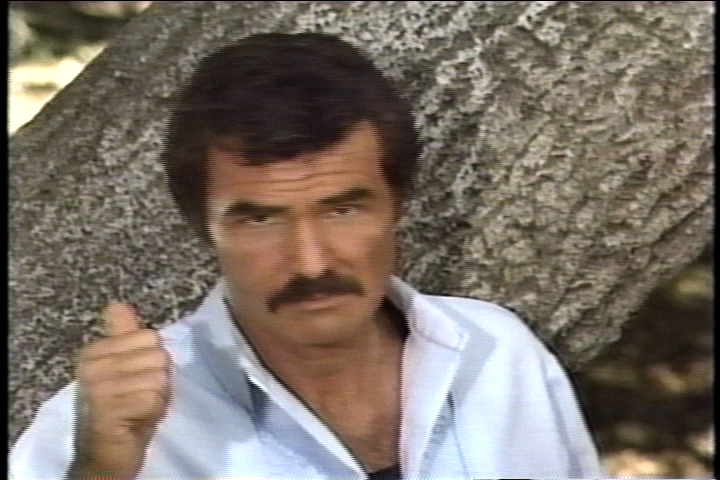
If the name of the director, George Erschbamer, seems familiar, you may be familiar with the Snake Eater films that he made with Lorenzo Lamas.  Fortunately, Flinch is far superior to Snake Eater III.  Starting out like a romantic comedy before turning into a thriller, Flinch is actually one of the better direct-to-video Judd Nelson films to come out in the 90s.  Of course, considering that the competition comes from Entangled and Conflict of Interest, Flinch doesn’t have that high of a bar to clear.  Though the thriller aspect is predictable, The first half of the movie, which is almost entirely Gershon and Nelson trying to talk to each other without anyone noticing their lips moving, is actually enjoyable.  Gina Gershon is as sexy as ever and she brings out the best in Judd Nelson, who is almost likable in this movie.

Still, there is one thing that could have improved Flinch.  Like almost any other Judd Nelson film, it really could have used a Burt Reynolds cameo.

Right, Burt?

Back to School Part II #19: Girls Just Want To Have Fun (dir by Alan Metter)


Girls_just_want_to_have_fun

For our next film in this series of Back to School reviews, we take a look at 1985’s Girls Just Want To Have Fun!

And you know what?

It’s true — we do just want to have fun!

The fun in Girls Just Want To Have Fun is pretty much defined by dancing, which is okay with me because I love to dance.  However, Girls Just Want To Have Fun had the misfortune to be made in the mid-80s.  I have lost track of many 80s films that I’ve watched but I’m still always shocked at how undanceable most 80s music truly was.  This film, of course, does contain a cover version of the famous song by Cyndi Lauper and that’s actually a pretty good 80s song.  However, the rest of the music (and, by that, I mean the music that everyone in the movie is actually dancing to) is incredibly bland in the way that only music from the decade of We Built This City could be.

As for the film itself, it takes place in Chicago.  Janey Glenn (Sarah Jessica Parker) is the newest student at the local Catholic girls school.  Janey’s overprotective father (Ed Lauter) is in the army and Janey has lived all over the world.  Despite that, Janey is not at all worldly.  In fact, when she tries to introduce herself to her classmates, all she can get out is that she’s a gymnast and she loves to dance. (When we actually see Janey dancing or doing any sort of gymnastics, Sarah Jessica Parker’s hair always seems to fall in her face, which is certainly one way to hide a stunt double.)

Janey makes one friend at the school.  Lynn (Helen Hunt, looking like a teenager but already sounding like a hung over 40 year-old) is about as wild as a girl can be in 1980s PG-rated film.  That’s to say, she wears a leather skirt when she’s not in school and, when she babysits, she orders pizza and then allows the baby to sit on it.  (Ewwwwwww!  There’s a reason why babies wear diapers….)  Lynne and Janey are automatically BFFs because they both love Dance TV!

That’s right — it’s DTV!  I wonder what that’s supposed to be based on…

It turns out that DTV is having a contest to pick two new dancers!  Disobeying her strict father, Janey sneaks out of the house and joins Lynn in auditioning!  Lynn’s partner turns out to be so spastic that Lynn doesn’t make the semi-finals.  Later, Lynn discovers that her partner was bribed by rich bitch Natalie Sands (Holly Gagnier).  I’m not sure why Natalie felt the need to do that since Lynn wasn’t that impressive to begin with.  She’s about as good a dancer as you would expect Helen Hunt to be.

However, Janey does make it to the semi-finals, where she’s partnered with Jeff.  Jeff is tough and blue-collar and, at first, it doesn’t seem like he and Janey will get along.  So, of course, they end up falling in love and, of course, Natalie’s father tries to force Jeff out of the contest by threatening to put his father out of work.  Jeff, incidentally, is played by Lee Montgomery.  Years before appearing in Girls Just Want To Have Fun, Montgomery played the little kid who gets crushed by a chimney at the end of Burnt Offerings.  Burnt Offerings is a really crappy film but I watch it every time that it comes on TCM just so I can see that chimney crush Lee Montgomery.  That said, Montgomery actually does a pretty good job of Jeff.  You never quite buy him as a rebel without a cause but he still seems like an authentic and likable teenager.  Jeff and Janey are a cute couple and that’s all that really matters.

Just as Janey has a best friend, Jeff also has a best friend.  Drew Boreman (Jonathan Silverman) talks too much, tries to sell t-shirts from the trunk of his car, and there’s also a scene were he grabs a random girl’s breasts and makes a comment about using her nipples to tune a radio.  Drew is annoying and, once you get over the fact that she’s being played by a young Helen Hunt, so is Lynn.  Watching the movie, you kind of want to tell both of them to just calm down for a few minutes.

But you know who is not annoying?  Jeff’s younger sister, Maggie, who is played by none other than a very young Shannen Doherty.  Maggie was my favorite character because she alone seemed to understand how stupid everyone else in the film was.  And she was willing to call them out on it.

ANYWAY — Girls Just Want To Have Fun is one of those movies where next to nothing actually happens.  There is an extended sequence where our heroes destroy Natalie’s snooty party with the help of a bunch of punks and female body builders but otherwise, it’s remarkable how little actually happens.  That said, some of the dancing is good (even if most of the music is totally bland in the way that only 80s music can be) and it’s interesting to see Sarah Jessica Parker and Helen Hunt when they were young.  Sarah Jessica Parker actually gives a surprisingly likable performance here, even if it is often way too obvious that a body double is doing the majority of her dancing.  That said, you really can’t get any further away from Carrie Bradshaw than Janey Glenn.

Girls Just Want To Have Fun is a time capsule of the decade in which it was made and that is definitely the main reason to watch it.  Until time machines are a reality and we can experience the past firsthand, we’ll just have to keep getting our information from movies like this one.

http://www.youtube.com/watch?v=8h6pXPHaWM0