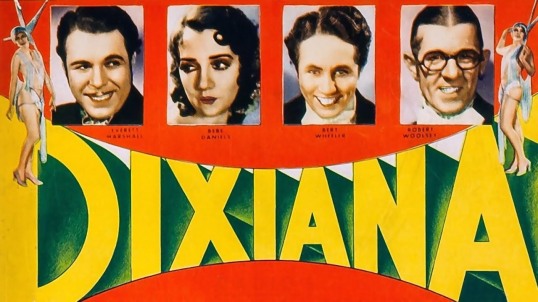
Mardi Gras Film Review: Dixiana (dir by Luther Reed)


Mardi Gras in New Orleans has always been a legendary party.

If you doubt me on this, just watch the 1930 film, Dixiana.  Dixiana is all about Mardi Gras.  I mean, there is a plot of sorts but it’s pretty easy to guess that, for audiences in 1930, the promise of a spectacular Madi Gras finale (filmed in technicolor, I might add) was the main appeal of this film.  Dixiana itself takes place in the 1840s so there you have it.  90 years ago, RKO Pictures made a lavish movie about a Mardi Gras celebration that had happened nearly 100 years earlier.  That’s quite a legendary party, no?

As with many pre-Code films about the Antebellum South, it can be a bit awkward to watch Dixiana today.  This is a film that opens on a plantation, with Cornelius Van Horn (Joseph Cawthorn) and his son, Carl (Everett Marshall), discussing how much they enjoy listening to the slaves sing about the Mississippi River.  They’re amazed that the slaves can sing so beautifully about water.  (It doesn’t occur to them that the song was actually about going up the river and finding freedom.)  Cornelius and Carl, we discover, are actually from Pennsylvania.  Cornelius has recently remarried, to the snobbish Birdie (Jobnya Howland) and both he and his son have only recently moved down to her native Louisiana.  Carl and Cornelius are still getting used to life in and the customs of the South.  Cornelius, for instance, explains that he regularly frees some of his slaves and he imagines that’s why they’re always so happy.  But if he really wants them all to be happy why doesn’t he just free them all and maybe stop buying slaves all together?  Let’s just say that Dixiana is not the film to watch if you’re looking for an honest look at American life before the Civil War.

Anyway, if you’re still interested in seeing the film after reading all of that, the majority of Dixiana takes place in New Orleans.  Carl goes into town, does some gambling, and sees a show.  He is immediately smitten with a performer named Dixiana (Bebe Daniels) and he asks her to marry him.  Even though her two best friends, Peewee and Ginger (played by the comedy team of Wheeler and Woolsey), are weary, Dixiana accepts his proposal.  Carl takes Dixiana back to the plantation with him.  Unfortunately, he also takes Peewee and Ginger and they soon let slip that they’re all circus performers.  Birdie is scandalized.  There’s no way her stepson is going to bring shame on the family by marrying a circus performer!

So, Dixiana and her friends head back to New Orleans.  The circus no longer wants her so Dixiana is forced to work in a gambling hall that’s owned by smarmy Royal Montague (Ralf Harolde).  Montague has his own personal interest in Dixiana but she’s still in love with Carl.  So, Royal plots to not only have Dixiana crowned as the Queen of Mardi Gras but also to trick Carl into accept a duel with him.  Montague, of course, plans to pull an Aaron Burr and cheat.  Meanwhile, Peewee and Ginger steal money, kick each other in the backside, and fight a duel of their own….

And really, none of that matters.  In the end, the film’s storyline is mostly just busywork.  The main reason that anyone would want to see this film is for the final 20 minutes, which is when the grainy black-and-white cinematography is replaced by gloriously vibrant technicolor and the Mardi Gras celebrations begin.  There’s singing.  There’s dancing.  There’s even Bill “Bojangles” Robinson, making his film debut and dancing up a storm.  Seriously, 1840s Mardi Gras looked like it would have been fun to attend, even if it does sometimes seem more like a lively cotillion as opposed to the orgy of alcohol poisoning that everyone knows and loves today.
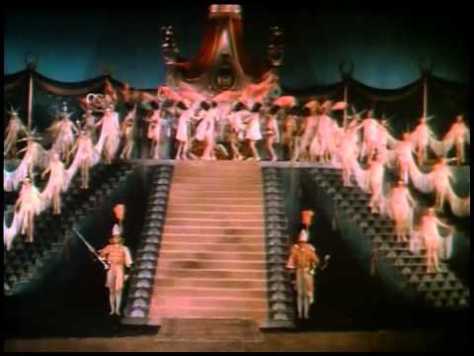
Dixiana is one of those films that’s fallen into the public domain and, as such, it tends to turn up in a lot of cheap DVD boxsets.  There’s quite a few prints out that are completely in black-and-white and which don’t feature the sudden change to color.  That’s a shame because, whatever flaws this film may have, it does make good use of that technicolor during the final 20 minutes.  It’s big and lavish and gorgeous to look at and it’s easy to imagine the valuable escape that it provided for audiences at the start of the Depression.

Today, Dixiana is probably most interesting as a historical document.  It’s not quite as racy as one might expect from a pre-code film but it’s a good example of the type of lavish musicals that were popular among audiences who, in the 30s, used the film as a way to escape from the grimness of reality.  And, if nothing else, it’s proof that Mardi Gras in New Orleans has always been a big deal.

Love on the Shattered Lens: Coffy (dir by Jack Hill)


It may seem odd to describe Coffy as being a love story.

After all, this is a film that is perhaps best known for a scene in which Pam Grier (as Nurse Coffin, a.k.a. Coffy) shoots her lying boyfriend in the balls.  Coffy is often described as being the epitome of 70s grindhouse, a film in which Pam Grier takes on drug dealers, the Mafia, and a corrupt political establishment with a combination of shotguns and shanks.  Coffy is perhaps Grier’s best-known films and it features one of her best performances.  There’s nothing more empowering than watching Pam Grier take down some of the most corrupt, arrogant, and disgusting men to ever appear in a movie.  It’s a violent and gritty film, one that opens with a drug dealer’s head literally exploding and never letting up afterwards.  There are many different ways to describe Coffy but it’s rarely called a love story.

But here’s the thing.  A film about love doesn’t necessarily have to center around romantic love.  Coffy is about love but it’s not about any love that Coffy may have for her boyfriend, the duplicitous politician Howard Brunswick (Booker Bradshaw).  Instead, the love at the center of this film is the love that Coffy has for her sister, who died from a heroin overdose.  It’s her sister’s death that leads to Coffy first seeking revenge but that’s not the only love that motivates Coffy.  There’s also the love that Coffy feels for her community.  Throughout the film, we hear about how the black community is being destroyed by the drugs that are being pushed into their neighborhoods by white mafia dons like Arturo Vitronia (Allan Arbus, who was once married to the iconic photographer, Diane Arbus).  It’s not a random thing that, for all of Coffy’s anger, she saves her most savage revenge for the members of her community who are working with the white mobsters, men like the pimp, King George (Robert DoQui), and her own boyfriend, Howard.

Throughout the film, Coffy says that she feels like she’s “in a dream” and Pam Grier gives an intelligent performance that suggests that, even after her mission is complete, Coffy will never be the same.  She’s not a natural killer.  She’s a nurse and it’s her job to save lives.  But when she sets out to get revenge on those who killed her sister and who are destroying her community, Coffy shows no mercy.  When she violently interrogates another victim of the drug trade, Coffy shows the junkie no sympathy because sympathy isn’t going to solve the problem.  Coffy is determined and the reason why she succeeds is because none of her victims realize just how serious she is.  Coffy uses her beauty to distract them and then, when they aren’t looking, she strikes.  By the end of the film, she’s walking alone on the beach and the viewer is left to wonder what’s going on inside of her head.  After all the people that Coffy has killed, can she ever go back to simply working the night shift at the ER?  After you’ve seen life and death at its most extreme, can things ever go back to the way that they once were?

And listen, I’m generally a pacifist and I’m not a huge fan of real-life vigilante justice and I’ve signed many petitions against the death penalty but it’s impossible not to cheer for Coffy.  Pam Grier gives such a committed performance that it’s impossible not to get sucked into her mission.  (It helps, of course, that most of the people who she targets are legitimately terrible human beings.)  The brilliance of Grier’s performance comes in the quiet moments.  Yes, she’s convincing when she has to shoot a gun and she delivers vengeful one-liners with the best of them.  But the film’s best moments are the ones were Grier thinks about how her life has become a dream of violent retribution and where she allows us to see the love for her sister and her community, the same love that is motivating all of the bloodshed.

Coffy is a rightfully celebrated film.  For once, a cult film actually deserves its cult.  It’s one of the best of the old grindhouse films and, in fact, to call it merely an exploitation film actually does a disservice to how effective a film Coffy actually is.  It’s just a great film period.

Love On The Shattered Lens: The Path of the Wind (dir by Doug Hufnagle)


The 2009 film, The Path of the Wind, begins with a man being released from prison and discovering that living in the real world can be just as confining.

Lee Ferguson (Joe Rowley) has spent the last few years locked up, convicted of killing a man.  It was a spontaneous fight and Lee didn’t intend for the man to die but that doesn’t change the fact that Lee is responsible for taking another man’s life.  He was a model prisoner and he intends to be a model citizen.  Fortunately, he’s inherited a nice house and a good deal of money from his father.  He’s also got a job waiting for him, as the well-meaning manager of the local grocery store has agreed to give Lee a chance.

From the minute he leaves the prison, Lee feels out-of-place in the world.  He’s still struggling to control his temper and, because of his past, he’s hesitant about letting anyone get too close to him.  He knows that if he tries to get close to anyone, he’ll eventually have to tell them why, despite his obvious intelligence and education, he’s currently working as a stocker in a grocery store.  And, after he tells them that he’s been in prison, he’ll then have to explain what he did to find himself in that situation.

Still, on his first night of working at the grocery store, he meets a young woman named Katie (Liz DuChez).  When he first sees her, Katie is being harassed by her violent ex-husband.  Lee chases the man off.  It turns out that Katie runs the local video store and she thanks Lee by offering him all of the free movies that he wants.  Eventually, Lee works up the courage to go to the video store and gets a bunch of western DVDs.  Later, he reveals that he not only doesn’t have a DVD player but he’s not totally sure what a DVD player is.  I guess Lee was in prison for a while.

It takes a while but Lee and Katie finally start to date.  Katie opens up about her past as a stripper and Lee finally tells her about the time that he spent in prison.  (It turns out that Katie already knew.)  They fall in love but there are still problems.  For one thing, Katie is rather religious whereas Lee is a committed agnostic.  Secondly, Katie refuses to have sex unless she’s married.  Lee, meanwhile, really, really wants to get laid….

Of course, that’s not all that’s going on in The Path of the Wind.  There’s about a different dozen storylines running through The Path of the Wind and the film doesn’t do a particularly good job of juggling all of them.  Along with having to deal with Katie’s psycho ex-husband, Lee also has to deal with not one but two evil coworkers and his bitter sister.  This is one of those films where a lot of plot points are raised but then mysterious abandoned.  There is one effective scene, in which Wilford Brimley shows up as the father of the man that Lee killed.  Brimley’s only in the film for a few minutes but he brings so much natural authority to his role that he basically takes over the entire movie for the limited amount of time that he’s on screen.

The film’s a bit of a mess but there’s a low-key sincerity to it that’s kind of likable.  According to the imdb, it was made for a budget of $100,000 and, with the exception of Wilford Brimley, the cast is largely made up of amateurs.  That said, both Joe Rowley and Liz DuChez have enough screen presence to be watchable and, even if the dialogue sometimes sounds a bit awkward, they have a likable chemistry and you can believe them as a couple.  Add to that, the film does attempt to deal with a very real issue, the difficulty that ex-cons face trying to rejoin a society that often values punishment and revenge over forgiveness and rehabilitation.  This is an amateur film but it may hold your interest.

Love on the Shattered Lens: Blue Crush (dir by John Stockwell)


Released in 2002, Blue Crush tells the story of Anne Marie Chadwick (Kate Bosworth).

Anne Marie lives in Hawaii and she’s got a lot going on in her life.  Because her mother recently abandoned her daughters so that she could run off to Las Vegas with her good-for-nothing boyfriend, Anne Marie is practically raising her 14 year-old sister, Penny (Mike Boorem).  Anne Marie is also working as a maid at a beach-side hotel, where she and her two best friends, Eden (Michelle Rodriguez) and Lena (Sanoe Lake), spend their time cleaning up messes and trying on the guests’s clothes.  I have to admit that, if I was a maid, I’d probably try on the clothes too.  However, after watching Blue Crush several times, I can tell you that the last thing I would ever want to do would be to work as a hotel maid.  Seriously, some of the messes that Anne Marie, Eden, and Lena had to deal with were so disgusting that I had to look away from the screen.  Bleh!

Anne Marie and her two friends are also surfers!  In fact, surfing is pretty much what their lives revolve around.  Anne Marie has been invited to compete in an upcoming competition but she’s haunted by an incident that occurred several years before, an extreme wipe-out that nearly caused her to drown.  (Despite all of the beautiful surfing footage, this film does little to alleviate my own extreme drowning phobia.)  Despite Eden’s encouragement, Anne Marie isn’t sure that she has what it takes to get back into the competition circuit.

Unfortunately, there’s a group of NFL players staying at the hotel and they totally trash their room and leave a huge mess for the maids to clean up.  (At one point, Lena finds a used condom stuck to the bottom of her shoe and totally freaks out.  I would have to.  I once moved into an apartment that was already inhabited by several friends of mine and, while I was cleaning, I came across like nearly a hundred used condoms hidden in every nook and cranny of the place.  I mean, I was happy that everyone was having sex but seriously, don’t just leave your condom on the floor after it’s been used.  Pick up after yourself!  Anyway, where was I?)  Fortunately, however, one of the players is a totally hot quarterback named Matt (Matthew Davis).  Matt and his fellow players hire Anne Marie and her friends to teach them how to surf.  Matt and Anne Marie end up falling in love, mostly because they’re the two best-looking people on the beach.  With Matt’s support, will Anne Marie be able to conquer her fears and compete in the competition?  It would be a really depressing movie if she didn’t.


So, let’s see.  What do you we have here?

We’ve got lots of pretty shots of pretty people running along the beach in slow motion.

We’ve got a soft-focus love scene between the best-looking people in the movie.

We’ve got a ton of exciting surfing footage.

We’ve got a thoroughly predictable plot that still kind of works because everyone involved is so good-looking.

Yep, this must be a John Stockwell film.

Seriously, John Stockwell is one of my favorite directors because he always delivers exactly what he promises.  He makes films about beautiful people in beautiful places and if that’s not enough for you, too bad.  He’s a genre director and makes no apologies for it.  There’s a refreshing lack of pretension when it comes to John Stockwell’s filmography and it’s hard not to appreciate the universe that he creates in films like Crazy/Beautiful, Into the Deep, In the Blood, and this one.  It’s a universe where everyone knows that they’re in a genre movie and they behave accordingly.  It’s a world where the scenery is beautiful, the people are attractive, and nearly every problem can be solved by a kiss or the proper one-liner.

You could probably make the argument that the storyline of Blue Crush is shallow and a bit obvious.  I wouldn’t necessarily disagree with you.  But who cares?  Kate Bosworth and Matthew Davis have a tone of chemistry, the Hawaiian scenery is gorgeous, and well, I just kind of love this movie.


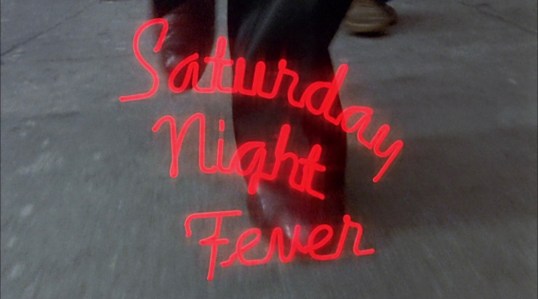
Scenes That I Love: The Opening Credits of Saturday Night Fever


Saturday Night Fever (1977, dir. John Badham)

Today is John Travolta’s birthday!

In honor of this day, here’s a scene that I love, the opening credits of Saturday Night Fever.  Watch as John Travolta, playing the role of Tony Manero, walks down the streets of Brooklyn, not letting the fact that he’s carrying two cans of paint do anything to lessen his strut.  Watch as Tony puts a down payment on a pair of shoes!  Thrill as Tony buys two slices of pizza!  Cringe as Tony bothers a woman who wants absolutely nothing to do with him!

This is one of the greatest introductions in film history.  Not only does it set Tony up as an exemplar of cool but it also subverts our expectations by revealing just how little being an exemplar of cool really means.  I always relate to the woman who gets annoyed with Tony and tells him to go away.  I know exactly how she feels, as does any woman who has ever been stopped in the middle of the street by some guy who thinks she has an obligation to talk him.  It doesn’t matter how handsome he is or how much time he obviously spent working on his hair.  He’s still just some guy carrying two buckets of paint and acting like she should be flattered that he spent half a minute staring at her ass before chasing after her.  For all of his carefully constructed attitude, Tony comes across as being a rather ludicrous figure in this introduction.  He carries those cans of paint like he’s going to war and you secretly get the feeling that he knows how silly he looks carrying them but he’s not going to allow anything to get in the way of his strut.

The rest of the film, of course, is about presenting who Tony actually is underneath the disco facade and it’s not always a pretty picture.  I actually discussed this with some friends this weekend while we were listening to combination of disco and punk music.  Saturday Night Fever has a reputation for being a fun dance movie but actually, it’s an extremely dark and rather depressing movie.  The opening song isn’t lying when it says that “I’m going nowhere.”  Tony is lost and, despite what happens in the sequel, he’s probably never going to escape his circumstances.  Even though he clearly wants to be a better person, you’re never quite convinced that he has what it takes to truly do that.  At least he can strut a little while waiting for the world to end.  It takes guts to give an honest performance when you’re playing as imperfect a character as Tony Manero but Travolta pulls it off.  (We won’t talk about some of the films that he made in the years immediately after this one.  Eventually, he did make a comeback with Pulp Fiction and spent several years again appearing in good films.  And then somehow, last year, he ended up starring in The Fanatic.  Oh well.  66 is not that old and I’m sure Travolta has more than one comeback within him.)

Anyway, happy birthday to John Travolta!  And here is today’s scene that I love:

Love on the Shattered Lens: Rapture (dir by John Guillermin)


The 1965 film, Rapture, is an odd one.

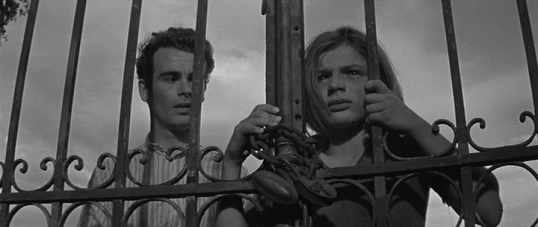
It takes place in France, largely at an isolated home sitting on a cliff above the Brittany coast.  Frederick Larbaud (Melvyn Douglas) is a former judge who has largely retreated from society.  He lives in his house with his teenager daughter, Agnes (Patricia Gozzi) and his promiscuous housekeeper, Karen (Gunnel Lindbloom).  He’s a stern man, one who is obviously struggling to overcome a vaguely defined personal tragedy.  He is very overprotective of his daughter, Agnes.

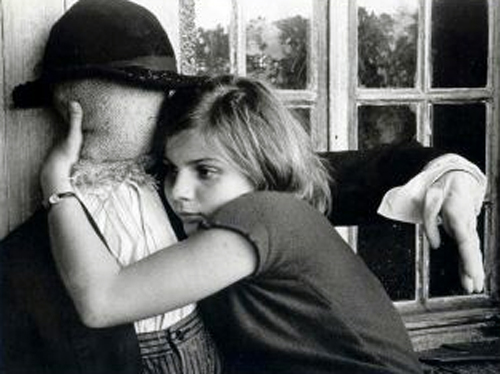
As for Agnes, she alternates between moments of childish immaturity and moments of surprising clarity.  She’s the type who still plays with dolls but who also casually tosses them over the cliff so that they can shatter on the rocks below.  She seems to be naive and innocent but, at the same time, she’s also capable of blackmailing Karen and threatening to tell her father that Karen’s boyfriend sneaks into the house at night.  When the sheltered Agnes gets her father’s permission to make a scarecrow for the garden, she throws herself into the work, even going so far as to flirt with the scarecrow after it’s been built.

Meanwhile, a sailor named Joseph (Dean Stockwell) has been arrested for getting into a fight during a drunken night on the town.  While he’s being transported to jail, the prison bus runs off the road.  Joseph escapes from the bus and runs up a hill, passing by Frederick, Agnes, and Karen.  Though the police manage to seriously wound Joseph, he still escapes.

Later that night, during a violent storm, Agnes is shocked to see that her scarecrow has vanished.  While she’s out searching for it, she comes across a delirious Joseph.  Because Joseph has stolen the scarecrow’s clothes, Agnes decides that her scarecrow has come to life and, as a result, Joseph belongs to her.  Surprisingly, Frederick expresses no reservations about allowing Joseph to stay at the house while he recovers from his gunshot wound.

Once Joseph recovers, he explains to Frederick what happened and says that he should probably turn himself in and hope for the best.  Frederick, however, disagrees.  It turns out that Frederick has an agenda of his own and part of that agenda is revealing that brutality of the police.  He continues to allow Joseph to hide out at his house but little does Frederick know that Joseph is falling in love with Agnes (and, of course, Agnes still thinks that Joseph is her scarecrow come to life).

Rapture took me by surprise.  When the film started, I honestly thought it was going to be unbearably pretentious and I wasn’t exactly filled with confidence when I discovered that the film was directed by John Guillermin, a prolific British director whose career spanned from the 50s and the 80s but whose overall output is not particularly highly regarded among film historians.  With its obvious debt to Ingmar Bergman, Rapture did not seem like the type of movie that one would expect to be successfully directed by the 1960s equivalent of Taylor Hackford.  And, it should be said, that the first fourth of the film is rather pretentious and a bit silly.  The black-and-white cinematography is frequently gorgeous and atmospheric but Agnes’s eccentricity often feels overwritten and it seems to take forever for Joseph to actually show up at the house.

However, things get better.  The film, itself, doesn’t become any less pretentious but eventually Joseph starts to fall for Agnes and the chemistry between Dean Stockwell and Patricia Gozzi is strong enough that it carries the viewer over the film’s rough spots.  The film becomes less about how strange Agnes is and more about a sheltered girl falling in love for the first time and, freed from the inconsistency that marred her characterization during the first part of Rapture, Patricia Gozzi’s performance starts to click as Agnes becomes relatable and even sympathetic.

The film hits a high point when Joseph and Agnes try to start a life for themselves away from Agnes’s father and we watch a lengthy montage of their steadily deteriorating relationship.  In a manner of minutes, we witness how quickly the intrusion of the real world threatens to cause their too perfect romance to go awry.  Most of the montage is made up of overhead shots and it captures the feeling of two naive lovers being overwhelmed by the difficulties of living in the real world.  With each movement of the camera, we feel Agnes and Joseph’s world getting a little bit more claustrophobic and a little more threatening.

The film ends on a sad note, which shouldn’t come as a surprise to anyone watching.  From the minute that Agnes leads a wounded Joseph into the house, we know that their love is doomed.  That said, it’s still a rather odd ending and one that raises more questions than it answers.  It’s a strange ending for a strange film and it’s one that will stick with you long after you watch it.

Love on the Shattered Lens: Lying Eyes (dir by Marina Sargenti)


If you want to see something creepy, just check out the first 5 minutes of the 1996 television film, Lying Eyes.

It takes place at a high school basketball game.  While the team is heading into the locker room for halftime (which is something that I assume they do in basketball, though I’ve never actually watched a game so I could be wrong), the cheerleaders run out onto the court and do their routine.  The camera switches back and forth from closeups of the cheerleader’s backsides to shots of a handsome man named Derek Bradshaw (Vincent Irizarry) sitting in the stands and obviously enjoying the show.

The scene already has a leering quality but what makes it disturbing is the little smile that comes to Derek’s face while he watches the cheerleaders.  Derek maybe handsome but he’s also quite a bit older than the teenagers who are sitting around him.  It’s obvious that he’s come to the game alone and it’s also obvious, just from the way that he’s watching, that he didn’t come because he’s a fan of high school basketball.  Instead, he’s there to ogle the cheerleaders.

Later, one of the cheerleaders — Amy Miller (Cassidy Rae) — is driving home.  We’ve already seen a scene where Amy explains to her best friend, Dana (Ashlee Levitch), that she’s tired of dating immature teenage boys.  While Amy’s sitting at a stop light, another car rear ends her.  The driver gets out and checks to see if Amy’s okay.  The other driver is ….. DEREK!

Amy is immediately charmed by Derek, especially after he offers to pay for the damage done to her bumper so that she won’t have to report the accident to her insurance company.  Later, when Amy goes to pick up her car from the garage that Derek recommended, she discovers that not only has the bumper been replaced but that Derek also had the mechanic install a CD player!  (Remember, this movie was made in 1996.)  And Derek’s given her a bundle of CDs!  When she thanks him, he smiles and says that he hopes that she likes Hootie and the Blowfish.

(Seriously, he says that.  I’m not joking.)

Anyway, Derek and Amy are soon having an affair.  Amy thinks that Derek is the best and even accepts his word when he explains that he’s married but he and his wife are separated.  However, everyone else in Amy’s life is suspicious of Derek and so are we, because we’ve seen a 100 movies just like this one!  Plus, we saw Derek acting all pervy at the high school basketball game….

Soon, Amy’s grades are slipping and her friends are getting mad at her because she’s no longer spending any time with them.  However, Amy has other things to be concerned about.  For instance, someone leaves a note in her mailbox, calling her a whore.  Someone keeps calling the house.  Someone takes a knife to her new leather jacket.  Apparently, someone is not happy about Amy’s relationship and, even after Amy breaks it off with Derek, the harassment continues.

Who is out to get Amy?  Could it be Derek?  Could it be Derek’s wife?  Could it be Dana or maybe even Dana’s older sister, Jennifer (Alison Smith)?  Or could it be someone who Amy doesn’t even suspect?

Lying Eyes is an enjoyably trashy film.  This is one of those movies where you know exactly what’s going to happen but the film itself is just so cheerfully melodramatic that you can’t help but get sucked into it.  Though the film was originally made for NBC, it has since become a Lifetime staple.  This really is the ultimate Lifetime film.  Unfortunately, it’s not as a good as it used to be because, the last few times I watched the film, I noticed that the original kickass soundtrack had been replaced by a generic soundtrack.  I get that this sort of thing happens and it has to do with whether or not the distributor feels like its worth the trouble to pay for the rights to the songs that originally appeared in the film.  But seriously, the generic music that replaced the original soundtrack often doesn’t even go with the scenes in which it is heard.  This is especially true of the film’s opening, where the cheerleaders’ opening routine was obviously choreographed to totally different music from what is now playing in the background.

On the plus side, Vincent Irizarry is both perfectly sleazy and perfectly charming in the role of Derek and Cassidy Rae is relatable and sympathetic at Amy.  Falling for a guy who is obviously wrong but refusing to listen to your friends and family because you want the fantasy to be true?  Seriously, we’ve all been there.  That was pretty much my entire life when I was 18 years old.  Rae does such a great job that you don’t even mind that Amy often behaves like an idiot.  (Seriously, if someone is stalking you, threatening to kill you, and forcing your car off the road, you might want to consider not shrugging it off.)

Lying Eyes is a good, trashy melodrama and if you’re looking for some Valentine’s Day counter programming, it’s on Amazon Prime.  I just wish they would bring back the original soundtrack.

Love On The Shattered Lens: Romeo and Juliet (dir by Franco Zeffirelli)


Happy Valentine’s Day!

Now that the Oscars and the Sundance Film Festival are over with, it’s time to start a new series of reviews here on the Shattered Lens.  For the rest of February, I will be looking at some films that deal with the universal topic of love.  Some of these films will be romantic.  Some of them will be sad.  Some of them might be happy.  Some of them might be scary.  Some of them might be good.  And some of them might be bad.  In fact, to be honest, I haven’t really sat down and made out a definite list of which films I’ll be reviewing for Love On The Shattered Lens.  Instead, I figure I’ll just pick whatever appeals to me at the moment and we’ll see what happens!

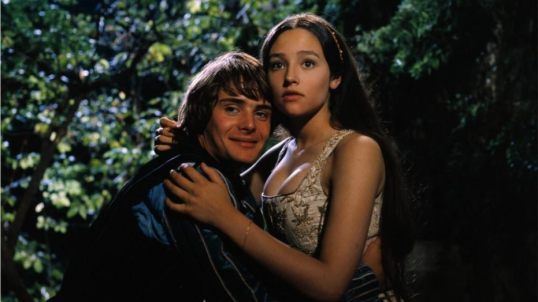
Let’s start things off with the 1968 film version of William Shakespeare’s Romeo and Juliet.

“Oh my God!  Romeo and Juliet are hippies!”

Well, that’s not quite true.  I mean, it is true that Romeo (played by Leonard Whitting) and Juliet (Olivia Hussey) are played by actual teenagers in this version of the classic play.  It’s also true that, even though the film is set in a painstakingly recreated version of 15th century Verona, almost all of the actors have what would have then been contemporary haircuts.  Romeo, Benvolio (Bruce Robinson), and Mercutio (John McEnery) all have longish hair, dress colorfully, and look like they could all be in the same band, covering the Beatles and writing songs about dodging the draft.  Even Tybalt (Michael York) seems a bit counter-cultural in this version.

As played by Olivia Hussey, Juliet comes across as being far more rebellious in this version of Romeo and Juliet than in some of the others.  It’s hard to imagine that Olivia Hussey’s Juliet would have much patience with Juliets played by Norma Shearer, Claire Danes, Hailee Steinfeld, or even the version of the character that Natalie Wood played in West Side Story.  Olivia Hussey’s Juliet is always one step away from running away from home and hitch-hiking to the free Rolling Stones concert at the Altamont Speedway.  Like the audience that the film was intended for, Romeo and Juliet both know that their parents are out-of-touch and that their friends are only temporary.  Embracing love and pursuing all that life has to offer is what matters.

Was this the first film version of Romeo and Juliet to make explicit that the two characters had consummated their marriage?  I imagine it was since it was apparently also the first version of Romeo and Juliet to feature on-screen nudity.  That’s quite a contrast to the largely chaste 1936 version, in which Norma Shearer and Leslie Howard both seemed determined to keep a respectable distance from each other.  Leonard Whiting and Olivia Hussey have an amazing chemistry together.  They’re the two prettiest people in Verona and they just look like they belong together.  From the minute they meet, you believe not only that they would be attracted to each other but that they’re also meant to be lovers.

Of course, we all know the story.  The Capulets and the Montagues are rival families.  Juliet is a Capulet.  Romeo is a Montague.  Juliet’s cousin, Tybalt, kills Romeo’s friend Mercutio.  Romeo kills Tybalt.  Juliet fakes her death.  Romeo commits suicide.  Juliet wakes up and does the same.  The Prince shows up and yells at everyone.  This film version moves around some of the events and it leaves out a few scenes but it actually improves on the play.  For instance, poor Paris (Roberto Bissaco) doesn’t die in this version.  Seriously, I always feel bad for Paris.

Throughout it all, director Franco Zeffirelli emphasizes the youth of the characters.  It’s not just Romeo and Juliet who are presented as young.  The entire Montague and Capulet feud is largely portrayed as being just a silly turf war between two competing high school cliques.  When Tybalt and Mercutio have their fateful duel, it starts out largely as a joke and, when Tybalt kills Mercutio, it comes across as if it was an accident on Tybalt’s part.  Tybalt appears to be just as shocked as anyone, like a scared kid holding a smoking gun and trying to explain that he didn’t know it was loaded when he pulled the trigger.  When Mercutio curses both the Capulets and the Montagues, it’s all the more powerful because Mercutio is undoubtedly wondering how the duel could have so quickly gone from playful taunting to a fatal stabbing.  The entire conflict between the Montague and the Capulets is a war that makes no sense, one in which the young are sacrificed while the old retreat to the safety of their homes.

Romeo and Juliet was a hit in 1968 and it’s still an achingly romantic film.  Whiting and Hussey generate more chemistry in just the balcony scene than Leonardo Di Caprio and Claire Danes did in the entirety of Baz Luhrmann’s version of the tragic tale.  Along with being a box office hit, it was also a critical hit.  The Academy nominated it for best picture, though it lost to Oliver!

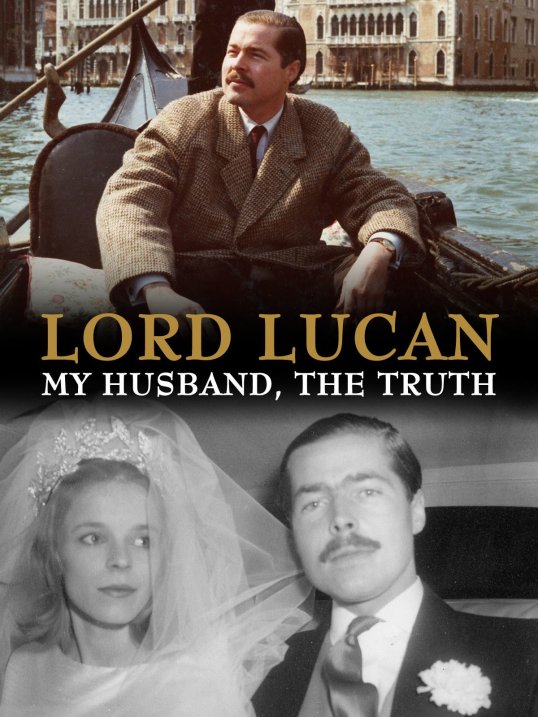
Documentary Review: Lord Lucan: My Husband, The Truth (dir by David O’Neill)


Who was Lord Lucan?

He was a British aristocrat, born not only wealthy but also with all the right connections.  His birth name was John Bingham but he eventually inherited the title of Lord Lucan when his father died in 1964.  At the time, the new Lord Lucan was 30 years and had been married for less than a year.  Lord Lucan was handsome and charming, so much so that Cubby Broccoli considered him for the role of James Bond in On Her Majesty’s Secret Service.  Lucan had no formal acting experience but he had the right look.  Nothing, of course, ever came of the idea of casting Lucan as Bond.  It’s rumored that he may have done a screen test but nothing can be said for sure.  Would Lord Lucan have had better luck with the role than George Lazenby?  Well, it’s hard to imagine how he possible could have had worst luck.

Like James Bond, Lord Lucan loved to gamble.  Unlike Bond, who was rarely seen to lose a hand whenever he sat down at the poker table, Lucan was not a particularly good gambler.  In fact, he lost so often that he was often broke.  Fortunately, his rich friends usually took care of him whenever he needed money or someone to testify as to his courage whenever he was accused of neglecting his wife, Lady Lucan.  When Lord and Lady Lucan separated in 1972, it forced the members of British high society to pick sides and most of them sided with Lord Lucan.  That remained true even in 1974 when Lord Lucan was accused of murdering his children’s nanny, Sandra Rivett.  Rivett, who bore a superficial resemblance to Lady Lucan, was bludgeoned to death with a piece of lead pipe while making a cup of tea in Lady Lucan’s home.  Lady Lucan claimed that she came across Lord Lucan in the house and that he admitted to having attacked Sandra in a case of mistaken identity.  Meanwhile, shortly after the murder, Lord Lucan reportedly called his mother and told her that he had just happened to be driving by his old home when he saw an unidentified man fighting with his wife.

The same night that Sandra Rivett was murdered, Lord Lucan vanished.  Both the police and Lady Lucan speculated that Lord Lucan had committed suicide by drowning himself in the Thames.  However, for years after Sandra Rivett’s murder, there were regular sightings of Lord Lucan around the world.  While many of those sightings were undoubtedly due to hysteria caused by the extensive press coverage surrounding the case, there were other sightings that seemed to be a bit more credible.  There was much speculation that Lucan’s powerful friends had helped him escape from Britain and he had relocated to either southern Africa or Australia.  As late as 2012, sightings of Lord Lucan were still being investigated.  If Lucan were still alive, he would be 86 years old today.

The story of Lord Lucan and the murder of Sandra RIvett is a fascinating one and the 2017 documentary, Lord Lucan: My Husband, The Truth, is a must-see for everyone interested in the case.  Produced for British television, this documentary is essentially an hour-long interview with Lady Lucan, during which she discusses not only her abusive marriage but also her feelings about the question of whether or not Lucan was still alive.  (For the record, she felt that he committed suicide “as a nobleman would do.”)  The documentary also features video that was shot by Lucan himself in the 60s, showing himself, his wife, and their wealthy friends touring Europe and basically acting like members of the idle rich.  Lady Lucan discusses how the notoriety surrounding the case affected her own life, leading to her becoming estranged from her children.  When asked if she was a “cold” towards her children, Lady Lucan chillingly replies, “All of my relationships are cold.”  When asked why she once claimed that Lord Lucan was still alive and hiding out somewhere in either Europe or Africa, Lady Lucan replies that she was “drugged up” when she said it and, as such, had no control over anything she said.  The documentary than shares a clip of a very stoned-looking Lady Lucan being interviewed in 1981 and saying that her former husband was still alive.

It’s an interesting story and a rather sad one.  Lord Lucan: My Husband, the Truth is a documentary that should appeal to anyone who is interested in true crime, missing fugitives, and the scandals of the very rich.  Despite the rumors of him still being alive, Lord Lucan was declared dead in 2016 so that his son could inherit his title and his place in the House of Lords.  As for Lady Lucan, she committed suicide shortly after being interviewed for this documentary.

Lord Lucan: My Husband, The Truth can be viewed on Amazon Prime.


Here Are The Oscar Winners!


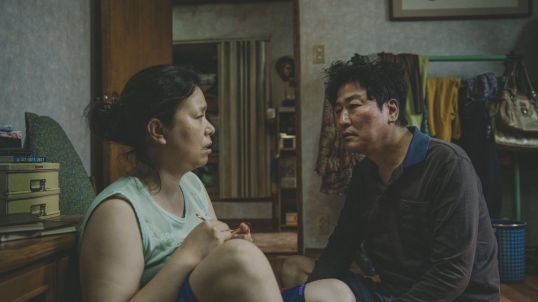
Best Picture — Parasite

Best Director — Bong Joon-ho for Parasite

Best Actor — Joaquin Phoenix, Joker

Best Actress — Renee Zellweger, Judy

Best Supporting Actor — Brad Pitt, Once Upon A Time In Hollywood

Best Supporting Actress — Laura Dern, Marriage Story

Best Original Screenplay — Parasite

Best Adapted Screenplay — JoJo Rabbit

Best Animated Feature Film — Toy Story 4

Best International Feature Film — Parasite

Best Documentary Feature Film — American Factory

Best Documentary Short Subject — Leaning to Skate In A Warzone (If You’re A Girl)

Best Live Action Short Subject — The Neighbors’ Widow

Best Animated Short Film — Hair Love

Best Original Score — Joker

Best Original Song — Rocketman

Best Sound Editing — Ford v Ferrari

Best Sound Mixing — 1917

Best Production Design — Once Upon A Time In Hollywood

Best Cinematography — 1917

Best Makeup and Hairstyling — Bombshell

Best Costume Design — Little Women

Best Editing — Ford v Ferrari

Best Visual Effects — 1917