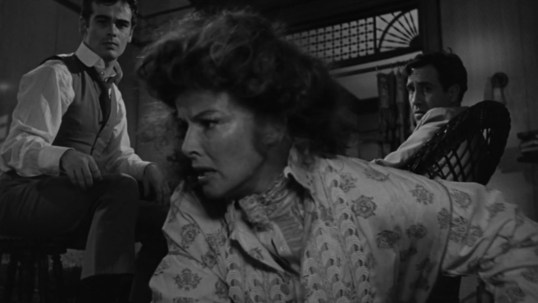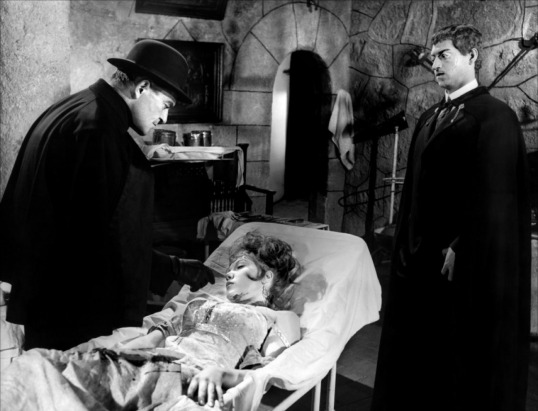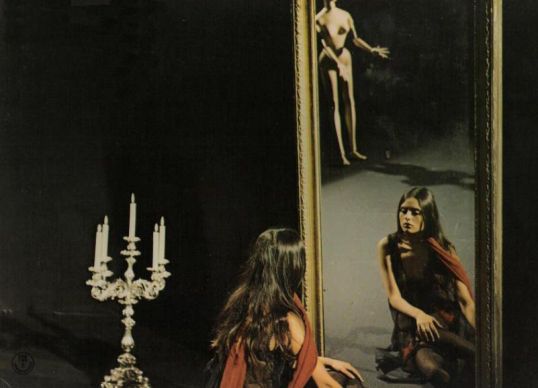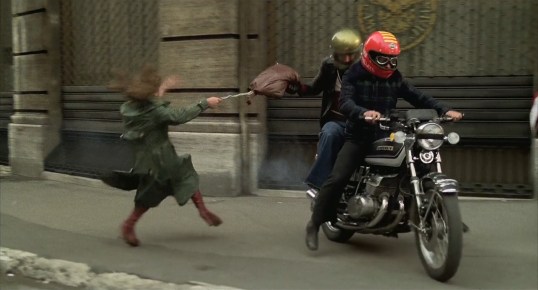
Cleaning Out The DVR: A Killer In My Home (dir by Farhad Mann)


When the lockdown was first announced down here in Texas, my initial reaction was, “Well, at least I can clean out my DVR now….”

Unfortunately, it didn’t really work out like that.  First off, I got caught up trying to work my way through my collection of DVDs and Blu-rays.  Then, I ended up getting distracted by my efforts to binge my way through The Sopranos, Oz, and Deadwood.  And suddenly, here we are!  It’s nearly June.  The lockdown is in the process of ending.  And I’ve barely made a dent on working my way through the 230 programs that I have on my DVR.

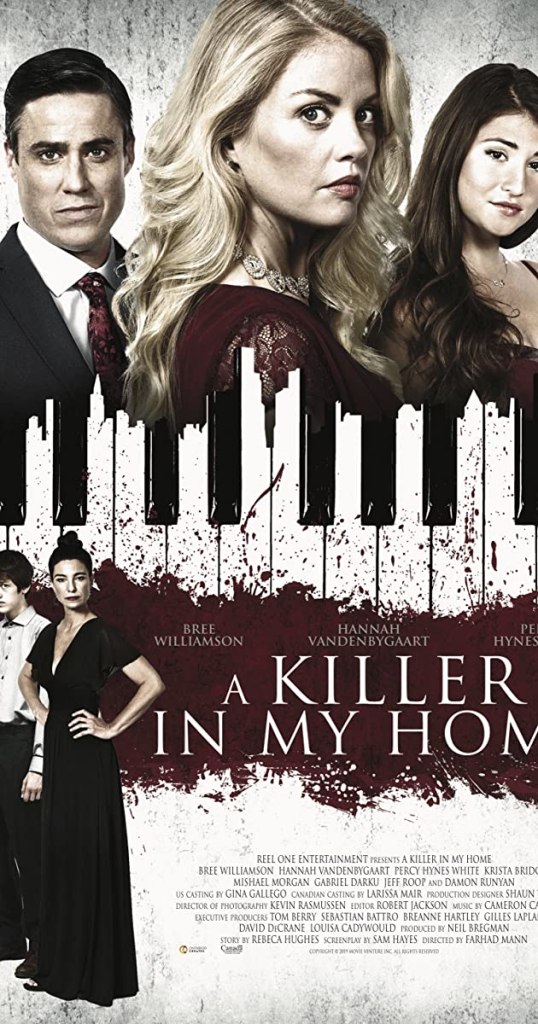
Earlier today, I decided to finally get to work by watching the Lifetime film, A Killer In My Home.  A Killer In My Home originally aired on the Lifetime Movie Network back in February.  I was on vacation at the time so my wonderful sister was nice enough to record it for me.  Watching it was an interesting experience, just because there weren’t any COVID-19-themed commercials.  Instead, there were a ton of commercials for Tom Steyer and Mike Bloomberg.  I mean, seriously — whenever you think about how bad 2020 may be right now, just remember that, even before everything shut down, we had to spend a month and a half dealing with the Tom and Mike charm offensive.

As for the film itself, it tells the story of Allison Wright (Bree Williamson) and her daughter, Hollie (Hannah Vandenbygaart).  Allison and Hollie appear to have the perfect life.  Not only do they live in a huge house but Hollie appears to have the perfect future ahead of her.  Soon, she’ll graduate high school, get a nice car, and go to a good college.  But then, Allison’s husband and Hollie’s father suffers a heart attack!  While he’s dying in the hospital, he’s visited by Jenna Fallon (Krista Bridges) and her withdrawn son, Joshua (Percy Hynes White).  When Allison demands to know why Jenna is visiting her dying husband, Jenna explains that she had an affair with Allison’s husband and Joshua was the result.  Apparently, Allison’s husband spent years visiting and financially supporting Jenna and Joshua.  Now that he’s dead, Jenna and Joshua have no one left to provide for them.

Now, if you were Allison, what would you do in this situation?

Would you say, “Tough shit, you whore.  Get out of here and take that bastard with you!”

Or

Would you say, “Why don’t you come live in our guest house?”

Now, to the film’s credit, Allison’s initial reaction is to tell Jenna and Joshua to go away.  However, a few weeks later, Allison has a change of heart and she allows Jenna and Joshua to move into the guest house.  Jenna and her son are supposed to stay away from the main house and out of Allison and Hollie’s lives.  Needless to say, things don’t work out like that.

Soon, strange things start to happen.  There’s a break-in at the house.  Despite her efforts to ignore him, Joshua still tries to talk his half-sister.  Jenna starts to throw biker-populated parties at the guest house.  Despite the fact that she claims to have no money, Jenna is able to buy her son an expensive jeep.  Allison comes to realize what we realized from the beginning: Jenna has sinister motives of her own!  The only question is whether or not Joshua shares those motives or if he’s just a pawn trapped in a game he didn’t intend to play.

A Killer In My Home is okay.  If I’m not as enthusiastic about it as I am about other Lifetime films, it’s because I never believed that Allison would 1) allow Jenna to stay in the guest house and 2) allow her to continue to stay in the guest house even after it became obvious that some seriously strange stuff was going on.  Allison lost my sympathy by doing that.  However, I did really like Krista Bridges’s performance as the unstable Jenna and I though Hannah Vandenbygaart gave a good and sympathetic performance as the daughter who is basically just sick of dealing with the adults in her life.  I could definitely relate.

Finally, the house was nice.  Lifetime movies always feature the nicest houses and A Killer In My Home featured one of the best!

The Things You Find on Netflix: The Stand at Paxton County (dir by Brett Hedlund)


The Stand at Paxton County, which is currently playing on Netflix, opens with an ominous title card warning us that what we’re about to see is “based on a true story.”

I may be alone in this but I find the term “based on a true story” to be fascinating.  It’s signifies that the film that we’re about to watch was inspired by something that actually happened but it’s not actually a recreation of that event.  It’s an invitation to watch and to try to figure out how much is true and how much is just a product of a screenwriter’s imagination.  “Based on a true story” is a real cinematic tease.

The Stand at Paxton County tells the story of Janna Connelly (Jacqueline Toboni), an army medic who is still haunted by her memories of serving in Afghanistan.  When her rancher father, Dell (Michael O’Neill), has a heart attack, Janna returns home to Paxton County, North Dakota.  What she discovers is that, after she left home, the ranch fell into disrepair.  Dell only has one ranch hand, a seemingly amiable doofus named Brock (Greg Perrow) and it doesn’t appear that Brock’s been doing a very good job.

When Sheriff Bostwick (Christopher McDonald) shows up to do a compliance check on the ranch, he finds a lot of problems.  When he returns with a cold-eyed veterinarian named Dr. Morel (Marwa Bernstein), Dell is informed that his ranch is in such disrepair that the sheriff can take away his livestock and essentially put Dell out of business!

How can the sheriff get away with this, Janna asks.  Dell explains that, years ago, the voters of the state voted down a proposition that would have given law enforcement the right to confiscate a rancher’s livestock.  However, a bunch of unelected lobbyists and left-wing activists went ahead and forced the law through the state legislature!  Now, the sheriff can pretty much do whatever he wants and anyone who tries to stand up for their Constitutional rights is subject to harassment and perhaps even murder!

While all of this is going on, Brock vanishes from the ranch.  It turns out that Brock is a professional bad employee who goes from ranch to ranch and goes out of his way to mess things up so that the ranchers lose their livestock.  The livestock is then sold to the highest bidder or sometimes the sheriff will just keep a horse for himself.  With Brock gone, Janna hires sexy Matt (Tyler Jacob Moore) to be the new ranch hand and then sets out to get justice for her father.

I had mixed feelings about The Stand at Paxton County.  On the one hand, I’m not a fan of the government regulation in general and I’m always happy to watch a libertarian-themed film.  Christopher McDonald’s smug and corrupt sheriff felt like a stand-in for all of the authoritarian-minded politicians and bureaucrats who have recently come out of the woodwork and used the COVID-19 pandemic to increase their own power.  (“Hey, it’s Clay Jenkins!” I said as soon as the sheriff showed up.)  So, on that level, I enjoyed the film.

Unfortunately, The Stand at Paxton County doesn’t just stick to criticizing the government for overstepping their authority.  Instead, it also portrays animal rights activists as being a part of a sinister financial conspiracy and that’s where it lost me.  It’s a lot easier to buy into the idea of a corrupt sheriff than it is to imagine the head of the PSCA sitting in a darkened war room and ordering his minions to torment one rancher, all so he can resell the rancher’s livestock.  That doesn’t mean that activists should be immune from criticism or that there isn’t a legitimate argument to be made that even well-intentioned regulations are vulnerable to abuse.  But the film’s portrayal of its central conspiracy just got a bit too cartoonish to be effective.  Once the villains went from being smug to being downright evil, it became impossible to take the movie seriously.  If the film had simply stuck to criticizing government overreach instead of imagining a shadowy conspiracy, it would have been a lot more effective.

The Stand at Paxton County has some lovely shots of the North Dakota countryside and Christopher McDonald is a wonderfully smarmy villain.  I always appreciate a film that has an anti-authoritarian subtext but The Stand At Paxton County is ultimately dragged down by its own heavy hand.

Film Review: The American Dreamer (dir by Lawrence Schiller and L.M. Kit Carson)


Since today would have been Dennis Hopper’s 84th birthday, I decided to watch the 1971 documentary, The American Dreamer.

Filmed in 1970, between the success of Easy Rider and the release of Hopper’s infamous follow-up to that film, The Last Movie, The American Dreamer is a cinematic portrait of a very specific time in both Dennis Hopper’s life and American film history.  Dennis Hopper was 34 years old at the time The American Dreamer was shot and he was at the top of his career.  As a result of the success of Easy Rider, he was regularly touted as being the future of American film.  He was a self-styled revolutionary who specialized in spacey yet compelling monologues about how American movies were about to enter into a new age.  Eager to try to capture the same audience that had made Easy Rider a success, Universal Pictures gave Dennis Hopper a million dollars and allowed him to take the money to South America, where he used it to film The Last Movie, a film that was designed to show who Hopper truly was as a filmmaker.  The American Dreamer was filmed while The Last Movie was in post-production and we do see a few scenes of Hopper editing the film.

That said, Hopper doesn’t really seem to be too interested in talking about the specifics of The Last Movie.  He does talk a lot about how he’s leading a revolution that’s going to forever alter the American cultural scene but again, Hopper doesn’t really go into too many specifics when it comes to his artistic vision.  He’s more into slogans than details.  Fortunately, Hopper was a compelling speaker so he holds your attention regardless of how incoherent his frequent monologues are.  The American Dreamer may not convince you that Dennis Hopper was a great director but it does prove that he was a good actor.  In this film, he’s acting the role of being an outlaw and a visionary.

As vague as he is about his artistic vision, Hopper gets a bit more specific whenever he’s talking about his love of weed, sex, and guns.  In between leading encounter groups with all of the women who are living with him in New Mexico, Hopper brags about being such a considerate love that he’s a “male lesbian.”  In another scene, Hopper talks to three giggling girl in a bathtub.  He explains that free love is a part of the revolution and that he’s helping people get over their hang-ups.  It’s impossible not to cringe as Hopper comes across less like a lovable eccentric and more like one of those cult leaders who ends up living in a compound in Nevada and getting into a stand-off with the government.

Hopper’s a bit more likable when he’s filmed rolling a joint.  Watching the film, you can tell that he was a man who truly loved getting stoned and he actually lets down his guard a bit and grins once he’s ready to light up.  However, Hopper is probably at his most natural and likable when he’s shooting a gun in the desert.  Hopper spends a good deal of the film talking about his love for guns.  On the one hand, it’s a bit alarming as Hopper doesn’t exactly come across as being the most stable person on the planet.  On the other hand, Hopper appears to be having such a good time that it’s hard not to be happy for him.  Hopper explains that, when you’re an outlaw and you’ve living in New Mexico, you have to have guns for your own protection and he makes a pretty good argument.  One of the frequent misconceptions about Hopper is that he was a hippie.  (This despite the fact that Easy Rider more or less ridiculed the hippies.)  The American Dreamer, with its emphasis on individual freedom and the right to protect yourself, shows that, even during the height of the Hollywood counterculture, Hopper’s outlook was essentially libertarian.  Watching The American Dreamer, it’s easier to understand how Hopper went from directing Easy Rider to becoming one of the few Republicans in Hollywood.  Indeed, whenever the bearded and often unwashed Hopper is seen walking through the desert or firing a gun at a cross, he comes across less like the revolutionary visionary that he’s trying to be and more like an old soul in a new world.

With its frequent use of freeze frames and its intentionally ragged editing, The American Dreamer is very much a film of its era.  That’s actually the main appeal of The American Dreamer.  It captures a very unique and very specific point of time.  It captures an artist during the brief period between his biggest success and his greatest failure and while the film may be frustrating on a narrative level, it’s fascinating as a time capsule.  The film is probably more poignant when viewed today than it would have been back in 1971 because, today, we know that The Last Movie bombed and that Hopper’s revolution ended as quickly as it began.  It was not Dennis Hopper who determined the future of American film but instead Steven Spielberg and George Lucas.  Hopper struggled, both professionally and personally, through the rest of the 70s and the early 80s before finally kicking drugs and emerging as not just as an in-demand character actor but also something of a pop cultural icon.  Watching The American Dreamer, it’s fascinating to compare the older Hopper — the one who gave witty interviews and who joked about his past excesses — with the pretentious and self-serious Hopper of the early 70s.

Still, The American Dreamer shows that Dennis Hopper was always a compelling figure.  It’s impossible not to roll your eyes while watching and listening to the youngish Dennis Hopper but, nonetheless, you do continue to watch and listen.

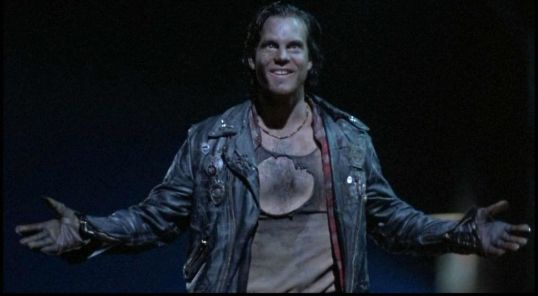
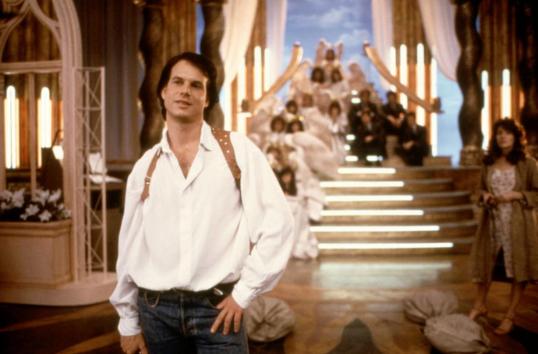
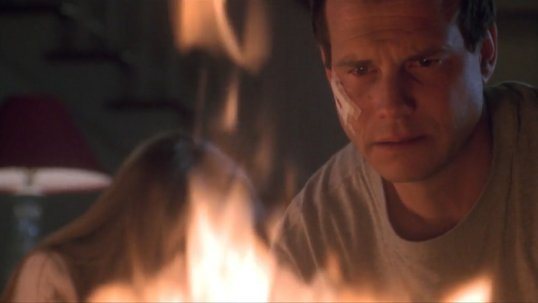
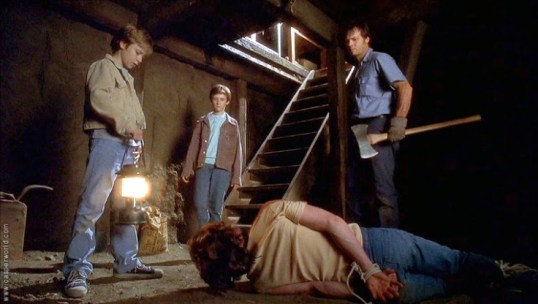
4 Shots From 4 Films: Special Bill Paxton Edition


4 Shots From 4 Films is just what it says it is, 4 shots from 4 of our favorite films. As opposed to the reviews and recaps that we usually post, 4 Shots From 4 Films lets the visuals do the talking!

Bill Paxton would have been 65 years old today.  One of the greatest of the modern character actors, Bill Paxton passed away three years ago and the loss is still felt.  Paxton was one of those actors who was often taken for granted but who was capable of bring almost any character to life.  He was an exciting actor to watch, not to mention being one of the best actor to ever come out of Ft. Worth, Texas.  He is definitely missed.

Today, we pay tribute to the great Bill Paxton with….

4 Shots From 4 Films

Near Dark (1987, dir by Kathryn Bigelow)

Pass the Ammo (1988, dir by David Beaird)

A Simple Plan (1998, dir by Sam Raimi)

Frailty (2001, dir by Bill Paxton)

4 Shots From 4 Films: Special Henry Fonda Edition


4 Shots From 4 Films is just what it says it is, 4 shots from 4 of our favorite films. As opposed to the reviews and recaps that we usually post, 4 Shots From 4 Films lets the visuals do the talking!

Today, we celebrate the birthday of Henry Fonda!  Fonda was born 115 years ago today and, over the course of his long career, he was often cast in role the epitomized everything great about America.  It’s rare to find a Henry Fonda film in which he played an out-and-out villain, though he did just that in Sergio Leone’s Once Upon A Time In The West.  (Leone, in fact, cast Fonda as the evil Frank because he knew audiences would be shocked to see Fonda coldly gunning down settlers and their families.)

In honor Henry Fonda’s legacy, here are….

4 Shots From 4 Films

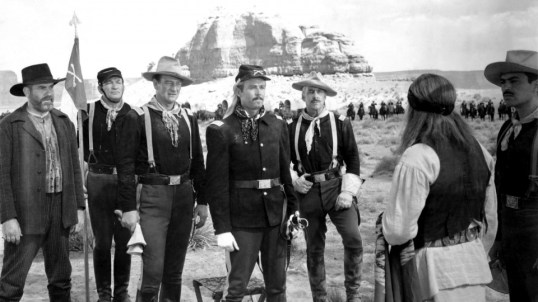
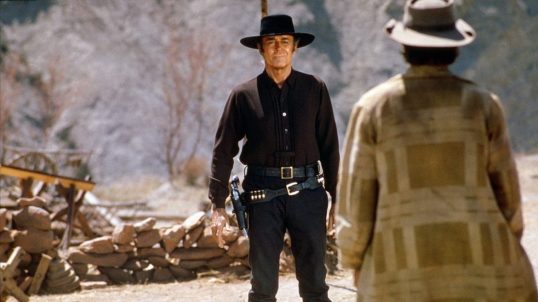
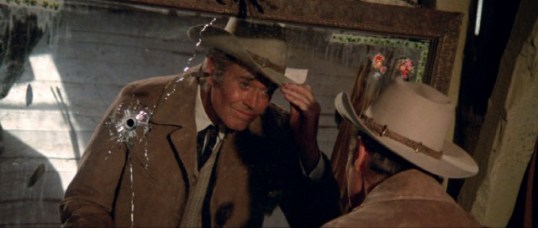
My Darling Clementine (1946, dir by John Ford)

Fort Apache (1948, dir by John Ford)

Once Upon A Time In The West (1968, dir by Sergio Leone)

My Name Is Nobody (1973, dir by Tonino Valerii)

4 Shots From 4 Films: Special Sofia Coppola Edition


4 Shots From 4 Films is just what it says it is, 4 shots from 4 of our favorite films. As opposed to the reviews and recaps that we usually post, 4 Shots From 4 Films lets the visuals do the talking!

Today is the birthday of one of my favorite American directors, the one and only Sofia Coppola!  In honor of this day, here are….

4 Shots From 4 Films

Lost In Translation (2003, dir by Sofia Coppola)

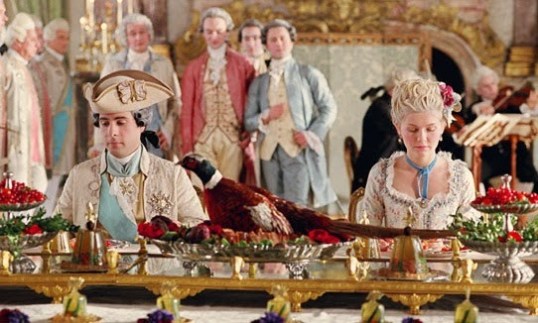
Maire Antoinette (2006, dir by Sofia Coppola)

Somewhere (2010, dir by Sofia Coppola)

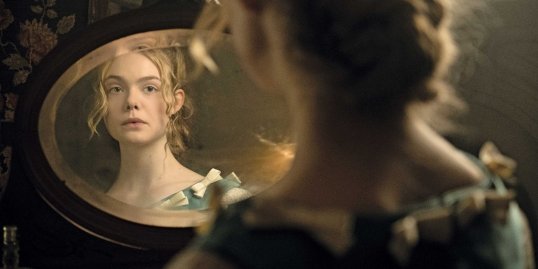
The Beguiled (2017, dir by Sofia Coppola)

Scenes That I Love: Winston Wolfe Says Goodbye In Pulp Fiction


Today is Harvey Keitel’s 81st birthday.

Harvey Keitel is one of those actors who has given so many great performances that it’s difficult to pick which one is his best.  He’s almost always great, even when the film sometimes isn’t.  That said, I’ll always have a lot of affection for the character of Winston Wolfe, the cleaner that Keitel played in Quentin Tarantino’s Pulp Fiction.

Keitel doesn’t show up until the final third of Pulp Fiction but once he does, he pretty much takes over the entire film.  For me, though, my favorite Winston Wolfe moment comes at the end of his story, when he says goodbye to John Travolta and Samuel L. Jackson and essentially reveals himself to be kind of an old-fashioned, almost dorky (if impeccably dressed) guy.

Happy birthday, Harvey Keitel!

4 Shots From 4 Films: Special Katharine Hepburn Edition


4 Shots From 4 Films is just what it says it is, 4 shots from 4 of our favorite films. As opposed to the reviews and recaps that we usually post, 4 Shots From 4 Films lets the visuals do the talking!

Yesterday was the birthday of one of the most iconic screen legends of all time, the one and only Katharine Hepburn!  In honor of her life, career, and legacy, here are….

4 Shots From 4 Films

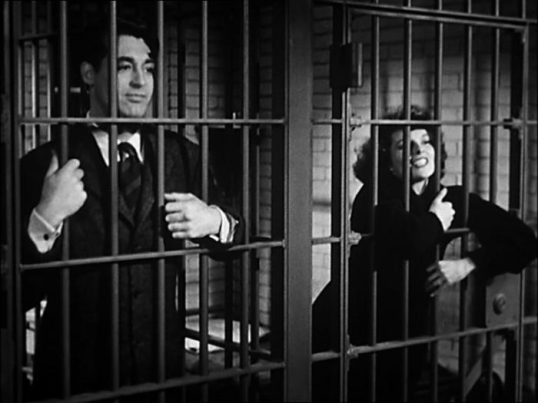
Bringing Up Baby (1938, dir by Howard Hawks)

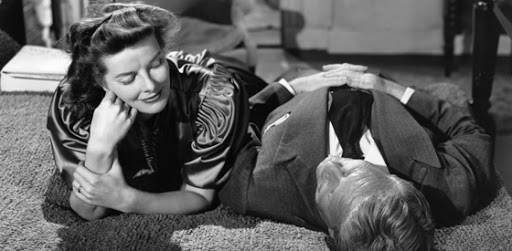
State of the Union (1948, dir by Frank Capra)

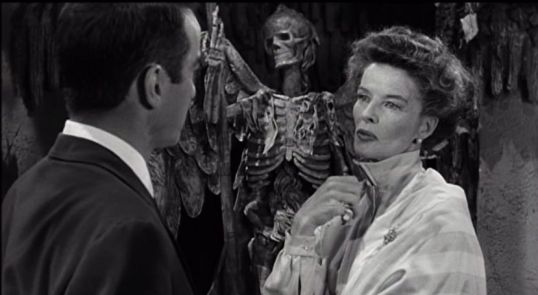
Suddenly, Last Summer (1959, dir by Joseph L. Mankiewicz)

Long Day’s Journey Into Night (1962, dir by Sidney Lumet)

4 Shots From 4 Films: Special Jess Franco Edition


4 Shots From 4 Films is just what it says it is, 4 shots from 4 of our favorite films. As opposed to the reviews and recaps that we usually post, 4 Shots From 4 Films lets the visuals do the talking!

Today is the 90th anniversary of the birth of Jesus Franco!  One of the most prolific filmmakers of all time, Franco made movies that …. well, they’re not easy to describe.  Jess Franco was responsible for some of the most visually striking and narratively incoherent films ever made.  He made films that you either loved or you hated but there was no mistaking his work for being the work of someone else.

Today, in honor of his birthday, here are….

4 Shots From 4 Films

The Awful Dr. Orloff (1962, dir by Jess Franco)

The Blood of Fu Manchu (1968, dir by Jess Franco)

Vampyros Lesbos (1970, dir by Jess Franco)

Countess Perverse (1973, dir by Jess Franco)

4 Shots From 4 Films: Special Ruggero Deodato Edition


4 Shots From 4 Films is just what it says it is, 4 shots from 4 of our favorite films. As opposed to the reviews and recaps that we usually post, 4 Shots From 4 Films lets the visuals do the talking!

Today is the 81st birthday of the great Italian director, Ruggero Deodato!  And that, of course, means that it’s time for….

4 Shots From 4 Films

Live Like A Cop, Die Like A Man (1976, dir by Ruggero Deodato)

The House on The Edge of The Park (1980, dir by Ruggero Deodato)

Raiders of Atlantis (1983, dir by Ruggero Deodato)

Phantom of Death (1988, dir by Ruggero Deodato)