Film Review: Boom! (dir by Joseph Losey)


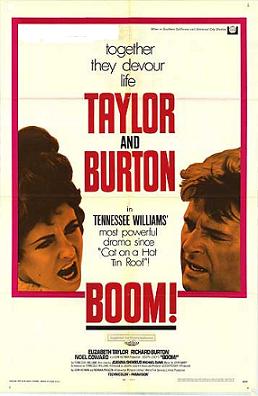
“Boom!” says poet Chris Flanders (Richard Burton) in the 1968 film of the same name. Boom, he goes on the explain, is the sound of life being lived. Every minute that we’re reminded that we’re still alive is a “Boom!” It’s the type of thing that 18 year-old artists say to get laid, though the film treats Chris’s comment with an almost supernatural reverence.

Chris has just shown up on an island that’s owned by Flora Goforth (Elizabeth Taylor), who is the richest woman in the world and who is apparently dying of one of those diseases that makes you lie in bed and yell a lot. Flora lives on the island with an entourage that includes a secretary named Miss Black (Joanna Shimkus) and a head of security named Rudi (Michael Dunn). Rudi is a dwarf and he dresses like a Nazi and often does a stiff-armed salute, just in case we missed the fact that he’s supposed to be a fascist. Why exactly Flora, who were supposed to sympathize with, would employ a Nazi, we never really find out. The film seems to think that there’s something extremely daring about casting a person of short statue as the head of Flora’s security though, ultimately, it’s about as profound as uttering “Boom!” every few minutes.

Anyway, Flora is dying but she’s also dictating her autobiography. It turns out that she’s rich because she married a lot of wealthy men, all of whom died and left her all of their money. Flora’s always in a bad mood but things improve a little when Chris mysteriously shows up on the island and starts saying, “Boom!” all the time. Flora and Chris have several conversations about life and the meaning of it all, the majority of which are full of obscure statements and half-baked attempts at being profound. The dialogue is pretentious but it’s also not very memorable, which is a shame. One can survive being pretentious but being forgettable is simply unforgivable.

Eventually, a friend of Flora’s shows up. Famed playwright Noel Coward plays The Witch of Capri, a flamboyant friend to the rich and famous. He loves to gossip and has a bitchy comment for every occasion. One could argue that Coward is merely playing himself, though one imagines that the real-life Coward could have also come up with a few genuinely witty lines. The Witch informs Flora that Chris has a habit of showing up at the bedside of rich women right before they die. Some people think that Chris is a gigolo while others believe Chris to be …. THE ANGEL OF DEATH!

(Dramatic music)

Which is it? Don’t worry, the answer is revealed by the end of the movie. Of course, it takes a while to get to the end. Boom! is two hours long but it feels much longer. Storywise, Boom! feels like it would be ideal as a 30-minute episode of some old anthology show but director Joseph Losey keeps the story moving at a very slow pace and there are so many dramatic pauses and unnecessary zoom shots that the film itself becomes a bit of an endurance test. Just when you think the movie is finally going to get moving, Chris says, “Boom!” or there’s an extreme close-up of Flora’s ring and everything slows down again.

Boom! is one of the many films that Richard Burton and Elizabeth Taylor made together in the 60s. Unfortunately, both actors are miscast in the lead roles. Flora is described as being old and sickly. Elizabeth Taylor was in her 30s and appeared to be in robust health during the shooting of the film. Chris Flanders is supposed to be in his 20s and a seeker of truth and enlightenment. Burton was in his 40s and looked like he was in his 60s. He spends most of the film looking and sounding as if he’s just come off a weekend bender, which makes him look all the more ludicrous when he hears the ocean and says, “Boom!”

On the plus side, the film is lovely to look at. Flora’s house is big and beautiful. The island scenery is gorgeous. Flora’s costumes are ludicrously ornate but still, they are what you would want to see an international movie star wearing in 1968. As such, the film is always nice to look at. In fact, perhaps the best way to watch Boom! is to turn down the sound so you don’t have to listen to any of the dialogue.

Boom! was based on a Tennessee Williams’s play called The Milk Train Doesn’t Stop Here Anymore. The filmmakers decided to change the name to Boom! and I really can’t blame them for that. This was Elizabeth Taylor’s third film to be based on a Tennessee Williams play. Unfortunately, it matched neither the critical nor the commercial success of Cat On A Hot Tin Roof or Suddenly, Last Summer.

Boom!
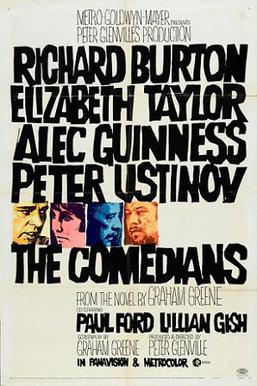
Cleaning Out The DVR: The Comedians (dir by Peter Glenville)


Not to be mistaken for the Taylor Hackford-directed, Robert De Niro-starring disaster from a few years back, The Comedians is a film from 1967 that follows several different people as they attempt to survive day-to-day life in Haiti, back when Haiti was ruled by the dictator, Papa Doc Duvalier.

Richard Burton stars Mr. Brown (Richard Burton), a deeply cynical and world-weary Englishman who owns what passes for a luxury hotel in Haiti.  Though Mr. Brown hopes to be able to sell the hotel and get out of Haiti, he is also having an affair with Martha (Elizabeth Taylor), the German wife of Pineda (Peter Ustinov), the ambassador from Uruguay.  Mr. Brown tries to avoid politics, which it turns out is not easy to do when you’re living under a murderous regime.

Complicating Mr. Brown’s life is Major Jones (Alec Guinness), a retired British army officer who has come to Haiti to do business but who is promptly imprisoned when it’s discovered that he was invited to come to the island by a minister who was subsequently declared to be an enemy of the state.  The fascist Captain Concasseur (Raymond St. Jacques) arrests Major Jones and Mr. Brown takes it upon himself to try to get Jones released.  Unfortunately, Major Jones doesn’t quite understand how serious his situation is and he’s convinced the Haitians that he’s not only a brilliant military leader but that he can also arrange for them to receive a cache of weapons, which he claims he has hidden in a Miami warehouse.

Meanwhile, Mr. and Mrs. Smith (Paul Ford and Lillian Gish) have also arrived on the island, hoping to set up a vegetarian center in Haiti.  (Mr. Smith even once ran for President of the U.S. as the candidate of the Vegetarian Party.)  In many ways, Mr. and Mrs. Smith serve as a stand-in for clueless American activists, obsessing over minor issues while ignoring the larger problems that are right in front of their faces.

From the start, The Comedians establishes Haiti as being a dangerous place, a country where the people live in fear of the brutal police and where the poor struggle to survive day-to-day while their rulers live a life of luxury.  It’s a place where political dissidents regularly disappear, though the police aren’t above murdering people in public as well.  It’s a country where the State rules supreme, controlling the citizens through both fear and a fierce cult of personality.  Rebels like Dr. Magiot (James Earl Jones) only want the country to be free but they know that, as long superpowers like America are supporting the regime, there’s little that the rebels can realistically hope to accomplish.

A major theme running through The Comedians is that the real suffering of the Haitian people is often overshadowed by the strategic concerns of the United States.  Unfortunately, pretty much the same thing happens within the film itself.  While there’s several black actors in supporting roles, the story focuses on the white characters and, as a result, it sometimes feels like the film’s message is less about the people being oppressed and more about how unfortunate it is that people like Brown, Jones, and the Smiths are being inconvenienced by it all.  Like many similarly well-intentioned political films from the late 60s, The Comedians get so bogged down in all of the personal dramas that it loses sight of what’s actually the important part of the story.  The film is often seems more interested in Brown and Martha’s affair than in the conditions that would lead to people like Dr. Magiot risking their lives to bring about change.

For the most part, it’s a well-acted film.  Richard Burton’s natural self-loathing is put to good use and Alec Guinness has a few poignant scenes as a pathological liar who doesn’t realize how much trouble he’s actually in until it’s too late.  (Guinness also has a scene where he wears blackface and pretends to be Burton’s maid.  He does this in order to escape from the secret police and the film doesn’t treat it as being a joke but it’s still rather cringey to watch.)  Elizabeth Taylor is miscast as Martha and her German accent comes and goes but Paul Ford and Lillian Gish do a good job playing clueless Americans.  Perhaps the film’s strongest performance comes from Zakes Mokae, who doesn’t say much as a member of the secret police but who exudes menace every time that he’s on screen.  Still, as well acted at it may be, the film is slowly paced and always seem hesitant about taking any position beyond a general sense that dictatorships are bad.

That said, there’s nothing wrong with reminding people that dictatorships are bad.  That’s especially an important message today.  The past few years have left me convinced that a lot of people secretly yearn for a dictatorship and would be willing to trade their freedoms for a false sense of security.  Though the film may struggle dramatically, it’s still works as a warning about what true authoritarianism actually is.


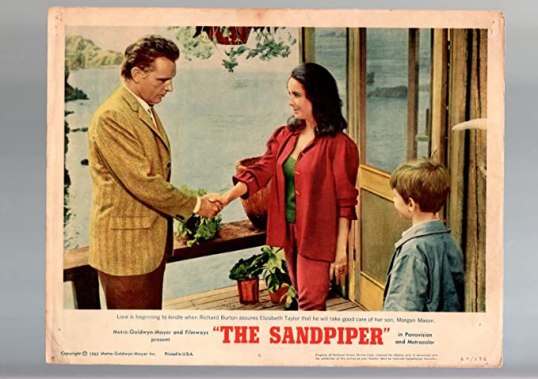
Cleaning Out The DVR: The Sandpiper (dir by Vincente Minnelli)


I recorded The Sandpiper that last time that it aired on TCM.  This 1965 film is one of the many films that Elizabeth Taylor and Richard Burton made together after they fell in love during the making of Cleopatra.  And while it’s true that Who’s Afraid of Virginia Woolf? won Taylor an Oscar and probably should have won one for Burton as well, the majority of the Taylor/Burton films were overproduced melodramas that often seemed as if they’d been rushed into production in order to capitalize on the couple’s tabloid popularity.  Unfortunately, Virginia Woolf aside, neither Taylor nor Burton seemed to bring out the best in each other as actors.

The Sandpiper finds Taylor playing Laura Reynolds, an artist who lives in a California beach house with her young son, Danny (Morgan Mason).  Laura is a free spirit who believes that everyone, including her son, should have the freedom to make their own choices.  She is resistant to any and all authority.  She’s a bohemian, a rebel, the type who doesn’t care what society has to say and who flaunts her refusal to follow the dictates of respectability.  Good for her!  However, she’s also Elizabeth Taylor, which means that she’s impossibly glamorous and even her “cluttered” beach house looks like it’s a hundred times more expensive than anything that anyone viewing the film will ever be able to afford.  Though Taylor tries hard, there’s nothing convincingly bohemian about her.

Richard Burton plays Dr. Edward Hewitt, who runs the nearby Episcopal school.  Dr. Hewitt is not a free spirit.  Instead, he and his wife, Claire (Eva Marie Saint), very much believe in structure and playing by the rules.  They believe in a traditional education and, when a judge orders Danny to be enrolled at their school, that’s what Hewitt plans to give him.  This, of course, brings Hewitt into conflict with Laura.  Both of them have differing ways of looking at the world and Laura is not a fan of religion in general.  However, since they’re played by Burton and Taylor, they’re destined to fall in love and have a scandalous affair.

Dr. Hewitt is one of the many religious figures that Burton played throughout his career.  In fact, Burton played so many alcoholic priests that I spent most of the movie assuming that Hewitt was an alcoholic as well.  However, he’s not.  He’s just Episcopalian.  That said, Burton delivers every line of dialogue in his trademark “great actor” voice and every minute that he’s onscreen just seems to be full of self-loathing.  Even before he cheats on his wife, Hewitt seems to hate himself.  Of course, once Burton does start cheating on his wife, it only gets worse.  The film presents Hewitt as being something of a hesitant participant, someone who knows that he’s doing the wrong thing but he simply cannot stop himself.  Laura, meanwhile, is presented as being someone who is fully willing to break up a marriage to get what she wants.  One gets the feeling that 1965 audiences probably just assumed they were watching the true story of how Taylor and Burton fell in love during the making the Cleopatra.  That said, it’s all pretty tame.  Just like Taylor, director Vincente Minnelli was too much of a product of the old Hollywood to truly embrace this story for all of its sordid potential.

If you’ve ever wanted to watch Charles Bronson debate religion with Richard Burton, this is the film for you.  Bronson plays a sculptor and an atheist who upsets Hewitt by calling him “reverend.”  Bronson is actually more convincing in the film than either Burton or Taylor, bringing a rough authenticity to his role.  Whereas Burton and Taylor both seem to be going through the motions, Bronson comes across as if he actually has a personal stake in the film’s story.  It’s not enough to save the movie, of course.  Fortunately, a year later, Liz and Dick would be used to better effect in Who’s Afraid of Virginia Woolf?


Cleaning Out The DVR: The V.I.P.s (dir by Anthony Asquith)


The 1963 film, The V.I.P.s, is about a group of very important people who have all shown at Heathrow Airport at the same time, all in an effort to get the Hell out of England.  They’ve all got their own individual reasons for wanting to leave the country but the important thing is that they all want to leave.  Unfortunately, a fog has rolled onto the runway and the plane can’t take off.  Because this film was made in 1963, all the passengers are allowed to leave the plane and wait, overnight, in a hotel.

Among the Very Important People:

Flamboyant film producer Max Buda (Orson Welles, playing a version of himself) needs to leave London before he receives a gigantic tax bill.  Accompanying him is his latest discovery, Gloria Gritti (Elsa Martinelli).  Max is the type who does things like barging into the plane’s cockpit and demanding to know why the pilots aren’t willing to risk crashing the plane.  That may sound self-centered on Max’s part but Welles is such a charmer that you forgive him.  Add to that, he’s trying to avoid paying taxes and that’s something that I can definitely get behind.

The Duchess of Brighton (Margaret Rutherford) is an eccentric but impoverished noblewoman who is going to lose her home if she doesn’t fly to Florida and take on a somewhat demeaning job.  The Duchess is the type who struggles to find room in the overhead compartment for her ludicrous oversized hatbox.  She’s never really been out in the real world before.  Margaret Rutherford won an Oscar for her performance, which is occasionally amusing but never particularly subtle.  (Have you seen Airport?  Rutherford has the Helen Hayes role, basically.)

Lee Mangrum (Rod Taylor) is a businessman who is on the verge of losing his business.  Miss Mead (Maggie Smith) is his secretary.  Miss Mead is secretly in love with Lee, who somehow hasn’t noticed.  We’re supposed to sympathize with Lee but he’s so incredibly clueless that it’s hard not to feel that Miss Mead could do better.

Finally, we have Frances Andros (Elizabeth Taylor).  Frances is one of the most popular film stars in the world.  She’s married to Paul Andros (Richard Burton), who is very wealthy and who, like most Burton characters, is also very moody.  Frances has decided to leave Paul and go to America with her lover, Marc Champselle (Louis Jourdan).  However, the fog gives Paul a chance to come to the airport and try to talk Frances out of leaving him.

Make no mistake about it, Liz Taylor and Burton are the main attraction here.  Welles, Rod Taylor, Rutherford, and Smith all get plenty of scenes but it’s obvious that the people behind The V.I.P.s understood that most of the audience would be there to watch Liz and Burton acting opposite each other.  This was, I think, the first film that they made together after falling in love on the set of Cleopatra.  Due to Cleopatra’s legendarily difficult production, it was released around the same time as The V.I.P.s, despite going into production years before the latter film.  Audiences could go watch Liz and Dick fall in love in Cleopatra and then head over to a different theater and watch the two of them fight in The V.I.Ps.  Elizabeth Taylor may be playing Frances Andros and Richard Burton may be playing Paul Andros but they really might as well be playing themselves.

The V.I.P.s is a big and glossy film, the type of movie that the Hollywood studios used to make as their way of saying, “See!  You won’t get this on TV!”  It’s frequently silly but it’s also undeniably watchable.  While Burton and Taylor’s later films tended to feature the two of them at their worst, they’re both actually really good in The V.I.P.s and the scenes where they argue have an emotional heft to them that, with the exception of Who’s Afraid of Virginia Woof?, wasn’t found in their other films.  For once, you watch the film and you really do hope that Liz and Dick will work things out and stay together.  The V.I.P.s may be dated (just try to chase someone through an airport or get off a delayed flight now) but it’s still entertaining.

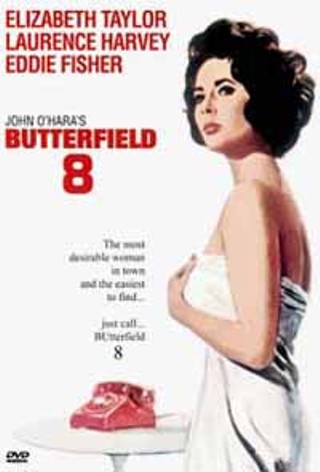
Cleaning Out The DVR: BUtterfield 8 (dir by Daniel Mann)


“Mama, face it,” Gloria Wandrous (Elizabeth Taylor) announces in the 1960 film, BUtterfield 8, “I was the slut of all time!”

Personally, I think Gloria is being a little bit too hard on herself. Certainly the film suggests, in its 1960 way, that she’s promiscuous and that she only sleeps with men for money but that doesn’t necessarily make her the slut of all time. For one thing, I would think that the slut of all time would have more options than just a wimpy pianist played by Eddie Fisher or a depressing, self-absorbed businessman played by Laurence Harvey.

“I still say it stinks,” Elizabeth Taylor said, almost immediately after winning her first Oscar for her performance in BUtterfield 8 and she’s kind of right. BUtterfield 8 is not a particularly good film, though not quite as bad as Taylor seemed to believe it to be.

Taylor won the Oscar after suffering a near fatal bout of pneumonia and having to undergo a tracheotomy. Along with saying that the film stunk, Taylor also often said that she only won her first Oscar because she nearly died. That may or may not be true but the thing is, Taylor’s the best thing in this overwritten and overheated mess of a movie. She certainly gives a better and more sympathetic performance than Laurence Harvey, who is cast as her married lover, Wilson Liggett. We’re meant to sympathize with Ligget but Harvey plays him as if he’s in a permanently sour mood and, after just a few minutes of listening to him bitch about every little thing, the viewer will get sick of him. It’s hard to really see what Gloria Wandrous sees in this whiny alcoholic.

Then again, the only other option that the film gives Gloria is Steve Carpenter, the pianist played by Eddie Fisher. Steve can’t decide if he’s in love with his boring girlfriend, Norma (Susan Oliver) or if he’s in love with Gloria. However, Steve has no problem letting Gloria borrow one of Norma’s dresses so that she can wear it when she goes home to visit her mother and I have to say that if I was Norma, Steve would be finding a new bed to sleep in after that. Gloria tells Steve that he needs to decide who he’s in love with but Steve jut can’t do it. Of course, in real life, Eddie Fisher left Debbie Reynolds so that he could marry Elizabeth Taylor. (A year or so later, Taylor left Fisher so that she could marry Richard Burton.)

BUtterfield 8 is one of those films that was undoubtedly considered to be daring when it was first released, seeing as how it acknowledged that people had sex without getting married first. (GASP!) Of course, though the film acknowledges that people have sex, it still makes sure to let us know that no one’s happy afterwards and that promiscuity eventually leads to death. (I mean, BUtterfield 8 may have taken risks but it still knew better than to defy the production code.) Seen today, the entire film is rather tame, talky, and slow but the star power of Elizabeth Taylor still comes through. The film opens with a lengthy sequence of Gloria getting ready for her day and, as you watch it and, more importantly, as you watch Elizabeth Taylor, you find yourself thinking that this is what a movie star is supposed to be. She dominates the film and she manages to credibly deliver even the most overheated pieces of dialogue. (Just try to imagine Jennifer Lawrence delivering the “slut of all time” line and you’ll immediately understand the difference between the movie stars of the past and the movie stars of the present. Of course, you could also say the same thing about trying to imagine a young Elizabeth Taylor in Silver Linings Playbook or The Hunger Games.) In fact, one could argue that Taylor’s performance is almost too good for the material. The film, in its 1960 way, suggests that Gloria would be better off if she just settled down but it’s impossible to imagine Taylor’s Gloria Wandrous settling for the stiffs played by Laurence Harvey and Eddie Fisher.

Though Elizabeth Taylor was correct about BUtterfield 8‘s overall quality, it’s still a good example of what star power can do for an otherwise mediocre film.

Here’s The Trailer For Spiral: From The Book of Saw!


Casting Chris Rock in a Saw film still feels strange to me but it’s not quite as a strange as the fact that Saw franchise is apparently still a thing. Unlike the majority of the characters who have appeared in the Saw films, this franchise appears to be immortal. I have a feeling that long after we’re all gone and we’ve been replaced by a new generation of film watcher and film reviewers, a new Saw film will still come out every few years. Eventually, no one will be able to follow the plot but it won’t matter. All that’ll matter will be seeing who loses an arm.

Anyway, the latest Saw is called Spiral: From The Book of Saw, which is a rather unwieldy title. When this movie was first announced it was just called Spiral but I guess someone realized that they needed to make it clear that this film is a part of the Saw Cinematic Universe.

(For the records, the SCU existed long before the MCU and it proved that audiences would spend money to watch sequels that were basically impossible to follow if you didn’t already know the backstory. So, you could argue that the MCU owes a lot to the success of the Saw films.)

Here’s the trailer for Spiral. Spiral will be released in May so get ready!

Here’s The Trailer for The Night House!


Well, this looks super creepy, doesn’t it?

Plus, it stars Rebecca Hall!  I’ll watch anything with Rebecca Hall in it.  Well, almost anything.  Now that I think about it, she’s appeared in some films that I didn’t really care for but she still always gave a good performance and it really does seem like she should be a bigger star for now.  So, let’s hope The Night House is a success!

The Night House premieres on July 16th!  Here’s the trailer:

Here’s The Trailer for Wrath of Man!


Finally, something to look forward to!

Guy Ritchie and Jason Statham are teaming up for an action revenge thriller, in which Statham kills a lot of of people.  That’s really all I can tell from the trailer for Wrath of Man but really, all you need to know is that it’s Ritchie and Statham.

It’s amazing to think that there was once a time when I didn’t like Jason Statham.  What was I thinking?  I was probably just being a film snob.  Today, of course, I realize that he’s the closest thing we’ve got to an old school action hero.  Decades from now, people will be doing memes about how tough 90 year-old Jason Statham still is.  Who would win in a fight between Jason Statham and Liam Neeson?  Neeson, but only becuase Statham would take pity on him and allow him to win.  Jason Statham’s cool like that.

Here’s the trailer for Wrath of Man.  It premieres on May 7th!

Film Review: Tom & Jerry (dir by Tim Story)


Kayla Forester (Chloe Grace Moretz) has recently arrived in Manhattan, fleeing her go-nowhere hometown in Pennsylvania.  She’s determined to finally do something with her life, spurred on by the feeling that there are other people who are just as young as she is but who have already managed to get their lives together.  She doesn’t have much work experience but she has endless ambition and she’s also willing to lie, cheat, and steal if it means finding a better life.

Tom Kat (played by himself) is an aspiring pianist and creator of ludicrously elaborate mouse traps who finds his ambitions hampered by the fact that he’s a cartoon cat who can’t talk and who has a habit of getting involved in elaborate mishaps.  Even his attempts to make a meager living by playinf piano in Central Park are continually thwarted by all of the other cartoon animals that are lurking around New York City.  (“Look!” a little boy announces, “that cat’s playing a piano!”  His father explains that it’s common to see all sorts of strange things in New York.)

Jerry Mouse (playing himself) is Tom’s longtime rival.  A cartoon mouse who is also a plucky kleptomaniac, Jerry has recently arrived in Manhattan.  He’s looking for a home and he wastes no time in reigniting his decades old feud with Tom and, of course, engaging in countless acts of petty thievery.

Together, they solve crimes!

Well, no, actually, they don’t.  Instead, they commit a few.  Kayla gets things started by stealing someone else’s resume and getting a job working at a luxury hotel.  Under the mistrustful eye of event manager Terence Mendoza (Michael Pena), Kayla tries to make sure that two celebrities, Ben (Colin Jost) and Preeta (Pallavi Sharda ), have the perfect wedding in the hotel’s ballroom.  Despite being in no way qualified for her job, Kayla proves to be a quick learner and she even manages to deal with the hotel’s temperamental head chef, Jackie (played, somewhat inevitably, by Ken Jeong).  The only problem is that Jerry has moved into the hotel as well.  Realizing that a mouse could ruin the entire wedding, Kayla hires Tom to track the little rodent down.  Tom and Jerry better work out their differences before the wedding because Ben and Preeta are scheduled to ride two cartoon elephants down the aisle and you know how elephants feel about mice!

Tom & Jerry is a hybrid film, a mix of live action and animation.  New York City is real.  All of the human characters are played by actual humans.  However, every single animal — from the title characters to the elephants to Ben’s bulldog to the pigeons that fly over Central Park and provide a chorus to the action — is a 2D cartoon character.  It’s actually a pretty cute idea and, to the film’s credit, it doesn’t waste anyone time with elaborate excuses for why this is.  Everyone in the film simply accepts that they live in a world with cartoon animals.  No one is particularly surprised with Kayla hires a cartoon cat to take care of the cartoon mouse problem.

Tom & Jerry works whenever it focuses on the title characters.  It’s actually a lot of fun to watch the two of them chasing each other through a live action New York City and never suffering any injuries regardless of how many mallets they hit each other with.  Unfortunately, the film slows down whenever it focuses on the human characters.  Chloe Grace Moretz is one of the best actresses of her generation and it’s always nice to see her playing a character who isn’t being stalked or having to deal with some sort of unimaginable tragedy but still, Kayla’s story is never really interesting enough to justify taking the focus away from Tom and Jerry.  For most of the movie, poor Michael Pena gets stuck playing the film’s designated villain, even though Terrence is basically just doing his job.  In the end, of course, everyone learns an important lesson and they’re all the better for it but most viewers would probably trade the lesson for more of the mouse and the cat.

Still, whenever it’s just Tom and Jerry doing their thing, this is a cute movie.  I just wish the movie hadn’t gotten bogged down with everything else.

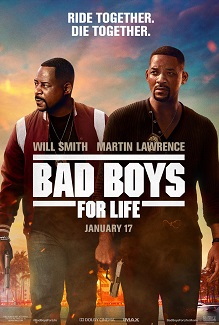
The NAACP Image Awards Honor Bad Boys For Life


The winners of the 2020 NAACP Image Awards were announced last night, during a ceremony that was aired on BET.  Personally, I think Bad Boys For Life was a pretty good movie so I’m glad it won.  Sometimes, I think we forget that an entertaining film can also be a good (or, in this case, “outstanding”) film.

Here are the film winners:

Outstanding Motion Picture
Bad Boys For Life 
Da 5 Bloods
Jingle Jangle: A Christmas Journey
Ma Rainey’s Black Bottom
One Night In Miami…

Outstanding Directing in a Motion Picture
David E. Talbert – Jingle Jangle: A Christmas Journey
George C. Wolfe – Ma Rainey’s Black Bottom
Gina Prince-Bythewood – The Old Guard
Radha Blank – The Forty-Year-Old Version
Regina King – One Night In Miami…

Outstanding Actor in a Motion Picture
Anthony Mackie – The Banker
Chadwick Boseman – Ma Rainey’s Black Bottom
Delroy Lindo – Da 5 Bloods
Forest Whitaker – Jingle Jangle: A Christmas Journey
Will Smith – Bad Boys For Life

Outstanding Actress in a Motion Picture
Issa Rae – The Photograph
Janelle Monáe – Antebellum
Madalen Mills – Jingle Jangle: A Christmas Journey
Tracee Ellis Ross – The High Note
Viola Davis – Ma Rainey’s Black Bottom

Outstanding Supporting Actor in a Motion Picture
Aldis Hodge – One Night In Miami…
Chadwick Boseman – Da 5 Bloods
Clarke Peters – Da 5 Bloods
Colman Domingo – Ma Rainey’s Black Bottom
Glynn Turman – Ma Rainey’s Black Bottom

Outstanding Supporting Actress in a Motion Picture
Anika Noni Rose – Jingle Jangle: A Christmas Journey
Gabourey Sidibe – Antebellum
Nia Long – The Banker
Phylicia Rashad – Jingle Jangle: A Christmas Journey
Taylour Paige – Ma Rainey’s Black Bottom

Outstanding Writing in a Motion Picture
David E. Talbert – Jingle Jangle: A Christmas Journey
Kemp Powers – One Night In Miami…
Lee Isaac Chung – Minari
Pete Docter, Kemp Powers & Mike Jones – Soul
Radha Blank – The Forty-Year-Old Version

Outstanding Independent Motion Picture
Emperor
Farewell Amor
Miss Juneteenth
The 24th
The Banker

Outstanding International Motion Picture
Ainu Mosir
His House
Night of the Kings
The Last Tree
The Life Ahead

Outstanding Breakthrough Performance in a Motion Picture
Dayo Okeniyi – Emperor
Dominique Fishback – Project Power
Jahi Di’Allo Winston – Charm City Kings
Jahzir Bruno – The Witches
Madalen Mills – Jingle Jangle: A Christmas Journey

Outstanding Ensemble Cast in a Motion Picture
Da 5 Bloods
Jingle Jangle: A Christmas Journey
Ma Rainey’s Black Bottom
Soul
The Banker

Outstanding Animated Motion Picture
Onward
Over the Moon
Scoob!
Soul
Trolls World Tour

Outstanding Character Voice-Over Performance – Motion Picture
Ahmir-Khalib Thompson aka Questlove – Soul
Angela Bassett – Soul
Chris Rock – The Witches
Jamie Foxx – Soul
Phylicia Rashad – Soul

Outstanding Short Form (Live Action)
Baldwin Beauty
Black Boy Joy
Gets Good Light
Home
Mr. & Mrs. Ellis

Outstanding Short Form (Animated)
Canvas
Cops and Robbers
Loop
The Power of Hope
Windup

Outstanding Breakthrough Creative (Motion Picture)
Loira Limbal – Through the Night
Melissa Haizlip – Mr. Soul!
Nadia Hallgren – Becoming
Radha Blank – The Forty-Year-Old Version
Remi Weekes – His House

Outstanding Documentary (Film)
All In: The Fight For Democracy
Coded Bias
John Lewis: Good Trouble
Soul!
On the Record

Entertainer of the Year
Viola Davis
Regina King
D-Nice
Trevor Noah
Tyler Perry

Social Justice Impact
Stacey Abrams
Debbie Allen
Lebron James
Tamika Mallory
April Ryan

President’s Award
LeBron James

Hall of Fame Award
Eddie Murphy

Chairman’s Award
Rev. James Lawson