International Horror Film: Burning (dir by Lee Chang-dong)


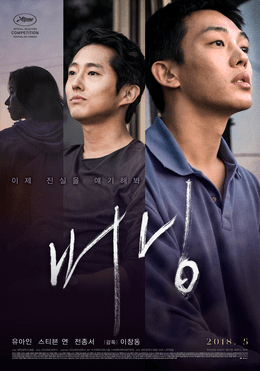
I’ll be the fist to admit that it’s probably open for debate whether or not the 2018 South Korean film, Burning, is really a horror film.  On the one hand, it could be a murder mystery or perhaps a film about a poor farm boy who meets an upper class sociopath.  On the other hand, it could all be a big misunderstanding.  By the end of the movie, you’re not even sure that all of these characters even existed.  Though there are no ghosts nor any other paranormal monsters to be found in Burning, it’s still a deeply unsettling film.  In fact, it’s one of the most unsettling films that I’ve seen in a while.  It’s a film that sticks with you, as any good horror film should.

Lee Jong-su (Yoo Ah-in) is an aspiring writer who makes a meager living by doing odd jobs in Seoul.  His family owns a farm and his father has been accused of murder, though the details as to what happened are left deliberately opaque.  When Jong-su runs into an old classmate named Shin Hae-mi (Jeon Jong-seo) in downtown Seoul, he doesn’t recognize her at first.  She cheerfully explains that she’s had plastic surgery.  She also says that she has spent years training in the art of pantomime.  She pantomimes eating invisible food and she does such a good job at it that you’d swear she was actually holding something in her hand and chewing something in her mouth.  After they have sex, Hae-mi says that she’s going on a trip to Africa and she asks Jong-su to look after her cat.  Jong-su agrees.

And yet, we never see the cat.  After Hae-mi leaves, Lee goes to her apartment and searches for the cat but never finds it.  He finds evidence that the cat does exist.  Food is eaten.  The litter box is used.  And yet, the entire time that Jong-su is supposed to be taking care of it, the cat is never seen.  Jong-su spends so much time searching for the cat in that apartment that it’s hard not to wonder if the cat even existed.  For that matter, Hae-mi’s story about going to Africa is remarkably vague.  Why is she going to Africa?  Why has she entrusted someone she barely knows with taking care of her cat?  Are the cat and the visit to Africa just another pantomime, something that seems real yet only exists in Jong-su’s mind?

When Hae-mi finally does return from her trip, she brings with her a story about being stranded in the Nairobi Airport for three days as the result of a terrorist attack.  Returning with Hae-mi is Ben (Steven Yeun).  Ben is a handsome and rich and confident and everything that Lee is not.  Ben alternates between being superficially friendly and chillingly cold.  At one point, he suggests that he at least cared enough about Hae-mi to be jealous of her relationship with Jong-su and yet it’s hard not to notice that Ben always seems to be slightly annoyed with her whenever they’re together.  When the three of them go up to Jong-su’s farm and a stoned Hae-mi dances in the night, Jong-su watches enraptured while Ben smirks.  (It would be easy to assume that Jong-su is the good guy while Ben is the bad guy if not for a scene where Jong-soo angrily reprimands Hae-mi for her behavior around other men, showing that Ben is not only person in the film with control issues.)  At one point, Ben casually tells Jung-so about his interesting habit.  He sets fire to greenhouses.  He destroys the beauty that others have grown.  He tells Jong-su that he’s noticed a lot of greenhouses near his family’s farm….

Burning is a deeply unsettling film.  It’s not just that Steven Yeun gives a chilling performance as a man who appears to have no soul.  (The film makes very good use of Yeun’s natural likability so show how someone like Ben can not only survive in the world but also thrive in it.)  At the same time that we’re trying to figure out Ben, we’re also struggling to get a read on Jong-su as well.  We spend a lot of time with Jong-su and yet, by the end of the movie, we’re still not sure that we know him at all.  He says he wants to be a writer and speaks vaguely of Faulkner and Fitzgerald but it still seems as if he’s hiding secrets of his own.  It’s tempting to read a lot (perhaps too much) into Jong-su’s admiration of Faulkner and Fitzgerald.  Faulkner wrote novels that took place in the heads of his characters, much as how Burning, at times, seems to be taking place completely in the head of Jong-su.  Fitzgerald’s best-known novel was about a man who was obsessed with money and a woman whom he had idealized beyond reality.  Jong-su, at one point, refers to Ben as being Gatsby but we’re left to wonder if perhaps it’s the other way around.  Perhaps Jong-su is Gatsby, the poor man who is constantly trying to reinvent his reality.

It all leads to a mystery that may not be a mystery and clues that could just as easily by coincidences.  It also leads to an act of sudden violence, one that leaves you wondering whether or not we knew any of these people.  As I said, it’s a deeply unsettling film but, at the same time, it’s not one that can be ignored.  It has a 148-minute running time and it’s deliberately paced and yet, due to the strength of the performers and the intriguing enigma of the plot, you don’t get bored.  You don’t look away.  You watch this story and you search for answers that you know you’ll probably never find.

Burning is on Netflix right now so be sure to watch it before they drop it to make room for another season of American Horror Story.
 

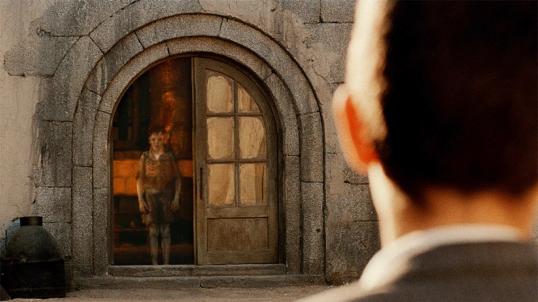
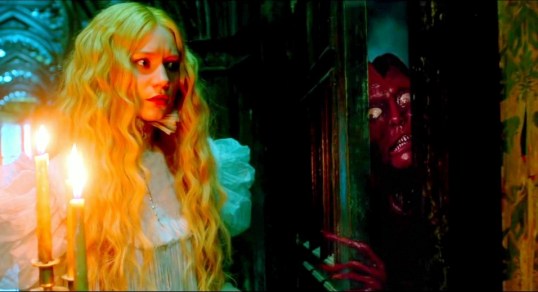
4 Shots From 4 Guillermo Del Toro Films: Cronos, The Devil’s Backbone, Pan’s Labyrinth, Crimson Peak


4 Shots From 4 Films is just what it says it is, 4 shots from 4 of our favorite films. As opposed to the reviews and recaps that we usually post, 4 Shots From 4 Films lets the visuals do the talking!

This October, we’ve been using 4 Shots From 4 Films to pay tribute to some of our favorite horror directors!  Today we recognize not only the talent of Guillermo Del Toro but we wish him the happiest of birthdays as well!

4 Shots From 4 Films

Cronos (1993, dir by Guillermo Del Toro)

The Devil’s Backbone (2001, dir by Guillermo Del Toro)

Pan’s Labyrinth (2006, dir by Guillermo Del Toro)

Crimson Peak (2015, dir by Guillermo Del Toro)

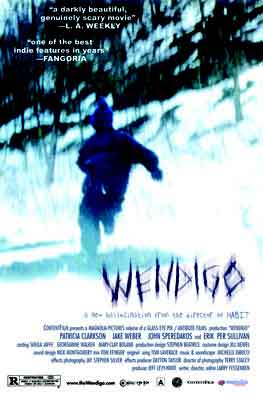
Horror Film Review: Wendigo (dir by Larry Fessenden)


The 2001 film, Wendigo, tells the story of a family in the Catskills.  Some families go to upstate New York and they hang out with the dance people and learn a lesson about tolerance, class conflict, and dirty dancing.  Others leave New York City and head up north because they’re trying to get away from the stress that comes from being a New Yorker.  The film is about the latter and, to be honest, I don’t blame them for leaving the city.  While it’s true that I don’t live in New York, I’ve seen enough clips of Bill de Blasio speaking to know that I also would want to get away from that 8 foot monster.

Of course, there are monsters in upstate New York as well.  Just as South Texas has to deal with chupacabras, it would appear that Upstate New York has a Wendigo problem.  According to the film, the Wendigo is a man who turned into a monster after committing cannibalism.  The Wendigo can assume any shape and …. well, it’s basically just a real bitch to be around, I guess.

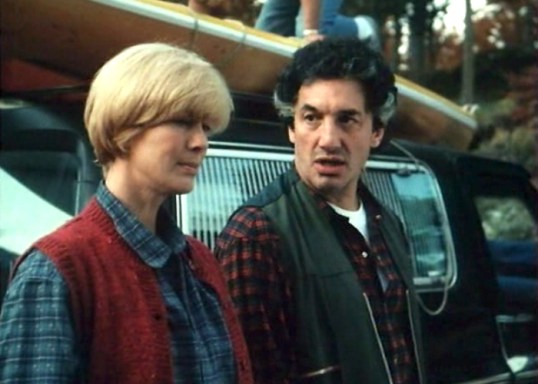
At least, that’s how it inititally appears when George (Jake Weber) and his wife Kim (Patricia Clarkson) and their son Miles (Erik Per Sullivan) are just starting out their trip upstate.  George accidentally crashed into a deer and gets into with a local hunter named Otis (John Speredakos).  Otis is really upset that George took out that deer before he got a chance to.  George apologizes but it doesn’t seem to do much good.  Later, when the family reach their cabin …. well, things just continue to get out of hand.  Are they being harassed by the hunters or is it the Wendigo?

Or could it be both!?

As you may have guessed, I had a bit of a mixed reaction to Wendigo when I saw it.  On the one hand, I appreciated the way the film captured the feeling of isolation and there’s a few nicely surreal dream sequences.  If you’ve been reading this site for a while, you know how much I appreciate an effective and surreal dream sequence.  However, Wendigo is also a rather slowly-paced film.  It’s only 91 minutes long but it felt much longer and Otis is such a total caricature that it made it difficult for me to take his character seriously as either a hunter or, for that matter, a legitimate threat to anyone’s safety.  As a viewer, I took one look at Otis and I thought to myself, “There better be an actual monster in the film because if this guy is the villain, it’s going to be a long 90 minutes.”

As for the cast, Patricia Clarkson and Jake Weber were believable if not terribly interesting as the parents.  It was especially interesting to see Clarkson in a horror film, as this isn’t a genre with which one really associates her.  (Jake Weber at least has Medium on his resume.)  Erik Per Sullivan also did an okay job as Miles.  I was glad that he wasn’t as annoyingly precocious as a lot of a child actors tend to be.  The supporting cast is a mixed collection of performers who try too hard and those who don’t seem to be trying at all.

Wendigo has got some effective, Shining-influenced visuals and it ends on an appropriately ambiguous note.  The film has its moments but, ultimately, it was a bit too slow-paced and uneven for me.

Horror On the Lens: This Is Not A Test (dir by Fredric Gadette)


For today’s horror on the lens, we have a low-budget apocalypse film from 1962.  The film follows Deputy Colter (Seamon Glass), a deputy who tries to take charge of the formation of a shelter and who quickly reveals himself to be a mentally unstable fascist. Though this film undoubtedly gets off to a rough start, it soon develops a convincingly ominous and almost dream-like atmosphere.

After watching the film, be sure to check out my review from last year.  And, as always, enjoy!

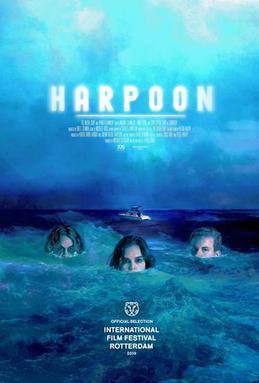
The TSL’s Horror Grindhouse: Harpoon (dir by Rob Grant)


The 2019 Canadian film, Harpoon, tells the friends of three friends and a boat.

The three friends are Jonah (Munro Chambers), Richard (Christopher Gray), and Sacha (Emily Tyra).  Jonah is a perhaps overly sensitive young man who is struggling to come to terms with not only the death of his parents but also the mountain of debt that they left for him.  Richard is wealthy, has an anger problem, and it is suggested that his father might have murdered at least one person.  Sacha is a nurse who is going out with Richard.  Richard claims to love Sacha but that still doesn’t stop him from cheating on her.  Jonah is obviously in love with Sacha but, just as obviously, he would never betray his best friend …. or would he?

The boat is a yacht known as the Naughty Bouy.  It’s a really nice yacht.  Richard owns it, though he doesn’t appear to be much of a sailor.  The film’s rather sardonic narrator (voice of Brett Gelman) lists a number of superstitious beliefs that Richard, Jonah, and Sacha overlooked when they boarded the yacht for the day.

Here’s just a few of them:

  1. It’s never safe to have someone named Jonah on a boat.
  2. It’s not safe to take your first step onto a boat with your left foot.
  3. Apparently, it’s bad luck to have a redhead (like Sacha and, for that matter, me) on a boat.
  4. Never kill a sea gull.  “That’s a big one,” the narrator tells us, right after Jonah and Richard kill a sea gull.

Now, I really can’t go into too many specifics about what happens on the boat without spoiling the film.  And this is a film that you really should watch without any knowledge of what’s about to happen.  However, I will say that the friends eventually end up stranded out in the middle of the ocean.  Some of it’s because of bad luck.  Some of it’s because the friends all seem to secretly hate each other.  Two of them may have teamed up to try to kill the other one …. or maybe someone’s just being paranoid.  One of the friends ends up with hole in their hand, courtesy of a spear gun.  The important thing is that they eventually find themselves trapped out in the middle of the ocean, forced to depend on one another even while possibly thinking about killing each other.  Secrets and lies are revealed and hard decision are made.  It would all be really dark, if not for the sardonic commentary of the narrator, who not only tells us who these three are but who also keeps informed as to what they’re doing wrong.

It’s a good movie, one that immediately captured my attention and kept me guessing as to what was going to happen.  If I’ve been vague about the film’s plot, it’s because this film earned the right to not be spoiled.  It’s an occasionally grisly thriller with a wonderfully dark sense of humor.  The three actors all did a wonderful job bringing their three less-than-lucky characters to life.  Fans of Degrassi will especially be interested to see Munro Chambers, giving an excellent performance as a character who might initially remind them of Eli Goldsworthy but who eventually turns to be someone else altogether.

Harpoon really surprised me.  Keep an eye out for it and, for the love of God, don’t kill any seagulls.


Horror Scenes That I Love: The Opening of Stage Fright


Let’s die Broadway style!

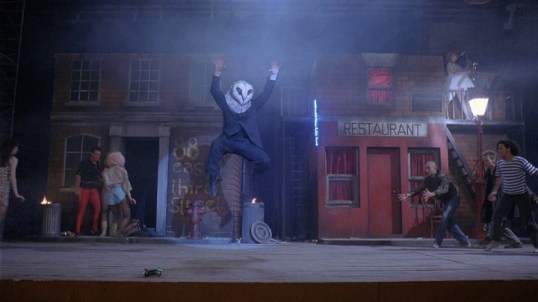
The opening on Michele Soavi’s 1987 masterpiece, StageFright, is one of the most brilliant ever filmed.  Not only does it send up the conventions of the slasher genre but is also sends up musical theater.  Seriously, how can you not love a horror film that features Marilyn Monroe playing the saxophone?

Of course, the opening of the film only begins to hint at the violence that’s going to follow.  When a real killer manages to get into the theater, fantasy and reality blend together.

Interestingly enough, I think a real-life Broadway adaptation of StageFright would be a hit.

For now, enjoy the dancing and the mayhem!

International Horror Film Review: Body Count (dir by Ruggero Deodato)


Sitting in the middle of the forest, there’s a camp ground.  Rumor has it that the camp was built on the site of an ancient Native American burial ground and that’s why grouchy Robert Ritchie (David Hess) and his wife Julia (Mismy Farmer) were able to afford it as such as reasonable price.  I guess that could be true and maybe the part about the curse is true, too….  Well, no matter!  People love to camp and the forest is lovely and there’s no way that this camp ground won’t be a success!

In fact, the only thing that could stop it from being a popular vacation location would be if two teenagers were mysteriously murdered one night….

Which, of course, is exactly what happens!  The daughter of a local doctor (played by John Steiner, of all people) goes off with her boyfriend and both of them are murdered!  (Though we’re told that the two of them are high school students and, when we first see them, they’re at basketball practice, both victims appear to be in their early 30s.  When the actress playing the doctor’s daughter first approached him, I immediately assumed that she was playing his wife.  I was actually a little bit stunned when she said, “Bye, Daddy.”)

Anyway, the unsolved murder pretty much ruins any hope of the camp ground being successful.  15 years later, Robert is paranoid and convinced that a Native shaman is sneaking around the forest and looking for campers to kill.  Meanwhile, Julia is so frustrated with her increasingly unstable husband that she’s having an affair with the sheriff (Charles Napier).  The sheriff is so busy shtupping Julia that it often falls upon Deputy Ted (Ivan Rassimov, who had the best hair of all the Italian horror actors) to actually enforce the law.  Meanwhile, the doctor is still mourning the death of his daughter and wandering around the forest.

Eventually, a bunch of obnoxious 30-something teenagers arrive, looking for a place to park their camper and ride their dirt bikes.  Despite the history of murder and the general grouchiness of Robert Ritchie, they decide to say at the campground.  Soon, a masked killer is carving people up.  Is it the spirit of the Native shaman or is it something else?  Who will survive and what will be left of them?

This 1986 Italian film was directed by none other than Ruggero Deodato, the man behind films like Cannibal Holocaust and The House On The Edge of the Park (which starred Body Count’s David Hess).  As one might expect from a Deodato film, the emphasis is on blood and atmosphere.  Deodato, who always had a good eye for properly ominous locations, gets a lot of mileage out of that spooky forest, which really does look like exactly the place where a masked killer would chose to hang out.  While the kills are tame by Deodato standards, they’re still icky enough to make you cringe.  I’m sorry but if the scene involving the body hanging from the hook doesn’t freak you out, then you’ve obviously become dangerously desensitized and you probably should probably take a break from watching movies like this.

Of course, the main appeal of Body Count is to see a cast of Italian horror and exploitation veterans going through the motions of starring in an American-style slasher film.  David Hess, Ivan Rassimov, John Steiner, Charles Napier, and Mimsy Farmer are all such wonderfully eccentric performers that they’re worth watching even when they’re stuck in one-dimensional roles.  David Hess, especially, does a good job as the unhinged Robert Ritchie and the film makes good use of Hess’s image.  The film understand that we’re so used to watching David Hess kill people on screen that our natural instinct is to suspect the worst when we see him in Body Count.  I also liked the performance of John Steiner, largely because Steiner always came across like he couldn’t believe that, after a distinguished theatrical education, he somehow ended up an Italian horror mainstay.  And, of course, Ivan Rassimov had the best hair in the Italian horror genre.

Body Count is on Prime.  The story’s not great but it’s worth watching just for the horror vets in attendance.

4 Shots From 4 Ruggero Deodato Films: The House on the Edge of the Park, Raiders of Atlantis, Body Count, The Washing Machine


4 Shots From 4 Films is just what it says it is, 4 shots from 4 of our favorite films. As opposed to the reviews and recaps that we usually post, 4 Shots From 4 Films lets the visuals do the talking!

This October, we’ve been using 4 Shots From 4 Films to pay tribute to some of our favorite horror directors!  Today, we recognize one of the most controversial directors of all time, the master of Italian horror, Ruggero Deodato!

4 Shots From 4 Films

The House on the Edge of the Park (1980, dir by Ruggero Deodato)

The Raiders of Atlantis (1983, dir by Ruggero Deodato)

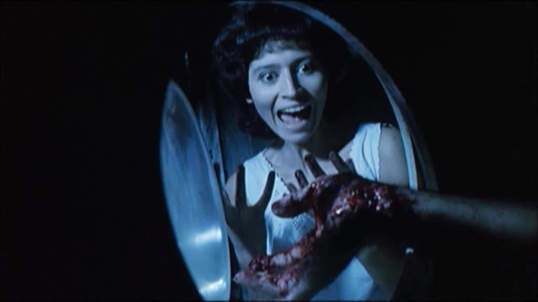
Body Count (1986, dir by Ruggero Deodato)

The Washing Machine (1993, dir by Ruggero Deodato)


Horror Film Review: House (dir by Steve Miner)


Yesterday, I didn’t get to watch or review any horror films because the air conditioner at the house stopped working.  While I know that a lot of people up north think that AC is a luxury that’s going to destroy the world, I live in Texas and an air conditioner is a necessity down here.  So, if that leads to glaciers melting and me getting a lecture from some obnoxious little brat …. well, fine.

Anyway, we were able to get the air conditioner fixed.  It took a while but it’s now working again.  Once the AC was again blowing cool air into the house, I started to think about how it could be worse.  I mean, the house could be haunted.  We always tend to assume that ghosts are going to be nice but really, there are some nasty ghosts out there.

Take the 1986 film, House, for instance.  House stars William Katt as Roger Cobb, a horror author who needs a best seller.  Cobb is dealing with a lot.  He’s wife (Kay Lenz) has left him.  His son has vanished.  His aunt has recently committed suicide, leaving behind her house.  On top of all that, Cobb is still haunted by his experiences during the Vietnam War, when he was forced to leave behind a gravely wounded soldier named Big Ben (Richard Moll).  Cobb wants to write about his Vietnam experiences but his agent is aghast.  No one wants to talk about the war!

So, Roger moves into his aunt’s old house.  He was originally planning on selling it but, for whatever reason, he thinks living in an abandoned house that drove its last owner to suicide will be a good idea.  Roger thinks that living in the house will help him finish his book.  The House has different ideas.

Soon, Roger finds himself dealing with a series of incidents that feel as if they were lifted from other, more cohesive horror movies.  In a scene that feels like it was inspired by the Evil Dead, his wife turns into an otherworldly creature and tries to attack him.  Weird gremlin creatures, which could have come from Troll or Ghoulies, keep showing up and trying to kidnap an obnoxious neighbor child.  Roger’s neighbor (George Wendt) thinks that it’s possible that Roger is a murderer and that he’s buying his victims out in the backyard.  Even worse, a decaying and pissed off Big Ben starts to show up.

House is an occasionally likable attempt to mix horror and comedy.  Most of the comedy comes from Roger’s attempts to keep anyone else from noticing just how crazy things have gotten in the house.  (Disposing of a demon’s body turns out to be not as easy as one might imagine.)  William Katt does a good job with selling the comedy, though he never quite convinces you that he’s a best-selling horror author.  That said, the horror aspect is far more interesting, if just as a metaphor for Roger’s PTSD.  At its best, the film suggests that the house is feeding off of the lingering trauma of Roger’s war experiences.  It’s an interesting idea but not one that’s really explored as much as you might like.  Unfortunately, the film struggles to balance the horror and the comedy.  Just when it really starts to scare you, it remembers that it’s supposed to be a comedy.  Sam Raimi would have been the ideal director for House.

That said, House is entertaining, if a little bland.  If nothing else, watching it made me feel better about my own house.  My air conditioner may have gone down for a few hours yesterday but at least it didn’t open a portal to Hell.

Horror On The Lens: The Yesterday Machine (dir by Russ Marker)


For today’s horror on the lens, how about 1963’s The Yesterday Machine?  This film opens with some impressive baton twirling and then segues into telling a story about time travel, mad scientists, and …. well, that’s about it.  Still, what else do you need?  Have you ever wondered what would happen if a sane scientist discovered time travel?  For some reason, it’s always the insane ones who figure it out.

This film was shot in North Texas!  That’s right, this is one of those low-budget regional productions, the one’s where the film might not be great but you kind of have to admire the determination of the filmmakers to try to make a real movie.  Even if you didn’t recognize the landscape, the accents of the actors would have given it away immediately.  Russ Marker was an independent filmmaker, based in Texas.  The Yesterday Machine is one of two films that Marker directed.  He also had an uncredited role as a bank guard in 1967’s Bonnie and Clyde.

Finally, the film stars Tim Holt who also appeared in The Magnificent Ambersons and Treasure of the Sierra Madre.  How Does The Yesterday Machine rank when compared to those two films?  Watch and find out!  (And, after you watch it, read my review from last year.)