As some of our regular readers undoubtedly know, I am involved in a few weekly live tweets on twitter. I host #FridayNightFlix every Friday, I co-host #ScarySocial on Saturday, and I am one of the five hosts of #MondayActionMovie! Every week, we get together. We watch a movie. We tweet our way through it.
Tonight, for #ScarySocial, Tim Buntley will be hosting 2013’s 13 Eerie!
If you want to join us on Saturday night, just hop onto twitter, start the film at 9 pm et, and use the #ScarySocial hashtag! The film is available on Prime. I’ll probably be there and I imagine some other members of the TSL Crew will be there as well. It’s a friendly group and welcoming of newcomers so don’t be shy.
As some of our regular readers undoubtedly know, I am involved in a few weekly live tweets on twitter. I host #FridayNightFlix every Friday, I co-host #ScarySocial on Saturday, and I am one of the five hosts of #MondayActionMovie! Every week, we get together. We watch a movie. We tweet our way through it.
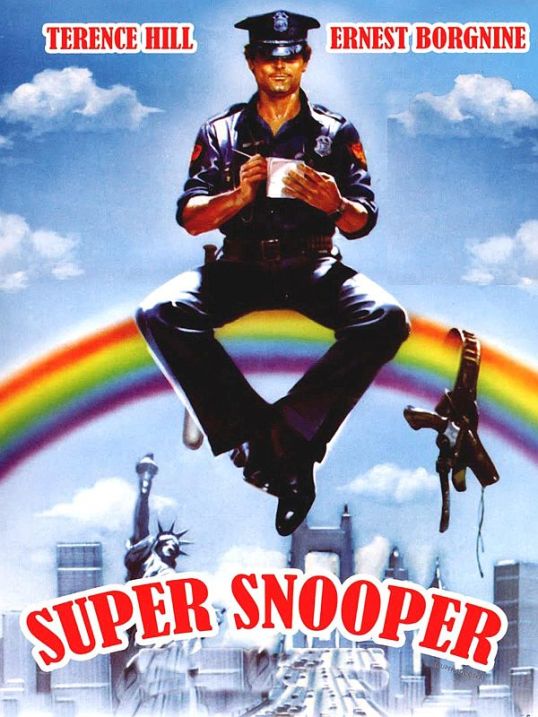
Tonight, at 10 pm et, #FridayNightFlix has got 1981’s Super Snooper!
Directed by Sergio Corbucci and starring Terence Hill and Ernest Borgnine, Super Snooper is the story of an amiable Florida cop who can do just about anything. The film is better known as Super Fuzz but, for some reason, Prime is going with Super Snooper. Whatever. We’re going to live tweet the Heck out of it, regardless of which title it’s under.
If you want to join us this Friday, just hop onto twitter, start the movie at 10 pm et, and use the #FridayNightFlix hashtag! It’s a friendly group and welcoming of newcomers so don’t be shy.
Super Snooper is available on Prime and YouTube! See you there!
4 Or More Shots From 4 Or More Films is just what it says it is, 4 shots from 4 of our favorite films. As opposed to the reviews and recaps that we usually post, 4 Shots From 4 Films lets the visuals do the talking!
Today, the Shattered Lens honors both the birth and the legacy of the great filmmaker, Akira Kurosawa! It’s time for….
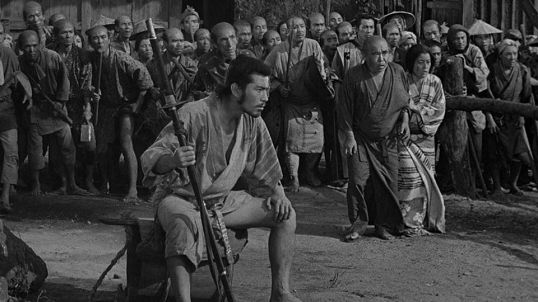
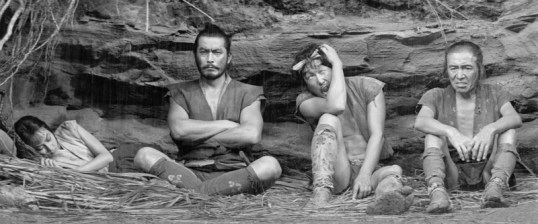
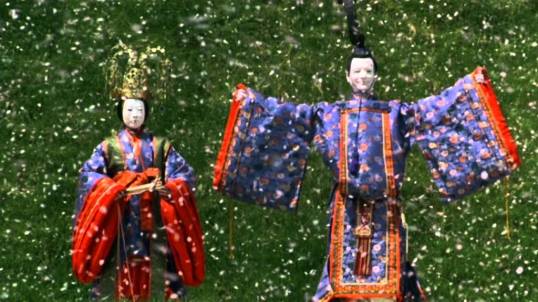
4 Shots From 4 Akira Kurosawa Films
Seven Samurai (1954, dir by Akira Kurosawa, DP: Asakazu Nakai)
The Hidden Fortress (1958, dir. by Akira Kurosawa, DP: Kazuo Yamasaki)
Dersu Uzala (1975, dir. by Akira Kurosawa, DP: Asakazu Nakai)
Dreams (1990, dir by Akira Kurosawa, DP: Takao Saito)
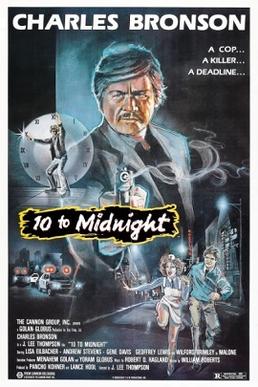
The 1983 film, 10 to Midnight, opens with LAPD detective Leo Kessler (played by legendary tough guy Charles Bronson) sitting at his desk in a police station. He’s typing up a report and taking his time about it. A reporter who is in search of a story starts to bother Leo.
“Jerry,” Leo tells him, “I’m not a nice person. I’m a mean, selfish son-of-a-bitch. I know you want a story but I want a killer and what I want comes first.”
It’s a classic opening, even if Leo isn’t being totally honest. Yes, he can be a little bit selfish but he’s really not as mean as he pretends to be. He may not know how to talk to his daughter Laurie (Lisa Eilbacher) but he is also very protective of her and he wants to be a better father than he’s been in the past. He may roll his eyes when he discovers that Detective Paul McAnn (Andrew Stevens) is the son of a sociology professor but he still tries to act as a mentor to his younger partner. Leo may complain that the criminal justice system “protects those maggots like they’re an endangered species” but that’s just because he’s seen some truly disturbing things during his time on the force and, let’s face it, Leo has a point. When one of Laurie’s friends is murdered, Leo is convinced that Warren Stacy (Gene Davis) is the murderer and he’s determined to do whatever he has to do to get Warren off the streets. “All those girls,” Leo snarls when he sees Warren, his tone letting us know that his mission to stop Warren is about more than just doing his job.
Warren Stacy is handsome, athletic, and he has good taste in movies. (He’s especially a fan of Butch Cassidy and the Sundance Kid. Just don’t try to trick him by saying Steve McQueen played the Sundance Kid.) Warren is also a total creep, the type of guy who complains that a murder victim “wasn’t a good person,” because she trashed him in her diary. When Leo takes a look around Warren’s apartment, he finds not only porn but also a penis pump. (“It’s for jacking off!” Leo yells at Warren, enunciating the line as only Charles Bronson could.) Warren is also a murderer but he’s a clever murderer, the type who sets himself up with an alibi by acting obnoxiously in a movie theater. Warren strips nude before killing his victims, in order to make sure that he doesn’t leave behind any evidence. (This film was made in the days before DNA testing.)
Leo knows that Warren is guilty but, as both his gruff-but-fair captain (Wilford Brimley, naturally) and the D.A. (Robert F. Lyons) point out, he has no way to prove it. When Warren starts to stalk Laurie and her friends (including Kelly Preston), Leo decides that he has no choice but to frame Warren. But when Warren’s amoral attorney, Dave Dante (Geoffrey Lewis, giving a wonderfully sleazy performance), threatens to call McAnn to the stand, McAnn has to decide whether to tell the truth or to join Leo in framing a guilty man.
10 to Midnight is a violent, vulgar, and undoubtedly exploitive film, one that features a ham-fisted message about how the justice system is more concerned with protecting the rights of the accused as opposed to lives of the innocent. And yet, in its gloriously pulpy way, this is also one of Bronson’s best films. It’s certainly my personal favorite of the films that he made for Cannon.
Director J. Lee Thompson and Charles Bronson were frequent collaborators and Thompson obviously knew how to get the best out of the notoriously reserved actor. Bronson was not known for his tremendous range but he still gives one of his strongest performances in 10 to Midnight, playing Leo as being not just a determined cop but also as an aging man who is confused by the way the world is changing around him. Stopping Warren isn’t just about justice. It’s also about fighting back against the the type of world that would create a Warren Stacy and then allow him to remain on the streets in the first place. Interestingly, though Leo doesn’t hesitate when it comes to framing Warren, he is also sympathetic to McAnn’s objections. Unlike other Bronson characters, Leo doesn’t hold a grudge when his partner questions his methods. Instead, he simply know that McAnn hasn’t spent enough time in the real world to understand what’s at stake. McAnn hasn’t given into cynicism. He hasn’t decided that the best way to deal with his job is to be a “mean son of a bitch.” Bronson and Andrew Stevens, who had worked together in the past, have a believable dynamic. McAnn looks up to Leo but is also conflicted by his actions. Leo may be annoyed by McAnn’s reluctance but he also respects him for trying to be an honest cop. Their partnership feels real in a way that sets 10 to Midnight apart from so many other films about an older cop having to deal with an idealistic partner.
One of the most interesting things about the film is Leo’s relationship with his daughter, Laurie. Over the course of the film, Leo and Laurie go from barely speaking to bonding over liquor and their shared regrets about the state of the justice system. When McAnn first meets Laurie, she’s offended when McAnn suggests that she takes after her father. But, as the film progresses, she comes to realize that she and Leo have much in common. (To be honest, I related quite a bit to Laurie, especially as I’ve recently come to better appreciate how much of my own independent nature was inherited from my father.) Lisa Eilbacher and Charles Bronson are believable as father-and-daughter and they play off of each other well. The scenes between Laurie and Leo give 10 to Midnight a bit more depth than one might otherwise expect from a Bronson Cannon film. Leo isn’t just trying to protect his daughter and her roommates from a serial killer. He’s also trying to be the father who he wishes he had been when she was younger. He’s trying to make up for lost time, even as he also tries to keep Warren Stacy away from his family.
As played by Gene Davis, Warren Stacy is one of the most loathsome cinematic villains of all time. Warren’s crimes are disturbing enough. (Indeed, the surreal sight of a naked and blood-covered Warren Stacy stalking through a dark apartment is pure nightmare fuel.) What makes Warren particularly frightening is that we’ve all had to deal with a Warren Stacy at some point in our life. He’s the sarcastic and easily offended incel who thought he was entitled to a phone number or a date or perhaps even more. As I rewatched this movie last night, I wondered how many Warrens I had met in my life. How many potential serial killers have any of us unknowingly had to deal with? Warren tries to strut through life, smirking and going out of his way to let everyone know that he knows more than they do but the minute that Leo turns the table on him, Warren starts whining about he’s being treated unfairly. During his final, disturbing rampage, Warren yells that his victims aren’t being honest with him, blaming them for his actions. The film deserves a lot of credit for not turning Warren into some sort of diabolical and erudite supervillain. He’s not Hannibal Lecter. Instead, like all real-life serial killers, he’s a loser who is looking for power over those to whom he feels inferior and for revenge on a world that he feels owes him something. He’s a realistic monster and that makes him all the more frightening and the film all the more powerful. Warren is the type of killer who, even as I sit here typing this, could be walking down anyone’s street. He’s such a complete monster that it’s undeniably cathartic whenever Leo goes after him.
How delusional is Warren Stacy? He’s delusional enough to actually taunt Charles Bronson! At one point, Warren informs Leo that he can’t be punished for being sick. Warren announces that, when he’s arrested, he might go away for a while but he’ll be back and there’s nothing Leo can do about it. (The suggestion, of course, is that Warren will be back because he committed his crimes in California and all the judges were appointed by a bunch of bleeding heart governors. Warren may not say that out loud but we all know that is the film’s subtext. Some people may agree with the film, some people may disagree. Myself, I’m against the death penalty because I think it’s a prime example of government overreach but I still cheered the first time that I heard Clint Eastwood say, “Well, I’m all torn up about his rights,” in Dirty Harry.) How does Leo react to Warren’s taunts? I can’t spoil the film’s best moment but I can tell you that 10 to Midnight features one of Bronson’s greatest (and, after what we’ve just seen Warren do, most emotionally satisfying) one-lines.
The title has nothing to do with anything that happens in the film. In typical Cannon fashion, the film’s producers came up with a snappy title (and 10 to Midnight is a good one) and then slapped it onto a script that was previously called Bloody Sunday. Fortunately, as long as Bronson is doing what he does best, it doesn’t matter if the title makes sense. And make no mistake. 10 to Midnight is Bronson at his best.
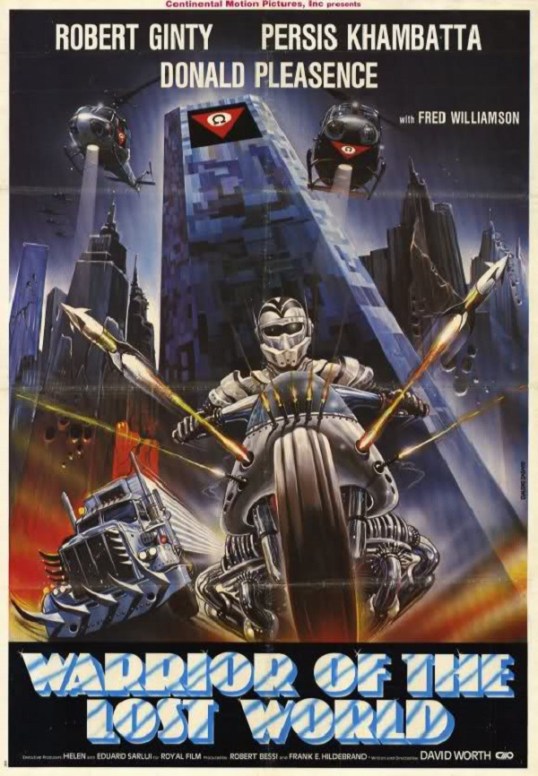
The 1983 Italian film, Warrior of the Lost World, opens with a long title card that explains that society has collapsed, due to radiation, disease, wars, and multiple bank bail-outs. The world of the future is a dangerous place, where the roads are ruled by dangerous scavengers. It’s a world where survival is not guaranteed and only those who are willing to fight will live to see another day and….
Well, look, I’ll be honest. It was a really long title card and, as anyone who knows me can tell you, I don’t have a particularly long attention span. I read about the radiation and the diseases and then I kind of zoned out. The important thing to know is that the film takes place in the future and that the film was made in the wake of the international success of The Road Warrior. In the early 80s, the Italian film industry briefly abandoned zombies to make movies about people driving cars through a post-apocalyptic landscape. In fact, I initially assumed that David Worth was a pseudonym for someone like Enzo Castelleri or even Umberto Lenzi. David Worth is actually a cinematographer who worked on a few Clint Eastwood films and who went to Italy to make his directorial debut with Warrior of the Lost World. After this film, Worth went on to direct Kickboxer and handful of others.
(One thing that’s always interesting about watching these films is discovering that people were speculating about the collapse of society long before 2023. It’s kind of nice to be reminded that people have always been panicking about something, even while society itself continued to survive and grow.)
Robert Ginty stars as The Rider, a man so tough that he doesn’t even need a name. The Rider and his motorcycle travel across the country. The Motorcycle can talk, though it’s screechy voice might make you wish that it couldn’t. It warns The Rider whenever there’s danger nearby. When a bunch of punk rock rejects attempt to attack the Rider, his motorcycle identifies them as being “dorks.” Later, when the Rider is looking at a woman who he has just saved from death, the Motorcycle orders, “Kiss the girl!” The Motorcycle has a weird quirk where it says everything three times. The Rider talks back to the Motorcycle but he always mumbles all of his lines, to the extent that it’s often difficult to really understand what he’s saying. It’s hard not to get the feeling that Robert Ginty couldn’t believe that he was actually having to pretend as if he was a heart-to-heart with a motorcycle.
(The Rider’s bike is actually named Einstein but, to me, it will always by The Motorcycle.)
After the Rider crashes into a wall, he’s nursed back to health by a bunch of old people who are trying to organize a rebellion against the evil Prossor (Donald Pleasence), who rules the State of Omega. Prossor has kidnapped the rebellion’s leader, Prof. McWayne (Harrison Muller, Jr). The old people want The Rider to accompany McWayne’s daughter, Natasia (Persis Khambatta), to Prossor’s city. The Rider whines about being asked but eventually agrees to do so. I’m not sure why The Rider agrees to help because The Rider seriously never stops complaining about how inconvenient the whole journey is. While The Rider does manage to rescue McWayne, Natasia gets left behind so, of course, the Rider has to do it all over again. Fortunately, it turns out that the Omega army isn’t quite as competent as everyone claims that they are. In fact, outsmarting Prosser is so easy that you can’t help but wonder why no one bothered to it before.
Warrior of the Lost World is not necessarily a good movie but, when watched with a group of friends and with the right snarky attitude, it is a fun movie. The action and the plotting is just so over-the-top and ridiculous that it’s hard to look away from the screen and Robert Ginty seems so genuinely annoyed by every little thing that happens that it’s hard not to wonder if maybe The Rider read the script before heading off to confront Prossor. An extended sequence is devoted to everyone singing the Rebellion’s national anthem, the great Donald Pleasence rants like a pro, Fred Williamson has a largely pointless cameo, and the film features what appears to be a 20-minute kiss between The Rider and Natasia. (The Motorcycle watches.) If you can’t have fun while watching Warrior of the Lost World, I just don’t know what to tell you.
4 Or More Shots From 4 Or More Films is just what it says it is, 4 shots from 4 of our favorite films. As opposed to the reviews and recaps that we usually post, 4 Shots From 4 Films lets the visuals do the talking!
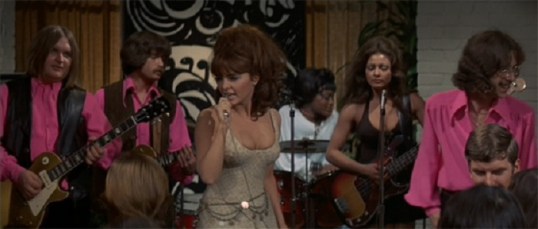
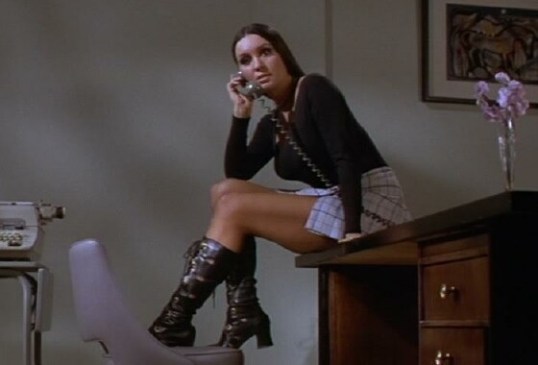
101 years ago, on the very day, Russ Meyer was born in San Leandro, California. Meyer would get his start filming newsreels during World War II, with much of his newsreel footage later showing up in films like the 1970 Oscar winner, Patton. When he returned to the United States, he continued to make films, though the subject matter changed a bit. Meyer was one of the pioneers of the adult film industry, though his once controversial films now seem rather quaint and innocent when compared to the industry’s later films. Meyer’s strong visual sense and his intentionally over-the-top plots made him a favorite amongst underground critics. In the 70s, he was briefly embraced by mainstream Hollywood but, unhappy with having to deal with the studio bosses, Meyer returned to making the type of independent, grindhouse films that made him famous.
Russ Meyer was 82 years old when he died in 2004. He was acclaimed as one of America’s first and most iconic independent filmmakers.
Here are 4 Safe-For-Work Shots From 4 Russ Meyer Films.
4 Shots From 4 Films
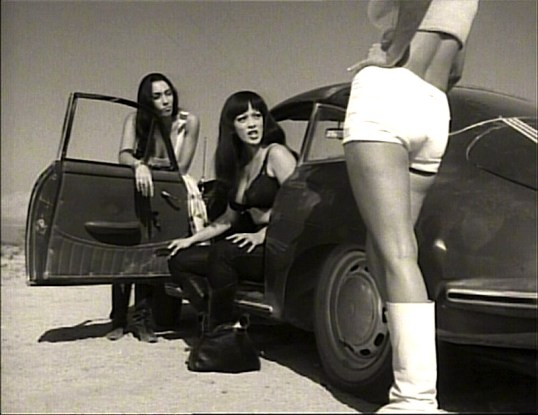
Faster, Pussycat! Kill! Kill! (1965, dir by Russ Meyer, DP: Walter Schenk)
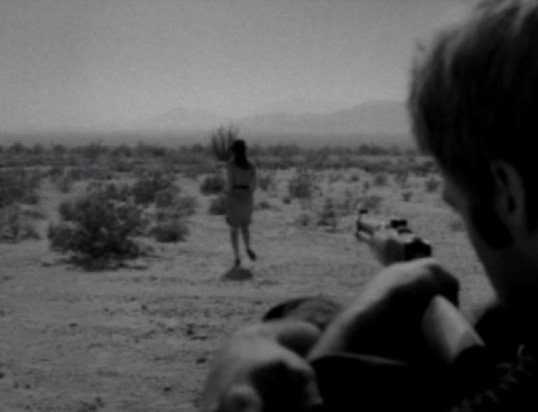
Motorpsycho (1965, dir by Russ Meyer, DP: Russ Meyer)
Beyond The Valley Of The Dolls (1970, dir by Russ Meyer, DP: Fred J. Koenekamp)
The Seven Minutes (1971, dir by Russ Meyer, DP: Fred Mandl)
Today is Gary Oldman’s 65th birthday and, in honor of the occasion, here’s a scene from one of my favorite Oldman films, 2011’s Tinker Tailor Soldier Spy.
In this scene, British intelligence officer George Smiley (Gary Oldman) confronts his colleague and Russian mole Bill Haydon (Colin Firth). This scene is a masterclass of good acting, put on by both Firth and Oldman. As Haydon tries to justify his behavior, Smiley listens with deceptive calmness. When I first saw this film, Oldman suddenly raising his voice made the entire audience jump.
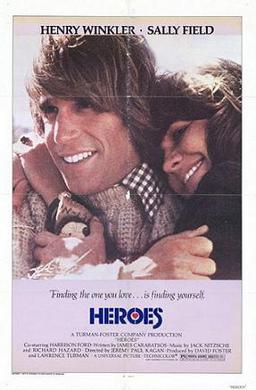
The 1977 film, Heroes, tells the story of Jack Dunne (a young Henry Winkler).
Jack spent four years fighting in Vietnam. Since returning to America, he has struggled to adjust to civilian life. Though he’s mentally blocked out much of what happened in Vietnam, he’s haunted by nightmares, When we first meet him, he’s a patient at a mental health facility in New York City. He has big plans, though. He wants to open up a worm farm in Eureka, California. He’s convinced that he can make a ton of money selling worms to fisherman and he wants all of the old members of his unit to join him in the venture. After Jack escapes from the hospital, he boards a bus heading for California.
He also meets Carol (Sally Field), who is supposed to be getting married in four days but who has decided to board a bus and take an impromptu vacation instead. When Carol is told that the bus is already full and she’ll have to wait for the next one, Jack bribes the ticket agent to get Carol on the bus. Once on the bus, Jack makes himself into a nuisance, continually bothering the driver (Val Avery) and embarrassing Carol. (In the film’s defense, it’s later established that Jack isn’t just being a jerk for fun. The driver’s uniform makes Jack nervous. That said, it’s hard not to feel bad for the driver, who is just doing his stressful job to the best of his ability.) Carol and Jack do eventually strike a tentative friendship. They’re linked by the fact that they’re both trying to escape from something.
At a diner, Jack tells her that he served in Vietnam.
“I protested the war,” Carol says.
“I fought it,” he replies.
Carol eventually joins with Jack in his quest to track down the three people who he expects to go into business with. One of them is missing. One of them never returned home from the war. And the third, Ken (Harrison Ford), is living in a trailer and raising rabbits for a living. Ken is also a stock car racer, though he eventually admits that he rarely wins. In fact, he seems to spend most of his time drinking and shooting off the M16 that he keeps in his car’s trunk. Meeting Ken sends Jack spiraling into depression but, with Carol’s help, Jack is finally starts to come to terms with the reality of what happened to him and his friends in Vietnam.
Heroes was one of the first films to sympathetically portray the plight of Vietnam veterans struggling to adjust to life back in the United States and it certainly deserves a lot of credit for its good intentions. (Indeed, it’s implied that a part of Carol’s concern from Jack comes from her own guilt over how the anti-war movement treated the returning soldiers.) That said, the film itself is an awkward mix of drama and comedy. The first half of the film, in which Henry Winkler comes across like he’s doing a manic Al Pacino impersonation, is especially uneven. Winkler and Field are both naturally likable enough that the film remains watchable but, during the first half of the film, most viewers will never buy their relationship for a second. It’s hard to believe that the driver wouldn’t have kicked Jack off the bus as soon as he started to cause trouble and the other passengers often seem to be unrealistically charmed by Jack’s behavior. If I’m on a crowded bus and some dude insists on walking up and down the aisle and taunting the driver, I’m probably going to get off at the first stop and refuse to get back on. Traveling with a bunch of strangers is already nerve-wracking enough without having to deal with all of that.
Not surprisingly, things improve once Harrison Ford shows up. This was one of Ford’s last character parts before he was cast as Han Solo in Star Wars. (Heroes, however, was released after Star Wars, which explains why Ford is mentioned prominently in the trailer despite having a relatively small role.) Ford gives a strong performance as the amiable but ultimately self-destructive Ken. Ford plays Ken as someone whose quick smile is a cover for the fact that his entire life is a mess. Whereas Jack wears his emotions on his sleeve (and Winkler never stops projecting those emotions), Ken is someone who has repressed his anger and his sadness and Ford gives an internalized and controlled performance. Perhaps not coincidentally, Winkler calms down a bit when he’s acting opposite Ford and, as a result, his own performance starts to improve.
After the meeting with Ken, Jack starts to realize that it’s not going to be as easy to start his business as he thought. Jack starts to come down from his manic high and, even more importantly, Henry Winkler stops overacting and instead, starts to dig into the sadness at the heart of Jack’s life. During its second half, the film finally settles on being a drama and Heroes becomes a much stronger story as a result. Even Jack and Carol’s relationship seems to make more sense during the second half of the film. Things end on a note of cautious optimism, which also acknowledging that life can never go back to what it was before the war.
Today, if anyone watches Heroes, it’s probably going to be for Harrison Ford. (I imagine the presence of Harrison Ford is the reason why it’s currently available on Netflix.) It’s a bit of an uneven film, one that feels as if it should have been stronger than it actually was. Still, it’s a worthwhile time capsule of 1977 and America’s struggle to come to terms with the Vietnam War. Today, we’re still struggling to come to terms with what happened in Iraq and with the botched withdrawal from Afghanistan and, again, it seems like the country is too busy trying to move on to take the time to take care of its veterans. It’s sad that so many people only seem to care about the soldiers who fight in popular wars. Heroes was a plea to America not to forget its veterans. It’s a plea that still needs to be heard.
As some of our regular readers undoubtedly know, I am involved in hosting a few weekly live tweets on twitter. I host #FridayNightFlix every Friday, I co-host #ScarySocial on Saturday, and I am one of the five hosts of #MondayActionMovie! Every week, we get together. We watch a movie. We tweet our way through it.
Tonight, for #MondayActionMovie, the film will be 1983’s Warrior of the Lost World! Selected and hosted by me, this film features car motorcycles, explosions, Donald Pleasence, and a timely message about creeping authoritarianism! The movie starts at 8 pm et! Here’s the playlist!
Following #MondayActionMovie, Brad and Sierra will be hosting the #MondayMuggers live tweet. They will be watching Sigourney Weaver in 1995’s Copycat! Check the hosts’s twitter accounts for a link to the film!
It should make for a night of fun viewing and I invite all of you to join in. If you want to join the live tweets, just hop onto twitter, start the Warrior of the Lost World playlist at 8 pm et, and use the #MondayActionMovie hashtag! Then, at 10 pm et, start Copycat, and use the #MondayMuggers hashtag! The live tweet community is a friendly group and welcoming of newcomers so don’t be shy.
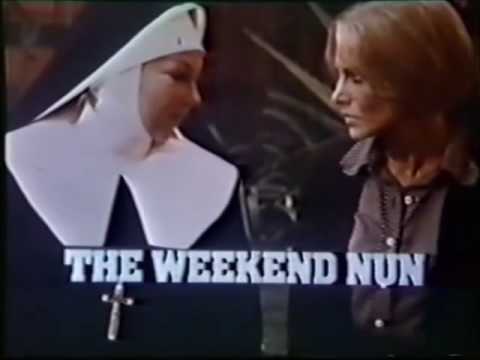
Welcome to Retro Television Reviews, a feature where we review some of our favorite and least favorite shows of the past! On Sundays, I will be reviewing the made-for-television movies that used to be a primetime mainstay. Today’s film is 1972’s The Weekend Nun! It can be viewed on YouTube!
By day, Marjorie Walker (Joanna Pettet) is a probation officer who, some might say, cares just a little too much.
By night and on the weekends, she’s Sister Mary Damian, a nun who has taken the three vows of poverty, chastity, and obedience.
Mother Bonaventure (Ann Sothern) isn’t sure that she’s happy about Sister Damian working as a probation officer. And the tough and cynical Detective Chuck Jardine (Vic Morrow) certainly isn’t happy when he discovers that the reason why Marjorie has never invited him into her home for a drink is because she lives at a convent. But Marjorie is determined to make a difference, especially in the life of a troubled teen runaway named Audree (Kay Lenz).
Now, this may sound like the premise of a socially relevant sitcom and, indeed, The Weekend Nun is one of those titles that might lead some to expect wacky hijinks and an intrusive laugh track. However, The Weekend Nun is not only loosely based on a true story but the film also takes itself very seriously. From the minute that Sister Damian agrees to take part in a program that would allow her to work a real job during the day while returning to the convent at night, she’s exposed to the harsh realities of the world. She goes from being sheltered to dealing with distraught parents, drug addicts, teen prostitutes, and violent criminals. Because Captain Richardson (James Gregory) doesn’t want anyone to feel uncomfortable, he hides the fact that she’s a nun. Of course, this leads to be people like Chuck Jardine wondering why Marjorie is so shocked when she witnesses the thing that he has to deal with a day-to-day basis.
And, indeed, the film’s biggest flaw is that Marjorie is often portrayed as being ridiculously naïve. The film acts as if spending time in a convent is somehow the equivalent of spending a decade hiding out in a bomb shelter or something. (Speaking as a Catholic school survivor, nuns are usually some of the least naïve people around.) Marjorie is portrayed as being such a wide-eyed innocent that it’s hard not to wonder why she was hired to work as a probation officer in the first place. Of course, Marjorie quickly gets an education on just how dangerous and unforgiving life on the streets can be and she soon has to make a choice between being a nun or being a probation officer. Will she give her life to God or will she potentially give it to Vic Morrow?
Joanna Pettet overplays Marjorie’s innocence but that’s more the fault of the script than anything else. James Gregory, Vic Morrow, and Ann Sothern are all believable as the authority figures in Marjorie’s life and Kay Lenz has a few good scenes as the teenage runaway who Marjorie tries to save. Beverly Garland has a small but brief role as Lenz’s horrifically unconcerned mother. It’s a well-acted film, regardless of any other flaws.
The Weekend Nun is not perfect but it’s still preferable to The Flying Nun. It’s a sincerely heartfelt film, one that’s earnest in a way that can seem a bit quaint but which is still likable when watched today. For better or worse, there’s not a hint of snark to be found.