
Today’s song of the day comes from Ennio Morricone’s score for Sergio Leone’s Once Upon A Time In America, one of the greatest ever composed.
Today’s song of the day comes from Ennio Morricone’s score for Sergio Leone’s Once Upon A Time In America, one of the greatest ever composed.
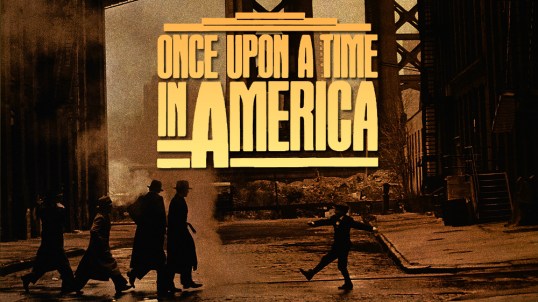
(SPOILERS BELOW)
The final moments of Sergio Leone’s epic 1984 gangster film, Once Upon A Time in America, are filled with questions and mysteries.
The final moments of Sergio Leone’s epic 1984 gangster film, Once Upon A Time in America, are filed with questions and mysteries.
In 1968, who did Noodles (played by Robert De Niro) see standing outside of Max’s mansion? When the garbage truck pulled up, did the mysterious man get in the truck or was he thrown in by some unseen force?
Why, in 1968, did Noodles see a car from the 1920s, one that was full of people who appeared to be celebrating the end of prohibition? Was the car really there, in 1968, or was it an element of Noodles’s past as a gangster suddenly popping into his mind?
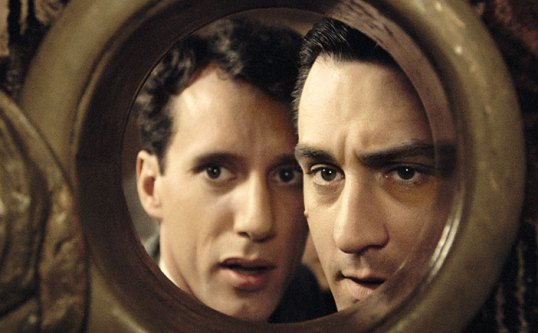
Once Upon A Time In America (1984, dir by Sergio Leone, DP: Tonino Delli Colli)
When we then see a young Noodles in an opium den, are we flashing back to the 1920s? Is Noodles remembering the past or is it possible that we’ve been in the 20s the whole time and all of the scenes set in 1968 were actually only a drug-induced dream?
Why, with men looking to kill him and all of his friends apparently dead, does Noodles suddenly smile at the end of the film? Is that sudden smile a result of the drugs or is there something else going on?
Once Upon A Time In America was Sergio Leone’s final film. It’s one that he spent decades trying to get made and, once it was finally produced, it was butchered and re-edited by a studio hacks who demanded that the film tell its story in a linear style. Leone was reportedly heart-broken by how his film was treated. Some have speculated that his disappointment may have even contributed to the heart attack that eventually killed him. It was only after Leone passed that his version of Once Upon A Time In America became widely available in the U.S. This enigmatic epic continues to spark debate. One thing that can’t be denied is that it’s a brilliant film.
As today is Leone’s birthday, it only seems appropriate to share a pair of scenes that I love, from the ending of Once Upon A Time In America.
As some of our regular readers undoubtedly know, I am involved in a few weekly live tweets on twitter. I host #FridayNightFlix every Friday, I co-host #ScarySocial on Saturday, and I am one of the five hosts of #MondayActionMovie! Every week, we get together. We watch a movie. We tweet our way through it.
Tonight, at 9 pm et, Deanna Dawn will be hosting #ScarySocial! The movie? 1985’s Re-Animator!
If you want to join us this Saturday, just hop onto twitter, start the movie at 9 pm et, and use the #ScarySocial hashtag! It’s a friendly group and welcoming of newcomers so don’t be shy.
The film is available on Prime and Tubi!
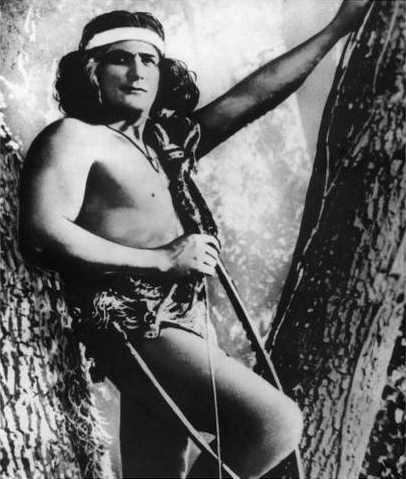
Elmo Lincoln.
That name may not sound all the imposing but Elmo Lincoln played a very important role in the early days of Hollywood. He was the first actor to play the adult version of Tarzan, the Lord of the Jungle. Originally from Indiana, Elmo Lincoln was a 29 year-old former sailor and boxer when he was selected to replace Stellan Windrow as the star of 1918’s Tarzan of the Apes. (A stunt man, Windrow had already filmed the majority of Tarzan’s stunts before he was drafted to serve in World War I.) Lincoln, who had already appeared in a few of D.W. Griffith’s films, would briefly find stardom as a result of playing Tarzan.
Of course, it takes a while for Lincoln to appear in Tarzan of the Apes. The film was reportedly two hours long when it was initially released but today, it only exists in a 61-minute version. (Because each municipality had its own board of censors, the version of Tarzan of the Apes that played in one city could be quite different from the version that played in another. Unfortunately, with that many censors snipping scenes from city to city, a lot of footage that was cut from the film was undoubtedly lost forever.) The first half of the film deals with the birth of Tarzan while the second half features Tarzan as an adult. Technically, the first actor to play Tarzan was the uncredited baby who appears shortly after Lord Greystoke (True Boardman) and his wife (Kathleen Kirkham) are abandoned by mutineers in Africa. After the baby is given to the Apes, child actor Gordon Griffith takes over the role. Finally, once an expedition is sent to investigate whether or not the stories about Tarzan are true, Elmo Lincoln takes over the role and saves Jane (Enid Markey) after she’s kidnapped by a group of natives. The film ends with Tarzan and Jane just starting to fall in love. (A sequel, The Romance of Tarzan, was released that same year but it’s a lost film.)
In the role of Tarzan, Elmo Lincoln is …. well, he’s okay. He’s not a great actor but he’s a good Tarzan. He’s obviously strong and athletic and he looks convincing when he’s hiding in the trees. Lincoln was not a particularly expressive actor and that natural stiffness is noticeable whenever he’s called upon to demonstrate anything other than grim determination. He has a strong physical presence and, in 1918, that was probably enough to make him a star. When he gazes at Jane and the title cards tells us that he’s saying, “Tarzan is a man and man does not force the love of a woman,” the viewer believes it. If I was lost in the jungle, I’d probably want Elmo Lincoln to help me out. We wouldn’t have much to talk about but I would have faith in his ability to take care of any problems that we ran into on the way back to civilization.
That said, the film is at its best when it depicts Tarzan’s childhood. There’s a sense of fun and wonder to those scenes that is missing from the second half of the film. Gordon Griffith did a good job as the young Tarzan. Louisiana is a surprisingly effective stand-in for the jungles of Africa. By today’s standards, Tarzan of the Apes can seem a bit creaky. (The camera barely moves at all.) But watching it, one can still understand why Hollywood fell in love with the idea of a man raised by apes. One can even understand why, for a brief period of time, Elmo Lincoln became a star.
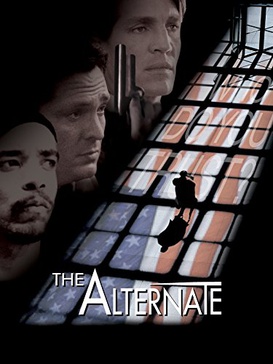
Why is 2000’s The Alternate one of the greatest action films ever made?
Consider this: President John Fallbrook (John Beck) is scheduled to give a speech at a World Hunger Symposium, where he will be announcing legislation that will make it illegal for people not to have food. (I’m not sure how that would work but whatever. It’s a movie.) Eric Roberts is The Alternate, a former intelligence agent who has just been recruited to serve as a member of a team that is being used by Agent William (Ice-T) to test the President’s security. (Ronn Moss, of Hard Ticket to Hawaii and Bold and the Beautiful fame, plays the fake President.) The Leader (Bryan Genesse) tells the Alternate that the CIA actually wants to abduct the President for real in order to help boost the President’s reelection campaign. The Alternate agrees to help but then it turns out that the Leader is actually just in it for the money and he’s planning on holding the President hostage until he gets paid. While Agent Briggs (Michael Madsen) watches from the outside, The Alternate makes his way through a nearly deserted hotel and attempts to defeat the bad guys.
It’s Die Hard …. with Eric Roberts!
The plot is so convoluted that it borders on self-parody but director Sam Firstenberg keeps the action moving quickly and, to its credit, this is a film that fully understands how to embrace the melodrama. When the Leader tries to take out The Alternate, he doesn’t just pursue him with a gun. Instead, he picks up a flame thrower! When The Alternate gets into a gunfight at the hotel’s pool, he doesn’t just duck behind pillars and fire his gun. Instead, he grabs a banner and swings back and forth over the water, all the while shooting his gun. When the President says that he doesn’t like heights, it isn’t just a case of him getting nervous about being on the roof of the hotel. Instead, he’s so paralyzed that he literally has to be picked up and carried from one location to the next. When The Leader calls the police and gives them his list of demands, he doesn’t just make the usual threats. Instead, he speaks in what sounds like a French accent and claims to be a infamous (and possibly fictional) terrorist. When it’s time to kidnap the President, the kidnappers don’t just use guns. Instead, they also use blow-darts to paralyze the Secret Service agents. Everything about the film is gloriously and wonderfully over the top.
(I’ve always felt that, when it comes to low-budget action films, the best ones are the ones that are willing to just be as ridiculous as possible. Bring out the flame thrower. Fly the Money Plane. Cast Joe Don Baker as your lead. Just jump off that cliff and see what happens.)
The Alternate is definitely a film that deserves to be better-known. (It was also released under the title The Replacement.) In the realm of Die Hard rip-offs, it’s in a class by itself, a totally enjoyable thrill ride that manages to get more and more excessive with each passing minute. Bryan Genesse, who also wrote the script, gets to show off some stylish martial arts moves. John Beck is the wimpiest President ever. Michael Madsen never takes off his dark glasses. And, best of all, Eric Roberts gets to be the star!
The Alternate? Why, it’s just one of the best action movies ever!
Previous Eric Roberts Films That We Have Reviewed:

1979’s Roller Boogie opens with an impromptu parade of roller skaters rolling across the Venice Beach boardwalk. They don’t care about any stuffy people who think that they should be in school or working behind a counter. They’re young, they’re free! One of them wears rainbow suspenders and juggles while skating. (I’ve noticed that every roller skating movie seems to feature at least one juggler in rainbow suspenders. Strangely, you never see them in real life.)
This is followed by a scene of a teenage rich girl Terry Barkley (Linda Blair) getting ready for her day in her poster decorated bedroom. The camera zooms in for a close-up as she picks just the right chunky bracelet to wear.
In other words, it doesn’t get much more late 70s/early 80s than Roller Boogie.
The plot is pretty simple. Terry meets the king of the roller skaters, Bobby James (Jim Bray). Bobby is a kid from a working class background and he dreams of the day that his roller skating skills will lead to him competing in the Olympics. Terry is rich and she has a snooty best friend (Kimberly Beck) and parents (Beverly Garland and Roger Perry) who are planning on sending her to Julliard. Despite everyone saying that they’re from different worlds, Terry and Bobby enter the roller disco contest together! Cue the montage!
Unfortunately, a crooked businessman (Mark Goddard) is planning on bulldozing the skating rink. Can Bobby and the other skaters defeat the businessman and his gangster pals? Even when guns are pulled on them, Bobby and his friends refuse to give up. Myself, I’d just find another skating rink. I mean, it’s Venice Beach in 1979. It’s hard to believe that there’s only one place to go.
The gangster subplot feels out of place, a misguided attempt to bring some action to a perfectly acceptable teen romance. This was Jim Bray’s only film role and he wasn’t a particularly good actor but he and Linda Blair had enough natural chemistry to bring some charm to the film. Linda Blair, for her part, skates as if the fate of the world depended upon it and she seems to enjoy playing a relatively happy character for once. It’s totally predictable, a bit dumb at times but it’s still likable enough. Ultimately, it’s such a product of its time — look at the clothes, look at the hair, listen to the slang — that it becomes rather fascinating to watch. This is a movie that you watch and say, “So, that’s what 1979 was like!”
Previous Guilty Pleasures
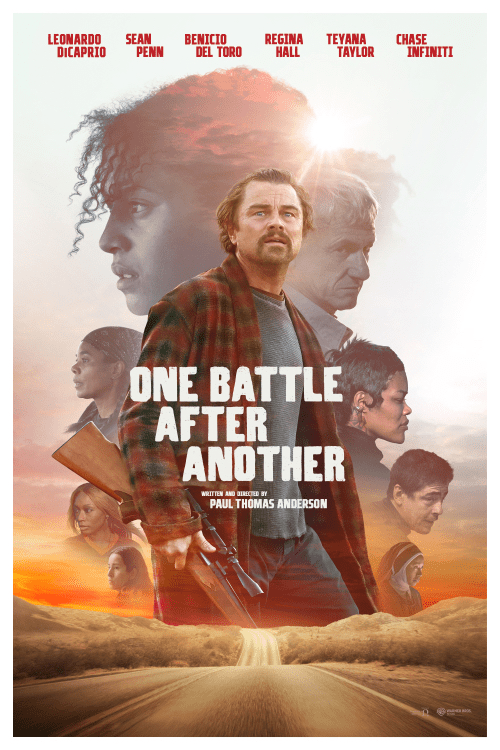 The Minnesota Film Critics Association has announced its picks for the best of 2025. The winners are listed in bold.
Best Picture
Hamnet
Marty Supreme
One Battle After Another
Sentimental Value
Sinners
Best Director
Paul Thomas Anderson – One Battle After Another
Ryan Coogler – Sinners
Josh Safdie – Marty Supreme
Joachim Trier – Sentimental Value
Chloé Zhao – Hamnet
Best Actor
Timothée Chalamet – Marty Supreme
Leonardo DiCaprio – One Battle After Another
Joel Edgerton – Train Dreams
Ethan Hawke – Blue Moon
Michael B. Jordan – Sinners
Best Actress
Jessie Buckley – Hamnet
Rose Byrne – If I Had Legs I’d Kick You
Chase Infiniti – One Battle After Another
Renate Reinsve – Sentimental Value
Amanda Seyfried – The Testament of Ann Lee
Best Supporting Actor
Benicio del Toro – One Battle After Another
Jacob Elordi – Frankenstein
Paul Mescal – Hamnet
Sean Penn – One Battle After Another
Stellan Skarsgård – Sentimental Value
Best Supporting Actress
Elle Fanning – Sentimental Value
Inga Ibsdotter Lilleaas – Sentimental Value
Amy Madigan – Weapons
Wunmi Mosaku – Sinners
Teyana Taylor – One Battle After Another
Best Ensemble
Marty Supreme
One Battle After Another
Sentimental Value
Sinners
Wake Up Dead Man: A Knives Out Mystery
Best Adapted Screenplay
Frankenstein – Guillermo del Toro
Hamnet – Chloé Zhao, Maggie O’Farrell
No Other Choice – Lee Ja-hye, Lee Kyoung-mi, Don McKellar, Park Chan-wook
One Battle After Another – Paul Thomas Anderson
Wake Up Dead Man: A Knives Out Mystery – Rian Johnson
Best Original Screenplay
It Was Just an Accident – Jafar Panahi
Marty Supreme – Ronald Bronstein, Josh Safdie
Sentimental Value – Joachim Trier, Eskil Vogt
Sinners – Ryan Coogler
Weapons – Zach Cregger
Best Film Editing
F1
Marty Supreme
One Battle After Another
Sinners
Weapons
Best Cinematography
Frankenstein
Hamnet
One Battle After Another
Sinners
Train Dreams
Best Music
Hamnet
KPop Demon Hunters
Marty Supreme
One Battle After Another
Sinners
Best Costume Design
Frankenstein
Hamnet
Marty Supreme
Sinners
Wicked: For Good
Best Makeup and Hairstyling
Frankenstein
Marty Supreme
Sinners
The Smashing Machine
Wicked: For Good
Best Production Design
Frankenstein
Hamnet
Marty Supreme
Sinners
Wicked: For Good
Best Sound
F1
Mission: Impossible – The Final Reckoning
One Battle After Another
Sinners
Warfare
Best Special Effects
Avatar: Fire and Ash
Frankenstein
Sinners
Superman
Tron: Ares
Best Stunt Choreography
Ballerina
F1
Mission: Impossible – The Final Reckoning
One Battle After Another
Sinners
Best International Feature
It Was Just an Accident – France, Iran, Luxembourg
No Other Choice – South Korea
The Secret Agent – Brazil, France, Germany, Netherlands
Sentimental Value – Denmark, France, Germany, Norway, Sweden, United Kingdom
The Ugly Stepsister – Denmark, Norway, Poland, Sweden
Best Animated Feature
Arco
Dog Man
Elio
KPop Demon Hunters
Zootopia 2
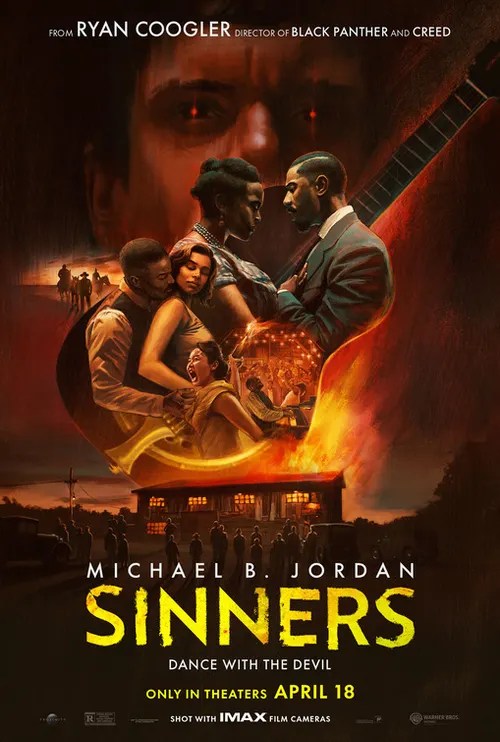
The Puerto Rico Critics Association has announced its picks for the best of 2025. The winners are listed in bold.
Best Picture
Frankenstein
It Was Just an Accident (RUNNER UP TIE)
One Battle After Another (RUNNER UP TIE)
The Secret Agent
Sentimental Value
Sinners (WINNER)
Sirāt
The Testament of Ann Lee
Best Puerto Rican Film
@-Amor
Esta Isla (WINNER)
Parto (RUNNER UP)
Best Director
Ryan Coogler – Sinners (WINNER)
Mona Fastvold – The Testament of Ann Lee
Oliver Laxe – Sirāt (RUNNER UP TIE)
Jafar Panahi – It Was Just an Accident (RUNNER UP TIE)
Paul Thomas Anderson – One Battle After Another
Chloé Zhao – Hamnet
Best Actor
Timothée Chalamet – Marty Supreme (WINNER)
Leonardo DiCaprio – One Battle After Another
Joel Edgerton – Train Dreams
Ethan Hawke – Blue Moon
Michael B. Jordan – Sinners
Wagner Moura – The Secret Agent (RUNNER UP)
Best Actress
Jessie Buckley – Hamnet
Rose Byrne – If I Had Legs I’d Kick You (RUNNER UP)
Chase Infiniti – One Battle After Another
Jennifer Lawrence – Die, My Love
Renate Reinsve – Sentimental Value
Amanda Seyfried – The Testament of Ann Lee (WINNER)
Best Supporting Actor
Jacob Elordi – Frankenstein (RUNNER UP)
Delroy Lindo – Sinners
Paul Mescal – Hamnet
Josh O’Connor – Wake Up Dead Man: A Knives Out Mystery
Stellan Skarsgård – Sentimental Value
Benicio del Toro – One Battle After Another (WINNER)
Best Supporting Actress
Jodie Comer – 28 Years Later (RUNNER UP)
Mia Goth – Frankenstein
Inga Ibsdotter Lilleaas – Sentimental Value
Amy Madigan – Weapons (WINNER)
Wunmi Mosaku – Sinners
Teyana Taylor – One Battle After Another
Best Adapted Screenplay
28 Years Later
Frankenstein
Hamnet
No Other Choice
One Battle After Another (WINNER)
Wake Up Dead Man: A Knives Out Mystery (RUNNER UP)
Best Original Screenplay
It Was Just an Accident
The Secret Agent
Sentimental Value (RUNNER UP)
Sinners (WINNER)
Sorry, Baby
Weapons
Best Animated Feature
Arco (RUNNER UP)
Chainsaw Man – The Movie: Reze Arc
Elio
KPop Demon Hunters (WINNER)
Little Amélie or the Character of Rain
Zootopia 2
Best Documentary
2000 Meters to Andriivka
Cover-Up
Megadoc
My Undesirable Friends: Part I – Last Air in Moscow
The Perfect Neighbor (WINNER)
Put Your Soul on Your Hand and Walk (RUNNER UP)
Best International Feature
It Was Just an Accident (RUNNER UP TIE)
No Other Choice
Resurrection
The Secret Agent (RUNNER UP TIE)
Sentimental Value (WINNER)
Sirāt
Best Action Film
From the World of John Wick: Ballerina
F1 (RUNNER UP)
Mission: Impossible – The Final Reckoning
One Battle After Another (WINNER)
Predator: Badlands
Superman
Best Horror Film
28 Years Later
Final Destination: Bloodlines
Frankenstein
Sinners (WINNER)
The Ugly Stepsister
Weapons (RUNNER UP)
Best Comedy/Musical
If I Had Legs I’d Kick You
The Naked Gun (RUNNER UP)
No Other Choice
One Battle After Another
The Testament of Ann Lee
Wake Up Dead Man: A Knives Out Mystery (WINNER)
Best First Film
The Chronology of Water (RUNNER UP TIE)
Eephus
Lurker
Sorry, Baby (WINNER)
The Ugly Stepsister (RUNNER UP TIE)
Urchin
Best Cinematography
28 Years Later
Frankenstein
One Battle After Another
Sinners (WINNER)
Sirāt
Train Dreams (RUNNER UP)
Best Costume Design
Frankenstein (WINNER)
Hamnet
The Phoenician Scheme
Sinners
The Testament of Ann Lee
Wicked: For Good (RUNNER UP)
Best Film Editing
It Was Just an Accident
No Other Choice (RUNNER UP)
One Battle After Another (WINNER)
The Secret Agent
Sinners
Sirāt
Best Hair & Makeup
28 Years Later (RUNNER UP)
Frankenstein (WINNER)
Sinners
The Testament of Ann Lee
The Ugly Stepsister
Wicked: For Good
Best Production Design
Frankenstein (WINNER)
Hamnet
Sentimental Value (RUNNER UP TIE)
Sinners
The Testament of Ann Lee
Wicked: For Good (RUNNER UP TIE)
Best Original Score
Frankenstein
Hamnet
One Battle After Another
Sinners (WINNER)
Sirāt (RUNNER UP)
The Testament of Ann Lee
Best Original Song
Lowly – 28 Years Later
The Risk – A Big Bold Beautiful Journey
Golden – KPop Demon Hunters (WINNER)
I Lied to You – Sinners (RUNNER UP)
Clothed by the Sun – The Testament of Ann Lee
Train Dreams – Train Dreams
Best Sound
Avatar: Fire and Ash
F1 (WINNER)
Frankenstein
One Battle After Another
Sinners
Sirāt (RUNNER UP)
Best Visual Effects
28 Years Later
Avatar: Fire and Ash (WINNER)
F1
Frankenstein (RUNNER UP)
Sinners
Tron: Ares
The Raúl Juliá Award
This honorary award recognizes Puerto Rican actors whose work has elevated our culture in the film industry. This year’s recipient is Benicio del Toro for her outstanding performance in One Battle After Another and The Phoenician Scheme.
Rising Star Award
Honoring emerging talent with remarkable potential, the 2024 award goes to Chase Infiniti for her stellar performances in One Battle After Another.
Cinematographic Resistance Award
This award celebrates filmmakers who use cinema to challenge power structures and highlight urgent social issues. The 2024 honorees are Jafar Panahi for their impactful film It Was Just an Accident.
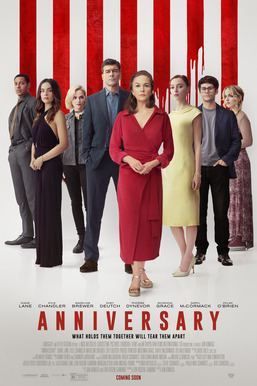
Anniversary begins with a party. Ellen Taylor (Diana Lane), a professor at Georgetown University, is celebrating the 25th anniversary of her marriage to Paul (Kyle Chandler), a restauranteur. The family has gathered at Lina and Paul’s ocean-side mansion. Daughter Cynthia (Zoey Deutch) and her husband Rob (Daryl McCormick) are environmental attorneys. Another daughter, Anna (Madeleine Brewer), is a performance artist who is very close to the youngest child, teenage Birdie (McKenna Grace). Finally, Josh (Dylan O’Brien) is the only son, a struggling writer who arrives with his fiancée, Liz Nettles (Phoebe Dynevor).
Ellen immediately recognizes Liz as a former student, one who wrote a dissertation advocating for a one-party state. At the time, Ellen called out Liz’s totalitarian ideology, to the extent that Liz accused Ellen of bullying her and ended up transferring to a different college. Now, Ellen is not happy to discover that Liz has written a book called The Change and that Josh has abandoned his own “sci-fi trilogy” to help Liz out with her projects. Liz is polite to Ellen but, before she leaves, she gives her future mother-in-law a forced hug and says, “I’m not scared of you anymore.”
From there, the film jumps forward from year-to-year, from gathering-to-gathering. Liz’s book is a best-seller that soon sparks a movement. Ellen watches in horror as her neighbors start to fly Change flags (which is the American flag, with the stars in the center). Josh goes from being awkward and dorky to being arrogant and finally threatening. With each year, the Change becomes more powerful and more menacing, until eventually Paul can’t even stand outside at night without a drone warning him that he’s violating curfew. Anna becomes a fugitive while Birdie tries to find her place in a rapidly changing world. The tragedies that follow all feel inevitable.
Anniversary is definitely an uneven film. Some of the performances are better than others. Diane Lane, Kyle Chandler, Dylan O’Brien, and Phoebe Dynevor all give excellent performances. If nothing else, this film shows that Dylan O’Brien may be one of the most underrated actors working today. At the same time, Madeline Brewer goes so over-the-top that I was almost relieved when Anna had to go into hiding and Zooey Deutch is let down by a script that doesn’t seem to be quite sure what to do with her character. There are a few moments that are a bit too heavy-handed for their own good and the viewer is sometimes left to wonder if the film has the self-awareness necessary to understand that the Taylors, with their combination of wealth and radical chic politics, are often their own worst enemies.
That said, Anniversary is definitely a film of the moment. There are enough brilliant scenes — like a meeting with two “census takers” that gradually turns menacing — to make up for the scenes that don’t work. It’s best moments have an undeniable power in which the viewer realizes that the film’s melodrama is far more plausible today than it would have been in a pre-COVID era. The scene where Paul is told that he is violating curfew would seem heavy-handed if not for the fact that, in 2020, we pretty much saw the same thing happening across the country.
Some online critics have complained that The Change’s ideology is purposefully left vague but that misses the point that most successful movements actually are vague about the details. (Historically, most American third party movements tend to fall apart as soon as they start taking actual policy positions.) The Change becomes powerful specifically because people can view it as being whatever they want it to be. Whereas some people might see it as a return to a “simpler” time, others will view it as the warmth of collectivism replacing the frigidity of rugged individualism. The Change is all about vibes and paranoia, the feeling that people are being left behind by the system and the only way to solve the problem is for everyone to embrace The Change without question. The thing that all the followers of The Change share is a belief that dissent cannot be tolerated.
Anniversary is a crudely effective film, one that shows a small act of revenge can grow into something much larger. It was overlooked when released but it still carries a powerful punch.
In 1979’s Old Boyfriends, Talia Shire plays Dianne Cruise.
A sociology professor (or so she claims at one point), Dianne is struggling with an unhappy marriage and trying to recover from a recent breakdown. After deliberately crashing her car, she leaves her husband and goes on a trip across the country. She sets out to track down three ex-boyfriends.
Jeff Turrin (Richard Jordan) was her college boyfriend, the one who asked her to marry him three times. Jeff is now working as a director. When we first see him, he’s shooting a commercial for a political campaign in which Sam the Fisherman (Gerrit Graham) complains that the current governor of Colorado is a “long-hair” who gets in the way of small businessmen like himself. Dianne shows up on the set. Sam hits on her. Interestingly, it takes Jeff a while before he recognizes her. (Jeff comments that Dianne used to have longer hair but still, it seems like Jeff should be able to recognize someone to whom he proposed marriage three times.)
After having an affair with Jeff, who is in the process of getting a divorce, Dianne tracks down Eric Katz (John Belushi), the aspiring musician who humiliated her in middle school by telling everyone that she was “easy.” Eric owns a formal wear store and he still performs with his band. (Belushi sings the Hell out of Jailhouse Rock at one point.) He mostly performs at proms. As he explains it to Dianne, most of his customers are teenagers looking for prom outfits so it only makes sense that he should perform for them as well as dress them.
Dianne’s third old boyfriend is Louis Van Til but, when Dianne arrives at his home, she is told that Louis died in Vietnam. Under the watchful eye of his mother (Bethel Leslie) and his psychiatrist (John Houseman), she starts an obviously doomed relationship with Louis’s sensitive younger brother, Wayne (Keith Carradine).
While Dianne travels around the country, Jeff continues to look for her. He even hires a private detective named Art Kopple (Buck Henry).
Old Boyfriends is a film that I had been meaning to watch for a while. (I first read about it in a biography of John Belushi.) A lot of talent went into making the film. The script is by Paul and Leonard Schrader. Director Joan Tewkesbury wrote the script for Robert Altman’s Nashville and indeed, there is an Altmanesque feel to the loose way that the film’s story unfolds. The cast is full of talented people. This was John Belushi’s first film after Animal House and Talia Shire’s first after Rocky. With all that talent, you would think that the end result would be more interesting than it actually is. The story is intriguing. The cast is impressive. But Old Boyfriends falls flat.
Why doesn’t the film work? A lot of it is due to Tewkesbury’s direction. She struggles with the film’s frequent shifts in tone and she always seems to be keeping a certain distance from the characters. Talia Shire is in nearly every scene but the film seems to be determined to just observe her as opposed to actually allowing the viewer to get into her head. Shire herself never seem to be particularly comfortable with the role and, as a result, none of her visits with her old boyfriends carry much of an emotional impact. (Unfortunately, they don’t carry much of an intellectual impact either.) Jordan, Belushi, and Carradine all give good performances but the film itself doesn’t seem to be sure what it wants to say about any of them.
It’s a disappointing film. It’s not awful but, while watching it, it’s hard not to think about how much better it could have been. One gets the feeling that Robert Altman, with his eye for quirky detail and his skill with improvisation, could have gotten something worthwhile out of the material. As it is, Old Boyfriends is an intriguing idea that doesn’t quite work.
 Through the Shattered Lens