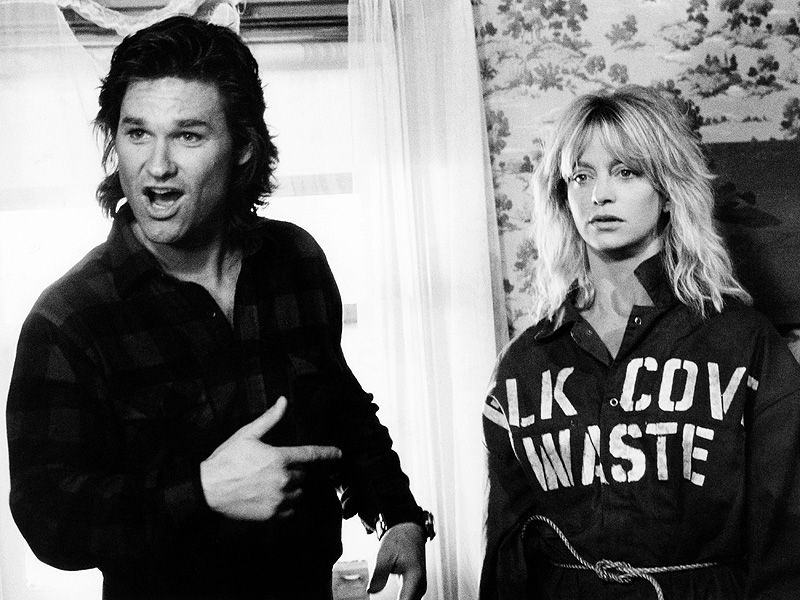
Brad reviews OVERBOARD (1987), starring Kurt Russell and Goldie Hawn!


Spoiled heiress Joanna Stayton (Goldie Hawn) hires carpenter Dean Proffitt (Kurt Russell) to remodel a closet on her yacht. Unsatisfied with his work and completely unreasonable about everything, she refuses to pay him and when he presses her for the $600, she pushes him and all of his tools overboard. Needless to say, the lady’s a “bitch” (Dean’s word) and nobody can stand her, including her husband, Grant Stayton III (Edward Herrman), and their butler Andrew (Roddy McDowell). And then something interesting happens a few days later… Joanna accidentally falls off her yacht, and when she’s fished out of the ocean, she’s still difficult to deal with, but she doesn’t have a clue who she is. Unable to identity her, the hospital puts the “amnesia lady” on the news hoping someone will recognize her. Sensing a chance to get rid of the anchor around his neck, Grant Stayton III pretends he doesn’t know her and heads out of town. This is where Dean hatches up his own plot to get revenge. He heads to the hospital and through a series of happenstances and coincidences, he’s able to convince everyone, including Joanna, now dubbed as “Annie,” that she’s his wife. He takes her home with him and makes her take care of his four wild boys, cook their food, and clean his house. Dean figures she owes it to him. But wouldn’t you know it, even though “Annie” hates it at first, over time she begins to soften towards her new life, bonds with the boys, and some sparks of love start flying between her and Dean. When she unexpectedly gets her memory back, she has to decide whether to return to her life as a spoiled heiress or stay with the man and boys she’s grown to love.

I have a soft spot in my heart for OVERBOARD, because this is a movie that my mom and I both loved, and we watched it together many times in the late 80’s and early 90’s. My mom and I didn’t often have the same taste in movies, so this was kind of “our movie.” There are a couple of other notable favorites for both me and mom, and those movies are RUTHLESS PEOPLE (1986) and LETHAL WEAPON (1987). I guarantee if I called my mom right now, interrupted her Hallmark Christmas movies, and told her I was coming over with OVERBOARD, she’d say “Come on! I’ll get something together for you to eat!” That actually sounds like a pretty good idea!

Another reason I love OVERBOARD is the fact that it stars Kurt Russell. I became a big fan of Kurt Russell during my teenage years, as I was 14 when this movie came out. A couple of years earlier, Russell starred in the films THE BEST OF TIMES (1986) and BIG TROUBLE IN LITTLE CHINA (1986), and a couple of years later he would make movies like TEQUILA SUNRISE (1988), TANGO & CASH (1989), and BACKDRAFT (1991). I wanted to watch every movie that Russell was in, and all of these films are staples of my VHS years and nostalgic favorites. In OVERBOARD, Russell starts off as a gruff, grudge-holder, but as he begins to fall for “Annie,” his natural charm and likability emerge, but so does a newfound guilt for lying to her and possibly even kidnapping her. One question for the lawyers out there, is it kidnapping when her husband had a chance to claim her and chose to abandon her instead? I’m not sure if it’s a felony or not, but I’m guessing there has to be something on the law books that doesn’t jive with what happens here. Anyway, I’ll just say that it’s best not to think of these types of pesky realities when judging this fairy tale and just go along for the ride.

Along with the Russell’s fun performance, Goldie Hawn is so perfect as the horrifically spoiled snob of an heiress who transforms into a caring substitute mother and the woman of Dean’s dreams. I know she’s great in the movie, because I can’t stand her at the beginning, but I find myself falling for her too as the movie progresses. I would not really call myself a fan of Goldie Hawn, because I haven’t spent much of my life revisiting her films, but I love her here. A couple in real life, the natural chemistry between Russell and Hawn sparkles as they fall in love on screen and only the most cold-hearted cynic isn’t pulling for them to live happily ever after as the movie closes in on its ending. As far as the supporting cast, Edward Herrmann, Katherine Helmond, Mike Hagerty, and Roddy McDowall all have good moments sprinkled throughout the film.

I do have one complaint about OVERBOARD, and that’s the “Wonders of the World Miniature Golf Course,” which is the dream business of Dean and his best friend Bad Billy Pratt (Mike Hagerty). As someone who grew up in the 70’s and 80’s playing miniature golf on the courses in Branson, MO, I would never want to play their course. Its design appears over-the-top and cheesy to me, the type of course where the scores on the holes would be determined as much by luck as by skill, which is something I find offensive. However, just like the potential kidnapping storyline, I’ve had to let my disdain for the quality of the course design go as well so I could enjoy that section of the film. I will admit this one is harder for me personally, and I still struggle with it.

Overall, OVERBOARD is not high art, and its premise is about as silly as it gets, but through a magical combination of personal 1980’s nostalgia, an appreciation for the chemistry of its stars, and a complete willingness to suspend my disbelief as we head towards an irresistibly happy ending, I still love this film. I watch it just about every year, especially if I need a pick me up as I hammer away at tax returns!
Retro Television Review: St. Elsewhere 3.1 “Playing God, Part One”


Welcome to Retro Television Reviews, a feature where we review some of our favorite and least favorite shows of the past! On Fridays, I will be reviewing St. Elsewhere, a medical show which ran on NBC from 1982 to 1988.  The show can be found on Daily Motion.

Today, we start the third season of St. Elsewhere with some new opening credits!

Episode 3.1 “Playing God, Part One”

(Dir by Bruce Paltrow, originally aired on September 19th, 1984)

The opening of the third season finds that St. Eligius is just as depressing as it’s ever been.

Fiscus leads a group of new residents, including Dr. Elliott Axelrod (played by new series regular Stephen Furst), through the hospital.  Fiscus comes across as being an arrogant jackass.  I guess that’s the appeal of being a second-year resident.  You get to look down on all of the first-years.

Jack is still dating Clancy (young Helen Hunt).  When Clancy tells Jack that she’s pregnant, he’s shocked when she says she’s planning on getting an abortion.  Jack proposes to her.  Clancy says she’s not ready to get married and she’s not ready to have a baby.

Dr. Craig is still yelling at Dr. Ehrlich.  Dr. Ehrlich is still annoying the nurses.

Speaking of the nurses, they’re going on strike!

Three firefighters (one of whom is played by Erin Hudson) are injured while on the job and are rushed to St. Eligius with severe burns.  Luckily, plastic surgeon Bobby Caldwell (Mark Harmon, without that terrible mustache he wore during season two) is on call.

Dr. Peter White is working in a shady clinic and is still suing for his right to be a resident.

A traffic accident leaves one nun in a coma and apparently brain-dead.  Sister Doemnica (Michael Learned) wants to take her off life-support.  Westphall (Ed Flanders), who seems even more depressed than usual, disagrees.  It looks like there’s going to be some conflict about this.  For once, I’m on Westphall’s side.  I’m believer in hope.

Auschlander is still battling his cancer.

In other words, it’s another day at St. Eligius.  The third season premiere did a good job of re-introducing viewers to the hospital.  The snarkiness of Fiscus’s tour nicely balanced all of the more dramatic moments in the episode.  If anything has me worried, it’s the possible return of the loathsome Peter White.  How is the hospital going to deal with the return of a man who they all know is a rapist, even if he was somehow acquitted?  I guess we’ll find out.

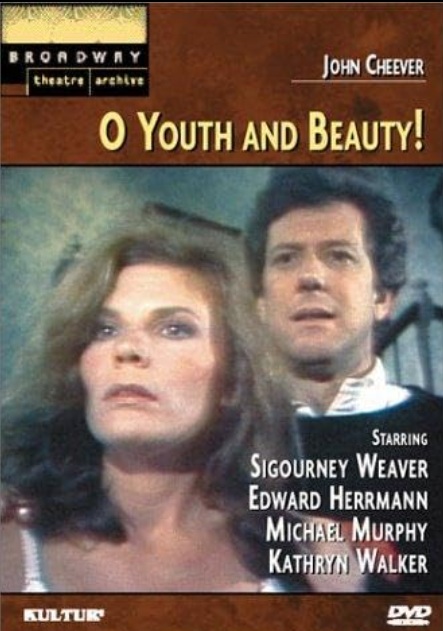
Retro Television Review: 3 By Cheever 1.2 “O Youth And Beauty!” (dir by Jeff Bleckner)


Welcome to Retro Television Reviews, a feature where we review some of our favorite and least favorite shows of the past!  On Saturdays, I will be reviewing 3 By Cheever, which ran on PBS in 1979.  The entire show can be purchased on Prime and found on YouTube.

Episode 1.2 “O Youth and Beauty!”

(Dir by Jeff Bleckner, originally aired on October 31st, 1979)

Back in the day, Cash Bentley (Michael Murphy) was an athletic marvel.  He was a track star who could jump the hurdles with ease and who everyone in high school looked up to.  Now, however, he’s 40 years old and he feels lost.  He’s aging and a new generation of young people have come along.  They certainly have no idea who Cash Bentley used to be.

At drunken neighborhood parties, Cash insists on recreating his youth by having his hosts set up their furniture like an obstacle course.  Giving them a starter’s pistol that he insists be fired to signify the start of the race, Cash will run through the house, jumping over chairs and couches and tables while everyone cheers.  Unfortunately, Cash’s luck runs out and he ends up breaking his leg during one of his demonstrations.

Forced to get around on crutches, Cash feels isolated from the rest of the world.  He doesn’t get a promotion because his bosses say they need someone who can start traveling immediately.  When all of his neighbors get on the train that is heading into the city at the usual morning time, a hobbled Cash arrives late and is forced to wait alone for the next one.  His wife, Louise (Kathryn Walker), gets a job working at a boutique to help pay the bills.  She says that maybe she’ll make enough that they’ll be able to take a vacation.  At the neighborhood parties, no one wants to deal with Cash and his broken leg.  His athleticism was all he had left.  It was what he was known for.  It was the source of all his confidence.  Now that he doesn’t have that, he’s lost.

Eventually, his legs comes out of the cast and he insists that Louise set up all the furniture in the house so that he can run another obstacle race.  He gives Louise the starter’s pistol and insists that she fire it when it’s time for him to start.  The scene cuts to the outside of their suburban home.  The sound of one gunshot upsets the calm.  Later, Louise and her children are seen moving out of the house.  Cash is nowhere to be seen.

The episode ends ambiguously.  Those who are familiar with the original John Cheever short story know that Louise shot Cash and that no one was sure whether she meant to do it or not.  The movie cuts away before the gun is actually fired.  For all we know, Cash did the obstacle course and then just never returned home.

O Youth and Beauty is one of John Cheever’s most acclaimed short stories.  The screen adaptation features an excellent performance from Kathryn Walker but the scenes of Cash running the furniture obstacle course are probably something that worked better on the page and in the reader’s imagination than when actually presented on film.  Michael Murphy is almost too confident and handsome as Cash.  The role calls for a former jock slowly going to seed and desperately trying to hold onto his youth whereas Murphy looks like he’s still in peak athletic form.  Murphy does a good job portraying Cash’s depression and his alienation after he breaks his leg but, physically, he still seems miscast in the role.

Edward Herrmann and Sigourney Weaver, who were the center of last week’s episode, make a brief appearance in this one, hovering in the background of the neighborhood’s endless parties.

Next week, we finish up 3 By Cheever.

Retro Television Review: 3 By Cheever 1.1 “The Sorrows of Gin” (dir by John Hofsiss)


Welcome to Retro Television Reviews, a feature where we review some of our favorite and least favorite shows of the past!  On Saturdays, I will be reviewing 3 By Cheever, which ran on PBS in 1979.  The entire show can be purchased on Prime and found on YouTube.

In 1979, PBS aired 3 By Cheever, three short films that were all based on stories by the American author, John Cheever.  The stories all took place in the same suburban milieu and featured characters in common.  The first episode was an adaptation of one of Cheever’s earlier stories, The Sorrows of Gin.

Episode 1.1 “The Sorrows of Gin”

(Dir by Jack Hofsiss, originally aired on October 24th, 1979)

Taking place in the New England suburb of Shady Hill, The Sorrows of Gin deals with the Lawton family.  The Lawtons have got a nice house, lovely neighbors, and enough loyal servants that they don’t ever have to really worry about taking care of their eight year-old daughter, Amy (Mara Hobel).  Kip (Edward Herrmann) and Marcia Lawton (Sigourney Weaver) are youngish, successful, athletic (they play tennis, of course), and they’re also alcoholics.  They don’t realize they’re alcoholics and they’re both far more refined than the stereotypical image of the boozy drunk but they’re alcoholics nonetheless.

They’re also hypocrites.  When Amy’s babysitter, Rosemary (Eileen Heckart), comes to work with booze on her breath, Kip fires her.  Amy, realizing that the alcohol is causing her parents to fight, starts to secretly pour out all of the gin, a little at a time.  Kip and Marcia assume that the servants are sneaking drinks and they go on a firing rampage.  Amy finally decides to run away from home, just to be found by Kip who, at the very least, seems like he’s willing to try to be a better father and husband.

Wow, what a depressing story!  Cheever’s original short story, which was one of the first American stories to really explore suburban alcoholism, was written with a good deal of wit and social satire.  The PBS adaptation takes a far more literal approach.  It captures Cheever’s story but not his voice and, as a result, you kind of find yourself why you should care about any of these people.  Even taking alcohol out of the equation, Kip and Marcia are shallow, self-absorbed, and terrible parents.  Maybe Amy should run away.

On the plus side, the film does feature Edward Herrmann and Sigourney Weaver, both giving excellent performances as the Lawtons.  The same year in which this aired, Weaver also starred as Ripley in Alien and it is a bit odd to see Weaver playing someone who would probably never in a thousand years see that film.  That said, Weaver does a good job and is totally believable as the clueless Marcia.  Meanwhile, Edward Herrmann has just the right WASP-y style to play Kip Lawton.  One of the most effective things about this film is how Kip is just a goofy suburban husband until he thinks someone is drinking his gin.  Then, he becomes outraged.  This film ends with a hint of redemption for Kip, a suggestion that Kip has finally realized how much his drinking is upsetting his daughter.  But, honestly, Kip doesn’t really seem like he has it in him to change.  Hopefully, he’ll just stop firing people.

This was an uneven production.  The story wasn’t quite as shocking as perhaps it was when Cheever first wrote about the Lawtons.  But the performances of Herrmann and Weaver kept me watching.


Shattered Politics: Harry’s War (dir by Kieth Merrill)


It’s Tax Day, which means that it’s a good day to remember that the IRS is not your friend.

That can sometimes be hard to forget, with all the talk of making people “pay their fair share” and all the drama that seems to accompany any suggestion that federal bureaucracy should be reduced.  Back in 2003, there was a big story about how the IRS was going to hire 3,000 new employees and it amazed me how the media tried to frame this as being a good thing to which no one could possibly object.  Whenever I turned on the news, I would see government official bragging about how they were going to bring in even more IRS agents to make “the billionaires” pay their fair share.  (They may say “billionaires” but one can be sure that those 3,000 IRS agents weren’t going to anyone near anyone who donated to the right people.)  In the recent election, I was always amused by analysts who were shocked to discover that many voters, especially those were struggling to pay their bills, weren’t enthusiastic about the idea of a supercharged IRS.

The fact of the matter is that people hate the IRS.  The IRS exists to make people’s live difficult.  The IRS exists to take our money away from us, money that we earned but which we are apparently not worthy of keeping.  The IRS is an agency that demands that you do you own taxes but then threatens to throw you in jail if you make a mistake.  When people hear 3,000 new IRS agents, they imagine 3,000 more people looking to take their money and toss them in prison for forgetting to carry the one.  I often think that if the IRS simply sent people a bill every year, people would actually get a lot less upset about having to pay taxes.  I get a property tax bill from the country and I have no problem paying it because it gives me an exact amount.  Instead, the IRS says, “We know how much you owe but we’re not going to tell you.  If you pay too much, you won’t get a refund and if you pay too little, we’ll destroy your life.”

On days like this, watching a film like 1981’s Harry’s War can be a cathartic experience.  The film stars Edward Herrmann (yes, the History channel guy) as Harry, a postman who was raised by Beverly Payne (Geraldine Page), an eccentric woman who collects military memorabilia and whose property is listed as being a church and is therefore tax exempt.  In her will, Beverly has named Harry as her heir.  Arrogant IRS district director Ernie Scelera (David Ogden Stiers) is convinced that Beverly is hiding a fortune from the IRS and he proceeds to harass both her and Harry in court until Beverly drops dead of a heart attack.  Harry inherits Beverly’s property and also her tax bill.  However, Harry has also inherited all of her military stuff and soon, he’s crashing Ernie’s press conference with a tank and then engaging in a lengthy stand-off with the government.  The film is a dramedy and you never really doubt that Harry will somehow triumph (even if his victory is ultimately a symbolic one) but the film still reminds us of how quickly the government will turn on its citizens when it’s being defied and the final few moments bring to mind some of the worst ATF and FBI excesses of the past 30 years.  That said, Harry is quick to point out that he’s not waging war on the government.  He’s waging war on the unelected bureaucrats who have forgotten that civil servants are supposed to work for the people and not against them.  “All that power in one place,” Harry says scornfully about the IRS and it’s hard to deny that he has a point.  It’s hardly a perfect film but, in this day and age, it’s a film that will leave you cheering.


Lisa Marie Reviews An Oscar Nominee: Reds (dir by Warren Beatty)


In the 1981 film Reds, Warren Beatty plays Jack Reed, the radical journalist who, at the turn of the century, wrote one of the first non-fiction books about Russia’s communist revolution and then went on to work as a propagandist for the communists before becoming disillusioned with the new Russian government and then promptly dying at the age of 32.

Diane Keaton plays Louise Bryant, the feminist writer who became Reed’s lover and eventually his wife.  Louise found fame as one of the first female war correspondents but then she also found infamy when she was called before a Congressional committee and accused of being a subversive.

Jack Nicholson plays Eugene O’Neill, the playwright who was a friend of both Reed and Bryant’s and who had a brief affair with Bryant while Reed was off covering labor strikes and the 1916 Democratic Convention.

Lastly, Maureen Stapleton plays Emma Goldman, the anarchist leader who was kicked out of the country after one of her stupid little dumbass followers assassinated President McKinley.  (Seriously, don’t get me started on that little jerk Leon Czolgosz.)

Together …. well, I was going to say that they solve crimes but that joke is perhaps a bit too flippant for a review of RedsReds is a big serious film about the left-wing activists at the turn of the century, one in which the characters move from one labor riot to another and generally live the life of wealthy bohemians.  Reed spends the film promoting communism, just to be terribly disillusioned when the communists actually come to power in Russia.  For a history nerd like me, the film is interesting.  For those who are not quite as obsessed with history, the film is extremely long and the scenes of Reed and Bryant’s domestic dramas often feel a bit predictable, especially when they’re taking place against such a large international tableaux.  At its best, the film is almost a Rorschach test for how the viewer feels about political and labor activists.  Do you look at Jack Reed and Louise Bryant and see two inspiring warriors for the cause or do you see two wealthy people playing at being revolutionaries?

Reds was a film that Warren Beatty spent close to 20 years trying to make, despite the fact that the heads of the Hollywood studios all told him that audiences would never show up for an epic film about a bunch of wealthy communists.  (The heads of the studio turned out to be correct, as the film was critically acclaimed but hardly a success at the box office.)  It was only after the success of the 1978, Beatty-directed best picture nominee Heaven Can Wait that Beatty was finally able to get financing for his dream project.  He ended up directing, producing, and writing the film himself and he cast his friend Jack Nicholson as O’Neill and his then-romantic partner Diane Keaton as Louise Bryant.  (Gene Hackman, Beatty’s Bonnie and Clyde co-star, shows up briefly as one of Reed’s editors.)  One left-wing generation’s tribute to an early left-wing generation, Reds is fully a Warren Beatty production and, for his efforts, Beatty was honored with the Oscar for Best Director.  That said, the Reds lost the award for Best Picture to another historical epic, Chariots of Fire.  Chariots of Fire featured no communists and did quite well at the box office.

The film is good but a bit uneven, especially towards the end when we suddenly get scenes of Louise Bryant trudging through Finland as she attempts to make it to Russia to be reunited with Reed.  The film actually works best when it features interviews with people who were actual contemporaries of Reed and Bryant and who share their own memoires of the time.  In fact, the interviews work almost too well.  The “witnesses,” as the film refers to them, paint such a vivid picture of the Reed, Bryant, and turn of the century America that Beatty’s attempt to cinematically recreate history often can’t compete.  One can’t help but feel that Beatty perhaps should have just made a documentary instead of a narrative film.

(Interestingly enough, many of the witnesses were people who were sympathetic to Reed’s politics in at the start of the century but then moved much more to the right as the years passed.  Reed’s friend and college roommate, Hamilton Fish, went on to become a prominent Republican congressman and a prominent critics of FDR.)

That said, Jack Nicholson gives a fantastic performance as Eugene O’Neill, adding some much needed cynicism to the film’s portrayal of Reed and Bryant’s idealism.  Keaton and Beatty sometime both seem to be struggling to escape their own well-worn personas as Bryant and Reed but Beatty does really sell Reed’s eventually disillusionment with Russia and the scene where he finally tells off his Russian handler made me want to cheer.  Fans of great character acting will want to keep an eye out for everyone from Paul Sorvino to William Daniels to Edward Herrmann to M. Emmet Walsh and IanWolfe, all popping up in small roles.

Reds is not a perfect film but, as a lover of history, I enjoyed it.


Playing Catch-Up: Crisscross, The Dust Factory, Gambit, In The Arms of a Killer, Overboard, Shy People


So, this year I am making a sincere effort to review every film that I see.  I know I say that every year but this time, I really mean it.

So, in an effort to catch up, here are four quick reviews of some of the movies that I watched over the past few weeks!

  • Crisscross
  • Released: 1992
  • Directed by Chris Menges
  • Starring David Arnott, Goldie Hawn, Arliss Howard, Keith Carradine, James Gammon, Steve Buscemi

An annoying kid named Chris Cross (David Arnott) tells us the story of his life.

In the year 1969, Chris and his mother, Tracy (Goldie Hawn), are living in Key West.  While the rest of the country is excitedly watching the first moon landing, Chris and Tracy are just trying to figure out how to survive day-to-day.  Tracy tries to keep her son from learning that she’s working as a stripper but, not surprisingly, he eventually finds out.  Chris comes across some drugs that are being smuggled into Florida and, wanting to help his mother, he decides to steal them and sell them himself.  Complicating matters is the fact that the members of the drug ring (one of whom is played by Steve Buscemi) don’t want the competition.  As well, Tracy is now dating Joe (Arliss Howard), who just happens to be an undercover cop.  And, finally, making things even more difficult is the fact that Chris just isn’t that smart.

There are actually a lot of good things to be said about Crisscross.  The film was directed by the renowned cinematographer, Chris Menges, so it looks great.  Both Arliss Howard and Goldie Hawn give sympathetic performances and Keith Carradine has a great cameo as Chris’s spaced out dad.  (Traumatized by his experiences in Vietnam, Chris’s Dad left his family and joined a commune.)  But, as a character, Chris is almost too stupid to be believed and his overwrought narration doesn’t do the story any good.  Directed and written with perhaps a less heavy hand, Crisscross could have been a really good movie but, as it is, it’s merely an interesting misfire.

  • The Dust Factory 
  • Released: 2004
  • Directed by Eric Small
  • Starring Armin Mueller-Stahl, Hayden Panettiere, Ryan Kelly, Kim Myers, George de la Pena, Michael Angarano, Peter Horton

Ryan (Ryan Kelly) is a teen who stopped speaking after his father died.  One day, Ryan falls off a bridge and promptly drowns.  However, he’s not quite dead yet!  Instead, he’s in The Dust Factory, which is apparently where you go when you’re on the verge of death.  It’s a very nice place to hang out while deciding whether you want to leap into the world of the dead or return to the land of the living.  Giving Ryan a tour of the Dust Factory is his grandfather (Armin Mueller-Stahl).  Suggesting that maybe Ryan should just stay in the Dust Factory forever is a girl named Melanie (Hayden Panettiere).  Showing up randomly and acting like a jerk is a character known as The Ringmaster (George De La Pena).  Will Ryan choose death or will he return with a new zest for living life?  And, even more importantly, will the fact that Ryan’s an unlikely hockey fan somehow play into the film’s climax?

The Dust Factory is the type of unabashedly sentimental and theologically confused film that just drives me crazy.  This is one of those films that so indulges every possible cliché that I was shocked to discover that it wasn’t based on some obscure YA tome.  I’m sure there’s some people who cry while watching this film but ultimately, it’s about as deep as Facebook meme.

  • Gambit
  • Released: 2012
  • Directed by Michael Hoffman
  • Starring Colin Firth, Cameron Diaz, Alan Rickman, Tom Courtenay, Stanley Tucci, Cloris Leachman, Togo Igawa

Harry Deane (Colin Firth) is beleaguered art collector who, for the sake of petty revenge (which, as we all know, is the best type of revenge), tries to trick the snobbish Lord Shabandar (Alan Rickman) into spending a lot of money on a fake Monet.  To do this, he will have to team up with both an eccentric art forger (Tom Courtenay) and a Texas rodeo star named PJ Puznowksi (Cameron Diaz).  The plan is to claim that PJ inherited the fake Monet from her grandfather who received the painting from Hermann Goering at the end of the World War II and…

Well, listen, let’s stop talking about the plot.  This is one of those elaborate heist films where everyone has a silly name and an elaborate back story.  It’s also one of those films where everything is overly complicated but not particularly clever.  The script was written by the Coen Brothers and, if they had directed it, they would have at least brought some visual flair to the proceedings.  Instead, the film was directed by Michael Hoffman and, for the most part, it falls flat.  The film is watchable because of the cast but ultimately, it’s not surprising that Gambit never received a theatrical release in the States.

On a personal note, I saw Gambit while Jeff & I were in London last month.  So, I’ll always have good memories of watching the movie.  So I guess the best way to watch Gambit is when you’re on vacation.

  • In The Arms of a Killer
  • Released: 1992
  • Directed by Robert L. Collins
  • Starring Jaclyn Smith, John Spencer, Nina Foch, Gerald S. O’Loughlin, Sandahl Bergman, Linda Dona, Kristoffer Tabori, Michael Nouri

This is the story of two homicide detectives.  Detective Vincent Cusack (John Spencer) is tough and cynical and world-weary.  Detective Maria Quinn (Jaclyn Smith) is dedicated and still naive about how messy a murder investigation can be when it involves a bunch of Manhattan socialites.  A reputed drug dealer is found dead during a party.  Apparently, someone intentionally gave him an overdose of heroin.  Detective Cusack thinks that the culprit was Dr. Brian Venible (Michael Nouri).  Detective Quinn thinks that there has to be some other solution.  Complicating things is that Quinn and Venible are … you guessed it … lovers!  Is Quinn truly allowing herself to be held in the arms of a killer or is the murderer someone else?

This sound like it should have been a fun movie but instead, it’s all a bit dull.  Nouri and Smith have next to no chemistry so you never really care whether the doctor is the killer or not.  John Spencer was one of those actors who was pretty much born to play world-weary detectives but, other than his performance, this is pretty forgettable movie.

  • Overboard
  • Released: 1987
  • Directed by Garry Marshall
  • Starring Goldie Hawn, Kurt Russell, Edward Herrmann, Katherine Helmond, Roddy McDowall, Michael G. Hagerty, Brian Price, Jared Rushton, Hector Elizondo

When a spoiled heiress named Joanne Slayton (Goldie Hawn) falls off of her luxury yacht, no one seems to care.  Even when her husband, Grant (Edward Herrmann), discovers that Joanne was rescued by a garbage boat and that she now has amnesia, he denies knowing who she is.  Instead, he takes off with the boat and proceeds to have a good time.  The servants (led by Roddy McDowall) who Joanne spent years terrorizing are happy to be away from her.  In fact, the only person who does care about Joanne is Dean Proffitt (Kurt Russell).  When Dean sees a news report about a woman suffering from amnesia, he heads over to the hospital and declares that Joanne is his wife, Annie.

Convinced that she is Annie, Joanne returns with Dean to his messy house and his four, unruly sons.  At first, Dean says that his plan is merely to have Joanne work off some money that she owes him.  (Before getting amnesia, Joanne refused to pay Dean for some work he did on her boat.)  But soon, Joanne bonds with Dean’s children and she and Dean start to fall in love.  However, as both Grant and Dean are about to learn, neither parties nor deception can go on forever…

This is one of those films that’s pretty much saved by movie star charisma.  The plot itself is extremely problematic and just about everything that Kurt Russell does in this movie would land him in prison in real life.  However, Russell and Goldie Hawn are such a likable couple that the film come close to overcoming its rather creepy premise.  Both Russell and Hawn radiate so much charm in this movie that they can make even the stalest of jokes tolerable and it’s always enjoyable to watch Roddy McDowall get snarky.  File this one under “Kurt Russell Can Get Away With Almost Anything.”

A remake of Overboard, with the genders swapped, is set to be released in early May.

  • Shy People
  • Released: 1987
  • Directed by Andrei Konchalovsky
  • Starring Jill Clayburgh, Barbara Hershey, Martha Plimpton, Merritt Butrick, John Philbin, Don Swayze, Pruitt Taylor Vince, Mare Winningham

Diana Sullivan (Jill Clayburgh) is a writer for Cosmopolitan and she’s got a problem!  It turns out that her teenager daughter, Grace (Martha Plimpton), is skipping school and snorting cocaine!  OH MY GOD!  (And, to think, I thought I was a rebel just because I used to skip Algebra so I could go down to Target and shoplift eyeliner!)  Diana knows that she has to do something but what!?

Diana’s solution is to get Grace out of New York.  It turns out that Diana has got some distant relatives living in Louisiana bayou.  After Cosmo commissions her to write a story about them, Diana grabs Grace and the head down south!

(Because if there’s anything that the readers of Cosmo are going to be interested in, it’s white trash bayou dwellers…)

The only problem is that Ruth (Barbara Hershey) doesn’t want to be interviewed and she’s not particularly happy when Diana and Grace show up.  Ruth and her four sons live in the bayous.  Three of the sons do whatever Ruth tells them to do.  The fourth son is often disobedient so he’s been locked up in a barn.  Diana, of course, cannot understand why her relatives aren’t impressed whenever she mentions that she writes for Cosmo.  Meanwhile, Grace introduces her cousins to cocaine, which causes them to go crazy.  “She’s got some strange white powder!” one of them declares.

So, this is a weird film.  On the one hand, you have an immensely talented actress like Jill Clayburgh giving one of the worst performances in cinematic history.  (In Clayburgh’s defense, Diana is such a poorly written character that I doubt any actress could have made her in any way believable.)  On the other hand, you have Barbara Hershey giving one of the best.  As played by Hershey, Ruth is a character who viewers will both fear and admire.  Ruth has both the inner strength to survive in the bayou and the type of unsentimental personality that lets you know that you don’t want to cross her.  I think we’re supposed to feel that both Diana and Ruth have much to learn from each other but Diana is such an annoying character that you spend most of the movie wishing she would just go away and leave Ruth alone.  In the thankless role of Grace, Martha Plimpton brings more depth to the role than was probably present in the script and Don Swayze has a few memorable moments as one of Ruth’s sons.  Shy People is full of flaws and never really works as a drama but I’d still recommend watching it for Hershey and Plimpton.

Embracing The Melodrama Part III #6: The Betsy (dir by Daniel Petrie)


“Wheeeeeeee!”

— Loren Hardeman Sr. (Sir Laurence Olivier) in The Betsy (1978)

Here’s a little thought experiment:

Imagine if The Godfather had starred Laurence Olivier and Tommy Lee Jones.

That may sound strange but it actually could have happened.  When Francis Ford Coppola first started his search for the perfect actor to play Don Vito Corleone, he announced that he could only imagine two actors pulling off the role.  One was Marlon Brando and the other was Laurence Olivier.

As for Tommy Lee Jones, he was among the many actors who auditioned for the role of Michael Corleone.  At the time, Jones was 26 years old and had only recently made his film debut in Love Story.  As odd as it may be to imagine the quintessentially Texan Tommy Lee Jones in the role, Coppola always said that he was looking for a brooder as Michael and that’s definitely a good description of Jones.

Of course, as we all know, neither Olivier nor Jones were ever cast in The Godfather.  Marlon Brando played Don Vito and Al Pacino was cast as Michael.  However, a few years later, Olivier and Jones would co-star in another family saga that combined history, organized crime, and melodrama.  That film was 1978’s The Betsy and, interestingly enough, it even co-starred an actor who actually did appear in The Godfather, Robert Duvall.

Of course, now would probably be a good time to point out that The Godfather is perhaps the greatest American film of all time.  And The Betsy … well, The Betsy most definitely is not.

The film’s German poster even gives off a Godfather vibe

Based on a novel by Harold Robbins, The Betsy exposes the secrets of Detroit.  Decades ago, Loren Hardeman founded Hardeman Motors and started to build his considerable fortune.  Sure, Loren had to break a few rules.  He cut corners.  He acted unethically.  He had an affair with his daughter-in-law and then drove his gay son to suicide.  Loren never said that he was perfect.  Now in his 80s, Loren has a vision of the future and that vision is a new car.  This car will be called the Betsy (named after his great-granddaughter) and it will be the most fuel-efficient car ever made.

Since the film appropriates the flashback structure used in The Godfather Part II, we get to see Loren Hardeman as both an elderly man and a middle-aged titan of industry.  Elderly Loren is played by Laurence Olivier.  Elderly Loren spends most of the film in a wheelchair and he speaks with a bizarre accent, one that I think was meant to be Southern despite the fact that the film takes place in Michigan.  Elderly Loren gets really excited about building his new car and, at one point, shouts out “Wheeeeeee!”

Middle-aged Loren is played by … Laurence Olivier!  That’s right.  Olivier, who was 71 years old at the time, also plays Loren as a younger man.  This means that Olivier wears a hairpiece and so much makeup that he looks a bit like a wax figure come to life.  Strangely, Middle-aged Loren doesn’t have a strange accent and never says “wheeeee.”

To build his car, Loren recruits race car driver Angelo Perino (Tommy Lee Jones).  Angelo’s father was an old friend of Loren’s.  When Angelo agrees, he discovers that the Hardeman family is full of drama and secrets.  Not only is great-granddaughter Betsy (Kathleen Beller) in love with him but so is Lady Bobby Ayers (Lesley-Anne Down), who is the mistress of Loren’s grandson, Loren the 3rd (Robert Duvall).

Because he blames his grandfather for the death of his father, Loren the 3rd has no intention of building Loren the 1st’s car.  Loren the 3rd wants to continue to make cars that pollute the environment.  “Over my dead boy!” Loren the 1st replies.  “As you wish, grandfather,” Loren the 3rd replies with a smile.

But we’re not done yet!  I haven’t even talked about the Mafia and the union organizers and the automotive journalist who ends up getting murdered.  From the minute the movie starts, it’s nonstop drama.  That said, most of the drama is so overdone that it’s actually more humorous than anything else.  As soon as Laurence Olivier shouts out, “Wheeeee!,” The Betsy falls into the trap of self-parody and it never quite escapes.  There’s a lot going on in the movie and one could imagine a more imaginative director turning the trashy script into a critique of capitalism and technology.  However, Daniel Petrie directs in a style that basically seems to be saying, “Let’s just get this over with.”

The cast is full of interesting people, all of whom are let down by a superficial script.  Nothing brings out the eccentricity in talented performers quicker than a line of shallow dialogue.  Jane Alexander, who plays Duvall’s wife, delivers all of her lines in an arch, upper class accent.  Edward Herrmann, playing a lawyer, smirks every time the camera is pointed at him.  Katharine Ross, as Olivier’s mistress and Duvall’s mother, stares at Olivier like she’s trying to make his head explode.  Tommy Lee Jones is even more laconic than usual while Duvall always seems to be struggling not to start laughing.

And then there’s Olivier.  For better or worse, Olivier is the most entertaining thing about The Betsy.  He doesn’t give a good performance but he does give a memorably weird one.  Everything, from the incomprehensible accent to a few scenes where he literally seems to bounce up and down, suggests a great actor who is desperately trying to bring a spark of life to an otherwise doomed project.  It’s a performance so strange that it simply has to be seen to be believed.

Tomorrow, we take a look at another melodrama featuring Robert Duvall, True Confessions!


4 Film Reviews: Bridge To Silence, The Chocolate War, Kiss The Bride, Wedding Daze


Last week, I watched six films on This TV.

Which TV?  No, This TV!  It’s one of my favorite channels.  It’s not just that they show a lot of movies.  It’s also that they frequently show movies that are new to me.  For instance, last week, This TV introduced me to both Prison Planet and Cherry 2000.

Here are four other films, two good and two not so good, that This TV introduced to me last week.

First up, we have 1989’s Bridge to Silence.

Directed by Karen Arthur, Bridge To Silence was a made-for-TV movie.  Lee Remick plays Marge Duffield, who has a strained relationship with her deaf daughter, Peggy (Marlee Matlin).  After Peggy’s husband is killed in a traffic accident, Peggy has a nervous breakdown.  Marge and her husband, Al (Josef Sommer) take care of Peggy’s daughter, Lisa, while Peggy is recovering.  However, even as Peggy gets better, Marge still doesn’t feel that she can raise her daughter so Marge files a lawsuit to be named Lisa’s legal guardian.  While all of this is going on, Peggy is starring in a college production of The Glass Menagerie and pursuing a tentative romance with the play’s director (Michael O’Keefe).

Bridge to Silence is one of those overwritten but heartfelt melodramas that just doesn’t work.  With the exception of Marlee Matlin, the cast struggles with the overwrought script.  (Michael O’Keefe, in particular, appears to be miserable.)  The film’s biggest mistake is that it relies too much on that production of The Glass Menagerie, which is Tennessee Williams’s worst play and tends to be annoying even when it’s merely used as a plot device.  There’s only so many times that you can hear the play’s director refer to Peggy as being “Blue Roses” before you just want rip your hair out.

Far more enjoyable was 1988’s The Chocolate War.

Directed by Keith Gordon, The Chocolate War is a satirical look at conformity, popularity, rebellion, and chocolate at a Catholic boys school.  After the manipulative Brother Leon accidentally purchases too much chocolate for the school’s annual sale, he appeals to one of his students, Archie Costello (Wallace Langham), to help him make the money back.  Archie, who is just as manipulative as Leon, is the leader of a secret society known as the Vigils.  However, Archie and Leon’s attempt to manipulate the students runs into a roadblack when a new student, Jerry Renault (Illan Mitchell-Smith) refuses to sell any chocolates at all.  From there, things get progressively more complicated as Archie tries to break Jerry, Jerry continues to stand up for his freedom, and Leon … well, who knows what Leon is thinking?

The Chocolate War was an enjoyable and stylish film, one that featured a great soundtrack and a subtext about rebellion and conformity that still feels relevant.  John Glover and Wallace Langham both gave great performances as two master manipulators.

I also enjoyed the 2002 film, Kiss The Bride.

Kiss The Bride tells the story of a big Italian family, four sisters, and a wedding.  Everyone brings their own personal drama to the big day but ultimately, what matters is that family sticks together.  Directed by Vanessa Parise, Kiss The Bride featured believable and naturalistic performances from Amanda Detmer, Talia Shire, Burt Young, Brooke Langton, Monet Mazur, and Parise herself.

I have to admit that one reason why I liked this film is because it was about a big Italian family and it featured four sisters.  I’m the youngest of four sisters and, watching the film, I was reminded of my own big Irish-Italian family.  The movie just got everything right.

And then finally, there was 2006’s Wedding Daze.

Wedding Daze is a romantic “comedy.”  Anderson (Jason Biggs) asks his girlfriend to marry him, just to have her drop dead from shock.  Anderson’s best friend is afraid that Anderson will never get over his dead girlfriend and begs Anderson to not give up on love.  Anderson attempts to humor his friend by asking a complete stranger, a waitress named Katie (Isla Fisher), to marry him.  To everyone’s shock, Katie says yes.

From the get go, there are some obvious problems with this film’s problem.  Even if you accept that idea that Katie would say yes to Anderson, you also have to be willing to accept the idea that Anderson wouldn’t just say, “No, I was just joking.”  That said, the idea does have some comic potential.  You could imagine an actor like Cary Grant doing wonders with this premise in the 30s.  Unfortunately, Jason Biggs is no Cary Grant and the film’s director, comedian Michael Ian Black, is no Leo McCarey.  In the end, the entire film is such a misjudged failure that you can’t help but feel that Anderson’s ex was lucky to die before getting too involved in any of it.

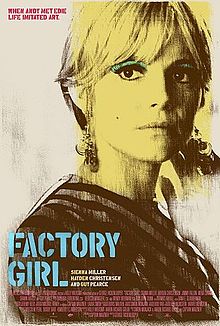
Film Review: Factory Girl (dir by George Hickenlooper)


Oh God.  Factory Girl.

Released in 2006, Factory Girl was a biopic about Edie Sedgwick, the tragic model/actress/artist who was briefly both Andy Warhol’s muse and one of the most famous women in America.  Before I talk too much about this film, I should probably admit that I’m probably the worst possible person to review a movie about Edie Sedgwick.

Why?

Allow me to repost something that I wrote when I reviewed Edie’s final film, Ciao Manhattan:

“In the late 60s, Edie Sedgwick was a model who was briefly the beautiful face of the underground.  Vogue called her a “youthquaker.”  She made films with Andy Warhol, she dated the rich and the famous and for a brief time, she was one of the most famous women in America.  But a childhood full of tragedy and abuse had left Edie fragile and unprepared to deal with the pressures of being famous.  She was fed drugs by those who claimed to care about her, she had numerous mental breakdowns, and, when she was at her most vulnerable, she was pushed away and rejected by the same people who had loved her when she was on top of the world.  Edie died because, when she asked for help, nobody was willing to listen.


Edie Sedgwick (1943 — 1971)

I guess I should explain something.  I don’t believe in reincarnation but if I did, I would swear that I was Edie Sedwick in a past life.  Of all the great icons of the past, she, Clara Bow, andVictoria Woodhull are the ones to whom I feel the closest connection. (Edie is the reason why, for the longest time, I assumed I would die when I was 28.  But now I’m 29, so lucky me.)”

(Incidentally, I wrote that two years ago and I’m still alive so, once again, lucky me.)

Anyway, my point is that I’m always going to be a hundred times more critical of a film about Edie Sedgwick as I would be about any other film.  If you’re already guessing that I didn’t particularly care for Factory Girl, you’re right.  However, there are some people whose opinions I respect and some of them love this film.

Anyway, Factory Girl is a biopic that’s structured so conventionally that it even opens with Edie (played by Sienna Miller) narrating her story to an unseen interviewer.  I can count on one hand the number of successful biopics that have featured someone telling the story of their life to an unseen interviewer.  It’s a conventional and kind of boring technique.  Anyway, the film follows all of the expected beats.  Edie arrives in New York.  Edie is spotted by Andy (Guy Pearce).  Edie makes films with Warhol.  Her famous dance in Vinyl is recreated.  Edie becomes Andy’s platonic girlfriend but then, she meets and falls in love with Bob Dylan…

Oh, sorry.  He’s not actually Bob Dylan.  According to the credits, his name is Folksinger.  He says Bob Dylan type stuff.  He rides around on a motorcycle.  He carries a harmonica.  Oh, and he’s played by Hayden Christensen.

See, the first half of Factory Girl is actually not bad.  Sienna Miller gives a pretty good performance as Edie, even if she never comes close to capturing Edie’s unforced charisma.  Despite being several years too old, Guy Pearce is also credible as Andy Warhol.  The film itself is full of crazy 60s clichés but, even so, that’s not always a terrible thing.  Some of those 60s clichés are a lot of fun, if they’re presented with a little imagination.

But then Hayden Christensen shows up as Bob Dylan and the film loses whatever credibility it may have had.  Hayden, who gave his best performance when he played a soulless and largely empty-headed sociopath in Shattered Glass, is totally miscast as a musician who once said that if people really understood what his songs were about, he would have been thrown in jail.  The film attempts to portray Dylan and Warhol as two men fighting for Edie’s soul but Christensen is so outacted by Guy Pearce that it’s never really much of a competition.  Even though the film makes a good case that Edie’s relationship with Andy was ultimately self-destructive, Guy Pearce is still preferable to Hayden Christensen trying to imitate Dylan’s distinctive mumble.

Anyway, Factory Girl doesn’t really work.  Beyond the odd casting of Hayden Christensen, Factory Girl is too conventionally structured.  In its portrayal of the Factory and life in 1960s New York, the film never seems to establish a life beyond all of the familiar clichés.  (Before anyone accuses me of contradicting myself, remember that I said that the old 60s clichés are fun if they’re presented with a little imagination.  That’s a big if.)  At no point, while watching the film, did I feel as if I had been transported back to the past.  If you want to learn about Edie Sedgwick, your best option is to try to track down her Warhol films.

Edie!