Brains, Laughs, and Decline: The Uneven Legacy of Return of the Living Dead


Subverting the Zombie Canon: Satire, Genre-Bending, and Decay in the Return of the Living Dead Series

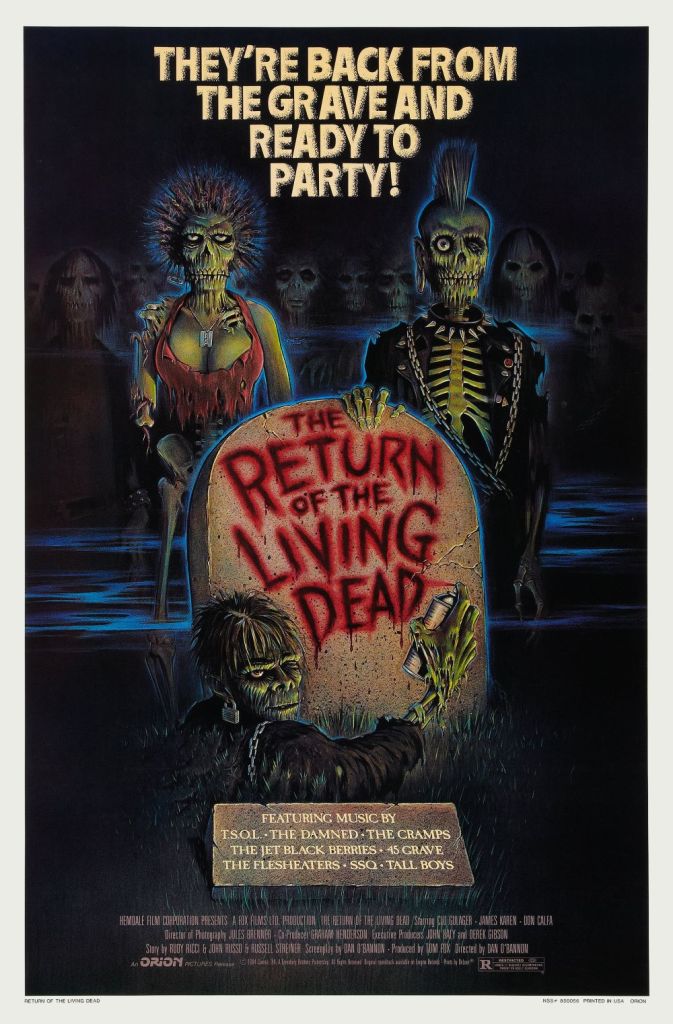
When talking about cult horror films, the Return of the Living Dead series holds a special place—not only as a spin-off from George A. Romero’s seminal Night of the Living Dead, but as a unique creative force in its own right. Thanks to a legal split between Romero and co-writer John Russo over rights to the “Living Dead” name, Russo and director Dan O’Bannon got to imagine a parallel zombie universe. This franchise quickly carved out its own identity, mixing horror, black comedy, and punk spirit in a way that both paid tribute to and upended zombie tropes.

Reinventing Zombie Lore with a Wink

The original Return of the Living Dead (1985) starts with a clever “what if” twist: what if Romero’s Night wasn’t just a movie, but a dramatized cover-up of a real government disaster? This meta idea instantly frames the film as self-referential and playful, setting a tone unlike anything out at the time.

Central to the film’s identity is the invention of 2-4-5 Trioxin, a fictional military chemical designed to clear marijuana crops which instead raises the dead—zombies with surprising new abilities. Unlike the slow, drooling zombies Romero popularized, these ghouls sprint, talk, and set traps. Their hunger is peculiar as well: they crave brains exclusively, as it eases the pain of being undead. And the old rules of zombie combat? Forget shooting them in the head. These zombies resist it, raising the stakes and scare factor.

This refreshing rewrite of zombie rules allowed the movie to be both frightening and fun. The zombies were smart but still monstrous, turning classic horror expectations on their head in a way that invited both laughter and fear—a tricky balance that few horror comedies manage.

Playing with Comedy, Panic, and Punk Rock

One of the greatest strengths of the original film is how it embraces horror-comedy so naturally. It doesn’t shy away from being funny while still delivering tension. James Karen and Thom Mathews excel as the main pair—Karen’s frantic, over-the-top panicked man paired with Mathews’ straight, slowly succumbing counterpart create a perfect comedic rhythm. Their slow transformation into zombies adds a tragic dimension to what could have been simple slapstick. Meanwhile, Don Calfa’s mortician character and Clu Gulager’s warehouse owner provide a grounded center amidst chaos.

The punk subculture flavor adds another unique texture. Linnea Quigley’s famous graveyard striptease encapsulates the 1980s’ blend of irreverence, sexuality, and horror obsession. The scene is shocking, hilarious, and iconic—one of those moments that encapsulates everything this film is about: having fun with taboos while not losing the darker undercurrents of mortality and decay.

Beyond laughs, there’s biting satire here. The film skewers the government and military’s hubris—scientists create a superweapon they can’t control, leading to chaos and destruction. This reflects 1980s American anxieties about bioweapons, government cover-ups, and nuclear fears. Horror and comedy collide to reflect cultural distrust and paranoia.

The Problem of the Sequel: Part II’s Familiar Ground

When Return of the Living Dead Part II came out in 1988, it felt like the franchise was stuck in a loop. With much of the original cast returning in near-identical roles, and lines and situations seemingly recycled, the film circles back to the same story. This self-copying invites a mix of amusement and disappointment: it seems the filmmakers didn’t believe they could improve on the original and decided to replicate it instead.

While it has its moments—good practical effects and a rollicking tone reminiscent of the first film—it leans harder into comedy, sometimes at the expense of the horror. The suburban setting and clearer military lockdown raise the action stakes, but the humor feels broader and less sharp, which can make the movie seem a bit cartoonish.

In a way, Part II comments on the pitfalls of horror franchises: once you’ve struck gold with an unexpected idea, sequels often struggle to regain that freshness. This installment is entertaining, but signals the beginning of the franchise’s creative plateau.

Much Darker Territory: Part III’s Horror and Romance

With Return of the Living Dead 3 in 1993, things take a major tonal shift. Brian Yuzna’s direction removes much of the comedy and replaces it with body horror, gore, and a genuinely tragic romance. The story centers on Curt and Julie, two teenagers tragically pulled into the military’s secret zombie experiments. After Julie is accidentally killed and resurrected, she becomes a zombie who feeds on brains but manages her hunger through extreme self-inflicted pain.

This grim take pushes the franchise into more serious, intense horror territory, with heavy themes of love, loss, and bodily autonomy threaded throughout. Julie’s tortured transformation is both tragic and unsettling, symbolizing not only the loss of life but also the torment of trying to hold onto humanity while losing it from within.

Yuzna’s effects are grisly in the finest tradition of ‘90s practical SFX. The film revives the franchise’s sense of danger and stakes by mixing romance with horror, delivering something emotionally resonant and viscerally impactful. While it diverges sharply from the earlier comedic tone, Part III proves the series’ flexibility and capacity for reinvention.

Creative Collapse: Parts IV and V’s Direct-to-Cable Downfall

Sadly, the wheels come off with Return of the Living Dead 4: Necropolis and 5: Rave to the Grave, both made in 2005 and directed by Ellory Elkayem. Shot back-to-back and released direct-to-cable, these films are pale shadows of the earlier entries.

They ditch the original’s clever mix of horror and humor entirely. Instead, we get generic corporate conspiracies, confusing Eastern European settings, weak scripts, and inconsistent zombie characterizations. The zombies lose their unique “brains only” horror and instead act like run-of-the-mill undead. Even the acting is amateurish, with only Peter Coyote standing out briefly as a sinister scientist.

Part 5 further muddies continuity by introducing Trioxin as a rave drug, leading to a chaotic rave/zombie apocalypse scenario that is both baffling and poorly paced. The low-budget effects and uneven pacing betray the exhaustion and lack of passion behind these entries.

These final two films underscore a common fate for franchises that outlive their creative spark—once inventive mythology becomes shallow cliché, and attempts to cash in feel uninspired. Instead of honoring their roots, they become muddled and forgettable.

Why the Series Matters

Despite its uneven legacy, Return of the Living Dead remains important for what it dared to do in horror cinema. The first film’s originality influenced countless horror comedies and redefined how zombies could be portrayed. Its self-awareness and invention paved the way for postmodern horror, where genre is as much about commentary as it is fear.

The third film’s daring shift to tragic body horror further demonstrated the potential for zombie films to explore complex emotional and societal themes beyond gore or giggles.

While the later sequels falter, their failure serves as a cautionary tale about the dangers of diluting distinct voices and creative risks in franchise filmmaking.

Ultimately, Return of the Living Dead survives in cultural memory as a zombie series that captured the spirit of its time—punk rebellion, Cold War paranoia, and genre self-mockery—with flashes of brilliance that continue to entertain and inspire.

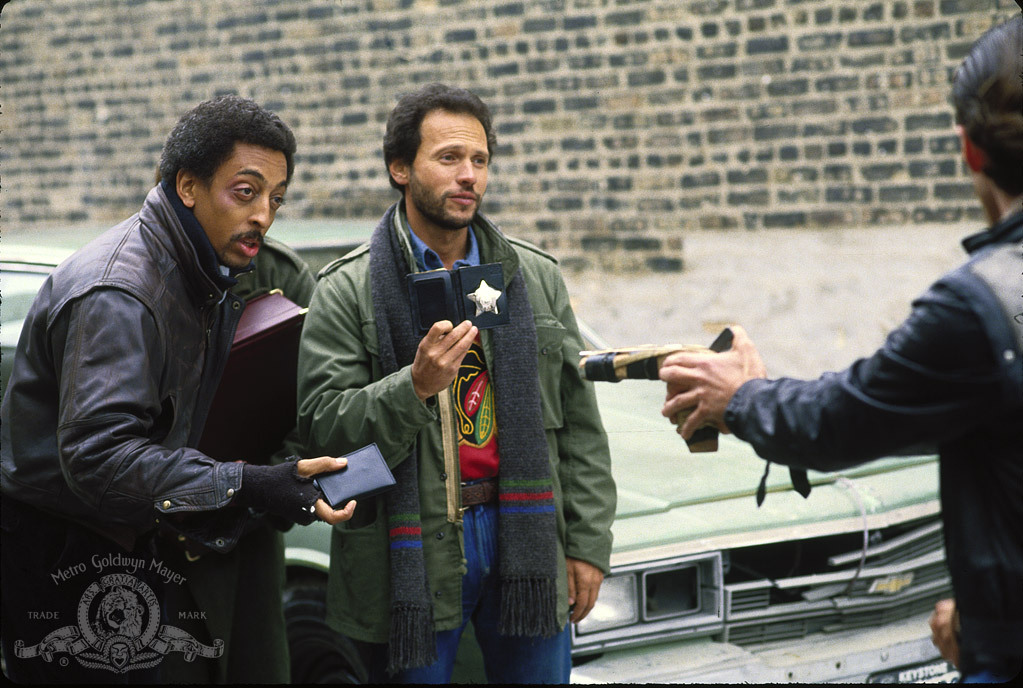
Live Tweet Alert – #MondayMuggers present RUNNING SCARED (1986), starring Gregory Hines and Billy Crystal!


Every Monday night at 9:00 Central Time, my wife Sierra and I host a “Live Movie Tweet” event on X using the hashtag #MondayMuggers. We rotate movie picks each week, and our tastes are quite different. Tonight, Monday, August 11th, we’ll be watching RUNNING SCARED (1986), starring Gregory Hines, Billy Crystal, Steven Bauer, Darlanne Fluegel, Joe Pantoliano, Dan Hedaya, Jon Gries, Tracy Reed, and Jimmy Smits.

The plot: Two street-wise Chicago cops have to shake off some rust after returning from a Key West vacation to pursue a drug dealer who nearly killed them in the past.

Peter Hyams directed RUNNING SCARED, and it’s one of the very best “Buddy Cop” films out there. So, if a night full of action and laughs sounds good to you, join us on #MondayMuggers and watch RUNNING SCARED. It’s on Amazon Prime, Tubi, and PlutoTV! I’ve included the trailer below:

The TSL Horror Grindhouse: Chopper Chicks in Zombietown (dir by Dan Hoskins)


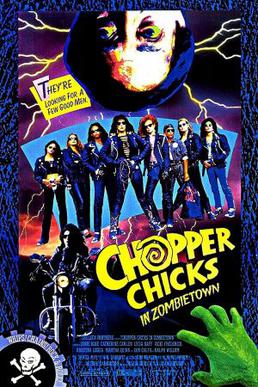
An all-women motorcycle gang called the Cycle Sluts roars through the desert. Why are they called the Cycle Sluts? As their leader puts it, they know what people are going to call them so they’re reclaiming the term for themselves. Nobody tells the Cycle Sluts what to do and nobody but the Cycle Sluts decides or defines who the Cycle Sluts are. They’re rebels and they’re singers, making music and fighting the patriarchy as they make their way through the dusty corners of America.  Go, Cycle Sluts, go!

When the Cycle Sluts drive into the small desert town of Zariah, the residents are not happy to see them. Zariah is a peaceful and boring town and the citizens would like to keep it that way.  The citizens are happy having a town where there’s only a few buildings, next to no businesses, and only a few residents.  It’s a town where not much happens and everyone can live in peace, far away from all the evil temptations of the big city and corrupt civilization.  However, the town becomes a lot less peaceful when the local mortician starts to bring the dead back to life. Soon, zombies are wandering through the desert on their way back to their former home and only the Cycle Sluts and a bus full of stranded blind kids can save the town!

That slight plot description probably tells you all you really need to know to get a feel for what type of film 1989’s Chopper Chicks in Zombietown is. It was released by Troma, which means that the humor is crude, the zombie attacks are bloody, and the film’s aesthetic is undeniably cheap. That said, the film itself is enjoyable when taken on its own dumb terms. The action moves quickly, the members of the cast perform their silly roles with an admirable amount of dedication, and the whole thing ends with a message of peace and equality. The townspeople learn how to be tolerant and the Cycle Sluts learn how to trust other people. It’s about as dumb as a movie about about bikers fighting zombies can be but it’s a surprisingly fun movie.  It’s hard not to cheer a little when the Cycle Sluts and the towns people and the blind kids finally set aside their differences and do what has to be done.  They even manage to save the life of a baby and anyone who has seen any other Troma films knows how rare that can be.  In its way, Chopper Chicks in Zombietown serves as a reminded that not every Troma film is as bleak as Combat Shock or Beware!  Children at Play. The Cycle Sluts do a good job and so does the film.

Speaking of doing a good job, keep an eye out for Billy Bob Thornton, making an early appearance as the unfortunate boyfriend of one of the residents of Zariah. Billy Bob seems to be having fun with this early job and his appearance here serves as a reminder that everyone started somewhere.

Peeper (1975, directed by Peter Hyams)


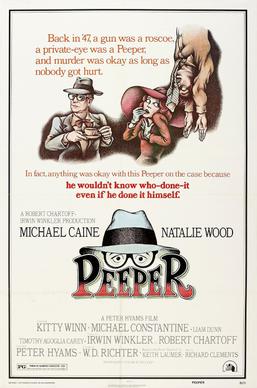
Peeper gets off to a good start, with a Humphrey Bogart look alike standing on a dark street corner and reading the opening credits in a reasonable approximation of Bogart’s unmistakable voice.  It all goes down hill from there.

Peeper stars Michael Caine as Leslie C. Tucker, a cockney private detective who is working in Los Angeles in the late 40s.  Tucker is hired by a shady businessman named Anglich (Michael Constantine).  Anglich explains that he knows that he has a daughter but he doesn’t know who or where she is.  He wants Tucker to track her down.  It doesn’t take much time for Tucker to conclude that Anglich’s daughter might be a member of the wealthy and quirky Pendergrast family.  In fact, Tucker thinks that Anglich’s daughter might be Ellen Pendergrast (Natalie Wood, who seems to be bored with the role).  It should be a simple enough case to solve but there are numerous complications along with two thugs (played by Timothy Carey and Don Calfa) who, for some reason, are out to get Anglich and Tucker.

It’s hard to know what to make of Peeper.  It’s meant to be an homage to the detective films of the 40s but it also tries to parody the genre.  Unfortunately, Peter Hyams has never been a director known for his light touch and, in this film, his idea of comedy is to have everyone shout their lines.  (Michael Constantine is the worst offender.)  Michael Caine is also miscast in the lead.  The film tries to get some comedic mileage out of Caine delivering Bogart-style dialogue in his cockney accent but it’s a joke that’s never as funny as the film seems to think.

Peeper was a critical and box office failure but fortunately, there were better things in store for both Michael Caine and Peter Hyams.  Hyams went on to direct Capricorn One while Michael Caine established himself as one of the most durable character actors around.

Cleaning Out The DVR: The Star Chamber (dir by Peter Hyams)


Here’s a good example of why I need to clean out my DVR more regularly:

I recorded the 1983 legal thriller, The Star Chamber, off of Starz on March 14th.  I know what you’re saying.  “Big deal!  That wasn’t that long ago.”  Well, did I mention that it was March 14th, 2017?

That’s right!  The Star Chamber sat on my DVR for over a year before I finally got around to watching it last night.  You’d be justified in asking why it took me so long and I’m afraid that I really couldn’t give you a definite answer.  I can, however, tell you the four main reasons why I recorded it in the first place:

  1. I’m always intrigued whenever I come across a movie of which I haven’t previously heard.
  2. The movie was described as being about a conflicted judge and I just happen to love legal films.
  3. I really, really liked the title.  The Star Chamber?  Did that mean it took place in a room full of stars?
  4. Before I recorded The Star Chamber, I only had 55 films on the DVR.  Since I don’t like odd numbers, recording The Star Chamber took care of that problem.

As for the film itself, The Star Chamber is another one of those movies where a group of vigilantes end up getting pissed off because liberal California judges are letting too many murderers go free because of pesky, constitutional technicalities.  The twist here is that the vigilantes are the same judges who keep tossing out evidence and ruling that confessions are inadmissible in court.  After spending their day setting free the dregs of society, the judges all gather in a nearby house and review the evidence before voting on whether or not they believe the accused was actually guilty.  If the verdict is guilty, the judges promptly hire a hit man who proceeds to clean up the streets.

The newest member of this tribunal is Judge Steven R. Hardin (Michael Douglas).  Hardin is haunted by the technicalities that forced him to toss out a case against two accused of child murderers.  (Making things even worse, the child’s father commits suicide afterward.)  Despite his initial reservations, Judge Hardin signs off on hiring an assassin to take the two men out.  But, when it becomes apparent that the two men actually were innocent, Judge Hardin is horrified to discover that there’s no way to call off the hit…

The Star Chamber is an oddly constructed movie.  When the movie starts, it feels like a typical police procedural.  From there, the movie turns into a rather talky examination of the U.S. legal system, with Judge Hardin trying to balance his idealism with the often frustrating reality of what it takes to uphold the law.  The movie then briefly turns into a conspiracy film, featuring middle-aged men in suits holding secret meetings and debating whether or not they’re serving the greater good.  And then, towards the end of the movie, it turns into an action film, with Judge Hardin being chased by two drug dealers, a contract killer, and a suspicious police detective (Yaphet Kotto).  Judge Hardin may start the movie as a conflicted liberal but he ends at someone who can blow up the entire second floor of a drug lab.  In many ways, The Star Chamber is a deeply silly film but, as directed and co-written by Peter Hyams, it’s also just pulpy enough to be entertaining.  The dialogue may be over-the-top but so is Michael Douglas’s performance so it all evens out in the end.

It may have taken me a while to get around to watching The Star Chamber but I’m glad that I finally did.  It’s a ludicrous film and all the more entertaining as a result.

A Movie A Day #263: Running Scared (1986, directed by Peter Hyams)


Running Scared is weird but good.
Ray Hughes (Gregory Hines!) and Danny Costanzo (Billy Crystal!!!) are two tough detectives in Chicago.  All they want to do is three things: retire, open a bar in Florida, and bust Chicago’s most ruthless drug dealer, Julio Gonzalez (Jimmy Smits).  Their captain (Dan Hedaya) wants them to leave for Florida as soon as possible but they are determined to take down Julio first.’

There are two strange things about this otherwise formulaic crime film.  First off, the two tough cops are played by Gregory Hines and Billy Crystal.  According to the film’s Wikipedia page, director Peter Hyams realized that Running Scared‘s plot was nothing special so he decided that the only way to make the movie stand out was by doing it “with two actors you would not normally expect to see in an action movie.”  The other strange thing is that Hyams’s gambit worked.  Gregory Hines may have been best known as a dancer and Billy Crystal as a comedian but both of them were surprisingly believable as Chicago cops.  Running Scared is actually one of Billy Crystal’s best performances.  For once, he’s believable as being someone other than a version of himself.  Even his frequent one liners seem like something that a detective would say instead of Crystal recycling punch lines from his act.  Whether they are chasing down perps and firing their guns at a moving vehicle, Hines and Crystal are never less than credible as action stars.  Lorenzo Lamas has got nothing on the team of Hines and Crystal.

Predictable though it may be, Running Scared is one of the better late 80s cop films.  The action scenes are exciting and Hyams does a good job capturing the grittiness of Chicago.  Jimmy Smits is a good villain and Joe Pantoliano, Steven Bauer, and Jon Gries all shine in supporting roles.  Keep an eye out for the always underrated Darlanne Fluegel, playing Danny’s ex-wife.

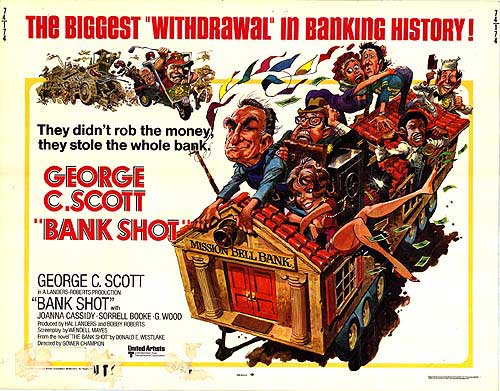
Criminally Underrated: George C. Scott in BANK SHOT (United Artists 1974)


gary loggins's avatarcracked rear viewer

I’m a big fan of the novels and short stories of Edgar Award-winning writer Donald E. Westlake , named a Grand Master by the Mystery Writers of America. His comic-laced crime capers featuring master planner Dortmunder were well suited for films and the first book in the series, THE HOT ROCK, was filmed by Peter Yates in 1972 with Robert Redford as the mastermind. Two years later came BANK SHOT, the second Dortmunder novel, starring George C. Scott but changing the character’s name to Walter Ballentine due to legal issues. Dortmunder or Ballentine, BANK SHOT is a zany film with a fine cast of actors that deserves another look.

Ballentine is doing life in Warden “Bulldog” Streiger’s maximum security prison, but when his shady “lawyer” and confidant Al G. Karp visits with an idea for a new “shot”, the hardened criminal makes his escape. Karp needs Ballentine’s expertise to plan the robbery of Mission Bell…

View original post 334 more words

TV Review: Twin Peaks 2.10 “Dispute Between Brothers” (directed by Tina Rathbone)


The 10th episode of the 2nd season of Twin Peaks opens with a shot of Laura and Leland Palmer’s pictures on the mantle and a title card telling us that it has been three days since Leland’s death.

At the Palmer house, Mrs. Palmer (Grace Zabriskie) is preparing to bury her husband.  Doctor Hayward (Warren Frost) tries to give her a shot, which she refuses.  Agent Cooper (Kyle MacLachlan) assures her that Leland did not actually kill her daughter.

(It’s interesting to note that this episode was directed by Tina Rathone, whose last episode also featured a funeral.)

At Leland’s wake, the entire cast has shown up and they’ve all brought food.  Nadine (Wendy Robie) is dressed like a 1950s teenager.  Audrey (Sherilyn Fenn) wonders if people are invited to wakes or if they just show up.  Hank (Chris Mulkey) grabs all the food that he can.  Donna (Lara Flynn Boyle) tells Ed (Everett McGill) that James is blaming himself for everything that happened.  Ed promises Donna that James will eventually come back.  Speaking of coming back, Doctor Jacoby (Russ Tamblyn) has finally returned from Hawaii and arrived just in time for the wake.

Cooper tells Harry (Michael Ontkean) and Major Briggs (Don S. Davis) that he has some vacation time coming up so he will be sticking around town for at least a few more days.  The Major invites Cooper to go night fishing.

Twin Peaks’s elderly mayor, Dwayne Milford (John Boylan) throws a swing at his equally elderly brother, Dougie (Tony Jay), the owner of the town’s newspaper.  As Harry and Ed pull them apart, Pete (Jack Nance) tells Cooper that Dougie and Dwayne have had a running feud for over 50 years.  Cooper says he’s really going to miss Twin Peaks.

Fade to commercial.

When the show returns, Ed and Jacoby are at Twin Peaks High School and trying to talk the vice principal (Don Calfa) into admitting 35 year-old Nadine as a member of the senior class.  Nadine runs into the office and tells them to hurry up because class is about to start and she wants to try out for cheerleader.

Cooper is in his hotel room, packing.  Audrey comes in, says that she’s from customer relations, and asks if his stay has been satisfactory.  Audrey asks if Cooper’s just going to leave and break her heart.  Cooper explains that he can’t get involved with anyone who was involved in any of his cases.  Cooper explains that he once fell in love with a material witness.  He was supposed to protect her but, when the attempt was made on her life, he was not prepared and she died in his arms.

At the Johnson house, Bobby (Dana Ashbrook) is trying on Leo’s (Eric Da Re) suit.  Bobby is going to try to convince Ben into giving him a job.  Shelly (Madchen Amick) is already getting bored with her new life.

At the sheriff’s station, Harry walks into his office and finds Catherine (Piper Laurie) waiting for him.

“Hello, Harry,” Catherine says.

“Forgive me for saying so, Catherine,” Harry replies, “but aren’t you dead?”

Catherine shrugs.  She explains that, after the explosion at the mill, she woke up in the woods with no knowledge of how she got there.  She says that a guardian angel must have rescued her.  She spent a week living in the woods, eating only tuna fish.  Harry asks what made her come back.  Catherine says that she ran out of tuna fish.

In the lobby, Dick (Ian Buchanan) tells Lucy (Kimmy Robertson) that he wants to talk about their “bambino.”  Dick says he wants to be a father, he believes the child is his, and that he’s enrolled in parenting classes.  After hiding around the corner and listening to the conversation, Andy (Harry Goaz) walks into the lobby and says that, for the sake of the baby, they should all be friends.  As Andy later explains to Hawk (Michael Horse), the key to Lucy’s heart lies in “morals and manly behaviors.”

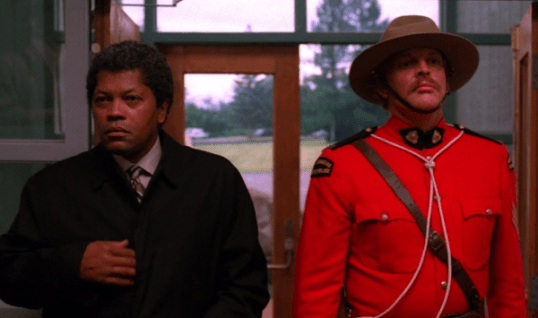
Cooper stops by Harry’s office to say goodbye.  Harry gives Cooper a parting gift of a special fishing lure and a Book House Boy patch.  Cooper then says goodbye to Hawk, Andy, and Lucy.  However, the goodbyes are interrupted by the arrival of FBI Agent Roger Hardy (Clarence Williams IIIand Preston King (Gavan O’Herlihy) of the Royal Canadian Mounted Police.

(Long before they both appeared on Twin Peaks, Clarence Williams III and Peggy Lipton co-starred on The Mod Squad.  Gavan O’Herlihy is the son of Dan O’Herlihy.  Best known for playing Conal Cochran in Halloween III, Dan will join the cast of Twin Peaks in one more episode.  As for Gavan, he is probably best known for playing Chuck Cunningham during the first season of Happy Days and getting shot by Charles Bronson in Death Wish II.)

Roger tells Cooper that he has been suspended from the FBI.  Cooper’s raid on One-Eyed Jack’s was a violation of FBI policy because it involved crossing the border into Canada.  Roger says that there are other allegations as well but they’re waiting for the evidence to arrive.  Roger explains that King was involved in a sting operation to capture Jean Renault and that Cooper’s actions screwed it up.  Also, the cocaine that King was using as a part of the operation disappeared after Cooper’s raid.  Roger tells Cooper that he has 24 hours to assemble his defense.

At the Great Northern, Audrey helps Bobby get into Ben’s office but Ben (Richard Beymer) immediately has Bobby tossed out.  Audrey saves Bobby from Ben’s goons.  In order to thank her, Bobby buys Audrey an ice cream cone.  “I like to lick,” Audrey says.

At Twin Peaks High School, Nadine tries out for cheerleader.  Nadine now has Hulk-like super strength now, which she demonstrated by picking up a student and throwing him through the air.

Bobby calls Shelly to tell her about the meeting.  While Shelly talks on the phone about how they have to put Leo in a home, Leo moves forward in his wheel chair.  “He moved!” Shelly says, shocked.

At the diner, Norma (Peggy Lipton) takes the fancy table cloths off the tables and complains to Vera (Jane Greer) about a bad review that the Double R got from the mysterious travel writer, M.T. Wentz.  Vivian reveals that she’s M.T. Wentz and she gave her own daughter’s diner a negative review.  Vera says that she can’t violate her professional ethics.

At One-Eyed Jack’s, Hank and Ernie (James Booth) are chasing women and acting like fools.  Hank is pressuring Ernie to steal Vera’s money.  Ernie says he could never do that, he’s gone straight.  That’s when Hank introduces Ernie to his new employer, Jean Renault (Michael Parks).  Jean is looking for someone to serve as a money launderer and Ernie agrees, bragging that he has set up deals for everyone from the Colombians to the Bolivians.  Jean is pleased and introduces Ernie to his other partner, Preston King of the Royal Canadian Mounted Police.

That night, Harry is woken up by someone knocking on the door to his cabin.  When he opens the door, Josie (Joan Chen), who was supposed to be in Seattle, stumbles in and collapses.

In the woods, Cooper and Major Briggs are camping, roasting marshmallows, and discussing right and wrong.  Briggs says that it is some men’s fate to face great darkness.  Briggs asks if Cooper has ever heard of the White Lodge.  Cooper says he hasn’t but he looks forward to hearing more about it.  Cooper then goes off to relieve himself.  There is a flash of white light.  “Cooper!” Briggs shouts as a hooded man appears in the woods.  Cooper runs back to the camp, just to discover that Briggs has vanished.

This uneven episode finds Twin Peaks struggling to establish an identity after the conclusion of the Laura Palmer storyline.  For me, the highlight was Leland’s wake, which showed Twin Peaks as a community.  Nadine’s adventures in high school may be cartoonish but they hold up better than I thought they would.  Finally, this was the first episode to mention that all-important White Lodge.

Tomorrow, both David Duchovny and Dan O’Herlihy join the cast in Masked Ball.

Previous Entries in The TSL’s Look At Twin Peaks:

  1. Twin Peaks: In the Beginning by Jedadiah Leland
  2. TV Review: Twin Peaks 1.1 — The Pilot (dir by David Lynch) by Lisa Marie Bowman
  3. TV Review: Twin Peaks 1.2 — Traces To Nowhere (directed by Duwayne Dunham) by Jedadiah Leland
  4. TV Review: Twin Peaks 1.3 — Zen, or the Skill To Catch A Killer (dir by David Lynch) by Lisa Marie Bowman
  5. TV Review: Twin Peaks 1.4 “Rest in Pain” (dir by Tina Rathbone) by Leonard Wilson
  6. TV Review: Twin Peaks 1.5 “The One-Armed Man” (directed by Tim Hunter) by Jedadiah Leland
  7. TV Review: Twin Peaks 1.6 “Cooper’s Dreams” (directed by Lesli Linka Glatter) by Lisa Marie Bowman
  8. TV Review: Twin Peaks 1.7 “Realization Time” (directed by Caleb Deschanel) by Lisa Marie Bowman
  9. TV Review: Twin Peaks 1.8 “The Last Evening” (directed by Mark Frost) by Leonard Wilson
  10. TV Review: Twin Peaks 2.1 “May the Giant Be With You” (dir by David Lynch) by Leonard Wilson
  11. TV Review: Twin Peaks 2.2 “Coma” (directed by David Lynch) by Jedadiah Leland
  12. TV Review: Twin Peaks 2.3 “The Man Behind The Glass” (directed by Lesli Linka Glatter) by Jedadiah Leland
  13. TV Review: Twin Peaks 2.4 “Laura’s Secret Diary” (dir by Todd Holland) by Lisa Marie Bowman
  14. TV Review: Twin Peaks 2.5 “The Orchid’s Curse” (dir by Graeme Clifford) by Lisa Marie Bowman
  15. TV Review: Twin Peaks 2.6 “Demons” (dir by Lesli Linka Glatter) by Leonard Wilson
  16. TV Review: Twin Peaks 2.7 “Lonely Souls” (directed by David Lynch) by Jedadiah Leland
  17. TV Review: Twin Peaks 2.8 “Drive With A Dead Girl” (dir by Caleb Deschanel) by Lisa Marie Bowman
  18. TV Review: Twin Peaks 2.9 “Arbitrary Law” (dir by Tim Hunter) by Lisa Marie Bowman

Quickie Review: Return of the Living Dead (dir. by Dan O’Bannon)


Return of the Living Dead has to go down as one of the funniest and inventive take on the zombie subgenre that began after the release of George A. Romero’s Night of the Living Dead. Due to a dispute between Romero and John Russo (co-producer of the original NOTLD), the sequels to Night of the Living Dead that were produced and directed by Romero dropped the “Living Dead” part in their titles. Russo retained the rights to create sequels using those words while Romero just kept the word “Dead” in the follow-up films to Night. It took Russo awhile, but he finally got to use those naming rights with 1985’s Return of the Living Dead.

Even though there were some acrimony between Romero and Russo, the screenplay for Return of the Living Dead makes several complimentary nods to Night of the Living Dead. The film’s premise was what if Romero’s first film was actually based on a true event and that the government and the military covered it up before people got a wind of it. The film takes that simple premise and creates an action-packed horror-comedy that still stands the test of time.

Unlike Romero’s films, Return of the Living Dead actually gives an explanation as to what causes the dead to return to life with a singular purpose of attacking the living. The cause of all this undead mayhem was due to a bioweapon nerve toxin called 2-4-5 Trioxin which was originally designed by the military to defoliate marijuana crops. To say that the side-effects of the gas had some interesting effects was an understatement. The zombies created by Trioxin do attack the living but they’re also much more livelier and smarter (retaining agility, strength and mental capacity of their previous life) than the traditional Romero-zombies. They also do not feed on just humans. They also feed on other animals. The last major difference between the Romero-zombies and the Trioxin-zombies was that the latter only wanted to feed on live brains to end the pain of being dead. These differences made for a much faster-paced horror movie. As much as I consider the Romero zombie films as the best out there, I hold a special place in my horror-fan heart for these Trioxin dudes.

The story by John Russo would be turned into a screenplay and directed by Dan O’Bannon also made Return of the Living Dead behave more as a horror-comedy than just a straight-up horror. The dialogue between the characters were full of great one-liners that would’ve sounded cheesy if not for the great and game performances from the cast. Clu Gulager as Burt Wilson (owner of the medical supplies warehouse where the lost canister of Trioxin was being stored in) did a great job being incredulous at the events happening around him. His back and forth with his friend Ernie (played with Peter Lorre eyes by Don Calfa), the local mortuary’s gun-toting mortician, keep the film lively and hilarious in-between scenes of horror.

The scene stealers in the film must go to a bumbling pair of Burt’s employees who inadvertently release the toxic and reanimating gas from the warehouse’s inventory of Trioxin canister. James Karen as the worldly and cynical Frank was a riot from start to end. His over-the-top performance had me in stitches. He played Frank with such a manic, panicky style that it was difficult not to get caught up in his hysterics. To balance out Frank’s Hardy with his more subdued, but no less panicked Laurel, was Thom Mathews as Freddy. Mathews would later appear in other horror movies in the decade and even reprise a similar role in this film’s sequel. His performance as the straight man to Karen’s fool was also very good. His slow decline into becoming one of the zombies after the initial inhalation of the Trioxin gas in the film’s introduction was funny and sad. Of all the zombies in the film he gets the brunt of the slapstick sequences, especially once he starts hunting his girlfriend for her brains. His professing of his love for her and at the same time wanting her to give up her brain was hilarious, if not creepy as well.

Another thing that Return of the Living Dead had that made it different from Romero’s zombie movies were the scenes of gratuitious nudity throughout the film. A majority of the nude scenes were courtesy of scream queen Linnea Quigley as the punk rock Trash whose morbid obsession with all things death made her an early victim for the zombies and later on as one of their leaders. I know that kids my age at that time replayed over and over the scene of her strip-tease down to nothing atop a graveyard headstone. Even now many fans of the film consider that sequence as one of their favorite.

Return of the Living Dead still counts as one of the best zombie movies out there and preceded the UK’s Shaun of the Dead by two decades as a great horror-comedy. There was a sequel a few years later to capitalize on the popularity of the first film. It tried to capture the hilarity and horror of the first one but did not measure up in the end.