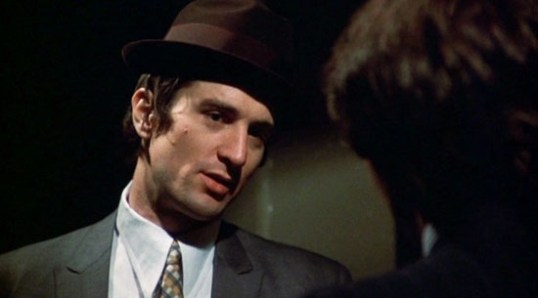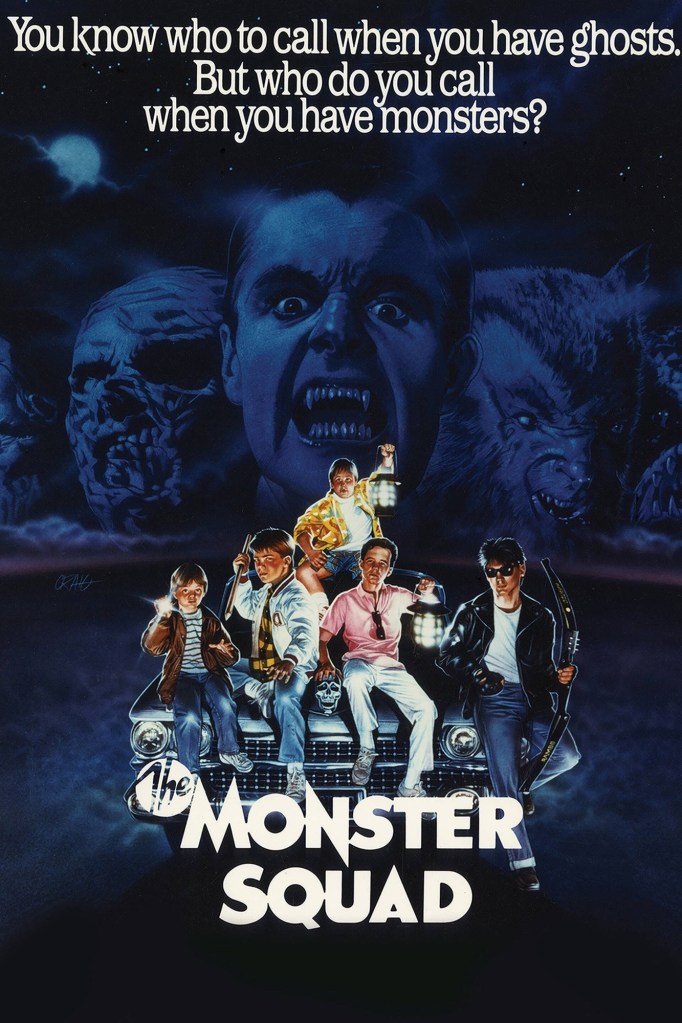
King of New York (1990, directed by Abel Ferrara)


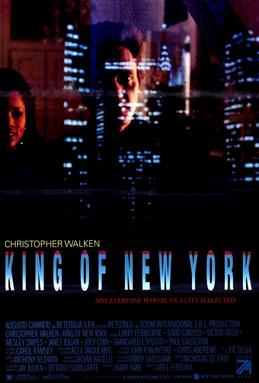
Drug kingpin Frank White (Christopher Walken) has been released from prison and is again on the streets of New York City.  Frank might say that he’s gone straight but, as soon as he’s free, he’s  partying with his old crew (including Laurene Fishburne, Steve Buscemi, Giancarlo Esposito, and others).   While Frank’s agent (Paul Calderon) goes to all of the other city’s gangsters and explains that they can either get out of Frank’s way or die, three detectives (Victor Argo, David Caruso, and Wesley Snipes) make plans to take Frank out by any means necessary.  Meanwhile, Frank is donating money to politicians, building hospitals, and presenting himself as New York’s savior.

King of New York is the epitome of a cult film.  Directed by Abel Ferrara, the dark and violent King of New York was originally dismissed by critics and struggled to find an audience during its initial theatrical run.  (It was lumped in with and overshadowed by other 1990 gangster films like Goodfellas and Godfather Part III.)  But it was later rediscovered on both cable and home video and now it’s rightly considered to be a stone cold crime classic.  Walken gives one of his best performances as Frank White and that’s not a surprise.  The film was clearly made to give Walken a chance to show off what he could do with a lead role and Walken captures Frank’s charisma and humor without forgetting that he’s essentially a sociopath.  Walken gives a performance that feels like James Cagney updated for the end of the 80s.  What’s even more impressive is that all of the supporting characters are just as memorable as Walken’s Frank White.  From Laurence Fishburne’s flamboyant killer to David Caruso’s hotheaded cop to Paul Calderon’s slippery agent to Janet Julian’s morally compromised attorney, everyone gives a strong performance.  (I’m usually not a Caruso fan but he’s legitimately great here.)  They come together to bring the film’s world to life.  Everyone has their own reason for obsessing on Frank White and his return to power.  I’ve always especially appreciated Victor Argo as the weary, veteran detective who finds himself trapped by Caruso and Wesley Snipes’s impulsive plan to take down Frank White.  Frank White and the cops go to war and it’s sometimes hard to know whose side to be on.

Director Abel Ferrara has had a long and storied career, directing films about morally ambiguous people who are often pushed to extremes.  Personally, I think King of New York is his best film, a portrait of not just a criminal but also of a city that combines the best and the worst of human nature.  The action is exciting, the cast is superb, and Frank’s justifications for his behavior sometimes make a surprising amount of sense.  Thought there’s occasionally been speculation that it could happen, there’s never been a sequel to King of New York and it doesn’t need one.  King of New York is a film that tell you all that you need to know about Frank White and the city that he calls home.


Phantom Punch (2008, directed by Robert Townsend)


Ving Rhames plays Sonny Liston, one of the greatest heavyweights who ever boxed but whose legacy will forever be overshadowed by the man who defeated him twice, Muhammad Ali.

Phantom Punch hits all of the well-known notes of Liston’s life.  He grows up dealing with poverty and racism.  He goes to prison as a young man and it is there that a sympathetic priest (Rick Roberts) helps him discover that his talent for fighting can be transformed into the skills needed to be a heavyweight contender.  Sonny turns pro after he’s released but, even as he angles for a championship fight, he’s still collecting debts for mobsters like Savino (David Proval).  Sonny becomes the champ after defeating Floyd Patterson but is hated by white boxing fans who resent that, unlike previous black champs, he doesn’t seem to care about their approval.  Both of his losses to Ali lead to accusations that he threw the fights.  With the help of his manager (Nichols Turturro), he works his way back up the rankings and is poised for another shot at the title but the Mafia now wants him to throw his fights for real.  In 1971, Liston dies of what the police claim was a heroin overdose even though everyone knew that Liston hated needles.  There’s not much new to be found in Robert Townsend’s biopic of Liston but Ving Rhames is convincing as Sonny and even brings some humanity to one of boxing’s most fearsome champs.  It was a movie made for boxing fans and Rhames looks credible throwing a punch.

As I watched the movie, I wondered whether Liston really did throw his fights against Ali.  I don’t think he did, even though both fights were strange.  In the first fight, Sonny put something on his gloves that irritated Ali’s eyes.  When that didn’t stop Ali, Sonny retired to his corner and didn’t come out for the seventh round.  That led to rumors that the Mob ordered him to throw the fight but if you watch the match, it’s obvious that Sonny was trying to win and he just wasn’t prepared for Ali’s quickness.  Liston knew he was losing and, with an aggravated shoulder injury making it difficult for him to throw his heavy punches, Liston bowed to the inevitable and refused to give Ali the chance to knock him out.  The second fight was the one where the phantom punch occurred.  Liston fell so quickly that, when I first saw it, I thought he had thrown the fight.  It wasn’t until I watched the fight in slow motion that I saw that Ali did make contact with Liston before he fell.  Liston may have been many things but but he wasn’t a chump.  The so-called phantom punch was fast but it was real.

THE SHAWSHANK REDEMPTION (1994) – In honor of our son’s birthday, I review his favorite movie!


I sent our son a text the other day and asked him if he had an answer for the question “What’s your favorite movie?” I thought I knew the answer but it turns out I was only half right. I expected his answer to be THE HATEFUL EIGHT. Rather, the answer I received back was “The Hateful Eight or Shawshank Redemption!” Since I recently wrote about the time that he and I attended THE HATEFUL EIGHT roadshow in Dallas, I decided I would write about THE SHAWSHANK REDEMPTION this time around. It doesn’t hurt that it’s one of my favorite movies as well. It also doesn’t hurt that it’s the very top rated film on the Internet Movie Database.

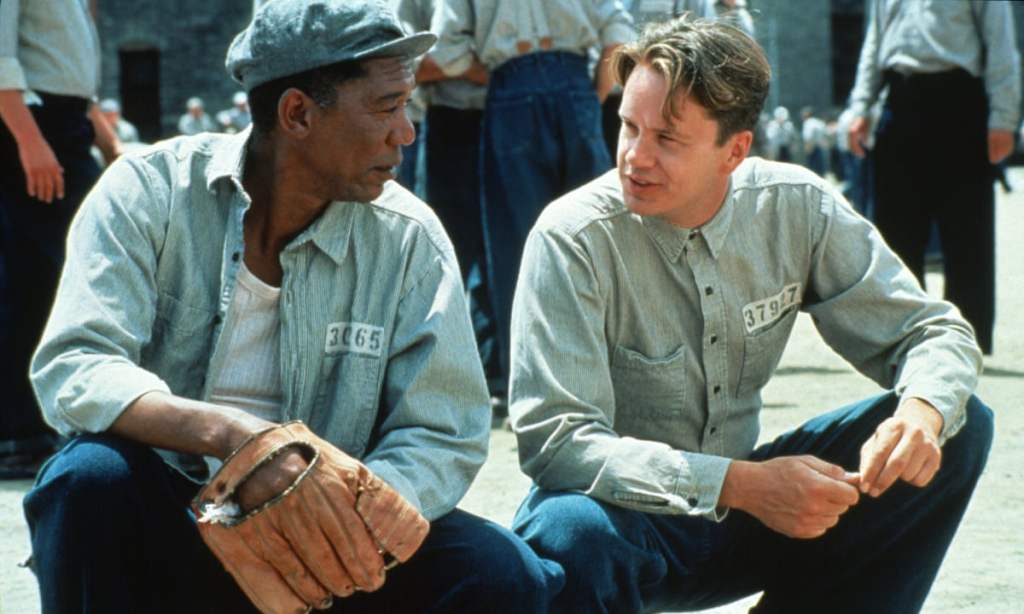
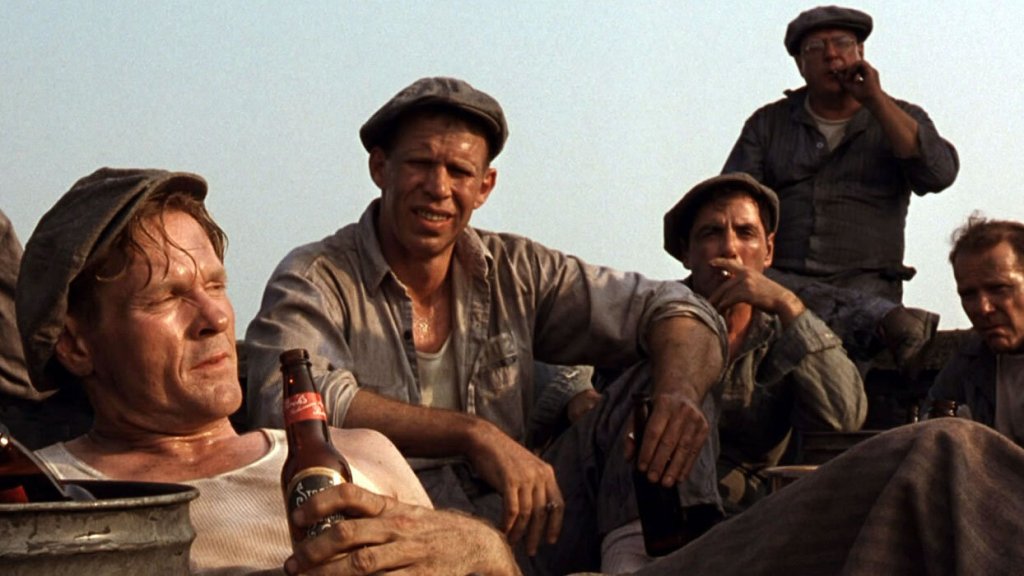
Based on Stephen King’s “Rita Hayworth and Shawshank Redemption,” the story is well known… hot shot banker Andy Dufresne (Tim Robbins) is convicted of the murder of his wife and her lover, and gets sentenced to life at the Shawshank prison. Once on the inside, we meet a variety of characters that you expect in a prison movie. We meet Warden Norton (Bob Gunton), the hypocrite who speaks of the Bible while hiding a corrupt, evil spirit. We meet Captain Hadley (Clancy Brown), the brutal chief prison guard, who rules over the inmates with intimidation and a real willingness to inflict violence and pain on anyone who shows the least bit of independence. We meet Red (Morgan Freeman), the long-time inmate who has the ability and connections to get you anything you need. We meet other inmates like Heywood (William Sadler), the inmate who seems like a jerk when you first meet him but turns out to be a pretty good fella; Tommy (Gil Bellows), the young guy who comes into prison and may know something that proves Andy’s innocence; Brooks (James Whitmore), the old man who gets released after almost a lifetime in prison, and doesn’t know how to adjust to life on the outside; and Bogs (Mark Rolston), the sadistic prisoner who wants to force himself on Andy, and is willing to kill to get what he wants. Life isn’t easy at all in Shawshank, but Andy’s intelligence and ability to prove himself useful to Warden Norton and Captain Hadley allows him to finds ways to make life more bearable for him and his friends. After nineteen years in prison, even though he maintains his innocence, it appears that Andy is content to live out his remaining years in prison. Or is he??

I’ll never forget the first time I saw the movie THE SHAWSHANK REDEMPTION. I didn’t see it until a year or two after its initial release in 1994. I was one of those guys who figured a movie that praised by the critics was probably not something that I would like that much. Plus, at the time, the title of the movie just seemed kind of weird. But I kept hearing about how great it was, so I finally decided to give it a viewing. I agree with my son, I think THE SHAWSHANK REDEMPTION is one of the most emotionally uplifting movies ever made. Why is that you might ask? My answer would be because there’s something profoundly satisfying about people who persevere through the worst times imaginable and continue to find hope where most of us would be hopeless. Prison life is shown as horrific. One prisoner is literally beaten to death by Captain Hadley on his first night in prison for crying. Andy fights off the sadistic Bogs as much as he can, but he is unable to completely fight off his advances. But no matter what he goes through, Andy Dufresne is able keep moving forward, and he does not allow the prison life to completely crush his spirit. He keeps finding ways to persevere. Andy’s actions and endurance turn simple acts like listening to Mozart or having a beer into overwhelming emotional highs for us as the audience. The film also maintains a realistic sense of humor, which might seem difficult under the circumstances. This sense of humor is found in such mundane tasks as creating a prison library, providing tax prep services for the guards, or attending multiple parole hearings over the years. These comedic moments are earned by the way the movie takes it’s time letting us really get to the know the characters and then laugh with them as the individual moments occur. And the friendship between Andy and Red is something that deeply resonates with me. I think we all would like to have that kind of friendship. These kinds of friendships aren’t built overnight, and often they require a level of shared experience that is almost impossible to find. But they find it behind Shawshank’s prison walls, and it connects them for life. In my opinion, the friendship between these two characters leads to one of the most emotionally satisfying endings to any film, ever.

Director Frank Darabont was able to obtain some of career-defining performances from his cast. As good as Tim Robbins is as an actor, in my opinion, he has never been better than he was as Andy Dufresne. And I say this knowing full well he won an Oscar for MYSTIC RIVER. He maintains his dignity against all odds and only appears to break down a time or two. Morgan Freeman is great as always as Red, but his character is so important because we see him go from a hopeless skeptic, to a man who truly has hope thanks to his friendship with Andy. Freeman seems to handle this transition effortlessly. I’m going to give a shoutout to James Whitmore as well. With a career going all the way back to the 1940’s, his performance as Brooks Hatlen is one of the more touching and heartbreaking performances of the film. I haven’t seen all of his work, but I have never seen him better than he was in THE SHAWSHANK REDEMPTION. Each additional cast member, from Bob Gunton, Clancy Brown and Mark Rolston, to Willam Sadler and Gil Bellows all have powerful moments that add to the overall effect of the film.

Looking back now, it’s hard to believe that THE SHAWSHANK REDEMPTION did not win the Academy Award for best film. It lost to FORREST GUMP when the awards were handed out in 1995. It’s even harder to believe that the film did not win a single Academy Award even though it received seven nominations. But at the end of the day, that doesn’t really matter to me. I just know that it’s a great film, and it reaches emotional heights that very few movies, if any, have ever reached before. That’s a pretty damn good legacy.

The Unnominated: Mean Streets (dir by Martin Scorsese)


Though the Academy of Motion Picture Arts and Sciences claim that the Oscars honor the best of the year, we all know that there are always worthy films and performances that end up getting overlooked.  Sometimes, it’s because the competition too fierce.  Sometimes, it’s because the film itself was too controversial.  Often, it’s just a case of a film’s quality not being fully recognized until years after its initial released.  This series of reviews takes a look at the films and performances that should have been nominated but were, for whatever reason, overlooked.  These are the Unnominated.

“Honorable men go with honorable men.” — Giovanni Cappa

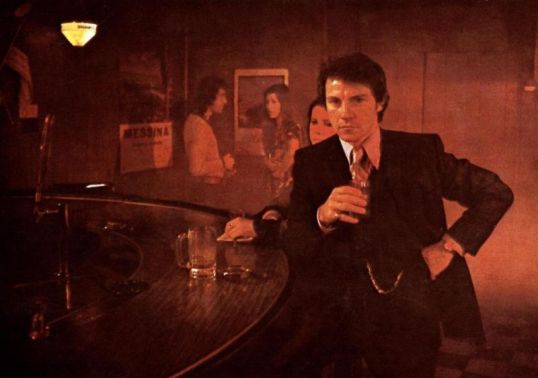
1973’s Mean Streets is a story about Little Italy.  The neighborhood may only be a small part of the sprawling metropolis of New York but, as portrayed in this film, it’s a unique society of its very own, with its own laws and traditions.  It’s a place where the old ways uneasily mix with the new world.  The neighborhood is governed by old-fashioned mafiosos like Giovanni Cappa (Cesare Danova), who provide “protection” in return for payment.  The streets are full of men who are all looking to prove themselves, often in the most pointlessly violent way possible.  When a drunk (David Carradine) is shot in the back by a teenage assassin (Robert Carradine), no one bothers to call the police or even questions why the shooting happened.  Instead, they discuss how impressed they were with the drunk’s refusal to quickly go down.  When a soldier (Harry Northup) is given a party to welcome him home from Vietnam, no one is particularly shocked when the solider turns violent.  Violence is a part of everyday life.

Charlie Cappa (Harvey Keitel) is Giovanni’s nephew, a 27 year-old man who still lives at home with his mother and who still feels guilty for having “impure” thoughts.  Charlie prays in church and then goes to work as a collector for Giovanni.  Giovanni is grooming Charlie to take over a restaurant, not because Charlie is particularly talented at business but just because Charlie is family.  Giovanni warns Charlie not to get involved with Teresa (Amy Robinson) because Teresa has epilepsy and is viewed as being cursed.  And Giovanni particularly warns Charlie not to hang out with Teresa’s cousin, Johnny Boy (Robert De Niro).  Johnny Boy may be charismatic but everyone in the neighborhood knows that he’s out-of-control.  His idea of a good time is to blow up mailboxes and shoot out street lamps.  Charlie, who is so obsessed with sin and absolution that he regularly holds his hand over an open flame to experience the Hellfire that awaits the unrepentant sinner, finds himself falling in love with Teresa (though it’s debatable whether Charlie truly understands what love is) and trying to save Johnny Boy.

Charlie has other friends as well.  Tony (David Proval) runs the bar where everyone likes to hang out and he seems to be the most stable of the characters in Mean Streets.  He’s at peace with both the neighborhood and his place in it.  Meanwhile, Michael (Robert Romanus) is a loan shark who no one seems to have much respect for, though they’re still willing to spend the afternoon watching a Kung Fu movie with him.  Michael knows that his career is dependent on intimidation.  He can’t let anyone get away with not paying back their money, even if they are a friend.  Johnny Boy owes Michael a lot of money and he hasn’t paid back a single dollar.  Johnny Boy always has an excuse for why he can’t pay back Michael but it’s obvious that he just doesn’t want to.  Charlie realizes that it’s not safe for Johnny Boy in Little Italy but where else can he go?  Brooklyn?

Mean Streets follows Charlie and his friends as they go about their daily lives, laughing, arguing, and often fighting.  All of the characters in Mean Streets enjoy a good brawl, despite the fact that none of them are as tough as their heroes.  A chaotic fight in a pool hall starts after someone takes offense to the word “mook,” despite the fact that no one can precisely define what a mook is.  The fights goes on for several minutes before the police show up to end it and accept a bribe.  After the cops leave, the fight starts up again.  What’s interesting is that the people fighting don’t really seem to be that angry with each other.  Fighting is simply a part of everyday life.  Everyone is aggressive.  To not fight is to be seen as being weak and no one is willing to risk that.

Mean Streets was Martin Scorsese’s third film (fourth, if you count the scenes he shot before being fired from The Honeymoon Killers) but it’s the first of his movies to feel like a real Scorsese film.  Scorsese’s first film, Who’s That Knocking On My Door?, has its moments and feels like a dry run for Mean Streets but it’s still obviously an expanded student film.  Boxcar Bertha was a film that Scorsese made for Roger Corman and it’s a film that could have just as easily been directed by Jonathan Demme or any of the other young directors who got their start with Corman.  But Mean Streets is clearly a Scorsese film, both thematically and cinematically.  Scorsese’s camera moves from scene to scene with an urgent confidence and the scene where Charlie first enters Tony’s bar immediately brings to mind the classic tracking shots from Goodfellas, Taxi Driver, and Casino.  One gets the feeling that Pete The Killer is lurking somewhere in the background.  The scenes between Keitel and De Niro are riveting.  Charlie attempts to keep his friend from further antagonizing Michael while Johnny Boy tells stories that are so long and complicated that he himself can’t keep up with all the details.  Charlie hold everything back while Johnny Boy always seems to be on the verge of exploding.  De Niro’s performance as Johnny Boy is one that has been duplicated but never quite matched by countless actors since then.  He’s the original self-destructive fool, funny, charismatic, and ultimately terrifying with his self-destructive energy.

Mean Streets was Scorsese’s first box office success and it was also the film that first brought him widespread critical acclaim.  However, in a year when the totally forgotten A Touch of Class was nominated for Best Picture, Mean Streets did not receive a single Oscar nomination, not even for De Niro’s performance.  Fortunately, by the time Mean Streets was released, De Niro had already started work on another film about the Mafia and Little Italy, The Godfather Part II.

Previous entries in The Unnominated:

  1. Auto Focus 
  2. Star 80
  3. Monty Python and The Holy Grail
  4. Johnny Got His Gun
  5. Saint Jack
  6. Office Space
  7. Play Misty For Me
  8. The Long Riders

Late Night Retro Television Review: Friday the 13th: The Series 2.9 “13 O’Clock”


Welcome to Late Night Retro Television Reviews, a new feature where we review some of our favorite and least favorite shows of the past! On Fridays, I will be reviewing Friday the 13th: The Series, a show which ran in syndication from 1987 to 1990. The show can be found on YouTube!

This week, time stops.

Episode 2.9 “13 O’Clock”

(Dir by Rob Hedden, originally aired on January 2nd, 1989)

Wealthy but dorky Henry Wilkerson (Ron Hartmann) owns a watch that he inherited from his father.  The watch can stop time at exactly one a.m., giving the owner the chance to do whatever he or she wants for an hour while the world is frozen.  The only catch is that someone has to be murdered before the watch will do its thing.  Henry, like his father before him, has killed a lot of people and stolen a lot of money while the world was frozen.  But then Henry is murdered by his wife, Reatha (Gwynyth Walsh), who wants the watch for herself and her adulterous, criminal lover, Eric (David Proval, who later played Richie Aprile on The Sopranos).

When Jack reads a series of newspaper articles about a bunch of murders and thefts that all seem to take place near the subway station at one in the morning, he figures out that someone is using a cursed watch.  (Actually, it’s kind of strange just how quickly Jack manages to figure that out.  Jack, is there something you need to share with everyone?)  Micki and Ryan investigate the area around the station and they meet two homeless teenagers, Skye and Johnny-O  (played by Ingrid Veninger and Jason Hopley).  Skye witnessed Reatha killing Henry and she is about to become Reatha’s next target.

This was one of the better episodes of Friday the 13th.  The scenes where time froze were remarkably well-done, with the world not only stopping but also transforming into black-and-white.  Only Reatha and anyone who is with her can move and they are also the only things not stripped of color in the frozen world.  The sight of Reatha, Eric, and eventually Ryan walking through the frozen and eerily silent subway station is a surprisingly powerful one.  This is an episode that really does seem to capture what it would be like to actually live in a world where magic collides with everyday, mundane reality.  The special effects earned this show an Emmy nomination and it was certainly deserved.  They’re still effective, even when viewed today by eyes that have been jaded by too much CGI.

Reatha, Eric, and Henry make for a memorable trio of villains and Gwynyth Walsh especially deserves some credit for fearlessly embracing the melodrama in her performance as Reatha.  If you ever wondered what would happen if a femme fatale from a classic noir made a deal with Satan, Reatha is your answer.  I will admit that I cringed a little when the homeless teens showed up but Ingrid Veninger and Jason Hopley were well-cast and they turned their stereotypical characters into sympathetic human beings.

I wish this episode had been a bit clearer on how the stopwatch works.  At the end of the episode, Reatha and Eric appear to be permanently frozen in time but they’re frozen in a very public place and you really do have to wonder what’s going to happen when people notice two monochrome people standing frozen on the train tracks.

But that’s a minor quibble.  Overall, this was a superior episode of Friday the 13th.

Late Night Retro Television Review: Friday the 13th 1.23 “Badge of Honor”


Welcome to Late Night Retro Television Reviews, a new feature where we review some of our favorite and least favorite shows of the past! On Fridays, I will be reviewing Friday the 13th: The Series, a show which ran in syndication from 1987 to 1990. The show can be found on YouTube!

This week …. OH MY GOD, IT’S JOHN STOCKWELL!

Episode 1.23 “Badge of Honor”

(Dir by Michelle Manning, originally aired on July 5th, 1988)

Victor Haas (David Proval) is a club owner and also the head of Canada’s most violent ring of counterfeiters.  Detective Russ Sharko (Val Avery) is obsessed with taking Victor down.  Victor attempts to dissuade Sharko by using a car bomb to take out Sharko’s wife.  That just makes Sharko more determined.  However, when Sharko’s obsession leads to a bust-gone-wrong and a dead cop, Sharko is kicked off the force.  Sharko now has to take Victor and his man down on his own.  Fortunately, he happens to own an antique sheriff’s badge.  When he pins the badge on someone, that person suffers a violent death.

This sounds like a job for Micki and Ryan.  (Jack, again, is out of town.)  However, Micki and Ryan are distracted by the arrival of Tim (played by one of my favorite 80s leading men, the superhot John Stockwell).  Tim is Micki’s ex-boyfriend and soon, he and Micki are picking up where they left off.  (When the season began, Micki was engaged so I guess Tim must have been the boyfriend before the fiancé.)  Ryan gets jealous because — surprise! — he’s kind of in love with Micki.  Of course, just a few episodes ago, Ryan was in love with a preacher’s daughter.  And then, after that, he was in love with Catherine, who was murdered by an evil journalist.  Ryan seems to fall in love easily so….

Actually, wait a minute.  RYAN AND MICKI ARE COUSINS!  WHAT ARE YOU DOING, RYAN!?  Of course, they’re not first cousins but still …. it just doesn’t seem right!

Anyway, at first, it seems like Ryan might be correct to be suspicious of Tim because Tim approaches Victor and offers to help him with his counterfeiting ring.  But then we learn that Tim is with the FBI!  Why is the FBI working in Canada?  I guess maybe the show’s producers were still trying to convince viewers that Friday the 13th took place in America, despite the fact that all of the directors and most of the actors were Canadian and the show itself was clearly filmed in wintry Canada.  (This episode is a bit of an oddity in that all three of the main guest stars — David Proval, John Stockwell, and Val Avery — were born in the Lower 48.)  The important thing is that Tim’s a good guy but — uh oh! — Tim also gets shot and dies at the end of the episode.  Micki is a little bit sad but Ryan is kind of relieved because it means he’ll have a chance to hook up with his cousin….

SERIOUSLY, WHAT THE HELL!?

This episode got a little bogged down with all of the counterfeiting stuff.  It felt more like an episode of Miami Vice than Friday the 13th.  The badge was also a bit of a boring antique because it didn’t really do anything other than kill people.  Other antiques changed the personality of the people who owned them and demanded a quid pro quo for their powers.  This antique is far more simple and kind of dull.

Oh well.  It’s a less-than-memorable episode but John Stockwell was hot and I’m a bit disappointed that he apparently won’t be making a return appearance.

Next week, we meet Ryan’s father and discover that he’s not a good man at all!

Retro Television Review: Miami Vice 2.5 “The Dutch Oven”


Welcome to Retro Television Reviews, a feature where we review some of our favorite and least favorite shows of the past!  On Mondays, I will be reviewing Miami Vice, which ran on NBC from 1984 to 1989.  The entire show can be purchased on Prime!

Well, this sucks!  Tubi is no longer streaming Miami Vice.  Hopefully, the show will soon have a new streaming home.  As for the episode that I reviewed below, I had to buy it on Prime.  It cost next to nothing but still, there’s a larger issue, namely my desire to watch stuff for free.

Episode 2.4 “The Dutch Oven”

(Dir by Abel Ferrara, originally aired on October 25th, 1985)

This week’s episode of Miami Vice opens with a typical Vice situation.  Trudy is undercover as a prostitute.  Tubbs is undercover as a drug buyer.  When the dealers try to rip Tubbs off, it leads to an exciting and well-shot car chase that ends in an alley.  One of the dealers points his gun at Sonny and Trudy and, four shots later, he’s lying dead on the ground.

For once, though, it’s not Sonny who did the shooting.  Instead, all four shots were fired by Trudy.  This time, it’s Trudy who is shaken by taking someone’s life and it’s Trudy who finds herself being harassed by Internal Affairs.  Feeling lost, Trudy goes to a party hosted by her ex-boyfriend, David (Cleavant Derricks).  Soon, Trudy and David are back together but, when Trudy discovers that someone is dealing drugs at David’s parties, she is forced to confront the fact that her boyfriend might not be an innocent bystander.

A young Giancarlo Esposito appears in this episode, playing an up-and-coming dealer named Adonis.  Adonis is an old friend of David’s and he’s also the one who is responsible for selling the drugs at the parties.  (It turns out that David actually is innocent.)  Sonny, realizing that Trudy is too close to the case and still emotionally shaken by the earlier shooting, goes undercover to take Adonis down.  Of course, Adonis doesn’t surrender easily and the episode ends with him literally daring Trudy to shoot him.  Trudy hesitates so Sonny sends Adonis to the ground with one punch.  As far as endings go, it doesn’t quite feel like a Miami Vice ending.  Season one, for instance, had no hesitation about ending with gunshots.  Gina shot Burt Young in cold blood.  Pam Grier killed several drug dealers and apparently got away with it.  Bruce Willis’s wife shot him on the courthouse steps.  Dennis Farina was shot in his car at the end of Lombard.  This episode, though, ends with Sonny demonstrating that he can make arrests without killing people and with Trudy still not having to deal with her fear of using her weapon.  It feels a bit wishy-washy, to be honest.

On the plus side, Abel Ferrara does a good job directing this episode.  The opening action scene is genuinely exciting and the entire episode is permeated with a melancholy atmosphere.  This episode deserves some credit for acknowledging that the Vice detectives spend a lot of time investigating and arresting people with whom they’ve become friends.  And it’s good that, after spending so much time in the background, Trudy finally got a showcase episode and Olivia Brown got a chance to prove she could carry a story.  This is an effective episode, even if it never quite becomes a classic.

Horror on TV: Friday the 13th: The Series 1.23 “Badge of Honor” (dir by Michelle Manning)


On tonight’s episode of Friday the 13th, Val Avery plays an angry cop who uses an antique sheriff’s badge to get revenge on the mobster who put his wife in a coma.  The mobster is played by David Proval, who later played RIchie Aprile during the second season of The Sopranos.  (You might remember Janice shooting him in the chest.)

This episode was directed by Michelle Mannings who, while working as an executive at Paramount, produced both Sixteen Candles and The Breakfast Club!

This episode originally aired on July 9th, 1988.

https://youtu.be/nfXWM2JWtOw


Cleaning Out The DVR: The Star Chamber (dir by Peter Hyams)


Here’s a good example of why I need to clean out my DVR more regularly:

I recorded the 1983 legal thriller, The Star Chamber, off of Starz on March 14th.  I know what you’re saying.  “Big deal!  That wasn’t that long ago.”  Well, did I mention that it was March 14th, 2017?

That’s right!  The Star Chamber sat on my DVR for over a year before I finally got around to watching it last night.  You’d be justified in asking why it took me so long and I’m afraid that I really couldn’t give you a definite answer.  I can, however, tell you the four main reasons why I recorded it in the first place:

  1. I’m always intrigued whenever I come across a movie of which I haven’t previously heard.
  2. The movie was described as being about a conflicted judge and I just happen to love legal films.
  3. I really, really liked the title.  The Star Chamber?  Did that mean it took place in a room full of stars?
  4. Before I recorded The Star Chamber, I only had 55 films on the DVR.  Since I don’t like odd numbers, recording The Star Chamber took care of that problem.

As for the film itself, The Star Chamber is another one of those movies where a group of vigilantes end up getting pissed off because liberal California judges are letting too many murderers go free because of pesky, constitutional technicalities.  The twist here is that the vigilantes are the same judges who keep tossing out evidence and ruling that confessions are inadmissible in court.  After spending their day setting free the dregs of society, the judges all gather in a nearby house and review the evidence before voting on whether or not they believe the accused was actually guilty.  If the verdict is guilty, the judges promptly hire a hit man who proceeds to clean up the streets.

The newest member of this tribunal is Judge Steven R. Hardin (Michael Douglas).  Hardin is haunted by the technicalities that forced him to toss out a case against two accused of child murderers.  (Making things even worse, the child’s father commits suicide afterward.)  Despite his initial reservations, Judge Hardin signs off on hiring an assassin to take the two men out.  But, when it becomes apparent that the two men actually were innocent, Judge Hardin is horrified to discover that there’s no way to call off the hit…

The Star Chamber is an oddly constructed movie.  When the movie starts, it feels like a typical police procedural.  From there, the movie turns into a rather talky examination of the U.S. legal system, with Judge Hardin trying to balance his idealism with the often frustrating reality of what it takes to uphold the law.  The movie then briefly turns into a conspiracy film, featuring middle-aged men in suits holding secret meetings and debating whether or not they’re serving the greater good.  And then, towards the end of the movie, it turns into an action film, with Judge Hardin being chased by two drug dealers, a contract killer, and a suspicious police detective (Yaphet Kotto).  Judge Hardin may start the movie as a conflicted liberal but he ends at someone who can blow up the entire second floor of a drug lab.  In many ways, The Star Chamber is a deeply silly film but, as directed and co-written by Peter Hyams, it’s also just pulpy enough to be entertaining.  The dialogue may be over-the-top but so is Michael Douglas’s performance so it all evens out in the end.

It may have taken me a while to get around to watching The Star Chamber but I’m glad that I finally did.  It’s a ludicrous film and all the more entertaining as a result.