With the Oscar nominations due to be announced this week, now seems like a good time to indulge in something I like to call “If Lisa Marie Had All The Power.” Listed below are my personal Oscar nominations. Please note that these are not the films that I necessarily think will be nominated. The fact of the matter is that the majority of them will not. Instead, these are the films that would be nominated if I was solely responsible for deciding the nominees this year. Winners are listed in bold.
Best Picture
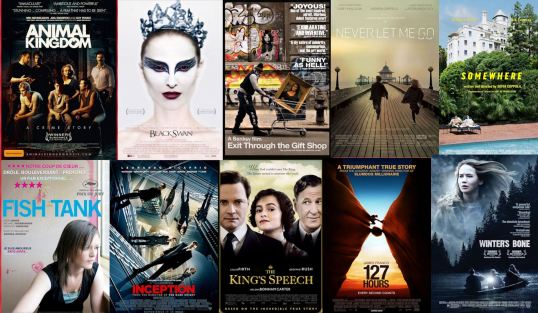
Animal Kingdom
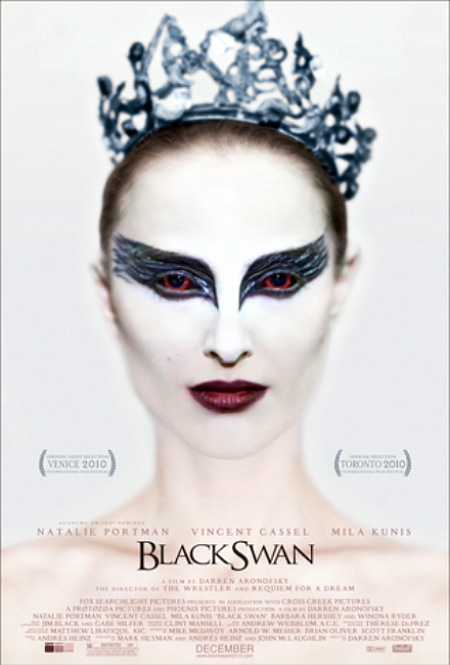
Black Swan
Exit Through The Gift Shop
Fish Tank
Inception
The King’s Speech
Never Let Me Go
127 Hours
Somewhere
Winter’s Bone
Best Actor
Patrick Fabian in The Last Exorcism
Colin Firth in The King’s Speech
James Franco in 127 Hours
Andy Garcia in City Island
Ben Stiller in Greenberg
Best Actress
Katie Jarvis in Fish Tank
Jennifer Lawrence in Winter’s Bone
Natalie Portman in Black Swan
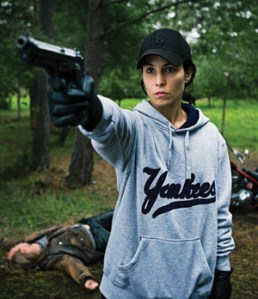
Noomi Rapace in The Girl With The Dragon Tattoo
Emma Stone in Easy A
Best Supporting Actor
Christian Bale in The Fighter
Aaron Eckhardt in Rabbit Hole
Andrew Garfield in Never Let Me Go
John Hawkes in Winter’s Bone
Ben Mendelsohn in Animal Kingdom
Best Supporting Actress
Elle Fanning in Somewhere
Rebecca Hall in Please Give
Chloe Grace Moretz in Kick-Ass
Hailee Steinfeld in True Grit
Jacki Weaver in Animal Kingdom
(That’s right, everyone. It’s a tie between the youngest nominee and the oldest nominee. Don’t you just love the Oscars?)
Best Director
Andrea Arnold for Fish Tank
Darren Aronofsky for Black Swan
Danny Boyle for 127 Hours
Sofia Coppola for Somewhere
Christopher Nolan for Inception
Best Original Screenplay
Animal Kingdom
Black Swan
Fish Tank
Inception
The King’s Speech
Best Adapted Screenplay
Never Let Me Go
127 Hours
Rabbit Hole
Toy Story 3
Winter’s Bone
Best Editing
Black Swan
Exit Through the Gift Shop
Inception
127 Hours
Somewhere
Best Cinematography
Black Swan
Somewhere
True Grit
Twelve
Winter’s Bone
Best Art Direction
Black Swan
Harry Potter and the Deathly Hallows, Part One
Inception
The King’s Speech
Scott Pilgrim Vs. The World
Best Sound Mixing
Black Swan
Inception
Secretariat
Stone
Toy Story 3
Best Sound Editing
The Expendables
Inception
Scott Pilgrim Vs. The World
Secretariat
Toy Story 3
Best Costume Design
Black Swan
The Girl With The Dragon Tattoo
Harry Potter and the Deathly Hallows, Part One
Robin Hood
The Wolf Man
Best Original Score
Black Swan
Inception
Machete
127 Hours
Tron: Legacy
(Yes, I know that the Academy has ruled that the original score for Black Swan is not eligible to be nominated. However, these are my nominations and I make the rules.)
Best Visual Effects
Harry Potter and the Deathly Hallows, Part One
Inception
Scott Pilgrim Vs. The World
Splice
Tron: Legacy
Best Makeup
Harry Potter and the Deathly Hallows, Part One
Let Me In
127 Hours
Splice
The Wolf Man
Best Song
“Better Days” from Eat Pray Love
“Bound Together” from Burlesque
“Dear Laughing Doubters” from Dinner For Schmucks
“Sticks and Stones” from How To Train Your Dragon
“You Haven’t Seen The Last of Me” from Burlesque
Best Documentary Feature
Best Worst Movie
Exit Through the Gift Shop
Joan Rivers: A Piece of Work
Restrepo
Winnebago Man
Best Animated Feature
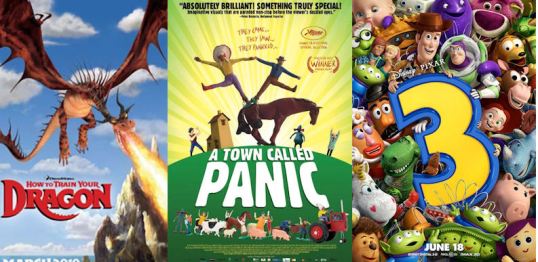
How To Train Your Dragon
A Town Called Panic
Toy Story 3
(Again, I am aware that the Academy ruled that A Town Called Panic isn’t eligible and again, I don’t care.)
Best Foreign Language Film
The Girl With The Dragon Tattoo (Sweden)
Mother (South Korea)
OSS 117 – Lost in Rio (France)
Police, Adjective (Romania)
A Prophet (France)
(While the Academy considers one submission per country for this award, I’m simply using it to recognize the best foreign language film released in the U.S. last year. Or, at least, the best one that I got a chance to see.)
So, since I love lists, here’s a final tally of films by nominations:
10 Nominations — Black Swan
9 Nominations — Inception
7 Nominations — 127 Hours
5 Nominations — Somewhere, Winter’s Bone
4 Nominations — Animal Kingdom, Fish Tank, Harry Potter and the Deathly Hallows, The King’s Speech, Toy Story 3
3 Nominations — Exit Through The Gift Shop, The Girl With The Dragon Tattoo, Never Let Me Go, Scott Pilgrim Vs. The World
2 Nominations — Burlesque, How To Train Your Dragon, Rabbit Hole, Secretariat, Splice, Tron: Legacy, True Grit, The Wolf Man
1 Nomination — Best Worst Movie, City Island, Dinner For Schmucks, Easy A, Eat Pray Love, The Expendables, The Fighter, Greenberg, Joan Rivers: A Piece of Work, Kick-Ass, The Last Exorcism, Machete, Mother, OSS 117 — Lost in Rio, Please Give, Police, Adjective, A Prophet, Restrepo, Robin Hood, Stone, A Town Called Panic, Twelve, Winnebago Man
0 Nominations — The Social Network
And lastly, here’s a tally by imaginary Oscars won:
5 Oscars — Black Swan
2 Oscars — Toy Story 3
1 Oscar — Animal Kingdom, Burlesque, Exit Through The Gift Shop, Fish Tank, The Girl With The Dragon Tattoo, Harry Potter and the Deathly Hallows, Inception, Never Let Me Go, 127 Hours, Scott Pilgrim Vs. The World, Somewhere, Tron: Legacy, Twelve, Winter’s Bone, The Wolf Man
0 Oscars — The Social Network
(One final note: A big thank you to my sister, Erin Nicole Bowman, who created the banners used in this post.)
Last night, I watched the annual Golden Globe Awards show.
Why Was I Watching It?
Well, I wasn’t watching it because I was expecting to see the best films and tv shows of the last year recognized. The Golden Globes are notorious for being odd and anyone who takes them too seriously needs to relax a little. The appeal of the Golden Globes is that 1) it recognizes both television and film in the same ceremony which means you get to see unexpected sights like Jim Parsons, Robert De Niro, Johnny Depp, and the cast of Glee all in the same auditorium, 2) drinks are served throughout the ceremony which means that everyone’s pretty drunk by the end of it, and 3) you can make fun of what everyone’s wearing.
What’s It About?
As the show’s host, Ricky Gervais pointed out while commenting on the odd nomination of The Tourist for Best Picture (Comedy), the show is mostly about the shadowy members of the Hollywood Foreign Press Association getting a chance to hang out with people like Angelina Jolie and Johnny Depp. And who can blame them, really? Quite honestly, if it meant I might get a chance to spend a night with Johnny Depp (or, I’ll admit it, Angelia Jolie), I’m more than willing to love The Tourist too.
What Worked
Oh my God, it was such an odd three hours. While the winners were kinda predictable and boring (how excited can you get — at this point — to see The Social Network win awards) and showed the typical tendency towards embracing the safe over the unpredictable, Ricky Gervais kept things lively. He hosted with an attitude that basically said, “My career doesn’t need your approval so fuck off, Hollywood.” It also pretty much guaranteed that Gervais will never host the Oscars. My favorite Gervais moment came early when he made the comment about secretly gay Scientologists (an obvious reference to Tom Cruise and maybe John Travolta). The way the audience gasped pretty much told you all you needed to know as far as the truth behind the joke was concerned.
Robert De Niro won the DeMille Award and gave a speech that revealed that he’s actually a human being and apparently, a somewhat bitter one at that. Also, I simply have to mention that Robert De Niro is aging really well. As opposed to…oh, I don’t know…Al Pacino, maybe?
Melissa Leo is one of my favorites actresses and it was nice to see her rewarded for The Fighter but her speech did go on and on and the only thing that saved the moment was that some genius in the control booth decided to cut to Helena Bonham Carter who had the coolest “What the fuck?” look on her face.
Angelina Jolie’s green dress was quite simply to die for and I want it because it’s the same color as my right eye. So, I’ll repeat the offer that I made earlier on twitter: whoever gets me this dress (by whatever means) can watch while I try it on and take it off. (That’s a joke, by the way! Seriously though, I so want that dress. Except, of course, I’d want to have Hello Kitty on it somewhere…)
Natalie Portman won best actress in a drama and, out of all the awards given last night, that’s really the only one I agreed with. When Portman’s name was announced, my twitter friend Jason Tarwater asked if I was doing cartwheels. Well, I didn’t do cartwheels but I did attempt to do a pirouette and wow, that was a mistake because I so twisted my ankle the wrong way and ended up in really intense pain. So, I missed Natalie’s speech but I bet it was great.
I do like the way that the Golden Globes divide their awards into a drama and a comedy section. It’s a smart idea, I think.
What Didn’t Work?
I’m not going to complain about The Social Network winning most of the awards. It’s not a bad film, at all. It’s just not the great movie that so many critics are insisting that it is. At this point, I’m not so much anti-Social Network as much as I’m just bored with it.
Al Pacino’s a great actor but seriously, I hit mute any time he wins an award. And, seriously, would it kill him to wash his hair or something before he shows up for an awards ceremony?
Justin Bieber came out and gave an award or something and I’m sorry — he’s creepy. I mean, like David Archuletta creepy. Plus, I always have to go to Wikipedia to find out whether the i or the e comes first whenever I’m trying to type out the name “Bieber”. I mean, I’m only 25 and this little punk and his fans are making me feel like an old woman complaining about “kids today.” NOT COOL, BIEBER!
Aaron Sorkin won for his overrated screenplay and I guess he’s aware that he’s got an image problem because he tried so hard to be gracious but it was kinda like when James Cameron tried to be gracious while promoting Avatar. It just didn’t work. The more humble Sorkin tried to be, the more he came across like a prick. The final insult came when he thanked the best actress nominees for being “smart” women as if that’s such an unusual thing to be. I’m assuming this was Sorkin’s attempt to show that he’s not a sexist pig but it just came across as condescending and fake. It’s interesting to contrast Sorkin’s speech with David Fincher’s speech. Fincher was far more gracious and, quite frankly, the only reason that Sorkin’s screenplay came close to working was because, as a director, Fincher kept things visually interesting so you didn’t really spend too much time thinking about how every single character in the entire freakin’ movie sounded exactly like Aaron Sorkin. Seriously, does Sorkin know anyone who doesn’t talk like him?
Was it just me or did producer Scott Rudin — while accepting best picture for The Social Network — almost seem as if he had to be reminded to thank Fincher? It’s interesting that, for all the acclaim Social Network and Sorkin have gotten, Fincher has often come close to being forgotten. Could it be because Sorkin is a card-carrying member of the Hollywood establishment while Fincher, much like Fighter’s David O. Russell and Black Swan’s Darren Aronofsky, is not?
Finally, the first winner of the night was Christian Bale. Was he deliberately trying to channel Colin Farrell last night or was it just an accident? Regardless, when it comes Colin Farrell, I prefer the real thing.
“Oh my God! Just Like Me” Moment
“I’ll show you a pair of golden globes!”
Lessons Learned
As excited as I’ll be if Natalie Portman wins an Oscar for best actress, I will force myself not to dance.
Every year, there’s a handful of film scenes that come to define the entire year for us. At their best, these scenes can leave such an impression that they become a part of our shared history. For some people (though not me), 2009 will always be the year of Avatar. Meanwhile, for me (but not others), 2010 will always be the year I realized it was okay to admit how much I love to dance. Listed below are 20 of the many film moments that I will remember whenever I look back on this current year.
20) Carey Mulligan and Andrew Garfield discover what really happened to all of their childhood artwork in Never Let Me Go.
Permeated with an atmosphere of nonstop melancholy, Never Let Me Go never quite found the audience is deserved but I think it’s one of the best films of 2010 and the scene mentioned above is one of the reasons why.
19) Scott Pilgrim says, “Oh cool, coins!” in Scott Pilgrim Vs. The World.
And Lisa Marie suddenly realizes that she has fallen in love with a movie.
18) Keifer Sutherland says, “Tap that ass” in Twelve.
Truth be told, I don’t even remember what was happening on-screen. I just remember Keifer, as the film’s narrator, saying “Tap that ass” in that sexy, nicotine-fueld growl of his and thinking to myself, “Well, okay…”
17) Jake Gyllenhaal chases down a bus full of dying old people in Love and Other Drugs.
Yes, the old people desperately need to get up to Canada so they can get their prescriptions filled but unfortunately for them, Anne Hathaway happens to be on the bus as well and Jake — apparently realizing that he’ll never get to see her breasts again if they break up — chases the bus down in his Porsche so he can reconcile with her. And, of course, the old people are just so adorably excited at the idea of a 15-minute delay while these two deeply damaged characters stand outside and talk about their relationship. I mean, fuck it — who cares about getting these people their medicine when there’s a disposable pop tune playing in the background and Jake wants to talk to his ex-girlfriend? In so many ways, this scene represents everything I hate about mainstream filmmaking.
16) Joseph Gordon-Levitt flies through the corridors of a dream hotel in Inception.
Inception was a film full of amazing images but my personal favorite was perhaps the simplest — Joseph Gordon-Levitt (looking rather adorable in his dark suit) floating down those Argentoesque hallways while trying to figure out how to wake everyone up.
15) Jacki Weaver delivers the line of the year in Animal Kingdom.
“And you’ve done some bad things, sweetie.”
14) John Hawkes “talks” his way out of a traffic stop in Winter’s Bone.
While Winter’s Bone should rightfully make Jennifer Lawrence a star, John Hawkes also contributed some of the film’s best moments.
13) Patrick Fabian slips a recipe into his sermon in The Last Exorcism.
Cast as a modern-day Marjoe Gortner in this underappreciated film, Fabian gives one of the best performances of the year, if not the best.
12) Chloe Grace Moretz saves Kick-Ass from the mafia in Kick-Ass.
As far as women kicking ass was concerned, 2010 was a good year. Sure, the majority of cinematic female portraits were — as always — sexist to the extreme but there were a few rays of hope. Angelina Jolie in Salt, Noomi Rapace in The Girl With The Dragon Tattoo films, Mila Jovovich in Resident Evil — all were among the women who got to do something more than just look pretty while the boys saved the day. Seeing as how I’m honoring Rapace further down the list, I’m going to allow Chloe Grace Moretz (in the role of Hit Girl) to serve as a stand-in here for every single woman who was allowed to kick a little ass in 2010.
11) Christian Bale and Mark Wahlberg walks down the streets of Lowell at the beginning of The Fighter.
Seriously, this entire sequence — set to Heavy’s How You Like Me Now? (or “The Sock Monkey Song” as I call it) — could be a short film in itself. Call it: “Men and why we love them.”
10) Colin Firth fearfully waits to give a speech at the start of The King’s Speech.
One look at Firth’s terrified eyes and I was in tears. From that minute on, this unexpected gem of a film had me.
9) Jennifer Lawrence fishes for her dad’s hand in Winter’s Bone.
Southern gothic at its best!
8) James Franco is rescued by a purifying storm in 127 Hours.
Helpless and hopeless, Franco is suddenly freed by a sudden storm. Both Franco and director Danny Boyle handle this scene with such skill that the audience finds itself just as saddened as Franco when it all turns out to be a hallucination.
7) Katie Jarvis dances in an abandoned apartment and finds a momentary glimmer of hope in Fish Tank.
Between this movie and Black Swan, 2010 was the year that reminded me of just how much I love to dance and why. 2010 is the year that I realized it was okay for me to love to dance again.
6) Andy gives away his toys at the end of Toy Story 3.
And Lisa Marie cries and cries.
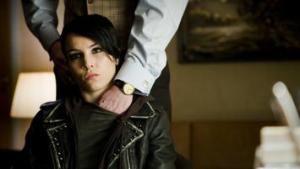
5) Lisbeth Salander (played by Noomi Rapace) gives her abusive guardian a tattoo in The Girl With The Dragon Tattoo.
For any and every girl who has ever been used, abused, hurt, spoken down to, insulted, manipulated, or betrayed by someone who claimed to only be looking after her best interests, this scene was truly cathartic. When I say that Noomi Rapace’s Lisbeth will be iconic, it’s largely because of scenes like this. In that one scene, Lisbeth is established as a woman who will never be victimized and it gives hope any for those of us who don’t have dragon tattoos.
4) Footage from Theirry’s completed “documentary” is revealed in Exit Through The Gift Shop.
And the audience is suddenly forced to question just how much of anything they’ve seen is the truth.
3) The spinning top wobbles at the end of Inception.
Or does it?
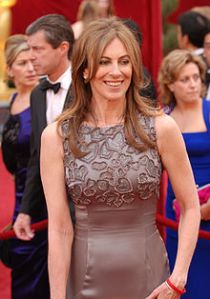
2) Kathryn Bigelow becomes the first woman to win the Oscar for best director while her ex-husband glowers in silence.
I wasn’t a huge fan of The Hurt Locker but I still squealed with delight as Kathryn Bigelow accepted the award that should have gone to Sofia Coppola back in 2004. Not only did Bigelow make history but she did it by beating her soulless jerk of an ex-husband, James Cameron. And then she gave one of the best acceptance speeches in Oscar history, all the while looking about 20 years younger than she actually is. In short, Kathryn Bigelow showed every Oscar winner — past, present, and future — exactly how it’s done.
1) The final fifteen minutes of Black Swan
In 15 minutes, Darren Aronofsky reminded me of how much I love ballet and audiences of why we love movies in the first place.
With the Golden Globe nominations set to be announced on Tuesday, I figured now would be a good time to recap which films and performances have already been honored by the various critics groups.
One thing that I discovered as I researched this is that there are a lot of critics groups out there! I don’t know who half these people are and most of them probably won’t have any bearing at all on who is actually nominated come Oscar time. But since I’m a lover of trivia and lists, there you go.
The following films and performances were honored by either The National Board of Review, the D.C. Film Critics, the Boston Society of Film Critics, The New York Film Critics Online,The Los Angeles Film Critics, The Indiana Film Journalists, The Southeastern Film Critics, The New York Film Critics Circle, or the San Francisco Film Critics.
Best Picture:
The Social Network (All. That’s right, it’s a clean sweep for an above average film.)
Best Director:
Darren Aronofsky for Black Swan (S.F)
Olivier Assayas for Carlos (LAFC)
David Fincher for The Social Network (BSFC, DC, NBR, NYFCC, NYFCO, SEFC, S.F.)
Christopher Nolan for Inception (IFJ)
Best Actor:
Jesse Eisenberg (BSFC, NBR)
Colin Firth for The King’s Speech (DC, LAFC, NYFCC, SEFC, S.F.)
James Franco for 127 Hours (IFJ, NYFCO)
Best Actress:
Annette Bening for The Kids Are All Right (NYFCC)
Kim Hye-ja for Mother (LAFC)
Jennifer Lawrence for Winter’s Bone (DC)
Lesley Manville for Another Year (NBR)
Natalie Portman for Black Swan (BSFC, IFJ, NYFCO, SEFC)
Michelle Williams for Blue Valentine (S.F.)
Best Supporting Actor:
Niels Arestrup for A Prophet (LAFC)
Christian Bale for The Fighter (BSFC, DC, IFJ, NBR, NYFCO)
John Hawkes for Winter’s Bone (S.F.)
Mark Ruffalo for The Kids Are All Right (NYFCC)
Geoffrey Rush for The King’s Speech (SEFC)
Best Supporting Actress:
Melissa Leo for The Fighter (DC, NYFCC, NYFCO)
Juliette Lewis for Conviction (BSFC)
Hailee Steinfeld for True Grit (IFJ, SEFC)
Jacki Weaver for Animal Kingdom (LAFC, NBR, S.F.)
Best Documentary:
Exit Through The Gift Shop (DC, IFJ, NYFCO)
The Inside Job (NYFCC, SEFC)
Last Train Home (LAFC)
Marwencol (BSFC)
The Tillman Story (S.F.)
Waiting For Superman (NBR)
Best Animated Feature:
How To Train Your Dragon (IFJ)
The Illusionist (NYFCC)
Toy Story 3 (BSFC, DC, LAFC, NBR, NYFCO, SEFC, S.F.)
Best Adapted Screenplay:
The Social Network (BSFC, DC, IFJ, LAFC, NYFCO, SEFC, S.F.)
The final 15 minutes or so of Black Swan are so intense and exhilarating that, after I watched them, I ended up having an asthma attack. The movie literally left me breathless.
I saw this movie last Saturday at the Plano Angelika and I’ve been trying to figure out just how exactly to put into words my feelings about this movie. Why is it so much easier to talk about movies we hate than the movies we love? Perhaps it’s because we all know what a bad movie looks like but a great movie is something unique and beautiful. I fear that any review I write it going to cheapen this experience.
However, I’m going to try. And if my words can’t convince you then just see the movie yourself. You’ll either love it or you’ll hate it. As with all great works of art, there is no middle ground. Unfortunately, I don’t see any way for me to talk about this film without talking about a few key plot points that could be considered spoilers. So, if you haven’t seen the movie yet, read on with caution.
This year, there’s been two types of filmgoers. There’s been those who have spent 2010 waiting for The Social Network and then there are people like me who have been waiting for Black Swan. There’s a lot of reasons why I had been so looking forward to seeing this movie. First off, it’s directed by Darren Aronofsky, one of my favorite directors. Requiem for a Dream is a personal favorite of mine and I thought The Wrestler was one of the best films of 2008. Secondly, the movie stars Natalie Portman, a great actress who rarely ever seems to get parts worthy of her talent.
However, the main reason was a personal one. Black Swan takes place in the world of ballet and, for several years, ballet was literally my life. My family used to move around a lot but whether we were living in Ardmore, Oklahoma or Carlsbad, New Mexico or Dallas, Texas, ballet always remained my constant. Every town we ended up in, my mom tracked down the closest dance studio and enrolled me. I’ve loved all types of dance (and still do) but ballet is what truly captured my heart. It provided structure for my otherwise chaotic life. Ballet was something that I knew not everyone could do and when I danced, I felt special. I felt like I was something more than just an asthmatic girl with a big nose and a country accent. I felt beautiful and strong and special. When I danced, I felt alive.
As much as I dreamed of being a prima ballerina, I always knew that I wasn’t really that good at it. I’ve always danced with more enthusiasm than technique and, if forced to choose between perfect execution and just having fun, I almost always chose to have fun. My body also conspired me against me as I’ve been a D-cup since I was 14 and while boobs don’t necessarily make ballet impossible, they don’t exactly help. Of course, my main problem was that I was (and still am) a klutz. When I was 17 years old, I tripped, fell down a flight of stairs, and broke my ankle in two places. And so ended my ballet career.
To a certain extent, falling down those stairs is the best thing that ever happened to me because it forced me to explore a life outside of the idealized fantasy of ballet. It forced me to consider ambitions that don’t necessarily have to end the minute one turns 30. It allowed me to realize how much I love to write and how much I love to watch movies. Still, I do miss ballet. While I still love to dance, it’s just doesn’t feel the same. I still have fun but it no longer makes me feel special.
I guess I was hoping that Black Swan would remind me of that feeling that I had lost. And it did.
But enough about me. Let’s talk about Black Swan.
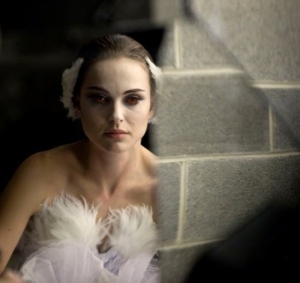
Natalie Portman plays Nina, a veteran ballerina who, despite being young enough to still live with her mother (and, it’s hinted, to still be a virgin), is also approaching the age when she’ll be considered too old to ever be a prima ballerina. She is a member of a struggling New York dance company that is run by Thomas (Vincent Cassel, turning up the sleaze level to 11). Thomas has decided that the company’s next show will be Tchaikovsky’s Swan Lake and that it’s time to replace the company’s prima ballerina, Beth (played by Winona Ryder), with a younger dancer. Nina begs for the chance to be Beth’s replacement but Thomas rejects her, claiming that her dancing is technically perfect but has no passion. He then attempts to kiss her which leads to Beth biting his lip and, apparently, convincing him that she has passion after all. Thomas soon announces that Nina will dance the lead in Swan Lake.
Unfortunately, even before winning the role, Nina is obviously unstable. Whether she’s obsessively stretching in her hideously pink bedroom, forcing herself to vomit up the contents of her stomach, or seeing shadows down every corridor, Nina’s every action and thought seems to be obsessed with finding the idealized perfection that ballet demands and life seldom affords. No matter how much she and her controlling mother (Barbara Hershey) cut her nails, she still wakes up with mysterious scratch marks across her back. Even worse, as she gets deeper and deeper into the role, she finds herself strangely drawn to and fearful of Lilly (Mila Kunis), a younger, free-spirited dancer who may, or may not, have her eye on taking Nina’s place.
Along with being an homage to such classic films as Repulsion, Suspiria, and All About Eve, Black Swan is also a modern-day reinterpretation of Swan Lake. Swan Lake tells the story of Odette, a princess who has been cursed by an evil sorcerer. As a result of the curse, Odette is only allowed her human form at night. During the day, she exists only in the form of a white swan. A prince named Siegfried meets Odette in her human form and falls in love with her so Rothbart tricks the prince by transforming his own daughter, Odile, into the Black Swan, a seductress who looks just like Odette except she wears black. One reason why the lead role in Swan Lake is so coveted is because the same ballerina plays both the innocent and fragile White Swan and the seductive and uninhibited Black Swan. As such, the two roles are presented as opposite sides of the same coin. (I’ve always thought of the White Swan as representing what men idolize and the black swan representing what men actually desire.) The challenge is to be convincing in both roles while still perfectly executing the idealized movements of ballet.
Over the course of Black Swan, Nina is continually told (by Thomas) that she is perfect for the role of the innocent and sheltered White Swan but that she doesn’t have what it takes to be the sexy and uninhibited Black Swan. At one point, Thomas gives her a homework assignment for the role, ordering her to go home and touch herself. (Nina eventually does so just to suddenly realize, right when she’s on the verge of bringing herself to climax, that her mother is sleeping in the exact same room. This sudden shot of Barbara Hershey sleeping in that chair both made me jump and laugh at the same time.)
Thomas also suggests that Nina study that way that Lilly dances. In many ways, Lilly appears to be the exact opposite of Nina. (Though wisely, Aronofsky emphasizes how much Portman and Kunis — not to mention Ryder and Hershey — all resemble each other physically, therefore creating the feeling that we’re seeing four different versions of the same basic human being.) Whereas Nina’s every dance move appears to be the product of rigorous training, Lilly dancing follows her emotions. While Nina’s expression while dancing is always one of a grimly obsessive dedication, Lilly smiles and enjoys the moment. Whereas Nina is scared of sex and can barely bring herself to look a man in the eye, Lilly is openly flirtatious with both men and women. In short, Lilly is Nina’s Black Swan.
Even as Nina studies Lilly, Lilly starts to pursue Nina, even showing up at her apartment and inviting Nina out for a night on the town. Desperate to escape her controlling mother (whose goal seems to be to keep Nina as the innocent White Swan for the rest of her life), Nina goes out with Lilly. They hit the clubs, Lilly convinces Nina to drink a spiked drink, and soon Nina is making out with random men in corners and eventually with Lilly in a taxi cab.
Now, I know this is something that a lot of people are wondering about so I’ll just confirm it. Yes, Mila Kunis does go down on Natalie Portman in this film. And yes, it’s hot. But even more importantly, it works as something more than just a juvenile male fantasy of what we girls do when you guys aren’t around. When Nina touches Lilly, she is reaching out for and accepting the side of her personality that she’s previously tried to deny. She’s accepting what she knows could destroy her.
(SPOILERS BELOW READ CAREFULLY)
And sure enough, after her encounter with Lilly (which Lilly subsequently claims never happened), Nina’s world grows more and more distorted. She looks at the paintings that line her mother’s room and she sees a hundred faces laughing at her. On the subway, men leer at her. And suddenly, Thomas seems to be paying more attention to Lilly (who is named as her alternate) than to her. Lilly visits Beth in the hospital where Beth is recovering from a car accident. Beth responds to Lilly’s presence by mutilating herself with a fingernail file. And so things go until the film reaches its climax in a dizzying mix of dance and blood.
Much like ballet itself, Black Swan presents a very stylized view of existence and, in order for the film to work, the performances have to be perfect. I’m happy to say that everything you’ve heard about Natalie Portman in this film is correct. She gives a brilliant performance. The film doesn’t provide a definite explanation as to what lies at the root of Nina’s mental instability but the clues are all there in Portman’s subtle but effective performance. Perhaps even more importantly, Portman is convincing in the ballet sequences. She captures perfectly the rigorous and often times painful dedication that ballet demands. In the movie’s finale, as she dances on stage while her fragile world collapse around her, she was suddenly creating my own fantasy of what it would be like to be a true prima ballerina. Watching her, I felt her every move as if I was on the stage dancing the role. It left me exhausted and breathless and I have to admit that after the movie, I foundd myself crying for a solid hour as I realized that would truly be as close as I would ever get to living my old teenage fantasy.
Portman pretty much dominates the entire film but still leaves room for Hershey, Cassell, and especially Mila Kunis to give impressive performances. Alternatively loving and spiteful, Hershey is the stage mother from Hell. Cassell’s character is almost too sleazy for his own good but Cassell still has fun with the role and even adds a few notes of ambiguity. However, Mila Kunis is the true standout among the supporting players. Playing a role that requires her to be both likable and vaguely threatening, Kunis holds her own with Portman and proves here that she actually can act. Her character also provides the film with a few much-needed moments of humor. Lilly gets all the best one-liners and Kunis delivers them flawlessly.
So, I’m sure many people might be saying at this point, “That’s great that you loved it, Lisa Marie. But you’re like all convinced that this film is actually about you. What about us normal people who don’t really care about ballet? Is there anything here for us?”
That’s not an easy question for me to answer precisely because I do love ballet and I did relate a lot of this film to experiences — both good and bad — from my own life. It’s also an issue that Aronofsky acknowledges in a rather clever scene where Nina and Lilly flirt with two frat boy types who react to Nina’s talk of ballet with boredom. However, I do think that this film can be seen and appreciated by those who aren’t into ballet for the exact same reason why I loved The Wrestler despite being interested in professional wrestling like not at all.
I’ve always felt that ballet — and by that, I mean the whole experience of both the dancing and all the stuff that goes on before and after the actual dance — was in many ways the perfect metaphor for life.
For instance, in my experience, there were always two separate cliques in any dance school or company.
There was the group of dancers who had spent their entire lives preparing for the one moment they would become a prima ballerina. These were the girls who spent hours obsessing over their technique and who minutely examined every performance for the least little flaw. These were the girls who risked their health to maintain perfect dancer bodies. They obsessed over everything they ate, which struck me as strange since they usually just threw it all back up a few minutes later anyway. They had parents who not only spent the money to make them the best but who, unlike the rest of us, actually had the money to spend in the first place. These were the girls who knew every move they were supposed to make but they never knew why.
And then, there was the group that I was always a part of. We were the girls who never worried about perfect technique. We would laugh when we missed a step and we joked about our mistakes. When we danced, we followed our emotions and if that meant breaking a rule, so be it. The perfect girls hated us because, for the most part, we were more popular than they were because we allowed ourselves to be real as opposed to perfect. And we hated the perfect girls because we knew that they would eventually have the life that we fantasized about.
I used to think that was unique to ballet and certainly, in Black Swan, it’s clear that Portman would be one of the perfect girls and Kunis would be one of us. However, once my life was no longer solely about ballet, I realized that everyone was either a part of the perfect group or a part of the real group. It wasn’t just ballet. It was life, the conflict between those who try to create an idealized fantasy and those who simply take advantage of the randomness of everyday life. And, when I watched Black Swan, it was obvious that Aronofsky recognizes this as well.
Ballet is all about creating perfection, of telling a story through exactly choreographed movements. As the film progresses, it become obvious that the root of Nina’s psychosis is that the reality has not lived up to her idealized worldview. Nina hides from the real world because the real world, unlike ballet, is not messy. Movement in ballet is controlled but movement in reality is random and often frightening. However, by submerging her identity into ballet, Nina has fallen into another trap because, as a prima ballerina, her every movement has to be perfect. There’s no room for error. There’s no room for her to break free of Thomas’s choreography. Her every move has been dictated for her and not a single mistake can be tolerated.
And I guess that’s truly why this film got to me because who hasn’t felt like that? Who hasn’t felt as if the world is watching and waiting to pounce on you for failing to live up to their ideal? While I’m not suggesting that men don’t face unique pressures of their own, this theme especially hit home for me as a woman. Everyday, I wake up knowing that I’m being expected to live up to some sort of societal concept of perfection that was set up long before I was born by people I’ll never actually meet. Every day, I wake up knowing that I’m always look my best without flaunting it in a way that would suggest that I know I look my best, to find a husband and devote my life to the agonizing pain of childbirth, to suffer my period in respectful silence, to always be weak when I want to be strong, and certainly to never, ever view sex as anything other than a duty. It’s the type of expectation that leads every woman to consider embracing her own black swan. Some of us are brave enough to do it. And others, scared of being rejected as imperfect, simply try to pretend that they never saw it in the first place.
For me, that’s what Black Swan is truly about. It’s not about ballet and it’s not about Mila Kunis bringing Natalie Portman to orgasm. It’s about finding the courage to live life regardless of how scary it might be. Much as Aronofsky used pro wrestling to tell the story of everyone who ever refused to be anonymous and forgotten, Black Swan is the story of every one who ever struggled to reconcile the demands of society with the realities of existence.
Since this is an Aronofsky film, viewers will either love it or hate it. As exhilarating as I found that film’s finale to be, I can already hear other viewers saying, “What!?” As a director, Aronofsky has always been willing to walk that thin line between art and excess and you’re reaction to him will probably depend a lot on where you personally draw that line. Throughout the film, Aronofsky comes close to going over the top. However, he also directs the film in such a way as to make it clear that we’re not meant to be watching an exact recreation of reality. Instead, we view most of the film’s events through the prism of Nina’s own unstable mind and both the film’s grainy cinematography and the deliberately odd camera angles perfectly capture the feel of a mind losing its grip on reality.
Again, I should admit that I’m bipolar and, as such, I reacted very sympathetically to Nina’s struggle to distinguish the real world from the world created by her own paranoid fears because I recognized much of it from my last major manic episode. Now, would I have had a different reaction if not for my own personal experiences? The honest answer is that I don’t know. All I know is that Darren Aronofsky gets it right.
The film’s ending will surely be the root of not a little controversy. (Again: MAJOR SPOILER WARNING) Much like the end of the The Wrestler we’re left to wonder whether our main character has truly triumphed or if she’s been defeated. Is Aronofsky celebrating self-destruction or is he celebrating the individualistic impulse that leads people to pursue their passions no matter what the end result? Has Nina found true perfection and freedom or has she been destroyed by her own demons?
Aronofsky leaves it up to the viewer to decide and a lot of people won’t like that.
However, for me, Black Swan is the best film of 2010.
A little over five years ago Warner Brothers made the decision to reboot the Batman film franchise. Several names of filmmakers were mentioned as candidates to helm this reboot. One of them was director Darren Aronofsky. He has made a name for himself helming very dark (and for some very depressing) films about very damaged personalities and their struggles. The Batman/Bruce Wayne duality was perfect for Aronofsky and he had begun to do early treatments to adapt Frank Miller’s classic Batman origin tale, Batman: Year One. In the end, this Aronofsky project fell through and the reboot ended up being handled by Christopher Nolan (not a slouch of a filmmaker himself).
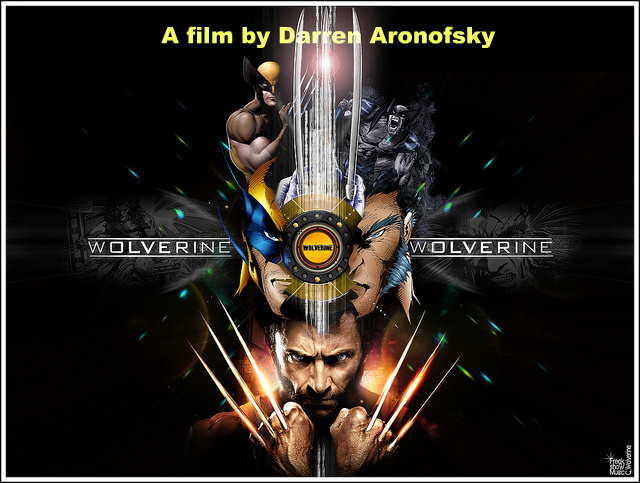
Aronofsky has made a couple of original and very personal films since then (The Fountain, The Wrestler, Black Swan), but with 20th Century Fox scrambling to put another one of their Marvel-licensed properties into production in order to keep the rights to them, they’ve decided to give the reins of the next Wolverine film to Aronofsky. Rumors of Aronofsky close to signing the deal to helm this Logan sequel was finally confirmed by none other than Hugh Jackman himself aka Wolverine in an interview for Vulture.
The first film in this character’s franchise was lackluster at best and horrible to most. The fact that a sequel has been greenlit even after the less-than-stellar box office returns of the first film was headscratching to many. Will Aronofsky’s involvement in this sequel actually erase the bad taste that Wolverine: Origins left in fans’ mouths. If there was anyone who can actually get a handle in the troubled and damaged psyche of one of Marvel’s most iconic characters it would be Darren Aronofsky.
There’s still little details as to what sort of storyline this Aronofsky sequel will take or will he just decide to reboot the franchise and start fresh. The reaction I’ve been reading has been mostly tepid with some guarded excitement from those who thinks Aronofsky will end up working his dark magic on this character on the big-screen. We’ll learn more once filming starts in early 2011.
Here’s to hoping that Aronofsky can do for Wolverine what Nolan was able to do for Batman.
The first official trailer for Darren Aronofsky’s next film has been released.
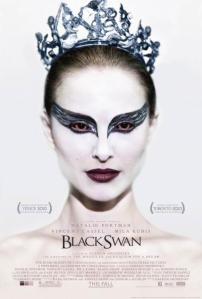
Black Swan stars Natalie Portman, Mila Kunis, Vincent Cassel, Barbara Hershey and Winona Ryder. It’s a psychological thriller based on the script by Mark Heyman and sets the film in the competitive world of ballet. The film will have its premiere at the 67th Venice Film Festival this coming September 2010 with another screening soon after in the same month at the 35th Toronto International Film Festival. The film will open to limited release in early December to qualify it for the award season for 2010.
The trailer definitely has been getting much buzz since it’s release on August 17th, 2010. Some have called it Fight Club for women just from the series of clips and images which made up the teaser trailer. While I won’t say that these individuals are right or wrong, to try and determine what the film is about in just a 2-minute trailer is idiotic. The film definitely plays on the psychological aspect of the story with Natalie Portman’s character the main focus of all the happenings going on around her.
Ms. Portman’s career should get another boost from this role as she continues to move away from her half a decade spent on the Star Wars universe. She has definitely made a concerted effort to pick roles as diverse as possible to avoid being typecase in any one particular role. Already an Oscar nominee for her work in Closer there’s a good chance that she may get another for her work on Black Swan. We will see if the buzz on that rumor will have weight come September 2010 when the film premieres n the Fall Film Festival season.
On July 22, 2010 USA Today score the first exclusive pictures from the set of Darren Aronofsky’s follow-up to his critically-acclaimed 208 film, The Wrestler. This time around Aronofsky takes on Tchaikovsky’s Swan Lake and weaves a psychological thriller around the classic ballet.
Black Swan will have in the titular lead one Ms. Natalie Portman. She’s taking on a role which continues her attempts to expand her repoertoire of character beyond the helpless child-like young women she’s been portraying since she first burst onto the scene. Playing opposite Ms. Portman is Mila Kunis. There’s already been talk going as far back as late 2009 that the two co-sta’ characters will be getting real close.
Synopsis: The dark tale with psychological twists stars Natalie Portman as Nina, a technically brilliant ballerina whose life takes some strange turns after being picked as the lead in a New York City production of Swan Lake. Pressures mount as her overbearing mother (Barbara Hershey) pushes her to succeed and her manipulative dance master (Vincent Cassel) commands her to be more seductive and loose in her performance.
Complicating matters is the arrival of Lily (Mila Kunis), a sultry dancer who exhibits all the innate ease and sexuality that Nina lacks. Nina begins to fixate on the newcomer as the two forge an unusual relationship.
The film will premiere at the Venice Film Festival this September and also appear in the 35th Toronto Internation Film Festival. Black Swan will be shown in limited release this coming December 1, 2010 to qualify it for the awards season and from the buzz surrounding this film don’t be surprised if it does well with awards and critics prizes. Pictures from the set can be seen in the USA Today link below.
It appears that Darren Aronofsky and Angelina Jolie are being reported as having plans to work together in the near future. Aronofsky has just completed initial filming on his latest, Black Swan, and is now looking to try and adapt the Ron Rash novel, Serena, with Angelina Jolie in the title role.
The project will be using a script adapted from the novel by Chris Kyle (wrote several of Kathryn Bigelow’s past work). The story is set in Depression-era 1929 and involves husband and wife George and Serena Pemberton heading down to North Carolina from Boston to try and make their fortune in timber. The title character of Serena adapts wells to the backwoods country as well as any of the locals and timbermen and in pursuit of creating their timber empire pushes the husband into further acts of cruelty to realize their dream. It is a the height of their power and growing empire that Serena realizes she cannot bear children. This revelation causes her to set out on a plan to murder the son her husband had outside their marriage. The rest of the film becomes a struggle between Serena and the “son” and of betrayal as Serena begins to suspect her husband trying to portect and save his illegitimate family.
Serena looks to have some similar themes as Paul Anderson’s There Will Be Blood and with what could be a small budget despite the period piece setting, Aronofsky may have another classic in the works to add to his body of work. All of this hinges on Aronofsky and Jolie finding financing for the project. Here’s to hoping that their search is not too long and production begins soon enough that Jolie doesn’t back out to work on another film.
























 Through the Shattered Lens