Retro Television Review: St. Elsewhere 2.17 “Vanity”


Welcome to Retro Television Reviews, a feature where we review some of our favorite and least favorite shows of the past! On Fridays, I will be reviewing St. Elsewhere, a medical show which ran on NBC from 1982 to 1988.  The show can be found on Hulu and, for purchase, on Prime!
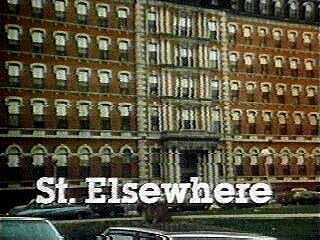
This week’s episode was available on neither Hulu nor Prime.  I had to watch a really terrible upload that I found on Daily Motion.  Bleh.

Episode 2.17 “Vanity”

(Dir by Mark Tinker, originally aired on March 7th, 1984)

I was relieved to see that this episode featured Kathy Martin returning to the hospital.  I was seriously worried that Peter White had killed her.  With Peter in jail for attacking Wendy Armstrong, Kathy doesn’t tell anyone that Peter raped her.  From the minute we first see her, it’s clear that Kathy is suffering from severe PTSD.  As a character, Kathy Martin was not always treated well by this show.  During the first season, she was often portrayed as being a caricature, the quirky pathologist who liked to have sex in strange places.  This episode finally allowed Kathy to emerge as a fully-developed character and Barbara Whinnery gave a strong performance in the role.

Peter is in jail.  Despite Wendy’s anger, Dr. Morrison regularly visits him.  Morrison says that Peter is obviously sick and needs help but, at the same time, he hasn’t accepted that Peter is also the Ski Mask Rapist.  (Peter wasn’t wearing his mask when he attacked Wendy.)  As for Peter, he continues to feel sorry for himself.

Dr. Craig is upset when he receives a cop of the documentary about him and he discovers that he comes across like an arrogant martinet.  Dr. Craig threatens to sue the director (played, again, by Michael Richards) though one gets the feeling that Craig is mainly angry because he knows the documentary is true.

Nurse Rosenthal gets reconstructive breast surgery.  Joseph, the construction worker who has been having attacks of blindness, is successfully operated on.  Sometimes, things work out well at the hospital.  Not often, but sometimes.

Finally. Mr. Entertainment (Austin Pendleton) returns, singing to patients and upsetting his supervisor.  (Mr. Entertainment now works as a janitor at the hospital.)  To be honest, the majority of this episode was devoted to Mr. Entertainment and it was a bit too much.  Austin Pendleton is a good actor but Mr. Entertainment is such a cartoonish character that I mentally checked out of his story.

This was an odd episode.  There was a lot to work but it was almost all overshadowed by Mr. Entertainment.  Sometimes, you can tell a writer has fallen so in love with a minor character that they’ve forgotten about what the audience is actually interested in.  The episode felt like an example of that.
Retro Television Review: St. Elsewhere 2.16 “After Dark”


Welcome to Retro Television Reviews, a feature where we review some of our favorite and least favorite shows of the past! On Fridays, I will be reviewing St. Elsewhere, a medical show which ran on NBC from 1982 to 1988.  The show can be found on Hulu and, for purchase, on Prime!

This week, it’s time to name the Doctor of the Year!

Episode 2.16 “After Dark”

(Dir by Eric Laneuville, originally aired on February 29th, 1984)

It’s time for the annual end-of-the-year dinner, during which the Women’s Auxiliary will announce their pick for Doctor of the Year.  Last year, to Dr. Craig’s shock, Westphall won the award.  This year, Dr. Craig is sure that he’s going to win.  Even though Craig says that he doesn’t care about awards, he still has his wife, Ellen (Bonnie Bartlett), write out a speech for him.

The dinner is just as boring as usual.  The majority of the doctors who show up mention that their spouse couldn’t make it because they suddenly came down with the flu.  When it is time to announce the Doctor of the Year, Dr. Craig prepares to accept the award.  However, the award is given — for the second year in a row — to Dr. Westphall!

Seriously?  I mean, what the Heck?  Nothing against Dr. Westphall but what exactly has he done to deserve the award this year?  Dr. Auschlander has continued to see patients while battling cancer.  Dr. Craig performed a heart transplant!  Meanwhile, Dr. Westphall has dealt with the administrative stuff and been kind of grumpy.  I’m totally on Dr. Craig’s side here.  There’s no way Westphall deserved that award for two years running.

Westphall, himself, had to leave the awards dinner early because of an emergency at the hospital.  (More on that below.)  Dr. Craig accepts the award in Westphall’s place and — surprise! — gives a sincere speech about how much he appreciates Dr. Westphall’s leadership.  Good for Dr. Craig!  That said, there’s no way Dr. Westphall deserved the award this year.

Meanwhile, Kathy Martin, who we last saw being raped by Peter White in the morgue, is missing.  Peter wanders through the hospital in a narcotic-induced haze, carrying his ski mask in his pocket.  He nearly attacks Shirley.  He does attack Wendy Armstrong and this time, he doesn’t even put on his ski mask.  Fortunately, Fiscus hears Wendy’s screams and knocks Peter out with a fire extinguisher.  Peter is taken away by the police while Westphall heads to Peter’s home to tell Peter’s wife that her husband is the Ski Mask Rapist.

Victor is thinking of getting divorced.  Bobby, on the other hand, decides to ask Joan to marry him.  And Dr. Morrison continues to get too involved with his patients.  When Joseph (Dan Hedaya), a construction worker dealing with random bouts of blindness, is told that he’ll have to quite job, Morrison calls out a fellow doctor being callous.  Good for Morrison!

The episode, a well-acted one that deftly mixed drama and comedy, ended with some unanswered questions.  Peter’s been arrested.  Is he gone for good?  And where is Kathy Martin?  And seriously, how did Dr. Westphall win that award!?

Retro Television Review: St. Elsewhere 2.15 “Attack”


Welcome to Retro Television Reviews, a feature where we review some of our favorite and least favorite shows of the past! On Fridays, I will be reviewing St. Elsewhere, a medical show which ran on NBC from 1982 to 1988.  The show can be found on Hulu and, for purchase, on Prime!

This week, the identity of the Ski Mask Rapist is revealed.

Episode 2.15 “Attack”

(Dir by Kevin Hooks, originally aired on February 22nd, 1984)

The Ski Mask Rapist is continuing to attack.  Off-screen, a pharmacist is assaulted while trying to catch her train.  In the hospital, a candy striper gets lost in the cavernous building and is attacked in a storage room.  When Shirley Daniels enters the storage room, she’s startled by a man wearing a pest control outfit.  She sprays him with her mace but is later told that the police do not believe that he was the rapist.  Instead, he was just a man trying to steal drugs.  When Fiscus tries to put together a list of men who will walk the women to their cars, Dr. Cavanero tells him that one of the men on his list could very well be the rapist.

Amongst themselves, the women who work at St. Eligius debate what they would do if they are attacked.  Shirley carries her mace.  Wendy says that she would use her keys as a weapon.  Jacqueline Wade says that women who don’t struggle and just submit have a better chance of surviving.  Dr. Cavanero dumps her insensitive boyfriend after he offers up a half-hearted, insincere apology for trying to force himself on her during the previous episode.  The head of the hospital’s security gives a lecture and makes the women feel like the attacks are somehow their fault.  “There’s no need to get hysterical,” he says.

(Myself, I carry mace.  I’m always scared that I’ll accidentally spray myself in the face with it but still, I carry it.)

Kathy Martin turns down the offer of a rape whistle, saying that carrying it would give her the aura of a victim.  As the episode ends, she’s attacked in the morgue.  She manages to push up the ski mask, revealing the face of …. Peter White.

It’s not really a surprise that Peter turned out to be the rapist.  I suspected it was him last week.  Rape may be classified as a sex crime but ultimately, it’s about power.  The weakest men are rapists and there’s no man on this show who is weaker than Peter White.  Before Peter attacks Kathy, we see him with a prostitute who tells him that it’s okay that he couldn’t get it up.  Peter mentions that it’s his anniversary.  Peter is weak and, looking back at the the moment he first appeared during the first season (begging Dr. Morrison to cover for him), it’s obvious that the series has been building up to the moment that he loses control.

There were other things that happened during this episode.  Geraldine Fitzgerald played a patient who Auschlander dated in his younger days.  (Now, she’s a drug addict.)  Victor and Roberta returned from their honeymoon, Victor with a painful sunburn and Roberta with a host of problems that she accidentally broadcast to the entire hospital while talking to her friend in the front office.  (You have to make sure the PA is turned off before talking about your sex life, folks.)  There was a humorous scene in which Dr. Ridley got into an argument with Roberta’s psychiatrist (Philip Sterling).  Dr. Morrison tried to figure out why his latest patient (Dan Hedaya) was suffering from sudden bouts of blindness.

In the end, though, this was a grim episode and not always an easy one for me to watch.  Honestly, if I had been a nurse or a doctor at that hospital, I would have walked as soon as it became apparent that the Ski Mask Rapist was someone inside the building.  I would have gone home and refused to come back until they caught the guy.

Kathy saw Peter’s face as he attacked her.  I fear what’s waiting for me on next week’s episode.

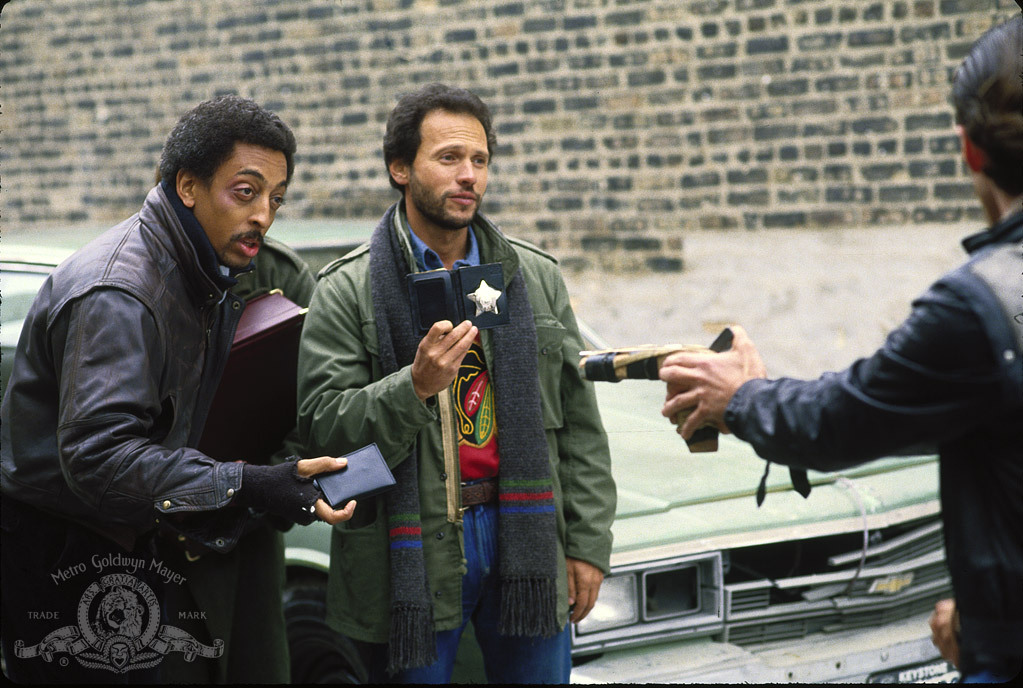
Live Tweet Alert – #MondayMuggers present RUNNING SCARED (1986), starring Gregory Hines and Billy Crystal!


Every Monday night at 9:00 Central Time, my wife Sierra and I host a “Live Movie Tweet” event on X using the hashtag #MondayMuggers. We rotate movie picks each week, and our tastes are quite different. Tonight, Monday, August 11th, we’ll be watching RUNNING SCARED (1986), starring Gregory Hines, Billy Crystal, Steven Bauer, Darlanne Fluegel, Joe Pantoliano, Dan Hedaya, Jon Gries, Tracy Reed, and Jimmy Smits.

The plot: Two street-wise Chicago cops have to shake off some rust after returning from a Key West vacation to pursue a drug dealer who nearly killed them in the past.

Peter Hyams directed RUNNING SCARED, and it’s one of the very best “Buddy Cop” films out there. So, if a night full of action and laughs sounds good to you, join us on #MondayMuggers and watch RUNNING SCARED. It’s on Amazon Prime, Tubi, and PlutoTV! I’ve included the trailer below:

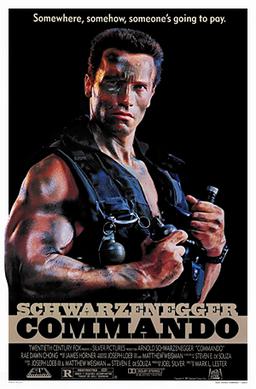
Commando (1985, directed by Mark L. Lester)


John Matrix (Arnold Schwarzenegger) is a former colonel in the U.S. Amy Special Forces.  He was one of the best at what he did but he’s now retired from all that and lives in the mountains of California with his young daughter, Jenny (Alyssa Milano).  When Capt Bennett (Vernon Wells), Martix’s former comrade-in-arms, kidnaps Jenny, Matrix is told that he has 11 hours to assassinate the leader of the country of Val Verde so that General Arius (Dan Hedaya) can launch a coup.  Knowing that the bad guys are planning on killing both him and Jenny no matter what he does, Matrix instead takes out Arius’s men as he makes his way to where Jenny is being held captive.

Commando is one of my favorite Schwarzenegger films.  It has some of the best one-liners (“I like you, Sully, I kill you last,”), some of the best character actors (Sully is played by David Patrick Kelly), and also one of Schwarzenegger’s best performances.  In Commando, Schwarzenegger shows that he’s willing to poke fun at himself, which was something that set him apart from many of the action heroes of the 80s.  (Stallone eventually learned how to poke fun at himself but it took a very long time.)  At his California home, Matrix chops down and carries a tree without breaking a sweat.  During a chase through a mall, Matrix easily lifts up a phone booth.  Matrix may be trying to save the life of his daughter but he still takes the time to come up with one-liners and fall in love with flight attendant Cindy (Rae Dawn Chong).  Commando is essentially just a big comic book brought to life and Schwarzenegger understands that and gives a very knowing, self-aware performance.  Director Mark Lester wastes no time getting to the action and the result is one of the most entertaining action films of the 80s.

Believe it or not, Commando was originally envisioned as being a Gene Simmons picture.  When the KISS frontman turned down the film, the script was rewritten for Arnold Schwarzenegger.  Schwarzenegger made this film after The Terminator and it was another box office success.  As for Gene Simmons, he would have to wait for Runaway to make his action debut.

I review TIGHTROPE (1984) – starring Clint Eastwood! 


In TIGHTROPE, a psychiatrist makes the following comment to New Orleans police detective Wes Block (Clint Eastwood) while he’s trying to catch a serial killer who’s targeting sex workers:

“There’s a darkness inside all of us, Wes; you, me, and the man down the street. Some have it under control. Others act it out. The rest of us try to walk a tightrope between the two.”

This statement definitely hits home to Wes, whose personal life has gotten rather dark. His wife has recently left him and their two daughters (Alison Eastwood and Jenny Beck), and the detective seems to be drowning himself in his work, at times in a bottle, and at other times in the arms of some of the local ladies of the night. Whenever he does try to plan something with his girls, his job always seems to get in his way. As he investigates the murders in a variety of the seediest locations in New Orleans, we learn that Wes is very much into the kinds of women who inhabit these places, and he gives into his secret desires on multiple occasions. This becomes personal when the killer, who knows that Wes is the detective in charge of the case, begins targeting and killing some of the very same women who helped ease Wes’ emotional pain, and then taunts him about it. It becomes even more personal when the killer goes after his daughters and his new “legitimate” lady friend Beryl Thibodeaux (Geneviève Bujold), a rape counselor Block has gotten to know as part of the broader investigation. As the bodies continue to pile up, will Wes be able to stop the killer in time to save the most precious people in his life?!!

TIGHTROPE is a special movie to me. I’ve mentioned this before in other reviews, but FOX-16 out of Little Rock played a lot of good movies in the mid to late 80’s when I was a teenager. Some of those movies hold a strong nostalgic value in my life because I first discovered them and my true love of movies during those years. The channel advertised and showed TIGHTROPE, and many other Eastwood films, quite often. Of course, the movie broadcast on FOX-16 was heavily edited, and I didn’t realize the true sexual complexity of detective Wes Block until I was quite a bit older. In the original DIRTY HARRY, there’s a running gag where different people ask Eastwood’s iconic character, “Why do they call you Dirty Harry?” From what we see in TIGHTROPE, if someone asked, “Why do they call you Dirty Wes,” the answer would be more than obvious as he engages in various kinky forms of sexual relations with at least three of the sex workers he hits up for information. The killer knows of his sexual activities with these women, even watching on occasion. The movie leans hard into this connection between Wes’ kinky sex that often involves handcuffs, and the kinship that the killer feels with Wes when he’s perpetrating violence on these same women. It adds an uneasy and unsettling quality to the proceedings when the killer publicly taunts his rival, who understandably doesn’t want his peers to know of his more private nocturnal activities. He can’t fool his new lady friend, the tough as nails Beryl Thibodeaux, who senses his hidden desires and accepts him for who he is, especially after spending some quality time with him and his daughters. I like Genevieve Bujold in the role and the French-Canadian actress is able to even nail the local accent on a couple of occasions. I also wanted to mention the excellent chemistry between Clint Eastwood and his real-life daughter Alison, who play father and daughter in the movie as well. Alison was only 12 years old when TIGHTROPE was released, but she gives a strong performance as the older daughter who’s still trying to come to terms with her parents’ divorce. The killer really messes up when he targets her. 

I’ll tell anyone who’s willing to listen that I love the city of New Orleans as a movie location. I personally love to visit the city and partake in its fun atmosphere and wide variety of excellent cuisine. TIGHTROPE hits many of the highlights of New Orleans in 1984… Bourbon Street, Jackson Square, the Super Dome, the Creole Queen, a warehouse full of Mardi Gras floats, the famous cemeteries, Randi Brooks in a hot tub, etc. etc. One thing about New Orleans is that its famous streets like Bourbon Street have not been cleaned up or become “family friendly” in the same way as a place like Times Square in New York City. To this day, it retains that same feeling of sexual decadence that is portrayed here in 1984. 

I personally consider TIGHTROPE to be a must-see film for fans of Clint Eastwood, as Wes Block is a wholly unique addition to his cavalcade of tough cop characters, and he makes us justifiably uncomfortable at times. Eastwood’s conflicted performance, the serial killer storyline and the fun New Orleans locations add up to a very good movie that’s aimed squarely at adults. 

Embracing The Melodrama: The God Committee (dir by Austin Stark)


First released (after being delayed by the COVID lockdowns) in 2021, The God Committee tells the story of a group of doctors faced with a difficult decision.

They’re the so-called God Committee, the ones who have been tasked with deciding which one of their patients will be receiving a new heart.  When the original “next name on this list” suddenly dies while being prepped for surgery, it comes down to three other possibilities.  One is a cranky old woman who has said that she doesn’t even want a new heart.  Another is a middle-aged, obese Black family man who suffers from bipolar disorder and who, years earlier, attempted to commit suicide.  And finally, there’s a young white guy who is famous for his addictions and his wild lifestyle.  He’s just arrived at the hospital, in critical condition.  Normally, his history of cocaine addiction would rule him out as a possible recipient but his father (Dan Hedaya) is rich and the hospital is in desperate need of money.

“I’m not going to let a good heart go to waste,” the brilliant Dr. Andre Boxer (Kelsey Grammer) says and he has a point.  Most candidates for a heart transplant die before a suitable heart is found.  This heart, taken from a teenage boy was hit by a car while returning home from a date, is a good one but it won’t stay viable forever.  Boxer, who is scheduled to leave the hospital in another month to set up his own private practice, is torn between the candidates.  Dr. Valerie Gilroy (Janeane Garofalo) and Father Dunbar — a disbarred lawyer-turned-priest — both feel the heart should go to the patient whose father can afford to fund the hospital.  Even if the decision is made just for the money, it’ll still do some good.  Dr. Jordan Taylor (Julie Stiles), who is Dr. Boxer’s former lover, is not so sure.  Psychiatrist Dr. Allen Lau (Peter Kim) recuses himself from voting for personal reasons and Nurse Wilkes (Patricia R. Floyd) eventually casts a vote that takes everyone by surprise.

While the God Committee debates who should get the heart, the film occasionally flashes forward.  Dr. Boxer, who is now dying and in need of a heart transplant himself, is working on a project that, if successful, will revolutionize the organ transplant business.  But will he survive long enough to see it completed?  Dr. Taylor, now in charge of the God Committee, tracks him down and asks him if he’s ready to see his son.  Though it takes a while for us to understand why and how, the decision that Doctors Boxer and Taylor made in the past will continue to have repercussions in the present.

The God Committee is based on a play.  Even if I didn’t already know that, I would have guessed as much from watching the film.  The God Committee is type of melodrama that tends to work better on stage than on film.  The artificiality of the stage allows for a story to be a bit overbaked and heavy handed.  On the other hand,  as a film, The God Committee‘s arguments are stacked so heavily to one side that it weighs down the plot.  It’s not enough for the rich candidate to be a former drug addict.  He also has to beat his pregnant girlfriend and leave her with a roadmap of cuts crisscrossing across her face.  It’s not for the good candidate to simply be a nice guy with a family.  Instead, he’s presented as being almost saintly.  There’s nothing subtle about it.

Fortunately, the talented cast steps up and keeps the story from going off the rails, with Julia Stiles, Colman Domingo, and Kelsey Grammer especially bringing some much-needed shading and nuance to their roles.  Grammer especially does well as the genius who can save lives and change the world but who struggles to connect with anyone on an emotional level.  In the end, The God Committee works due to the strength of its performers, all of whom bring their characters to multi-layered life and who remind us that it’s never easy to play God.

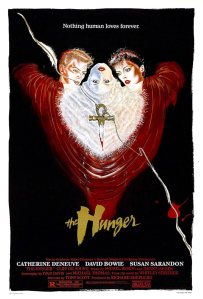
Horror Film Review: The Hunger (dir. by Tony Scott)


Whoa! Hold your horses! This isn’t the only review for The Hunger. Take a look at Lisa’s Review and if you’re so inclined, feel free to double back here.

It seems fitting that we start our descent towards Halloween with Tony Scott’s first feature film, The Hunger. As a fan of Vampires in general, it may not be a great film, but I feel like it does have a place in history where creatures of the night are concerned.

When I think of Whitley Streiber, Wolfen comes to mind and anyone who knows me also knows how much I adore that film. I don’t usually associate him with Vampires, but 1983’s The Hunger is pretty interesting. To me, there’s a nice beauty and mystery to the film as the undead involved could just be regular people asking the same questions about mortality we do, all to some beautiful movie throughout. They are practical vampires. There’s no real explanation as to how John and Miriam move about through the day. Rather than biting, they use small knives to acquire blood. The powers they wield are subtle, putting the story on par with Kathryn Bigelow’s Near Dark when it comes to avoiding vampire cliches. Additionally, this film also never mentions the word ‘vampire’.

Miriam (Catherine Deneuve, Belle de Jour) and John Baylock (David Bowie, Labyrinth) are vampires living in present day Manhattan. Enjoying their existence as any member of the undead would, they spend their nights mingling among the living and discarding bodies by dawn. What seems like a great unlife takes a turn when John finds himself unable to sleep. This restlessness escalates as he finds he’s losing his hair and gaining more wrinkles. The pair stumble on the Park West Sleep Clinic, and Dr. Sarah Roberts’ (Susan Sarandon, Blue Beetle) studies on sleep and aging. For me, one of the best scenes of the film was a parallel between John’s rapid aging while waiting in the Clinic alongside a lab monkey that is also suffering a similar issue. Sarah doesn’t really get to check in on John (who ages a quick 15 years during the wait), but their meeting does eventually introduce her to Miriam.

Miriam eventually loses John after he falls into a near mummified state. Although he becomes incredibly old, he’s still far from death’s touch. I love her explanation for him: “Humankind die one way, we another. Their end is final. Ours is not. In the earth, in the rotting wood, in the eternal darkness, we will see and hear and feel.” We also learn that this has happened with all of Miriam’s former lovers over the ages. Miriam then turns her sights on Sarah, which blossoms into a mix of a romance at first. Trivia fans will recognize the piano piece Miriam plays for Sarah (Lakme by Delibes), which Scott reused for True Romance. That was a nice touch. Needing a new partner, Miriam’s approaches become more predatory after Miriam’s true nature is revealed.

The cast in The Hunger all do well, but let’s face it, the real draw here was always Bowie (at least for me, anyway). It’s a shame his character doesn’t stay on screen for long, but he makes good use of the scenes he has and he’s there for at least half the movie. The film essentially belongs to Deneuve, who brings some charisma to Miriam’s character. Whether she’s being playfully flirtatious or deadly serious, she seems to be in control. I don’t have anything particular against Susan Sarandon as an actress. She’s quite good in this, but part me kind of imagined Lesley Ann Warren (Clue) doing all this a bit better.

Tony’s directing style is beautiful but slightly disjointed, with flashbacks giving an idea to Miriam’s past. On the one hand, they aren’t enough to be too revealing, but they’re also accompanied with some strange sound zingers that could be a bit off-putting. He moves quickly between scenes, but the general ideas of immortality and her longevity are suggested. Cinematographer Stephen Goldblatt (Outland) would go on to work on the Lethal Weapon films and Schumacher’s Batman films. There are some good uses of shadow and light here.

The music a mix of classical pieces, mixed with what sounds like either wind chimes and synth keyboards. The classical music stands out. The score, not so much. It’s not a terrible thing by any means, but it’s a strange selection of sounds. Other than the music, I was bothered by the film’s ending. What occurs seems like it could have happened at any time, and why it does is never explained in any way. I guess it worked. By the end, though, I felt like I watched something where the first 3 acts were fully thought out and the production team threw a dart at a board full of possible endings.

Overall, The Hunger is a interesting film to watch if you catch it late at night. Every director has to start somewhere, and while it’s a little sketchy in the end, there’s some style and grace to it all.

Retro Television Review: Miami Vice 2.20 “Payback”


Welcome to Retro Television Reviews, a feature where we review some of our favorite and least favorite shows of the past!  On Mondays, I will be reviewing Miami Vice, which ran on NBC from 1984 to 1989.  The entire show can be purchased on Prime!

After taking a two-month hiatus, I think it’s time to finally get back to the reviews.  Thank you for your patience, everyone.  Now, let’s head to down to Miami for some Vice!

Episode 2.20 “Payback”

(Dir by Aaron Lipstadt, originally aired on March 14th, 1986)

A low-level drug dealer named Jesus Moroto (Roberto Duran) wants a meeting with the detective who arrested him and sent him to jail.  When Sonny Crockett arrives to see what Moroto wants, Sonny is shocked when Moroto commits suicide in the visitation room.

Sudden and violent deaths are a recurring thing in Miami but the death of Moroto haunts Sonny.  As Sonny explains to Tubbs, it doesn’t make any sense for Moroto, who was only looking at a few years in jail, to have killed himself.  Sonny wonders why Moroto died in front of him.  Tubbs suggests that Sonny instead focus on their current assignment, trying to get close to the elusive drug lord, Mario Fuente (played by famed art rocker, Frank Zappa).  As a lot of drug lords do on this show, Fuente lives on a yacht and it’s next to impossible to see him.  Using their undercover identities as Burnett and Cooper, Crockett and Tubbs have so far only been able to meet with Fuente’s second-in-command, Reuben Reydolfo (Dan Hedaya).

Crockett and Tubbs find themselves assigned to work with two DEA agents, one whom — Kevin Cates (Graham Beckel) — claims that he can get Crockett and Tubbs onto Fuente’s boat.  Crockett and Tubbs are reluctant to work with anyone but it soon turns out that Cates is apparently better at his job than Crockett and Tubbs gave him credit for.

Except, of course, everyone’s got a secret.  Before he went to jail, Moroto stole several million dollars from Fuente.  It turns out that Internal Affairs is convinced that Crockett helped Moroto steal the money and Fuente, who knows that Burnett and Cooper are actually Crockett and Tubbs, believes the same thing.  The only person who can truly prove that Crockett is innocent is Kevin Cates and that’s because he’s the one who stole the money!

It doesn’t matter that the twisty plot of this particular episode is not always easy to follow.  It also doesn’t matter that this episode leaves you wondering just how exactly Crockett and Tubbs have managed to maintain their Burnett/Cooper personas for so long without everyone in Miami’s underworld figuring out the truth.  (Personally, I wonder that after every episode.)  This episode works due to the atmospheric direction of Aaron Lipstadt and the performances of Don Johnson, Edward James Olmos, Frank Zappa, and especially Graham Beckel.  Beckel gives a performance that will keep you guessing at just who exactly Kevin Cates is working for and whether or not he can be trusted.  That he makes Kevin into a somewhat likable character makes it all the more disturbing when he turns out to not be quite the honest law enforcer that he made himself out to be.  If the main theme of Miami Vice often seemed to be that Crockett and Tubbs were fighting a war that there was no way to win, this episode shows why their work often felt so futile.  In this episode, Crockett not only has to battle a drug lord but he also has to battle Internal Affairs.  No one trusts anyone.

The episode ends on an ambiguous note, with Crockett technically cleared but still unable to truly prove his innocence.  (Kevin Cates, the only man who can truly prove Crockett’s innocence, is naturally gunned down during the show’s final few minutes.)  Crockett is warned that Fuente is still going to be coming after him.  (Unfortunately, Zappa was in poor health when he filmed this episode and Fuente would never return.)  This episode is Miami Vice at its most cynical and its most effective.

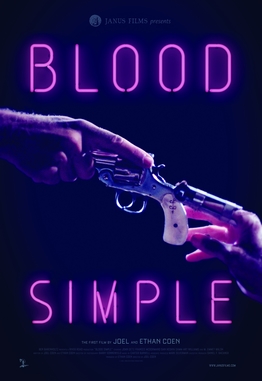
Scene That I Love: M. Emmet Walsh in Blood Simple


The great character actor M. Emmet Walsh passed away yesterday.  He was an actor who had a long career, often playing small but important roles.  1985’s Blood Simple brought Walsh one of his few starring roles and today’s scene that I love comes from that film.

In this scene, M. Emmet Walsh’s sleazy private detective meets with bar owner Dan Hedaya and reveals the result of his investigation into whether or not the bar owner’s wife is cheating on him.  Blood Simple was the directorial debut of the Coen Brothers and featured Frances McDormand in one of her first starring roles.  It also featured M. Emmet Walsh at his best.