Musical Film Review: National Lampoon’s Lemmings (directed by Michael Keady)


“Welcome to the Woodchuck Music Festival, three days of peace, love, and death.”

Your emcee is a bearded John Belushi and, in between warning the audience about spiked drugs and encouraging the people climbing the sound tower to jump off from the high spot possible, he introduces several musical acts.  Christopher Guest appears as Bob Dylan, repeatedly walking to and then retreating from the stage until Belushi produces enough money to convince him to perform a song called Positively Wall Street.  Introduced as the ultimate “bummer” by Belushi, Joan Baez (Rhonda Coullet) comes out on stage with a baby and rambles about her imprisoned husband David (whose hunger strike was so successful that he and the inmates of Cell Block 11 have all starved to death) before singing a protest song with a title that I can’t repeat.  Joe Cocker (Belushi) sings while shaking on stage.  James Taylor (Christopher Guest) attempts to perform but his band (including Belushi and Chevy Chase) are too zoned out on heroin to play their instruments.  The owner of Yasser’s Farm (played by Christopher Guest) comes out to praise everyone in the audience who has already died.  Finally, a heavy metal group called Megadeath (no, not that Megadeth!) come out on stage and turn up their amplifiers so loud that the entire audience dies at the end of their song.

An Off-Broadway production that premiered in 1973 and ran for over 300 performance, National Lampoon’s Lemmings has achieved legendary status amongst comedy nerds.  It’s rare that you read any history of Saturday Night Live, Second City, or This Is Spinal Tap without coming across a reference to Lemmings.  Along with satirizing Woodstock and the 60s counterculture in a way that probably few would have the guts to do today, the production features Belushi, Chase, and Guest before any of them became (however briefly) stars.  Fortunately, HBO — which started broadcasting a year before the premiere of Lemmings — filmed one of the stage shows.

Viewed today, Lemmings still carries a strong satiric bite.  Though Lemmings was clearly a 70s production, much of its humor still feels relevant today.  The vapid political posturing, the greed disguised as altruism, the audience blindly following their idols, there was little in Lemmings that one can’t see today just by spending a few minutes on social media.  Beyond the humor, though, Lemmings is a chance to see Belushi, Chase, and Guest as youngish men who had their entire lives ahead of them.  Chase is surprisingly likable, playing up his goofy physical comedy.  Guest disappears into each role that he plays, with his impersonation of Dylan being the clear highlight.  That said, Belushi is the clear star of the show, delivering the most absurd of lines with an engaging sincerity.  As I watched Lemmings, it was hard not to wonder what type of roles John Belushi would be playing today.  Would he still be doing comedy?  Would he have faded away?  Or, like Bill Murray (or, for that matter, Jim Belushi), would he now be appearing in a mix of comedic and serious roles?

We’ll never know.  But we’ll always have his performance as Joe Cocker.

Retro Television Review: St. Elsewhere 1.7 “Legionnaires: Part Two”


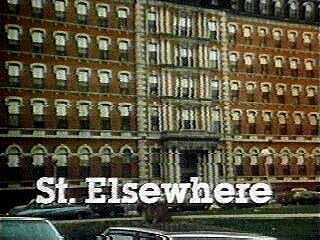
Welcome to Retro Television Reviews, a feature where we review some of our favorite and least favorite shows of the past! On Fridays, I will be reviewing St. Elsewhere, a medical show which ran on NBC from 1982 to 1988.  The show can be found on Hulu!

This week, the hospital’s in chaos!

Episode 1.7 “Legionnaires: Part Two”

(Dir by Mark Tinker, originally aired on December 14th, 1982)

With one of the wards shut down due to a Legionnaires outbreak, the hospital is in crisis.  All of the patients from the infected ward and their doctors have been moved to a new floor and now, everyone is stressed and overworked.  Dr. Westphall insists to the Hospital Board that he has no regrets about shutting down the ward and that he did what he had to do.  Westphall is vindicated when it turns out that he was correct about the Legionnaires outbreak but he still has to admit that administrator H.J. Cummings (Christopher Guest) has a point about Westphall’s actions causing a panic.  Cummings argues that Westphall could have quietly closed the ward without alerting the media.  In the end, it doesn’t matter as Cummings explains that he’ll be the one who gets fired over the bad publicity, not Westphall.  The episode ends with Westphall returning to his small home, carrying the birthday present that he was supposed to give his son that day.  Westphall has dedicated his life to the hospital and it’s obvious that his family has often had to wait until he has time for them.

(I’m starting to understand why Westphall always seems so damn depressed.)

Some people take advantage of the chaos.  Two gang members (one of whom is played by a very young Robert Davi) hit Fiscus over the head and steal his wallet after Fiscus stitches up one of their hands.  Peter White, eager to get away from his troubled marriage, shows up to work Morrison’s shift for him.  Dr. Chandler glares at a nurse that he previously accused of unprofessional behavior.  Dr. Craig tries to find someone foolish enough to buy his old convertible from him.  And head nurse Helen Rosenthal finds herself being called over and over again to the room of patient Martha Mulvahey (Ann Bronston).

Poor Martha!  She has a reputation for being a problem patient, because she’s always calling for the nurses and asking them to do things for her, like wash her hair or raise her bed.  Only Helen is willing to put up with Martha but even Helen loses her temper when Martha asks for help putting on her makeup.  Finally, Martha breaks down and explains that her arthritis is so severe that she can barely move her hands.  She’s a librarian and she can’t even turn the pages of a book anymore.  (Excuse me, I think I have something in my eye….)  A friend is coming to visit her at the hospital and she just wants to look good for him because she doesn’t want him to remember her as someone who can’t even get out of a hospital bed.  Helen helps Martha put on her makeup.  At the end of the episode, the hospital may be in chaos but Martha gets to see her friend and that made me happy and brought even more tears to my eyes.

Meanwhile, psychiatric patient Jane Zontell (Laraine Newman) returns to the hospital and checks herself back in for treatment.  Dr. Beale (G.W. Bailey) is shocked to learn that Jane is three months pregnant.  But it’s only been two months since Jane was last a patient at St. Eligius so that father must be someone at the hospital.  Uh-oh.

(Personally, I suspect Fiscus.)

This was a good episode.  I cried for Martha.  I felt bad for Westphall.  I hope someone buys Dr. Craig’s car so he’ll stop bothering everyone else about it.  This episode was about how bad things can get at a hospital but, with Martha and Rosenthal, it offered up some hope as well.  All in all, it worked.

Retro Television Review: St. Elsewhere 1.6 “Legionnaires: Part One”


Welcome to Retro Television Reviews, a feature where we review some of our favorite and least favorite shows of the past! On Fridays, I will be reviewing St. Elsewhere, a medical show which ran on NBC from 1982 to 1988.  The show can be found on Hulu!

This week, Peter White continues to disappoint everyone.

Episode 1.6 “Legionnaires: Part One”

(Dir by Thomas Carter, originally aired on December 7th, 1982)

Dr. Peter White (Terence Knox) is perhaps the most incompetent doctor at St. Eligius.  Over the course of the first few episodes, we have watched as he’s taken advantage of his fellow residents, been rude to patients, misdiagnosed obvious medical conditions, and complained nonstop about how difficult his life is.  Dr. White is struggling to balance the punishing schedule of being a resident with also being a husband and the father to a young girl and a newborn.  He’s in over his head.

What’s interesting is that, despite all of his problems, he’s not a particularly sympathetic character and I don’t think he’s meant to be.  He’s never going to be a good doctor and he doesn’t have the courage to admit it.  Instead of finding a career for which he’s suited, he insists on being a doctor and risking the life of anyone unlucky enough to be his patient.  What makes Dr. White an especially disturbing character is that there are probably a lot of doctors in the real world who are just like him.  They’re overwhelmed and they make stupid mistakes.  I get overwhelmed sometimes too, as does everyone.  And, like everyone, I occasionally make mistakes.  However, my mistakes usually amount to something like missing a cringey typo that causes me to feel embarrassment until I get a chance to fix it.  A doctor’s mistake can lead to people dying.

This week, Dr. White attempts to give penicillin to a patient who is allergic.  Fortunately, Dr. Westphall is able to stop White from putting his patient into a coma.  Dr. White also manages to lose his hospital-issued pager and, when he’s told that it will cost him $300 to get a new one, he freaks out.  A chance meeting with a lawyer in the hospital cafeteria leads White to offer to sell out the hospital by recommending the lawyer to anyone willing to sue because they ended up with a doctor like Peter White.  White finally raises the money by donating his sperm.  The nurse at the sperm bank says that it’s really generous for a doctor to donate.  Not this doctor!

While Peter is screwing up his life, Dr. Westphall is dealing with what appears to be an outbreak of Legionnaire’s Disease in one of the wards.  Westphall wants to immediately shut down the ward.  Dr. Auschlander and board member H.J. Cummings (Christopher Guest — yes, that Christopher Guest) disagree.  However, after another young woman dies of what appears to be Legionnaire’s, Westphall orders the ward to be closed and the patients to be relocated.

Meanwhile, Kathy Martin broke up with Fiscus because she felt their fling was turning into a relationship and Dr. Cavanero dealt with a nurse who disliked her.  Neither one of those subplots did much for me, though Kathy is emerging as one of my favorite characters on this show.  Before breaking up with Fiscus, she goes to a funeral of a stranger just so he won’t be buried without someone there to mourn him.  She wears white to the funeral.  One doctor comments that she’s never seen Kathy wear white before.  Kathy’s a great character and deserves better than just being Fiscus’s girlfriend.

This episode was an improvement over the last episode I watched.  According to the title, it’s also only “Part One” so I imagine there will be some fallout over closing that ward next week.  We’ll see what happens.

The Unnominated: The Long Riders (Dir by Walter Hill)


Though the Academy of Motion Picture Arts and Sciences claim that the Oscars honor the best of the year, we all know that there are always worthy films and performances that end up getting overlooked.  Sometimes, it’s because the competition too fierce.  Sometimes, it’s because the film itself was too controversial.  Often, it’s just a case of a film’s quality not being fully recognized until years after its initial released.  This series of reviews takes a look at the films and performances that should have been nominated but were, for whatever reason, overlooked.  These are the Unnominated.

First released in 1980, The Long Riders is one of the many films to tell the story of the James/Younger Gang.

A group of former Confederate guerillas who became some of the most notorious bank robbers to roam post-Civil War America and who were based in Missouri, the brothers who made up the James/Younger Gang were hunted by the Pinkertons and beloved by the citizens who viewed them as being 19th Century Robin Hoods.  Following a disastrous attempt to rob a bank in Northfield, Minnesota, the Younger brothers were captured by the government while Jesse and Frank James made it back to Missouri.  Jesse was shot in the back by Bob Ford while Frank subsequently surrendered to authorities and made a good living on the lecture circuit.

The Long Riders tells the story of the gang, from their first encounter with the heavy-handed Pinkertons to the Northfield raid to Frank’s eventual surrender.  Director Walter Hill both celebrates the legend of the James/Younger Gang while also emphasizing that all the members of the gang were also individual humans who had their strengths and their flaws.  Hill emphasizes the idea of the gang being a group of post-war rebels, still fighting a war against a government that is more interested in protecting banks than looking after people.  The Long Riders deconstructs the legend while also celebrating it.

The main thing that sets The Long Riders apart from other films about the James/Younger Gang is the fact that the brothers are played by actual brothers.  David, Keith, and Robert Carradine plays the Youngers.  Randy Quaid plays Clell Miller while Dennis Quaid assumes the role of the cowardly Ed Miller.  Nicholas and Christopher Guest make a memorably creepy impression as Charley and Bob Ford.  And finally, Jesse and Frank James are played by James and Stacy Keach.  (The Keaches also worked on the film’s script).  And while Stacy is definitely the more charismatic of the Keach brothers, the film makes good use of James’s rather stoic screen presence.  While the rest of the gang enjoys the outlaw life, James Keach’s Jesse is rigid, serious, and ultimately too stubborn and obsessive for his own good.

Now, the casting might sound like a gimmick but it works wonderfully.  When Clell chooses the gang over Ed, it carries an emotional weight because we’re watching real brothers reject each other.  The comradery between the Carradines carries over to the comradery between the Youngers and it also informs their occasional rivalry with the better known James brothers.  While it is Stacy Keach and David Carradine who ultimately dominate the film, every brother in the cast makes a strong impression.  Also giving a memorable performance is Pamela Reed as a defiantly independent Belle Starr, who loves David Carradine’s Cole Younger but marries Sam Starr (James Remar).  The knife fight between Carradine and Remar is one of the film’s highlights, as is the violent and disastrous attempt to rob the bank in Northfield.

The Long Riders is an exciting and ultimately poignant western but sadly, it received not a single Oscar nomination, not even for the stunning cinematography or Ry Cooder’s elegiac score.  Fortunately, just like the legend of the James/Younger Gang, The Long Riders lives on.

Previous entries in The Unnominated:

  1. Auto Focus 
  2. Star 80
  3. Monty Python and The Holy Grail
  4. Johnny Got His Gun
  5. Saint Jack
  6. Office Space
  7. Play Misty For Me

Holiday Film Review: It Happened One Christmas (dir by Donald Wyre)


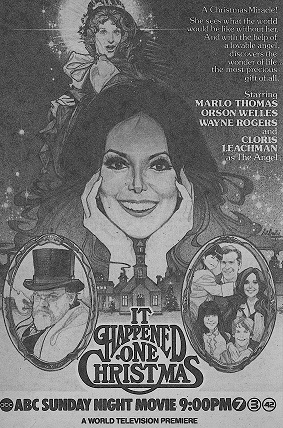
The 1977 made-for-TV movie, It Happened One Christmas, opens in Heaven.  We hear the voice of Joseph (Charles Grodin), one of the top angels.  Joseph has noticed that, in the town of Bedford Falls, a lot of people seem to be praying and all of their prayers concern one person.  They are all worried about Mary Bailey Hatch (Marlo Thomas).

He requests that an angel be sent down to Earth to help Mary with her problems.  Unfortunately, the only angel available is Clara (Cloris Leachman) and Clara, despite her optimistic outlook and upbeat personality, is not considered to be a particularly smart angel.  She hasn’t even gotten her wings yet!  However, Joseph promises her that, should she convince Mary Hatch not to toss away her life on Christmas Eve, Clara will get her wings.

But first, Joseph shows Clara all of the important events in Mary’s life.  Clara watches as young Mary saves the life of her brother, Harry.  A few weeks later, Mary manages to keep Dr. Gower from accidentally poisoning a patient.  Though Mary dreams of leaving Bedford Falls and pursuing a career as a writer, she instead ends up taking over her late father’s old Building and Loan company.  With the help of her husband, George (Wayne Rogers), she helps hundreds of people move into affordable housing.  She is also one of the few people in town willing to stand up to Old Man Potter (Orson Welles)….

What was that?

Yeah, I know.  Just hold on.  I’m getting to that.

Anyway, everything is going great in Mary’s life until her irresponsible Uncle Willie (Barney Martin) accidentally loses a deposit on Christmas Eve.  Facing embezzlement charges and having yelled at her family, Mary considers jumping off a bridge.  Fortunately, Clara is there to show her what her life would be like if she had never been born….

Excuse me?  Did you say that this sounds familiar?

Yes, It Happened One Christmas is a remake of It’s A Wonderful Life.  The main difference is that the genders are swapped.  Jimmy Stewart’s role is played by Marlo Thomas.  Wayne Rogers plays the Donna Reed role.  This leads to a few changes in the story.  For instance, Mary still yells at ZuZu’s teacher but she doesn’t get sucker punched as a result.  Whereas the original Mr. Potter treated George Bailey with outright hostility, the remake’s Mr. Potter tends to use a tone of condescending concern when talking to Mary.  Since George Hatch doesn’t lose his hearing in one ear, he’s able to serve in World War II and he returns on crutches.  In the world where Mary was never born, George still never marries but, instead of working at the library, he becomes a boorish auto mechanic.  Violet is no longer an important character and Mary never tries to blame her visions of Pottersville on “bad liquor.”  These are cosmetic differences but, otherwise, it’s pretty much the exact same story.

To be honest, it probably sounds more interesting than it actually is.  It’s not that It Happened One Christmas is a poorly made or a badly acted film.  It’s fine, really!  But it’s not It’s A Wonderful Life.  Marlo Thomas plays her role with a lot of energy but she’s still no Jimmy Stewart.  Stewart, who was still dealing with his own World War II experiences, played up the haunting sadness behind George’s mild-mannered facade and that’s something that Thomas never accomplishes.  If Stewart’s George seems like he’s been beaten down by one lost dream after another, Marlo Thomas’s Mary just seems like she’s having a really bad night.  By that same token, Wayne Rogers is likable a the love of Mary’s life but he’s no Donna Reed.  Even the great Orson Welles can’t escape the shadow of Lionel Barrymore.  Barrymore’s Mr. Potter was a pure misanthrope who was at his happiest mocking the dead and approving men for the draft.  Oddly, Orson Welles brings an almost avuncular style to Mr. Potter.  One gets the feeling that Welles simply couldn’t resist winking at the audience and assuring them that he was still the bigger-than-life showman that they had grown up with.

So, you may be wondering ….. why remake It’s A Wonderful Life in the first place?  I was wondering about that so I did a little research and thanks to an obscure web site called Wikipedia (not many people have heard of it), I discovered that It Happened One Christmas was actually made before It’s A Wonderful Life started to regularly air during the holidays.  At the time it was made, it was aactually remake of a classic film that was no longer regularly watched.  Frank Capra angrily denounced It Happened One Christmas as being “plagarism” but, in 1977, it was enough of ratings success that it was re-aired in both 1978 and 1979.  But, by that time, It’s A Wonderful Life had started to regularly air during the holiday season and was being rediscovered by audiences young and old.  As a result, the okay remake was soon overshadowed by the vastly superior original.

And really, that’s the way it should be.  It Happened One Christmas isn’t a bad movie but it just no replacement for Capra’s Wonderful film.

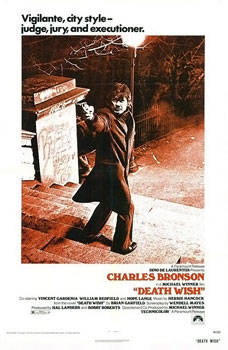
Bronson’s Revenge: Death Wish (1974, directed by Michael Winner)


To quote “Dirty” Harry Callahan, “I’m all broken up about his rights.”

In 1972, a novel by Brian Garfield was published.  The novel was about a meek New York City accountant named Paul Benjamin.  After Paul’s wife is murdered and his daughter is raped, Paul suffers a nervous breakdown.  A self-described bleeding heart liberal, Paul starts to stalk the streets at night while carrying a gun.  He is hunting muggers.  At first, he just kills the muggers who approach him but soon, he starts to deliberately set traps.  Sinking into insanity, Paul becomes just as dangerous as the men he is hunting.  Garfield later said that the book was inspired by two real-life incidents, one in which his wife’s purse was stolen and another in which his car was vandalized.  Garfield said that his initial response was one of primitive anger.  He wondered what would happen if a man had these rageful thoughts and could not escape them.

The title of that novel was Death Wish.  Though it was never a best seller, it received respectful reviews and Garfield subsequently sold the film rights.  At first, Sidney Lumet was attached to direct and, keeping with Garfield’s portrayal of Paul Benjamin, Jack Lemmon was cast as the unlikely vigilante.

Lumet, ultimately, left the project so that he could concentrate on another film about crime in New York City, Serpico.  When Lumet left, Jack Lemmon also dropped out of the film.  Lumet was replaced by Michael Winner, a director who may not have been as thoughtful as Lumet but who had a solid box office record and a reputation for making tough and gritty action films.

Winner immediately realized that audiences would not be interested in seeing an anti-vigilante film.  Instead of casting an actor with an intellectual image, like Jack Lemmon, Winner instead offered the lead role (now named Paul Kersey and no longer an accountant but an architect) to Charles Bronson.  When Winner told Bronson that the script was about a man who shot muggers, Bronson replied, “I’d like to do that.”

“The script?” Winner asked.

“No, shoot muggers.”

At the time that he was cast, Charles Bronson was 52 years old.  He was the biggest star in the world, except for in America where he was still viewed as being a B-talent at best.  Bronson was known for playing tough, violent men who were not afraid to use violence to accomplish their goals.  (Ironically, in real life, Bronson was as much of an ardent liberal as Paul Kersey was meant to be at the beginning of the movie.)  Among those complaining that Charles Bronson was all wrong for Paul Kersey was Brian Garfield.  However, Bronson accepted the role and the huge box office success of Death Wish finally made him a star in America.

To an extent, Brian Garfield was right.  Charles Bronson was a better actor than he is often given credit for but, in the early scenes of Death Wish, he does seem miscast.  When Paul is first seen frolicking with his wife (Hope Lange) in Hawaii, Bronson seems stiff and awkward.  In New York City, when Paul tells his right-wing colleague (William Redfield) that “my heart does bleed for the less fortunate,” it doesn’t sound natural.  But once Paul finds out that his wife has been murdered and his daughter, Carol (Kathleen Tolan), has been raped, Paul gets mad and Bronson finally seems comfortable in the role.

In both the book and the original screenplay, both the murder and the rape happened off-screen.  Never a subtle director, Winner instead opted to show them in a brutal and ugly scene designed to get the audience as eager to shoot muggers as Bronson was.  Today, the power of the scene is diluted by the presence of Jeff Goldblum, making his screen debut as a very unlikely street thug.  Everyone has to start somewhere and Goldblum got his start kicking Hope Lange while wearing a hat that made him look like he belonged in an Archie comic.

With his wife dead and his daughter traumatized, Paul discovers that no one can help him get justice.  The police have no leads.  His son-in-law (Steven Keats) is a weak and emotional mess.  (As an actor, some of Bronson’s best moments are when Paul makes no effort to hide how much he loathes his son-in-law.)  When a mugger approaches Paul shortly after his wife’s funeral, Paul shocks himself by punching the mugger in the face.

When Paul is sent down to Arizona on business, he meets Ames Jainchill (Stuart Margolin), a land developer who calls New York a “toilet” and who takes Paul to see a wild west show.  Later at a gun club, Paul explains that he was a conscientious objects during the Korean War but he knows how to shoot.  His father was a hunter and Paul grew up around guns.  When Paul returns to New York, Ames gives him a present, a revolver.  Paul is soon using that revolver to bring old west justice to the streets of New York City.

As muggers start to show up dead, the NYPD is outraged that a vigilante is stalking the street.  Detective Frank Ochoa (Vincent Gardenia) is assigned to bring the vigilante in.  But the citizens of New York love the vigilante.  Witnesses refuse to give an accurate description of Paul.  When Paul is wounded, a young patrolman (Christopher Guest, making almost as unlikely a film debut as Jeff Goldblum) conspires to keep Paul’s revolver from being turned over as evidence.

The critics hated Death Wish, with many of them calling it an “immoral” film.  Brian Garfield was so disgusted by how Winner changed his story that he wrote a follow-up novel in which Paul is confronted by an even more dangerous vigilante who claims to have been inspired by him.  Audiences, however, loved it.  Death Wish was one of the top films at the box office and it spawned a whole host of other vigilante films.

Death Wish is a crude movie, without any hint of subtlety and nuance.  It is also brutally effective, as anyone who has ever felt as if they were the victim of a crime can attest.  In a complicated and often unfair world, Kersey’s approach may not be realistic or ideal but it is emotionally cathartic.  Watching Death Wish, it is easy to see why critics hated it and why audiences loved it.

It is also to see why the movie made Bronson a star.  Miscast in the role or not, Bronson exudes a quiet authority and determination that suggests that if anyone could single-handedly clean-up New York City, it’s him.  An underrated actor, Bronson’s best moment comes after he punches his first mugger and he triumphantly reenters his apartment.  After he commits his first killing, Bronson gets another good scene where he is so keyed up that he collapses to the floor and then staggers into the bathroom and throws up.  Garfield may have complained that the Death Wish made his madman into a hero but Bronson’s best moments are the ones the suggest Paul has gone mad.  The real difference between the book and the movie is that the movie portrays madness as a necessary survival skill.

This Friday, a new version of Death Wish will be playing in theaters.  Directed by Eli Roth, this version starts Bruce Willis as Dr. Paul Kersey.  Will the new Death Wish be as effective as the original?  Judging from the trailer, I doubt it.  Bruce Willis or Charles Bronson?  I’ll pick Bronson every time.

Tomorrow, Bronson returns in Death Wish II!

No Safe Space: Drunk Stoned Brilliant Dead: The Story Of The National Lampoon (2015, directed by Douglas Tirola)


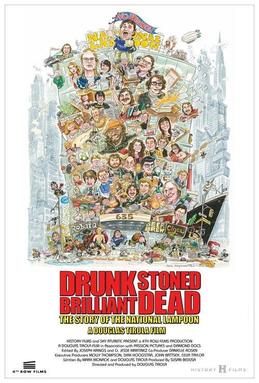
Drunk_Stoned_Brilliant_Dead_PosterThe documentary Drunk Stoned Brilliant Dead pays tribute to National Lampoon.  Founded in 1970, National Lampoon was published for 28 years and, at the height of its popularity, its sensibility redefined American comedy.  When it came to National Lampoon, nothing was sacred and nothing was off-limits.  The success of National Lampoon led to a stage show called Lemmings and The National Lampoon Radio Hour, which featured everyone from John Belushi and Bill Murray to Chevy Chase and Harold Ramis.  Michael O’Donoghue, famed for his impersonations of celebrities having needless inserted into their eyes, went from writing for the Lampoon to serving as Saturday Night Live‘s first head writer.  National Lampoon’s Animal House, Vacation, and Caddyshack are three of the most influential film comedies ever made.  Everyone from P.J. O’Rourke to John Hughes to The Simpsons‘ Al Jean got their start at National Lampoon.
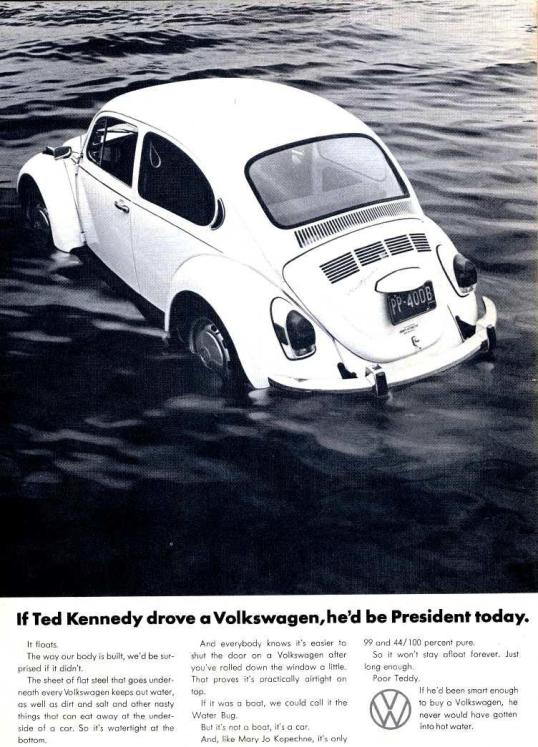
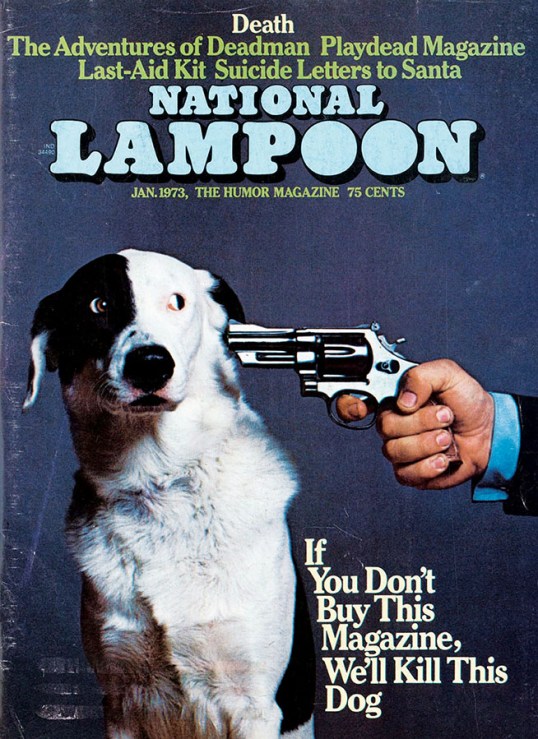
As influential as it was, National Lampoon is a magazine that would not be able to exist today’s world.  Just looking at the cover of most issues of National Lampoon would reduce today’s special little snowflakes to the point of hysteria.  In Drunk Stoned Brilliant Dead, National Lampoon‘s publisher claims that the Lampoon ultimately ceased publication because the religious right threatened to boycott any company that advertised in the magazine.  Today, it would be the “safe space” crowd complaining that the magazine did not come with proper trigger warnings.  Lena Dunham would look at one issue and go into a rage spiral.  Salon would publish a hundred hand-wringing think pieces about how National Lampoon was the worst thing since Ted Cruz.  Colleges would ban it and religious groups would still burn it.  National Lampoon was a magazine that went out of its way to be offensive to both the left and the right but, as editor-in-chief Tony Hendra puts it, the job of satire is to make those in power feel uncomfortable.  By poking fun at everything and challenging its readers, National Lampoon exposed the absurdity behind both the country’s prejudices and some of its most sacred beliefs.

Kennedy VW Ad

Drunk Stoned Brilliant Dead follows the National Lampoon from its founding to its ignominious end.  Along with interviews with Lampoon alumni, it also features archival footage of both Lemmings and The Radio Show, providing glimpses of  Christopher Guest, Bill Murray, John Belushi, Gilda Radner, and Harold Ramis before they became famous.  There are also interviews with celebrity admirers of the Lampoon who talk about how the magazine inspired their own work.  It makes sense that Judd Apatow was interviewed and Kevin Bacon made his screen debut in Animal House but what was Billy Bob Thornton doing there?

Unfortunately, drunk, stoned, brilliant, and dead describes some of the most important and talented figures in the Lampoon‘s history.  The documentary especially focuses on Doug Kenney, the Lampoon’s co-founder.  Everyone interviewed agrees that Kenney was a comedic genius who was also often emotionally troubled and who would vanish for months on end.  After the initial critical failure of Caddyshack, Kenney disappeared in Hawaii.  His body was later discovered at the bottom of the cliff.  Did Kenney jump or did he slip or, as director John Landis suggests, was he murdered by a drug dealer?  Nobody seems to know but Kenney’s ghost haunts the documentary.  This collection of very funny people get very serious when it comes time to talk about Kenney’s death.  Even Chevy Chase briefly redeems himself after years of bad publicity when he gets choked up.

Drunk Stoned Brilliant Dead is tribute to both a magazine and a bygone era.  See it before it gets banned.

How_I_Killed_Lampoon_6_embed

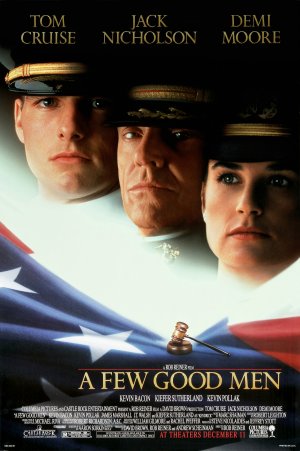
Lisa Watches An Oscar Nominee: A Few Good Men (dir by Rob Reiner)


A_Few_Good_Men_poster

So, late Saturday night, I turned over to TCM’s 31 Days Of Oscar and I was watching the 1992 best picture nominee, A Few Good Men, and I noticed that not only was there only one woman in the entire film but she was also portrayed as being humorless and overwhelmed.  While all of the male characters were allowed to speak in quippy one liners and all had at least one memorable personality trait, Lt. Commander Joanne Galloway (Demi Moore) didn’t get to do much beyond frown and struggle to keep up.

“Hmmmm…” I wondered, “why is it that the only woman in the film is portrayed as basically being a humorless scold?”  Then I remembered that A Few Good Men was written by Aaron Sorkin and it all made sense.  As I’ve discussed on this site before, Aaron Sorkin has no idea how to write woman and that’s certainly evident in A Few Good Men.  Joanne (who goes by the masculine Jo) is the one character who doesn’t get to say anything funny or wise.  Instead, she mostly serves to repeat platitudes and to be ridiculed (both subtly and not-so subtly) by her male colleagues.  You can tell that Sorkin was so busy patting himself on the back for making Jo into a professional that he never actually got around to actually giving her any personality.  As a result, there’s really not much for her to do, other than occasionally scowling and giving Tom Cruise a “that’s not funny” look.

(“C’mon,” Tom says at one point, “that one was pretty good.”  You tell her, Aaron Tom.)

A Few Good Men, of course, is the film where Tom Cruise yells, “I want the truth!” and then Jack Nicholson yells back, “You can’t handle the truth!”  At that point in the film, I was totally on Nicholson’s side and I was kinda hoping that the scene would conclude with Cruise staring down at the floor, struggling to find the perfect come back.  However, this is an Aaron Sorkin script which means that the big bad military guy is never going to have a legitimate point and that the film’s hero is always going to have the perfect comeback.  Fortunately, the scene took place in a courtroom so there was a wise judge present and he was able to let us know that, even if he seemed to be making the better point, Nicholson was still in the wrong.

As for the rest of the film, it’s a courtroom drama.  At Guantanamo Bay, a marine (Michael DeLorenzo) has died as the result of a hazing.  Two other marines (Wolfgang Bodison and James Marshall) have been accused of the murder.  Daniel Kafee (Tom Cruise), Joanne Galloyway (Demi Moore), and Sam Weinberg (Kevin Pollack) have been assigned to defend them.  Jack Ross (Kevin Bacon) is prosecuting them.  Kafee thinks that the hazing was ordered by Col. Nathan Jessup (Jack Nicholson) and Lt. Kendrick (Kiefer Sutherland).

We know that Kendrick’s a bad guy because he speaks in a Southern accent and is religious, which is pretty much the mark of the devil in an Aaron Sorkin script.  We know that Jessup is evil because he’s played by Jack Nicholson.  For that matter, we also know that Kafee is cocky, arrogant, and has father issues.  Why?  Because he’s played by Tom Cruise, of course.  And, while we’re at it, we know that Sam is going to be full of common sense wisdom because he’s played by Kevin Pollack…

What I’m saying here is that there’s absolutely nothing surprising about A Few Good Men.  It may pretend to be about big issues of national security but, ultimately, it’s a very slick and somewhat hollow Hollywood production.  This, after all, is a Rob Reiner film and that, above all else, means that it’s going to be a very conventional and very calculated crowd pleaser.

Which isn’t to say that A Few Good Men wasn’t enjoyable.  I love courtroom dramas and, with the exception of Demi Moore, all of the actors do a good job.  (And, in Demi’s defense, it’s not as if she had much to work with.  It’s not her fault that Sorkin hates women.)  A Few Good Men is entertaining without being particularly memorable.