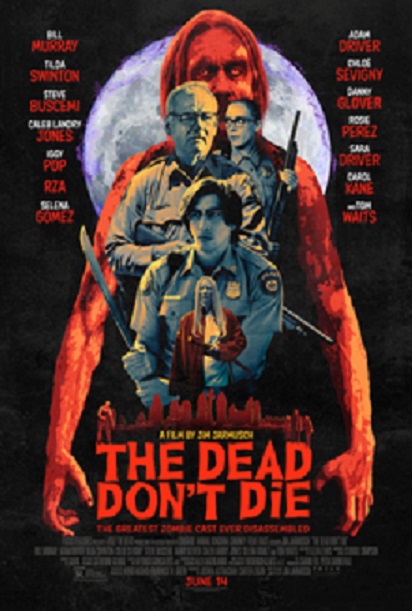
Jim Jarmusch’s The Dead Don’t Dieis a film that definitely grew on me. When I first watched it, I thought it was intriguing but perhaps a bit too cutesy and enamored with itself. However, I later came to realize that Jarmusch actually found the perfect tone for his look at our zombie-saturated culture.
In the scenes below, Bill Murray, Chloe Sevigny, and the wonderful Adam Driver all deal with the inevitability of doom that comes with being a character in a zombie film.
That is a question that has haunted journalists, cops, and true crime fans since the late 60s. It is known that the Zodiac Killer murdered at least five people in Northern California in 1968 and 1969. He targeted young couples, though he is also thought to have murdered on taxi driver as well. What set Zodiac apart from other killers is that he was a prolific letter writer, who sent cards and ciphers to the police and the journalists who were reporting on his crimes. In one of his ciphers, Zodiac claimed that he had killed 37 people. Cartoonist Robert Graysmith later wrote two books about his personal obsession with the case. He estimated that the Zodiac may have been responsible for hundred of murders, up through the 80s. Of course, reading Graysmith’s first Zodiac book, it’s also easy to suspect that Graysmith reached a point where he saw the Zodiac’s hand in every unsolved murder in the San Francisco area. Of all the unidentified serial killers in American history, Zodiac is one that most haunts us. Zodiac was a serial killer who operated in an era when such things were still considered to be uncommon. Much as Jack the Ripper did during the Victorian Age, Zodiac announced the arrival of a new age of evil.
Zodiac wrote about being a film fan and he was probably happy about the fact that he inspired quite a few films. 1971’s The Zodiac Killer came out while Zodiac was still sending letters to the police and cops actually staked out the theaters showing the film just to see if he would show up. Dirty Harry‘s Scorpio Killer was also based on Zodiac, right down to the taunting letters that he sent the mayor and again, one has to wonder if Zodiac ever showed up to watch Clint Eastwood take him down.
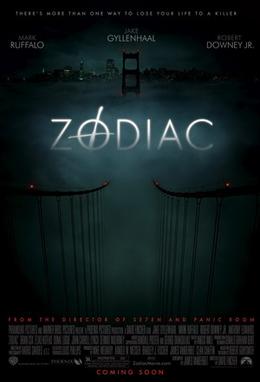
And, if Zodiac survived into the 21st Century, one has to wonder if he showed up in the theaters for 2007’s Zodiac.
One of the best true crime films ever made, Zodiac not only recreates the crimes of the Zodiac but it also examines the mental price of obsessing over the one unknown force of evil. Mark Ruffalo plays Dave Toschi, the celebrity cop who nearly sacrificed his professional reputation in his search for the identity of the killer. Jake Gyllenhaal plays cartoonist Robert Graysmith, who spends over a decade searching for the Zodiac’s identity and who loses his wife (Chloe Sevigny) in the process. And Robert Downey, Jr. plays Paul Avery, the crime reporter to whom the Zodiac wrote and who sunk into paranoia and addiction as a result. This is a film that is less about the Zodiac’s crime and more about how this unknown killer seemed to unleash a darkness that would come to envelope first a city and eventually an entire nation.
As one might expect from a film directed by David Fincher, Zodiac plays out like a filmed nightmare with the starkly portrayed murders being all the more disturbing because they often take place outside, where people would think they would be safe. (The second murder is especially terrifying, as it plays out without even the sound of background music to allow us the escape of remembering that it’s only a movie.) Fincher heightens our paranoia but having a different actor play the killer in each scene, reminding us that the Zodiac could literally be anyone. Indeed, one of the scarier things about Zodiac is that, in the course of his investigation, Graysmith meets so many different people who seem like they could be the killer. Even if they aren’t the Zodiac, the viewer is left with the feeling that the world is full of people who are capable of committing the same crimes. The film becomes a journey into the heart of darkness, with the Zodiac becoming both a malevolent force and potentially your next door neighbor. And with the film’s detailed recreation of the 60s and the 70s, the film becomes a portrait of a country on the verge of changing forever with the Zodaic and his crimes representing all the fear waiting in the future.
Again, as one might expect from a Fincher film, it’s a well-acted film, especially by Robert Downey, Jr. Zodiac came out a year before Iron Man, when Downey was still better known for his personal troubles than for his talent. Downey perfect captures his character’s descent into self-destruction, as he goes from being cocky and self-assured to being so paranoid that he’s carrying a gun. (Paul Avery’s actual colleagues have disputed the film’s portrayal of Avery being mentally destroyed by the Zodiac.) Ruffalo and Gyllenhaal also do a good job of portraying Toschi and Graysmith’s growing obsession with the case while Charles Fleischer and John Carroll Lynch both make strong (and creepy) impressions as two men who might (or might not) be the killer.
Though the film was not a success at the box office and it was totally ignored by the Academy, Zodiac has built up a strong reputation in the years since its released. It’s inspired a whole new generation of web sleuths to search for the killer’s identity. Personally, my favored suspect is Robert Ivan Nichols, an enigmatic engineer who abandoned his former life and changed his name to Joseph Newton Chandler III in the 70s and who committed suicide in 2002. I think much like Jack the Ripper, the Zodiac’s identity will never be definitely known. There have been many compelling suspects but most of the evidence seems to be circumstantial. (That’s certainly the case when it comes to Nichols.) The Zodiac was thought to be in his 30s or even his early 40s in 1969 so it’s doubtful that he’s still alive today. In all probability, his identity and his motive will forever remain an unsolvable mystery.
Michael Alig! He was the flamboyant, self-declared “King of the Club Kids.” He was a club promoter in New York City in the late 80s and the 90s. He had money. He had fame. He had a huge following. He used to appear regularly on the daytime talk shows. He was a regular feature in the gossip columns. He also had a raging drug addiction and an ego that most people couldn’t stand. He tried to position himself as the successor to Andy Warhol, overlooking the fact that Warhol himself actually had a bit of talent. And, in 1996, he became a murderer.
He and his roommate killed his drug dealer, a fellow club kid who was known as Angel. They hit him over the head and suffocated him before then dismembering him. Everyone knew that Alig was responsible for Angel’s disappearance, largely because he wouldn’t shut up about killing him. Alig even threw a party where the macabre and bloody decorations left little doubt that Alig had murder on his mind. Eventually, a group of children found Angel’s remains and Alig and his roommate were arrested. Due to a plea deal, Alig was sent to prison for manslaughter. He served 14 years before being paroled. Alig died of a heroin overdose in 2020.
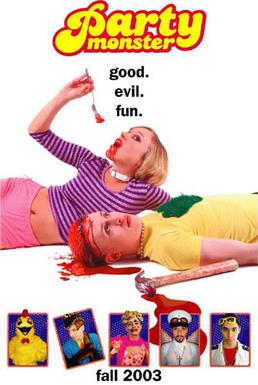
Released in 2003 (while Alig was still in prison), Party Monster is a biopic of Michael Alig and also a look at New York club culture in the 90s. The film got a bit of attention when it came out because it starred Macaulay Culkin and Seth Green as, respectively, Michael Alig and James St. John, who was Alig’s mentor-turned-friend-turned-enemy. Unfortunately, the film itself isn’t very good and both Culkin and Green are lousy in their roles. Both of them come across like middle American high school kids trying to score cheap laughs by acting as self-consciously flamboyant as possible. At the time the film was made, Culkin did bear a passing a resemblance to Michael Alig but the same could have been said of Michael Pitt and, at the very least, we know that Pitt is capable of playing a character who is capable of murder. Culkin, on the other hand, seems to be trying so hard to make us forget that he’s Macaulay Culkin that he instead continually reminds us that we’re watching the star of Home Alone snort cocaine and urinate in wine glasses. (Ewwwww!) That said, Culkin and Green aren’t the only two giving bad performances here. I started giggling as soon as Dylan McDermott showed up wearing an eyepatch. Only Wilson Cruz as Angel and Chloe Sevigny as one of Alig’s associates feel in any way convincing in their roles.
For a film about a group of people who claimed “fabulousness” as their defining aesthetic, Party Monster is a visually dull film. Many scenes are overlit, to the extent that the performers look wan and washed out. That may be a good look for the drug-addled Alig who killed Angel but, in this film, Alig looks and seems burned out from the minute he shows up in New York City. The end result is a rather boring film that doesn’t offer up any insight into the Club Kids or the murders.
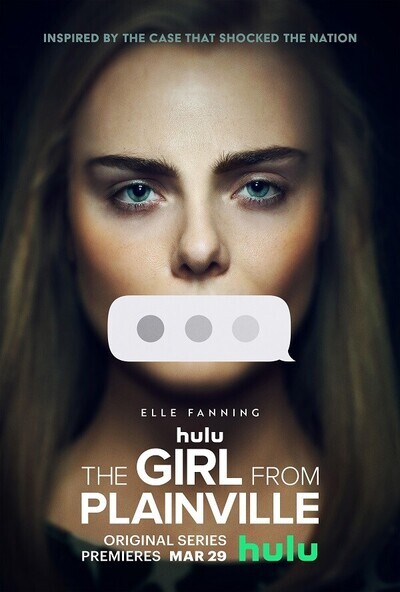
I really did. Coming off of the high that I got off reviewing each episode of The Dropout, I thought it would be pretty easy to review all 8 episodes of The Girl From Plainville but, having watched the fifth episode last night, I think I’m done.
Don’t get me wrong. I will continue to watch the series. (There’s only three weeks left.) And I’ll certainly include any thoughts that I have about the show in my “Week in Television” post. But I think I’m done with trying to come up with 500-1000 words to use to review each episode because, quite frankly, there’s just not much to say about The Girl From Plainville. The story of how Michelle Carter encouraged Conrad Roy to commit suicide is well-known. The fact that Michelle Carter was put on trial and convicted is also well-known. This show is trying to build-up suspense about a story that most viewers will already know.
It perhaps wouldn’t matter if The Girl From Plainville had something new or unexpectedly insightful to say about the case. But the fact of the matter is that Michelle Carter is not that interesting of a human being. Everything that I’ve read and seen about the case seems to suggest that she really didn’t have much going on inside of her brain. Because she lacked an actual personality, Michelle learned how to behave and how to interact through social media and television. Conrad’s death allowed her to live her life as if it was an episode of Glee, or at least that’s what Michelle was hoping. And now, years after Conrad’s suicide, Michelle is out of prison and being played in a miniseries by Elle Fanning. It doesn’t seem to be quite fair, does it?
As for last night’s episode, it felt pretty much like a filler episode. The prosecution team continued to build a case against Michelle while Michelle had to deal with going from briefly being the most popular girl in school to being an absolute pariah. We also got a few clumsily handled flashbacks to Michelle texting Conrad. Last weekend, I watched Dopesick, which also aired on Hulu and also used a jumbled timeline. The timeline in Dopesick did occasionally get confusing but, at the same time, it worked because it took place over several years and the actors could be made to look older or younger, depending on the timeline. If Michael Keaton had a hint of hair, you know the show was taking place in the 90s. If he was bald, you know it was 2004. The Girl From Plainville, on the other hand, is only dealing with a two-year period and, as such, it’s hard to keep track of what’s happening when. The characters played by Elle Fanning and Chloe Sevigny pretty much look and act the same in 2012 as they do in 2014. It’s a very clumsily constructed story structure, one that does the miniseries little good.
That said, Elle Fanning continues to give a convincingly unhinged performance as Michelle and Colton Ryan is appropriately vulnerable as Conrad. (Sorry, I’m not going to call him Coco.) I think if the miniseries had done away with all of the flashback nonsense and just told their story in chronological order, Fanning and Ryan’s strong performances would have been better served. For now, I’m done with doing full reviews of this show but, if next week’s episode is a surprisingly good one, that could change.
Jim Jarmusch’s The Dead Don’t Die is a film that has definitely grown on me. When I first watched it, I thought it was intriguing but perhaps a bit too cutesy and enamored with itself. However, I’ve subsequently come to realize that, actually, Jarmusch finds just the perfect tone for his look at our zombie-saturated culture.
In the scenes below, Bill Murray, Chloe Sevigny, and the wonderful Adam Driver all deal with the inevitability of doom that comes with being a character in a zombie film.
Seriously, I’ve lost track of how many zombie films I’ve seen over the past ten years. This last decade was the decade when zombies went mainstream and I have to admit that I have mixed feelings about it. Zombies have become so overexposed that they’re no longer as scary as they once were. I mean, there’s even PG-rated zombie movies now! How the Hell did that happen? Everyone’s getting in on the act.
There were a brief flurry of excitement when Jim Jarmusch announced that his next film would be a zombie film. Myself, I was a bit skeptical and the release of a terrible trailer didn’t really help matters. The fact that the film was full of recognizable names also made me uneasy. Would this be an actual zombie film or would it just be a bunch of actors slumming in the genre? The film opened the Cannes Film Festival and received mixed reviews. By the time it opened in the United States, it seemed as if everyone had forgotten about The Dead Don’t Die. It was widely chalked up as being one of Jim Jarmusch’s rare misfires, like The Limits of Control.
Last month, I finally watched The Dead Don’t Die and you know what? It’s a flawed film and yes, there are times when it even becomes an annoying film. That said, I still kind of liked it.
In The Dead Don’t Die, the Earth’s rotation has been altered, the result of polar fracking. No one seems to be particularly concerned about it. Instead, they’re just kind of annoyed by the fact that the sun is now staying up in the sky a bit longer than usual. Cell phones and watches stop working. House pets abandon and occasionally attack their owners. In the rural town of Centerville, the dead rise from their graves and start to eat people. Whether or not that’s connected to the Earth’s rotation is anyone’s guess. (I like to think that the whole thing about the Earth’s rotation being altered was Jarmusch’s homage to Night of the Living Dead‘s suggestion that the zombies were the result of space radiation.)
We meet the inhabitant of Centerville. Zelda (Tilda Swinton) is the enigmatic mortician. Bobby (Caleb Landry Jones) is the horror movie expert. Farmer Miller (Steve Buscemi) is the red-hatted farmer who hates everyone. Zoe (Selena Gomez) is the traveler who is staying at the run-down motel with two friends. Cliff Robertson (Bill Murray) is the police chief who wants to save everyone but Farmer Miller. Ronnie (Adam Driver) and Mindy (Chloe Sevigny) are police officers. They’re all in the middle of a zombie apocalypse but very few of them seem to really be that surprised by any of it.
Throughout the film, we hear Sturgill Simpson singing a wonderful song called The Dead Don’t Die. Cliff demands to know why the song is always one the radio. Ronnie replies that it’s the “theme song.” Ronnie, we discover, has an answer for almost everything. He explains that he knows what’s going to happen because he’s the only one that “Jim” allowed to read the entire script. Cliff isn’t happy about that.
That’s the type of film that The Dead Don’t Die is. It’s an elaborate in-joke, a zombie movie about people who know that they’re in a zombie movie but who are too detached to actually use that information to their advantage. The script has been written so they have no choice but to do what the script says regardless of whether it makes them happy or not. It’s a clever conceit, though a bit of a thin one to build a 103-minute movie around.
As I said, the film can occasionally be an endurance test. Everyone is so deadpan that you actually find yourself getting angry at them. But, whenever you’re on the verge of giving up, there will be a clever line that will draw you back in or the theme song will start playing again. Bill Murray and Adam Driver are fun to watch and Driver reminds us that he’s actually a good comedic actor. (In the year of Marriage Story and Rise of Skywalker, that can be easy to forget.)
It’s a flawed film and definitely not one of Jim Jarmusch’s best. At the same time, though, The Dead Don’t Die is not as bad as you may have heard.
So, I finally watched the 2018 thriller, The Snowman, and my main reaction to the film is that it featured a lot of snow.
That’s understandable, of course. The film takes place in Norway and it’s called The Snowman so, naturally, I wasn’t expecting a lot of sunshine. Still, after a while, the constant shots of the snow-covered landscape start to feel like almost some sort of an inside joke. It’s almost as if the film is daring you to try to find one blade of grass in Norway. Of course, the snow is important because the film’s about a serial killer who builds snowmen at the sites of his crimes. They’re usually pretty big snowmen as well. It’s hard not to be a little impressed by the fact that he could apparently make such impressive snowmen without anyone noticing.
Along with the snow, the other thing that I noticed about this movie is that apparently no one knows how to flip a light switch in Norway. This is one of those films where every scene seems to take place in a dark room. I found myself worrying about everyone’s eyesight and I was surprised the everyone in the film wasn’t wearing glasses. I can only imagine how much strain that puts on the eyes when you’re constantly trying to read and look for clues in the dark.
Michael Fassbender plays Harry Hole, a Norwegian police inspector who may be troubled but still gets results! He’s upset because his ex-girlfriend (Charlotte Gainsbourg) has a new boyfriend (Jonas Karlsson). He’s also upset because his son (Michael Yates) doesn’t know that Harry is actually his father. Or, at least, I think that Harry’s upset. It’s hard to tell because Fassbender gives a performance that’s almost as cold as the snow covering the Norwegian ground. Of course, he’s always watchable because he’s Fassbender. But, overall, he doesn’t seem to be particularly invested in either the role or the film.
Harry and his new partner (Rebecca Ferguson) are investigating a missing person’s case, which quickly turns into a multiple murder mystery. It turns out that the crimes are linked to a bunch of old murders, all of which were investigated by a detective named Gert Rafto (Val Kilmer). Gert was troubled but he still got results! Or, at least, Harry thinks that he may have gotten results. Nine years ago, Rafto died under mysterious circumstances…
Now, I have to admit that when, 30 minutes into the film, the words “9 years earlier” flashed on the screen, I groaned a bit. I mean, it seemed to me that the movie was already slow enough without tossing in a bunch of flashbacks. However, I quickly came to look forward to those brief flashbacks, mostly because they featured Val Kilmer in total IDGAF mode. Kilmer stumbles through the flashbacks, complete with messy hair and a look of genuine snarky bemusement on his face. Kilmer gives such a weird and self-amused performance that his brief scenes are the highlight of the film.
Before it was released, The Snowman was hyped as a potential Oscar contender. After the movie came out and got roasted by the critics, director Tomas Alfredson replied that the studio forced him to rush through the production and that 10 to 15% of the script went unfilmed. Considering Alfredson’s superior work on Let The Right One In and Tinker, Tailor, Soldier, Spy, I’m inclined to give him the benefit of the doubt. The film’s disjointed style would certainly seem to back up Alfredson’s claim that there was originally meant to be more to the film than actually ended up on the screen.
The Snowman is one of those films that doesn’t seem to be sure what it wants to be. At times, it aspires to David Lynch-style surrealism while, at other times, it seems to be borrowing from the morally ambiguous crime films of Taylor Sheridan. Ultimately, it’s a confused film that doesn’t seem to have much reason for existing. At the same time, I’ve also been told that the Jo Nesbø novel upon which the movie is based is excellent. The same author also wrote the novel that served as the basis for 2011’s Headhunters, which was pretty damn good. So, read the book and ignore the film.
Lisa already shared this week’s big trailer, the one for Barry Jenkins’sIf Beale Street Could Talk. Here’s the best of the rest:
Starring Chloe Sevigny and Kristen Stewart, Lizzie is revisionist take on the infamous Lizzie Borden murder trial. Lizzie received some attention at Sundance this year and is set to be released into theaters on September 14th.
The Puppet Master and his puppets are back in the red band trailer for Puppet Master: The Littlest Reich . Keep an eye out for them on August 17th!
Josh Groban is The Good Cop, in this upcoming series from Netflix. Based on an acclaimed Israeli series, The Good Cop drops on September 21st.
And finally, Maniac. Dropping the same day as The Good Cop, Maniac is described as being “a dark 10-episode comedy based on the 2014 Norwegian series about a guy who lives a fantasy life in his dreams but in reality is locked up at an institution.” Directed by True Detective‘s Cary Fukunaga, Maniac reunites Superbad co-stars, Jonah Hill and Emma Stone.
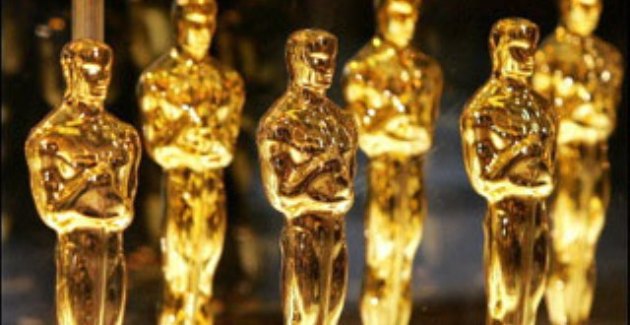
Well, it depends on how you look at it. You can predict the Oscars at any time during the year. However, predicting them correctly is next to impossible before October. That said, I’m going to give it a shot!
Now, to be clear, this is not an attempt to predict who and what will be nominated later this month. Instead, these are my predictions for what will be nominated next year at this time! I’ll be updating my predictions every month of this year.
So, with all that in mind, here are my way too early predictions for what will be nominated in January of 2019! As of right now, these predictions are a collection of instinct and random guesses. For all we know, some of these films might not even get released in 2018. In all probability, we’ll look back at this list in December and laugh.
Best Picture
Chappaquiddick
First Man
Lizzie
Mary Queen of Scots
The Miseducation of Cameron Post
Mortal Engines
A Star is Born
Widows
Wildfire
The Women of Marwen
Best Director
Desiree Akhavon for The Miseducation of Cameron Post
Damien Chazelle for First Man
Paul Dano for Wildfire
Steve McQueen for Widows
Robert Zemeckis for The Women of Marwen
Best Actor
Steve Carell in The Women of Marwen
Jason Clarke in Chappaquiddick
Ryan Gosling in First Man
Jake Gyllenhaal in Wildfire
Joaquin Phoenx in Don’t Worry, He Won’t Get Far On Foot
Best Actress
Viola Davis in Widows
Chloe Grace Moretz in The Miseducation of Cameron Post
Beatriz at Dinner is very much a film of the moment, which is a polite way of saying that it’s not very good but it does accurately reflect the way that a lot of people are feeling right now. I imagine that’s the main reason why it’s received a good deal of critical acclaim. It was even cited, by the National Board of Review, as one of the top ten independent films of the year. By 2019, I doubt anyone will even remember that this film exists.
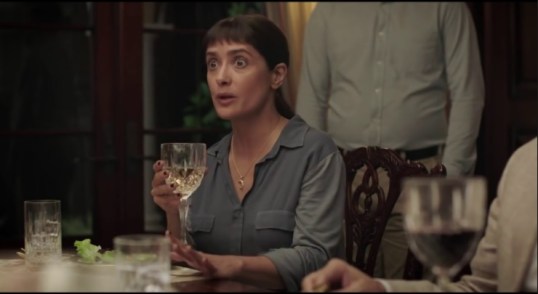
Salma Hayek plays the title character. Beatriz is a massage therapist in Los Angeles. She’s not having a good day. Not only has her neighbor killed one of her goats but, while she’s at the house of one of her wealthy clients, her car suddenly won’t start. Beatriz says that she can call a friend to come pick her up but that he won’t be able to show up until after he gets off work. Beatriz’s client, Kathy (Connie Britton), invites Beatriz to stay for dinner.
Kathy is a familiar type. She’s the rich, privileged white woman who probably brags about how nice she is to her maid. Kathy’s husband (David Warshofsky) may not want Beatriz to stay but Kathy feels that they owe a debt to Beatriz because Beatriz helped their daughter recover after she was treated for cancer. Kathy not only insists that Beatriz stay for dinner but she also asks Beatriz to not only stay the night but also to sing everyone a song after they’ve eaten. As Kathy’s rich friends start to arrive for dinner, Kathy treats Beatriz like a prop, blithely unaware of how awkward Beatriz feels around her guests.
The main dinner guest is an arrogantly vulgar businessman named Doug Strutt (John Lithgow). Doug is best known for building hotels, forcing poor people off of their land, and constantly bragging about how rich and famous he is. He is even working on a memoir. (In perhaps Beatriz at Dinner‘s only show of restraint, the film does not make him a reality show host.) The first time that Doug sees Beatriz, he assumes that she must be a maid and asks her to get him a drink. When Beatriz later launches into a monologue about her childhood in Mexico and how she first came to the United States, Doug interrupts to boorishly ask if she came legally. Whenever anyone admonishes Doug for being rude, he merely laughs it off and says that he doesn’t mean to be offensive. He’s just telling it like it is.
Hmmmm … I wonder who Doug is supposed to be a stand-in for?
Anyway, this all sounds promising enough but Beatriz at Dinner doesn’t really do much with this material. Just as with his previous overrated film, Cedar Rapids, director Miguel Arteta fails to generate any sort of narrative momentum. Basically, the entire film is Doug saying something offensive and Beatriz glaring at him. We keep waiting for Beatriz to blow up but when she finally does start to talk back to Doug, it’s anti-climatic. The dialogue suddenly starts to feel forced and unnatural. Doug goes from being a disturbingly credible vulgarian to just being another comic book villain and, as a result, Beatriz’s speech feels almost as empty as an angry thread of tweets. When Beatriz does take more concrete action towards Doug, the film ruins it all with an obvious twist that is nowhere close to being as profound as the filmmakers seem to think it is. If Beatriz at Dinner was truly as revolutionary as it seems to think it is, that twist wouldn’t be there.
(Buñuel and Godard, who are both obvious influences on Beatriz at Dinner, would dismiss the twist as bourgeois bullshit.)
In the lead role, Salma Hayek is good but not great. There’s really not much depth to Beatriz as a character. She functions more as a symbol than as a human being. (In many ways, the filmmakers treats Beatriz much in the same way that Kathy treats Beatriz, as a prop.) John Lithgow steals the entire movie, giving the only performance that actually shows a hint of real and dangerous charisma. As hateful a person as Doug may be, he is truthful about one thing. He is the only character in the movie who always says exactly what is on his mind. Lithgow plays Doug as not just a vulgarian but also as someone who is proud of being vulgar and who specifically goes out of his way to see how offensive he can be. At times, Lithgow is the only member of the cast actually bringing any life to this stifling bore of a film. Unfortunately, Lithgow is so good that he overpowers the rest of the cast. When Beatriz rebukes him, Hayek delivers her lines with a heartfelt fury that briefly threatens to rescue the movie from Doug but all Lithgow has to do is smirk and just like that, he’s taken the movie back from her.
For a lot of people, the appeal of Beatriz at Dinner is that Doug is obviously meant to be Trump and Beatriz says everything that they wish they could say. They see Beatriz’s frustration and anger and they immediately recognize it as being their frustration and anger. That’s a perfectly legitimate and understandable reaction but that doesn’t necessarily make Beatriz at Dinner a good film. It just makes it a film of the moment.



 Through the Shattered Lens