Retro Television Review: Welcome Back, Kotter 3.27 “Class Encounters of the Carvelli Kind”


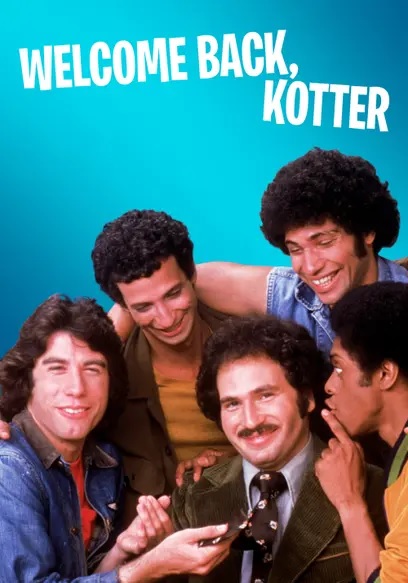
Welcome to Retro Television Reviews, a feature where we review some of our favorite and least favorite shows of the past!  On Saturdays, I will be reviewing Welcome Back Kotter, which ran on ABC  from 1975 to 1979.  The entire show is currently streaming on Tubi!
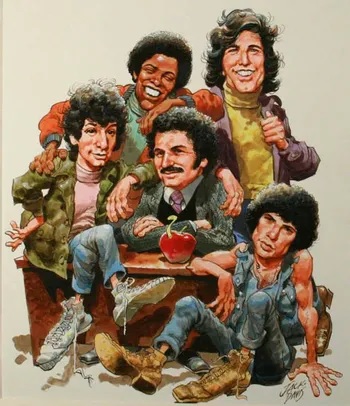
This week, the third season comes to an end.

Episode 3.27 “Class Encounters of the Carvelli Kind”

(Dir by Robert Hegyes, originally aired on May 18th, 1978)

At the Kotter apartment, Gabe tells Julie a joke about his Uncle Bruce, the dressmaker.  Julie responds by slamming the bedroom door in his face.  Poor Gabe!  Julie, if you hate his jokes that much, just get a divorce!

The next morning, Gabe steps into his classroom and finds Mr. Woodman sitting at the window and watching the rain falling outside.  “Being alive is overrated,” Woodman says.  “Try telling that to a dead person,” Gabe replies.  Woodman reveals that, when he was young, he dreamed of being a podiatrist.  “I love feet but I hate socks …. Sock stood between me and happiness!”

Woodman has every reason to be depressed.  There’s some sort of weird student exchange program going on.  Epstein is spending the week at another high school.  (In real life, Robert Hegyes was not available to play Epstein because he was busy directing this episode.)  Meanwhile, Carvelli (Charles Fleischer) and his buddy Murray (Bob Harcum) are going to Buchanan.

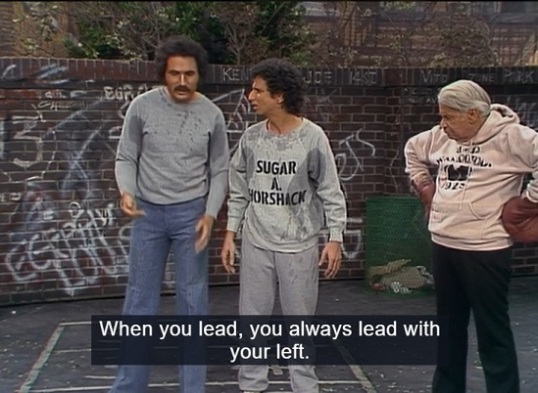
When Carvelli and Murray tell a story about being abducted by aliens and taken to the planet Yorksl, Gabe takes them to the vice principal’s office so Woodman can straighten them out.  To Gabe’s surprise, Woodman not only believe Carvelli’s story but he decides that he wants to go live on another planet.  He gives Carvelli permission to invite the aliens to land in the school’s courtyard.  Gabe is even more shocked with the alien does show up and it turns out to be Julie!  Julie explains that she’s a Yorsklite and then she agrees to Woodman away with her.  “You look like a nice little fella….”

Wow, I guess the show’s over.  I mean, Woodman is gone.  Julie’s an alien.  How do you do another episode about homework after that….

Oh wait, it was all a daydream.

Okay, never mind!

Usually, I hate it when a show does the whole “It was all a dream” thing but I actually enjoyed this episode because it gave John Sylvester White a chance to be totally unhinged as Woodman.  White’s performance as Woodman has been one of the few things to remain consistently strong through the first three seasons of Welcome Back, Kotter.  Watching him lose his mind, piece-by-piece, has truly been entertaining.

The episode and the third season ends with Washington tells Mr. Kott-air a joke about how ugly his aunt is.  Gabe is impressed enough to write the joke down on a notepad.

And that’s it for Season 3!  This was definitely an uneven season, with the humor ultimately getting a bit too broad for its own good.  The Sweathogs themselves are all obviously adults now.  This was something that Gabe Kaplan himself noticed.  He reportedly suggested setting the next season at a community college and having Gabe get a job as a professor.  (His students would, of course, be the graduated Sweathogs.)  ABC disagreed, which resulted in Gabe not appearing in several season 4 episodes.  Meanwhile, John Travolta also only appeared in a handful of episodes as he was now busy being a movie star.

What would all that mean for Season 4?

We’ll start finding out next week!

Retro Television Review: Welcome Back Kotter 3.19 “Epstein’s Term Paper”


Welcome to Retro Television Reviews, a feature where we review some of our favorite and least favorite shows of the past!  On Saturdays, I will be reviewing Welcome Back Kotter, which ran on ABC  from 1975 to 1979.  The entire show is currently streaming on Tubi!

This week, it’s term paper time!

Episode 3.19 “Epstein’s Term Paper”

(Dir by Bob Claver, originally aired on January 19th,1978)

It’s term paper time!

Freddie Washington’s term paper is on the Dust Bowl, which he turns in despite the fact that, as he explains it, “Dust killed my grandma.”

Vinnie’s term paper is on the Irish Potato Famine.  Vinnie thinks that the potato famine had something to do with no one in Ireland being able to eat French fries.

Arnold Horshack’s paper is on Joseph Stalin and the Purges, despite the fact that Horshack doesn’t know who Stalin was.

As Gabe tells Julie when she stops by his classroom for lunch, he’s really impressed with all the term papers.  In fact, he is concerned because he’s too impressed.  The Sweathogs have never been A-students so why are they now turning in perfect term papers?  Gabe, however, is looking forward to reading Epstein’s term paper on FDR.  Eleven years ago, Gabe turned in a term paper on FDR in which he described FDR as being a “white knight.”

Julie takes one look at Epstein’s term paper and mentions that Epstein used the exact same phrase.

Yes, you guessed it.  The Sweathogs bought a bunch of old test papers from Carvelli (Charles Fleischer) and attempted to pass them off their own.  Only Angie wrote her own term paper.  She got a B minus, which she is happy about.  Vinnie, Horshack, Freddie, and Epstein all gets F’s.  They’re not happy about it because they spent five dollars apiece for those papers.

“I could have written it myself,” Vinnie says, “and gotten an F for free!”

Gabe, however, tells the Sweathogs that he’ll give them one final chance to write new term papers.  Gabe explains that just because he turned in a term paper on FDR, that doesn’t mean that he wrote it.  So I guess the lesson here is that Gabe cheated and now he’s a teacher so cheating isn’t the end of the world.

Considering the subject matter and the fact that Gabe usually tries to encourage the Sweathogs to not take shortcuts, this was a surprisingly slight episode.  One gets the feeling that, if this story had been used during the first season, Gabe would have been a lot more upset about the fake term papers and he would have encouraged the Sweathogs to believe in themselves and their abilities.  However, in the third season, everything was treated as a big joke.  Gabe no longer seems that concerned about the Sweathogs realizing that they’re capable of being more than just Sweathogs.  Watching this episode, I couldn’t help but think about how the Sweathogs lost their edge halfway through the second season.  They used to be believable as delinquents, albeit goofy ones.  By the time the third season began, they had all been reduced to a series of catch phrases and gimmicks.  Robert Hegyes had some funny moments in this episode but it’s still hard not miss the old Epstein, the one who voted most likely to take a life.

As for this episode’s opening and closing jokes, Gabe told Mr. Woodman about his Uncle Murrow the biologist.  Woodman was not amused.  Later, Gabe tried to tell Julie about his Uncle Joe, just for Julie to shout out the punchline before he finished.  Gabe was not amused.

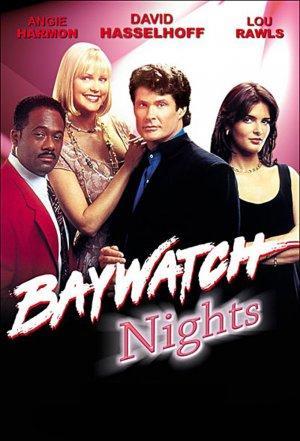
Late Night Retro Television Review: Baywatch Nights 1.15 “Thief In The Night”


Welcome to Late Night Retro Television Reviews, a feature where we review some of our favorite and least favorite shows of the past!  On Tuesdays, I will be reviewing Baywatch Nights, a detective show that ran in Syndication from 1995 to 1997.  The entire show is currently streaming on Youtube!

This week, Baywatch Nights want to make sure that you know it’s a show about a lifeguard.

Episode 1.15 “Thief In The Night”

(Dir by Charles Bail, originally aired on March 2nd, 1996)

This week, we find Mitch actually doing some lifeguard work for once.  I would say that about 35% of the episode features Mitch in his red swim trunks and either hanging out at his tower or at Baywatch Headquarters.  At one point, Donna even mentions that, along being a club owner, she’s also training to become a lifeguard.  It feels as if the show’s producers are literally standing off-camera, yelling, “This is a Baywatch show!  We’re sorry for not doing more Baywatch stuff during the first half of the season!  Please start watching!”

As for this week’s case, Mitch, Garner, and Ryan are hired by the snooty yacht club to investigate who has been breaking into their boats and stealing valuable things.  The head of the yacht club is Jeri Ross (Kristine Meadows), who is so snooty that she hires Mitch and Garner and then starts to immediately complain about them investigating the yachts.  Still, Mitch needs the paycheck, though I’m not sure why since he already has a full-time job as a senior lifeguard.

Mitch figures out that the thief is a scuba diver but he still can’t figure out who the person could be.  Perhaps that’s because Mitch keeps referring to thief as being a “he,” when the thief is actually Nina Cutter (Christiana D’Amore), a former Olympic-class swimmer who is now trying to raise money to pay the lawyers who are trying to overturn the embezzlement conviction that landed her brother in prison!  Seriously, Mitch, get with the times!  Women are just as capable of robbing a yacht as men.  Myself, I’ve never robbed a yacht but if I ever felt like doing so, I imagine I could do it just as well as anyone else who has a morbid fear of swimming in the ocean.

Nina sees Mitch investigating the crime and she decides that maybe it would be fun to meet and date him.  When Mitch is pulling out of Baywatch HQ, Nina rollerblades behind his truck and pretends to get knocked to the pavement.  Mitch jumps out with his first aide kit but he doesn’t jump out in slow motion, which I think was a missed opportunity on the part of the show.

Mitch does fall for Nina but, once he figures out that she’s the thief, he still captures her and sends her to jail.  On the bright side, he also saves her from drowning after she hits her head on the bottom of passing boat.  Still — what the Hell, Mitch?  When did you become so judgmental?  What if her brother really is innocent?

This episode was pretty boring.  When Mitch wasn’t hanging out at his lifeguard tower, he was underwater in a wet suit and, as anyone who has watched a 60s diving film can tell you, there’s nothing more boring then watching people float around in wet suits.  It didn’t help that all the diving scenes took place at night so I really had to strain my already hyperopic eyes to even get a vague idea of what was happening in that dark water.  As well, there really wasn’t much chemistry, romantic or otherwise, between Nina and Mitch.

Seriously, I can’t wait for the supernatural episodes to finally start!

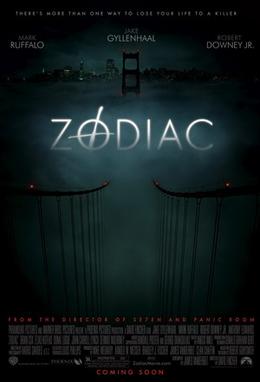
October True Crime: Zodiac (dir by David Fincher)


Who was the Zodiac Killer?

That is a question that has haunted journalists, cops, and true crime fans since the late 60s.  It is known that the Zodiac Killer murdered at least five people in Northern California in 1968 and 1969.  He targeted young couples, though he is also thought to have murdered on taxi driver as well.  What set Zodiac apart from other killers is that he was a prolific letter writer, who sent cards and ciphers to the police and the journalists who were reporting on his crimes.  In one of his ciphers, Zodiac claimed that he had killed 37 people.  Cartoonist Robert Graysmith later wrote two books about his personal obsession with the case.  He estimated that the Zodiac may have been responsible for hundred of murders, up through the 80s.  Of course, reading Graysmith’s first Zodiac book, it’s also easy to suspect that Graysmith reached a point where he saw the Zodiac’s hand in every unsolved murder in the San Francisco area.  Of all the unidentified serial killers in American history, Zodiac is one that most haunts us.  Zodiac was a serial killer who operated in an era when such things were still considered to be uncommon.  Much as Jack the Ripper did during the Victorian Age, Zodiac announced the arrival of a new age of evil.

Zodiac wrote about being a film fan and he was probably happy about the fact that he inspired quite a few films.  1971’s The Zodiac Killer came out while Zodiac was still sending letters to the police and cops actually staked out the theaters showing the film just to see if he  would show up.  Dirty Harry‘s Scorpio Killer was also based on Zodiac, right down to the taunting letters that he sent the mayor and again, one has to wonder if Zodiac ever showed up to watch Clint Eastwood take him down.

And, if Zodiac survived into the 21st Century, one has to wonder if he showed up in the theaters for 2007’s Zodiac.

One of the best true crime films ever made, Zodiac not only recreates the crimes of the Zodiac but it also examines the mental price of obsessing over the one unknown force of evil.  Mark Ruffalo plays Dave Toschi, the celebrity cop who nearly sacrificed his professional reputation in his search for the identity of the killer.  Jake Gyllenhaal plays cartoonist Robert Graysmith, who spends over a decade searching for the Zodiac’s identity and who loses his wife (Chloe Sevigny) in the process.  And Robert Downey, Jr. plays Paul Avery, the crime reporter to whom the Zodiac wrote and who sunk into paranoia and addiction as a result.  This is a film that is less about the Zodiac’s crime and more about how this unknown killer seemed to unleash a darkness that would come to envelope first a city and eventually an entire nation.

As one might expect from a film directed by David Fincher, Zodiac plays out like a filmed nightmare with the starkly portrayed murders being all the more disturbing because they often take place outside, where people would think they would be safe.  (The second murder is especially terrifying, as it plays out without even the sound of background music to allow us the escape of remembering that it’s only a movie.)  Fincher heightens our paranoia but having a different actor play the killer in each scene, reminding us that the Zodiac could literally be anyone.  Indeed, one of the scarier things about Zodiac is that, in the course of his investigation, Graysmith meets so many different people who seem like they could be the killer.  Even if they aren’t the Zodiac, the viewer is left with the feeling that the world is full of people who are capable of committing the same crimes.  The film becomes a journey into the heart of darkness, with the Zodiac becoming both a malevolent force and potentially your next door neighbor.  And with the film’s detailed recreation of the 60s and the 70s, the film becomes a portrait of a country on the verge of changing forever with the Zodaic and his crimes representing all the fear waiting in the future.

Again, as one might expect from a Fincher film, it’s a well-acted film, especially by Robert Downey, Jr.  Zodiac came out a year before Iron Man, when Downey was still better known for his personal troubles than for his talent.  Downey perfect captures his character’s descent into self-destruction, as he goes from being cocky and self-assured to being so paranoid that he’s carrying a gun.  (Paul Avery’s actual colleagues have disputed the film’s portrayal of Avery being mentally destroyed by the Zodiac.)  Ruffalo and Gyllenhaal also do a good job of portraying Toschi and Graysmith’s growing obsession with the case while Charles Fleischer and John Carroll Lynch both make strong (and creepy) impressions as two men who might (or might not) be the killer.

Though the film was not a success at the box office and it was totally ignored by the Academy, Zodiac has built up a strong reputation in the years since its released.  It’s inspired a whole new generation of web sleuths to search for the killer’s identity.  Personally, my favored suspect is Robert Ivan Nichols, an enigmatic engineer who abandoned his former life and changed his name to Joseph Newton Chandler III in the 70s and who committed suicide in 2002.  I think much like Jack the Ripper, the Zodiac’s identity will never be definitely known.  There have been many compelling suspects but most of the evidence seems to be circumstantial.  (That’s certainly the case when it comes to Nichols.)  The Zodiac was thought to be in his 30s or even his early 40s in 1969 so it’s doubtful that he’s still alive today.  In all probability, his identity and his motive will forever remain an unsolvable mystery.

Retro Television Reviews: Welcome Back Kotter 2.9 “Hello, Ms. Chips” and 2.10 “Horshack vs. Carvelli”


Welcome to Retro Television Reviews, a feature where we review some of our favorite and least favorite shows of the past!  On Saturdays, I will be reviewing Welcome Back Kotter, which ran on ABC  from 1975 to 1979.  The entire show is currently streaming on Tubi!

This week, Mr. Kotter gets a student teacher!

Episode 2.9 “Hello, Ms. Chips”

(Dir by Bob LaHendro, originally aired on December 2nd, 1976)

Instead of telling a joke about a relative, Gabe starts the show by coming home from shopping with Julie.  When Julie says that everyone at the store was crazy, Gabe comments that the women were all pushing and shoving and “bumping into me.”

“I’m going back tomorrow!” Gabe declares while Julie gives him a pity laugh.

At Buchanan High School, Woodman introduces Gabe to his new student teacher, Ms. Wright (Valerie Curtin).

“Ms. Wright,” Gabe says, “My mother always said I’d meet you someday.”

“Keep your sick fantasies out of this, Kotter,” Woodman replies.  “Watch her carefully, you remember what happened to the last student teacher …. she still sends me ceramic wallets from the home.”

After Woodman leaves, Gabe gets to know Ms. Wright and discovers that she’s read about the Sweathogs in her textbooks.  Gabe acknowledges that the classroom is famous and adds, “Some of our best teachers have passed through the windows.”

The Sweathogs make their arrival.  Ms. Wright observes the way that Gabe handles getting them to read their essays on what they would do if they were president and then she steps in and tries to teach while looking through her thick lesson plan.  Needless to say, the Sweathogs do not react well to that and Epstein throws a fit when Ms. Wright reads his essay (which is actually a poem) about how he would make the world a better, flower-filled place as President.  Ms. Wright runs, sobbing, from the room.

Gabe tracks Ms. Wright down to the front office, where Ms. Wright is asking Mr. Woodman what it was like when he was a teacher.  Woodman proceeds to sing Nobody Knows The Trouble I’ve Seen.

“Didn’t they have spankings in those days?” Ms. Wright asks.

“Yes,” Woodman replies, “but my students only spanked me once.”

The next day, Ms. Wright tries again.  This time, she tires to imitate Gabe’s approach and awkwardly tells Epstein, “In your mouth with a sandwich,” when he tries to apologize her.  Ms. Wright tells a series of Kotter-style jokes but her cheery delivery is all wrong.  Ms. Wright suddenly announces that Gabe’s technique isn’t right for her and that she’s just going to quit.

“You can’t quit,” Freddie says, “You’re not a lousy teacher, we’re just lousy students!”

Ms. Wright learns a valuable lesson about not teaching from the book and not trying to teach like someone else but just teaching as herself.  Ms. Wright says that she wants to tell the class about President Buchanan.

“That name sounds familiar,” Vinnie says.

This was not a bad episode.  I appreciated that Ms. Wright had to find her own style as opposed to just blindly following Gabe’s style.  Speaking of Gabe’s style, he ends the episode telling Julie about his Uncle Wilford Kotter, who was in love with an elephant.

Episode 2.10 “Horshack vs. Carvelli”

(Dir by Bob LaHendro, originally aired on December 9th, 1976)

At the apartment, Gabe calls his Uncle Herman and tells him that Julie’s going to be home in five minutes and he doesn’t have a joke to tell her.  Gabe asks if anything funny has happened in Herman’s life recently.  Herman tells Gabe about a guy who crossed an elephant and a beaver.  Herman says that he once knew a guy who was so mean that he used to train homing pigeons and then move.  Judging from the expression on Gabe’s face, Herman then proceeds to tell him something really wild.

(Julie, by the way, apparently never comes home and, therefore, does not appear in this episode.)

At school, the Silver Gloves Boxing Tournament is approaching and the Sweathogs are debating who will take on New Utrecht High’s most fearsome fighter, Carvelli (Charles Fleischer).  Woodman is especially concerned because he says that, in 20 years, Buchanan has never won the tournament.  When Gabe says that Bonzo Maretti won one year, Woodman replies, “Eating your opponent doesn’t count!”  Woodman wants a Sweathog to bring home a trophy.  Unfortunately, it appears that all of Woodman’s hopes rest on Arnold Horshack who is demanding to be the one to fight Carvelli.  As Horshack puts it, he’s tired of always being the one who is pushed to the side.

It’s time for a training montage, as Gabe and Woodman teach Horshack how to throw a punch.

Unfortunately, it doesn’t go well as Horshack ends up getting knocked down by Mr. Woodman.  “Maybe I should fight Carvelli!” Woodman says.

At the boxing match …. actually, I was expecting this to be one of those episodes where Horshack somehow ended up winning despite the odds but actually, he gets knocked out during the first round.  But all the Sweathogs are proud of him for having the guts to enter the ring so it’s a bit of a personal victory for him.  Plus, Gabe tells him a joke about his Uncle Maxie Kotter.

Yay!  Horshack finally won some self-respect!  Horshack was often the most cartoonish thing about this show and it’s rare that there was ever anything subtle about Ron Palillo’s performance but he deserves some credit for his work on this episode.  He revealed that, beneath the weird façade, Horshack was just as vulnerable and insecure as all the rest of the Sweathogs.  He didn’t win the fight but he won the audience’s heart and good for him!

Next week: Epstein is caught smoking!

Retro Television Review: The Death of Richie (dir by Paul Wendkos)


Welcome to Retro Television Reviews, a feature where we review some of our favorite and least favorite shows of the past!  On Sundays, I will be reviewing the made-for-television movies that used to be a primetime mainstay.  Today’s film is 1977’s The Death of Richie.  It  can be viewed on YouTube!

It’s not a spoiler to tell you that this film ends with the death of a teenager named Richie.  It’s right there in the title.  We start the film knowing that Richie is going to die.  The only question is how it’s going to happen and who, if anyone, is going to be held responsible for it.

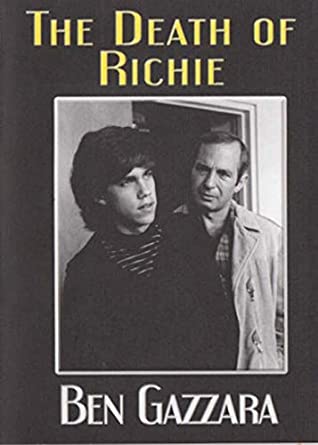
Played by Robby Benson, Richie Werner is a sensitive teenager living in the suburbs.  He’s painfully shy and he deals with that shyness by taking the drugs that are supplied to him by friends like Brick (Charles Fleischer) and Peanuts (Clint Howard, yes that Clint Howard).  His parents, George (Ben Gazzara) and Carol (Eileen Brennan), knows that Richie is struggling with both drugs and school.  However, neither one of them have a clue as to how to help him.  Carol spends most of the film silently hoping that things will somehow just magically get better.  Meanwhile, George can’t understand his son and, even worse, he makes no attempt to understand him.  George holds back his feelings and he’s obviously uncomfortable with his emotional son.  George is the type who retreats to his basement when he needs to get away from the world and yet, he can’t understand why his son needs a similar sanctuary.  When he discovers that Richie has set up a mini-bedroom in his closet, George destroys it.

Throughout the film, Richie tries to get his life straightened out.  He gets a job working at a restaurant but he quits after his friends laugh at his dorky uniform.  He tries to date a girl named Sheila (Cindy Eilbacher) but is heartbroken when he discovers that she’s going out with someone else.  When Richie tries to talk his dad, George refuses to listen.  When George tries to talk to Richie, Richie tells him to get out of his room.  Finally, after Richie crashes his car one last time, it leads to an act of shocking violence.  After all, the film is called The Death of Richie.

It’s also based on a true story, though there’s some debate over whether or not the film gets the story correct.  In real life, Richie’s named was George Richard “Richie” Diener and he lived in Long Island.  (The film appears to take place in a generic California suburb.)  Richie’s death inspired a magazine article and book, both of which inspired this film.  While I was doing research for this review, I came across a website about Richie’s death, one that argued that both the film and the book were too sympathetic to George’s version of what happened the day that Richie died.  The site has comments from many of the people who knew Richie and I recommend it to anyone who watches this film and want to know the other side of the story.

As for the film itself, it’s well-directed, intense, and, at times, rather heart-breaking.  As portrayed in the film, Richie is so desperate for some sort of approval that your heart just goes out to him.  Robby Benson is one of those actors who you come across in a lot of 70s films.  I’ve always found his performances to be a bit inconsistent and that’s certainly the case here.  He’s good when he’s allowed a quiet moment or two but there are other times when he gets so shrill that it takes you out of the reality of the film.  Ben Gazarra does a good job playing George as someone who loves his family but who is incapable of understanding his son’s pain.  Gazarra adds just a hint of ambiguity to his anger toward Richie.  Is he upset because Richie keeps getting trouble or has he reached the point where he’s just looking for an excuse to get Richie out of the family’s life?  According to the comments that I read at the blog mentioned above, both the film and the subsequent book based solely their portrayal of the last minutes of Richie’s life on George’s account.  Many people felt that there was more to what happened.

The film is a bit quick to blame all of Richie’s problems on the drugs.  While the drugs probably didn’t help, there are times when the film seems to suggesting that Richie would have been a happy, go-lucky kid if he had never taken that first Seconal.  Watching the film today, it’s obvious that there was a lot more going on with Richie than just weed and pills and it’s also obvious that calling the cops having them search his room while he watched was not the solution either.  Richie needed someone to talk to and, in the film at least, that was apparently the one thing that he could not get.  As the song says, things get a little easier once you understand.

Tales from the Crypt: Demon Knight (dir. by Ernest Dickerson)


Demon Knight PosterI remember going to the movies for Demon Knight. I loved Tales from the Crypt on HBO, and the idea of a movie was cool at the time. My sister and my best friend joined me for the showing. It was treat to watch. I left the cinema thinking of different tales that could come up using some of the elements in this story.
For those unfamiliar with Tales From the Crypt, the show aired on HBO during the late 1980s, and part of the 1990s. Based off of the old horror tales from EC Comics, each episode was a horror story. Unlike Tales From the Darkside, Monsters and Darkroom, Tales from the Crypt had the bonus of being on cable. This meant they were able to get away with more gore and nudity than their prime time counterparts. Perhaps that’s the only real disadvantage with the film. At least with Tales From the Darkside: The Movie, the story could push into darker elements with their restrictions lifted.

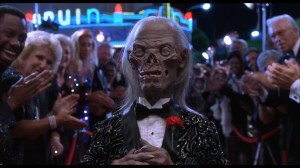
As with every episode of the show, Demon Knight is sandwiched between a scene with the Crypt Keeper (John Kassir) greeting the audience with some corny jokes and introducing the story. Frank Brayker (William Sadler – The Mist, Bill & Ted Face the Music) is on the run from The Collector (Billy Zane – Titanic). With his options dwindling and the strange seven-star pattern tattoo on his hand slowly forming a circle, Brayker makes his last stand at a motel with a group of individuals. In his possession is a key shaped vial that has the power to create wards. These wards hold back the army of demons that wish to reclaim the key and bring darkness across the land. Can Brayker make it through the night, while protecting the key and everyone around him? That’s pretty much the plot.

Demon Knight CryptKeeper

The Crypt Keeper is ready for his close up in Demon Knight. 

Having previously worked as a Cinematographer for Spike Lee, Ernest Dickerson made the jump to directing with 1992’s Juice. Demon Knight was his follow up and for the most part, it’s good. The creature design is interesting, reminiscent of Top Cow’s comic book, The Darkness. The demons are thin and indeed strange to behold, but they mostly take a back seat to Billy Zane’s Collector, who tries to seduce everyone into turning against the rest of the group.  Zane brings a lot of humor to the movie with his villain, as does Thomas Hayden Church (Sideways) playing that one guy you’d really like to slug in the mouth. CCH Pounder (Avatar), Jada Pinkett (Collateral), Brenda Bakke (L.A. Confidential), the legendary Dick Miller (Gremlins and just about everything Joe Dante did), and Charles Fleisher (Who Framed Roger Rabbit?) and Gary Farmer (Forever Knight) round it all out. It’s Sadler’s film to carry, however, and he does a great job here playing the hero.

From a sound/musical standpoint, Demon Knight boasts a interesting soundtrack, which I picked up around the time I first saw the film. Filter’s “Hey Man, Nice Shot” seemed like the only song featured in the film, but Ministry’s “Tonight We Murder”, Henry Rollins “Fall Guy” and Pantera’s “Cemetary Gates” are the standouts. The pacing of the film is pretty even, despite being a one shot. There’s not enough of a slowdown to feel bored. Demon Knight is just one regular Tales from the Crypt tale in a longer format. I would have preferred shorter pieces in this larger timespan, but that’s more a nitpick than anything.

Overall, Tales From the Crypt: Demon Knight is a fun film to visit around Halloween. Just make sure your doors and windows are locked (and sealed, if possible), when watching.


Who Framed Roger Rabbit (dir. by Robert Zemeckis)


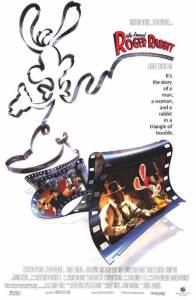
WhoFramedRogerRabbitPosterI can’t quite remember how I found out about 1988’s Who Framed Roger Rabbit. Growing up, most of my movie news came from four major sources – Entertainment Tonight, Siskel & Ebert, the occasional movie poster you’d see at a bus stop or cinema. If you were really lucky, the production company would sometimes create a “Behind the Scenes”/”Making of” showcase a little after the movie premiered. If possible, I would read the billing block of a poster to see if I could recognize anyone familiar, Just seeing Amblin Entertainment meant you’d have Steven Spielberg, Kathleen Kennedy and Frank Marshall involved. Nothing new there. I knew Robert Zemeckis and Alan Silvestri from Romancing the Stone and Back to the Future. Movies have had mixes of animation and live action – Bedrooms & Broomsticks, Mary Poppins, etc., but the big buzz here was the film planned to somehow involve both the Disney and Warner Bros. animation studios. It was an alien concept for me, because they couldn’t be more different from each other. Historically, animation on the WB side of things were edgy and almost dared to be even raunchy if they could get away with it. Disney, on the other hand, was pristine and extremely  kid friendly. Bugs Bunny and Mickey Mouse? Daffy Duck vs. Donald Duck, all on the same screen? It was the 1980’s equivalent of asking Marvel (which ironically, is owned by Disney now) and DC (which the WB has owned for decades) to write a single Justice League / Avengers crossover story.
At the time, Steven Spielberg was already well known for blockbusters like the Indiana Jones films and E.T., but did he really have enough clout to bring two major companies together like that? It blew my 13 year old mind and I became completely obsessed.

Around the time Who Framed Roger Rabbit came out, I picked up anything I could find about it. I had Alan Silvestri’s soundtrack, a poster, a stuffed Roger doll, and the video game when it came out. I even read Gary Wolf’s novel. I begged my parents to let me see it, and it was one of the rare times where my Mom took my sis and I to the movies instead of my dad (the major movie buff, who took us to see Robocop twice the year before). I think she went in part to shut me up, and to give herself a break from my nearly 2 year old brother. It remains one of the two best movie related memories I have of her.

In the world of Who Framed Roger Rabbit, humans and cartoons share the same space in Los Angeles. Cartoons live in Toontown, owned by Marvin Acme (Stubby Kaye). It’s the story of Eddie Valiant (Bob Hoskins – Hook, Mermaids), a Los Angeles Private Eye with a bit of a grudge against toons. For a quick buck, Valiant is hired by R.K. Maroon (Alan Tilvern – Firefox, Little Shop of Horrors) to snoop on Acme. Valiant’s work puts him in the path of Roger Rabbit (Charles Fleischer, Back to the Future Part II), after Eddie takes some racy pictures of Acme playing patty cake with Roger’s wife, Jessica (Kathleen Turner, Romancing the Stone). Roger angrily swears they’re still a happy couple and that Acme somehow coerced her before running off into the night. The next morning, Eddie is informed that the Marvin Acme’s been killed overnight. To make things worse, Acme’s Will is missing, leaving the fate of Toontown up in the air. All of the evidence points to Roger, but Roger asks for Eddie’s assistance in clearing his name. Can Eddie save Roger before Judge Doom (Christopher Lloyd, Back to the Future) and his pack of weasels get their hands on him?

The production for the film required jumping over a number of hurdles. Zemeckis, himself a cartoon fan, wanted to bring some of the Warner Bros. characters along with Disney characters. Even better, he also wanted to add some of Tex Avery’s classic style to the film. Similar to what he did with Ready Player One, Spielberg negotiated with some of the studios, and while he couldn’t get everyone, he did manage to get Disney, WB and a few others to commit. With this in place, they had to somehow merge animation with live-action in a way that made it look like the cartoons were interacting with their environment.

This would require one really huge magic trick, made up from an assortment of parts.

Since it was around 1986-1987, there really was no CG, yet.. James Cameron made 6 stuntmen in Alien suits look like 600 through the use of Oscar Winning Editing, and the technology that gave us the paradigm shifting dinosaurs of Jurassic Park wouldn’t occur for another 3 or 4 years. For Who Framed Roger Rabbit, the approach was a mix of robotics, puppetry, sleight of hand gadgetry, and a lot of imagination.

The art was handled by Richard Williams and his team, who would go on to win a Special Achievement Oscar for his contribution to the film. They had to draw every cell/frame by hand, on paper and then have them inked. These would then go to Industrial Light & Magic, who would add shadow, highlights and special effects To make things harder, the artists had to work around Zemeckis’ filming style and figure out how to fit the characters into each scene.

Take Jessica Rabbit’s performance of “Why Don’t You Do Right?”, sung by Amy Irving (Carrie, The Fury). At first glance, it seems a really easy shot. Girl steps on the stage, performs and leaves, right? However, there are so many things happening here on an effects level that I still don’t fully understand how they did it after all these years. ILM handled the lighting, from the sparkles in the dress, the use of the handkerchief and the great moment where Jessica blocks the spotlight in her walk from Acme to Valiant. I had to later explain to my mom that the “Wow” I whispered in the theatre during that scene had little or nothing to do with puberty. It was because I hadn’t seen anything like that before with a cartoon, and I’d hate the Academy forever if the movie didn’t win an Oscar for that.

Having cartoons on screen is one thing, but making it feel like they were interacting with people is another. Hoskins was the anchor that tied most of it all together. Having to work with nearly nothing – not even a green screen – and perform the physical actions required of the role was quite a feat compared to what some actors do with the motion capture rooms and digital walls we use today. Near lifesize models of Roger were created to help Hoskins handle some of the physical “grab and move” sequences, and actor Charles Fleischer actually spent time dressed as Roger on set (but off camera, of course) to feed his side of the conversation to Hoskins when filming a scene.

Puppeteers were brought on for moments were toon characters needed to hold objects, such as guns or knives. There is a moment of the movie where you can see one of the holes for the guns that the weasels, but it’s a pretty minute hiccup with all of the great work that was done. For the car sequences with Benny the Cab (also Fleischer), they used a special mini-car with a driver in the back. The car and driver were painted over (still, frame for frame) by the animators.

And ff course, it wouldn’t be a Zemeckis film without Alan Silvestri at the helm, musically speaking. Silvestri’s score for was a mix of detective noir and cartoony antics, which made for a perfect fit for the film. Overall, Who Framed Roger Rabbit is one of those films I cherished growing up, and it’s almost impossible for me to avoid recommending it.


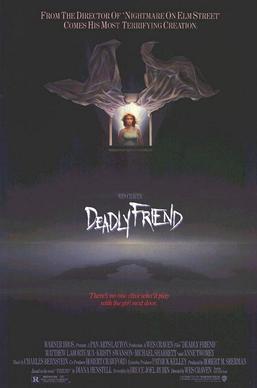
A Movie A Day #277: Deadly Friend (1986, directed by Wes Craven)


Things I learned from watching Deadly Friend:

Girls love nerds who build robots.

In 1986, nerds could build robots that displayed human feelings.

Angry old neighbors hate robots.

If a nerd can build a robot that displays human feelings, then he can also bring his girlfriend back to life by putting a computer chip from the robot in her brain.

Once brought back to life, the girlfriend will start to behave just like the robot.

Basketballs can be used to do anything.

Deadly Friend is best remembered for the scene where the newly revived Samantha (Kristy Swanson) throws a basketball with such force that it causes the head of her neighbor (Anne Ramsey) to explode.  It is also remembered for BB, the big yellow robot that was built by Paul (Matthew Laborteaux).  Deadly Friend starts out as the ultimate nerd fantasy: a beautiful girlfriend. a big robot, and a killer basketball.  By the end of the movie, the fantasy has turned into a nightmare.

Deadly Friend was Wes Craven’s follow-up to A Nightmare on Elm Street.  Craven intended for the film to be a dark love story between a teenage outcast and his zombie girlfriend, with a strong emphasis on the hypocrisy of the adults around them.  Craven said that, in his version of Deadly Friend, people like Samantha’s abusive father were meant to be scarier than Zombie Samantha With A Microchip In Her Brain.  Warner Bros. wanted a film that would appeal to teenage horror fans and demanded Elm Street-stlye nightmares and buckets of more blood.  As a result, Craven practically disowned the finished movie and Deadly Friend is a tonally inconsistent, with sentimental first love scenes competing for space with heads exploding and necks being snapped.  Despite good performances from Laborteaux and Swanson, the final film is too much of a mess to work.  However, I know that I will never look at a basketball the same way again.

Horror on TV: Tales From The Crypt 4.13 “Werewolf Concerto” (dir by Steve Perry)


For tonight’s excursion into televised horror, we present to you the 13th episode of the 4th season of HBO’s Tales From The Crypt!

Werewolf Concerto originally aired on September 9th, 1992.  It deals with what happens when a group of hotel guests believe that there might be a werewolf in the area.  Fortunately, Timothy Dalton is also in the area and he claims to be a professional werewolf hunter!

Or is he….?

You’ll have to watch to find out!

Enjoy!