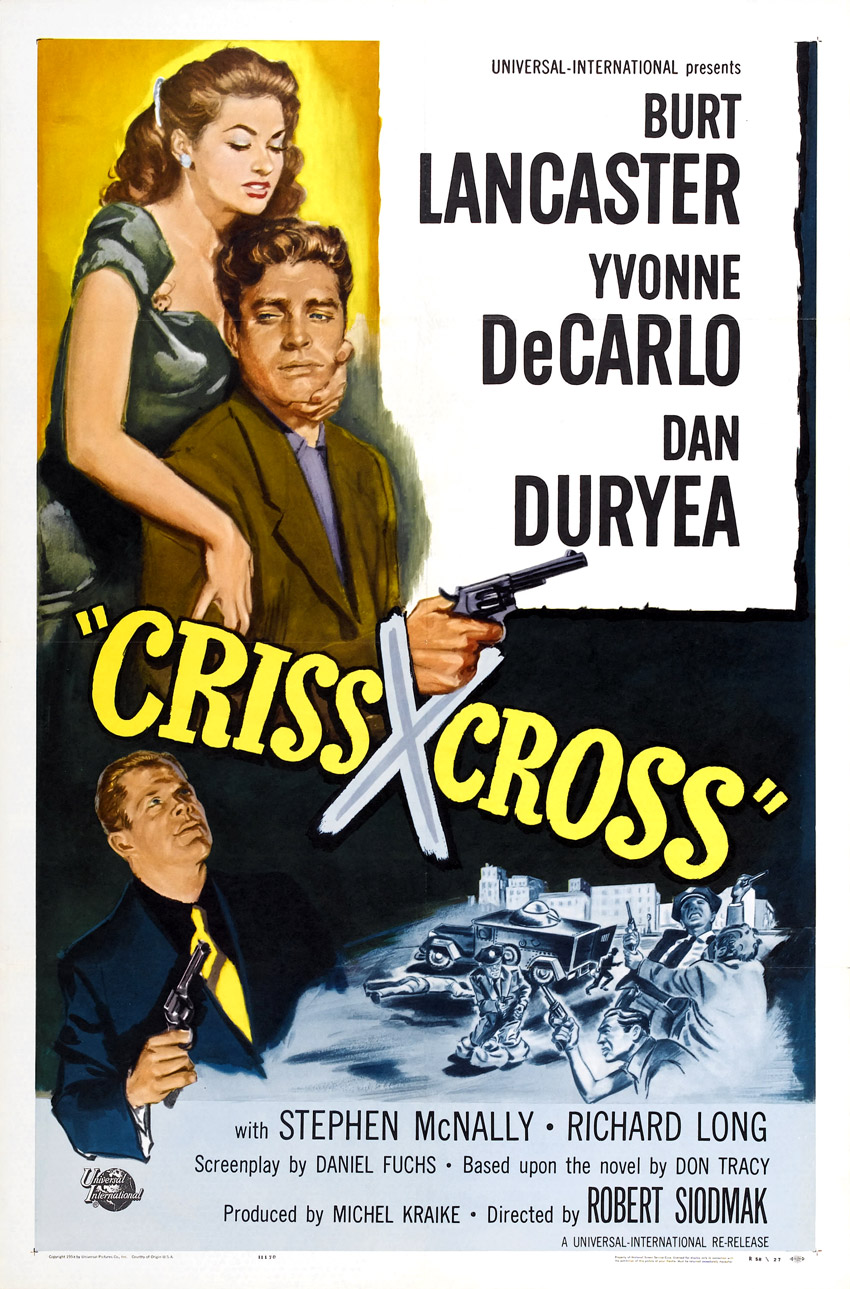
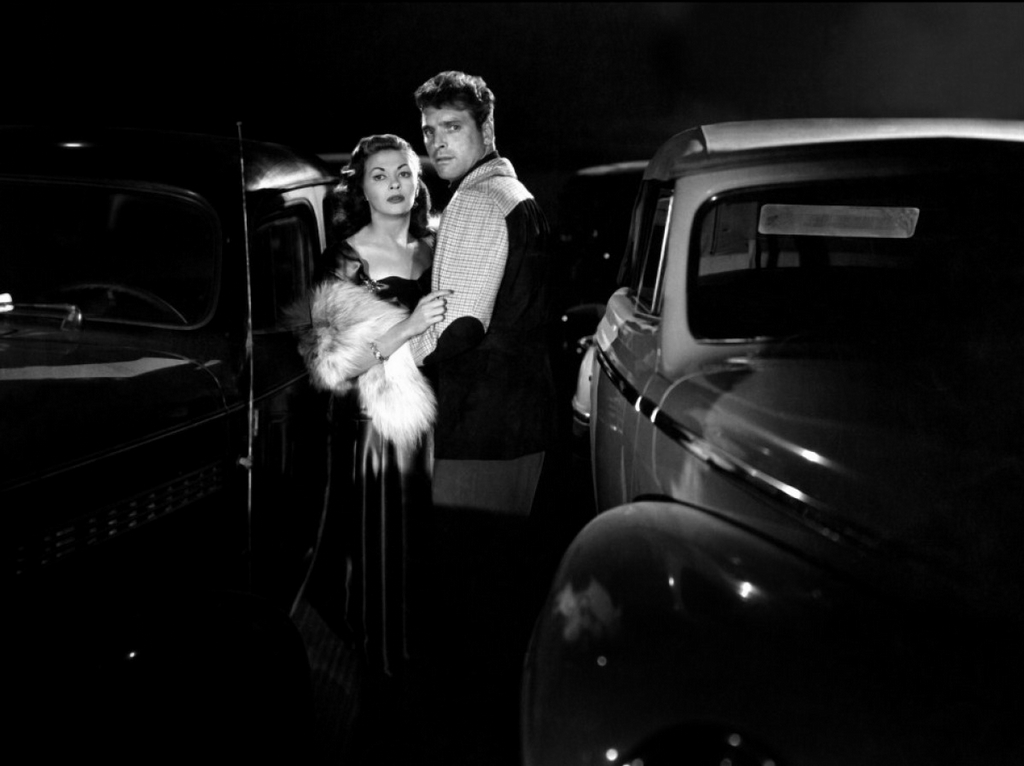
CRISS CROSS hits you like a sucker punch to the gut, delivered hard and swift, followed by a non-stop pummeling that doesn’t let up until the final, fatal shot. Things kick right in as we find clandestine lovers Steve Thompson and Anna Dundee going at it hot’n’heavy in a nightclub parking lot. They go inside, and Steve gets into it with Anna’s husband, the gangster Slim Dundee, who pulls a knife, but the fight’s interrupted by Lt. Pete Rameriz, Steve’s boyhood pal. What Pete doesn’t know is the fight was staged for his benefit: Steve is the inside man on a planned armored car heist Dundee’s gang is pulling off.
Flashbacks tell us how Steve got here: he was once married to Anna, and after the volatile couple divorced left L.A., drifting across country picking up odd jobs along the way. Returning to the City of Angels, he finds himself…
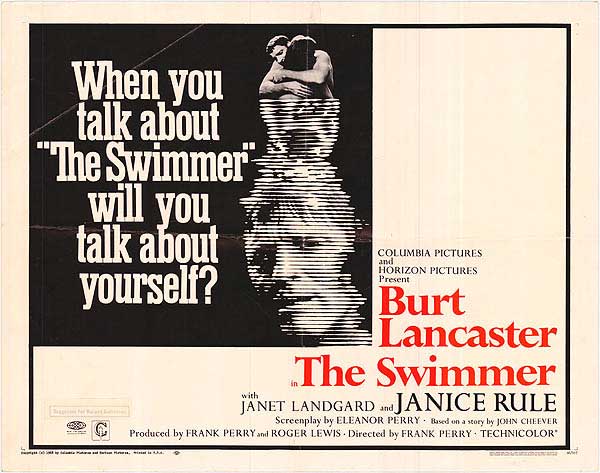
The 1968 film The Swimmer opens with Ned Merrill (Burt Lancaster) emerging from the woods that surround an affluent Connecticut suburb. He’s a tanned, middle-aged man and, because he spends the entire film wearing only a bathing suit, we can tell that he’s still in good shape for a man in his 50s. When Ned speaks, it’s with the nonstop optimism of a man who has found and claimed his part of the American Dream. In short, Ned appears to be ideal American male, living in the ideal American community.
However, it gradually starts to become apparent that all is not well with Ned. When he mysteriously shows up at a pool party being held by a group of his friends, they all seem to be shocked to see him, commenting that it’s been a while since Ned has been around. Ned, however, acts as if there’s nothing wrong and instead talks about how beautiful the day is and says that he’s heading back to his home. He’s figured out that all of his neighbor’s swimming pools form a “river” to his house and Ned’s plan is to swim home.
And that’s exactly what Ned proceeds to do, going from neighbor to neighbor and swimming through their pools. As he does so, he meets and talk to his neighbors and it becomes more and more obvious that there are secrets hidden behind his constant smile and friendly manner. As Ned gets closer and closer to his actual home, the neighbors are far less happy to see him.
At one house, he runs into Julie (Janet Landgard) who used to babysit for his daughter. Julie agrees to swim with Ned and eventually confesses that she once had a crush on him. When Ned reacts by promising to always protect and love her, Julie gets scared and runs away.
At another house, Ned comes across another pool party. A woman named Joan (played by a youngish Joan Rivers) talks to him before a friend of her warns her to stay away from Ned.
When Ned reaches the house of actress Shirley (Janice Rule), it becomes obvious that Shirley was once Ned’s mistress. They discuss their relationship and it quickly becomes apparent that Ned’s memories are totally different from Shirley’s.
And, through it all, Ned keeps swimming. Even when he’s offered a ride to his house, Ned replies that he has to swim home.
The Swimmer is a film that I had wanted to see ever since I first saw the trailer on the DVD for I Drink Your Blood. (That’s an interesting combination, no? I Drink Your Blood and The Swimmer.) I finally saw the film when it showed up on TCM one night and, when I first watched it, I have to admit that I was a little disappointed. Stylistically, the film itself is such a product of the 1960s that, even though suburban ennui and financial instability are still very relevant topics, The Swimmer felt rather dated. I mean, I love a good zoom shot as much as anyone but, often times during the 60s, they seemed to be used more for the sake of technique than the sake of story telling.
However, the second time I sat through The Swimmer, I appreciated the film a bit more. I was able to look past the stylistic flourishes of the direction and I could focus more on Burt Lancaster’s excellent lead performance. Lancaster plays Ned as the epitome of the American ideal and, as a result, his eventual collapse also mirror the collapse of that same ideal. The Swimmer is based on a short story by John Cheever and, quite honestly, the film’s story is a bit too much of a literary conceit to really work on film. That said, The Swimmer — much like the character of Ned Merrill — is an interesting failure, which is certainly more than can be said of most failures.
For today’s entry in the 44 Days of Paranoia, let’s take a look at the 1964 political thriller, Seven Days In May.
Directed by John Frankenheimer (who also directed the conspiracy classic, The Manchurian Candidate), Seven Days In May opens with unpopular President Jordan Lyman (Fredric March) on the verge of signing a treaty with the Russians. The chairman of the joint chiefs-of-staff, Gen. James Scott (Burt Lancaster), is opposed to the treaty and feels that Lyman’s actions will lead to the collapse of the U.S. When Scott’s aide, Jiggs Casey (Kirk Douglas), thinks that he’s come across evidence that Scott is planning a military coup, he takes his suspicions to the White House. Working with an alcoholic Senator (Edmond O’Brien) and a cynical political aide (Martin Balsam), the President launches his own investigation into Scott’s activities.
When it was first released, Seven Days In May was very successful with both critics and audiences. Edmond O’Brien even received an Oscar nomination for best supporting actor. When viewed today, however, Seven Days In May feels rather quaint. A good deal of the film’s suspense was meant to be generated by the question of whether or not Gen. Scott is actually planning a coup. However, for the modern viewer, it’s really not a question worth asking. For us, it’s easy to watch this film and shout, “Of course he’s planning on overthrowing the government! He’s the most obviously villainous character in the entire film!” The idea of a military conspiracy to overthrow the U.S. government was perhaps shocking back in 1964 but today, we take the existence of such conspiracies for granted.
Seven Days In May is definitely a product of its time. Unlike John Frankenheimer’s other well-known conspiracy film, The Manchurian Candidate, there’s no sly undercurrent of satire or subversion running through Seven Days In May. Instead, Seven Days In May epitomizes everything that we think of when we think about the early 60s. The film’s politics are liberal but not radically so. The President is such an honorable leader that he won’t resort to the politics of personal destruction and reveal that Scott has a mistress. Casey explains that he disagrees with the President’s politics but that he is bound by duty to reveal Gen. Scott’s subversion. Indeed, by the end of the film, it’s obvious that we’re meant to condemn Scott not because he might overthrow the President but because he would subvert the democratic process to do so. Seven Days In May is a film that tells viewers to support and respect their elected leaders, whether they be good or evil and whether they’re played by Fredric March or Burt Lancaster.
When I listened to Casey explain why he was informing on a man who he claimed to admire and agree with, I was reminded of some of the recent political debates that we’ve had deal with her in America. All of those debates can pretty much be summed up by whether we, as citizens, are obligated to support a law even if we personally don’t agree with it or to respect a leader even if we do not agree with him. The answer, according to Seven Days In May, would appear to be yes.
While Seven Days In May is often a bit too ponderous for its own good, it’s still a well-made and watchable film. If you’re a history nerd like me, you’ll enjoy the film as a portrait of its time. John Frankenheimer directs as if the movie is a film noir and the film’s shadowy black-and-white cinematography looks great. Finally, if you’re a fan of the old school movie stars, how can you not enjoy a film that features Kirk Douglas, Fredric March, and Burt Lancaster?
Even though it happened 22 years before I was born, I sometimes feel as if it was only yesterday that President John F. Kennedy was assassinated.
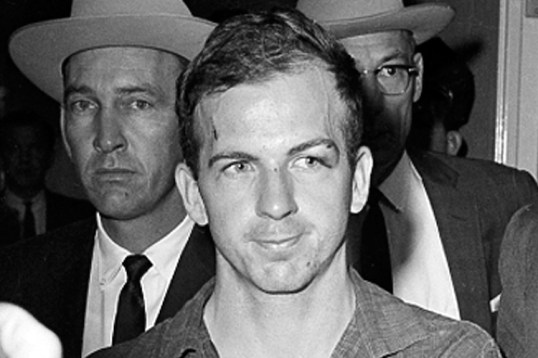
A lot of that is because I’m from Dallas. When I was born, my family lived in Oak Cliff, a few blocks away from where the accused assassin Lee Harvey Oswald once lived. I drive by the Kennedy Memorial several times a week. I’ve gone to the Sixth Floor Museum. I’ve made out on the Grassy Knoll. On a daily basis, I see tourists who have come down here from up north with their preconceived prejudices, their unwieldy copies of Stephen King’s 11/22/63, and their overactive sweat glands. (“How do you handle the heat!?” they ask when the temperature is barely above 90.) With the 50th anniversary of the assassination approaching, the Dallas Morning News has been running daily stories examining every detail of that terrible event.
The rest of the nation, of course, will never let us forget that JFK was assassinated in Dallas. Just last week, there was an idiotic and bitter opinion piece in The New York Times, written by James McAuley, in which he claimed that Dallas was a “city of hate” that should feel more guilt over the JFK assassination. As McAuley (who is studying history at Oxford and is not a resident of that city that he apparently feels qualified to judge) put it, “For 50 years, Dallas has done its best to avoid coming to terms with the one event that made it famous: the assassination of John F. Kennedy on Nov. 22, 1963.”
This, of course, is bullshit.
There are two competing schools of thought about the assassination of John F. Kennedy. One says that Lee Harvey Oswald was solely responsible. The other is that Kennedy was killed as the result of a complex conspiracy.
Let’s say, for the sake of argument, that Lee Harvey Oswald acted alone. Well, Oswald was born in New Orleans but he was raised up north in New York City. He was also a communist with a history of mental instability. Hence, if you accept that Oswald was the lone assassin than you also have to be willing to accept that Oswald would have tried to kill Kennedy regardless of what city he was living in.
Things get a bit more complicated if you believe that Kennedy was killed as the result of a conspiracy. But let’s consider the usual suspects that come up whenever people start talking about the possibility of conspiracy. The Mafia was based in the north. The CIA was based in Washington, D.C. The anti-Castroites were based in Miami. Again, all of these conspirators would have killed Kennedy regardless of what city he went to in November.
It’s easy for the rest of the country, in a fit of jealousy, anger, and delusion, to blame Dallas and Texas for the assassination of John F. Kennedy but, regardless of whether you believe in the lone assassin or a larger conspiracy, the truth is far more complex.
Over the next few days, as part of the 44 Days of Paranoia, I’ll be taking a look at some of the many films that were inspired by this assassination. Let’s start things off with one of the lesser known entries in the JFK genre, 1973’s Executive Action.
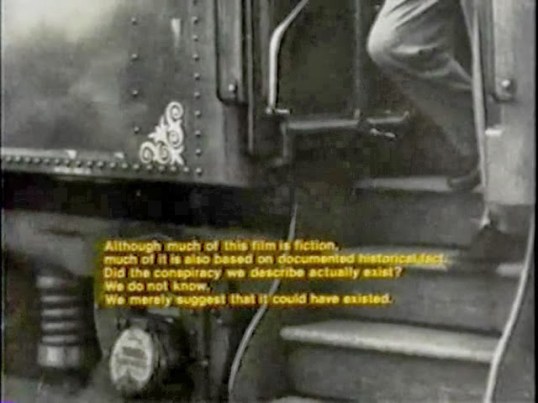
Executive Action opens with a series of grainy, black-and-white photographs of both America in the 1960s and the men who, over the course of the film, will be portrayed as having plotted and carried out the assassination of President Kennedy while a mournful piano plays in the background. It’s a low-key but eerily effective opening and it also lets the viewers know exactly what type of film they are about to see. As opposed to Oliver Stone’s far better known JFK, Executive Action is a low-key, almost deliberately undramatic film. Despite the fact that there are some familiar faces in the cast (or, at the very least, familiar faces to those of us who watch TCM), Executive Action almost feels as if it could have been a documentary.
As the film opens in 1963, we see a group of very rich men talking about the future of America. Ferguson (Will Geer) and Foster (Robert Ryan) are concerned that President Kennedy’s policies are going to destroy America. Foster is worried that Kennedy is planning on cutting back on military spending. Ferguson is upset by Kennedy’s support of the Civil Rights movement. (In one memorable scene, we see Martin Luther King delivering his Dream speech on TV before the camera pulls back to reveal Ferguson watching in disgust.) Their associate, the shadowy Farrington (Burt Lancaster), argues that the only way to stop Kennedy is to assassinate him and put the blame on a lone gunman.
With the support of Ferguson and Foster, Farrington recruits a group of gunmen (led by Ed Lauter and including Roger Corman regular Dick Miller) and works to set up the perfect patsy. A man (James MacColl) goes around Dallas, acting obnoxious and telling anyone who will listen that his name is Lee Oswald. At Ferguson’s insistence, a picture is doctored to make it appear as if Lee Harvey Oswald is posing in his backyard with a rifle. As all of this goes on, the date of November 22nd steadily approaches…
As I stated before, Executive Action is an almost obsessively low-key film. That, however, works to the film’s advantage. Ferguson, Foster, Farrington, and the other conspirators are chillingly believable because they are presented almost as being anonymous. Instead of being portrayed as being super villains, they are instead men who approach assassination as just another part of doing business. The impression one gets is that Kennedy isn’t the first leader they’ve had killed and he probably wasn’t the last. Director David Miller seamlessly mixes historical footage with film reenactments and the end result is a disturbingly plausible film.
Unfortunately, Executive Action is less well-known than some of the other films that have argued that a conspiracy was responsible for the assassination for John F. Kennedy. However, it may very well be the best.
I stayed up way too late last night but it was totally worth it because I was watching a film from 1966, The Oscar.
Among those of us who love bad and campy movies from the 50s and 60s, The Oscar is a legendary film. It has a reputation for being one of best so bad-its-good-films ever made. The Oscar is a film that I’ve read about in several books but, until last night, I had never gotten a chance to actually see it. When I saw that the film was going to be on last night, I said “Sleep be damned!” and I stayed up and watched. What other choice did I have?
The Oscar takes place in a world where women are “dames” and men are “fellas” and everyone acts as if they’re a character in a Rat Pack-themed fanfic. One look at Frankie Fane (played by Stephen Boyd) and you know he’s the type of guy who snaps his fingers when he walks and probably uses pig Latin when he flirts. He’s one cool cat and as the film begins, he’s been nominated for an Academy Award for Best Actor.
The film begins at the Oscars. Frankie sits out in the audience, surrounded by Hollywood royalty and nervously waiting for the envelope to be opened. The camera pans over to Frankie’s personal manager, Hymie Kelley. Hymie stares bitterly at his former friend and suddenly, we hear his thoughts and do they ever let us know what type of movie we’re about to see.
As Hymie himself puts it:
“You finally made it, Frankie! Oscar night! And here you sit, on top of a glass mountain called “success.” You’re one of the chosen five, and the whole town’s holding its breath to see who won it. It’s been quite a climb, hasn’t it, Frankie? Down at the bottom, scuffling for dimes in those smokers, all the way to the top. Magic Hollywood! Ever think about it? I do, friend Frankie, I do…”
Hymie, incidentally, is played by the singer Tony Bennett. This was Bennett’s first dramatic film role and it was also his last. Whatever talent or magnetism Bennett may have had as a singer, it didn’t translate into screen presence. Bennett goes through the entire film looking embarrassed but who can blame him when the script calls for him to constantly tell Frankie that, “You lie down with pigs, you stand up smelling like garbage…”
As we discover through the use of flashback, Frankie has had to lay down with a lot of pigs to get his chance at winning an Oscar. After starting out his career working at sleazy clubs, Frankie, Hymie, and Frankie’s stripper girlfriend (Jill St. John) find themselves in New York. Frankie dumps his girlfriend (unaware that she’s pregnant with his child) after he meets artist Elke Sommer at a “swinging party.”
“Are you a tourist or a native?” Frankie asks her.
“Take one from column A and one from column B. You get an egg roll either way,” Sommer replies.
No wonder Frankie tells her, “You make my head hurt with all that poetry.”
Eventually, Frankie is discovered by a talent agent who takes him to see studio mogul Joseph Cotten (who went from Citizen Kane, The Magnificent Ambersons, and Third Man to this). Cotten is so impressed with Frankie that he says, “Once in a while, you bring me meat like this. It all has different names: prime rib of Gloria, shoulder cut of Johnny. MEAT!”
With the help of savvy talent agent Milton Berle, Frankie becomes a film star but he’s still a total heel who cheats on Sommer and takes advantage of Hymie’s loyalty. When Frankie gets nominated for an Oscar, he hires a sleazy private investigator (Ernest Borgnine, of course) to leak a story about Frankie’s criminal past. Frankie assumes that one of his fellow nominees will be blamed for the leak and that he’ll be able to ride a wave of sympathy to victory.
And who are Frankie’s fellow nominees? We only learn the identity of three of them – Frank Sinatra, Richard Burton, and Burt Lancaster. We never find out what movie Sinatra was nominated for but we’re told that Burton was nominated for The Grapes of Winter (which, I’m going to assume, was a film version of a Shakespeare play about Tom Joad) while Lancaster was nominated for his amazing performance in The Spanish Armada. Doesn’t that sound like an amazing film?
Oh, how to describe the delirious experience of watching The Oscar? In many ways, it is a truly terrible movie but it’s fun in the way that only a “racy” film from the mid-60s can be. Nobody plays his or her role with anything resembling subtleness. Instead, everyone spends the entire film yelling, screaming, and gritting their teeth while flaring their nostrils. Everyone, that is, except for Tony Bennett who gives a performance that has a definite community theater feel to it. Even better is the dialogue. People in this film don’t just say their lines – they exclaim them. If you’ve ever wanted to spend two hours in a world where every sentence ends with an exclamation point, watch The Oscar.
For a film that was apparently meant to be something of a love letter to the Academy, The Oscar was only nominated for two Oscars. It received nominations for Best Art Design and Best Costume Design. While I had a hard time seeing what was so impressive about the film’s art design (in the world of The Oscar, Hollywood has a definite Ikea feel to it), the costumes were fairly impressive in a tacky, 1966 type of way.
Finally, I think it’s time that somebody remake The Oscar. David Fincher can direct it, Aaron Sorkin can write the script, Jessie Eisenberg can play Frankie Fane, and Justin Timberlake would make for an adorable Hymie Kelley. For the supporting roles, I think Billy Crystal would be a natural for Milton Berle’s role and perhaps Philip Baker Hall could step into the shoes of Joseph Cotten. Perhaps veteran film blogger and self-described very important person Sasha Stone could make her film debut in Ernest Borgnine’s role.
I previously posted a review of the 1967 best picture nominee Guess Who’s Coming To Dinner that was somewhat critical of Stanley Kramer as a filmmaker. In retrospect, I feel like I may have been a bit too dismissive of Stanley Kramer. When one looks over the list of every film that has ever been nominated for best picture, one comes across the name Stanley Kramer (as a producer, a director, or both) far too many times to just blindly dismiss him for the sin of being old-fashioned. While Kramer made his share of well-intentioned misfires like Guess Who’s Coming To Dinner, he was also responsible for some films that remain important and watchable today. Judgment at Nuremberg is one of those films.
Judgment at Nuremberg opens in 1947, with one car being driven through the ruins of Nuremberg, Germany. Inside the car is Dan Haywood (Spencer Tracy), a judge from Maine who has been appointed chief of a military tribunal that will be passing judgment on four German judges who are accused of crimes against humanity for their legal rulings during the Nazi regime. As Haywood quickly learns, many people don’t feel that the Nazi judges should be held as accountable for their actions as men like Hitler, Goebbles, and Goering should have been. It’s up to Haywood to determine whether the accused were simply doing their job or if they had a responsibility to defy the laws that they had sworn to uphold.
Judgment at Nuremberg almost feels like two films. The first film is a courtroom drama, where the Nazi judges (the main one of which is played by Burt Lancaster) are prosecuted by the fiery Col. Tad Lawson (Richard Widmark) and defended by the idealistic Hans Rolfe (Maximilian Schell). While Lawson approaches the case and regards the defendants with righteous anger, Rolfe takes a more cerebral approach to defending the undefensible. Rolfe argues that the judges were following the laws of Germany and that if the tribunal finds them guilty than it will be finding the entire nation of Germany guilty. (In a rather clever twist, director Kramer and screenwriter Abby Mann initially make the German defense attorney a far more likable character than the American prosecutor.) During the trial, we also hear heart-wrenching testimony from two people (played by Montgomery Clift and Judy Garland) who were victimized by the Nazi regime and the judges who gave legal legitimacy to the regime’s crimes.
The second film deals with Haywood adjusting to working in Germany and trying to understand how the Nazis could have come to power in the first place. Haywood asks several Germans to tell him about life under the Nazis and every time, he is met with bland excuses. (“We were not political,” he is told more than once.) The film’s strongest scenes are the ones where Haywood simply walks alone through the ruins of Nuremberg. Spencer Tracy was a uniquely American actor and, much as he did in Guess Who’s Coming To Dinner, Tracy here stood in for every American who was struggling to make sense of a changing world.
In his book Pictures At A Revolution, Mark Harris correctly points out that Stanley Kramer started out as a producer and, even after he started directing, he still approached filmmaking like a producer. While that approach led to many uninspiring films, it was also the right approach for Judgment at Nuremberg. Perhaps realizing that Judgment at Nuremberg was a long and talky movie about a disturbing subject manner, Kramer made the very producer-like decision to fill Judgment at Nuremberg with recognizable faces. While this approach has proven disastrous for many films, it works quite well in Judgment at Nuremberg.
This is one of the most perfectly cast films of all time, with all of the actors bringing both their characters and the issues that they’re confronting to vivid life. As the main defendant, Burt Lancaster brings a combination of intelligence and self-loathing to his role, playing him in such a way to reveal that even he can’t believe the evil he upheld as a judge. Meanwhile, Spencer Tracy is perfectly cast as a world-weary man who is simply trying to figure out what justice means in the post-war world. Maximilian Schell plays his role with so much passion that it’s impossible not to listen to him even when you despise the argument he’s making. Marlene Dietrich has an extended cameo where she plays the widow of Nazi general who befriends Judge Haywood but still refuses to admit that she knew anything about what Adolf Hitler was doing. Even William Shatner shows up, playing a small role as Haywood’s chief military aide and yes, he does deliver his lines in that Shatner way of his.
First released in 1962, Judgment at Nuremberg won Oscars for Best Actor (Maximilian Schell) and Best Adapted Screenplay (Abby Mann) and was nominated for 9 more: Best Picture, Best Director, Best Actor (Spencer Tracy), Best Supporting Actor (Montgomery Clift), Best Supporting Actress (Judy Garland), Best Black-and-White Art Direction, Best Black-and-White Cinematography, Best Black-and-White Costume Design, and Best Film Editing. While it’s hard to argue with the victory of West Side Story in that year’s Oscar race, Judgment at Nuremberg remains a watchable and thought-provoking film.
Since it’s Oscar weekend, I’ve been watching past and present Best Picture nominees like crazy. Here are my thoughts on ten of them.
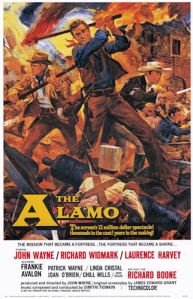
The Alamo (1960, directed by John Wayne, lost to The Apartment) — I’m a Texan which means that I’m legally required to watch both this film and the 2004 remake whenever they show up on television. Both films are way too long and feature way too many characters speaking speeches as opposed to dialogue but, if I had to choose, I would have to go with the 1960 version of the story. The original Alamo might be heavy-handed, poorly paced, and awkwardly acted but at least it’s sincere in its convictions. I always cry when Richard Widmark dies.
Becket (1964, directed by Peter Glenville, lost to My Fair Lady) — This one is a personal favorite of mine. The film is about the friendship and the eventual rivalry of King Henry II (Peter O’Toole) and Thomas Becket (Richard Burton). Becket and Henry II start out the film drinking and whoring but eventually, Henry makes Becket Archbishop of Canterbury. Becket, however, rediscovers his conscience and soon, Henry is famously asking, “Who will rid me of this troublesome priest?” Becket is an exciting historical drama and Peter O’Toole is at his absolute best as the flamboyantly decadent Henry.
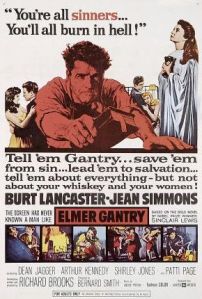
Elmer Gantry(1960, directed by Richard Brooks, lost to The Apartment) — Burt Lancaster plays Elmer Gantry, a traveling salesman and con artist who ends up falling in love with a saintly evangelist (played by Jean Simmons). Gantry soon starts preaching himself and soon has an army of loyal followers. However, Gantry’s new career is threatened when an ex-girlfriend-turned-prostitute (Shirley Jones) pops up and starts telling people how Gantry “rammed the fear of God into” her. With its unapologetically corrupt lead character and its looks at how commerce and religion are often intertwined, Elmer Gantry makes a perfect companion piece to Paul Thomas Anderson’s There Will Be Blood. Lancaster won an Oscar for his powerful and intense performance in the title role.
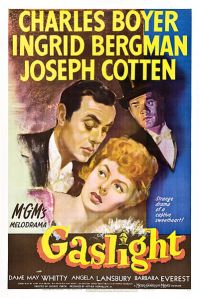
Gaslight (1944, directed by George Cukor, lost to Going My Way) — Evil Charles Boyer marries Ingrid Bergman and then attempts to drive her crazy. Luckily, Inspector Joseph Cotten is on the case. Gaslight is, in many ways, an old-fashioned melodrama but it’s still a lot of fun to watch. Boyer is a suave devil and Joseph Cotten (one of my favorite of the old film actors) is a dashing hero.
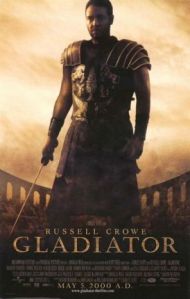
Gladiator(2ooo, directed by Ridley Scott, won best picture) — One thing that I’ve recently discovered is that men love Gladiator. Seriously, they obsess over this film and hold Russell Crowe’s surly gladiator up as some sort of mystical ideal and if you dare to say a word against it in their presence, be ready for big and long argument. So, I won’t criticize Gladiator too much other than to say that the film has always struck me as being kinda overlong, that the CGI is occasionally cartoonish, and that, despite his fearsome reputation, Russell Crowe is a lot more interesting as an actor when he plays a thinker as opposed to a fighter. Joaquin Phoenix, playing the Emperor Commodus, is a lot of fun to watch.
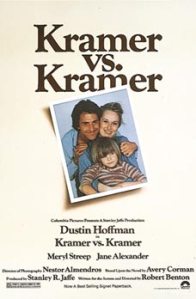
Kramer Vs. Kramer(1979, directed by Robert Benton, won best picture) — Dustin Hoffman plays a workaholic New York advertising executive who, after his wife Meryl Streep leaves him, ends up as a single father. Kramer Vs. Kramer won best picture in 1979 but I have to admit that I didn’t care much for it. Then again, I don’t think that I was the intended audience. Instead, Kramer vs. Kramer appears to have been made to appeal to men frustrated with women wanting to have a life outside of being a domestic servant. The film is well-acted though Hoffman’s character becomes insufferably smug once he gets comfortable with being a single father.
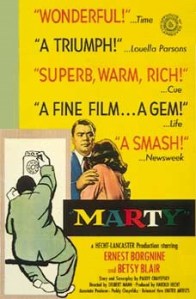
Marty (1955, directd by Delbert Mann, won best picture) — Lonely butcher Marty (Ernest Borgnine) romantically pursues a shy school teacher named Clara (Betsy Blair). However, Marty’s friends and his family don’t like Clara and Marty soon finds himself having to choose between them. Marty is a bit of an anomaly when it comes to best picture winners. It’s not an epic, it doesn’t claim to solve any of the world’s problems, and it’s based on a tv show. However, it’s also a sincerely sweet and heartfelt film and also features excellent performances from Borgnine and Blair.
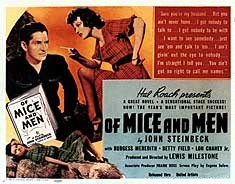
Of Mice and Men(1939, directed by Lewis Milestone, lost to Gone With The Wind) — “Tell me about the rabbits, George.” Yes, it’s that film. Smart and little George (Burgess Meredith) and big but simple Lenny (Lon Chaney, Jr.) are migrant farm workers who get a job working at ranch where Lenny ends up accidentally killing the rancher’s daughter-in-law. Despite the fact that we all now tend to naturally smirk when we hear anyone say “Tell me about the rabbits, George,” Of Mice and Men remains an effective tear-jerker and both Meredith and Chaney give strong performances.
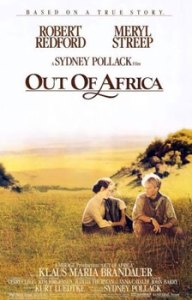
Out of Africa(1985, directed by Sydney Pollack, won best picture) — I recently sat down to watch this film because 1) my aunts love this film and get excited whenever they see that it’s going to be on TV and 2) Out of Africa was named the best film of the year I was born. So, I sat down and watched it and then three or five hours later, I realized that the film was nearly over. Anyway, the film is about a Danish baroness (Meryl Streep) who moves to a plantation in Africa and ends up having an affair with a British big game hunter. The hunter is played by Robert Redford, who refuses to even try to sound British. (USA! USA! USA!) Anyway, the film is pretty in that generic way that most best picture winners are but the film ultimately suffers because its difficult to care about any of the characters. Streep acts the Hell out of her Danish accent but she and Redford (who seems to be bored with her) have absolutely no chemistry. I saw one review online that dismissed Out of Africa as a “big budget Lifetime movie” but Lifetime movies are a lot more fun.
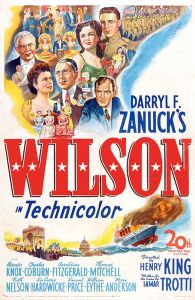
Wilson (1944, directed by Henry King, lost to Going My Way) — Wilson is a two-and-a-half biopic about Woodrow Wilson and his presidential administration. Wilson is well-played by Alexander Knox, who later showed up in countless exploitation films. Wilson shows up on cable occasionally and every time I’ve seen it, I’ve had mixed feelings about it. The critical part of me tends to be dismissive of this film because it’s way too long, extremely stagey, and it glosses over the fact that Wilson was a virulent racist who idolized the Ku Klux Klan. However, as a secret history nerd, I can’t help but enjoy seeing a film where Vincent Price plays the Secretary of the Treasury.
“The one constant through all the years, Ray, has been baseball. America has rolled by like an army of steamrollers. It has been erased like a blackboard, rebuilt and erased again. But baseball has marked the time.” — Terence Mann
I have always been a fan of baseball. I would say that baseball has been the one thing which has always remained constant for me throughout the years. Other sports may be flashier, faster and more violent, but baseball I’ve always equated as part of America’s national identity. This is why 1989’s Field Of Dreams by Phil Alden Robinson continues to resonate for me and for legions of baseball fans everywhere.
The film is based off of the W.P. Kinsella’s novel, Shoeless Joe, and tells the story of one Ray Kinsella and his titular field of dreams. It’s a film which sees Ray not just building a baseball field in his field of corn despite financial problems bringing him and his family closer to losing everything, but it also sees him traveling across the country to find a reclusive writer in Terence Mann (J.D. Salinger in the novel). It’s afilm which offers an insight to what makes baseball and the American identity so intertwined as the film finally offers Ray a chance to finally realize that the very baseball field he has built in his cornfield has granted many a second chance to realize their dream. For this film that dream is to be able to play baseball once more and this second chance becomes important to the ghosts of baseball’s past who have fallen from baseball’s grace through a scandal which had them banned from the game they love.
I’ve never been a big Kevin Costner fan, but his work in this film as Ray Kinsella showed me why people saw in him talent as an actor and not just a pretty face up on the screen. His real-life love for baseball shows in his performance as Ray whose own love for baseball becomes a personal journey for redemption and reunion with a father who also shared his love for the sport. The performances by Amy Madigan as Ray’s supportive wife was quite good and allowed the character not to be eclipsed by Costner’s excellent work as Ray. Even James Earl Jones as the writer Terence Mann gives the film a level of gravitas which just added to the film’s intimate yet epic nature. But it’s the breakout performance by Ray Liotta as the ghost of baseball great Shoeless Joe Jackson. Liotta’s screentime was limited to mostly in the latter part of the film, but his presence dominated every moment he was on the screen.
Field of Dreams has been called just a good baseball film by some, but for many people who have seen and loved it see it as more than just a film about baseball. It’s a film that shows Americana at it’s best and most nostalgic. Shows how one sport has become such a positive influence on the relationship between children and their fathers. It’s a film that dares to show genuine affection and love to the idea of letting someone follow their dream despite many outside influences and obstacles trying to get in their way. There’s a reason the film was nominated for an Oscar Best Picture. Even voters who are so used to rewarding films that look at the darker and more depressing side of the human condition could see the inherent quality in a film which looks at the brighter and more hopeful side of the equation.
Sometimes, you have to be careful which films you choose to watch over the course of the day.
Such as, last Friday night, I heard the news that Jill Clayburgh had died and I ended up watching An Unmarried Woman. This, along with the fact that I also watched the Black Swan trailer, led to me dancing around the house in my underwear, en pointe in bare feet, and doing a half-assed pirouette in the living room. And I felt pretty proud of myself until I woke up Saturday morning and my ankle (which I don’t think has ever properly healed from the day, seven years ago, that I fell down a flight of stairs and broke it in two places) literally felt like it was on fire. That was my body’s way of saying, “You ain’t living in a movie, bitch. Deal with it.”
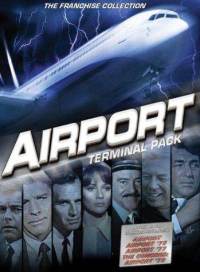
So, come Sunday, I decided to play it safe by watching something that I was sure wouldn’t lead to any imitative behavior on my part. Since I had previously reviewed Earthquake on this site, I decided that I would devote some time to the movies that started the entire 1970s disaster movie genre — Airport. Watching Airport led to me watching Airport’s three sequels.
I was able to do this largely because I own the Airport Terminal Pack, a two-disk DVD collection that contains all four of the Airport films and nothing else. There’s no special features or commentary tracks. That’s probably a good thing because these films are so extremely mainstream that I doubt the commentary tracks would be all that interesting except to people who love “Me and Jennings Lang had the same lawyer…” style stories.
The movies are a mixed bag of ’70s sexism, mainstream greed, and casts that were described as being “all-star” despite the fact that they featured very few stars. They’re all worth watching as time capsules of a past time. Some of them are just more worthy than others.
Below are my thoughts on each individual film in the collection…
Airport (directed by George Seaton)
First released in 1970, Airport was nominated for 10 Academy Awards (including best picture), broke box office records, and started the whole 70s disaster movie trend. It also has to be one of the most boring, borderline unwatchable movies ever made. The fact that I managed to sit through the whole thing should be taken as proof that I’m either truly dedicated to watching movies or I’m just insane. Take your pick.
Anyway, the film is painstakingly detailed account of the every day operations of an airport. Yeah, sounds like a lot of fun, doesn’t it? Burt Lancaster runs the airport. His brother-in-law Dean Martin flies airplanes. Both of them have mistresses but we’re told that’s okay because Lancaster’s wife expects him to talk to her and Martin’s wife is cool with him fucking around as long as he comes home at night. I would be tempted to say that this is a result of the film having been made in 1969 and released in 1970 but actually, it’s just an introduction to the sexual politics of the typical disaster film. Men save the day while women get in the way. And if you think things have changed, I’d suggest you watch a little film calledf 2012…
The only interesting thing about the film is that Lancaster’s mistress is played by Jean Seberg who, ten years earlier, had helped change film history by co-starring in Jean-Luc Godard’s classic film Breathless. Nine years later, after years of being hounded by the American press and the FBI for her radical politics, Seberg committed suicide.
Airport 1975 (directed by Jack Smight)
As opposed to its predecessor, Airport 1975 is actually a lot of fun in its campy, silly way. This is the one where a small private plane (flown by Dana Andrews, the star of the wonderful film noir Laura) collides with a commercial airliner. The entire flight crew is taken out and head stewardess Karen Black has to pilot the plane despite the fact that she’s obviously cross-eyed. Luckily, since Black is a stewardess, she has a pilot boyfriend who is played by Charlton Heston. Heston talks her through the entire flight despite the fact that she was earlier seen trying to pressure him into not treating her like an idiot. Anyway, Heston does his usual clench-jaw thing and if you need a drinking game to go with your bad movie, just take a shot every time Heston calls Black “honey.” You’ll be drunk before the plane lands.
There’s some other stuff going on in this movie (for instance, Gloria Swanson appears as “herself” and doesn’t mention Sunset Boulevard or Joseph Kennedy once!) but really, all you need to know is that this is the film where Karen Black acts up a storm and random characters keep saying, “The stewardess is flying the plane!?”
Odd trivia fact: Airport 1975 was released in 1974.
Airport ’77 (directed by Jerry Jameson)
In Airport ’77, a group of art thieves attempt to hijack an airplane which, of course, leads to the airplane crashing into the ocean and somehow sinking down to the ocean’s floor without splitting apart. The crash survivors have to try to figure out how to get to the surface of the water before they run out of oxygen.
In this case, our resident sexist pilot is Jack Lemmon who has a really ugly mustache. He wants to marry head stewardess Brenda Vaccarro. Vaccarro doesn’t understand why they have to get married to which Lemmon responds, “Because I want a wife and kids!” The film also gives us Lee Grant as a woman who is married to Christopher Lee but who is having an affair with another man. She also drinks a lot and dares to get angry when she realizes that the airplane is underwater. While this sort of behavior is acceptable from Dean Martin, Charlton Heston, and Jack Lemmon, the film punishes Lee Grant by drowning her in the final minutes.
Technically, Airport ’77 is probably the best of the Airport films. The cast does a pretty good job with all the melodrama, the film doesn’t drag, and a few of the scenes manage to generate something resembling human emotion. (For instance, when the blind piano player died, I had a tear in one of my freaky, mismatched eyes.) Unfortunately, the movie’s almost too good. It’s not a lot of fun. Everyone plays their roles straight so the silly plot never quite descends into camp and the key to a good disaster film is always camp. This film also has the largest body count of the series, with most of the cast dead by the end of the movie. (And, incidentally, this film did nothing to help me with my fear of water…)
The Concorde: Airport ’79 (directed by David Lowell Rich)
The last Airport movie is also the strangest. Some people have claimed that this film was meant to be a satire of the previous Airport films. I can understand the argument because you look at film like Concorde and you say, “This must be a joke!” However, the problem with this theory is that there are moments of obvious “intentional” humor in this film (i.e., J.J. from Good Times smokes weed in the plane’s bathroom, another passenger has to go to the bathroom whenever she gets nervous) and none of them show any evidence of the type of wit and outlook necessary to come up with anything this silly on purpose. Add to that, the film’s story is credited to Jennings Lang, a studio executive. Studio execs do not take chances. (Plus, the actual script was written by Eric Roth, who went on to write the amazingly humorless The Curious Case of Benjamin Button).
No, this film is meant to be taken seriously and oh my God, where do I start?
Our pilots are George Kennedy and Alain Delon. The head stewardess (and naturally, Delon’s girlfiend) is played by Sylvia “Emanuelle” Kristel who, at one point, says, “You pilots are such men!” “Hey, they don’t call it a cockpit for nothing, honey,” Kennedy replies.
Meanwhile, Robert Wagner is trying to destroy the Concorde because one of the passengers is his girlfriend who has proof that Wagner has been selling weapons to America’s enemies. So, he attempts to blow the plane up with a guided missile and when that fails, he sends a couple of fighter planes after them. Kennedy responds by opening up the cockpit window — while breaking the sound barrier mind you — and firing a flare gun at their pursuers.
After this, there’s stop over in Paris where Delon arranges for Kennedy to sleep with a prostitute who assures Kennedy that he made love “just like a happy fish.”
The next day, everyone returns to the exact same Concorde — despite the fact that just a day earlier they’d nearly been blown up by a squadron of fighter planes — and take off on the second leg of the flight. Let me repeat that just to make sure that we all understand what this film is asking us to believe. After nearly getting blown up by a mysterious squad of fighter planes, everybody shows up the next morning to get on the exact same plane.
Oh, and it never occurs to Wagner’s ex-girlfriend that Wagner might have something to do with all of this.
Now sad to say, Concorde is the one of those films that’s a lot more fun to talk about than to actually watch. It should be a lot more fun in its badness than it actually is. Still, the movie has just enough camp appeal to make it fun in a “what the fuck…” sorta way.
And that’s how the Airport series comes to an end.






 Through the Shattered Lens