Playing Catch-Up With The Films of 2017: Churchill (dir by Jonathan Teplitzky)


2017 is shaping up to be the year of films about Winston Churchill.

For instance, Dunkirk has been an Oscar front-runner ever since it was released last summer.  Winston Churchill does not actually appear in Dunkirk but his shadow hangs over the entire film.  Whenever Mark Rylance says that he’s doing what the prime minister requested him to do, we know that he’s talking about Winston Churchill.

Darkest Hour, which I hope to see this week, features Gary Oldman in the role of Churchill.  For most of the year, a lot of people (like me) assumed that Darkest Hour would be a definite best picture nominee and a probable winner.  While the film seems to have lost a little of its luster, everyone still seems to agree that Gary Oldman is not only going to be nominated by best actor but that he also has a pretty chance of finally winning.

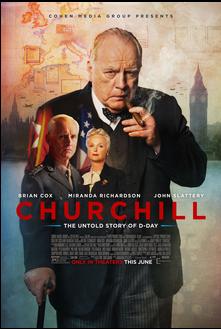
However, before either of those films were released, there was Churchill.  Chuchill received a very limited release in June.  It starred Brian Cox in the title role and it took place in the days leading up to D-Day.  It follows Churchill as he struggles with self-doubt.  He is haunted by nightmares about the men he lost while a military commander in 1915.  He worries that he is being marginalized by the Americans (represented by John Slattery in the role of Dwight D. Eisenhower).  He worries that if he authorizes the invasion of Normandy, he’ll run the risk of losing whatever prestige he has left.  What if the invasion ends in disaster?

That question right there is the main problem with Churchill.  If you know anything about history, you know that the invasion of Normandy was a victory for the Allies, albeit a costly one.  Therefore, for this film to maintain any sort of suspense about what ‘s going to happen, it has to be viewed by people who don’t know about history.  But people who don’t care about history probably won’t be interested in watching a somewhat stuffy film about Winston Churchill.

Despite a few surrealistic nightmare sequences, Churchill ultimately feels like it belongs more on PBS than a movie screen.  It doesn’t surprise me to learn that the majority of director Jonathan Treplitzky’s work has been for British television because Churchill really does feel like a heavily edited version of a 6-hour miniseries.  You watch and you’re impressed by the production values and some of the performances but you find yourself wondering if certain have scenes have been cut out.  If Churchill had been made for HBO, I imagine that Brian Cox and Miranda Richardson (as Churchill’s wife) would be Emmy front-runners.  But, as a feature film, it feels like a decidedly minor portrayal of a major figure.

One final note: all films about the British government during World War II are required to feature at least one scene with King George VI.  Colin Firth, in The King’s Speech, remains the best George.  Laurence Fox in W.E. was the worst.  In Churchill, King George VI is played by James Purefoy.  He doesn’t have a big role but he does a good job with it.  To be honest, I wish that his role had been bigger because he and Cox are entertaining to watch when they’re acting opposite each other.

http://www.youtube.com/watch?v=sVOzMZ4IrMA


The TSL’s Horror Grindhouse: The Autopsy of Jane Doe (dir by André Øvredal)


I have to admit that I’ve watched so many horror films that I’m sometimes tempted to get a little bit jaded about them.

Don’t get me wrong.  I love the genre.  I love watching horror movies.  I love analyzing horror movies.  I love writing about horror movies.  It’s just that, after you’ve watched a few hundred of them, it becomes easier to pick up on all the little tricks.  For instance, I now know not to worry whenever anyone hears a strange sound in the kitchen because it’s inevitably just going to be a cat in a cabinet.  Instead, it’s only after the cat has run by and caused everyone to jump that you have to start worrying about something terrible to happen.  I also know that there’s a good chance that the first chase scene is going to turn out to be an elaborate nightmare.  As such, I sometimes I get cynical about whether or not I can really be frightened anymore.

But then I watch something like The Autopsy of Jane Doe.

I watched The Autopsy of Jane Doe back in Decemeber.  It was two in the morning.  I was alone in the house.  It was raining outside.  I was having trouble sleeping so, of course, I decided why not sit in the dark in my underwear and watch a horror movie?  At the time, it didn’t occur to me that I was essentially putting myself in a classic horror movie situation.  It was only later, when I was lying in bed with all the lights on and freaking out about every little noise that I heard that I realized my mistake.

The Autopsy of Jane Doe takes place in a morgue in a small town.  The body of a woman has been brought in.  It is believed that she died in a house fire but there are no signs of trauma on her body.  Her finger prints are not on record.  No one knows who she is.  Over the course of the night, coroner Tommy Tilden (Brian Cox) and his son, Austin (Emile Hirsch), examine the body.  With each incision, the mystery of Jane Doe’s identity deepens.  The inside of her body is as damaged as the outside is perfect.

As the night continues, strange things start to happen inside the morgue.  It’s small things at first.  Strange sounds are heard.  Austin thinks that he sees something out of the corner of his eye.  A storm starts to rage outside.  Austin says that they should stop the autopsy but Tommy says that they have to finish what they’ve started…

And things only escalate from there.

The Autopsy of Jane Doe sneaks up on you.  It starts out as a collection of small scares and subtle hints that all is not right.  At first, you’re kind of like, “Yeah, it’s weird noises and shadows in the corner.  It’s a horror movie.  Of course, that’s going on…”  And then suddenly, about halfway through the film, you realize that you’re totally tense.  All of those small scares have added up, leaving you wondering when the big scares are going to start.  And when those big scares do arrive, they deliver.  By confining the movie to one location, director André Øvredal creates a palpable atmosphere of claustrophobia and impending doom.  It helps that Brian Cox is one of those older, paternal actors who you always expect to be in control of things so seeing him in a situation where he has no control carries an unexpectedly strong emotional impact.

If you doubt the power of horror, The Autopsy of Jane Doe will make you a believer.

Film Review: The Ring (dir by Gore Verbinski)


the-ring-2

(SPOILERS BELOW!)

This weekend, I will be seeing Rings, the second sequel to the 2002 film, The Ring.  (Of course, The Ring itself is a remake of the Japanese film, Ringu.)  Since it’s been a while since we’ve had a new installment in the Ring franchise, I decided to rewatch the first film tonight.

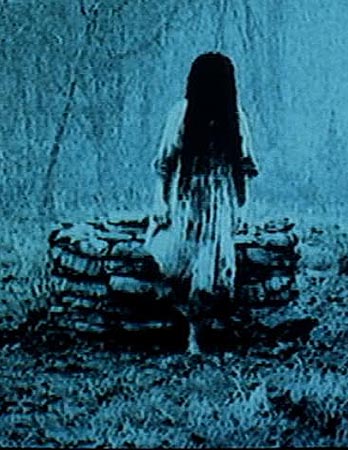
I have to admit that I had a few concerns before I rewatched The Ring.  When I first saw The Ring, it scared me to the extent that I actually had nightmares afterward.  Even after all these years, the image of that little girl emerging from the well and then crawling out of the television still makes me shiver.  But even with that in mind, I still found myself wondering if The Ring would live up to my vivid memories.

After all, it’s been 14 years since The Ring was released and, since that time, it’s been copied and imitated by literally hundreds of other PG-13 rated horror movies.  Would the shocks still be effective, now that I knew they were coming and that I would no longer be surprised to learn that the little girl in the well was actually evil?

Add to that, there was the question of technology.  In 2002, it seemed all too plausible that people could be trading back and forth a cursed VHS tape.  The Ring was made at a time when DVDs were still considered to be exotic.  When The Ring first came out, YouTube didn’t even exist.  But today, both VHS tapes and VCRs are artifacts of another era.  DVDs have been replaced by Blu-rays and Blu-rays are in the process of being replaced by streaming services.  For The Ring to work, you had to be able to relate to people watching a VHS tape.  Today, all of these people would be too busy watching cute cat videos on YouTube to fall into The Ring‘s trap.

In short, would The Ring still work in the age of Netflix?  And would the film still be as scary as it was when it was first released?  These were the question that I found myself wondering as I sat down to rewatch The Ring.

And the answer to both questions is … for the most part, yes.

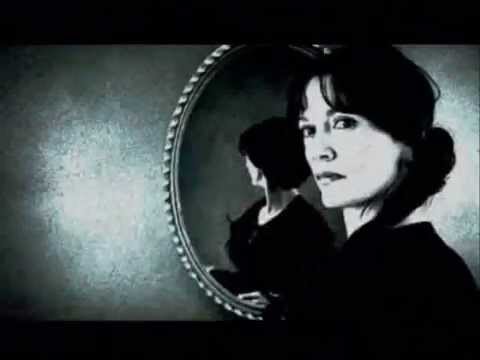
Here’s the good news.  All the important things still work.  The performances of Martin Henderson, David Dorfman, Amber Tamblyn, and especially Naomi Watts hold up well.  Gore Verbinski’s direction is still effective and, as I rewatched the film, I was surprised to see how many odd and quirky details that Verbinski managed to work into the film.  (I especially enjoyed the magic-obsessed desk clerk.)  The cursed video was still creepy and compulsively watchable and I still felt uneasy while watching Anna Morgan (played by Shannon Cochran) comb her hair in that mirror.  Even more importantly, the little girl in the well, Samara Morgan (Daveigh Chase), was still incredibly frightening.

Admittedly, The Ring is dated and some of its effectiveness has been diluted by imitation.  Unfortunately, that’s something that happens with any financially successful horror film.  Beyond that, as effective as the entire film was, there were parts of The Ring that did feel undeniably silly.  There’s a lengthy scene in which Naomi Watts, while on a ferry, attempts to talk to a horse and the horse reacts by jumping into the ocean.  I understand that the scene was probably meant to establish that, as a result of watching that videotape, Watts was now cursed.  But, still, I kept wondering why Watts was bothering the horse in the first place.  I mean, I love horses too but I know better than to disturb one while on a ferry.  As well, the film’s opening sequence — in which Amber Tamblyn is menaced and ultimately killed by Samara — no longer felt as effective as it did when I first saw it, largely due to the fact that it’s been copied by so many other horror films.  Imitation may be the ultimate compliment but it does tend to dilute the effectiveness of horror.

But, in the end, The Ring held up well enough.  The film’s storyline — characters watch a cursed video tape and then, seven days later, are killed by Samara — was simple but enjoyable.  And, when David Dorfman delivered his classic line: “No.  You weren’t supposed to help her,” I still felt a chill run down my spine.

Will Rings hold up as well as The Ring?

I’ll find out this weekend!

the-ring

Playing Catch-Up With The Lesser Films of 2015: Get Hard, Paul Blart: Mall Cop 2, Pixels, The Wedding Ringer


SPOILER ALERT!

One or more of the films reviewed below will appear on my list of the 16 Worst Films of 2015!  Can you guess which one(s)?

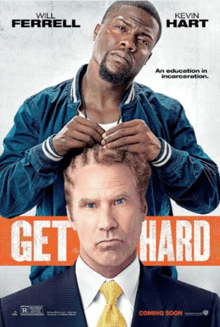
Get_Hard_film_poster

Get Hard (dir by Etan Cohen)

Will Ferrell is funny and Kevin Hart is funny and you would think that putting them together in one movie would be especially funny but … nope.  Get Hard, which I watched on HBO a few weeks ago, is incredibly not funny.  Ferrell plays a hedge fund manager who is convicted of fraud and embezzlement and it’s a sign of how haphazard this film is that I was never really sure whether he was supposed to be guilty or not.  Anyway, Ferrell is terrified of going to prison but fortunately, he runs into Kevin Hart.  Hart is playing the owner of a car wash here, a mild-mannered family man who simply wants to be able to afford to send his daughter to a good school.  However, Ferrell assumes that, since Hart is black, Hart must be an ex-con.

So, Ferrell hires Hart to teach him how to survive in prison and Hart agrees.  And, to be honest, this is not a terrible idea for an edgy satire but the film pulls it punches and never really exposes or challenges the racism that led to Ferrell hiring Hart in the first place.  Instead, it’s more interested in making homophobic jokes about prison rape (there’s a particularly long and unpleasant scene where Ferrell attempts to learn how to give a blow job that feels like it was lifted from a deservedly forgotten 90s film) and eventually, it devolves into a painfully predictable action film.

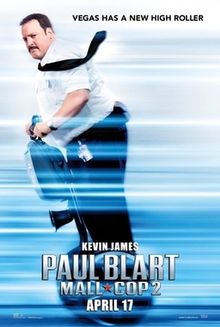
Paul_Blart_-_Mall_Cop_2_poster

Paul Blart: Mall Cop 2 (dir by Andy Fickman)

I know what someone out there is saying.

“YOU’VE NEVER EVEN SEEN THE FIRST PAUL BLART: MALL COP!!!  WHO THE HELL ARE YOU TO REVIEW THE SEQUEL!?”

Well, listen — it’s true.  I’ve never seen the first film and the only reason I watched the second one (on HBO at a friend’s house, which means that it literally cost me nothing) was because I had heard how terrible it was and I figured that I should see it before making out my list of the worst films of the year.  But, even with that in mind, I think I can still give this film a fair review.

(At the very least, I’ll try.  Dammit, I’ll try.)

Paul Blart: Mall Cop 2 is one of those films that is so forgettable that you forget about it while you’re watching.  Kevin James plays Paul Blart, a mall security guard who goes to Las Vegas for a security guard convention and ends up getting involved in thwarting a big heist.  It’s a comedy, though I can’t think of a single time I laughed.  Paul Blart: Mall Cop 2 was not quite the abomination that I had been led to expect.  It was, in no way, comparable to Birdemic, April Rain, or Man of Steel.  Instead, it was just an incredibly empty and soulless film.  It was a zombie movie that existed only to eat money.

One thing that is frustrating about a film like Paul Blart: Mall Cop 2 is that Kevin James seems like he could actually survive appearing in a good film, if he could just get a chance to make one.  He’s likable and he’s got an everyman quality about him.  But, for now, he seems to be trapped in films where he either plays Paul Blart or he’s surrounded by talking animals.

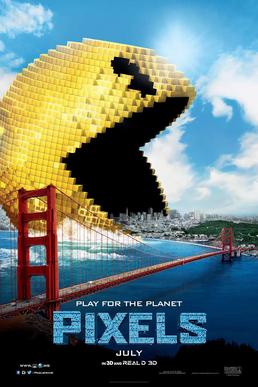
PixelsOfficialPoster

Pixels (dir by Chris Columbus)

Speaking of Kevin James, he’s also in Pixels!  He plays William Cooper.  When he was a kid, he was obsessed with playing video games.  Now that he’s an adult, he’s the President of the United States!  And he still keeps in contact with his best friend from childhood, Sam.  Sam, needless to say, will never be President.  When Sam was a kid, he was traumatized when he lost a national video game championship.  Now that he’s an adult, he installs home-theater systems and he’s played by Adam Sandler…

When Earth is invaded, it turns out that the aliens are under the impression that video games are real!  So, they recreate a bunch of classic video game characters and send them off to do havoc.  Who better to stop them than the President and Sam?  And who better to help than a nerdy conspiracy theorist (Josh Gad) and Eddie Planet (Peter Dinklage), the same guy who cheated in order to defeat Sam at the video game championship….

If you’re thinking that sounds like way too much plot for a silly comedy about video games coming to life, you’re right.  Pixels has some cute moments (though, based on the comments and occasional laughter of the middle-aged people in the theater around me, I get the feeling that a lot of the film’s video game-themed humor was a bit too “before my time” for me to fully appreciate) but oh my God, it was such an unnecessarily busy movie.  The idea behind Pixels had some potential but the film refused to take advantage of it.

I’ve said this before and I always get some strange looks but I honestly do think that — if he would actually break out of his comfort zone and stop doing movies that mostly seem to be about finding an excuse to hang out with his friends — Adam Sandler could be an acceptable dramatic actor.  Check out his work in Punch-Drunk Love, Funny People, Reign Over Me, Spanglish, and even the first half of The Cobbler.  (Tarantino even wrote the role of Donny Donowitz in Inglourious Basterds with Sandler in mind.)  The fact that Sandler could be doing good work makes his continual bad work all the more frustrating and annoying.

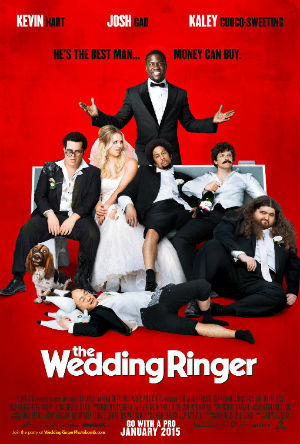
TheWeddingRingerPoster

The Wedding Ringer (dir by Jeremy Garelick)

And speaking of Josh Gad…he’s also in The Wedding Ringer!  For that matter, so is Kevin Hart.  Hart plays a guy who, for a sizable fee, will pretend to the lifelong best friend (and best man) for grooms who do not have enough real friends to fill out a wedding party.  Hart refuses to get emotionally involved with his clients but that all changes when, despite himself, he becomes friends with Josh Gad, who is on the verge of getting married to Kaley Cuoco.

The Wedding Ringer got terrible reviews but it also was very popular with audiences and I imagine a lot of that had to do with the relationship between Hart and Gad.  Both of them give very sincere performances that elevate some otherwise unpromising material.  The Wedding Ringer wasn’t good (it’s predictable, it’s portrayal of Kaley Cuoco’s character verges on misogynistic) but, at the same time, it wasn’t as bad as it was made out to be.  In the end, it was pretty much a typical January film.

I'm so excited!  I'm so excited!  I'm so ... wait a minute, am I just here because this is a post about bad movies?

I’m so excited! I’m so excited! I’m so … wait a minute, am I just here because this is a post about bad movies?

Which of these four films will make my list of the worst 16 films of 2015?  The answer shall be revealed soon!


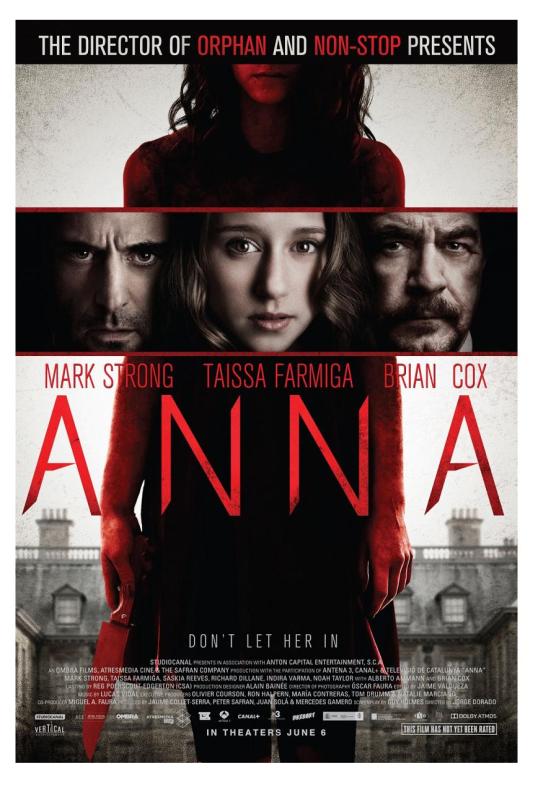
Film Review: Anna (dir by Jorge Dorado)


AnnaI just finished watching Anna, a Spanish thriller that was briefly given an American release way back in June.  Anna (which was produced under the title Mindscape) got fairly bad reviews, with many critics dismissing it as being a weak imitation of Inception.

Having now seen the film, I can say that, once again, the critics were wrong.

Oh, don’t get me wrong.  It’s obvious that without Inception, there never would have been an Anna.  But, as any fan of old school Italian horror can tell you, imitation is not necessarily a bad thing.  Anna may start out as a low-budget take on Inception but, by the end of the film, it has established its own unique identity.

Anna tells the story of John (Mark Strong), a “memory detective.”  John has the power to enter into people’s memories, where he can search for clues to help people deal with psychological trauma and to occasionally help the police solve crimes.  At the start of the film, John is recovering from a trauma of his own.  After their son dies, his wife — who is also a memory detective — retreats so deeply into her memories that she can’t come back.  (Yes, I know.  It’s exactly like Inception.  Just be patient…)  While exploring the memories of an assault victim, John’s own memories start to intrude on the victim’s memories, leading to John having a stroke.

After John recovers from the stroke, he finds himself both financially destitute and emotionally unstable.  His boss (Brian Cox) takes sympathy on John and assigns him to what should be an easy case.  16 year-old Anna (Taissa Farmiga) is refusing to eat and her extremely wealthy parents want to know why.

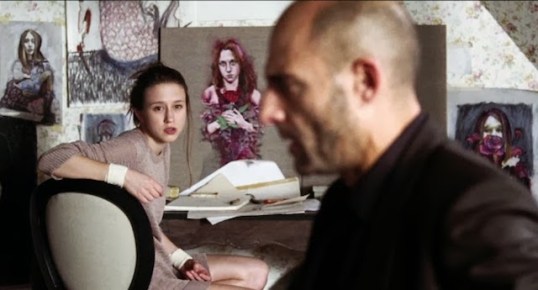
John meets Anna and discovers that she’s a sarcastic, intelligent, and withdrawn teenager.  When John enters into her mind, he discovers memories of neglect and abuse.  The night after John first enters Anna’s memories, her nurse is pushed down a flight of stairs.  The nurse claims that Anna pushed her while Anna swears that she’s being framed.  Anna’s parents, meanwhile, have signed papers to have her committed, giving John just a few days to determine what’s behind Anna’s behavior.

Convinced that she’s innocent, John enters into Anna’s memories and searches for clues that will answer the question of whether Anna is a victim or a sociopath.  As he does so, he finds more and more evidence that Anna was abused.  However, he also starts to discover hints that there may be more to Anna’s memories than he originally realized.

Anna is a good and entertaining mystery of a film, one that takes its time telling its multi-layered story.  Jorge Dorado makes his directorial debut with Anna and he wisely emphasizes characterization and atmosphere above all else.  There’s a dream-like sense of menace that fills every frame of the film, casting a palpable feeling of unease over both John and the audience.  As a result of his work here, I’m definitely looking forward to seeing what Dorado does in the future.

Mark Strong is a talented and intelligent actor who has gotten typecast as a villain.  As such, it’s nice to see him actually get a chance to be the star for once.  Strong gives a sympathetic performance while adding just enough instability that the audience is never totally at ease with John.  The same can also be said of Taissa Farmiga, who gives a wonderfully ambiguous performance that makes Anna both innocent and destructive at the same time.  Anna keeps both John and the audience guessing until the very end of the film.

Anna is currently making the rounds on cable.  I would recommend keeping an eye out for it.

strong


Lisa Reviews The Oscar Nominees: Nicholas and Alexandra (dir by Franklin J. Schaffner)


Nicholas_and_Alexandra-831476012-large

(Depending on how much you know about world history, the review below may contain spoilers.)

It was nearly four years ago that I decided that my goal in life was to watch and review every single film — no matter how obscure or potentially disappointing — that had ever been nominated for best picture.  Of course, that’s not my only goal.  If anything, I may have too many, often contradictory goals in my life.  But seeing all of the best picture nominees was definitely one of them and, all these years later, it’s a goal that I’m still trying to achieve.  With the help of TCM and their nonstop schedule of movies made long before I was born, it’s also a goal on which I am slowly but surely making progress.

Last night, as I scrolled through the guide, I noticed that TCM would be showing Nicholas and Alexandra, a three and a half hour film from 1971.  Now normally, I would be hesitant about watching a film that long, if just because I have ADHD and I doubt I’d be able to concentrate on it.  In a theater, watching the action unfold on a big screen, it wouldn’t be a big deal.  However, it’s totally different when you’re talking watching a movie on TV in a house that is full of potential distractions.  Add to that, Wednesday night is when I usually watch shows like Survivor, Hell’s Kitchen, and South Park.

But, here’s the thing.  The title Nicholas and Alexandra sounded familiar to me and not just because I’m an obsessive history nerd.  I did some checking and I discovered that, regardless of how obscure the film may be today, Nicholas and Alexandra was nominated for best picture.  It lost to The French Connection but it was nominated.

So, of course, I had to watch it.

And you know what?

NA

It’s not a terrible movie.  It’s certainly not great.  It has multiple flaws and it’s hard to imagine this film being nominated alongside films like The French Connection, Last Picture Show, and A Clockwork Orange.  Watching the movie, I got the feeling it was probably nominated because it was a big, expensive epic and not because it was one of the best of the year.  But, if you stick with the film (which, if we’re going to be honest here, is much easier said than done), it’s not quite as disappointing as you might expect it to be.

Nicholas and Alexandra tells the story of the last monarch of Russia, Tsar Nicholas II (Michael Jayston).  Struggling to escape the shadow of his father and incapable of understanding what life is like for those not born into royalty, Nicholas is portrayed as being well-meaning but autocratic and blind to the fact that the days of royalty are rapidly coming to an end.  His wife, Alexandra (Janet Susman) is also unpopular with both the Russian citizenry and the royal court on account of being German.

Alexandra spends most her time doting on her youngest son, Alexei, who suffers from hemophilia.  When a flamboyant Serbian monk named Rasputin (Tom Baker) claims that he has the power to heal Alexei, Alexandra immediately brings him into the court.  Soon, rumors are flying across Russia about Rasputin’s relationship with Alexandra.

Meanwhile, men with names like Lenin (Michael Bryant), Trotsky (Brian Cox), and Stalin (James Hazeldine) are plotting to lead a “worker’s revolution…”

If you know anything about history, it’s not really a spoiler to reveal what happens in the second half of Nicholas and Alexandra.  (And if you’re not into history, you probably would not have any interest in watching the movie in the first place.)   Archduke Franz Ferdinand is assassinated, plunging the entire world into war.  Russia declares war on Germany and the German-born Alexandra becomes even more unpopular than before.  The rest of the royal court, jealous over the mad monk’s influence, plots against Rasputin.  The Tsar is forced from the throne and Nicholas and his family spend their last days as captives of the people they once ruled.  Now a powerless prisoner, Nicholas finally starts to understand the world beyond his palace walls.  However, in the end, Nicholas, Alexandra, their children, and their loyal servants are taken into a small room and violently executed.  End of movie.

NA2

So, there are a lot of things wrong with Nicholas and Alexandra.  Not the least of the film’s problem is an unwieldy length and generally slow pace.  (The film was directed by Franklin J. Schaffner, who also directed the still-fun original Planet of the Apes.  Little of the flair he brought to Planet of the Apes is present here.)  This is one of those films that is full of incident with various characters popping up and discussing the intricacies of international politics with little concern as to whether or not any of this is the least bit cinematic or even compelling on a narrative level.  The film has a huge cast but very few memorable characters.

Even worse is that neither Nicholas nor Alexandra never come across as being all that interesting.  The film makes the case that Nicholas’s downfall was largely a result of him being unlucky enough to rule at a time when people across Europe and Asia were rejecting the old ways for the new ways of revolution and industrialization.  Nicholas is continually portrayed as being well-meaning but isolated and that has the potential to be interesting but, at times, the film feels almost as emotionally detached as its characters.

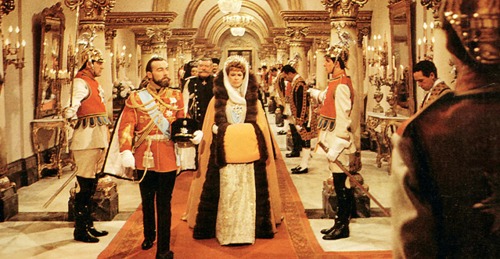
That said, Nicholas and Alexandra does work as a spectacle, as a showcase for beautiful clothing and ornate scenery.  As a character study, Nicholas and Alexandra largely fails but, as a fashion show, it’s actually a lot of fun.    Early on in the film, there’s a lengthy sequence in which Nicholas and Alexandra walk down the red-carpeted hallways of their palace.  It’s shot through Nicholas’s eyes and we see a collection of guards and noblemen and women standing to the side and bowing their heads as the Tsar and his wife walk past.  It’s a good scene and one that perfectly shows not only the life that Nicholas is used to but also why Nicholas doesn’t want to change that life.

baktna03

Perhaps not surprisingly, the first two hours of Nicholas and Alexandra work best when they focus on the flamboyant character of Rasputin.  Baker does a really go job as Rasputin, delivering all of his lines with a ferocious intensity while staring with obviously unhinged eyes.  When he’s with Alexandra, Rasputin is calculating and coldly conniving, providing just enough comfort to keep her under his control.  When he’s with Nicholas or any of the other male members of the court, he reveals himself to be an arrogant libertine, making profane jokes and bragging about his conquests.  It’s a really good performance but, as with so many other good performances in this film, it occasionally gets lost in the film’s dense production.

The best moments of Nicholas and Alexandra come towards the end, with the humbled Nicholas finally revealing his humanity and the Tsar’s family struggling to maintain their dignity even as their inevitable fate approaches.  At this point, the performers came to life.  The film suddenly had an emotional resonance.  It finally became about something!  For those final 20 or so minutes, Nicholas and Alexandra suddenly seemed worthy of being awarded.

In fact, based on those final 20 minutes, I would even be willing to see a sequel called Nicholas and Alexandra and Rasputin Makes Three.  

(Though I’m not sure how that sequel could ever be made.  As @Kev1Media pointed out when I suggested it on twitter, Adam Sandler would have to be somehow involved.)

As for Nicholas and Alexandra, it’s not a great film but if you’re into history or you’re an Oscar completist like me, the film has its occasional charms.  You just have to be willing to look for them.

Nicholas and Alexandra

Back to School #54: Rushmore (dir by Wes Anderson)


rushmore-play

It’s an understatement to say that Wes Anderson’s films tend to divide viewers.  It seems like critics either love his excessively stylized and quirky vision or else they dismiss him as being a pretentious, overrated, and overly concerned with the problems of the rich and the suburban.  Even among the writers here at the Shattered Lens, there are conflicting opinions.  Leon the Duke gave Moonrise Kingdom a rave review.  On the other hand, I know that Ryan The Trashfilm Guru is not particularly a fan of Anderson’s films.

Myself, I always find it usually takes me a while to warm up to an Anderson film.  With the exception of The Fantastic Mr. Fox, I always seem to find myself somehow both impressed and slightly disappointed after seeing an Anderson film for the first time.  Perhaps it’s because Anderson is such a highly praised director with such a recognizable style that I always tend to go into his film with my expectations set way too high.  And so, I often times end up watching the latest Anderson film and thinking about how much I loved the film’s production design and some of the performances but often times feeling that, narratively, there was something missing.  On first viewing, Anderson’s trademark quirkiness can be overwhelming.  Usually it’s not until a second or third viewing that I really start to appreciate an Anderson film for something more than just the way it looks.  Eventually, I came to love Moonrise Kingdom and The Grand Budapest Hotel but it took me a while.

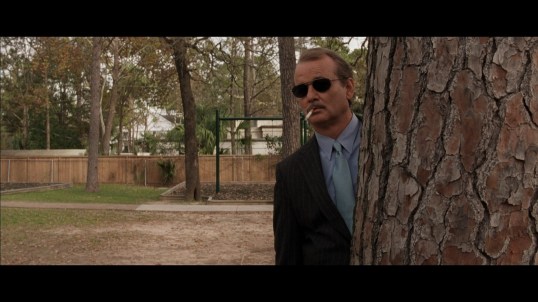
However, there is an exception to every rule.  And, as far as my reaction to Wes Anderson’s films are concerned, 1998’s Rushmore is that exception.  Rushmore is a film that I have unquestionably loved since the very first time I saw it.  Maybe it’s because, while Rushmore is undeniably quirky, that quirkiness doesn’t overwhelm the human aspect of the film’s story.  Maybe it’s because Rushmore — along with Bottle Rocket — is the most identifiably Texan of all of Anderson’s films.  Or maybe it’s just because Bill Murray gives such a great performance.

Seriously, Bill Murray makes any movie better.

02-rushmore-max-and-mr-blume

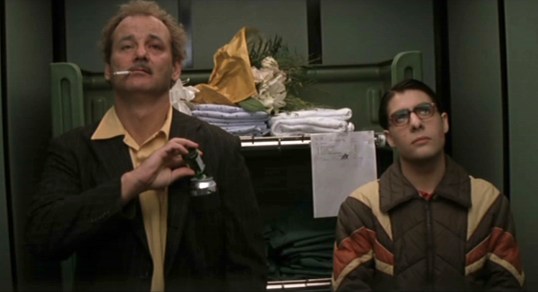
Rushmore is named after Rushmore Academy, a private school in Houston.  (Rushmore is quite obviously based on St. Mark’s, which is perhaps the most exclusive private school down here in Dallas.  Owen Wilson, who collaborated on Rushmore‘s script with Anderson, was expelled from St. Mark’s in the 10th Grade.)  15 year-old Max Fischer (Jason Schwartzman, who gives a sympathetic performance as a potentially off-putting character) loves attending Rushmore.  He’s involved in a countless number of extracurricular activities and has written and directed several plays, the majority of which are based on films from the 70s.  (We see his stage version of Serpico and it’s hilarious.)

tumblr_mcasy9Qj4S1r5l2jyo1_400

Unfortunately, Max has a few problems.  For one thing, unlike most of his peers, he’s not rich.  He tells everyone that his father (Seymour Cassel) is a neurosurgeon but actually, he’s a barber.  Even more seriously, Max spends so much of his time starting clubs and writing plays that he doesn’t ever bother to study.  Max is on the verge of flunking out and, despite numerous warnings from Dr. Guggenheim (Brian Cox), he refuses to do anything to improve his grades.

Instead, Max is more interested in pursuing a crush he has on an older teacher, the widowed Rosemary Cross (Olivia Williams).  What Max doesn’t realize is that his mentor, industrialist Herman Blume (Bill Murray), also has a crush on Ms. Cross.

rushmore02

While Max may be the film’s main character, Herman Blume is, without a doubt, the film’s heart.  Blume is a Viet Nam vet (“You were in the shit?” Max asks.  “Yes, I was in the shit,” Blume replies) who has literally gone from rags to riches.  And now that he is rich, he finds himself living an empty life with a wife who doesn’t respect him and two sons who are total idiots.  When Blume starts to mentor Max and pursue Ms. Cross, he starts to care about living once again.

rm61

Meanwhile, Max attempts to impress Ms. Cross by building an aquarium on the school’s baseball field.  This leads to Max getting expelled and having to enroll in a public school.  (Max continues to wear a suit and tie, even after being expelled.)  However, Max then discovers that Blume has been seeing Ms. Cross and soon, the mentor and the student become rivals…

And a lot of other stuff happens but you know what?  I’m not going to tell you what because if you haven’t seen Rushmore, you need to see it and discover all of this for yourself.  You won’t be sorry!

It may be named after the school but Rushmore is ultimately about how love and our dreams make life worth living.  For Max, Rushmore is his fantasy ideal, a world that he loves because it provides him a sanctuary from the harshness of the real world.  When Mr. Blume says, about Ms. Cross, “She’s my Rushmore,” we understand exactly what he means.  But, and this is what distinguishes Rushmore from so many other films about quirky love triangles, is that Ms. Cross is just as independent and important a character as Max and Mr. Blume.  Blessed with excellent performances from Seymour Cassel, Brian Cox, Jason Schwartzman, Olivia Williams, and especially Bill Murray, Rushmore is one of Wes Anderson’s best films.

rushmore-1999-movie-poster1

Horror On TV: Hammer House of Horror Episode 7 “The Silent Scream”


Today’s episode of televised horror is The Silent Scream, the seventh episode of Hammer House of Horror.  It was originally broadcast in the UK on October 25th, 1980.

This episode features an odd pet shop, a youngish Brian Cox playing an ex-con, and — best of all — the iconic Hammer horror star Peter Cushing!

Seriously, how can you do a horror month without featuring at least one appearance from Peter Cushing?

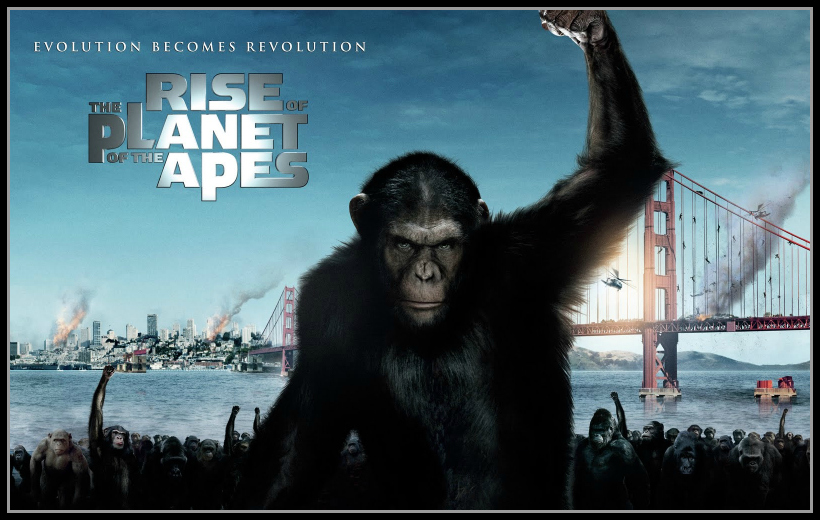
Review: Rise of the Planet of the Apes (dir. by Rupert Wyatt)


In 2001, Tim Burton released his highly-anticipated remake of the classic 1968 film adaptation of Pierre Boulle’s sci-fi novel which would ultimately be called, Planet of the Apes. Fans of the series were excited to see what idiosyncrasies Burton would add to the series which had petered out decades before. What people were hoping for and what they ended up getting were polar opposites. The film in of itself wasn’t an awful film, but it wasn’t a good one and many saw it as average at best and bad at it’s worst. Any plans to sequelize this remake fell by the wayside. It took almost a decade until a decision was made to continue the series in a different direction.

British filmmaker and writer Rupert Wyatt would be given the task to rejuvenate for a second time the Planet of the Apes franchise. He would be working with a screenplay written by Rick Jaffa and Amanda Silver which would take the 4th film in the series, Conquest of the Planet of the Apes, and rework it for a much more current setting. The film was to be called Rise of the Apes and would star James Franco, John Lithgow and Frieda Pinto. As time went by the film would be renamed Rise of the Planet of the Apes. Despite having such an awkward sounding titles the film would end up to be one of the best films of the summer of 2011, if not one of the best of the year.

The film begins with a harrowing sequence in the jungles of Central Africa as poachers capture several chimpanzees to be sold as medical test subjects. Some of these chimps end up at a genetics research lab outside of San Francisco where one Will Rodman (James Franco) is working to find a cure to Alzheimer. He sees the encouraging result in one chimp he has named “Bright Eyes” (due to the side-effect to the test subject’s eyes taking on green flecks to their irises) and pushes for the next step and that’s human testing. The ensuing pitch to the company’s board of directors doesn’t go as planned as Bright Eyes goes on a violent rampage leading to her being put down and the project shelved. Her reaction they soon find out has less to do with the breakthrough treatment and more of a maternal instinct to protect her baby she secretly gave birth to. Will takes the baby chimp home in secret temporarily, but soon becomes attached to it as does his Alzheimer stricken father (John Lithgow) who names it Caesar.

The first third of the film sees Caesar showing an inherited hyper-intelligence from his genetically-treated mother. Caesar becomes an integral part of the Rodman household even to the point that Will has taught Caesar to call him father. It’s a family dynamic which would help mold Caesar into something more than just a wild animal. He begins to show signs of humanity which would become bedrock of his decision later in the film to turn become the revolutionary that the film has been leading up to the moment Caesar gets sent to a primate sanctuary after a violent encounter with a boorish neighbor to end the first reel of the film.

It’s during the second reel which sees Caesar realize that while he may as smart (maybe even smarter) than the humans he would never be a part of that world. In the sanctuary he learns that his very uniqueness has set him apart from the other primates. He sees the abuse inflicted on his fellow primates and longing to be back to his “home” with Will turns to a focus need to free himself and his people. He does this in the only fashion he knows would succeed. With the help from a couple canisters containing the aerosol-based treatment which increased his mother’s intelligence, Caesar frees everyone from the sanctuary and takes the fight to the humans as they make for the wilds of the Muir Redwood Forest north of San Francisco.

Rise of the Planet of the Apes might look to be an action-packed film from how the trailers and tv spots has been pushing the film, but it actually only has three major action sequences and they’re integral to each third of the film in helping advance the story. These were not action for the sake of having action on the screen. Writers Jaffa and Silver do a great job in figuring out that the real strength of the film would be Caesar’s journey from precocious ape child, rebellious teen and then his final unveiling as the leader of a people who have shaken off the shackles of medical research and their forced sacrifice for the greater good.

The film was never about the humans played by Franco, Pinto and Lithgow. It was always about Caesar and the film hinged on the audience believing Caesar as a character. In that regard, the work by WETA Digital should be commended as should Andy Serkis’ performance as Caesar. Serkis’ motion capture performance goes beyond just mimicking the movement of an ape. His own acting as Caesar comes through in even in the digital form of Caesar. In fact, the film never had a real ape used during filming. From Caesar right up to the scarred ape Koba every ape in the film was the work of WETA Digital’s furthering the motion capture work they had done in Peter Jackson’s Lord of the Rings trilogy and James Cameron’s Avatar. Never once during the two hour running time of the film did I ever not believe I was watching apes on the screen. Every emotion Caesar goes through during the film was able to show through facial expressions and body language.

It’s the strength of Serkis’ mo-cap work and the overall execution of Caesar’s character by WETA which also highlighted the one major weakness of the film through it’s underdeveloped human characters. Whether it was Franco’s benevolent Dr. Frankenstein-like Will Rodman right up to his greedy, amoral boss in the company (played by David Oyelowo), all the human’s in the film were very one-note and mostly served to propel Caesar’s story forward. At times, Franco actually seemed to be just as he was during his hosting gig during the Academy Awards earlier in the year. These were not bad performances by the actors involved. They were just there and part of it was due to how underwritten their characters were.

To help balance out this flaw in the film’s non-ape character would be the beautiful work by the film’s cinematographer in Andrew Lesnie. He has always been well-known for beautiful, majestic panoramic shot of the world as he had demonstrated in Jackson’s Lord of the Rings trilogy. He does the same for this film as we see some beautiful shots of the Muir Redwood forest, of San Francisco’s skyline and in the climactic battle on the Golden Gate Bridge. The city of San Francisco and it’s iconic red-hued bridge and the surrounding area has never been shot as gorgeous as Lesnie has done with his DP work on this film.

Even with some of the characters in the film being underwritten the film succeeds through Rupert Wyatt’s direction which keeps the film moving efficiently, but also bringing out the emotional content of the film’s script in an organic way. Film has always been about manipulating the audience’s  emotions. It’s when a director does so and make it seem normal is when such manipulation doesn’t come through for those watching to feel. Then add to this Serkis’ exceptional work as Caesar with some major digital artistry from the folks over at WETA Digital and Rise of the Planet of the Apes does rise above it’s B-movie foundation into something that should live beyond the summer and for years to come.

Rise of the Planet of the Apes does a great job and a long way towards wiping off the bad taste left behind by Tim Burton’s failed attempt to remake the franchise. We didn’t need something exotic and idiosyncratic to give the franchise a fresh breath of life. It seems all it needed was a very good story, some exceptional work from Andy Serkis and WETA Digital and a filmmaker knowing how to tell the story in a natural fashion and not fall into the temptation to go into shock and awe to tell it. Rise of the Planet of the Apes is a film that could stand-alone, but it does something that many trying to create film franchises never seem to do right: it makes people want to see what happens next in the lives of Caesar and his apes.

Rise of the Planet of the Apes: Trailer


The franchise which seemed to have been left for dead by Tim Burton’s attempt to reboot it in 2001 looks to try and make another go at it again ten years later. Tim Burton will not be anywhere near this reboot and instead will be in the hands of British newcomer Rupert Wyatt.

Rise of the Planet of the Apes (originally called Rise of the Apes which I actually prefer) looks to reboot the franchise by taking the origjnal Conquest of the Planet of the Apes ffrom 1972 and using that as the foundation for this reboot’s plot. It will star his Highness himself, James Franco, with Peter Jackson-regular Andy Serkis playing the role of ape leader, Caesar.

This film seems to have the full backing of Jackson’s WETA Digital to create all the apes in the film digitally. There won’t be any prosthetics and make-up work with this film unlike the previous ones. While some may think this is a bad idea I actually think WETA Digital’s work in creating total CG-characters in the past pretty much heads above other FX-shops (and I include Industrial Light & Magic). From the trailer the apes look quite realistic and even Caesar himself look very real.

Time and the film’s release will tell if this reboot will have a better reception than Tim Burton’s film. I, myself, am looking forward to it since of all the Apes film of the past it was always Conquest that remained my favorite of all of them.

Rise of the Planet of the Apes is set for an August 5, 2011 release.