Rage, Ruin, and Redemption: The Evolving Horror of the “28 Days Later” Series


Raw Urgency and Psychological Horror in 28 Days Later

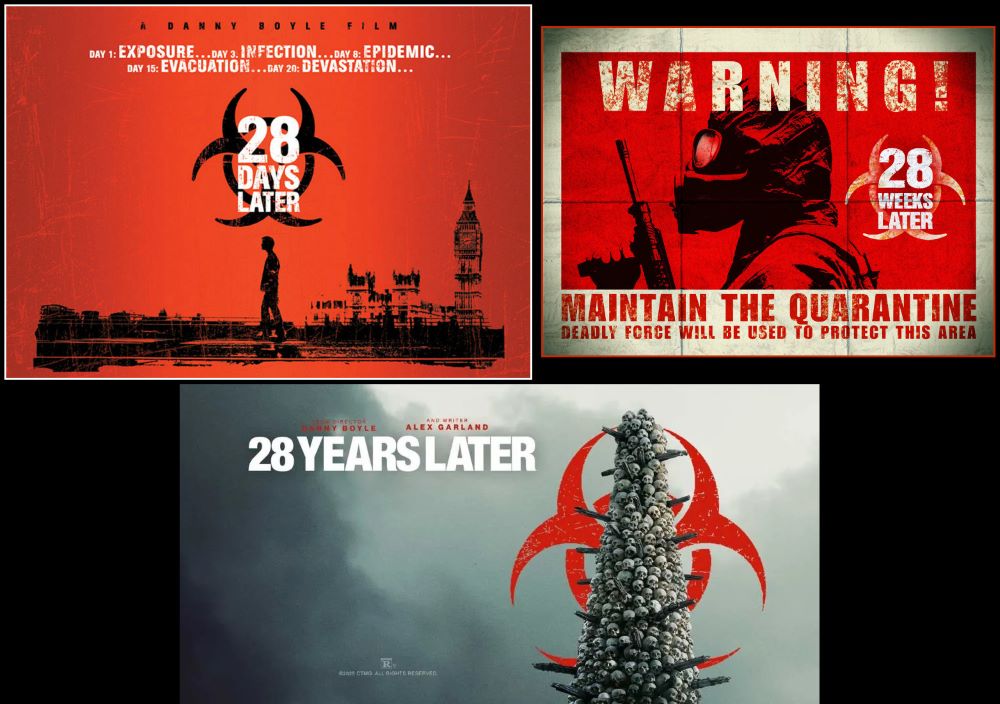
The original 28 Days Later broke new ground in horror filmmaking with its raw depiction of societal collapse fueled by a bioengineered rage virus. Danny Boyle and cinematographer Anthony Dod Mantle’s decision to shoot on early digital video cameras gave the film a distinct grainy, handheld aesthetic that enhanced the feeling of immediacy and disorientation. This style was pivotal in immersing the audience in the eerie emptiness of a London ravaged by infection and abandonment. The stark realism allowed viewers to viscerally experience the isolation and relentless threat surrounding the protagonists.

Unlike traditional zombie films that relied on the supernatural or undead creatures, 28 Days Later introduced infected humans whose fast, uncontrollable aggression metaphorically represented not just a physical virus but the eruption of primal rage and societal breakdown. The tension escalates beyond the infected themselves, focusing sharply on human nature’s darker side through the militarized faction led by Major West, whose corruption and moral decay pose threats as dangerous as the virus itself. This potent blend of external horror and ethical decay elevated the film into a profound exploration of survival, despair, and moral ambiguity in post-apocalyptic conditions. The film resonated deeply with early 21st-century anxieties about sudden disaster and social breakdown, marking a revitalization of horror that has influenced countless works since.

Expansion and Escalation in 28 Weeks Later: A Cinematic Allegory of Its Time

Five years later, 28 Weeks Later expanded the series’ scope significantly. Director Juan Carlos Fresnadillo shifted the narrative from personal survival to the complexity of institutional attempts at restoring order. The film’s polished 35mm cinematography reflected its larger budget and ambition, with expansive urban destruction, dynamic action sequences, and a broader focus on systemic chaos. The narrative unfolds against the backdrop of a militarized “Green Zone” in London, an unmistakable cinematic parallel to the fortified American-controlled zone in Baghdad during the Iraq War.

This allegory extends beyond setting: it captures the tangled failures and ethical dilemmas inherent in the military occupations of Iraq and Afghanistan. The film’s military forces struggle to differentiate friend from foe, ally from insurgent, mirroring the real-world complexities and frequent tragic mistakes of those conflicts. The virus and subsequent resurgence symbolize not only physical contagion but institutional and social rot—highlighting how the rage of war, betrayal, and corruption can infect governance and community trust. The film’s grim depiction of fractured family relationships echoes a society strained by war and occupation, portraying how betrayal and mistrust pervade all levels of social interaction. Through this lens, 28 Weeks Later critiques the hubris of militarized control and the illusion of security, underscoring the fragile, often illusory nature of civilization under stress.

The film’s slicker, high-production-value style distances the viewer somewhat from the intimate immediacy of 28 Days Later but serves its themes by creating a sensation of broad and relentless turmoil. Thematically, this sequel embraces a darker cynicism by portraying militaristic and bureaucratic responses to crisis as part of the problem rather than the solution, intensifying the series’ meditation on rage to encompass political and social failure as well as personal violence.

Reflection and Maturation in 28 Years Later: Evolution of Horror, Philosophy, and a Pandemic Mirror

Returning to the director’s chair decades after the original, Danny Boyle’s 28 Years Later marks a tonal and stylistic evolution that reflects not only the temporal distance from the initial crisis but also a deepening philosophical introspection. The film depicts a Britain still struggling under the long shadow of trauma left by the rage virus. Its infected are no longer iconic red-eyed figures vomiting blood but more mutated, less defined threats, symbolic of how trauma itself can evolve into something less visible but more pervasive.

Cinematographically, 28 Years Later blends moody, shadowy aesthetics with intimate, often handheld shots. Notably, the production’s use of modern digital technology, including iPhone cameras, allowed the film to maintain an intimate feel despite technological shifts. This stylistic choice reflects the thematic focus on memory, decay, and fragile attempts at normalcy. The film’s visual language speaks to a world where the horrors of the past persist beneath the surface, influencing human behavior and societal structures.

Importantly, 28 Years Later serves as a cinematic allegory to the global COVID-19 pandemic and its aftermath. In interviews, both Boyle and Garland acknowledged how the experience of living through the COVID crisis deeply informed the film’s narrative and tone. The pandemic effectively turned empty urban landscapes and daily precautions—once confined to dystopian fiction like 28 Days Later—into real shared experience. The film’s story of a society struggling to live with the virus, navigating quarantine zones and adapting to endemic conditions, echoes how the world has contended with COVID-19’s ongoing impact. Themes of risk, resilience, and generational divide are foregrounded: characters grapple with what it means to live “28 years later,” taking long-term risks even as uncertainties remain. This mirror between fiction and reality deepens the film’s resonance, showing how past speculative fears have become present-day lived realities.

The tonal shift to a more contemplative and somber horror reflects how the pandemic shifted global consciousness from immediate crisis to endurance and adaptation. The film acknowledges grief, loss, and the cultural memory of lives disrupted and taken. Notably, a character’s act of creating memorials to victims reflects real-world efforts to remember those lost to COVID-19, underscoring cinema’s role in processing collective trauma. While this evolution away from pure terror to introspection divides audiences—some missing previous visceral scares—it represents a mature reckoning with the lasting scars pandemics imprint on humanity.

Pandemic Parallels: The Trilogy as a Cinematic Allegory for COVID-19 and Endemic Realities

While each film in the 28 Days Later trilogy originally reflected the anxieties and socio-political contexts of its own era, together they now resonate profoundly as a prophetic allegory of the global COVID-19 pandemic and humanity’s ongoing struggle to live with viral threats as part of everyday life. The trilogy’s trajectory—from sudden catastrophic outbreak to institutional collapse to long-term trauma and adaptation—mirrors the historical arc the world has experienced with COVID-19, offering viewers insight into the psychological, societal, and cultural impacts of pandemics.

28 Days Later anticipated much of the early pandemic experience—fear of rapid contagion, empty cityscapes, social disintegration, and the terrifying vulnerability of individuals isolated amid a global crisis. Jim’s awakening into an eerily deserted London strikingly parallels the empty streets during COVID lockdowns around the world, turning what was once dystopian fantasy into frightening reality. The film’s exploration of panic, isolation, and distrust toward institutions echoes widespread experiences of confusion, fear, and uncertainty during the first months of the pandemic when COVID-19 was unfamiliar, unpredictable, and devastating.

28 Weeks Later deepens this pandemic allegory by portraying the consequences of failed institutional responses and attempts at control. The militarized “Green Zone” concept eerily parallels the real-world challenges of creating “safe zones” amid outbreaks, with tensions between enforcement, mistrust, and community survival. The film’s depiction of fractured families and systemic collapse reflects how social solidarity frays under the pressure of prolonged crisis, political distrust, and ethical quandaries surrounding public health measures experienced globally during COVID waves. The allegory isn’t just about physical infection but social contagion—fear, misinformation, and political polarization as viral threats themselves.

With 28 Years Later, the trilogy fully embraces its role as a cultural mirror to COVID-19’s enduring legacy. Danny Boyle and Alex Garland have openly discussed how the realities of the pandemic shaped the film’s narrative and tone, with characters navigating life decades after the outbreak under quarantine and endemic conditions. The film presents a world where viral infection is an ongoing condition to be managed rather than eradicated, reflecting how many experts now view COVID-19’s transition from acute pandemic to endemic presence. This shift from immediate horror to long-term social and psychological adaptation speaks to the global experience of living alongside risk and uncertainty, balancing caution with the human drive to reconnect and rebuild.

Visual motifs such as quarantine zones, memorial walls, and generational divides throughout the film underscore real-world pandemic realities about loss, resilience, and the passing of collective trauma. The story’s focus on a new generation born into post-virus society echoes global concerns about children’s—educational, emotional, and social—impacts during and after COVID. The film’s meditative tone reflects the world’s evolving understanding that recovery from a pandemic is neither swift nor purely scientific but deeply human, requiring reckoning with grief, memory, and ethical questions about care and sacrifice.

Together, the trilogy transcends traditional horror storytelling to become a cinematic meditation on humanity’s confrontation with biological catastrophe—capturing the terror of sudden collapse, the anguish of institutional failure, and the fragile hope of enduring and adapting to an altered world. In doing so, the 28 Days Later series offers both a chilling warning and a compassionate reflection on survival in an age defined by viral uncertainty.

Stylistic Evolution: From Gritty Realism to Reflective Sophistication

The trilogy’s visual evolution is a testament to the shifting thematic priorities and growing artistic ambition of the filmmakers. 28 Days Later’s raw digital aesthetic—with grainy textures and handheld immediacy—rooted the audience in the chaos of sudden societal collapse, pioneering an immersive and tangible horror. The decision to film real, unpopulated London streets added an authentic eeriness that fueled the film’s power.

With 28 Weeks Later, the move to 35mm film signaled a turn toward cinematic polish, spectacle, and scope. The expansive shots, precise lighting, and dynamic action sequences reflect the film’s thematic scale, portraying systemic collapse and institutional failure with cinematic authority. The surveillance-like camerawork amplifies feelings of observation and control that echo its allegorical engagement with military occupation themes.

28 Years Later rebalances styles, fusing intimate handheld shots with shadowy, atmospheric imagery, aided by modern digital filmmaking tools including smartphone cameras. This blend cultivates mood and emotional depth over traditional jump scares, visually representing a society haunted by trauma and in cautious recovery. The stylistic shift underscores the trilogy’s journey from immediate survival panic to measured reflection on long-term consequences.

Thematic Progression and the Metaphor of Rage

Rage is the fundamental metaphor animating the trilogy, but its form and focus evolve significantly. In 28 Days Later, rage manifests as an explosive primal force embodied in the infected—visible, aggressive, and terrifying, stripping away thin veneers of civilization to reveal instinctual violence.

28 Weeks Later expands rage to include institutional rot, betrayal, and the failure of governance. The infected remain threats but rage’s more insidious expressions appear in military violence, political cynicism, and fracturing communities. Rage becomes a societal contagion undermining cohesion as thoroughly as any virus.

28 Years Later shifts to a metaphor of inherited trauma and enduring wounds. Rage here is less overt but deeper—passed through generations in memory, ethics, and societal dysfunction. The virus and its mutated infected echo how psychological and cultural trauma evolve and persist, questioning humanity’s capacity for healing or self-destruction.

Characters and Emotional Depth: From Intimate Survival to Generational Reckoning

Character arcs reflect this thematic evolution. 28 Days Later centers on individual survival and fragile relationships formed amid chaos. Jim’s transformation from bewildered victim to protector provides audiences emotional grounding in a shattered world.

28 Weeks Later explores family ruptures wrought by betrayal and trauma, mirroring broader social breakdowns. Characters’ struggle with trust and loss enriches the narrative with psychological realism.

28 Years Later depicts survivors burdened by collective memory and ethical dilemmas, often across generations. Its characters wrestle not only with the immediate horrors but with legacies of violence and the search for reconciliation, offering psychological and moral complexity rare in horror narratives.

Cultural Impact and Legacy

28 Days Later transformed horror by replacing slow, supernatural zombies with fast, rage-fueled infected who symbolize contemporary fears about sudden collapse and human savagery. It revitalized a moribund genre and influenced popular culture globally.

28 Weeks Later expanded on this foundation with action spectacle and socio-political allegory, polarizing audiences but enriching thematic depth, especially with its projection of military occupation anxieties.

28 Years Later confronts the real-world pandemic experience directly, integrating cultural trauma into its narrative and style. It challenges genre boundaries by emphasizing reflection and resilience over instant terror, heralding a new phase for horror cinema aware of global trauma.

The Future of the “28 Days Later” Series: Continuing the Journey

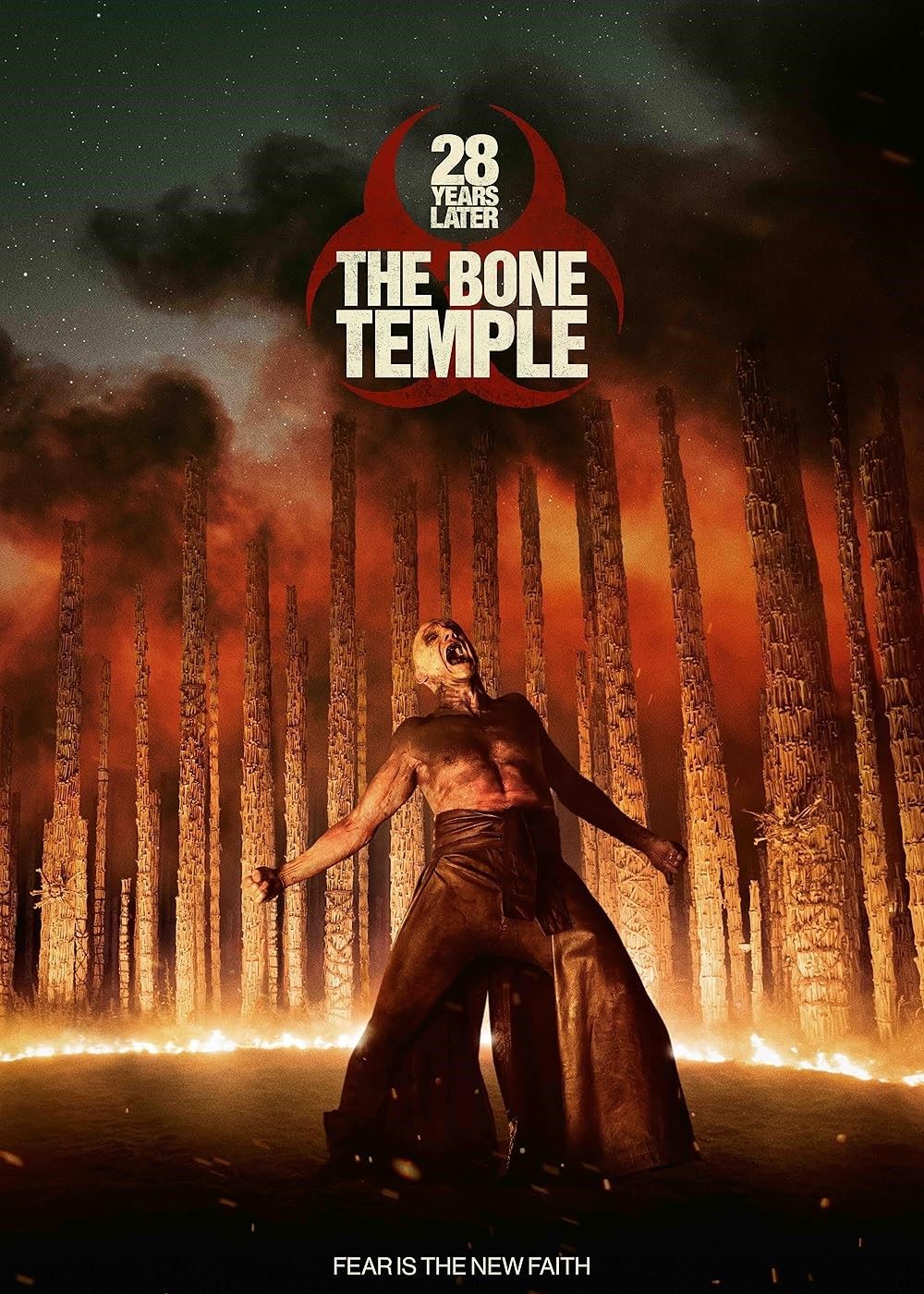
Building on the foundation of its groundbreaking predecessors, the “28 Days Later” series is set to continue with two more films that promise to expand its intricate narrative and thematic depth. 28 Years Later: The Bone Temple, directed by Nia DaCosta and scripted by Alex Garland, is scheduled for release in January 2026. This film, shot back-to-back with 28 Years Later (2025), will deepen the post-apocalyptic exploration with returning characters and new threats, continuing the saga of trauma, survival, and societal collapse.

Additionally, a fifth film in the series is currently in development, though its title and release date remain unannounced. With Danny Boyle and Alex Garland involved in these projects, audiences can expect a thoughtful continuation that balances horror with reflective inquiry into humanity’s resilience. The return of Cillian Murphy as Jim further ties the new films to the series’ emotional origins, ensuring that the evolving mythology stays grounded in personal stakes.

As these future films approach, the 28 Days Later series remains ripe for ongoing critical and cultural re-examination, especially given its enduring power to mirror contemporary fears—from early 2000s anxieties to the global experience of the COVID-19 pandemic and beyond. The series stands as a dynamic, evolving reflection on rage, ruin, and the hope for redemption in an uncertain world.

The Substance Wins In Indiana


The Indiana Film Journalists Association have announced their picks for the best of 2024!  The winners are in bold.
BEST FILM
Anora
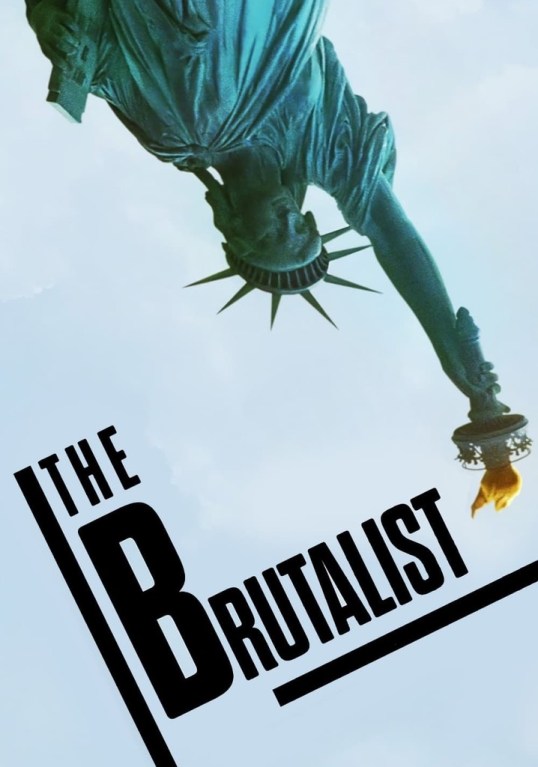
The Brutalist
Challengers
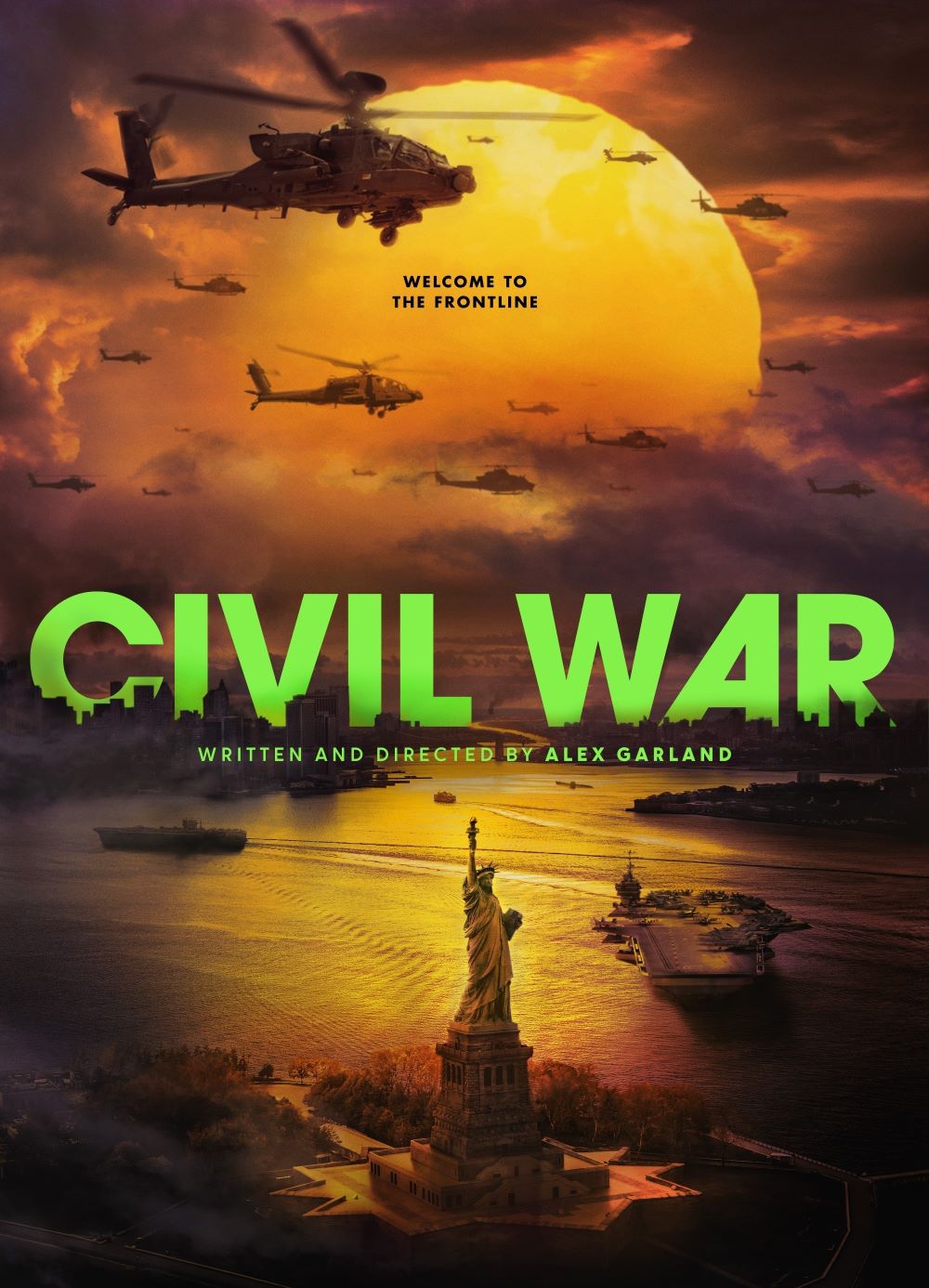
Civil War
Conclave
A Different Man
Dune: Part Two
His Three Daughters
I Saw the TV Glow
In a Violent Nature
Longlegs
Mars Express
Nickel Boys
Nosferatu
The People’s Joker
A Real Pain
Rebel Ridge
Sing Sing
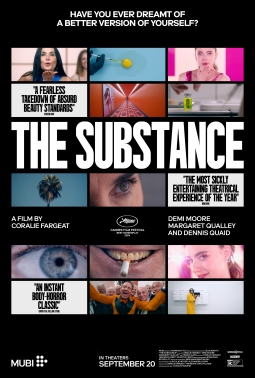
The Substance
Wicked

BEST ANIMATED FILM
Flow
Inside Out 2
Look Back
Mars Express
Memoir of a Snail
The Wild Robot

BEST FOREIGN LANGUAGE FILM
Aattam
All We Imagine as Light
Emilia Pérez
Evil Does Not Exist
Los Frikis
Look Back
Mars Express
The Seed of the Sacred Fig

BEST DOCUMENTARY
Daughters
Ennio
Girls State
No Other Land
The Remarkable Life of Ibelin
The Sixth
The Speedway Murders
Super/Man: The Christopher Reeve Story

BEST ORIGINAL SCREENPLAY
Moritz Binder, Tim Fehlbaum and Alex David – September 5
Brady Corbet and Mona Fastvold – The Brutalist
Jesse Eisenberg – A Real Pain
Coralie Fargeat – The Substance
Alex Garland – Civil War
Azazel Jacobs – His Three Daughters
Jeremy Saulnier – Rebel Ridge
Aaron Schimberg – A Different Man
Jane Schoenbrun – I Saw the TV Glow
Julio Torres – Problemista

BEST ADAPTED SCREENPLAY
Jacques Audiard – Emilia Pérez
Clint Bentley, Greg Kwedar, Clarence “Divine Eye” Maclin and John “Divine G” Whitfield – Sing Sing
Jay Cocks and James Mangold – A Complete Unknown
RaMell Ross and Joslyn Barnes – Nickel Boys
Chris Sanders – The Wild Robot
Peter Straughan – Conclave
Denis Villeneuve and Jon Spaihts – Dune: Part Two
Virgil Williams and Malcolm Washington – The Piano Lesson

BEST DIRECTOR
Brady Corbet – The Brutalist
Robert Eggers – Nosferatu
Jesse Eisenberg – A Real Pain
Coralie Fargeat – The Substance
Alex Garland – Civil War
Luca Guadagnino – Challengers
RaMell Ross – Nickel Boys
Jeremy Saulnier – Rebel Ridge
Aaron Schimberg – A Different Man
Jane Schoenbrun – I Saw the TV Glow

BEST LEAD PERFORMANCE
Adrien Brody – The Brutalist
Daniel Craig – Queer
Colman Domingo – Sing Sing
Kirsten Dunst – Civil War
Jesse Eisenberg – A Real Pain
Cynthia Erivo – Wicked
Ralph Fiennes – Conclave
Demi Moore – The Substance
Aaron Pierre – Rebel Ridge
Justice Smith – I Saw the TV Glow

BEST SUPPORTING PERFORMANCE
Nicolas Cage – Longlegs
Kieran Culkin – A Real Pain
Clarence “Divine Eye” Maclin – Sing Sing
Guy Pearce – The Brutalist
Adam Pearson – A Different Man
Dennis Quaid – The Substance
Margaret Qualley – The Substance
Bill Skarsgård – Nosferatu
Tilda Swinton – Problemista
Denzel Washington – Gladiator II

BEST VOCAL / MOTION-CAPTURE PERFORMANCE
Tom Hardy – Venom: The Last Dance
Maya Hawke – Inside Out 2
Lupita Nyong’o – The Wild Robot
Pedro Pascal – The Wild Robot
Amy Poehler – Inside Out 2
Sarah Snook – Memoir of a Snail
Owen Teague – Kingdom of the Planet of the Apes
Robbie Williams – Better Man

BEST ENSEMBLE ACTING
Civil War
Conclave
A Different Man
Dune: Part Two
His Three Daughters
Nickel Boys
Nosferatu
A Real Pain
Saturday Night
Sing Sing

BEST EDITING
Sean Baker – Anora
Marco Costa – Challengers
Jérôme Eltabet, Coralie Fargeat and Valentin Feron – The Substance
Nick Emerson – Conclave
Louise Ford – Nosferatu
Dávid Jancsó – The Brutalist
Nicholas Monsour – Nickel Boys
Jeremy Saulnier – Rebel Ridge
Terilyn A. Shropshire – Twisters
Joe Walker – Dune: Part Two

BEST CINEMATOGRAPHY
Jarin Blaschke – Nosferatu
Lol Crawley – The Brutalist
Greig Fraser – Dune: Part Two
Jomo Fray – Nickel Boys
Rob Hardy – Civil War
Benjamin Kračun – The Substance
Dan Mindel – Twisters
Sayombhu Mukdeeprom – Challengers
Sayombhu Mukdeeprom – Queer
Eric Yue – I Saw the TV Glow

BEST MUSICAL SCORE
Volker Bertelmann – Conclave
Daniel Blumberg – The Brutalist
Kris Bowers – The Wild Robot
Raffertie – The Substance
Trent Reznor and Atticus Ross – Challengers
Trent Reznor and Atticus Ross – Queer
Ben Salisbury and Geoff Barrow – Civil War
Alex Somers and Scott Alario – Nickel Boys
Umberto Smerilli – A Different Man
Benjamin Wallfisch – Twisters

BEST STUNT / MOVEMENT CHOREOGRAPHY
Bren Foster (action designer / fight choreographer) and Jaylan Foster, Jimmy Foster, Nick Harding, Jordan Petersen, Matthew Murgola and Mike Duncan (stunt team) – Life After Fighting
Muhammad Irfan (stunt coordinator / fight choreographer) – The Shadow Strays
Jeremy Marinas (fight coordinator and choreographer / second-unit director) – The Beekeeper
Lee Morrison (supervising stunt coordinator), Roger Yuan (fight coordinator / stunt coordinator) and Tanya Lapointe (second-unit director) – Dune: Part Two
Saifuddin Mubdy (stunt coordinator) and Brahim Chab (fight coordinator) – Monkey Man
Guy Norris (action designer / supervising stunt coordinator / second-unit director) and Richard Norton (fight choreographer / coordinator) – Furiosa: A Mad Max Saga
Chris O’Hara (stunt coordinator and stunt designer) – The Fall Guy
Christopher Scott (choreographer) and Jo McLaren (stunt coordinator) – Wicked
Ashley Wallen (dance choreographer), Nicholas Daines (stunt coordinator), Slavisa Ivanovic (stunt coordinator), Tim Wong (fight choreographer) and Spencer Susser (second-unit director) – Better Man
Keith Woulard and Cory DeMeyers (stunt coordinators) – Rebel Ridge

BEST SPECIAL EFFECTS
Mike Cheslik (visual effects) and Jerry Kurek (assistant effects artist) – Hundreds of Beavers
Bryan Jones (visual effects supervisor), Pierre Procoudine-Gorsky (visual effects producer) and Jean Miel (special effects supervisor) – The Substance
Paul Lambert (visual effects production supervisor), Gerd Nefzer (special effects supervisor), Rhys Salcombe (visual effects supervisor) and Stephen James (visual effects supervisor) – Dune: Part Two
Damien Leone (writer / director), Phil Falcone (producer), Christien Tinsley (design and creation of prosthetics and makeup effects), Brian Van Dorn (Tinsley Studios production coordinator), Ryan Ward (on-set makeup effects department head), Heather Albert (on-set makeup effects artist), Josh Petrino (visual effects supervisor), Declan Boyle (lead visual effects artist), Lincoln Smith (senior visual effects artist), John Caglione, Jr. (Virgin Mary / demon sequence prosthetics supervisor), Jason Baker (Callosum Studios on-set effects supervisor) and Jason Milstein (post-production supervisor and visual effects artist) – Terrifier 3
Luke Millar (visual effects supervisor) and Scott MacIntyre (special effects supervisor) – Better Man
Kevin Smith (visual effects supervisor), Kevin Sherwood (visual effects producer), Bruce Bright (special effects supervisor) and Michael Meinardus (special effects supervisor) – Godzilla x Kong: The New Empire
Ben Snow (visual effects supervisor), Florian Witzel (Industrial Light & Magic visual effects supervisor), Charles Lai (ILM associate visual effects supervisor) and Scott Fisher (special effects supervisor) – Twisters
David White (prosthetic and makeup effects design), Angela Barson (visual effects supervisor) and Pavel Sagner (special effects supervisor) – Nosferatu (2024)
Erik Winquist and Stephen Unterfranz (VFX supervisors), Paul Story (senior animation supervisor) and Rodney Burke (special FX supervisor) – Kingdom of the Planet of the Apes

BREAKOUT OF THE YEAR
Joanna Arnow (director / writer / editor / performer) – The Feeling That the Time for Doing Something Has Passed
Mike Cheslik (director / co-writer / editor / visual effects) – Hundreds of Beavers
Vera Drew (director / co-writer / editor / performer) – The People’s Joker
Mikey Madison (performer) – Anora
Chris Nash (director / writer) – In a Violent Nature
Katy M. O’Brian (performer) – Love Lies Bleeding
RaMell Ross (director / co-writer) – Nickel Boys
Maisy Stella (performer) – My Old Ass
Julio Torres (director / writer / performer) – Problemista
Malcolm Washington (director / co-writer) – The Piano Lesson

ORIGINAL VISION
Better Man
Emilia Pérez
Hundreds of Beavers
I Saw the TV Glow
In a Violent Nature
The People’s Joker
Problemista
Sasquatch Sunset
The Substance

The Indiana Film Journalists Nominate Everything


The Indiana Film Journalists Association announced their nominations for the best of 2024 today.  They kept things simple by nominating everything.  The winners will be announced on December 16th.
BEST FILM
Anora
The Brutalist
Challengers
Civil War
Conclave
A Different Man
Dune: Part Two
His Three Daughters
I Saw the TV Glow
In a Violent Nature
Longlegs
Mars Express
Nickel Boys
Nosferatu
The People’s Joker
A Real Pain
Rebel Ridge
Sing Sing
The Substance
Wicked

BEST ANIMATED FILM
Flow
Inside Out 2
Look Back
Mars Express
Memoir of a Snail
The Wild Robot

BEST FOREIGN LANGUAGE FILM
Aattam
All We Imagine as Light
Emilia Pérez
Evil Does Not Exist
Los Frikis
Look Back
Mars Express
The Seed of the Sacred Fig

BEST DOCUMENTARY
Daughters
Ennio
Girls State
No Other Land
The Remarkable Life of Ibelin
The Sixth
The Speedway Murders
Super/Man: The Christopher Reeve Story

BEST ORIGINAL SCREENPLAY
Moritz Binder, Tim Fehlbaum and Alex David – September 5
Brady Corbet and Mona Fastvold – The Brutalist
Jesse Eisenberg – A Real Pain
Coralie Fargeat – The Substance
Alex Garland – Civil War
Azazel Jacobs – His Three Daughters
Jeremy Saulnier – Rebel Ridge
Aaron Schimberg – A Different Man
Jane Schoenbrun – I Saw the TV Glow
Julio Torres – Problemista

BEST ADAPTED SCREENPLAY
Jacques Audiard – Emilia Pérez
Clint Bentley, Greg Kwedar, Clarence “Divine Eye” Maclin and John “Divine G” Whitfield – Sing Sing
Jay Cocks and James Mangold – A Complete Unknown
RaMell Ross and Joslyn Barnes – Nickel Boys
Chris Sanders – The Wild Robot
Peter Straughan – Conclave
Denis Villeneuve and Jon Spaihts – Dune: Part Two
Virgil Williams and Malcolm Washington – The Piano Lesson

BEST DIRECTOR
Brady Corbet – The Brutalist
Robert Eggers – Nosferatu
Jesse Eisenberg – A Real Pain
Coralie Fargeat – The Substance
Alex Garland – Civil War
Luca Guadagnino – Challengers
RaMell Ross – Nickel Boys
Jeremy Saulnier – Rebel Ridge
Aaron Schimberg – A Different Man
Jane Schoenbrun – I Saw the TV Glow

BEST LEAD PERFORMANCE
Adrien Brody – The Brutalist
Daniel Craig – Queer
Colman Domingo – Sing Sing
Kirsten Dunst – Civil War
Jesse Eisenberg – A Real Pain
Cynthia Erivo – Wicked
Ralph Fiennes – Conclave
Demi Moore – The Substance
Aaron Pierre – Rebel Ridge
Justice Smith – I Saw the TV Glow

BEST SUPPORTING PERFORMANCE
Nicolas Cage – Longlegs
Kieran Culkin – A Real Pain
Clarence “Divine Eye” Maclin – Sing Sing
Guy Pearce – The Brutalist
Adam Pearson – A Different Man
Dennis Quaid – The Substance
Margaret Qualley – The Substance
Bill Skarsgård – Nosferatu
Tilda Swinton – Problemista
Denzel Washington – Gladiator II

BEST VOCAL / MOTION-CAPTURE PERFORMANCE
Tom Hardy – Venom: The Last Dance
Maya Hawke – Inside Out 2
Lupita Nyong’o – The Wild Robot
Pedro Pascal – The Wild Robot
Amy Poehler – Inside Out 2
Sarah Snook – Memoir of a Snail
Owen Teague – Kingdom of the Planet of the Apes
Robbie Williams – Better Man

BEST ENSEMBLE ACTING
Civil War
Conclave
A Different Man
Dune: Part Two
His Three Daughters
Nickel Boys
Nosferatu
A Real Pain
Saturday Night
Sing Sing

BEST EDITING
Sean Baker – Anora
Marco Costa – Challengers
Jérôme Eltabet, Coralie Fargeat and Valentin Feron – The Substance
Nick Emerson – Conclave
Louise Ford – Nosferatu
Dávid Jancsó – The Brutalist
Nicholas Monsour – Nickel Boys
Jeremy Saulnier – Rebel Ridge
Terilyn A. Shropshire – Twisters
Joe Walker – Dune: Part Two

BEST CINEMATOGRAPHY
Jarin Blaschke – Nosferatu
Lol Crawley – The Brutalist
Greig Fraser – Dune: Part Two
Jomo Fray – Nickel Boys
Rob Hardy – Civil War
Benjamin Kračun – The Substance
Dan Mindel – Twisters
Sayombhu Mukdeeprom – Challengers
Sayombhu Mukdeeprom – Queer
Eric Yue – I Saw the TV Glow

BEST MUSICAL SCORE
Volker Bertelmann – Conclave
Daniel Blumberg – The Brutalist
Kris Bowers – The Wild Robot
Raffertie – The Substance
Trent Reznor and Atticus Ross – Challengers
Trent Reznor and Atticus Ross – Queer
Ben Salisbury and Geoff Barrow – Civil War
Alex Somers and Scott Alario – Nickel Boys
Umberto Smerilli – A Different Man
Benjamin Wallfisch – Twisters

BEST STUNT / MOVEMENT CHOREOGRAPHY
Bren Foster (action designer / fight choreographer) and Jaylan Foster, Jimmy Foster, Nick Harding, Jordan Petersen, Matthew Murgola and Mike Duncan (stunt team) – Life After Fighting
Muhammad Irfan (stunt coordinator / fight choreographer) – The Shadow Strays
Jeremy Marinas (fight coordinator and choreographer / second-unit director) – The Beekeeper
Lee Morrison (supervising stunt coordinator), Roger Yuan (fight coordinator / stunt coordinator) and Tanya Lapointe (second-unit director) – Dune: Part Two
Saifuddin Mubdy (stunt coordinator) and Brahim Chab (fight coordinator) – Monkey Man
Guy Norris (action designer / supervising stunt coordinator / second-unit director) and Richard Norton (fight choreographer / coordinator) – Furiosa: A Mad Max Saga
Chris O’Hara (stunt coordinator and stunt designer) – The Fall Guy
Christopher Scott (choreographer) and Jo McLaren (stunt coordinator) – Wicked
Ashley Wallen (dance choreographer), Nicholas Daines (stunt coordinator), Slavisa Ivanovic (stunt coordinator), Tim Wong (fight choreographer) and Spencer Susser (second-unit director) – Better Man
Keith Woulard and Cory DeMeyers (stunt coordinators) – Rebel Ridge

BEST SPECIAL EFFECTS
Mike Cheslik (visual effects) and Jerry Kurek (assistant effects artist) – Hundreds of Beavers
Bryan Jones (visual effects supervisor), Pierre Procoudine-Gorsky (visual effects producer) and Jean Miel (special effects supervisor) – The Substance
Paul Lambert (visual effects production supervisor), Gerd Nefzer (special effects supervisor), Rhys Salcombe (visual effects supervisor) and Stephen James (visual effects supervisor) – Dune: Part Two
Damien Leone (writer / director), Phil Falcone (producer), Christien Tinsley (design and creation of prosthetics and makeup effects), Brian Van Dorn (Tinsley Studios production coordinator), Ryan Ward (on-set makeup effects department head), Heather Albert (on-set makeup effects artist), Josh Petrino (visual effects supervisor), Declan Boyle (lead visual effects artist), Lincoln Smith (senior visual effects artist), John Caglione, Jr. (Virgin Mary / demon sequence prosthetics supervisor), Jason Baker (Callosum Studios on-set effects supervisor) and Jason Milstein (post-production supervisor and visual effects artist) – Terrifier 3
Luke Millar (visual effects supervisor) and Scott MacIntyre (special effects supervisor) – Better Man
Kevin Smith (visual effects supervisor), Kevin Sherwood (visual effects producer), Bruce Bright (special effects supervisor) and Michael Meinardus (special effects supervisor) – Godzilla x Kong: The New Empire
Ben Snow (visual effects supervisor), Florian Witzel (Industrial Light & Magic visual effects supervisor), Charles Lai (ILM associate visual effects supervisor) and Scott Fisher (special effects supervisor) – Twisters
David White (prosthetic and makeup effects design), Angela Barson (visual effects supervisor) and Pavel Sagner (special effects supervisor) – Nosferatu (2024)
Erik Winquist and Stephen Unterfranz (VFX supervisors), Paul Story (senior animation supervisor) and Rodney Burke (special FX supervisor) – Kingdom of the Planet of the Apes

BREAKOUT OF THE YEAR
Joanna Arnow (director / writer / editor / performer) – The Feeling That the Time for Doing Something Has Passed
Mike Cheslik (director / co-writer / editor / visual effects) – Hundreds of Beavers
Vera Drew (director / co-writer / editor / performer) – The People’s Joker
Mikey Madison (performer) – Anora
Chris Nash (director / writer) – In a Violent Nature
Katy M. O’Brian (performer) – Love Lies Bleeding
RaMell Ross (director / co-writer) – Nickel Boys
Maisy Stella (performer) – My Old Ass
Julio Torres (director / writer / performer) – Problemista
Malcolm Washington (director / co-writer) – The Piano Lesson

ORIGINAL VISION
Better Man
Emilia Pérez
Hundreds of Beavers
I Saw the TV Glow
In a Violent Nature
The People’s Joker
Problemista
Sasquatch Sunset
The Substance

Lisa Marie’s Way Too Early Oscar Predictions For May


We’re nearly halfway through the year and so far, we have two films that seem like they might still be in the Oscar conversation at the end of the year, Dune 2 and Civil War.  With the Cannes Film Festival coming up this month, we should soon have some more contenders to consider.

My predictions below are a bit heavy on sequels.  In fact, if the predictions below came true, it would a record year for sequels at the Oscars.  Of course, it’s early and it’s totally probable that the majority of the films listed below will not be nominated.  Right now, it’s pretty much a guessing game.  The production delays caused by last year’s strikes have opened the door for a lot of sequels to receive consideration that they might not receive in other years.

What will happen when the nominations are announced in 2025?  Who knows?  For now, let’s just have fun guessing.  You can check out my predictions for April by clicking here.

Best Picture

The Apprentice

The Bikeriders

Blitz

Civil War

Dune, Part II

Furiosa: A Mad Max Saga

Gladiator 2

Inside Out 2

Kingdom of the Planet of the Apes

SNL: 1975

Best Director

Ali Abassi for The Apprentice

Alex Garland for Civil War

Steve McQueen for Blitz

George Miller for Furiousa: A Mad Max Saga

Ridley Scott for Gladiator 2

Best Actor

Austin Butler in The Bikeriders

Daniel Craig in Queer

Richard Gere in Oh, Canada

Paul Mescal in Gladiator 2

Glen Powell in Hit Man

Best Actress

Jodie Comer in The Bikeriders

Ryan Destiny in The Fire Inside

Noemie Merlant in Emmanuelle

Anya Taylor-Joy in Furiosa

Zendaya in Challengers

Best Supporting Actor

Kieran Culkin in A Real Pain

Tom Hardy in The Bikeriders

Samuel L. Jackson in The Piano Lesson

Jeremy Strong in The Apprentice

Denzel Washington in Gladiator 2

Best Supporting Actress

Joan Chen in Didi

Danielle Deadwyler in The Piano Lesson

Connie Nielsen in Gladiator 2

Saoirse Ronan in Blitz

Rachel Sennot in SNL: 1975

Here’s The Trailer for Civil War!


a0X7hhz

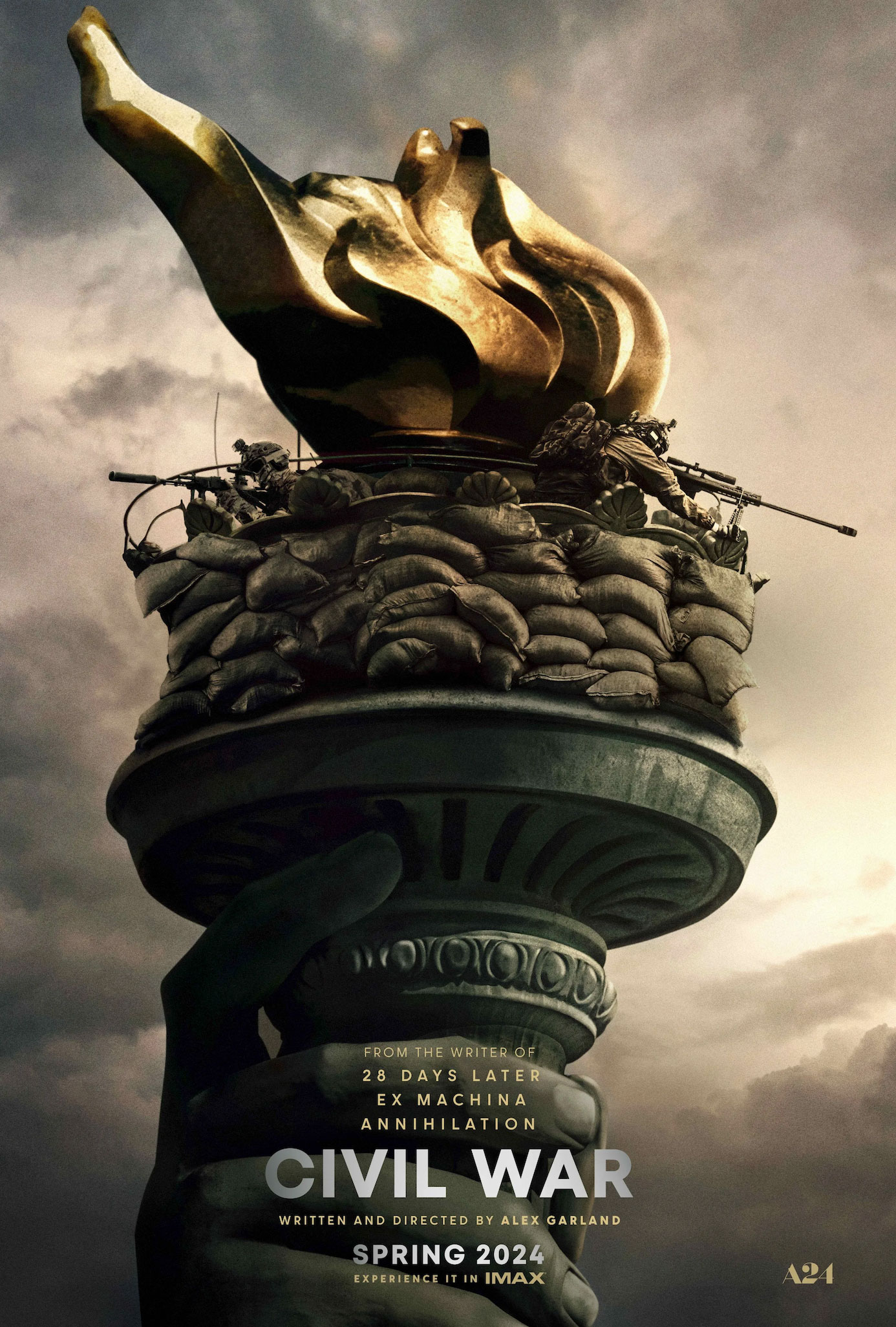
Alex Garland has got a new film coming out in April of 2024.  It’s entitled Civil War and it imagines a near future in which America slips into …. well, civil war.  There’s a lot of talented people in the cast, like Kirsten Dusnt and Jesse Plemons.

That said, the trailer dropped today and it almost feels like a parody of these type of films.  I almost laughed out loud when I heard the newscaster say “three-term president” because it just felt like such an awkward piece of exposition.

Anyway, I could be wrong and there are a lot of talented people involved with this film.  So, here’s the trailer:

‘Annihilation’ Review (dir. Alex Garland)


wewewewe.PNG

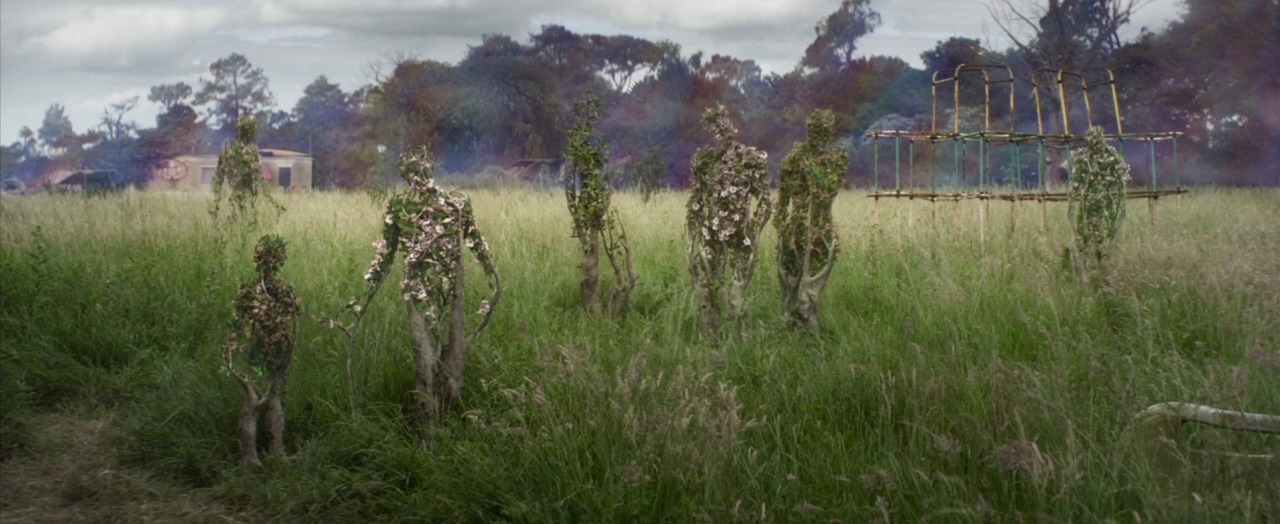
It has been quite some time since I last wrote a review. But sometimes a film hits the right notes and sits with you and the only way to shake it is by getting your thoughts out in writing. ’Annihilation’ was one of the first films in awhile to have that effect on me. I should preface this by saying that I’ve been waiting 3 years for its release ever since I read Jeff VanderMeer’s brilliant ‘Southern Reach’ trilogy. That it was going to be directed by Alex Garland only heightened that excitement. It is fitting that the last film I reviewed on this site was ‘Ex Machina’ – another Garland film that I loved and ended up being my favorite of that year. It might only be February but I can honestly say I could see ‘Annihilation’ taking that spot this year.

Alex Garland has stated that he read the first book of the ‘Southern Reach’ trilogy – from which the film gets its title – only once and then wrote the screenplay as if remembering a dream. To him it was a “dream like” book – one that would be hard to adapt outright. So he wrote the screenplay as if recalling a dream – attempting to capture the tone but also offering up his own interpretation of the story.  I think that you could say that this is also how I approached this review. I’ve only seen the film once and in writing this it  really was like trying to remember a dream. The film is so layered and so visceral of an experience that to discuss it without multiple viewings doesn’t quite do it justice, because like a dream you only remember what stood out, the parts that affected you the most and things might get overlooked. Those things might not be the same for everyone so my interpretation of it may not mirror what others have thought – it might also just seem like pseudo intellectual babel! But I’ll do my best.

tumblr_p4oj9i62Jw1rr1756o6_1280.png

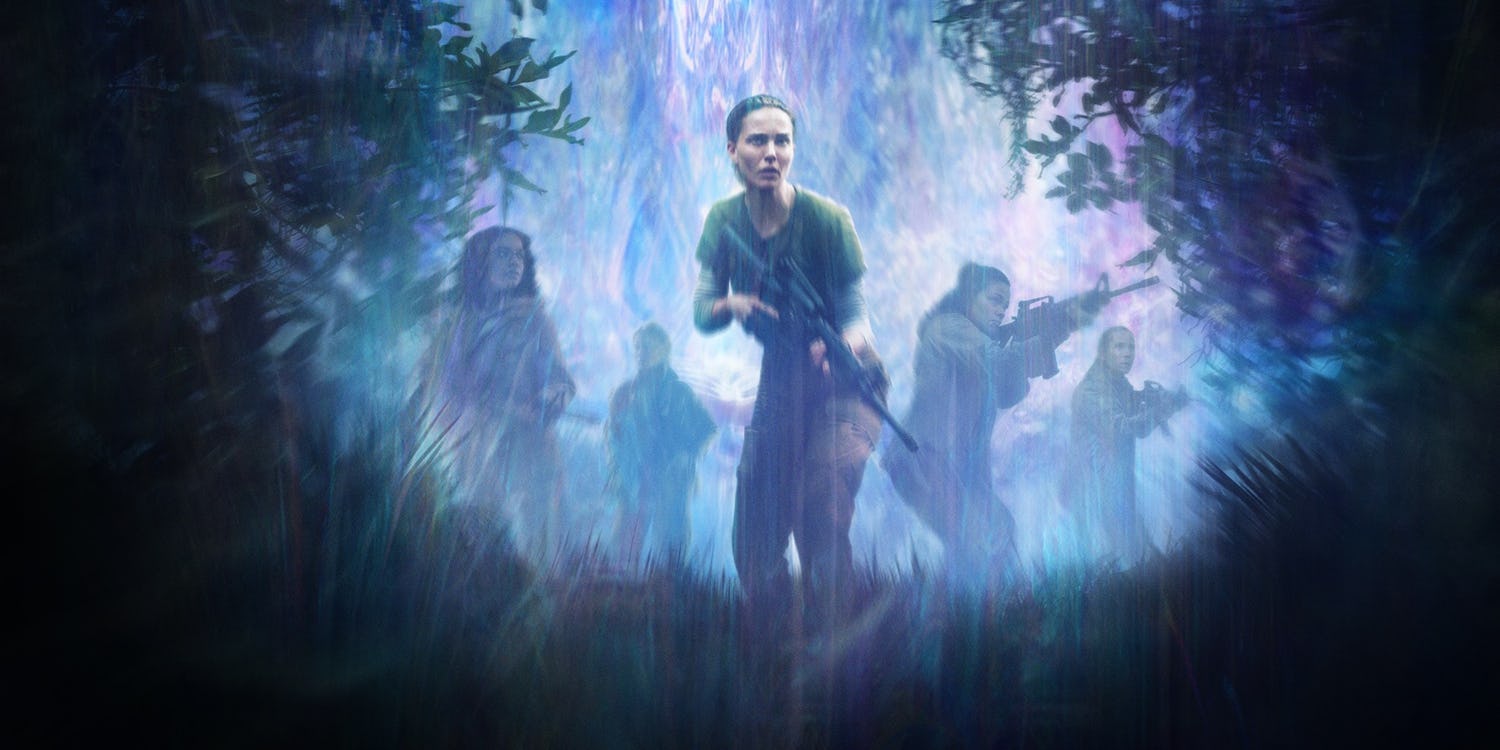
It would be damn near impossible to describe the plot of the film in any great detail without spoiling it but I will do my best to set it up. The film stars Natalie Portman as Lena – an ex army soldier turned biology professor. When we first meet her she is still grieving her missing husband Kane (Oscar Isaac) who was also in the military. He was sent on a mission a year prior and there has been no word of his status since. That is until one evening when he turns up to their house, his memory hazy, his explanation of his disappearance unclear. Before long he begins to have seizures and Lena rushes him to the hospital only to be intercepted by the Southern Reach – a secret government agency – and taken to a secure location.

There they explain to Lena that years prior something seemingly extraterrestrial crashed into the coastline. In subsequent days and weeks after the crash a shimmering pearl and translucent bubble began to grow and expand covering miles of swampland. It doesn’t seem to ever stop expanding and its presence is being monitored and kept secret. Their fear is that if it continues to grow at its current pace, it’ll eventually end up engulfing populated areas. They have sent in multiple exploratory teams over the years, consisting of trained military forces – to discover what lies within but none have returned. The prevailing theory/rumor? Something either killed them or they went crazy and killed each other. Lena learns that her husband – now on life support and quickly fading – was a part of one of those missions and is the first member to ever return. Determined to find out what happened – and possibly save him – Lena volunteers to join four other women on the next expedition into what the organization calls the “Shimmer”.

tumblr_p4oj9i62Jw1rr1756o10_1280.png

From there what Garland creates is a cerebral – at times haunting – sci-fi masterpiece. To me ‘Annihilation’ works brilliantly as two things. First as a genre film in the vein of ‘The Thing’ and ‘Alien’. It is at times bone chillingly eerie with a persistent sense of unease and paranoia from start to finish – and it contains one scene with a bear that is one of the more frightening scenes I’ve seen in awhile. This side of it raises a lot of questions about genetics, bioengineering and the effects of outside forces on an ecosystem. You could take it as a climate change allegory where human interference has altered the environment and now it has turned on them.

Second – and more importantly –  it is a metaphysical examination of depression, self destruction – and in my eyes – renewal that has ties to Tarkovsky and Kubrick. It is a film about characters dealing with issues that hang over them like a dark cloud. Addiction, the loss of a child, self harm, cancer. Each and every one of them goes on this mission not just because they want to know what lies within the Shimmer – but also because the unknown is better than what they currently know. In an almost subconscious way – and for some very conscious  – the threat of death doesn’t scare them and it perhaps would be a release. Once inside they are faced with an ever increasing state of anxiety. They can’t trust their eyes or their thoughts. Eventually even their bodies turn on them. Are they even any longer in control? Will they ever escape or be able to go back to being who or what they were before entering? Or will they be consumed by the Shimmer – the dark cloud that hangs over them?

For Lena specifically, the deeper she goes the more the Shimmer takes effect, the weight of guilt and grief consuming her, until she nears a breaking point. By the film’s end she must effectively confront herself head one – and for many people with depression that “self” is their worst enemy as it is here. She can’t get away from it, at one point it is literally suffocating and crushing the more she fights. It isn’t until she stops fighting that she is able to overcome. But still the question lingers – even once we get through the darkest moments in our life – when we shed that grief, guilt, loss or sadness – are we still the same? Has the effects of those things, of the Shimmer, changed us forever for better or for worse? That I think it open to interpretation. For me I found the ending hopeful. There was a sense of renewal, or rebirth, in the same way as ‘2001’ and the Starchild or the Titan-esque Ryan Stone crawling out of the “primordial soup” in the end of ‘Gravity’.

tumblr_p4qcibM26L1s8esgpo9_1280

Production wise I’d say the film is a marvel. The CGI is used to great effect creating a dreamy, gorgeous and colorful landscape. Garland has mentioned that although the film is set in Florida they shot the film in the UK and made the sets look like swampland. It is a minor production detail that I found interesting and in a way one that helps in making the Shimmer feel more unnatural. The score is equal parts hypnotic and kinetic. The finale in particular had my skin crawling as the images on screen danced along with the pounding score.

The two biggest complaints I have heard about the film are the pacing and the narrative structure. Neither bothered me. The pace was at times slow – but it felt deliberate as if building towards something great – which very much paid off. There are quiet moments but all serving a purpose to either further the progression of the story and Lena’s arc – or to build a sense of unease. As far as the structure of the film – which consists of flashbacks and jumps between the past and present – it didn’t hinder the film in any way. And to be quite honest, given the feeling of the unknown, I enjoyed the slow revelation of Lena’s past along with the questions about Lena’s state of mind in the present that the structure produced. One must remember she is an unreliable narrator at that point – something that I think could be rewarded with multiple viewings

tumblr_owy7rkOIBc1v6bg8ho2_540.gif

I do highly recommend that everyone see this on the big screen- especially because love it or hate it, we need to support these sorts of films. The studio already gave up on ‘Annihilation’ before it was even released. It won’t hit theaters overseas and hasn’t even opened in a lot of theaters in the US which is a shame.

Ultimately for me ‘Annihilation ‘ was a film that was as earthly – almost cosmic – as it was intimate. It is a horror story about how we change the world around us and how it changes us – as well as a fascinating examination of depression, anxiety and overcoming self destruction. It is a divisive film for sure. It won’t click with everyone and many will outright hate it. Even those that love it might not walk away with the same impression as I did. But that to me is the sign of a truly great film – one that is subversive, layered and truly unafraid to take risks.

Annihilation, Movie Review with some spoilers


Annihilation-Movie

Annihilation, a movie adaptation from the novel of the same name, is a confusing story.  The book is part of a trilogy and has no relation to the film except that both are fairly convoluted.

The movie has two storylines: a dying marriage that was based more on lust and youth than common interest and a comet that hits a lighthouse and forces mutations on everything around it.  The comet creates a “shimmer”, which may or may not be made of bubble mixture goop because that’s what it looks like and inside the shimmer a whole lot of mutations are goin’ on and scientists want to know why.

Lena (Natalie Portman) is having an affair so her husband decides to go into the shimmer because he’s self-destructive and Jimmy Fallon’s been kind of dull lately.  He’s gone for 12 months and returns ….. different.  The government, an organization run by a tranquilized Jennifer Jason Leigh, kinda wants Lena to go into the shimmer with her to investigate the entity further.  I write kinda because everyone in the film just meanders and moseys through their own story.

Lena and Jennifer don’t go in alone; they go into the bubble mixture goop with Jane the Virgin whose only special skill appears to be staring and whining, but to be fair she might be picking up on her malaise from being on a shitty CW show.  There’s also Explainer Woman who explains everything all….the….time and I mean Morgan Freeman voiceover levels of explaining.  There’s a lady who cuts herself (off camera) and whose special skill is to Explain Science with a voice that can only be described as sedated, interesting choice to prepare for every scene by eating a turkey sandwich and gravy.

They proceed to run into some weird predators and creepy deer; yep, creepy deer.  As they get closer to the origin of the comet impact, the mutations are more and more pronounced.  We are also treated to her husband via found video footage that the shimmer area is mutating him and his comrades that were all lost in the previous mission.  There does not appear to be a motive to the mutations or any form of a goal on the part of the invasive comet.  In many ways, the movie is a lot like the flora and fauna in the film; it is, it exists, and it will cost about 14.00 bucks to see it.

The movie did succeed in creating a mysterious vibe and playing up the unreliable narrator component.  It failed in pacing.  This movie is s l o w.  I mean it’s possible that I went back in time and re-watched it again.  I thought it was actually an hour longer than it was.  I have to really think as to whether I would recommend the film to a fellow human being.  If you go to see a Western because you like to watch people mosey, this is the film for you.


28 Days Later


There are A LOT of bad horror films out there and I mean Halloween Resurrection bad, but when you get a truly great one, it sticks with you for your life.  This movie is more unique in that the writer Alex Garland really peaked with this film and there are IMDB credits to prove it.  Danny Boyle directed the piece and you really feel as though you were inhabiting the after-times of a dead world….well, undead.  Danny Boyle did Trainspotting, Slumdog Millionaire, 127 hours, but I know what you’re thinking- Did he write anything besides family films for Disney?  Yes, he made this awesome zombie film.

We see shots of terrible violence and realize that monkeys are being forced to watch it. Then, Animal Rights Activists enter heavily armed with guns and sanctimony.  The researcher begs them not to release the animals because they are infected with a terribly contagious disease and that the goal of their research is to find a cure for rage.  The Animal Rights Activists patiently listen to the scientist instead of acting purely from smug instinct, dooming us all.  Just kidding, they release one of the monkeys, it rips the animal rights activist apart, barf bleeds all over her, making her patient zero, and I try really hard not to root for the diseased monkey.  The disease is out!  Of course, many of us always knew that animal rights activists would lead to the zombie apocalypse.  Just read their twitter feeds and you’ll know that they’ll doom us all.  Fade to Black and 28 Days Later… appears as a subtitle in the bottom right….BRILLIANT!!!

Jim wakes from a coma to a dead world.  Sound familiar? Yes, TWD went beyond homage there.  He leaves the hospital to amazing details that really sell a dead London.  Empty hospital, empty streets, garbage, worthless cash everywhere, a bus is overturned in front of parliament, and an amazing score reveals a World without people.  If you’re looking for the song that plays when he’s walking around dead London during the opening –  it’s by Godspeed You! Black Emperor – East Hastings – Long Version.

HOW DID THEY MAKE LONDON EMPTY?  MERLIN!  This is England, after all.   Nah, Danny Boyle got MANY government officials to agree to let the production shutdown huge traffic arteries for 90 seconds at a time.  London is one my most favorite cities and I would love to live there and it is Europe’s New York City, therefore, imagine shutting down Times Square for filming.  

Jim gets chased by fast-moving zombies and meets Selena and a Red Shirt.  He goes with them and realizes very quickly that he was probably better off in a coma.  Jim insists on seeing his parents.  They agree to take him and he finds them suicided on the bed clutching a note that reads- “With endless love, we left you sleeping. Now, we’re sleeping with you.  Don’t wake up.” This is not your dad’s zombie movie.  They decide to stay at his house for the night, but are attacked by zombies.  Red Shirt gets infected and is dispatched by Selena.  Jim and Selena must flee.

Jim and Selena venture forth and find Frank and his daughter Hannah.  It hasn’t rained for some time, therefore -no water.  For survival, they have to leave the city.  Selena doesn’t want to go with Frank and his daughter because she sees them as anchors, but Jim insists and Hannah explains that we actually need each other. Frank plays a radio signal that beckons them to safety and they leave as one tribe.  Along the way, there are some intense scenes and some shopping.  They arrive at the salvation location, but Frank gets infected and is killed by soldiers.

Right away, you can tell that the soldiers are goofing off too much.  I have commanded soldiers and there’s some level of goofing off, but this had an air of creepiness and broken discipline.    The soldier’s have taken over a residence as their HQ and have put up defenses to keep zombies out and people in.  We quickly learn that the radio message was a trap. Corporal Mitchell harasses Selena and a fight erupts.  The Major breaks it up, but it’s clear that Jim, Hannah, and Selena are prisoners.  The Major explains that the soldiers could not face a dead world and one attempted suicide.  The Major had a plan- lure women to the compound with a radio signal.  When they arrived, they would keep them prisoner to breed with his soldiers to restart civilization. He puts it simply: women equal hope.  His logic and delivery is truly chilling in its cold mathematics.

They decide to execute Jim and a SGT who gets in their way and keep Hannah and Selena for reproduction.  Corporal Mitchell and another Soldier take Jim and the SGT out for execution to a killing field.  Corporal Mitchell wants to bayonet Jim, the other Soldier can’t handle that kind of intimate murder, leading to a melee.  The SGT is killed and Jim escapes.

The next sequence is truly amazing because we see our hero morph from the sensitive man that he is naturally to a state of feral revenge indistinguishable from the fast-moving zombies.  He’s shirtless to further emphasize his lack of civility as he makes short work of many of the soldiers to rescue Hannah and Selena. Corporal Mitchell who wanted to bayonet him and rape Selena becomes the focal point of Jim’s rage- Jim puts his thumbs deep into Corporal Mitchell’s eyes until he’s dead.  This is a critical act of monstrosity because it shows not tells in the clearest finality that there is no separation between Jim’s blind rage and the rage that has infected the human population.

I don’t want to totally spoil the ending because this film will remain with you and is a must see.  It’s commentary on violence and society is forever salient: Violence is horrific, but forced civilization is worse and will lead to the ultimate act of revenge – THUMBS IN YOUR EYEBALLS or some such equivalent.  The other important lesson the film tries to inculcate is to beware of self-certain sanctimonious people because their grandiosity could doom us all.

Film Review: Ex Machina (2015, dir. Alex Garland)


IMG_5129

I know this was already reviewed by Leon last year. I watched it for the first time this March. It has bothered me ever since, so I decided to purge it from my system by writing my own review of the film. Can you tell I didn’t really like it?

The movie opens up and we meet our main character Caleb (Domhnall Gleeson). He just won the “Staff Lottery”.

IMG_5138

Whatever gets him out of having to program a search algorithm in C++ is a good thing. C++ is not the most fun language to program in, which is why I assume he switches to using Python later on in the film. If you think that’s going to lead to Caleb asking the robot about non-computable functions such as The Halting Problem, then you’re going to be very disappointed. These are functions that to a computer cannot be evaluated to obtain their result. That means there are problems that cannot be solved by machine intelligence. This of course leads to a debate about what exactly does natural intelligence have that machine intelligence doesn’t, and what does that say about whether a machine has consciousness. All things that will not be brought up. These are things I learned in a course I took before a basic ground level Computer Science course. A remedial CS course. Caleb not knowing these things is like making a movie about racing when the main character, who is a mechanic, can’t change a tire.

Now we are off to where Oscar Isaac’s character lives.

IMG_5191

I know his name is Nathan, but I just kept referring to him as Beard while watching the film. When Caleb shows up to enter his place I had to pause the movie.

IMG_5250

I love watching movies on the iPad with the Amazon Prime app because it not only tells you the characters, but it also drops in trivia about the current scene. This is how I know that this takes place at the Juvet Landscape Hotel in Alstad, Valldal, Norway. Beard has a pretty nice place. It comes with it’s own Kubrickian hallways…

IMG_5373

The Shining (1980, dir. Stanley Kubrick)

The Shining (1980, dir. Stanley Kubrick)

and Oldboy (2003) prison rooms.

IMG_5411

Oldboy (2003, dir. Chan-wook Park)

Oldboy (2003, dir. Chan-wook Park)

Beard gives Caleb a key that will only open rooms and let him use devices that he is allowed to use. It’s kind of like a computer game. In fact, that’s how you could describe the whole movie in a nutshell. It’s a game composed of cutscenes with the robot and Beard, except you don’t get to run around in between, and there are no dialog trees.

After showing Caleb into his room, he tells him he needs to sign an Non-Disclosure Agreement. Again, I had to pause the movie here cause I was taking care of my dog while a new ceiling fan was being put in.

IMG_5477

Okay, if you say so, then Beard saying his home is his research facility is a reference to It’s A Wonderful Life (1946). Now we get the Ex Machina definition of what a Turing Test is that isn’t what a Turing Test actually is. Caleb says:

“I know what the Turing Test is. It’s when a human interacts with a computer. And if the human doesn’t know they’re interacting with a computer, the test is passed”

Actually, the Turing Test is when you have a “Human interrogator” that is separated by a barrier with an isolated interface that let’s the interrogator interact with two sources that are both separated from each other and the interface. One source is a human being who has never met the interrogator. The other source is a machine that is being tested. If the interrogator cannot distinguish the two sources from each other than robot has passed the test.

Such a test is never really performed in this film unless you think that the point when Caleb cuts himself, he believes he might be a robot because he thinks he is indistinguishable from the robot. It’s not the same, but it may have been stuck in there to allude to that. Regardless, it means that it would be literally impossible for the Turing Test to even be performed since it would require three humans (a source, an interrogator, and someone setting up the experiment), and there are only two humans at Beard’s home. Here’s a nice diagram from the Second Edition of Introduction to Artificial Intelligence by Philip C. Jackson Jr.

IMG_1148

It doesn’t really prove that the computer has “artificial intelligence” either, but that a human being can’t tell the difference. That simply means it can pass for human in this controlled environment. That’s of course why the film will unceremoniously toss it aside in favor of a setup that will allow for a lot of engagement between actors that is done face-to-face.

Thus begins the “test”.

IMG_5529

We see Beard’s office first which is covered with post-it notes. I haven’t seen that since I think either the remake of Oldboy or that episode of Beverly Hills, 90210 where Brandon covered a professor’s office with them. Caleb also sees foreshadowing about previous robots who got a little cabin fever when he enters the interrogation room.

IMG_5552

Yes, that is glass. Does he turn right around and walk out because he has obviously been lied to about taking part in a Turing Test? Nope. We just meet Ava played by Alicia Vikander.

IMG_5634

I have to admit that I feel a little sorry for her. She really was cast in some terrible movies in 2015. You have this movie of course. You have her in The Man from U.N.C.L.E. where she is just there to make a reference to Anita Ekberg in La Dolce Vita (1959) by standing in a fountain while the male leads all but start making out. She was in The Danish Girl (2015) that will have more people asking children about their genitals since it makes being transgender all about bottom surgery. I loved how it didn’t tell you she had a uterus transplant at the end. Probably because leaving it in would mean the movie is actually equating having babies with identifying oneself as a woman like people think Avengers: Age of Ultron (2015) did. Then she was also in Burnt (2015), but I’ll be damned if I could find her in it while watching it.

No, I’m not kidding about The Danish Girl having that effect. People ask transgender children all the time about whether they plan to have surgery when they get older and that movie doesn’t help. Neither do other things, but I refuse to review that movie right now.

After some initial pleasantries, he asks how she learned to speak. She says she “always knew how to speak.” She also says she thinks she is clever since “language is something that people acquire” but she can apparently do it out of the box. He responds about language being inborn in the human mind, and that it is only attachment of words to this built-in stuff that allows us to speak. You could say it’s an explanation for why everyone gets a free language. This confuses Ava, but I’m more confused why rebooting Tomb Raider in 2018 with her as Lara Croft is a thing that’s happening. This is also a conversation of foreshadowing because we will get an explanation later that, surprise, surprise, shows again that Caleb really doesn’t know about Computer Science.

Now you’d think they would leave the Turing Test thing behind here, but no. They feel the need to rub their nose in it some more.

IMG_5719

He says that “if I hid Ava from you, so you just heard her voice, she would pass for human.” Maybe, except the Turing Test uses terminals, not voices, since that really wouldn’t be a test of human intelligence, but speech synthesis. Take for example talking to Siri or a similar intelligent agent. The very fact that it speaks instantly makes people start to think of it as human. That’s an example of Weak AI rather than Strong AI, which is what Ava is supposed to be. They’ll bring up Strong AI later, but will conveniently leave out Weak AI because it would open up holes in the film.

He wants to show him Ava, then see if he feels she has consciousness. What he is actually saying is whether he has effectively recreated superficial aspects of a humanoid robot with a reasonably passable intelligent agent controlling those parts. That’s not even close to the same thing. That would be like saying you have proven somebody actually works for immigration because illegal immigrants run when they see someone in pressed pants, a white shirt, and holding a clipboard enter a factory. You’ve simply proven that you can make something that can socially engineer a person. This is why the separation factor is so important to not have in a movie like this that can’t have its ending if it doesn’t ignore these things.

I don’t know why he couldn’t just say that he already had some people test her in a proper Turing Test, but now he wants him to do what he is asking him rather than just claiming that of course she would pass. Oh, well.

Since this movie isn’t very well written, they now have Caleb spout some jargon about her language abilities. Beard quickly shuts this down by saying he isn’t going to explain how she works. By that, he means until later when he decides to do just that in order to remind us of a real world event that happened a few years ago. The power soon goes out after this too for the purposes of foreshadowing that somebody is doing it, and it changes where and what Caleb is able to do with his keycard.

Caleb is now woken up by some speechless Asian lady robot.

IMG_6027

That makes two female robots. There must be a male one around here somewhere, right? Of course not. This would lead any reasonable person to wonder if he is building a brothel for straight men. The actual reason the movie tries to subtly slip in is that part of them being human is sexuality and gender. I’m assuming that means he has to test to make sure their vaginas work, and since they are both straight, then the robots must be women. Nope, still comes across like he is building a brothel.

Now Beard and Caleb have another conversation about how to test her. He basically breaks out more jargon, which Beard says isn’t important because too much thinking gets in the way of the drama and building of tension. Seriously, before it cuts to the image below, he says: “How does she feel about you?”

IMG_6103

It starts off with Ava showing him a picture, but they already want to turn the tables and have Ava ask Caleb questions as if we really are interested in him. But first we find out that Caleb works for Beard’s own version of Google. Then the funniest thing in the movie happens.

IMG_6263

He says that he is an advanced programmer. Sure, Caleb. Sure, and the majority of people knew what a race condition was when they started up Steve Jobs (2015).

Ava goes on to brag about how Beard wrote the code for not-Google when he was 13. She then asks him if he likes Mozart to which he responds that he likes Depeche Mode. What are you trying to say here, Garland? Maybe that people are people? Doesn’t matter because she doesn’t want to listen. She has other priorities like setting up the ending. The movie actually has very little to with robots. It’s about a woman who is imprisoned and uses the dumbest guy she can find to manipulate in order to get out. That’s the real movie in a nutshell. You won’t be asking yourself interesting questions here. It’s all kind of sleight of hand with what appears to be intelligent writing. Then the power goes out again and she takes credit for it before trying to drive a wedge between Caleb and Beard.

IMG_6334

Then the power comes back online.

IMG_6351

I have an idea. Ask her if on a hot summer night would you offer your throat to the wolf with the red roses. It’s totally random. No matter what she says, you respond that you bet she says that to all the boys. See how she responds. Of course not. This game has you on strict rails and doesn’t give you a dialog tree.

Blah, blah, blah. Now Beard says he is going to show Caleb where he created Ava even though he said he wasn’t going to tell him how she works earlier because it would ruin the test. Remember that they have established that Caleb is an advanced programmer, and at least as a degree in Computer Science. Beard asks him if he knows how he got her to “read and duplicate facial expressions.” That’s easy, you simply get a lot of training data and use it train something like a neural network or some other statistical model. Basic stuff for someone with a Computer Science degree that people use and interact with everyday in the form of a spam filter.

IMG_6584

Moving onward, Beard reminds us of that incident a few years back when it was discovered that Apple was using people’s iPhones to do war driving in order to improve their location services. In Beard’s specific case, he simple turned on the camera and microphone on cellphones to get a bunch of data and used it to train whatever he is using. He says the search engine itself, but that doesn’t make sense unless you want to say that his Google can search by image and sound bite, thus allowing for him to build a language of sorts between the collected data and the meanings humans assign them. That actually is probably what they were going for given the explanation of language earlier. It still doesn’t explain why they just had Caleb throw up his hands to say he has no idea how it was done.

IMG_6627 (1)

Next we find out that writer/director Alex Garland is probably a fan of Quantum Leap. I say that because that is Ava’s brain, which Beard refers to as wetware. What that means is that it should be a combination of physical aspects of the human brain interconnected with mechanical parts to create an artificial intelligence. This is what Ziggy on the show Quantum Leap has as its’ “brain”. That’s why they refer to her as a hybrid computer, and as having aspects of Sam in her since the brain cells are his. We also find out that the software running on it is his version of Google’s search engine.

IMG_6673

After showing Caleb another picture, she decides to manipulate him more by putting on hair and clothes. I had to pause the movie again here.

IMG_6832

In other words, they told her to just walk rather than walk while swinging her hips. I’m not sure why that was a thing they bothered with honestly. Without that bit of trivia popping up it would have just come across as someone who was shy rather than someone who was starting to conform to the gender forced upon them by form and/or programming.

Now we get Caleb explaining that AI doesn’t need a gender, so that they can get into a conversation that amounts to explaining how things such as neural networks work by using sexual preference as an analogy. A neural network is a graph formed of vertices and lines that is based on the way the human brain works. The vertices have some sort of function that acts on the inputs that are sent into it in order to spit out a value either as a final result or as inputs to other vertices. The lines have a weight that is assigned to them, which is then multiplied by the value being sent along it in order to create the value that enters the vertex it connects to. Here is a very simply example of a neural network taken from AI Application Programming by M. Tim Jones.

IMG_1149

What this all means is that using certain techniques such as backwards propagation, you can send information through such a network that in turn adjusts the weights in order to change the way it will operate by changing what it will output. In the context of his explanation, it means that if you pass a bunch of black girls through your brain, and you respond in a certain way, then your brain’s own neural network adjusts to having an attraction to them, or developing a dislike of them sexually. It also depends on the structure of said brain initially and how it is formed during your early years. To go back to the mathematical example, it would mean how many vertices you have, how they are linked, and the functions at each vertex.

Caleb doesn’t seem to understand because he isn’t very good at Computer Science. Beard takes Caleb into a room with a Jackson Pollock painting.

IMG_7145

He tries to explain what Automatic Art is to Caleb. It sounds like he is referencing Fuzzy Logic to me, which is when instead of using simple true and false, or 0 and 1, you make decisions based on everything in between 0 and 1. It’s not a fixed algorithmic if this then that, but something more human.

Then Beard references Star Trek by telling Caleb to “Engage intellect”. I’m still thinking he is making a brothel, so I’ll go with Mudd’s Women as the episode of the original series he is referencing. Amazon Prime says it’s a reference to the episode Requiem for Methuselah. I also think of The Measure of a Man from Star Trek: TNG where Data’s designation of being sentient or property is put on trial.

Beard now asks him to reverse the challenge of doing something not partially deliberate and partially unconscious. He asks Caleb what would happen if Pollock didn’t make a single mark if he didn’t know exactly what he was doing. Caleb says that he wouldn’t have made a single mark. In other words, he is describing the difference between how humans operate with fuzzy logic instead of with a strict rule system. I have a feeling that somebody told Alex Garland about how they tried things like theorem-proving software and knowledge systems in AI before Strong AI research collapsed and we switched to research into Weak AI. Weak AI being what we have been enjoying at an ever-growing rate since the 1980s in the form of speech recognition, image identification, and even programs that can write new songs in the style of Bob Dylan. Those things operate on probabilities, which when attached to incoming examples such as speech, images, and lyrics written by Bob Dylan will spit out another probability that is used to make a decision while also creating something that will make the kind of decisions you want based on the samples you gave it. Thus, it isn’t a strict rule, but something in between structure of the model and the current state of the probabilities in that model being used to generate the result. The Bob Dylan example would be feeding his lyrics into a chain that builds a series of probabilities between words so that if you picked a starting word, then it would generate the rest of the words based on the actual lyrics Bob Dylan wrote. You can do this with music as well. They are called Markov Chains/Hidden Markov Models in both cases.

This is all stuff to make you think that the more information you give to Google, then if the model is built correctly, all that data created by human beings will train that model to operate as a human does by becoming predictive of correct human behavior. Unfortunately, that’s not Strong AI. It’s simply Weak AI used on a large scale that impresses us the way a shiny object does a small child.

IMG_7229

Then Caleb comes right out and tells Ava he took a semester in AI. Yeah, sure you did Caleb. I took one and a half of them at Cal. Trust me when I say that if Anastasia Steele from Fifty Shades of Grey (2015) is the worst English major in recent film, then Caleb is the worst Computer Science major in recent movies.

Why does he say this? He says it because the movie wants to get arty by showing black and white shots. No really, there is no other reason. Caleb brings up a famous thought experiment about a person living in a black and white room who has perfect knowledge of color without having ever stepped out of that room. That would mean that the person in question would have never experienced color. However, Caleb screws this up by saying:

IMG_7264 (1)

Hmmm…you mean like the colors in the image I just posted that would show up on a black and white monitor, Caleb? He breaks the thought experiment simply so the film can show shots like that. He says that it gives her experience, which perfect knowledge about something doesn’t give you. That difference between pure knowledge and how something makes you feel is supposed to be the difference between human and machine intelligence according to Caleb. That’s why she mentions that she wants to go to a busy intersection if she is ever allowed to leave at a point in the movie. Of course the movie realizes that it needs to move the plot along instead of getting too smart so Ava messes with the power again to try and guilt Caleb some more. Boring.

Time for another session with Beard for Caleb. Nothing really happens here of consequence. Then more artsy shots and Beard banging the Asian lady robot. This is followed by Asian lady and Beard disco dancing to Oliver Cheatham’s Get Down It’s Saturday Night. I’m guessing Alex Garland also played Grand Theft Auto: Vice City since it’s on that soundtrack for the Fever 105 station hosted by Oliver “Ladykiller” Biscuit. It’s also there so that Lisa could have a scene from this movie to include as a dance scene that she loves.

IMG_7623

Unfortunately, Caleb doesn’t want to cool off on Saturday night, or any other night right now. He’s pissed off because the movie can’t really decide whether it wants to be smart about the technical stuff, or whether it wants to focus on that other boring prison break plot.

IMG_7683

There’s numerous questions that are batted back and forth here, but the only one that was important to me is that according to Ava she has an off switch like Data.

IMG_7792

So, why do they fight her before the Ms. 45 (1981) backstabbing ending when they could have simply turned her off? No matter. The conversations with her in this movie really aren’t the actual sessions. The sessions are with Beard. It’s time for Beard to think that Strong AI is right around the corner, and misunderstand what the singularity means.

I love how Beard makes sure to mention that the bodies are kept around after he builds the next model. He does this not for any in-movie reason, but for the horror factor of a bunch of bodies and so that Ava has a place to get skin later in the movie.

Beard brings up the singularity now and he seems to be confusing it for Terminator 2 (1991). The singularity is not when robots take over and replace us. The singularity is a point at which progress begins to outstrip our ability to fully comprehend the changes it creates till we essentially can do whatever we want. It’s like the Krell in Forbidden Planet (1956). Another example would be The Ancients in Stargate SG-1 who shed their material form and ascended into the freedom of pure energy. Not exactly something you whip out the Oppenheimer quote about being the destroyer of worlds when discussing. It’s an evolution, but not at the expense of the existence of humans. However, at this point the film is on autopilot towards its very unsatisfying conclusion, so who cares.

With Beard knocked out from drinking, Caleb decides to write a prime number generator.

IMG_8052

He is supposedly working to free Ava, but he will not use that prime number generator to keep the power system busy like they did in Real Genius (1985). Also, why the comments? It’s almost as funny as in Blackhat (2015) when they didn’t seem to know that comments disappear when you compile code, which means they wouldn’t be present when you decompile something like a virus.

More boring stuff that has very little to do with anything, but looks semi-impressive and atmosphere maintaining if you haven’t already given up on the film like I had long before this point.

IMG_8315

Ava is sitting in a corner to further guilt Caleb along with saying some more stuff and shutting off the power again.

IMG_8316

Good session.

Caleb and Beard talk some more before Ava finally breaks out from her prison. Beard is killed in the process.

IMG_9068

She locks Caleb up and gets away. I was honestly hoping that it would turn out Caleb was a robot, but they made sure to shoot that down by having him cut open his arm at one point. Then they juxtapose that with scenes later in the movie of the actual robots pulling off their skin.

I am part of a social network called Letterboxd. It isn’t a place where I write proper reviews. That’s what this site is for where I can really think about it, and include screenshots. I believe they are crucial. That’s why I use that network for initial gut reactions to what I watch. I try not to bring that over here, but really step through the film. This film isn’t as bad as I thought it was initially. I’m still not a fan though. The film boils down to somebody trying to socially engineer two people in order to make a prison break while we get pseudo-intellectual stabs at real tech stuff while not bothering to maintain consistency throughout the film. It’s not awful as I thought during and after watching it the first time, but it hardly deserves the ridiculous amount positive critical attention it has been getting since its’ release in 2015.

My ultimate conclusion is this: Watch Sneakers (1992), Real Genius (1985), and WarGames (1983) instead. Also, if this movie sparked an interest in AI for you, then run with it, because it is a fascinating subject that is not done justice by this film. My actual semester at Cal in AI was amazing. I had already read several books on the subject prior to taking the class, and it still was some of the most fun I had while at UC Berkeley.

Side notes: The reason for the race condition at the beginning of Steve Jobs is because a race condition is when two or more things try to operate on the same thing that causes unwanted results. Since the film uses Jobs’ brain as a metaphor for end-to-end control, a race condition is a perfect bug that doesn’t jive with what Jobs wants to achieve.

It is interesting that the film has exactly seven sessions with Ava since a byte is comprised of 8 bits. It makes one wonder whether Garland wants you to think it was cut short, there was a zeroth session prior to the official session since computers begin counting at zero, the 8th session is what happens at the very end, or that the missing session that would make it a byte represents that she is truly human and not really a computer anymore. Just something I thought I would pass on.

Here’s Who Won At The DGA (or The Unexpected Virtue of Making History)


The_Revenant_2015_film_poster

The Director’s Guild of America handed out their awards tonight and history was made!  (And the Oscar race got a little bit more complicated.)  First off, Alex Garland won the award for Best First-Time Feature Director for Ex Machina.  Then Cartel Land somehow defeated Amy for Best Documentary Direction.

And then Alejandro G. Inarritu was named Best Director for The Revenant!  This makes Inarritu the first film director to ever win back-to-back awards from the Director’s Guild.  As you may remember, he previously won for Birdman and when was the last time anyone thought about that damn movie?  (For the record, I thought the Revenant was far superior to Birdman.)

So, to recap, the Production Guild gave its top award to The Big Short.

The SAG gave its top award for Spotlight.

And now, the DGA — which is traditionally the most reliable of all the precursors — gave its top award to The Revenant!

In other words, for the first time in my lifetime, there are three films that seem to have a legitimate shot at winning best picture when the Oscars are awarded later this month.

Of the 8 films that were nominated, my personal favorite would be Brooklyn, which realistically has no chance of winning the top prize.  (Carol was my favorite film of the year but it was not nominated.)  However, there’s a part of me that still hopes that — despite not winning at the PGA or the DGA — Mad Max: Fury Road will pull off an upset.  Sadly, that probably won’t happen.  Not only would a Mad Max victory be a nice (and popular) surprise but it would completely redefine the stodgy old assumptions about what type of films qualify for Oscar consideration.

If The Big Short wins, it will be the biggest travesty since the victory of Crash.