Here are the 2025 nominations of the Chicago Film Critics Association!
BEST PICTURE
It Was Just an Accident
Marty Supreme
One Battle After Another
Sinners
Train Dreams
BEST DIRECTOR
Paul Thomas Anderson – One Battle After Another
Ryan Coogler – Sinners
Mona Fastvold – The Testament of Ann Lee
Jafar Panahi – It Was Just an Accident
Josh Safdie – Marty Supreme
BEST ACTOR
Timothée Chalamet – Marty Supreme
Leonardo DiCaprio – One Battle After Another
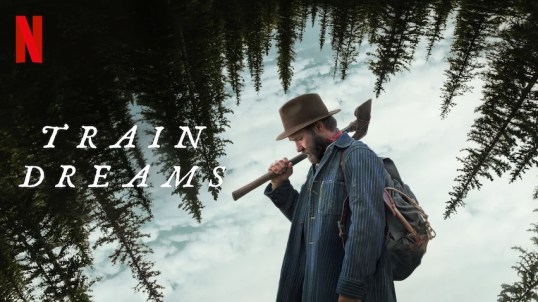
Joel Edgerton – Train Dreams
Ethan Hawke – Blue Moon
Michael B. Jordan – Sinners
Wagner Moura – The Secret Agent
BEST ACTRESS
Jessie Buckley – Hamnet
Rose Byrne – If I Had Legs I’d Kick You
Jennifer Lawrence – Die, My Love
Amanda Seyfried – The Testament of Ann Lee
Tessa Thompson – Hedda
BEST SUPPORTING ACTOR
Benicio del Toro – One Battle After Another
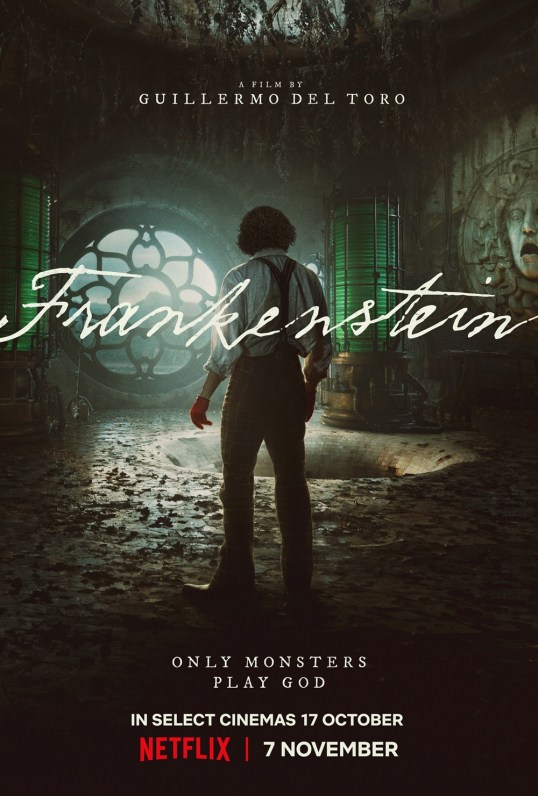
Jacob Elordi – Frankenstein
Delroy Lindo – Sinners
Sean Penn – One Battle After Another
Stellan Skarsgard – Sentimental Value
BEST SUPPORTING ACTRESS
Odessa A’Zion – Marty Supreme
Nina Hoss – Hedda
Inga Ibsdotter Lilleaas – Sentimental Value
Amy Madigan – Weapons
Wunmi Mosaku – Sinners
Teyana Taylor – One Battle After Another
BEST ORIGINAL SCREENPLAY
Blue Moon by Robert Kaplow
It Was Just an Accident by Jafar Panahi
Marty Supreme by Ronald Bronstein & Josh Safdie
Sinners by Ryan Coogler
Sorry, Baby by Eva Victor
BEST ADAPTED SCREENPLAY
Hamnet by Chloe Zhao & Maggie O’Farrell
No Other Choice by Park Chan-wook – Lee Kyoung-mi – Don McKellar – & Jahye Lee
One Battle After Another by Paul Thomas Anderson
Train Dreams by Clint Bentley & Greg Kwedar
Wake Up Dead Man by Rian Johnson
BEST ANIMATED FEATURE
Arco
Boys Go to Jupiter
KPop Demon Hunters
Little Amelie or the Character of Rain
Zootopia 2
BEST DOCUMENTARY
Cover-Up
My Undesirable Friends – Part 1 – Last Air in Moscow
The Perfect Neighbor
Predators
Put Your Soul on Your Hand and Walk
BEST FOREIGN LANGUAGE FILM
It Was Just an Accident
No Other Choice
The Secret Agent
Sentimental Value
Sirat
BEST ART DIRECTION/PRODUCTION DESIGN
Frankenstein
Marty Supreme
One Battle After Another
The Phoenician Scheme
Sinners
BEST CINEMATOGRAPHY
Dan Laustsen – Frankenstein
Lukasz Zal – Hamnet
Michael Bauman – One Battle After Another
Autumn Durald Arkapaw – Sinners
Adolpho Veloso – Train Dreams
BEST COSTUME DESIGN
Kate Hawley – Frankenstein
Lindsay Pugh – Hedda
Ruth E. Carter – Sinners
Malgorzata Karpiuk – The Testament of Ann Lee
Paul Tazewell – Wicked: For Good
BEST EDITING
Jon Harris – 28 Years Later
Stephen Mirrione & Patrick J. Smith – F1: The Movie
Ronald Bronstein & Josh Safdie – Marty Supreme
Kim Sang-beom & Kim Ho-bin – No Other Choice
Andy Jurgensen – One Battle After Another
BEST ORIGINAL SCORE
Rob Mazurek – The Mastermind
Jonny Greenwood – One Battle After Another
Ludwig Goransson – Sinners
Daniel Blumberg – The Testament of Ann Lee
Bryce Dessner – Train Dreams
BEST USE OF VISUAL EFFECTS
Avatar: Fire and Ash
Frankenstein
Mickey 17
Mission: Impossible — The Final Reckoning
Sinners
MILOS STEHLIK AWARD FOR BREAKTHROUGH FILMMAKER
Mary Bronstein – If I Had Legs I’d Kick You
Sarah Friedland – Familiar Touch
Carson Lund – Eephus
James Sweeney – Twinless
Eva Victor – Sorry, Baby
MOST PROMISING PERFORMER
Miles Caton – Sinners
Chase Infiniti – One Battle After Another
Abou Sangare – Souleymane’s Story
Tonatiuh – Kiss of the Spider Woman
Eva Victor – Sorry, Baby
Here are the 2025 nominations of the Indiana Film Journalists Association.
There’s a lot of them.
BEST FILM 28 Years Later Black Bag Bob Trevino Likes It Bugonia Frankenstein Friendship Hamnet Jay Kelly The Life of Chuck Marty Supreme No Other Choice One Battle After Another The Phoenician Scheme The Plague Sinners Splitsville Superman Train Dreams Wake Up Dead Man: A Knives Out Mystery Weapons
BEST ANIMATED FILM In Your Dreams KPop Demon Hunters The Legend of Hei 2 Little Amélie Or The Character Of Rain Ne Zha 2 Predator: Killer of Killers Zootopia 2
BEST FOREIGN LANGUAGE FILM Cloud It Was Just an Accident Left-Handed Girl No Other Choice Reflection In A Dead Diamond Rental Family The Secret Agent Sentimental Value Universal Language The Voice of Hind Rajab
BEST DOCUMENTARY Are We Good? Deaf President Now! Disposable Humanity Grand Theft Hamlet Hacking at Leaves Orwell: 2+2=5 Pavements The Perfect Neighbor
The Tenderness Tour
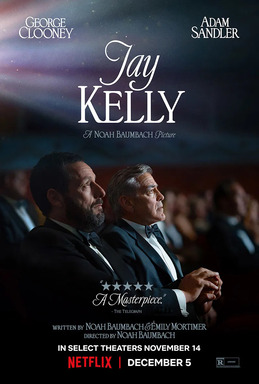
BEST ORIGINAL SCREENPLAY Noah Baumbach and Emily Mortimer – Jay Kelly Mary Bronstein – If I Had Legs I’d Kick You Ronald Bronstein and Josh Safdie – Marty Supreme Ryan Coogler – Sinners Michael Angelo Covino and Kyle Marvin – Splitsville Zach Cregger – Weapons David Koepp – Black Bag Tracie Laymon – Bob Trevino Likes It Jafar Panahi – It Was Just an Accident Charlie Polinger – The Plague
BEST ADAPTED SCREENPLAY Paul Thomas Anderson – One Battle After Another Clint Bentley and Greg Kwedar – Train Dreams Guillermo del Toro – Frankenstein Mike Flanagan – The Life of Chuck Alex Garland – 28 Years Later Dan Gregor, Doug Mand, and Akiva Schaffer – The Naked Gun James Gunn – Superman Rian Johnson – Wake Up Dead Man: A Knives Out Mystery Park Chan-wook, Lee Kyoung-mi, Don McKellar and Lee Ja-hye – No Other Choice Will Tracy – Bugonia
BEST DIRECTOR Paul Thomas Anderson – One Battle After Another Clint Bentley – Train Dreams Ryan Coogler – Sinners Michael Angelo Covino – Splitsville Zach Cregger – Weapons James Gunn – Superman Park Chan-wook – No Other Choice Charlie Polinger – The Plague Josh Safdie – Marty Supreme Steven Soderbergh – Black Bag
BEST LEAD PERFORMANCE Everett Blunck – The Plague Jessie Buckley – Hamnet Rose Byrne – If I Had Legs I’d Kick You Timothée Chalamet – Marty Supreme David Corenswet – Superman Leonardo DiCaprio – One Battle After Another Joel Edgerton – Train Dreams Michael Fassbender – Black Bag Barbie Ferreira – Bob Trevino Likes It Ethan Hawke – Blue Moon Michael B. Jordan – Sinners Liam Neeson – The Naked Gun Josh O’Connor – Wake Up Dead Man: A Knives Out Mystery Jesse Plemons – Bugonia Emma Stone – Bugonia
BEST SUPPORTING PERFORMANCE Pamela Anderson – The Naked Gun Miles Caton – Sinners Benicio del Toro – One Battle After Another Jacob Elordi – Frankenstein Nicholas Hoult – Superman Chase Infiniti – One Battle After Another John Leguizamo – Bob Trevino Likes It Amy Madigan – Weapons Paul Mescal – Hamnet Sean Penn – One Battle After Another Adam Sandler – Jay Kelly Stellan Skarsgård – Sentimental Value French Stewart – Bob Trevino Likes It Teyana Taylor – One Battle After Another
BEST VOCAL / MOTION-CAPTURE PERFORMANCE Oona Chaplin – Avatar: Fire And Ash Ebon Moss-Bachrach – The Fantastic Four: First Steps Will Patton – Train Dreams Dimitrius Schuster-Koloamatangi – Predator: Badlands Zhu Jing – The Legend of Hei 2
BEST ENSEMBLE ACTING Black Bag Bugonia The Life of Chuck Marty Supreme One Battle After Another The Plague Sinners Superman Wake Up Dead Man: A Knives Out Mystery Weapons
BEST EDITING Ronald Bronstein and Josh Safdie – Marty Supreme Barry Alexander Brown and Allyson C. Johnson – Highest 2 Lowest Mike Flanagan – The Life of Chuck Jon Harris – 28 Years Later Andy Jurgensen – One Battle After Another Kim Sang-bum – No Other Choice Brian Scott Olds – The Naked Gun Sara Shaw – Splitsville Michael P. Shawver – Sinners Steven Soderbergh – Black Bag
BEST CINEMATOGRAPHY Autumn Durald Arkapaw – Sinners Michael Bauman – One Battle After Another Steven Breckon – The Plague Darius Khondji – Marty Supreme Dan Laustsen – Frankenstein Anthony Dod Mantle – 28 Years Later Larkin Seiple – Weapons Steven Soderbergh – Black Bag Fraser Taggart – Mission: Impossible – The Final Reckoning Adolpho Veloso – Train Dreams
BEST MUSICAL SCORE Jerskin Fendrix – Bugonia Ludwig Göransson – Sinners Jonny Greenwood – One Battle After Another Ryan Holladay, Hays Holladay and Zach Cregger – Weapons David Holmes – Black Bag Johan Lenox – The Plague Daniel Lopatin – Marty Supreme John Murphy and David Fleming – Superman Nine Inch Nails – Tron: Ares Young Fathers – 28 Years Later
BEST STUNT / MOVEMENT CHOREOGRAPHY Wade Eastwood (second unit director / stunt coordinator) – Mission: Impossible – The Final Reckoning Timothy Eulich (stunt coordinator) – Eddington Tyler Hall (stunt coordinator / stunt driver) and Dave McKeown (stunt coordinator) – Splitsville Brian Machleit (stunt coordinator) – One Battle After Another Mandy Moore (choreographer) – The Life of Chuck Alain Moussi (stunt coordinator), Brahim Chab (fight coordinator), László Kósa (stunt coordinator, Hungary) and Balázs Lengyel (fight coordinator, Hungary) – Fight or Flight Celia Rowlson-Hall (choreographer) – The Testament of Ann Lee Jacob Tomuri (stunt coordinator) – Predator: Badlands
BEST SPECIAL EFFECTS Dennis Berardi, Ayo Burgess and Ivan Busquets (VFX supervisors) and José Granell (miniatures / models supervisor) – Frankenstein Jeff Capogreco (VFX supervisor), Dave Funston (VFX supervisor, OPSIS), Ross McCabe (VFX supervisor, Image Engine), Abishek Nair (VFX supervisor, Industrial Light and Magic / VFX supervisor, second unit), Vincent Papaix (VFX supervisor, Industrial Light and Magic) and Cameron Waldbauer (SFX supervisor) – Tron: Ares Stephane Ceretti, Enrico Damm, Stéphane Nazé and Guy Williams (VFX supervisors) – Superman Olivier Dumont and Sheldon Stopsack (VFX supervisors, Wētā), Kathy Siegel (VFX producer / co-producer) and Karl Rapley (animation supervisor, Wētā) – Predator: Badlands Dan Glass, Chris McLaughlin and Stuart Penn (VFX supervisors) and Dominic Tuohy (SFX supervisor) – Mickey 17 Joe Letteri (senior VFX supervisor), Richard Baneham (VFX supervisor, Lightstorm / virtual second unit director), Eric Saindon (senior VFX supervisor, Wētā Digital) and Daniel Barrett (senior animation supervisor, Wētā Digital) – Avatar: Fire And Ash Charlie Noble (VFX supervisor), David Zaretti (VFX supervisor, ILM), Russell Bowen (VFX supervisor, beloFX) and Brandon K. McLaughlin (SFX coordinator) – The Lost Bus Michael Ralla, Espen Nordahl and Guido Wolter (VFX supervisors) and Donnie Dean (SFX coordinator) – Sinners Scott Stokdyk (VFX supervisor, Marvel), Robert Allman (VFX supervisor, Framestore), Daniele Bigi (VFX supervisor, ILM), Theodore Bialek (VFX supervisor, SPI) and Alistair Williams (SFX supervisor) – The Fantastic Four: First Steps
BREAKOUT OF THE YEAR Clint Bentley (director / co-writer) – Train Dreams Everett Blunck (performer) – The Plague Miles Caton (performer) – Sinners Aidan Delbis (performer) – Bugonia Chase Infiniti (performer) – One Battle After Another Jacobi Jupe (performer) – Hamnet Tracie Laymon (director / writer) – Bob Trevino Likes It Charlie Polinger (director / writer) – The Plague Eva Victor (director / writer / performer) – Sorry, Baby Alfie Williams (performer) – 28 Years Later
ORIGINAL VISION Good Boy If I Had Legs I’d Kick You One Battle After Another The Plague Reflection In A Dead Diamond The Testament of Ann Lee Train Dreams
Here are the 2025 nominations of the New York Film Critics Online!
PICTURE
Hamnet If I Had Legs I’d Kick You It Was Just an Accident Marty Supreme No Other Choice Nuremberg One Battle After Another Sentimental Value Sinners Train Dreams
DIRECTOR
Paul Thomas Anderson – One Battle After Another Park Chan-wook – No Other Choice Ryan Coogler – Sinners Mona Fastvold – The Testament of Ann Lee Olivier Laxe – Sirāt Jafar Panahi – It Was Just an Accident Lynne Ramsey – Die, My Love Josh Safdie – Marty Supreme Joachim Trier – Sentimental Value Chloe Zhao – Hamnet
SCREENPLAY
Bugonia Hamnet If I Had Legs I’d Kick You It Was Just an Accident Marty Supreme One Battle After Another Sentimental Value Sinners Sorry, Baby Train Dreams Twinless
ACTOR
Timothee Chalamet – Marty Supreme Leonardo DiCaprio – One Battle After Another Sope Dirisu – My Father’s Shadow Joel Edgerton – Train Dreams Ethan Hawke – Blue Moon Lee Byung Hun – No Other Choice Dylan O’Brien – Twinless Michael B. Jordan – Sinners Wagner Moura – The Secret Agent Jesse Plemons – Bugonia
ACTRESS
Rose Byrne – If I Had Legs I’d Kick You Jessie Buckley – Hamnet Kathleen Chalfant – Familiar Touch Kate Hudson – Song Sung Blue Jennifer Lawrence – Die, My Love Renate Reinsve – Sentimental Value Amanda Seyfried – The Testament of Ann Lee Emma Stone – Bugonia Sydney Sweeney – Christy Tessa Thompson – Hedda
SUPPORTING ACTOR
Michael Cera – The Phoenician Scheme Benicio Del Toro – One Battle After Another Jacob Elordi – Frankenstein Noah Jupe – Hamnet Delroy Lindo – Sinners Pierre Lottin – When Fall is Coming Paul Mescal – Hamnet Sean Penn – One Battle After Another Adam Sandler – Jay Kelly Alexander Skarsgard – Pillion Stellan Skarsgard – Sentimental Value
SUPPORTING ACTRESS
Odessa A’zion – Marty Supreme Glenn Close – Wake Up Dead Man Elle Fanning – Sentimental Value Ariana Grande – Wicked: For Good Regina Hall – One Battle After Another Inga Ibsdotter Lilleaas – Sentimental Value Amy Madigan – Weapons Wunmi Mosaku – Sinners Da’Vine Joy Randolph – Eternity Teyana Taylor – One Battle After Another
ENSEMBLE CAST
Avatar: Fire and Ash Hamnet It Was Just an Accident Marty Supreme No Other Choice One Battle After Another Sentimental Value Sinners The Testament of Ann Lee Wake Up Dead Man
USE OF MUSIC
Hamnet KPop Demon Hunters Marty Supreme One Battle After Another Sinners Sirāt Song Sung Blue Springsteen: Deliver Me From Nowhere The Testament of Ann Lee Wicked: For Good
CINEMATOGRAPHY
Avatar: Fire and Ash Frankenstein Hamnet No Other Choice One Battle After Another Sinners Sirāt Train Dreams The Testament of Ann Lee 28 Years Later Wicked: For Good
DEBUT DIRECTOR
Akinola Davies Jr. – My Father’s Shadow Harris Dickerson – Urchin Sarah Friedland – Familiar Touch Scarlett Johansson – Eleanor the Great Harry Lighton – Pillion Carson Lund – Eephus Charlie Polinger – The Plague Kristen Stewart – The Chronology of Water Constance Tsang – Blue Sun Palace Eva Victor – Sorry, Baby
BREAKTHROUGH PERFORMER
Odessa A’zion Everett Blunck Miles Caton Chase Infiniti Jacob Jupe Inga Ibsdotter Lilleaas Kayo Martin Abou Sangare Eva Victor
ANIMATION
A Magnificent Life Arco Elio KPop Demon Hunters Little Amelie or the Character of Rain 100 Meters Predator: Killer of Killers Scarlet Zootopia 2
INTERNATIONAL FEATURE
It Was Just an Accident Left-Handed Girl No Other Choice Resurrection The Secret Agent Sentimental Value Sirāt Sound of Falling The Voice of Hind Rajib We Will Not Be Moved
DOCUMENTARY
Afternoons of Solitude BLKNWS: Terms & Conditions Come See Me in the Good Light Cover-Up My Undesirable Friends: Part 1 — Last Air in Moscow Pee-wee as Himself Put Your Soul in Your Hand and Walk The Perfect Neighbor The Alabama Solution 2000 Meters to Andriivka
Here are the wonderfully quirky 2025 nominations of the St. Lous Film Critics Association! Thank you, St. Louis, for thinking outside the box.
BEST FILM Frankenstein
Hamnet
It Was Just an Accident
Marty Supreme
One Battle After Another
The Phoenician Scheme
The Secret Agent
Sinners
Superman
Weapons
BEST DIRECTOR Paul Thomas Anderson – “One Battle After Another”
Ryan Coogler – “Sinners”
Jafar Panahi – “It Was Just an Accident”
Josh Safdie – “Marty Supreme”
Chloe Zhao – “Hamnet”
BEST ACTRESS Jessie Buckley – “Hamnet”
Rose Byrne – “If I Had Legs I’d Kick You”
Chase Infiniti – “One Battle After Another”
Amanda Seyfried – “The Testament of Ann Lee”
Emma Stone – “Bugonia”
BEST ACTOR Timothee Chalamet – “Marty Supreme”
Leonardo DiCaprio – “One Battle After Another”
Ethan Hawke – “Blue Moon”
Michael B. Jordan – “Sinners”
Wagner Moura – “The Secret Agent”
BEST SUPPORTING ACTRESS Glenn Close – “Wake Up Dead Man”
Elle Fanning – “Sentimental Value”
Inga Ibsdotter Lilleaas – “Sentimental Value”
Amy Madigan – “Weapons”
Teyana Taylor – “One Battle After Another”
BEST SUPPORTING ACTOR Benecio del Toro – “One Battle After Another”
Paul Mescal – “Hamnet”
Sean Penn – “One Battle After Another”
Andrew Scott – “Blue Moon”
Stellan Skarsgard – “Sentimental Value”
BEST ADAPTED SCREENPLAY Frankenstein
Hamnet
One Battle After Another
Train Dreams
Wake Up Dead Man
BEST ORIGINAL SCREENPLAY Blue Moon
It Was Just an Accident
Marty Supreme
Sinners
Sorry, Baby
Weapons
BEST CINEMATOGRAPHY Frankenstein
Hamnet
One Battle After Another
Sinners
Train Dreams
BEST COSTUME DESIGN
Frankenstein
Hamnet
Sinners
The Testament of Ann Lee
Wicked: For Good
BEST EDITING F1 A House of Dynamite
Marty Supreme
One Battle After Another
Sinners
BEST PRODUCTION DESIGN
Frankenstein
Hamnet
The Phoenician Scheme
Sinners
Wicked: For Good
BEST ORIGINAL SCORE Frankenstein
Hamnet
One Battle After Another
Sinners
The Testament of Ann Lee
BEST VISUAL EFFECTS Avatar: Fire and Ash
F1
Sinners
Superman
Tron: Ares
BEST SOUNDTRACK KPop Demon Hunters
Marty Supreme
Sinners
Springsteen: Deliver Me from Nowhere
Wicked: For Good
BEST VOCAL PERFORMANCE
Arden Cho – “KPop Demon Hunters”
Ginnifer Goodwin – “Zootopia 2”
Damian Lewis – “Orwell: 2+2=5”
Will Patton – “Train Dreams”
Scarlet Sher – “Weapons”
BEST ANIMATED FILM Arco
Elio
KPop Demon Hunters
Ne Zha II
Zootopia 2
BEST ENSEMBLE
Black Bag
Hamnet
A House of Dynamite
One Battle After Another
Sinners
BEST HORROR FILM 28 Years Later
Companion
Frankenstein
Sinners
Weapons
BEST STUNTS
Ballerina
F1
Mission: Impossible – The Final Reckoning
One Battle After Another
Warfare
BEST COMEDY FILM Eephus
Friendship
Good Fortune
The Naked Gun
The Phoenician Scheme
BEST ACTION FILM
F1
Mission: Impossible – The Final Reckoning
One Battle After Another
Superman
Warfare
BEST DOCUMENTARY FEATURE
2000 Meters to Andriivka
Afternoons of Solitude
Deaf President Now
Orwell: 2+2=5
The Perfect Neighbor
BEST INTERNATIONAL FEATURE FILM
It Was Just an Accident
No Other Choice
The Secret Agent
Sentimental Value
Sirāt
BEST FIRST FEATURE FILM
Emilie Blichfeldt – “The Ugly Stepsister”
Andrew DeYoung – “Friendship”
Drew Hancock – “Companion”
Carson Lund – “Eephus”
Eva Victor – “Sorry, Baby”
BEST SCENE
The Globe theatrical production in “Hamnet”
Finale in “It Was Just an Accident”
Music evolution “I Lied to You” in “Sinners”
Baktan Cross Car Chase Scene in “One Battle After Another”
The fate of Aunt Gladys in “Weapons”
Here are the 2025 nominations of the Seattle Film Critics Society!
BEST PICTURE Bugonia – Yorgos Lanthimos Hamnet – Chloé Zhao It Was Just an Accident – Jafar Panahi Marty Supreme – Josh Safdie One Battle After Another – Paul Thomas Anderson Sentimental Value – Joachim Trier Sinners – Ryan Coogler Sorry, Baby – Eva Victor Train Dreams – Clint Bentley Weapons – Zach Cregger
BEST DIRECTOR Hamnet – Chloé Zhao Marty Supreme – Josh Safdie One Battle After Another – Paul Thomas Anderson Sinners – Ryan Coogler Train Dreams – Clint Bentley
BEST ACTOR IN A LEADING ROLE Timothée Chalamet – Marty Supreme Leonardo DiCaprio – One Battle After Another Joel Edgerton – Train Dreams Ethan Hawke – Blue Moon Michael B. Jordan – Sinners
BEST ACTRESS IN A LEADING ROLE Jessie Buckley – Hamnet Rose Byrne – If I Had Legs I’d Kick You Amanda Seyfried – The Testament of Ann Lee Emma Stone – Bugonia Eva Victor – Sorry, Baby
BEST ACTOR IN A SUPPORTING ROLE Benicio del Toro – One Battle After Another Jacob Elordi – Frankenstein David Jonsson – The Long Walk William H. Macy – Train Dreams Sean Penn – One Battle After Another
BEST ACTRESS IN A SUPPORTING ROLE Ariana Grande – Wicked: For Good Inga Ibsdotter Lilleaas – Sentimental Value Amy Madigan – Weapons Wunmi Mosaku – Sinners Teyana Taylor – One Battle After Another
BEST ENSEMBLE CAST Eephus – Carson Lund Marty Supreme – Jennifer Venditti One Battle After Another – Cassandra Kulukundis Sinners – Francine Maisler Wake Up Dead Man: A Knives Out Story – Bret Howe, Mary Vernieu
BEST YOUTH PERFORMANCE Cary Christopher – Weapons Shannon Gorman – Rental Family Jacobi Jupe – Hamnet Jasper Thompson – The Mastermind Alfie Williams – 28 Years Later
BEST SCREENPLAY Marty Supreme – Ronald Bronstein, Josh Safdie One Battle After Another – Paul Thomas Anderson Sinners – Ryan Coogler Sorry, Baby – Eva Victor Train Dreams – Clint Bentley, Greg Kwedar
BEST ANIMATED FILM Arco – Ugo Bienvenu The Colors Within – Naoko Yamada KPop Demon Hunters – Maggie Kang, Chris Appelhans Little Amélie or the Character of Rain – Maïlys Vallade, Liane-Cho Han Zootopia 2 – Jared Bush, Byron Howard
BEST DOCUMENTARY FILM The Alabama Solution – Andrew Jarecki, Charlotte Kaufman Come See Me in the Good Light – Ryan White Pavements – Alex Ross Perry The Perfect Neighbor – Geeta Gandbhir WTO/99 – Ian Bell
BEST INTERNATIONAL FILM It Was Just an Accident – Jafar Panahi No Other Choice – Park Chan-wook The Secret Agent – Kleber Mendonça Filho Sentimental Value – Joachim Trier The Ugly Stepsister – Emilie Blichfeldt
BEST PACIFIC NORTHWEST FEATURE FILM Not One Drop of Blood – Jackson Devereux, Lachlan Hinton To Kill a Wolf – Kelsey Taylor Train Dreams – Clint Bentley Twinless – James Sweeney Wolf Land (Director’s Cut) – Sarah Hoffman WTO/99 – Ian Bell
BEST PACIFIC NORTHWEST SHORT FILM Charlotte, 1994 – Brian Pittala A Fateful Weekend – Tony Doupe Shelly’s Leg – Wes Hurley Songs of Black Folk – Justin Emeka, Haley Watson Style: A Seattle Basketball Story – Bryan Tucker
BEST CINEMATOGRAPHY Frankenstein – Dan Laustsen Hamnet – Łukasz Żal One Battle After Another – Michael Bauman Sinners – Autumn Durald Arkapaw Train Dreams – Adolpho Veloso
BEST COSTUME DESIGN Frankenstein – Kate Hawley The Phoenician Scheme – Milena Canonero Sinners – Ruth E. Carter Train Dreams – Malgosia Turzanska Wicked: For Good – Paul Tazewell
BEST FILM EDITING F1 The Movie – Stephen Mirrione, Patrick J. Smith Marty Supreme – Ronald Bronstein, Josh Safdie One Battle After Another – Andy Jurgensen Reflection in a Dead Diamond – Bernard Beets Sinners – Michael P. Shawver
BEST ORIGINAL SCORE F1 The Movie – Hans Zimmer Frankenstein – Alexandre Desplat One Battle After Another – Jonny Greenwood Sinners – Ludwig Göransson Tron: Ares – Nine Inch Nails
BEST PRODUCTION DESIGN Fantastic Four: First Steps – Kasra Farahani (Production Design); Jille Azis (Set Decoration) Frankenstein – Tamara Deverell (Production Design); Shane Vieau (Set Decoration) The Phoenician Scheme – Adam Stockhausen (Production Design); Anna Pinnock (Set Decoration) Resurrection – Liu Qiang, Tu Nan Sinners – Hannah Beachler (Production Design); Monique Champagne (Set Decoration)
BEST ACTION CHOREOGRAPHY Avatar: Fire and Ash – Garrett Warren, Steve Brown, Stuart Thorp From the World of John Wick: Ballerina – Stephen Dunlevy, Jackson Spindell Mission: Impossible – The Final Reckoning – Wade Eastwood Predator: Badlands – Jacob Tomuri Sinners – Andy Gill
BEST VISUAL EFFECTS Avatar: Fire and Ash – Joe Letteri, Richard Baneham, Eric Saindon, Daniel Barrett F1 The Movie – Ryan Tudhope, Nicolas Chevallier, Robert Harrington Frankenstein – Dennis Berardi, Ayo Burgess, Ivan Busquets, José Granell Predator: Badlands – Olivier Dumont, Alec Gillis, Sheldon Stopsack, Karl Rapley Sinners – Michael Ralla, Espen Nordahl, Guido Wolter, Donnie Dean
VILLAIN OF THE YEAR Aunt Gladys – Weapons (as portrayed by Amy Madigan) Col. Steven J. Lockjaw – One Battle After Another (as portrayed by Sean Penn) Laura – Bring Her Back (as portrayed by Sally Hawkins) Lex Luthor – Superman (as portrayed by Nicholas Hoult) Remmick – Sinners (as portrayed by Jack O’Connell)
The nominations for the Critics Choice Awards — a.k.a. the most pointless awards of the season — were announced on Friday. The winners will be announced on January 4th.
BEST PICTURE Bugonia (Focus Features) Frankenstein (Netflix) Hamnet (Focus Features) Jay Kelly (Netflix) Marty Supreme (A24) One Battle After Another (Warner Bros.) Sentimental Value (Neon) Sinners (Warner Bros.) Train Dreams (Netflix) Wicked: For Good (Universal Pictures)
BEST ACTOR Timothée Chalamet – Marty Supreme (A24) Leonardo DiCaprio – One Battle After Another (Warner Bros.) Joel Edgerton – Train Dreams (Netflix) Ethan Hawke – Blue Moon (Sony Pictures Classics) Michael B. Jordan – Sinners (Warner Bros.) Wagner Moura – The Secret Agent (Neon)
BEST ACTRESS Jessie Buckley – Hamnet (Focus Features) Rose Byrne – If I Had Legs I’d Kick You (A24) Chase Infiniti – One Battle After Another (Warner Bros.) Renate Reinsve – Sentimental Value (Neon) Amanda Seyfried – The Testament of Ann Lee (Searchlight Pictures) Emma Stone – Bugonia (Focus Features)
BEST SUPPORTING ACTOR Benicio del Toro – One Battle After Another (Warner Bros.) Jacob Elordi – Frankenstein (Netflix) Paul Mescal – Hamnet (Focus Features) Sean Penn – One Battle After Another (Warner Bros.) Adam Sandler – Jay Kelly (Netflix) Stellan Skarsgård – Sentimental Value (Neon)
BEST SUPPORTING ACTRESS Elle Fanning – Sentimental Value (Neon) Ariana Grande – Wicked: For Good (Universal Pictures) Inga Ibsdotter Lilleaas – Sentimental Value (Neon) Amy Madigan – Weapons (Warner Bros.) Wunmi Mosaku – Sinners (Warner Bros.) Teyana Taylor – One Battle After Another (Warner Bros.)
BEST YOUNG ACTOR / ACTRESS Everett Blunck – The Plague (Independent Film Company) Miles Caton – Sinners (Warner Bros.) Cary Christopher – Weapons (Warner Bros.) Shannon Mahina Gorman – Rental Family (Searchlight Pictures) Jacobi Jupe – Hamnet (Focus Features) Nina Ye – Left-Handed Girl (Netflix)
BEST DIRECTOR Paul Thomas Anderson – One Battle After Another (Warner Bros.) Ryan Coogler – Sinners (Warner Bros.) Guillermo del Toro – Frankenstein (Netflix) Josh Safdie – Marty Supreme (A24) Joachim Trier – Sentimental Value (Neon) Chloé Zhao – Hamnet (Focus Features)
BEST ORIGINAL SCREENPLAY Noah Baumbach, Emily Mortimer – Jay Kelly (Netflix) Ronald Bronstein, Josh Safdie – Marty Supreme (A24) Ryan Coogler – Sinners (Warner Bros.) Zach Cregger – Weapons (Warner Bros.) Eva Victor – Sorry, Baby (A24) Eskil Vogt, Joachim Trier – Sentimental Value (Neon)
BEST ADAPTED SCREENPLAY Paul Thomas Anderson – One Battle After Another (Warner Bros.) Clint Bentley, Greg Kwedar – Train Dreams (Netflix) Park Chan-wook, Lee Kyoung-mi, Don Mckellar, Jahye Lee – No Other Choice (Neon) Guillermo del Toro – Frankenstein (Netflix) Will Tracy – Bugonia (Focus Features) Chloé Zhao, Maggie O’Farrell – Hamnet (Focus Features)
BEST CASTING AND ENSEMBLE Nina Gold – Hamnet (Focus Features) Douglas Aibel, Nina Gold – Jay Kelly (Netflix) Jennifer Venditti – Marty Supreme (A24) Cassandra Kulukundis – One Battle After Another (Warner Bros.) Francine Maisler – Sinners (Warner Bros.) Tiffany Little Canfield, Bernard Telsey – Wicked: For Good (Universal Pictures)
BEST CINEMATOGRAPHY Claudio Miranda – F1 (Apple Original Films) Dan Laustsen – Frankenstein (Netflix) Łukasz Żal – Hamnet (Focus Features) Michael Bauman – One Battle After Another (Warner Bros.) Autumn Durald Arkapaw – Sinners (Warner Bros.) Adolpho Veloso – Train Dreams (Netflix)
BEST PRODUCTION DESIGN Kasra Farahani, Jille Azis – The Fantastic Four: First Steps (Marvel Studios) Tamara Deverell, Shane Vieau – Frankenstein (Netflix) Fiona Crombie, Alice Felton – Hamnet (Focus Features) Jack Fisk, Adam Willis – Marty Supreme (A24) Hannah Beachler, Monique Champagne – Sinners (Warner Bros.) Nathan Crowley, Lee Sandales – Wicked: For Good (Universal Pictures)
BEST EDITING Kirk Baxter – A House of Dynamite (Netflix) Stephen Mirrione – F1 (Apple Original Films) Ronald Bronstein, Josh Safdie – Marty Supreme (A24) Andy Jurgensen – One Battle After Another (Warner Bros.) Viridiana Lieberman – The Perfect Neighbor (Netflix) Michael P. Shawver – Sinners (Warner Bros.)
BEST COSTUME DESIGN Kate Hawley – Frankenstein (Netflix) Malgosia Turzanska – Hamnet (Focus Features) Lindsay Pugh – Hedda (Amazon MGM Studios) Colleen Atwood, Christine Cantella – Kiss of the Spider Woman (Lionsgate/Roadside Attractions) Ruth E. Carter – Sinners (Warner Bros.) Paul Tazewell – Wicked: For Good (Universal Pictures)
BEST HAIR AND MAKEUP Flora Moody, John Nolan – 28 Years Later (Sony Pictures) Mike Hill, Jordan Samuel, Cliona Furey – Frankenstein (Netflix) Siân Richards, Ken Diaz, Mike Fontaine, Shunika Terry – Sinners (Warner Bros.) Kazu Hiro, Felix Fox, Mia Neal – The Smashing Machine (A24) Leo Satkovich, Melizah Wheat, Jason Collins – Weapons (Warner Bros.) Frances Hannon, Mark Coulier, Laura Blount – Wicked: For Good (Universal Pictures)
BEST VISUAL EFFECTS Joe Letteri, Richard Baneham, Eric Saindon, Daniel Barrett – Avatar: Fire And Ash (20th Century Studios) Ryan Tudhope, Nikeah Forde, Robert Harrington, Nicolas Chevallier, Eric Leven, Edward Price, Keith Dawson – F1 (Apple Original Films) Dennis Berardi, Ayo Burgess, Ivan Busquets, José Granell – Frankenstein (Netflix) Alex Wuttke, Ian Lowe, Jeff Sutherland, Kirstin Hall – Mission: Impossible – The Final Reckoning (Paramount Pictures) Michael Ralla, Espen Nordahl, Guido Wolter, Donnie Dean – Sinners (Warner Bros.) Stephane Ceretti, Enrico Damm, Stéphane Nazé, Guy Williams – Superman (Warner Bros.)
BEST STUNT DESIGN Stephen Dunlevy, Kyle Gardiner, Jackson Spidell, Jeremy Marinas, Jan Petřina, Domonkos Párdányi, Kinga Kósa-Gavalda – Ballerina (Lionsgate) Gary Powell, Luciano Bacheta, Craig Dolby – F1 (Apple Original Films) Wade Eastwood – Mission: Impossible – The Final Reckoning (Paramount Pictures) Brian Machleit – One Battle After Another (Warner Bros.) Andy Gill – Sinners (Warner Bros.) Giedrius Nagys – Warfare (A24)
BEST ANIMATED FEATURE Arco (Neon) Elio (Walt Disney Studios Motion Pictures) In Your Dreams (Netflix) KPop Demon Hunters (Netflix) Little Amélie Or The Character Of Rain (GKIDS) Zootopia 2 (Walt Disney Animation Studios)
BEST COMEDY The Ballad of Wallis Island (Focus Features) Eternity (A24) Friendship (A24) The Naked Gun (Paramount) The Phoenician Scheme (Focus Features) Splitsville (Neon)
BEST FOREIGN LANGUAGE FILM Belén (Amazon MGM Studios)
It Was Just an Accident (Neon) Left-Handed Girl (Netflix) No Other Choice (Neon) The Secret Agent (Neon) Sirāt (Neon)
BEST SONG “Drive” – Ed Sheeran, John Mayer, Blake Slatkin – F1 (Apple Original Films) “Golden” – Ejae, Mark Sonnenblick, Ido, 24, Teddy – KPop Demon Hunters (Netflix) “I Lied to You” – Raphael Saadiq, Ludwig Göransson – Sinners (Warner Bros.) “Clothed by the Sun” – Daniel Blumberg – The Testament of Ann Lee (Searchlight Pictures) “Train Dreams” – Nick Cave, Bryce Dessner – Train Dreams (Netflix) “The Girl in the Bubble” – Stephen Schwartz – Wicked: For Good (Universal Pictures)
BEST SCORE Hans Zimmer – F1 (Apple Original Films) Alexandre Desplat – Frankenstein (Netflix) Max Richter – Hamnet (Focus Features) Daniel Lopatin – Marty Supreme (A24) Jonny Greenwood – One Battle After Another (Warner Bros.) Ludwig Göransson – Sinners (Warner Bros.)
BEST SOUND Al Nelson, Gwendolyn Yates Whittle, Gary A. Rizzo, Juan Peralta, Gareth John – F1 (Apple Original Films) Nathan Robitaille, Nelson Ferreira, Christian Cooke, Brad Zoern, Greg Chapman – Frankenstein (Netflix) Jose Antonio Garcia, Christopher Scarabosio, Tony Villaflor – One Battle After Another (Warner Bros.) Chris Welcker, Benny Burtt, Brandon Proctor, Steve Boeddeker, Felipe Pacheco, David V. Butler – Sinners (Warner Bros.) Laia Casanovas – Sirāt (Neon) Mitch Low, Glenn Freemantle, Ben Barker, Howard Bargroff, Richard Spooner – Warfare (A24)
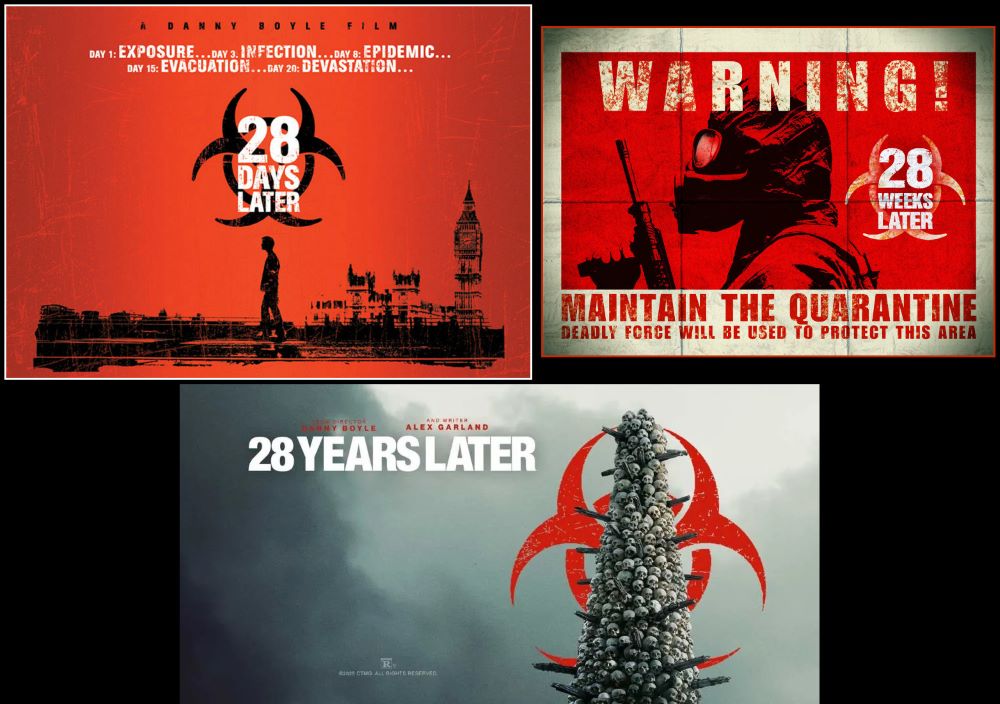
Raw Urgency and Psychological Horror in 28 Days Later
The original 28 Days Later broke new ground in horror filmmaking with its raw depiction of societal collapse fueled by a bioengineered rage virus. Danny Boyle and cinematographer Anthony Dod Mantle’s decision to shoot on early digital video cameras gave the film a distinct grainy, handheld aesthetic that enhanced the feeling of immediacy and disorientation. This style was pivotal in immersing the audience in the eerie emptiness of a London ravaged by infection and abandonment. The stark realism allowed viewers to viscerally experience the isolation and relentless threat surrounding the protagonists.
Unlike traditional zombie films that relied on the supernatural or undead creatures, 28 Days Later introduced infected humans whose fast, uncontrollable aggression metaphorically represented not just a physical virus but the eruption of primal rage and societal breakdown. The tension escalates beyond the infected themselves, focusing sharply on human nature’s darker side through the militarized faction led by Major West, whose corruption and moral decay pose threats as dangerous as the virus itself. This potent blend of external horror and ethical decay elevated the film into a profound exploration of survival, despair, and moral ambiguity in post-apocalyptic conditions. The film resonated deeply with early 21st-century anxieties about sudden disaster and social breakdown, marking a revitalization of horror that has influenced countless works since.
Expansion and Escalation in 28 Weeks Later: A Cinematic Allegory of Its Time
Five years later, 28 Weeks Later expanded the series’ scope significantly. Director Juan Carlos Fresnadillo shifted the narrative from personal survival to the complexity of institutional attempts at restoring order. The film’s polished 35mm cinematography reflected its larger budget and ambition, with expansive urban destruction, dynamic action sequences, and a broader focus on systemic chaos. The narrative unfolds against the backdrop of a militarized “Green Zone” in London, an unmistakable cinematic parallel to the fortified American-controlled zone in Baghdad during the Iraq War.
This allegory extends beyond setting: it captures the tangled failures and ethical dilemmas inherent in the military occupations of Iraq and Afghanistan. The film’s military forces struggle to differentiate friend from foe, ally from insurgent, mirroring the real-world complexities and frequent tragic mistakes of those conflicts. The virus and subsequent resurgence symbolize not only physical contagion but institutional and social rot—highlighting how the rage of war, betrayal, and corruption can infect governance and community trust. The film’s grim depiction of fractured family relationships echoes a society strained by war and occupation, portraying how betrayal and mistrust pervade all levels of social interaction. Through this lens, 28 Weeks Later critiques the hubris of militarized control and the illusion of security, underscoring the fragile, often illusory nature of civilization under stress.
The film’s slicker, high-production-value style distances the viewer somewhat from the intimate immediacy of 28 Days Later but serves its themes by creating a sensation of broad and relentless turmoil. Thematically, this sequel embraces a darker cynicism by portraying militaristic and bureaucratic responses to crisis as part of the problem rather than the solution, intensifying the series’ meditation on rage to encompass political and social failure as well as personal violence.
Reflection and Maturation in 28 Years Later: Evolution of Horror, Philosophy, and a Pandemic Mirror
Returning to the director’s chair decades after the original, Danny Boyle’s 28 Years Later marks a tonal and stylistic evolution that reflects not only the temporal distance from the initial crisis but also a deepening philosophical introspection. The film depicts a Britain still struggling under the long shadow of trauma left by the rage virus. Its infected are no longer iconic red-eyed figures vomiting blood but more mutated, less defined threats, symbolic of how trauma itself can evolve into something less visible but more pervasive.
Cinematographically, 28 Years Later blends moody, shadowy aesthetics with intimate, often handheld shots. Notably, the production’s use of modern digital technology, including iPhone cameras, allowed the film to maintain an intimate feel despite technological shifts. This stylistic choice reflects the thematic focus on memory, decay, and fragile attempts at normalcy. The film’s visual language speaks to a world where the horrors of the past persist beneath the surface, influencing human behavior and societal structures.
Importantly, 28 Years Later serves as a cinematic allegory to the global COVID-19 pandemic and its aftermath. In interviews, both Boyle and Garland acknowledged how the experience of living through the COVID crisis deeply informed the film’s narrative and tone. The pandemic effectively turned empty urban landscapes and daily precautions—once confined to dystopian fiction like 28 Days Later—into real shared experience. The film’s story of a society struggling to live with the virus, navigating quarantine zones and adapting to endemic conditions, echoes how the world has contended with COVID-19’s ongoing impact. Themes of risk, resilience, and generational divide are foregrounded: characters grapple with what it means to live “28 years later,” taking long-term risks even as uncertainties remain. This mirror between fiction and reality deepens the film’s resonance, showing how past speculative fears have become present-day lived realities.
The tonal shift to a more contemplative and somber horror reflects how the pandemic shifted global consciousness from immediate crisis to endurance and adaptation. The film acknowledges grief, loss, and the cultural memory of lives disrupted and taken. Notably, a character’s act of creating memorials to victims reflects real-world efforts to remember those lost to COVID-19, underscoring cinema’s role in processing collective trauma. While this evolution away from pure terror to introspection divides audiences—some missing previous visceral scares—it represents a mature reckoning with the lasting scars pandemics imprint on humanity.
Pandemic Parallels: The Trilogy as a Cinematic Allegory for COVID-19 and Endemic Realities
While each film in the 28 Days Later trilogy originally reflected the anxieties and socio-political contexts of its own era, together they now resonate profoundly as a prophetic allegory of the global COVID-19 pandemic and humanity’s ongoing struggle to live with viral threats as part of everyday life. The trilogy’s trajectory—from sudden catastrophic outbreak to institutional collapse to long-term trauma and adaptation—mirrors the historical arc the world has experienced with COVID-19, offering viewers insight into the psychological, societal, and cultural impacts of pandemics.
28 Days Later anticipated much of the early pandemic experience—fear of rapid contagion, empty cityscapes, social disintegration, and the terrifying vulnerability of individuals isolated amid a global crisis. Jim’s awakening into an eerily deserted London strikingly parallels the empty streets during COVID lockdowns around the world, turning what was once dystopian fantasy into frightening reality. The film’s exploration of panic, isolation, and distrust toward institutions echoes widespread experiences of confusion, fear, and uncertainty during the first months of the pandemic when COVID-19 was unfamiliar, unpredictable, and devastating.
28 Weeks Later deepens this pandemic allegory by portraying the consequences of failed institutional responses and attempts at control. The militarized “Green Zone” concept eerily parallels the real-world challenges of creating “safe zones” amid outbreaks, with tensions between enforcement, mistrust, and community survival. The film’s depiction of fractured families and systemic collapse reflects how social solidarity frays under the pressure of prolonged crisis, political distrust, and ethical quandaries surrounding public health measures experienced globally during COVID waves. The allegory isn’t just about physical infection but social contagion—fear, misinformation, and political polarization as viral threats themselves.
With 28 Years Later, the trilogy fully embraces its role as a cultural mirror to COVID-19’s enduring legacy. Danny Boyle and Alex Garland have openly discussed how the realities of the pandemic shaped the film’s narrative and tone, with characters navigating life decades after the outbreak under quarantine and endemic conditions. The film presents a world where viral infection is an ongoing condition to be managed rather than eradicated, reflecting how many experts now view COVID-19’s transition from acute pandemic to endemic presence. This shift from immediate horror to long-term social and psychological adaptation speaks to the global experience of living alongside risk and uncertainty, balancing caution with the human drive to reconnect and rebuild.
Visual motifs such as quarantine zones, memorial walls, and generational divides throughout the film underscore real-world pandemic realities about loss, resilience, and the passing of collective trauma. The story’s focus on a new generation born into post-virus society echoes global concerns about children’s—educational, emotional, and social—impacts during and after COVID. The film’s meditative tone reflects the world’s evolving understanding that recovery from a pandemic is neither swift nor purely scientific but deeply human, requiring reckoning with grief, memory, and ethical questions about care and sacrifice.
Together, the trilogy transcends traditional horror storytelling to become a cinematic meditation on humanity’s confrontation with biological catastrophe—capturing the terror of sudden collapse, the anguish of institutional failure, and the fragile hope of enduring and adapting to an altered world. In doing so, the 28 Days Later series offers both a chilling warning and a compassionate reflection on survival in an age defined by viral uncertainty.
Stylistic Evolution: From Gritty Realism to Reflective Sophistication
The trilogy’s visual evolution is a testament to the shifting thematic priorities and growing artistic ambition of the filmmakers. 28 Days Later’s raw digital aesthetic—with grainy textures and handheld immediacy—rooted the audience in the chaos of sudden societal collapse, pioneering an immersive and tangible horror. The decision to film real, unpopulated London streets added an authentic eeriness that fueled the film’s power.
With 28 Weeks Later, the move to 35mm film signaled a turn toward cinematic polish, spectacle, and scope. The expansive shots, precise lighting, and dynamic action sequences reflect the film’s thematic scale, portraying systemic collapse and institutional failure with cinematic authority. The surveillance-like camerawork amplifies feelings of observation and control that echo its allegorical engagement with military occupation themes.
28 Years Later rebalances styles, fusing intimate handheld shots with shadowy, atmospheric imagery, aided by modern digital filmmaking tools including smartphone cameras. This blend cultivates mood and emotional depth over traditional jump scares, visually representing a society haunted by trauma and in cautious recovery. The stylistic shift underscores the trilogy’s journey from immediate survival panic to measured reflection on long-term consequences.
Thematic Progression and the Metaphor of Rage
Rage is the fundamental metaphor animating the trilogy, but its form and focus evolve significantly. In 28 Days Later, rage manifests as an explosive primal force embodied in the infected—visible, aggressive, and terrifying, stripping away thin veneers of civilization to reveal instinctual violence.
28 Weeks Later expands rage to include institutional rot, betrayal, and the failure of governance. The infected remain threats but rage’s more insidious expressions appear in military violence, political cynicism, and fracturing communities. Rage becomes a societal contagion undermining cohesion as thoroughly as any virus.
28 Years Later shifts to a metaphor of inherited trauma and enduring wounds. Rage here is less overt but deeper—passed through generations in memory, ethics, and societal dysfunction. The virus and its mutated infected echo how psychological and cultural trauma evolve and persist, questioning humanity’s capacity for healing or self-destruction.
Characters and Emotional Depth: From Intimate Survival to Generational Reckoning
Character arcs reflect this thematic evolution. 28 Days Later centers on individual survival and fragile relationships formed amid chaos. Jim’s transformation from bewildered victim to protector provides audiences emotional grounding in a shattered world.
28 Weeks Later explores family ruptures wrought by betrayal and trauma, mirroring broader social breakdowns. Characters’ struggle with trust and loss enriches the narrative with psychological realism.
28 Years Later depicts survivors burdened by collective memory and ethical dilemmas, often across generations. Its characters wrestle not only with the immediate horrors but with legacies of violence and the search for reconciliation, offering psychological and moral complexity rare in horror narratives.
Cultural Impact and Legacy
28 Days Later transformed horror by replacing slow, supernatural zombies with fast, rage-fueled infected who symbolize contemporary fears about sudden collapse and human savagery. It revitalized a moribund genre and influenced popular culture globally.
28 Weeks Later expanded on this foundation with action spectacle and socio-political allegory, polarizing audiences but enriching thematic depth, especially with its projection of military occupation anxieties.
28 Years Later confronts the real-world pandemic experience directly, integrating cultural trauma into its narrative and style. It challenges genre boundaries by emphasizing reflection and resilience over instant terror, heralding a new phase for horror cinema aware of global trauma.
The Future of the “28 Days Later” Series: Continuing the Journey
Building on the foundation of its groundbreaking predecessors, the “28 Days Later” series is set to continue with two more films that promise to expand its intricate narrative and thematic depth. 28 Years Later: The Bone Temple, directed by Nia DaCosta and scripted by Alex Garland, is scheduled for release in January 2026. This film, shot back-to-back with 28 Years Later (2025), will deepen the post-apocalyptic exploration with returning characters and new threats, continuing the saga of trauma, survival, and societal collapse.
Additionally, a fifth film in the series is currently in development, though its title and release date remain unannounced. With Danny Boyle and Alex Garland involved in these projects, audiences can expect a thoughtful continuation that balances horror with reflective inquiry into humanity’s resilience. The return of Cillian Murphy as Jim further ties the new films to the series’ emotional origins, ensuring that the evolving mythology stays grounded in personal stakes.
As these future films approach, the 28 Days Later series remains ripe for ongoing critical and cultural re-examination, especially given its enduring power to mirror contemporary fears—from early 2000s anxieties to the global experience of the COVID-19 pandemic and beyond. The series stands as a dynamic, evolving reflection on rage, ruin, and the hope for redemption in an uncertain world.
Danny Boyle waited nearly two decades to return to the world he helped redefine with his groundbreaking 2002 film 28 Days Later, which reshaped the zombie subgenre by replacing the traditional, slow-moving undead with fast, feral infected that embody contagion, panic, and societal collapse. While purists continue to debate whether the creatures are technically zombies or infected, Boyle’s vision fundamentally changed how audiences engage with themes of epidemic, survival, and the breakdown of order on screen. The 2007 follow-up, 28 Weeks Later, directed by Juan Carlos Fresnadillo, expanded the Rage virus mythology and landscape but lacked the original’s haunting intimacy and innovation, leaving the franchise in a state of uncertainty until Boyle and writer Alex Garland reunited for 28 Years Later, a film that feels less like a conventional sequel and more like an elegy for a deeply changed world.
The film opens with a short, brutal prologue: young Jimmy Crystal’s family is consumed by the Rage virus while watching Teletubbies, and the boy flees to find safety only to discover his minister father welcoming the infected as a sign of apocalyptic judgment. This early scene deftly establishes the film’s unease, blending visceral horror with spiritual inquiry and foreshadowing a narrative caught between faith, grief, and chaos. Boyle reasserts his command of visceral set pieces while signaling that this film is more concerned with memory and ritual than with relentless terror.
Decades later, the British Isles have been sealed off; NATO forces enforce a quarantine and blockade, isolating the mainland as a toxic exclusion zone. On the tidal island of Lindisfarne, a small community clings to a fragile existence, protected by a causeway that floods at high tide—a detail that metaphorically underscores themes of isolation and dangerous connection. It is here that the emotional core emerges in Jamie and his son Spike, played by Aaron Taylor-Johnson and the remarkable newcomer Alfie Williams. Their spare, heartfelt relationship grounds what otherwise wanders into meditative and often surreal territory.
Alfie Williams emerges as one of the year’s most impressive new talents. His portrayal of Spike avoids the usual survivor archetype; instead, he presents a boy deeply shaped by inherited trauma and cautious curiosity. Boyle’s camera lingers on Williams’ face, capturing silent shifts of fear, wonder, and resilience, making his quiet moments as powerful as the film’s larger set pieces. Williams shines particularly in a sequence where Spike and his mother, portrayed with subtle grace by Jodie Comer, navigate a moss-covered village reclaimed by nature; Williams embodies awe and terror with a single glance. His encounters with the evolved infected—some sedentary and tree-like, others organized into predator packs—are charged with terrifying authenticity and emotional depth. Early reviews label Williams a breakout star, praising his ability to hold the screen alongside veteran actors.
Visually, Boyle and cinematographer Anthony Dod Mantle experiment with a striking mix of techniques, blending the use of iPhone 15 Pro Max cameras and drones with traditional film methods to create a language that oscillates between intimate human moments and sweeping, documentary-style landscapes. The Britain depicted is no longer a lifeless wasteland but an ecologically regrown terrain—lush, eerie, and indifferent. This verdant backdrop reflects the Rage virus’s own evolution. The infected have adapted in ways both terrifying and fascinating: some feed off the earth and fungus, becoming near-plantlike and sedentary, while others form packs ruled by alpha mutants, suggesting emergent social structures even after humanity’s collapse. This biological and ecological evolution amplifies the film’s central theme: survival transcending humanity.
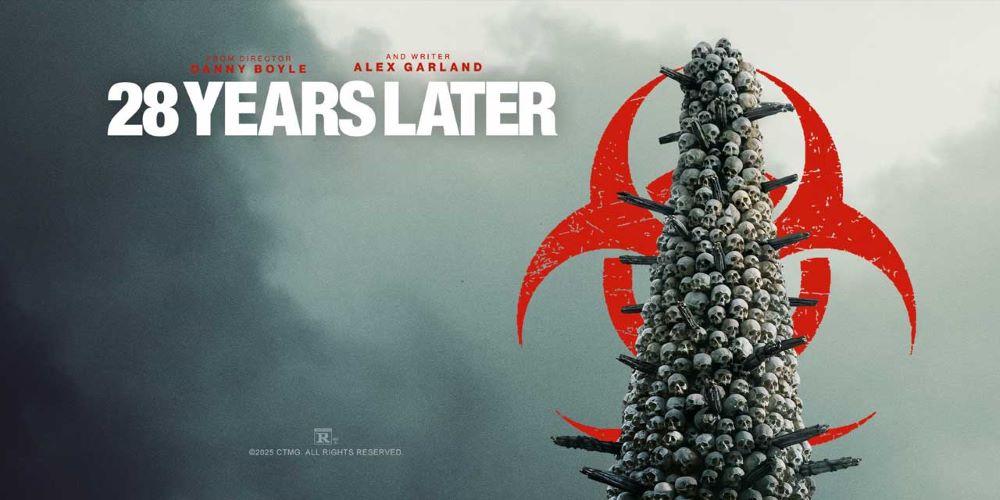
Anchoring the film’s philosophical inquiry is Ralph Fiennes’s performance as Dr. Ian Kelson, a former general practitioner who has exiled himself to live among the infected. Fiennes crafts Kelson with haunting solemnity and layered ambiguity—part caregiver, part fanatic, part recluse—who has created the eponymous “Bone Temple,” a shrine assembled from bones and memories to honor the dead and the changed world they inhabit. The role requires quiet intensity, and Fiennes delivers; his interactions with Spike are charged with both menace and melancholy. Kelson’s reverence for the infected and his willingness to coexist with them challenge traditional survivalist narratives, injecting the film with a solemn meditation on loss, acceptance, and the possibility of new forms of life.
28 Years Later opts for a deliberately slower, more contemplative pace than its predecessors. Boyle and Garland invest their energy in exploring grief, adaptation, and collective memory. The infected become symbolic forces of transformation rather than mere antagonists, while survivors seek meaning through ritual and remembrance as a bulwark against despair. This approach has divided fans: some lament the absence of the unrelenting terror and pace that characterized the earlier films, while others welcome the franchise’s intellectual maturity and thematic depth.
Certain scenes—such as the stranded NATO patrol subplot and glimpses of emerging cult-like human factions—hint at a larger, more complex world but never overshadow the film’s intimate father‑son narrative. Jodie Comer complements Williams with a nuanced portrayal of Spike’s mother, and Taylor‑Johnson brings grounded emotional weight to Jamie, embodying a parent wrestling with how to protect the next generation in a broken world and dealing with his own inner demons.
The interplay between Williams and Fiennes forms the film’s core dynamic, uniting youthful vulnerability with somber reflection. Kelson’s philosophical acceptance of the apocalypse contrasts with Spike’s struggle for identity and belonging, producing compelling, often unsettling exchanges that elevate the narrative’s moral complexity.
Toward the film’s conclusion, a jarring tonal shift occurs with the sudden arrival of a grown-up Jimmy Crystal, whose unsettling presence and cult leadership drastically change the mood. The moment is so discordant that viewers are left questioning whether it is literal or a fevered hallucination—an ambiguity that effectively sets the stage for the sequel.
The upcoming follow-up, 28 Years Later: The Bone Temple, is set for release in January 2026 and will be directed by Nia DaCosta, with Alex Garland returning as screenwriter. This sequel is expected to explore the role of Kelson’s Bone Temple more deeply and develop the cult gathering led by Jack O’Connell’s Jimmy Crystal, expanding on the fractured post-apocalyptic world and the characters introduced in the current film.
Ultimately, 28 Years Later is a film about evolution—of species, storytelling, and filmmaking itself. It balances raw dread with haunting visuals and somber themes, anchored by Alfie Williams’s quietly compelling Spike and Ralph Fiennes’s enigmatic Dr. Ian Kelson. Boyle has not merely revived the franchise; he has transformed it into an unsettling, elegiac meditation on rage, loss, and the fragile hope that survives beyond apocalypse.

 Through the Shattered Lens