Great Moments In Television History #35: The 33rd NFL Championship Game Is Broadcast In Color


60 years ago today, the Cleveland Browns and the Green Bay Packers met in the 33rd Championship Game of the National Football League.  The Packers were led by Vince Lombardi while the returning champions, the Browns, were coached by Blanton Collier and had all-star fullback Jim Brown on its offensive roster.  The game was played at Lambeau Field in Wisconsin, in the middle of a snowstorm that soon turned the field into a mud pit.  50,777 fans showed up for the game, braving freezing weather and paying ten dollars per ticket.  The Packers defeated the Browns, 23-12.

This game was significant for many reasons.  It was the last NFL Championship Game to be played before the Super Bowl era.  With the exception of that year’s Probowl, it was Jim Brown’s final game before he retired to concentrate on his acting career.  It was Lombardi’s 3rd NFL Championship.  (The next year, he would catch the Packers to victory at the first Super Bowl.)

It was also the first NFL title game to be broadcast in color.  Airing on CBS and announced by Ray Scott, Ken Coleman, and Frank Gifford, the game was broadcast into American household in full, glorious color.  It was both a worthy send-off to the Championship Game era and a welcome to the future of the NFL.

Previous Moments In Television History:

  1. Planet of the Apes The TV Series
  2. Lonely Water
  3. Ghostwatch Traumatizes The UK
  4. Frasier Meets The Candidate
  5. The Autons Terrify The UK
  6. Freedom’s Last Stand
  7. Bing Crosby and David Bowie Share A Duet
  8. Apaches Traumatizes the UK
  9. Doctor Who Begins Its 100th Serial
  10. First Night 2013 With Jamie Kennedy
  11. Elvis Sings With Sinatra
  12. NBC Airs Their First Football Game
  13. The A-Team Premieres
  14. The Birth of Dr. Johnny Fever
  15. The Second NFL Pro Bowl Is Broadcast
  16. Maude Flanders Gets Hit By A T-Shirt Cannon
  17. Charles Rocket Nearly Ends SNL
  18. Frank Sinatra Wins An Oscar
  19. CHiPs Skates With The Stars
  20. Eisenhower In Color
  21. The Origin of Spider-Man
  22. Steve Martin’s Saturday Night Live Holiday Wish List
  23. Barnabas Collins Is Freed From His Coffin
  24. Siskel and Ebert Recommend Horror Films
  25. Vincent Price Meets The Muppets
  26. Siskel and Ebert Discuss Horror
  27. The Final Scene of Dark Shadows
  28. The WKRP Turkey Drop
  29. Barney Pops On National TV
  30. The Greatest American Hero Premieres
  31. Rodney Dangerfield On The Tonight Show
  32. The Doors Are Open
  33. The Thighmaster Commercial Premieres
  34. The Hosts of Real People Say “Get High On Yourself”

Great Moments In Comic Book History #37: MAD Magazine Plays Both Sides


In January of 1961, Mad Magazine taught a nation of young readers how to cover their bets.  With the magazine due to go to press before the results of the 1960 presidential election would be known, Mad Magazine #60 was published with a double cover.

25 cents was not only a cheap price to pay for Mad’s trademark humor and satire but it was also the price of an invaluable political lesson.  Thank you, Mad Magazine!

Previous Great Moments In Comic Book History:

  1. Winchester Before Winchester: Swamp Thing Vol. 2 #45 “Ghost Dance” 
  2. The Avengers Appear on David Letterman
  3. Crisis on Campus
  4. “Even in Death”
  5. The Debut of Man-Wolf in Amazing Spider-Man
  6. Spider-Man Meets The Monster Maker
  7. Conan The Barbarian Visits Times Square
  8. Dracula Joins The Marvel Universe
  9. The Death of Dr. Druid
  10. To All A Good Night
  11. Zombie!
  12. The First Appearance of Ghost Rider
  13. The First Appearance of Werewolf By Night
  14. Captain America Punches Hitler
  15. Spider-Man No More!
  16. Alex Ross Captures Galactus
  17. Spider-Man And The Dallas Cowboys Battle The Circus of Crime
  18. Goliath Towers Over New York
  19. NFL SuperPro is Here!
  20. Kickers Inc. Comes To The World Outside Your Window
  21. Captain America For President
  22. Alex Ross Captures Spider-Man
  23. J. Jonah Jameson Is Elected Mayor of New York City
  24. Captain America Quits
  25. Spider-Man Meets The Fantastic Four
  26. Spider-Man Teams Up With Batman For The Last Time
  27. The Skrulls Are Here
  28. Iron Man Meets Thanos and Drax The Destroyer
  29. A Vampire Stalks The Night
  30. Swamp Thing Makes His First Cover Appearance
  31. Tomb of Dracula #43
  32. The Hulk Makes His Debut
  33. Iron Man #182
  34. Tawky Tawny Makes His First Appearance
  35. Tomb of Dracula #49
  36. Marvel Publishes Star Wars #1

Airplane II: The Sequel (1982, directed by Ken Finkleman)


It isn’t the past.  It isn’t the present.  It’s the future.

The moon has been colonized and, on Earth, the Mayflower II is preparing for its first international flight.  It will be carrying passengers from Houston to the lunar station.  Test pilot Ted Striker (Robert Hays) claims that the Mayflower II is not ready to make the trip but he’s been in the Ronald Reagan Hospital For The Mentally Ill ever since he had a nervous breakdown after losing his squadron during “the war.”

Aboard the Mayflower II is Ted’s ex-wife, Elaine (Julie Haggerty), and her new boyfriend, Simon (Chad Everett).  Simon says the Mayflower II is in perfect shape but he also turns into jelly whenever things get too rough.  Piloting the Mayflower II is Captain Clarence Oveur (Peter Graves) and waiting on the Moon is Commander Buck Murdock (William Shatner).  The crew of the Mayflower II is going to have a tough flight ahead of them.  Not only is the shipboard computer making plans of its own but one of the passengers (Sonny Bono) has a bomb in his briefcase.  Also, Ted has broken out of the hospital and is on the flight, boring people with his long stories.

Every successful film gets a sequel and when Airplane! was a surprise hit in 1980, it was inevitable that there would be an Airplane II.  Robert Hays, Julie Haggerty, Lloyd Bridges, Peter Graves, and Stephen Stucker all returned.  Unfortunately, Jim Abrahams, the Zucker brothers, Robert Stack, Kareem Abdul-Jabbar, and Leslie Nielsen did not.  (The directors and Nielsen were all working on Police Squad and their absence is strong felt.)  Airplane II recreates many of the same jokes as the first Airplane! but without the first film’s good nature or genuine affection for the disaster genre.  Airplane! was made for the love of comedy.  Airplane II was made for the love of money and, while there are more than a few amusing moments, the difference is obvious and there for all to see.

Not surprisingly, Airplane II is at its funniest whenever William Shatner is on screen.  In the role of Bud Murdock, Shatner pokes fun at his own image and shows himself to be a good sport.  He’s still not as funny as Leslie Nielsen or Robert Stack in the first film but that’s because, unlike Stack and Nielsen in their pre-Airplane! days, there had always been a hint of self-parody to Shatner, even in his most dramatic roles.  If Stack and Nielsen shocked people by showing that they could do deadpan comedy, Shatner’s performance just confirmed what most suspected, that he had always been in on the joke.  Still, he’s the funniest thing in Airplane II and, whenever I rewatch this movie, I am happy he was there.

Airplane II was a box office failure, which is why the world never got an Airplane III.  Fortunately, the world did get Hot Shots and The Naked Gun.

Retro Television Review: Malibu CA 1.22 “Mom’s Gift”


Welcome to Retro Television Reviews, a feature where we review some of our favorite and least favorite shows of the past!  On Thursdays, I will be reviewing Malibu CA, which aired in Syndication in 1998 and 1999.  The entire show is currently streaming on YouTube!

Well, I guess it’s time to get back to reviewing this show….

Episode 1.22 “Mom’s Gift”

(Dir by Gary Shimokawa, originally aired on April 25th, 1999)

After using the money that their Dad gave them to buy themselves a Nintendo, Jason and Scott realize that they’ve forgotten to get a birthday gift for their mom.  They panic, though I’m not sure why.  Their mother is living in Saudi Arabia, with her new husband and his family.  It’s time for Jason and Scott to admit that she no longer cares about them.  And even if she is expecting a gift, it takes a while to ship something from California to Saudi Arabia.  It’s not like she’s going to somehow know that they waited until the last minute.  Stupid Jason!  Stupid Scott!

Jason and Scott decide to make their mom a video tape of their lives in Malibu.  (Yeah, guys, that’s a lot better than jewelry.)  They invite Sam and Stads to share their favorite Scott and Jason memories and then both Murray and Traycee decide to get in on it as well and….

Yep, it’s a clip show.

Oh, clip shows!  Every show, good or bad, has them.  They’re cheap.  They’re easy to produce.  And they certainly are boring to watch.  That’s especially true when the clips come from a show, like Malibu CA, that still hasn’t figured out what type of story it’s trying to tell.  Hey, remember when Dennis Haskins ran for mayor of Malibu?  Remember when Stads and Jason were briefly a couple?  Remember when Scott and Sam were even more briefly a couple?  This show was all over the place and the clips in this episode mostly serve to remind us that Malibu CA never really settled on a consistent tone.

Probably the most interesting thing about the clips was that they revealed that Sam and Stads used to actually have personalities beyond just being killjoys.  When this show started, Stads actually had a sense of humor and Sam actually …. well, Sam never really had much of a personality but still, at least she used to do more than just sit in the background and comment on Murray’s weekly shenanigans.  The clips also reminded us me that Jason and Scott used to both be sociopathic.  Now, at least, Scott is vaguely responsible and level-headed.  Jason, meanwhile, remains a douchebag.

Happy birthday, mom!

Oh well.  What can you really say about a clip show?  It’s so rare to see a good one.  Even the clip show they did for The Office sucked.  I guess I should be happy that this was the first episode of Malibu CA that I reviewed for 2025.  The clips reminded me of why I was so happy to have an excuse to take a break from reviewing this stupid show but still, a clip show of Malibu CA is still less painful to review than an episode where you actually have to pay attention to the plot.

Happy New Year!

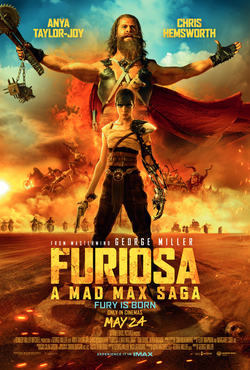
Catching Up With The Films of 2024: Furiosa: A Mad Max Saga (dir by George Miller)


Furiosa: A Mad Max Saga opens with the sound of nervous Australian citizens and commentators, narrating us through the collapse of civilization.  We hear about riots.  We hear about the breakdown of civilization.  We hear that people are literally running out of water.

It’s an effective opening but, for those of us who have seen the other movies set in the Mad Max universe, it also feels a bit redundant.  We already know the story of how our world came to an end.  Mad Max opened with society in its death throes.  The Road Warrior and Mad Max: Beyond Thunderdome both took place a few years after the apocalypse, with the majority of humanity reduced back to a feral existence of scrounging and fighting to survive.  Finally, Mad Max: Fury Road took place so far in the future that the only thing that really remained of the old ways were the cars and the guns that were obsessively cared for by the inhabitants of what was once Australia.  (Not even the collapse of civilization could halt car culture.)

Furiosa opens 45 years after the apocalypse, with young Furiosa (Alyla Brown) living in the Green Place, one of the few areas of Australia not to be reduced to a waterless desert.  When she’s kidnapped by Dementus (Chris Hemsworth) and the Biker Horde, she can only watch in horror as her mother (Charlee Fraser) is crucified by the Horde.  Dementus, who was driven mad by the death of his own family, adopts Furiosa as his own and spends years hoping that she will lead him to the Green Place.  Instead, Furiosa is eventually “traded” to Dementus’s rival, Immortan Joe (Lachy Hulme), and, under the tutelage of Praetorian Jack (Tom Burke), she eventually grows up to become both Anya Taylor-Joy and the fierce warrior who was at the center of Mad Max: Fury Road.

Like that opening montage of panicky voices describing the apocalypse, Furiosa is well-made but, narratively, it can feel a bit redundant.  There’s really nothing major about Furiosa’s backstory that wasn’t previously revealed in Mad Max: Fury Road.  Yes, we learn the exact circumstances of how she lost her arm and it’s a scene that definitely establishes Furiosa as a badass but it’s also reveals that she lost her arm in the way that I imagine 99% of Fury Road‘s audience assumed it happened the first place.  That’s the problem with both prequels and sequels.  If the first movie is effective, that usually means that the audience has been given all of the information that they needed to understand a character’s past and motivation.  As a result, prequels often feel narratively unnecessary.  Furiosa spends the majority of this movie plotting her escape from Immortan Joe but we already know that it’s not going to happen because Furiosa still has to be at the Citadel for Fury Road.

Compared to Fury Road (in which the action took place over a handful of days as opposed to the decade that is covered in the prequel), Furiosa can feel a little slow.  At times, it can even seem a bit draggy.  Furiosa devotes as much time to exploring post-apocalyptic society as it does to action sequences.  (It has more in common with Mad Max: Beyond Thunderdome than The Road Warrior.)  That said, there’s a lot about Furiosa that works wonderfully.  No one directs a chase or a battle as well as George Miller.  Chris Hemsworth gives a good performance as Dementus, playing him as a tyrant who learned how to lead from watching the Marvel movies that made Hemsworth famous.  Hemsworth is particularly strong in his final scene with Furiosa.   Dementus may be hateful but, in a strange way, he can be understood.  Having lost everything he once cherished in life, Dementus’s actions are as much about his own self-destructive impulses as his own thirst for pwoer.  Though she doesn’t take over the role until fairly late in the film, Anya Taylor-Joy gives a fierce performance as Furiosa.  Furiosa doesn’t speak much in the film but, when she does, both Anya Taylor-Joy and Alyla Brown make those words count.

Furiosa is an uneven film that falls victim to the same trap that has hindered many prequels.  But, ultimately, it’s still a watchable and frequently compelling vision of a disturbing future.


Song of the Day: Moonraker by Shirley Bassey


In honor of National Science Fiction Day, today’s song of the day comes from the film that sent James Bond into space!

Released in 1979, Moonraker may not get as much respect as some of the Bond films but I’ve always liked it.  The theme song was the third and final Bond song to be performed by Shirley Bassey.  The song was originally written for Frank Sinatra but he turned it down.  Johnny Mathis then agreed to perform the song but he backed out at the last minute.  Shirley Bassey came in to record the song just weeks before the film was due to premiere.

Because this is a 70s film, there were two versions of this song, the original and the disco.  Because I’m the one writing this post, we’re going with the disco version.

Where are you, why do you hide
Where is that moonlight trail that leads to your side?
Just like the moonraker goes in search of his dream of gold
I search for love, for someone to have and hold

I’ve seen your smile in a thousand dreams
Felt your touch, and it always seems
You love me, you love me

Where are you, when will we meet?
Take my unfinished life and make it complete
Just like the moonraker knows
His dream will come true someday
I know that you are only a kiss away

I’ve seen your smile in a thousand dreams
Felt your touch, and it always seems
You love me, you love me

Songwriters: John Barry / Hal David

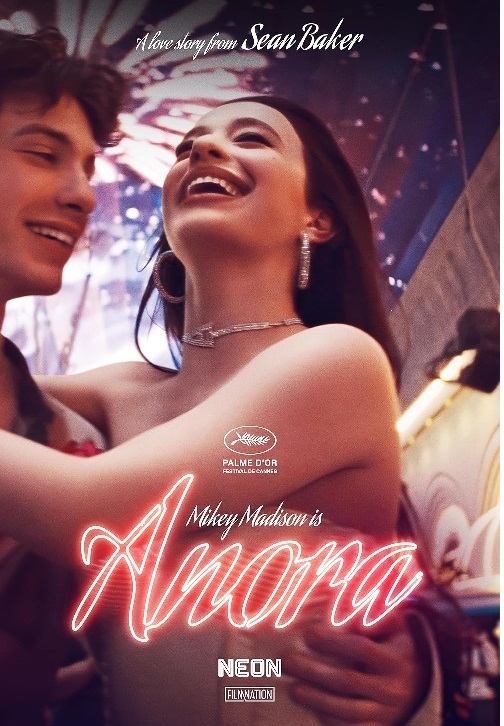
Anora Wins In Central Florida


The Critics Association of Central Florida has announced its picks for the best of 2024!

Best Picture
Winner: Anora
Runner-up: Wicked

Best Director
Winner: Denis Villeneuve – Dune: Part Two
Runner-up: Jon M. Chu – Wicked

Best Actor
Winner: Colman Domingo – Sing Sing
Runner-up: Timothée Chalamet – A Complete Unknown

Best Actress
Winner: Mikey Madison – Anora
Runner-up: Cynthia Erivo – Wicked

Best Supporting Actor
Winner: Kieran Culkin – A Real Pain
Runner-up: Clarence Maclin – Sing Sing

Best Supporting Actress
Winner: Zoe Saldaña – Emilia Pérez
Runner-up: Ariana Grande – Wicked

Best Cast
Winner: Wicked
Runner-up: Sing Sing

Best Documentary
Winner: The Remarkable Life of Ibelin
Runner-up: Will & Harper

Best International Film
Winner: Flow
Runners-up (TIE): Kneecap / Emilia Pérez

Best Animated Film
Winner: The Wild Robot
Runner-up: Flow

Best Screenplay
Winner: Anora
Runner-up: A Real Pain

Best Cinematography
Winner: Dune: Part Two
Runner-up: Nosferatu

Best Score
Winner: Challengers
Runner-up: Dune: Part Two

Best Original Song
Winner: “Kiss the Sky” – The Wild Robot
Runner-up: “Compress, Repress” – Challengers

Best Sound Design
Winner: Dune: Part Two
Runner-up: Wicked

Best Editing
Winner: Challengers
Runner-up: Dune: Part Two

Best Make-Up and Hairstyling
Winner: The Substance
Runner-up: Wicked

Best Production Design
Winner: Wicked
Runner-up: Dune: Part Two

Best Visual Effects
Winner: Dune: Part Two
Runner-up: Kingdom of the Planet of the Apes

Best Costume Design
Winner: Wicked
Runner-up: Dune: Part Two

Best Stunt Coordination
Winner: The Fall Guy
Runner-up: Furiosa: A Mad Max Saga

Best Hybrid Performance
Winner: Lupita Nyong’o – The Wild Robot
Runner-Up: Jonno Davies and Robbie Williams – Better Man

Best First Feature
Winner: Dev Patel – Monkey Man
Runner-Up: Julio Torres – Problemista

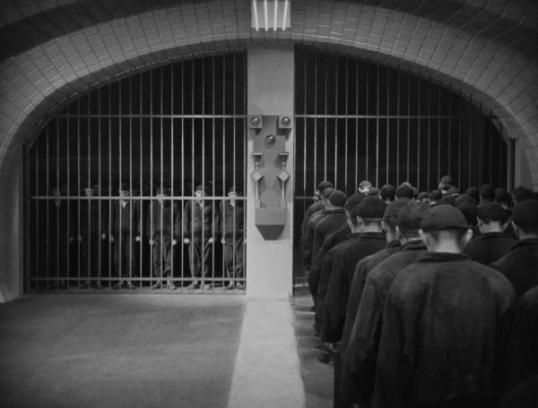
Scenes That I Love: The Future, as imagined by Fritz Lang’s Metropolis


Metropolis (1927, dir by Fritz Lang, DP: Karl Freund and Gunther Rittau)

Since today is National Science Fiction Day, it seems appropriate that today’s scene that I love should come from one of the first great science fiction films!  In this scene from Fritz Lang’s Metropolis, we get a look at how the future was imagined in 1927.  Lang really was not that far off!

4 Shots From 4 Films: Special Science Fiction Edition


4 Shots From 4 Films is just what it says it is, 4 shots from 4 of our favorite films. As opposed to the reviews and recaps that we usually post, 4 Shots From 4 Films lets the visuals do the talking.

Today, in honor of National Science Fiction Day, it’s time for….

4 Shots From 4 Science Fiction Films

2001: A Space Odyssey (1968, dir by Stanley Kubrick, DP: Geoffrey Unsworth)

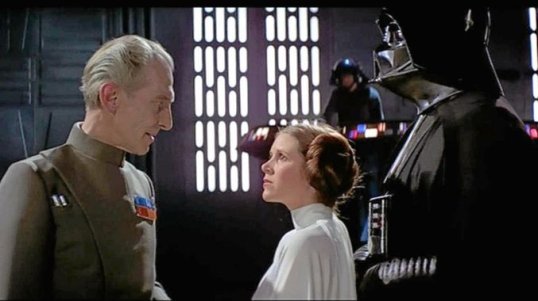
Star Wars Episode IV: A New Hope (1977, dir by George Lucas, DP: Gilbert Talyor)

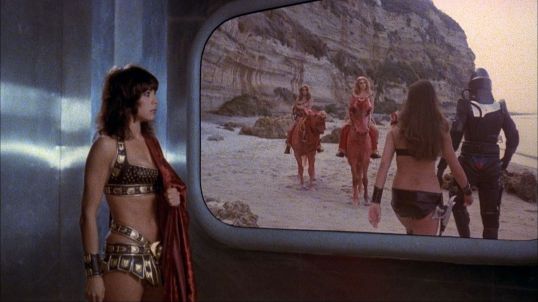
Starcrash (1978, dir by Luigi Cozzi, DP: Paul Beeson and Roberto D’Ettorre Piazzoli)

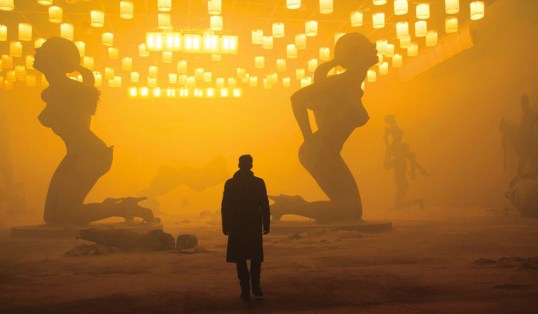
Blade Runner 2049 (2017, dir by Denis Villeneuve, DP: Roger Deakins)

Film Review: Save The Tiger (dir by John G. Avildsen)


1973’s Save The Tiger tells the story of Harry Stoner (Jack Lemmon).

When Harry was a young man, he loved baseball and he felt like he could conquer the world.  He saw combat in World War II and spent the final part of the war on the Island of Capri, recuperating after being wounded in battle.  Harry went on to partner up with Phil Greene (Jack Gilford) and they started a clothing company in Los Angeles, Capri Casuals.

Now, Harry is a middle-aged man who is still haunted by nightmares about the war.  He’s married.  He has a daughter attending school in Switzerland.  He’s respected in the industry.  He lives in a nice house in Beverly Hills.  And he’s totally miserable.  He wakes up every day and wonders what is happening to the country.  He talks about witnessing a wild pitch at a baseball game, missing the days when something like that could seem like the most important thing in his life.  He spends all of his time at work, cheating to balance the books and keeping clients happy by setting them up with a sophisticated prostitute named Margo (played, with a weary cynicism, by Lara Parker).

Save The Tiger covers just a few days in the life of Harry Stoner, as he searches for some sort of meaning in his life.  He gives a ride to a free-spirited hippie (Laurie Heineman) who offers to have sex with him.  (Harry replies that he’s late for work.)  He accepts an award at an industry dinner and, as he tries to give his acceptance speech, he is haunted by the sight of dead soldiers sitting in the audience.  With Phil, he debates whether or not to balance the books by setting fire to one of their warehouses in order to collect the insurance.  Harry sees a poster imploring him to “Save the Tigers.”  Who can save Harry as he finds himself increasingly overwhelmed by the realities of his life?

As I watched Save the Tiger, I found myself thinking about two other films of the era that featured a middle-aged man dealing with a midlife crisis while searching for meaning in the counterculture.  In Petulia and Breezy, George C. Scott and William Holden each found meaning in a relationship with a younger woman.  And while Petulia and Breezy are both good films, Save The Tiger is far more realistic in its portrayal of Harry’s ennui.  There is no easy solution for Harry.  Even if he accepted the hippie’s offer to “ball” or if he acted on the obvious attraction between himself and Margo, one gets the feeling that Harry would still feel lost.  Harry’s problem isn’t that he’s merely bored with his life.  Harry’s problem is that he yearns for a past that can never be recaptured and which may only exist in his imagination.  If George C. Scott and William Holden were two actors who excelled at playing characters who refused to yield to the world’s demands, Jack Lemmon was an actor who played characters who often seemed to be desperate in their search for happiness.  Save The Tiger features Lemmon at his most desperate, playing a character who has yielded so often and compromised so much that he now has nowhere left to go.

It’s not exactly a cheerful film but it is one that sticks with you.  Jack Lemmon won his second Oscar for his performance as Harry and he certainly deserved it.  Lemmon does a wonderful job generating some sympathy for a character who is not always particularly likable.  Many of Harry’s problems are due to his own bad decisions.  No one forced him to use “ballet with the books” to keep his business open and no one is forcing him to hire arsonist Charlie Robbins (Thayer David, giving a performance that is both witty and sinister at the same time) to burn down not only his warehouse but also an adjoining business that belongs to an acquaintance.  Harry could admit the truth and shut down his business but then how would he afford the home in Beverly Hills and all the other symbols of his success?  Harry yearns for a time when he was young and his decisions didn’t have consequences but that time has passed.

This isn’t exactly the type of film that many would expect from the director of Rocky but director John G. Avildsen does a good job of putting the viewer into Harry’s seedy world.  I especially liked Avilden’s handling of the scene where Harry hallucinates a platoon of wounded soldiers listening to his awards speech.  Instead of lingering on the soldiers, Avildsen instead uses a series of a quick cuts that initially leave the audience as confused as Harry as to what Harry is seeing.  Both Rocky and Save The Tiger are about a man who refuses to give up.  The difference is that perhaps Harry Stoner should.

“You can’t play with us, mister!” a kid yells at Harry when he attempts to recreate the wild pitch that so impressed him as a youth.  In the end, Harry is a man trapped by his memories of the past and his dissatisfaction with the present.  He’s made his decisions and he’ll have to live with the consequences but one is left with the knowledge that, no matter what happens, Harry will be never find the happiness or the satisfaction that he desires.  The tigers can be saved but Harry might be a lost cause.