Retro Television Review: Welcome Back Kotter 4.15 “Barbarino’s Baby”


Welcome to Retro Television Reviews, a feature where we review some of our favorite and least favorite shows of the past!  On Saturdays, I will be reviewing Welcome Back Kotter, which ran on ABC  from 1975 to 1979.  The entire show can be purchased on Prime.
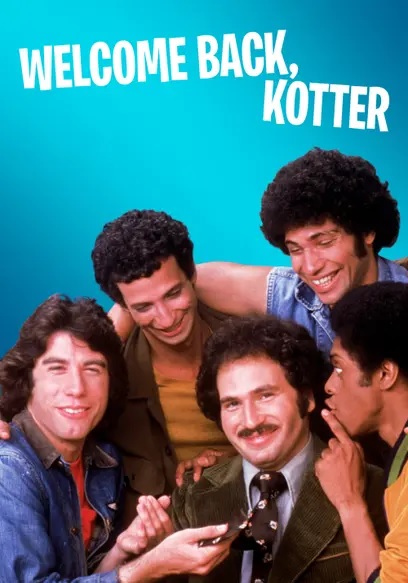
This week, a longtime Sweathog makes his final appearance.

Episode 4.15 “Barbarino’s Baby”

(Dir by Norman Abbott, originally aired on February 3rd, 1979)

This episode was John Travolta’s final appearance as Vinnie Barbarino.  That means no more visits to his ugly apartment, no more confusion as to whether or not Barbarino is actually still enrolled in high school, and no more of John Travolta trying his best to give a good performance while the rest of the cast sleep walk through their roles.  Seriously, you have to admire that Travolta was still trying to give a good performance even under the weird circumstances of the fourth season.  The studio audience was going to cheer no matter what Travolta did.  Travolta could have just shrugged off the entire show and character.  I’m sure the temptation to do so was there.  Instead, he did his best.

His final episode really isn’t worth the effort, though,  Barbarino wants to get promoted from scrubbing the floors of the hospital to working in the emergency room.  The head nurse says that there’s no way someone as dumb as Barbarino could be trusted in the ER.  Barbarino asks Mr. Woodman to write a letter.  Julie takes it upon herself to call the hospital and put in a good word for him.  As for Gabe …. he’s not in this episode.  Gabe does nothing!

Maybe Barbarino would get promoted if his idiot friends weren’t always hanging out at the hospital.  Seriously, does that group have nothing better to do than hang out in the world’s ugliest medical facility?  Couldn’t they go hang out on Christopher Street with Horshack or something?  Remember when the Sweathogs were an actual gang who committed crimes?  Epstein was once voted most likely to kill someone.  Freddie used to get accused of stealing every other week.  Beau showed up and they all got wimpy.

Anyway, Barbarino and the Sweathogs get on an elevator with a pregnant woman.  The elevator  stops between floors.  The woman goes into labor.  Time for Barbarino and the Sweathogs to deliver a baby …. *sigh*.  Seriously, there is nothing more stress-inducing than the idea of a bunch of 30 year-old high school students delivering a baby.  The important thing is that the head nurse is able to talk Barbarino through the delivery and Barbarino gets his promotion!  Barbarino is going to the ER!  That’s good news for Horshack because there’s no way he’s not going to end up getting his stomach pumped in the ER eventually.

And that’s John Travolta’s final episode of Welcome Back, Kotter.  It’s a bit of a let down, considering how important the character of Vinnie Barbarino was to the success of the show.  Imagine if The Office finale only allowed Michael Scott to appear for two minutes and only gave him one line of dialogue?  THAT WOULD BE INSANE!

I can only wonder what the rest of this show is going to be like without Kotter and Barbarino.  My fear is that it’s going to involve a lot of Horshack,  We’ll find out.  There’s only a few episodes left!

Song of the Day: Things To Come, performed by the UNT One O’Clock Lab Band


The courtyard at UNT’s Bruce Hall, the former home of this writer!

Since today is Tobe Hooper’s birthday and I’ve already shared a scene from The Texas Chainsaw Massacre, it seems appropriate that today’s song of the day should come from Texas as well!

Here is the University of North Texas’s One O’Clock Lab band performing Dizzy Gillespie’s Things To Come!

Film Review: The Straight Story (by David Lynch)


Released in 1999, The Straight Story is one of the greatest films ever made about America.

Alvin Straight (Richard Farnsworth) is an elderly veteran of World War II.  He lives in Iowa, a kind but rather taciturn man who doesn’t have time for doctors and would rather live on his own terms.  That said, when his daughter (Sissy Spacek) finally does manage to drag Alvin to a doctor, he’s told to stop smoking and to start using a walker to get around.  Alvin refuses, though he does start using two canes.  Alvin is an old man.  He’s lived a long time and, in his opinion, he knows best about what he needs to do.

For instance, when Alvin hears that his long-estranged brother Lyle (Harry Dean Stanton), has had a stroke, Alvin decides that he need to go Wisconsin to see him.  The only problem is that Alvin can barely see and he can’t walk and there’s no way anyone is going to give him a car or even a driver’s license.  His solution is to ride a lawnmower from Iowa to Wisconsin.

It’s based on a true story and if The Straight Story sounds like a film that will make you cry, it is.  Richard Farnsworth was terminally ill when he was offered the role of Alvin and he accepted because he admired Alvin’s determination to live life his own way.  As portrayed in the film, Alvin is not one to easily betray his emotions.  He grew up as a part of that stoic generation.  He saw his share of violence and death while he was serving during World War II and one gets the feeling that his attitude has always been that, if he could survive that, he can survive anything.  (The closest Alvin gets to becoming openly emotional is when he meets another veteran in a bar and it becomes obvious that the two of them share a bond that, as people who seen and survived war, only they can really understand.)  Farnsworth so completely becomes Alvin Straight that it’s easy to forger that he was a veteran actor who had a long career before starring in The Straight Story.  Alvin may not show much emotion but Farnsworth communicates so much with just the weariness in his eyes and his slow but determined gait that we feel like we know everything about him.

The film follows Alvin on his way to Wisconsin.  Along the way, he meets various people and, for the most part, they’re all good folks.  Even the runaway hitchhiker (Anastasia Webb) turns out to be a kind soul.  When Alvin momentarily loses control of his lawn mower, a group of stranger run out to help him.  They don’t know who he is or why he was riding his lawnmower down the street.  All that matter is that, at that moment, he’s a person who needs help.  The Straight Story celebrates both the beauty and the people of America.  It’s one of the most sincere and life-affirming films ever made, one that contains not a trace of cynicism and which is all the better for it.  And while many people might be shocked to discover that this film was directed by David Lynch, the truth of the matter is that a strong love for America and Americana runs through all of Lynch’s films.  Lynch was an artist who believed that people could surprise you with their kindness and that’s certainly the case with The Straight Story.

The Straight Story was the only one of David Lynch’s films to receive a G-rating.  It was also the only film that Lynch made for Disney.  It’s interesting to look at Lynch’s filmography and see this heartfelt and deeply touching film sitting between Lost Highway and Mulholland Drive.  But The Straight Story really does feature David Lynch at his best.  It also reveals him as a filmmaker who could do something unexpected without compromising his signature vision.  There’s a lot of beautiful, Lynchian images in The Straight Story.  But there’s also a lot of heart.

Scenes That I Love: The Opening Of The Texas Chainsaw Massacre


Since today is Tobe Hooper’s birthday, it seems fitting that today’s scene of the day should come from his best-known film.  The opening of 1974’s The Texas Chainsaw Massacre is genuinely unsettling, from the opening narration to the scene of the body being dug up to the news reports of grave robbery.  Even the opening credits feel ominous!

The narration was, of course, provided by a young John Larroquette, who has since said that he was “paid in marijuana” for what would become his first feature film credit.


4 Shots From 4 Films: Special Tobe Hooper Edition


4 Shots From 4 Films is just what it says it is, 4 shots from 4 of our favorite films. As opposed to the reviews and recaps that we usually post, 4 Shots From 4 Films lets the visuals do the talking!

Today, on what would have been his 82nd birthday, the Shattered Lens pays tribute to Texas’s own, Tobe Hooper!

The Austin hippie who redefined horror and left thousands of yankees terrified of driving through South Texas, Tobe Hooper often struggled to duplicate both the critical and the box office success of The Texas Chainsaw Massacre.  It’s only been in the years since his death that many critics and viewers have come to truly appreciate his unique and subversive vision.

Down here, in Texas, we always believed in him.

It’s time for….

4 Shots From 4 Tobe Hooper Films

Eggshells (1969, dir by Tobe Hooper, DP: Tobe Hooper)

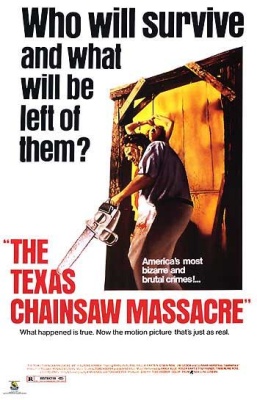
The Texas Chainsaw Massacre (1974, dir by Tobe Hooper, DP: Daniel Pearl)

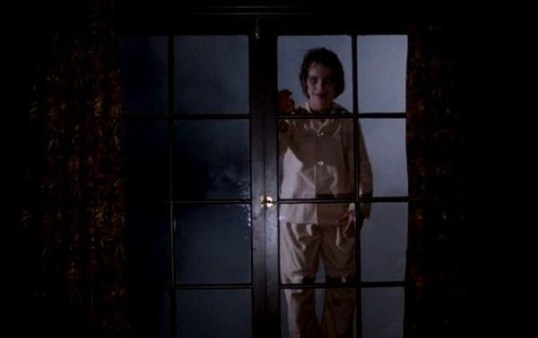
Salem’s Lot (1978, dir by Tobe Hooper, DP: Jules Bremmer)

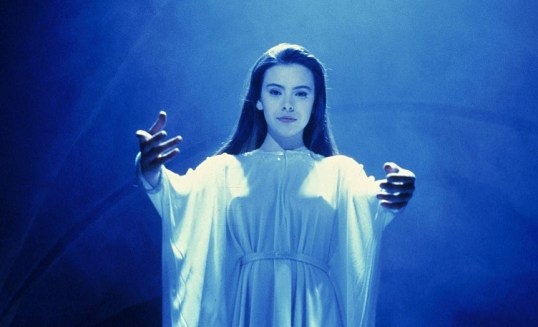
Lifeforce (1985, dir by Tobe Hooper, DP: Alan Hume)

Live Tweet Alert: Join #ScarySocial for Diary of the Dead!


As some of our regular readers undoubtedly know, I am involved in a few weekly live tweets on twitter.  I host #FridayNightFlix every Friday, I co-host #ScarySocial on Saturday, and I am one of the five hosts of #MondayActionMovie!  Every week, we get together.  We watch a movie.  We tweet our way through it.

Tonight, at 9 pm et, Tim Buntley will be hosting #ScarySocial!  The movie?  Diary of the Dead, from George Romero!

If you want to join us this Friday, just hop onto twitter, start the movie at 9 pm et, and use the #ScarySocial hashtag!  I’ll be there tweeting and I imagine some other members of the TSL Crew will be there as well.  It’s a friendly group and welcoming of newcomers so don’t be shy.

Diary of the Dead is available on Prime!

See you there

Late Night Retro Television Review: Friday the 13th: The Series 2.25 “The Prisoner”


Welcome to Late Night Retro Television Reviews, a feature where we review some of our favorite and least favorite shows of the past! On Fridays, I will be reviewing Friday the 13th: The Series, a show which ran in syndication from 1987 to 1990. The entire series can be found on YouTube!

This week, Johnny goes to prison!

Episode 2.25 “The Prisoner”

(Dir by Armand Mastroianni, originally aired on June 5th, 1989)

After Johnny Ventura’s father is killed by an invisible man….

Wait, what’s Johnny doing here?

No, don’t get me wrong.  I understand why Johnny’s there, mostly because I have the benefit of hindsight.  I know that Johnny is going to replace Ryan during the third season and this episode was obviously designed to get the audience used to the idea of Johnny being a part of the show.  The majority of the episode follows Johnny as he’s sent to prison, having been framed for murdering his own father.  The culprit is another prisoner, Dayton Railsback (Larry Joshua).  Dayton has a kamikaze pilot’s jacket that allows him to turn invisible whenever blood is spilled on it.  Whenever Dayton’s invisible, he sneaks out of the prison and searches for some money that he stole ten years earlier. Johnny is the only person in the prison who knows what Railsback is doing so soon, he’s being targeted by the invisible man.

While Johnny is dealing with life in prison, Micki, Ryan, and Jack are attempting to prove that Railsback is the murderer.  It’s a bit odd because the three of them — our stars! — are barely in the episode and, when they do appear, they’re just hanging out in the antique shop.  They talk about all of the investigating that they’ve been doing but we don’t actually see them doing it.  Watching the episode, one gets the feeling that John D. LeMay, Robey, and Chris Wiggins all shot their scenes in one day and then left on an extended vacation.  They showed up just long enough to establish this as being an episode of Friday the 13th, despite the fact that almost the entire episode is about Johnny.

Needless to say, it was a bit of a disjointed episode.  The show kept jumping from Johnny in prison to Railsback killing people outside of prison to everyone hanging out in the antique shop and it was a bit difficult to keep track of who was planning what.  Myself, I was surprised at how quickly the show went from Johnny’s father being murdered to Johnny getting tossed into prison.  We don’t even see Johnny’s trial.  Johnny was passed out when his father was shot and, quite frankly, it seems like he could have made a very credible argument that he was framed.  (The invisible Railsback puts the gun in Johnny’s hands but he doesn’t manipulate Johnny into pulling the trigger so it’s not like there would have been any powder residue on Johnny’s fingers.)  Johnny and his father appeared to have a pretty good relationship so you really have to wonder what type of case the prosecution made.  The episode ends with Johnny killing Railsback and then being released from prison.  So, is Johnny going to have to on trial again?  I mean, he just stood there while Railsback burned to death.

Weird episode.  It didn’t do too much for me.  I’m going to miss Ryan once season 3 starts.

Ghosts of Sundance Past: Longtime Companion (dir by Norman Rene)


The Sundance Film Festival is currently underway in Utah.  For the next few days, I’ll be taking a look at some of the films that have previously won awards at Sundance.

First released in 1990, Longtime Companion was one of the first mainstream feature films to deal with the early days of the AIDS epidemic.

The film follows a group of friends and lovers over the course of ten years.  The film opens with a crowded and joyous 4th of July weekend at Fire Island.  Willy (Campbell Scott) is a personal trainer who has just started a relationship with an entertainment lawyer who, due to his beard, is nicknamed Fuzzy (Stephen Caffrey).  Willy’s best friend is the personable and popular John (Dermot Mulroney).  David (Bruce Davison) and Sean (Mark Lamos) are the elder couple of the group.  Sean writes for a soap opera and one of Fuzzy’s clients, Howard (Patrick Cassidy), has just landed a role on the show.  He’ll be playing a gay character, even though everyone warns him that the role will lead to him getting typecast.  The group’s straight friend is Lisa (Mary-Louise Parker), an antique dealer who lives next door to Howard and who is Fuzzy’s sister.  The film takes it times showing us the friendships and the relationships between these characters, allowing us to get to know them all as individuals.

Even as the group celebrates the 4th, they are talking about an article in the New York Times about the rise of a “gay cancer.”  Some members of the group are concerned but the majority simply shrug it off as another out-there rumor.

The movie moves quickly, from one year to another.  John, the youngest of them, is the first member of the group to die, passing away alone in a hospital room while hooked up to a respirator.  (The sound of the respirator is one of the most haunting parts of the film.)  Sean soon becomes ill and starts to dramatically deteriorate.  It falls to David to take care of Sean and to even ghostwrite his scripts for the soap opera.  Howard’s acting career is sabotaged by rumors that he has AIDS while Willy and Fuzzy tentatively try to have a relationship at time when they’re not even sure how AIDS is transmitted.  At one point, Willy visits a friend in the hospital and then furiously scrubs his skin in case he’s somehow been infected.  When one member of the group passes, his lover is referred to as being his “longtime companion” in the obituary.  Even while dealing with tragedy and feeling as if they’ve been shunned and abandoned to die by the rest of America, the characters are expected to hide the details of the lives and their grief.

It’s a poignant and low-key film, one that was originally made for PBS but then given a theatrical release after production was complete.  Seen today, the film feels like a companion piece to Roger Spottiswoode’s And The Band Played On.  If And The Band Played On dealt with the politics around AIDS and the early struggle to get people to even acknowledge that it existed, Longtime Companion is about the human cost of the epidemic.  The film is wonderfully acted by the talented cast.  Bruce Davison was nominated for an Oscar for his sensitive performance as David.  If not for Joe Pesci’s performance in Goodfellas, it’s easy to imagine that Davison would have won.  The scene where he encourages the comatose Sean to pass on will make you cry.  Interestingly, when David gets sick himself, it happens off-screen as if the filmmakers knew there was no way the audience would have been able to emotionally handle watching David suffer any further.

Longtime Companion played at the 1990 Sundance Film Festival, where it won the Dramatic Audience Award.