I’m passionate about movies, but my day job consists of providing high quality tax planning and preparation services for a wide variety of clients in the Central Arkansas area. After a couple of months of 70-90 hour work weeks, April 16th is the day that I can begin to focus a little less on work and a little more on the things I truly love. I can’t wait to continue to share my passion for movies, music, Charles Bronson, Chow Yun-Fat, and so many other things with all of you. I need a few days to get some rest and get my mind straight, but I’ll soon be back to sharing my opinions and my life! Thanks to all of you who read my work! ❤️
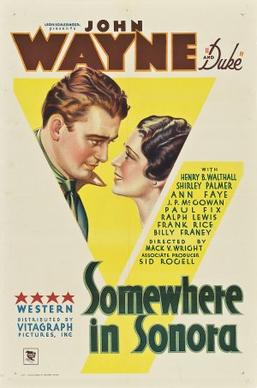
After stagecoach rodeo racer John Bishop is framed for causing a competitor to have an accident, he’s hauled off to jail. Fortunately, Bishop’s boss, Bob Leadly (Henry B. Walthall), comes through for Bishop and helps him escape from the jail. To thank Bob, Bishop heads down to Mexico to search for Bob’s son, Bart (Paul Fix). The last that Bob heard, Bart was running with an outlaw gang called “The Brotherhood of Death.” The only way get out of the Brotherhood of Death is to die.
By an amazing coincidence both Bart and Bishop’s girlfriend, Mary (Shirley Palmer), are in the Mexican town of Sonora. To try to get Bart to return home, Bishop goes undercover and infiltrates the gang. Once inside, Bishop discovers that gang leader Monte Black (J.P. McGowan) is planning on robbing the silver mine that belongs to Mary’s father.
This is a John Wayne B-western, typical of the poverty row productions that he was making before John Ford cast him as the Ringo Kid in Stagecoach and made him into a star. This one features the usual horse chases and bar fights and John Wayne gives a solid-enough performance in the lead role. The most interesting thing about it is that, even though it’s a western, it’s set in modern times. I guess frontier days lasted longer in some parts of the county than in others.
John Wayne’s horse, Duke, appears in this picture and shows again that he was the most talented of all the horse actors in the 30s. He earned his co-starring credit.
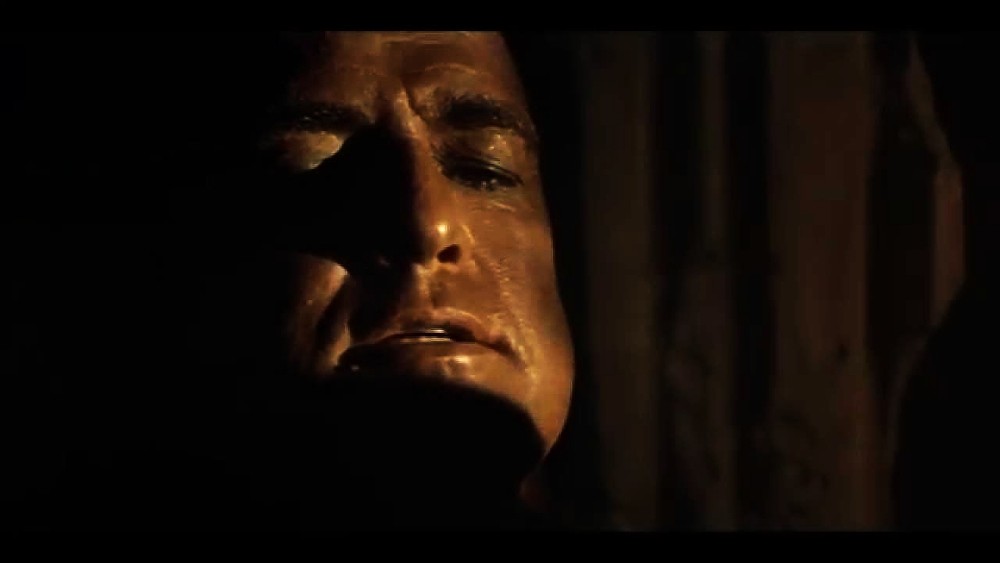
“I’ve seen horrors… horrors that you’ve seen. But you have no right to call me a murderer. You have a right to kill me. You have a right to do that… but you have no right to judge me. It’s impossible for words to describe what is necessary to those who do not know what horror means. Horror… Horror has a face… and you must make a friend of horror. Horror and moral terror are your friends. If they are not, then they are enemies to be feared. They are truly enemies! I remember when I was with Special Forces… seems a thousand centuries ago. We went into a camp to inoculate some children. We left the camp after we had inoculated the children for polio, and this old man came running after us and he was crying. He couldn’t see. We went back there, and they had come and hacked off every inoculated arm. There they were in a pile. A pile of little arms. And I remember… I… I… I cried, I wept like some grandmother. I wanted to tear my teeth out; I didn’t know what I wanted to do! And I want to remember it. I never want to forget it… I never want to forget. And then I realized… like I was shot… like I was shot with a diamond… a diamond bullet right through my forehead. And I thought, my God… the genius of that! The genius! The will to do that! Perfect, genuine, complete, crystalline, pure. And then I realized they were stronger than we, because they could stand that these were not monsters, these were men… trained cadres. These men who fought with their hearts, who had families, who had children, who were filled with love… but they had the strength… the strength… to do that. If I had ten divisions of those men, our troubles here would be over very quickly. You have to have men who are moral… and at the same time who are able to utilize their primordial instincts to kill without feeling… without passion… without judgment… without judgment! Because it’s judgment that defeats us.”
My latest “Scenes I Love” Monologue Edition comes courtesy of the great Marlon Brando as Col. Kurtz from Francis For Coppola’s magnus opus, Apocalypse Now.
The scene is the Kurtz monologue describing the horror he has seen and how it has shaped his thought process and concept on how to fight the enemies he has been tasked to fight and also condemned for the methods he has used to achieve results.
Shot and framed with Brando’s face half in shadows as he describes how the horrors he has seen and committed is just a reflection of the war they’re fighting and how emotions and judgment from those who have not experience and committed such horrors is the path to defeat.
Brando’s time in front of the camera is not very much in the whole runtime of the film, but from beginning to end his shadowy presence looms over everyone and this 5-minute monologue becomes the exclamation mark that succinctly explains the entire theme of the film: “In an insane world, the mad men are the ones who are sane”.
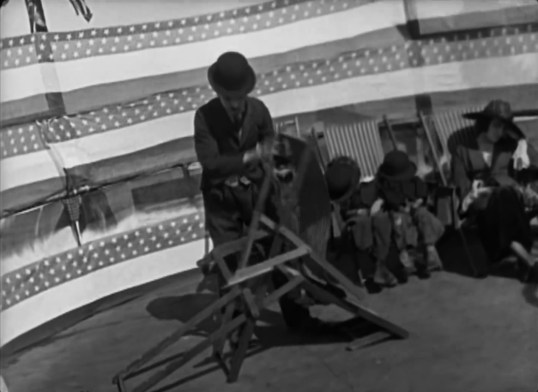
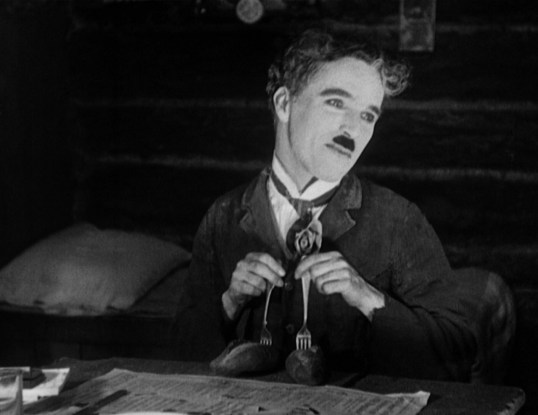
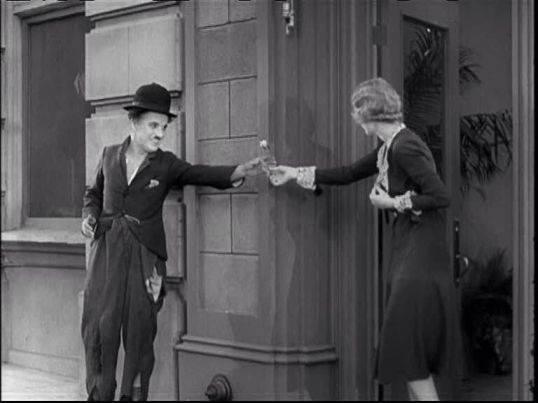
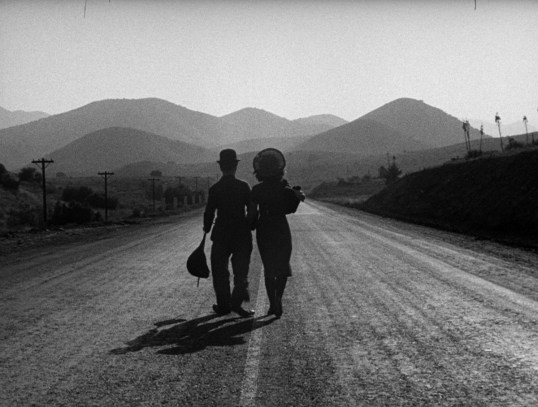
4 Or More Shots From 4 Or More Films is just what it says it is, 4 shots from 4 of our favorite films. As opposed to the reviews and recaps that we usually post, 4 Shots From 4 Films lets the visuals do the talking!
136 years ago today, film and comedy pioneer Charlie Chaplin was born. It’s time for….
Opening with a swarm of helicopters spaying for medflies and ending with an earthquake, 1993’s Short Cuts is a film about life in Los Angeles.
An ensemble piece, it follows several different characters as they go through their own personal dramas. Some of them are married and some of them are destined to be forever single but they’re all living in varying states of desperation. Occasionally, the actions of one character will effect the actions of another character in a different story but, for the most part, Short Cuts is a portrait of people who are connected only by the fact that they all live in the same city. There are 22 principal characters in Short Cuts and each one thinks that they are the star of the story.
Jerry Kaiser (Chris Penn) cleans the pools of rich people while, at home, his wife, Lois (Jennifer Jason Leigh), takes care of their baby and works as a phone sex operator. Jerry’s best friend is a makeup artist named Bill (Robert Downey, Jr.) who enjoys making his wife, Honey (Lili Taylor), looks like a corpse so that he can take her picture. One of her photographs is seen by a fisherman (Buck Henry) who has already discovered one actual corpse that weekend. He and his buddies, Vern (Huey Lewis) and Stuart (Fred Ward), discovered a dead girl floating in a river and didn’t report it until after they were finished fishing. (The sight of Vern unknowingly pissing on the dead body is one of the strongest in director Robert Altman’s filmography.)
Stuart’s wife, Claire (Anne Archer), is haunted by Stuart’s delay in reporting the dead body. A chance meeting Dr. Ralph Wyman (Matthew Modine) and his wife, artist Marian (Julianne Moore), leads to an awkward dinner between the two couples. Claire works as a professional clown and Ralph ends up wearing her clown makeup while his marriage falls apart.
Earlier, Claire was stopped and hit on by a smarmy policeman named Gene Shepard (Tim Robbins), who just happens to be married to Marian’s sister, Sherri (Madeleine Stowe). Gene is already having an affair with Betty Weathers (Frances McDormand), the wife of a helicopter pilot named Stormy (Peter Gallagher). When Stormy discovers that Betty has been cheating, he takes a creative revenge on her house.
Doreen Pigott (Lily Tomlin) lives in a trailer park with her alcoholic husband, Earl (Tom Waits). Driving home from her waitressing job, Doreen hits a young boy. The boy says he’s okay but when he gets home, he passes out. His parents, news anchorman Howard Finnegan (Bruce Davison) and his wife, Anne (Andie MacDowell), rush him to the hospital, where his doctor is Ralph Wyman. As Howard waits for his son to wake up, he has a revealing conversation with his long-estranged father (Jack Lemmon, showing up for one scene and delivering an amazing monologue). Meanwhile, a baker named Andy (Lyle Lovett) repeatedly calls the Finnegan household, wanting to know when they’re going to pick up their son’s birthday cake.
Based on the short stories of Raymond Carver and directed by Robert Altman, Short Cuts can sometimes feel like a spiritual descendent of Altman’s Nashville. The difference between this film and Nashville is that Short Cuts doesn’t have the previous film’s satiric bite. As good as Nashville is, it’s a film that can be rather snarky towards it character and the town in which it is set. Nashville is used as a metaphor for America coming apart at the seams. Short Cuts, on the other hand, is a far more humanistic film, featuring characters who are flawed but, with a few very notable exceptions, well-intentioned. If Nashville seem to be a portrait of a society on the verge of collapse, Short Cuts is a film about how that society ended up surviving.
It’s not a perfect film. There’s an entire storyline featuring Annie Ross and Lori Singer that I didn’t talk about because I just found it to be annoying to waste much time with. (The Ross/Singer storyline was the only one not to be based on a Carver short story.) The conclusion of Chris Penn’s storyline wasn’t quite as shocking as it was obviously meant to be. But, flaws and all, Altman and Carver’s portrait of humanity does hold our attention and it leaves us thinking about connections made and sometimes lost. Seen today, Short Cuts is a portrait of life before social media and iPhones and before humanity started living online. It’s a time capsule of a world that once was.

 After stagecoach rodeo racer John Bishop is framed for causing a competitor to have an accident, he’s hauled off to jail. Fortunately, Bishop’s boss, Bob Leadly (Henry B. Walthall), comes through for Bishop and helps him escape from the jail. To thank Bob, Bishop heads down to Mexico to search for Bob’s son, Bart (Paul Fix). The last that Bob heard, Bart was running with an outlaw gang called “The Brotherhood of Death.” The only way get out of the Brotherhood of Death is to die.