One of my favorite actors, James Coburn, was born on August 31, 1928, and he passed away on November 18, 2002. To celebrate and acknowledge the legend’s birthday, I thought I’d share one of my favorite scenes, and that’s his character’s introduction in THE MAGNIFICENT SEVEN. What makes the scene so impressive is that it comes in on the heels of the badass intro of Bernardo O’Reilly (Charles Bronson) and somehow manages to top it. Enjoy!
Review: Deadwood (by David Milch)
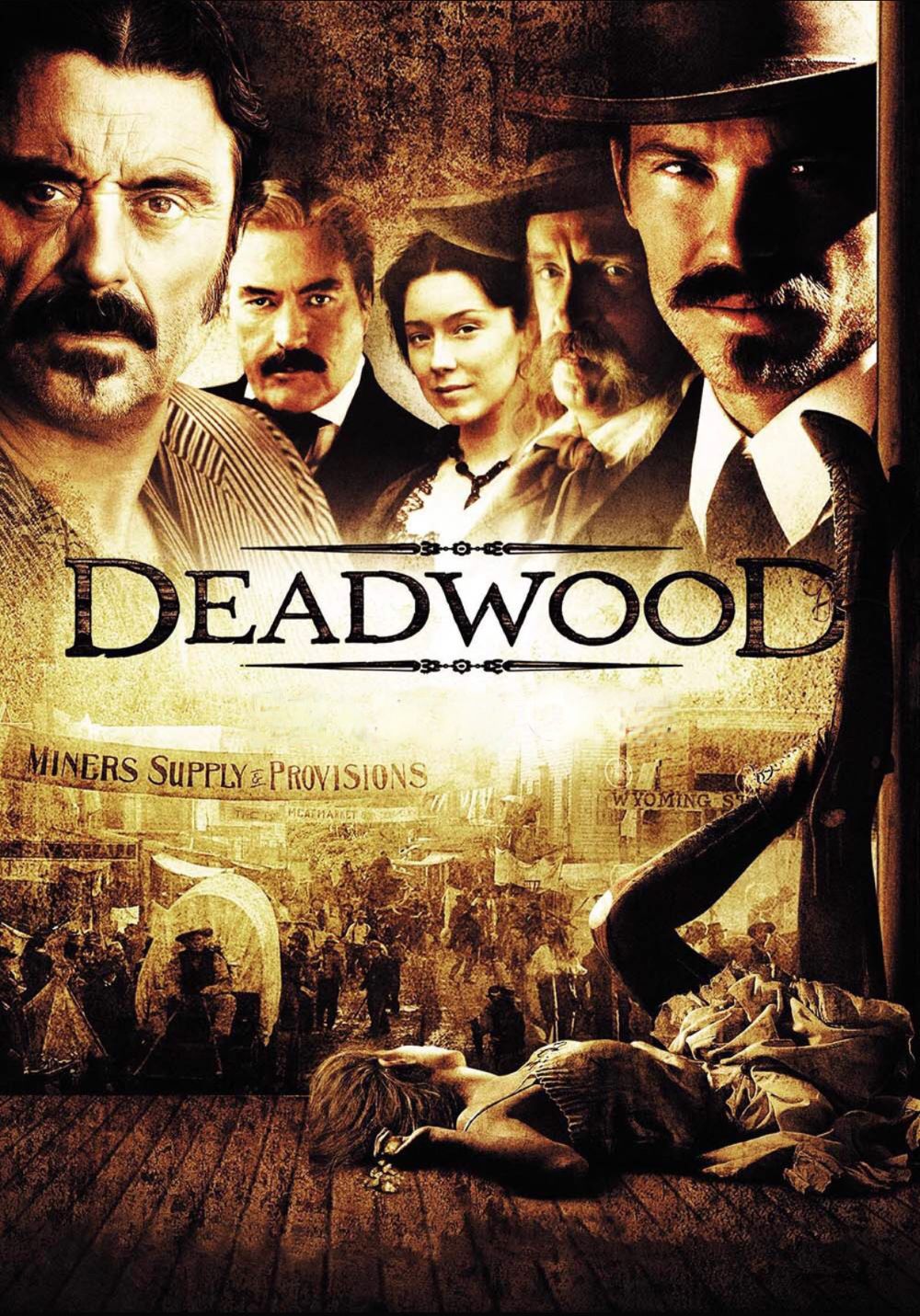
“Be in my joint in two hours—we’re forming a fuckin’ government.” — Al Swearengen
David Milch’s Deadwood is one of those rare television series that feels less like a conventional prestige drama and more like being dropped into a living, breathing, filthy historical world. Set in the rough gold-rush settlement of Deadwood, South Dakota, during the 1870s, the HBO series takes the familiar pieces of the Western—lawmen, gunfighters, prospectors, saloons, prostitutes, corrupt businessmen, and murder—and turns them into something far richer than a genre exercise. It is a Western, but it is also a story about the difficult, often ugly process of creating a society in the middle of chaos. Civilization in Deadwood is not built by noble speeches or clean acts of heroism. It is assembled through greed, fear, business deals, compromise, bloodshed, exploitation, loyalty, and the occasional act of real compassion.
The show’s biggest strength is its ability to make Deadwood itself feel like one of television’s great settings. At the beginning, the camp exists outside the reach of formal American law, which means everyone who arrives sees an opportunity. Some people come looking for gold. Others come looking to escape old lives, make money, gain power, or take advantage of people too desperate to protect themselves. Every character has a different idea of what Deadwood should become, and the series finds drama in the collision between those competing visions. A claim dispute, a murder, a business arrangement, an illness, a newspaper article, or even a random rumor can become part of the larger struggle over who gets to shape the town’s future.
At the center of that struggle is Seth Bullock, played by Timothy Olyphant with an intensity that makes him seem like he is always one bad conversation away from throwing somebody through a window. Bullock arrives in Deadwood with his friend and business partner Sol Star, hoping to start a hardware business and leave behind his past as a lawman. He wants a calmer, more stable existence, but the town almost immediately drags him back toward violence and public responsibility. Bullock has a powerful sense of justice, but he is not a smooth, patient hero. He is rigid, angry, stubborn, and frequently driven by instinct before reflection. Olyphant gives him a clenched physicality—the hard stare, the tense posture, the barely restrained frustration—that makes it clear Bullock is always fighting to keep the more destructive side of himself under control.
That is what makes Bullock such a compelling protagonist. Deadwood never treats him as a simple white-hat sheriff who comes to tame the frontier. He is more decent than many of the people around him, but he is not uncomplicatedly good. His moral certainty can become self-righteousness, and his willingness to defend the vulnerable can slide into an urge to control a situation through force. At times, Bullock’s anger is justified; at other times, it is frightening. Olyphant’s performance works because he does not try to make Bullock effortlessly likable. Instead, he makes him believable as a man who wants order, justice, and dignity in a place that seems designed to expose every violent impulse he is trying to bury.
If Bullock represents Deadwood’s rough version of moral order, Ian McShane’s Al Swearengen represents its ruthless understanding of power. As the owner of the Gem Saloon, Swearengen initially appears to be the obvious villain: a man who profits from vice, manipulation, intimidation, and murder. McShane gives him such enormous control over the role that every scene becomes more charged when Swearengen walks into it. His speech has a strange, unforgettable rhythm, moving between elaborate insults, sly observations, sudden bursts of rage, and dry comedy. He is part Shakespearean king, part criminal entrepreneur, and part exhausted manager trying to hold together a business and a town full of people who are constantly making life harder for him.
What makes Swearengen one of television’s greatest characters is that the series refuses to flatten him into a conventional bad guy. He is undeniably brutal, often monstrous, and capable of treating human beings as disposable pieces in a larger game. The show never asks the audience to forget that. But as Deadwood faces pressure from outside business interests, political maneuvering, and wealthy figures who see the camp as a resource to be absorbed, Swearengen’s investment in the town becomes clearer. He does not become a hero, but he develops into something more complicated: a man whose selfish ambition is inseparable from a practical, almost territorial loyalty to Deadwood. He understands that the camp can only survive if its people occasionally work together, even if he usually has to manipulate them into doing so.
The relationship between Bullock and Swearengen gives the series much of its electricity. They are rivals, reluctant allies, ideological opposites, and men who recognize certain necessary qualities in each other. Bullock sees Swearengen as a moral disease at the center of the camp. Swearengen sees Bullock as an unpredictable nuisance, but also as someone with the strength and authority to be useful. Their confrontations work because neither man can completely dominate the other. Olyphant and McShane create a tension that goes beyond physical threat. Their conflict reflects the show’s larger question: can Deadwood become a place governed by something closer to law and principle, or will it always belong to the people with the most money, violence, and influence?
Still, Deadwood would not be nearly as great if it were only the Bullock and Swearengen show. Its ensemble is one of HBO’s best, filled with actors who make the camp feel populated by people with histories, grudges, private fears, ambitions, and complicated ties to one another. John Hawkes is excellent as Sol Star, Bullock’s business partner and closest friend. Sol is quieter and more patient than Bullock, but Hawkes never lets that quietness fade into the background. He gives Sol an intelligence and decency that make him a crucial moral and emotional counterweight to Bullock’s volatility. His friendship with Bullock is one of the show’s most believable relationships because Sol understands the good in Bullock without ignoring the damage Bullock’s anger can cause.
Molly Parker is equally strong as Alma Garret, a wealthy widow who gradually becomes much more than an outsider caught in Deadwood’s orbit. Alma could have been written as a standard symbol of refinement in a crude frontier town, but Parker gives her tremendous resolve, intelligence, and emotional restraint. Her story is about survival in a different but no less dangerous form. She is forced to navigate grief, addiction, business interests, motherhood, and the expectations placed on a woman in a violently male world. Her relationship with Bullock is complicated in the best way because it is built from longing, frustration, guilt, repression, and circumstance rather than easy romance.
Anna Gunn brings similar depth to Martha Bullock, who becomes increasingly essential as the series develops. Martha could have been pushed aside as merely the protagonist’s wife, but Gunn makes her one of the clearest-eyed people in the camp. She understands the weight of family, grief, responsibility, and compromise, and she gives the character an emotional firmness that Bullock himself often lacks. Martha does not need grand speeches to establish her strength. Her endurance and intelligence gradually make her one of the show’s most quietly powerful figures.
Robin Weigert’s Calamity Jane is another unforgettable character, and one of the series’ most heartbreaking. Jane is loud, drunk, funny, self-destructive, and seemingly incapable of admitting how deeply she cares about people without covering it in profanity or sarcasm. Weigert finds the sadness beneath every messy outburst. Her love for Wild Bill Hickok, her loyalty to those who treat her with kindness, and her profound discomfort with herself make Jane much more than a colorful Western side character. She can be hilarious one minute and devastating the next, which is exactly the emotional balance Deadwood handles so well.
The supporting cast is so strong that the show continually finds new ways to make minor characters feel essential. Gerald McRaney brings a cold, weathered authority to George Hearst, the wealthy mining magnate whose arrival makes Deadwood’s conflicts larger and more dangerous. Hearst is not simply another local schemer. He represents the corporate and political forces that can crush a place like Deadwood from the outside, turning its chaos into something colder and more organized. McRaney plays him with a calm menace that is often more unsettling than open rage. He does not need to shout to make it clear how much power he has.
Brian Cox is terrific as Jack Langrishe, the theatrical and charismatic impresario whose arrival adds another kind of intelligence to the camp. Langrishe can be charming, funny, and seemingly generous, but Cox always lets the audience see the calculation behind the performance. He understands how to survive around men like Swearengen and Bullock because he knows that people are always playing roles, especially when power is on the line. Garrett Dillahunt also does remarkable work in two very different roles. He first appears as Jack McCall, the disturbed and dangerous killer whose actions leave a permanent mark on the camp. Later, he returns as Francis Wolcott, a polished, educated, deeply unsettling man whose manners barely conceal something vicious underneath. Dillahunt’s ability to make those roles feel so distinct is one of the more impressive acting achievements in the series.
Keith Carradine gives Wild Bill Hickok a tired, melancholy gravitas that makes the legendary lawman feel human rather than mythical. He is aware of his reputation, perhaps exhausted by it, and Carradine captures the loneliness beneath the public image. Jeffrey Jones is wonderfully eccentric as A. W. Merrick, Deadwood’s nervous but idealistic newspaper editor. Merrick’s love of language and belief in the importance of a free press make him both funny and unexpectedly vital. In a town shaped by violence and backroom deals, the act of recording events and trying to tell the truth becomes its own form of resistance.
Kim Dickens is excellent as Joanie Stubbs, a woman carrying deep emotional scars while trying to carve out independence in a world that treats vulnerability as an invitation to exploit someone. Her performance brings tenderness and pain to a character who could have easily been reduced to a plot device. Brad Dourif is another major presence as Doc Cochran, the camp’s exhausted, haunted physician. Dourif makes him funny, strange, compassionate, and spiritually worn down by everything he has seen. Jim Beaver is equally memorable as Whitney Ellsworth, the gruff prospector who gradually reveals himself to be one of the show’s warmest and most honorable people. Powers Boothe’s Cy Tolliver, meanwhile, offers a sharp contrast to Swearengen. He is just as ambitious and cruel, but he lacks Swearengen’s strange capacity for loyalty and for understanding that a town, however dirty and violent, is still an ecosystem that must be maintained.
Milch’s writing is famous for its dense, ornate, profanity-heavy dialogue, and it can take a little time to adjust to the show’s rhythm. These characters do not speak in the clean, direct language of a standard television Western. They circle around their meanings, launch into bizarrely poetic insults, turn routine negotiations into verbal duels, and sometimes say more through implication than through plain statements. But once the language clicks, it becomes one of Deadwood’s greatest pleasures. The dialogue gives the show its own identity. It makes the town sound as alive and unpredictable as it looks.
That stylized language also supports what Deadwood is really about. The series is not interested in selling a clean myth of American rugged individualism. It shows the frontier as a collision between people who need one another and often cannot stand one another. Deadwood grows through compromise, manipulation, sacrifice, corruption, and a slow recognition that nobody can survive entirely alone. Even the most vicious people become tied to a larger network of obligations. The show understands that communities are not built by saints. They are built by flawed, wounded, selfish people who occasionally discover that cooperating is better than destroying each other.
The original series ended after three seasons, which leaves it with an undeniably unfinished quality, but that does not lessen its accomplishments. If anything, the lack of a neat conclusion suits the show’s view of history. Deadwood is always changing, always threatened, and never fully settled. The later film provides a welcome return to the characters and offers some emotional closure, but the series remains the core achievement.
Deadwood is demanding television, but it is never hollow television. Its violence has consequences, its humor is vicious and surprisingly warm, and its characters become richer the more time the audience spends with them. Timothy Olyphant gives Seth Bullock the rage of a man trying to force order onto a world that resists it. Ian McShane turns Al Swearengen into a full, contradictory human being rather than a one-note villain. Around them, Milch assembled an extraordinary ensemble that makes every saloon, storefront, street, and muddy patch of ground feel inhabited. People may start the show for the gunfights, the outlaw mythology, and the famously inventive profanity, but the reason Deadwood endures is its people. It understands that civilization is not born cleanly. It is dragged into existence, often unwillingly, by damaged people trying to make a home in a place that barely resembles one.
Join #MondayMania For My Mom Robs Banks!
Hi, everyone! Tonight, on twitter, I will be hosting one of my favorite films for #MondayMania! Join us for My Mom Robs Banks!
You can find the movie on Prime and then you can join us on twitter at 9 pm central time! (That’s 10 pm for you folks on the East Coast.) See you then!
Scenes That I Love: Cleopatra
1963’s Cleopatra is a guilty pleasure of mine.
On the one hand, it’s a historically inaccurate portrayal of the events leading to the transformation of the Roman Republic to the Roman Empire. The pace is often slow. Some of the performances are regretful. It’s a film that was first envisioned as being a cheap B-picture but ended up nearly bankrupting 20th Century Fox. Of all of the movies released in 1963, it sold the most tickets and yet, because of the films huge production costs, it still lost money.
On the other hand, it’s a truly gigantic film, one that recreates the perhaps imagined splendor of the ancient world and which does it without the use of CGI. The film may not exactly embrace historical accuracy but it does embrace the melodrama. And, finally, you have scenes like the one below, in which it was obvious that Elizabeth Taylor and Richard Burton couldn’t wait for the cameras to stop rolling so they could toss off the costumes and make some history of their own.
4 Shots From 4 Films: Special Cleopatra Edition
4 Shots From 4 Films is just what it says it is, 4 shots from 4 of our favorite films. As opposed to the reviews and recaps that we usually post, 4 Shots From 4 Films is all about letting the visuals do the talking.
Let’s celebrate the end of the month with four shots from four films about Caesar’s one true love, Cleopatra!
4 Shots From 4 Films

Cleopatra (1917, dir by J. Gordon Edwards)
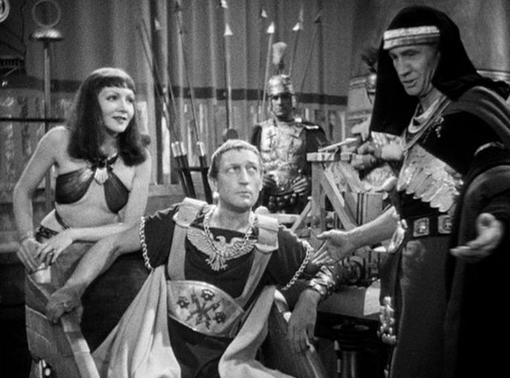
Cleopatra (1934, dir by Cecil B. DeMille)
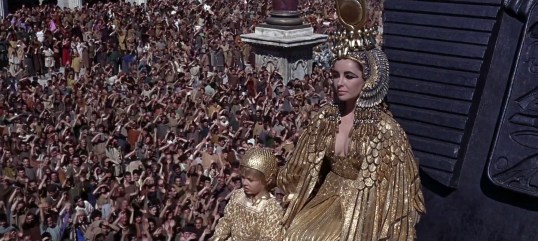
Cleopatra (1963, dir by Joseph L. Mankiewicz )
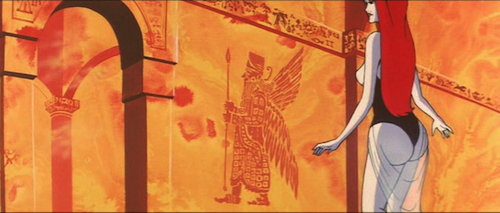
Cleopatra (1970, dir by Osamu Tezuka and Eiichi Yamamoto)
Monday Live Tweet Alert: Join Us for Circuitry Man 2!
As some of our regular readers undoubtedly know, I am involved in hosting a few weekly live tweets on twitter and occasionally Mastodon. I host #FridayNightFlix every Friday, I co-host #ScarySocial on Saturday, and I am one of the five hosts of Mastodon’s #MondayActionMovie! Every week, we get together. We watch a movie. We snark our way through it.
Tonight, for #MondayActionMovie, the film will be Circuitry Man 2!
If you want to join this watch party, just hop onto Mastodon, pull up Circuitry Man 2 on YouTube, start the movie at 8 pm et, and use the #MondayActionMovie hashtag!
Enjoy!
Song of the Day: Immortal Imperium (by Jesper Kyd)

Jesper Kyd’s Immortal Imperium is one of those tracks that immediately tells you exactly where you are: deep in the grim, overbuilt nightmare of Warhammer 40,000. It has that massive, oppressive scale the setting needs, but it never settles for sounding like generic sci-fi battle music. The heavy electronic pulse, ominous choir work, and mechanical textures make it feel like a hymn being blasted through the speakers of a hive city while factories churn, alarms scream, and thousands of people march toward jobs or wars they probably will not survive.
What makes the piece work so well is how naturally it channels 40K’s particular brand of gothic industrial opera. The choirs bring in the religious side of the Imperium, with all its worship, ceremony, and Emperor-centered fanaticism, while the synths and pounding rhythms supply the cold machinery beneath it all. It sounds sacred, but in an intimidating and almost inhuman way. You can picture enormous cathedral walls covered in smoke, servitors working beneath statues of saints, and the constant hum of ancient systems that nobody fully understands anymore.
Kyd also captures the fact that the Imperium is supposed to be impressive and horrifying at the same time. Immortal Imperium has real grandeur to it; the music makes the setting feel enormous, ancient, and powerful. But there is no clean sense of triumph in it. The momentum feels more like an endless machine pushing forward, powered by fear, faith, violence, and habit. That is very much the Darktide version of 40K: humanity is still standing, technically, but it is surviving inside a decaying system that treats every person as another disposable part.
As a soundtrack piece, Immortal Imperium does a great job of making Tertium feel bigger than the missions themselves. Even when the player is just fighting through corridors, sewage systems, transit stations, or ruined manufactorums, this kind of music reminds you that those spaces are part of a colossal and uncaring empire. It is dramatic, grimy, religious, mechanical, and weirdly beautiful—the exact mix that makes Warhammer 40,000 such a distinctive universe.
Artwork of the Day: Underworld Detective (by Michael McCann)
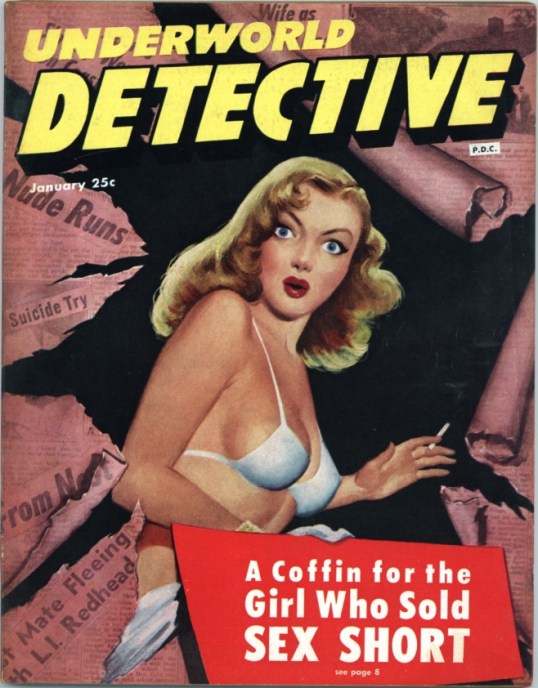
by Michael McCann
This cover is from 1951.
Music Video of the Day: 2010 by Andy Summers (1984, dir by ????)
Conceived and performed by Andy Summers, the guitarist for the Police, 2010 was a re-imagining of Also Sprach Zarathustra and was included as part of the soundtrack of the 1984 film, 2010: The Year We Make Contact. Though the song itself did not appear in the film, a music video featuring scenes from 2010 was put together for the song and was occasionally played on MTV.
Enjoy!
Late Night Retro Television Review: Degrassi: The Next Generation 3.8 “Whisper to a Scream”
Welcome to Late Night Retro Television Reviews, a feature where we review some of our favorite and least favorite shows of the past! On Sunday, I will be reviewing the Canadian series, Degrassi: The Next Generation, which aired from 2001 to 2015! The series can be streamed on YouTube and Tubi.
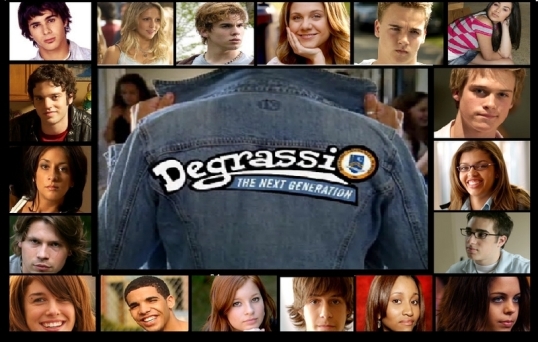
This week is Degrassi at its best and most important.
Episode 3.8 “Whisper to a Scream”
(Dir. Philip Earnshaw; originally aired November 12th, 2003)
Ellie is dealing with more than any teenager should have to.
Her father, Colonel Nash (Daniel Lévesque), is deployed overseas, leaving her to take care of her self-centered, alcoholic mother (Kirsten Kieferle). Ellie is up for an internship with Caitlin Ryan, but to get it she’ll have to beat out none other than Paige. Despite the fact that Paige starts wearing glasses to look smarter and “accidentally” spills a drink on Ellie’s shirt, Ellie still manages to get the internship. “I guess she really did feel sorry for you,” Paige says.
The internship is Ellie’s dream job, but now she has to balance it with school and taking care of her mom. Her grades struggle. The ladies in the front office start giving her nasty looks whenever she comes in for a late slip. Whenever the stress gets to be too much, Ellie cuts herself.
This episode is difficult for me to watch. For a time, Degrassi was advertised as the show that “goes there,” and this episode has always hit close to home for me. When I was much younger and blaming myself for my parents’ divorce and the fact that my mom usually had to work more than one job to support me and my sisters, I used to manage my stress in much the same way Ellie did, though I was usually too afraid of scars to actually break the skin. Cutting is a sensitive subject, and not one that is easy for other people to understand or for people who cut to really explain. This episode approaches the subject with intelligence and sensitivity, and Stacey Farber gives a commendable performance.
To the show’s credit, Ellie does not magically get over being a cutter in just 20 minutes. Even after her former rival, Paige, sees the scars on Ellie’s arms and encourages her to talk to the school counselor, Ellie isn’t suddenly better. In a future episode, Ellie will admit, “I’ll always be a cutter,” regardless of whether she’s actually cutting or not. It’s one of those honest moments that sets Degrassi apart from most other teen shows.
I should admit that when Ellie cuts herself, she does so with a drawing compass, and it’s obvious that the point is very dull. This was apparently done on purpose to keep the episode from becoming a “how-to” video. I can understand that. Degrassi shows the dangers of cutting, but it doesn’t shy away from admitting that it also provides an outlet for Ellie’s stress.
This episode’s B-plot is important as well. Someone has been leaving flowers at Terri’s locker. Terri fears that her secret admirer is Toby, and Toby doesn’t help things by saying stuff like, “I don’t know, am I?” Fortunately, it turns out that Toby is not her secret admirer and is just acting weird because he’s trying to test whether or not she has ESP. Instead, Terri’s secret admirer is cute, shy Rick Murray (Ephraim Ellis).
Considering Rick’s ultimate legacy as a Degrassi student, it’s always a bit surprising to be reminded that, in his first appearance, he just came across as a sweet romantic. “Awwww! He left her a poem!” When you already know that Rick is destined to (1) put Terri in a coma and (2) shoot Jimmy in the back, it completely changes how you react to Rick’s courtship of Terri.
Next week, Emma’s back and she’s trying to move on from Sean. Yeah, good luck with that!

