Retro Television Review: Fantasy Island 7.10 “Goin’ On Home/Ambitious Lady”


Welcome to Retro Television Reviews, a feature where we review some of our favorite and least favorite shows of the past!  On Tuesdays, I will be reviewing the original Fantasy Island, which ran on ABC from 1977 to 1984.  Unfortunately, the show has been removed from most streaming sites.  Fortunately, I’ve got nearly every episode on my DVR.

This week is another trip to the Island that feel a bit too familiar.

Episode 7.10 “Goin’ On Home/Ambitious Lady”

(Dir by Don Ingalls, originally aired on January 7th, 1984)

Nope.  I’m just not going to do it.  I refuse to spend too much time on this episode.  This episode felt like a rehash of several earlier episodes, all of which worked considerably better and didn’t feature Lawrence hovering in the background.

Billy Joe Pine (Mickey Gilley) is a country-western star who comes to the Island because he wants to be reunited with the family that he left behind when he traveled from the farm to …. Nashville, I guess.  His father (Leif Erickson) forgives him but his younger brother (John Dennis Johnston) is less inclined.  Mickey Gilley was a real-life country western singer and the only reason I know this is because he appeared previously on Fantasy Island as himself.  That episode wasn’t great but it was a masterpiece compared to this one.  “They don’t let you swim in your long johns!” is a line that is uttered at one point and I cringed like I’ve never cringed before.  This whole thing just felt rehashed and tired.

The second fantasy featured fashion designer Bryana Spencer (Mary Ann Mobley) and her husband, Fred Nelson (Ron Ely).  Fred gave up a promising entertainment career so that he could work as the exclusive emcee for Bryana’s fashion shows.  Bryana’s fantasy is for Fred to find the success that he gave up while Fred’s fantasy is for Bryana and him to experience that type of love that they felt for each other before Bryana became successful.  In other words, it’s time for another Fantasy Island fashion show!

Character actor George Wyner (you would recognize him) made me smile as the fashion show’s choreographer but otherwise, this was a pretty boring fantasy.  Mobley and Ely didn’t have much chemistry.  Then again, neither did Roarke and Lawrence.  The entire time I watched this episode, I kept thinking to myself, “Tattoo liked country western music.  Tattoo liked fashion shows.  This could have been a great Tattoo episode!”

This was not a great trip to the Island.

Retro Television Review: Miami Vice 4.20 “A Bullet For Crockett”


Welcome to Retro Television Reviews, a feature where we review some of our favorite and least favorite shows of the past!  On Mondays, I will be reviewing Miami Vice, which ran on NBC from 1984 to 1989.  The entire show can be purchased on Prime!

This week, in honor episode 4.20, Cockett and Tubbs get high.

Just kidding!  Instead, Crockett takes a bullet and Phil Collins sings Something In The Air tonight.

Episode 4.20 “A Bullet For Crockett”

(Dir by Donald L. Gold, originally aired on April 15th, 1988)

After Crockett is shot by a drug dealer’s girlfriend, he fights for his life while the other members of the Vice Squad hover nearby.  Crockett remembers past moments.  The other members of the Vice Squad remember past moments….

Hey, it a clip show!

Usually. I hate clip shows but I’ll defend this one because it was well-edited and it reminded me of how good this show was before season 4 started.  Plus, the episode made good use of Something In The Air Tonight.

The important thing is that, after all the memories were shared, Tubbs took down the shooter and Crockett woke up.  Let’s not worry too much about why Crockett’s new wife never came to the hospital.  She at least appeared in flashback.

What doe it say about Season 4 that the best episode was probably the clip show?

Late Night Retro Television Review: Degrassi: The Next Generation 1.5 “Parents Day”


Welcome to Late Night Retro Television Reviews, a feature where we review some of our favorite and least favorite shows of the past!  On Sunday, I will be reviewing the Canadian series, Degrassi: The Next Generation, which aired from 2001 to 2015!  The series can be streamed on YouTube and Tubi.

This week, Emma goes on a crusade and Canada will never be the same.

Episode 1.5 “Parents Day”

(Dir by Eleanore Lindo, originally aired April 15th, 2002)

Its Parents Day at Degrassi!

Toby Isaacs is paranoid that his divorced parents are going to get into an argument as soon as they’re in a room together and that’s exactly what happens.  When Snake tells them that Toby could have the best grades in school if he only applied himself, his mom and his dad start blaming each other.  This scene always makes me cringe, largely because I was in the same boat in high school.  “Lisa is smart as a whip,” one of my teachers said during my junior year, “but she doesn’t focus in class and is easily distracted.”  “Lisa Marie,” my mother said, “did you hear that?”  “Hear what?,” I replied.

Anyway, Toby tells his parents that the reason he’s struggling is because they’re always fighting.  His parents apologize to him.  Awwwww!  That’s sweet.  It would never happen in real life but it’s still sweet.  (Having seen the entire series, it’s always a bit jarring to be reminded of how much the first season focused on Toby, someone who — in future seasons — would often just be a background character.)

Meanwhile, we meet Sean’s totally cool older brother and guardian, Tracker (Kris Holden-Reid).  How cool is Tracker?  His name’s Tracker!  Plus, he calls out Emma to her face.  Emma, in a sign of things to come, has written an editorial for the school paper in which she complains about a once-a-week broadcast called NAK (News About Kids).  She feels that NAK is just propaganda.  When Principal Raditch points out that NAK donated the school’s computer lab in return for the school showing their broadcast (and again, it’s like a 10-minute program that is shown ONCE a week), Emma writes that the school shouldn’t accept anything from NAK and students should just use their home computers.  When Emma overhears Tracker describing her editorial as being “garbage,” she gets mad at tells him that he’s an idiot.  Tracker points out that not all kids — like Sean, for instance — can afford a home computer.

Here’s the thing: Tracker’s correct.  Even when I first saw this episode as an idealistic teenager who agreed with Emma about NAK being propaganda, I thought Tracker was correct.  Not all kids can afford their own computer.  If showing a 10-minute, once-a-week broadcast that most students would probably end up talking through meant the school got a computer lab, it seemed like a reasonable compromise.

However, this episode introduced one of the themes that would become prominent on Degrassi in later seasons.  Emma is never wrong.  Even when it’s clear that Emma is totally wrong and is being unreasonable, the show will still end with someone telling Emma that she’s right.  This episode ends with Sean telling Emma that her editorial wasn’t garbage.  Emma smiles because she has a crush on Sean and that’s sweet and all but you know what?  That editorial was totally garbage!

My feelings were mixed on this episode.  I could relate to Toby’s embarrassment.  I could also relate to Paige’s over-the-top efforts to impress Toby’s mom, who we’re told is casting director.  But this episode also launched the whole “Emma-is-a-crusader” thing, which would eventually become one of the more annoying things about the show.  In the end, though, I guess the important thing is that everyone survived Parents Day.

Retro Television Review: Homicide: Life on the Street 4.6 “Hate Crimes”


Welcome to Retro Television Reviews, a feature where we review some of our favorite and least favorite shows of the past!  On Sundays, Lisa will be reviewing Homicide: Life On The Street, which aired from 1993 to 1999, on NBC!  It  can be viewed on Peacock.

This week, Lewis solves a cold case.

Episode 4.6 “Hate Crimes”

(Dir by Peter Weller, originally aired on November 17th, 1995)

On the eve of Thanksgiving, a young man is killed outside of a gay night club.  Bayliss and Pembleton are investigating.  All of the witnesses say that the man was jumped by a group of skinheads.  While Pembleton, as usual, is set on capturing the guilty party, Bayliss is uncomfortable about the what he assumes to have been the victim’s identity.

Bayliss is a homophobe?  Really?

I guess this development doesn’t come totally out-of-nowhere.  There was an earlier episode where Bayliss was clearly uncomfortable dealing with an S&M-themed murder so he does have a history of getting weirded out by anything that goes against what he considers to be the straight and the conventional.  At the same time, it’s kind of hard to feel that Bayliss is often just whatever the writers need him to be at the moment.  For this episode, Pembleton needed a homophobe to deal with.  And, since Felton and Bolander are no longer on the show, the job fell to Bayliss, even though Bayliss — even at his most awkward and uncomfortable — has never been presented as being prejudiced before. For me, it’s hard not to feel that the episode would have been even more interesting if it was Pembleton — self-righteous, faith-struggling, Jesuit-trained Pembleton — was uncomfortable with the victim’s identity and if, for once, Bayliss could have been the tolerant one.  Pembleton’s a great character but occasionally, it’s hard not to feel that he’s almost too flawless.

That said, this storyline features a brilliant twist.  When Pembleton and Bayliss talk to the victim’s father (the great Terry O’Quinn), they ask him if he knew that his son was gay.  The father gets angry at them, says that if his son was gay then he deserved to die, and then kicks them out of the house.  Later, Bayliss and Pembleton learn that the victim was not gay.  Instead, the skinheads assumed he was gay and attacked him because he was outside of the nightclub.  Bayliss and Pembleton return to the victim’s father and tells him that his son wasn’t gay.  Only then does the victim’s father start to cry.  For him, his son was not worthy shedding a tear over until he was assured that his son wasn’t gay.  Of course, the father doesn’t realize that his prejudice is the same prejudice held by the skinheads who killed his son.  He’s stunned to hear his son was killed due to a mistake but it doesn’t occur to him that he rejected his son because he made the same mistake.

While that was going on, Lewis defied Howard and solved the Erica Chilton case.  (During the previous season, Howard was given the Chilton case after Crosetti committed suicide.  The since-departed Felton lost a key piece of evidence.)  When Erica Chilton’s daughter was brought to the office because she had been having dreams about her mother’s death, Lewis and Kellerman were the two detectives that talked to her.  Howard was not happy about this, saying that Lewis should have let her handle the interrogation.  Lewis. who has not been happy about Howard getting promoted to sergeant, told her to back off and to stop criticizing his former partner.  While the two of them were arguing, Kellerman got the little girl to remember that the murderer was wearing a monogrammed shirt and that his initials with “T.M.”  At the time of her murder, Erica was engaged to Tom Marans (Dean Winters).

Howard demanded that Lewis tell her before he interrogated Marans so that she could be in the Box.  So, of course, after Lewis and Kellerman tricked Tom into coming down to the station by telling him they needed him to look over some new evidence, Lewis proceeded to interrogate Tom without Howard being there.  With help of a new voice analysis machine, Lewis was able to get Tom to confess without much effort.  Lewis was also able to get a date with the voice analyst, Debbie Haskell (Allison Smith).  Sgt. Howard, meanwhile, got very, very pissed off.

Finally, Brodie (Max Perlich) — the cameraman who helped Lewis and Kellerman out a few episodes ago — got a new job when he was hired to help the Homicide Department film crime scenes.  I’m kind of amazed that they didn’t already have someone to do that.

This was a good episode, even if Bayliss’s homophobia did feel a bit forced.  While Andre Braugher and Kyle Secor were as great as always, I have to say that Clark Johnson really stole this episode as the cocky and rebellious Meldrick Lewis.  Howard is absolutely right about Lewis not treating her with the respect that she deserves.  At the same time, Lewis did finally solve the Chilton case.  So, maybe they’re even.

Probably not.


Late Night Retro Television Review: Good Morning, Miss Bliss 1.9 “Let’s Get Together”


Welcome to Late Night Retro Television Reviews, a feature where we review some of our favorite and least favorite shows of the past!  On Saturdays, I will be reviewing Good Morning, Miss Bliss, which ran on the Disney Channel from 1988 to 1989 before then moving to NBC and being renamed Saved By The Bell.  The entire show is currently streaming on Prime!

This week, the kids learn yet another lesson about conflict resolution.

Episode 1.9 “Let’s Get Together”

(Dir by Burt Brinckerhoff, originally aired on February 18th, 1989)

After Ms. Palladino (Joan Ryan) is kicked out of her apartment by her boyfriend, she temporarily moves in with Miss Bliss.  It doesn’t go well.  Ms. Palladino is messy and quirky and accident-prone.  Miss Bliss is British.  Can these two friends figure out how to live together?

Meanwhile, Nikki and Zach have been assigned to work on a class project but they’re suddenly not getting along.  They have to convince Miss Bliss that the telephone is a worthwhile invention.  (Miss Bliss plays the role of a skeptical pilgrim.)  Nikki wants to use a bunch of charts to make her point.  Zach pretends to call Nikki on the phone and apologizes to her for not being a good friend.  It’s extremely awkward to watch, despite the fact that Mark-Paul Gosselaar and Heather Hopper both pour their hearts into the scene.  Actually, maybe that’s why it’s so awkward to watch.  Imagine being a student, trapped in that classroom and forced to listen to Zach and Nikki work out their differences.  Miss Bliss give them an A and decides to stop being such a bitch to Ms. Palladino.  Good for her!

This episode probably would have been more effective if we hadn’t already been subjected to an episode where Mickey and Zach get into a disagreement and then talk about their friendship while the entire school watches.  This episode felt like a do-over.  I also found it curious that all the students apparently knew that Miss Bliss and Ms. Palladino were living together and not getting along.  First off, why would the students know this and secondly, why would the students cares?

I’m starting to think that Good Morning Miss Bliss was not a realistic portrayal of the Indiana middle school experience.

Retro Television Review: The American Short Story #15: The Sky Is Gray


Welcome to Retro Television Reviews, a feature where we review some of our favorite and least favorite shows of the past!  On Saturdays, Lisa will be reviewing The American Short Story, which ran semi-regularly on PBS in 1974 to 1981.  The entire show can be purchased on Prime and found on YouTube and Tubi.

This week, we have an adaptation of a 1963 short story.

Episode #15: The Sky Is Gray

(Dir by Stan Lathan, originally aired in 1980)

This adaptation of an Ernest Gaines short story takes place in Louisiana during the 1940s.  James (James Bond III) is a young black child who lives on a farm.  His father is overseas, serving in the Army during World War II.  His mother (Olivia Cole) is a stern but loving woman who is trying to raise the sensitive James in a world where one often has to depend on their inner strength to survive.  When James comes down with a toothache, he and his mother travel to a nearby town so he can see the dentist.  From having to stand in the back of the bus to listening to a debate between a priest and a militant in the dentist’s office, it’s an eye-opening journey for James.  When the white receptionist at the dentist’s office arbitrarily cancels James’s appointment and tells him and his mother to come back tomorrow, the two of them seek shelter.  James discovers how strong his mother is when they’re harassed by a pimp (Reuben Collins).  He also learns that there is unexpected kindness in the world when a white store owner invites him and his mother inside to give them shelter from the cold and windy day.  During one trip to the dentist, James learns that the world is far more complicated than he originally knew.

This was an okay adaptation of Gaines’s acclaimed short story.  Young James Bond III gave a good performance as James and the episode was full of scenes that visually captured the feel of being an outsider.  That said, as was often the case with this series, the adaptation was so straight-forward that it didn’t really capture the nuance of Gaines’s writing.  In the short story, Gaines put the reader right into James’s head.  The adaptation doesn’t really do that.  A heavy-handed musical score doesn’t help matters but, with all that in mind, this was still an effective coming-of-age tale.

Retro Television Review: St. Elsewhere 2.15 “Attack”


Welcome to Retro Television Reviews, a feature where we review some of our favorite and least favorite shows of the past! On Fridays, I will be reviewing St. Elsewhere, a medical show which ran on NBC from 1982 to 1988.  The show can be found on Hulu and, for purchase, on Prime!
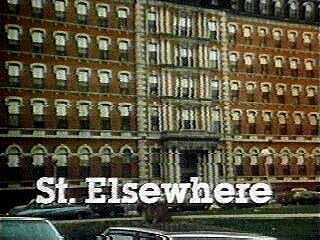
This week, the identity of the Ski Mask Rapist is revealed.

Episode 2.15 “Attack”

(Dir by Kevin Hooks, originally aired on February 22nd, 1984)

The Ski Mask Rapist is continuing to attack.  Off-screen, a pharmacist is assaulted while trying to catch her train.  In the hospital, a candy striper gets lost in the cavernous building and is attacked in a storage room.  When Shirley Daniels enters the storage room, she’s startled by a man wearing a pest control outfit.  She sprays him with her mace but is later told that the police do not believe that he was the rapist.  Instead, he was just a man trying to steal drugs.  When Fiscus tries to put together a list of men who will walk the women to their cars, Dr. Cavanero tells him that one of the men on his list could very well be the rapist.

Amongst themselves, the women who work at St. Eligius debate what they would do if they are attacked.  Shirley carries her mace.  Wendy says that she would use her keys as a weapon.  Jacqueline Wade says that women who don’t struggle and just submit have a better chance of surviving.  Dr. Cavanero dumps her insensitive boyfriend after he offers up a half-hearted, insincere apology for trying to force himself on her during the previous episode.  The head of the hospital’s security gives a lecture and makes the women feel like the attacks are somehow their fault.  “There’s no need to get hysterical,” he says.

(Myself, I carry mace.  I’m always scared that I’ll accidentally spray myself in the face with it but still, I carry it.)

Kathy Martin turns down the offer of a rape whistle, saying that carrying it would give her the aura of a victim.  As the episode ends, she’s attacked in the morgue.  She manages to push up the ski mask, revealing the face of …. Peter White.

It’s not really a surprise that Peter turned out to be the rapist.  I suspected it was him last week.  Rape may be classified as a sex crime but ultimately, it’s about power.  The weakest men are rapists and there’s no man on this show who is weaker than Peter White.  Before Peter attacks Kathy, we see him with a prostitute who tells him that it’s okay that he couldn’t get it up.  Peter mentions that it’s his anniversary.  Peter is weak and, looking back at the the moment he first appeared during the first season (begging Dr. Morrison to cover for him), it’s obvious that the series has been building up to the moment that he loses control.

There were other things that happened during this episode.  Geraldine Fitzgerald played a patient who Auschlander dated in his younger days.  (Now, she’s a drug addict.)  Victor and Roberta returned from their honeymoon, Victor with a painful sunburn and Roberta with a host of problems that she accidentally broadcast to the entire hospital while talking to her friend in the front office.  (You have to make sure the PA is turned off before talking about your sex life, folks.)  There was a humorous scene in which Dr. Ridley got into an argument with Roberta’s psychiatrist (Philip Sterling).  Dr. Morrison tried to figure out why his latest patient (Dan Hedaya) was suffering from sudden bouts of blindness.

In the end, though, this was a grim episode and not always an easy one for me to watch.  Honestly, if I had been a nurse or a doctor at that hospital, I would have walked as soon as it became apparent that the Ski Mask Rapist was someone inside the building.  I would have gone home and refused to come back until they caught the guy.

Kathy saw Peter’s face as he attacked her.  I fear what’s waiting for me on next week’s episode.

Late Night Retro Television Review: Highway to Heaven 4.13 “A Mother’s Love”


Welcome to Late Night Retro Television Reviews, a feature where we review some of our favorite and least favorite shows of the past!  On Thursdays, I will be reviewing Highway to Heaven, which aired on NBC from 1984 to 1989.  The entire show is currently streaming on Tubi and several other services!

This week, Mark is abandoned in the park.

Episode 4.13 “A Mother’s Love”

(Dir by Michael Landon, originally aired on January 6th, 1988)

It’s time for Jonathan and Mark to start a new assignment!  This week, Jonathan gets to be a teacher (again!) and Mark gets to be …. homeless.

Seriously, Mark is dropped off in the park and told to live there.  Eventually, Jonathan shows up and gives Mark a tent and some cooking supplies.  That was nice of him but still, you have to wonder why Mark always seems to get assignments that are designed to aggravate him.  “Thanks for giving up your independence to work with my angel,” the show’s version of God seems to be saying, “Now, here …. go live in the park.”

Also living in the park are four brothers whose mother has recently died.  They’re living in a van and are trying to not get sent to foster care.  Fortunately, there’s a teacher at Jonathan’s new school who regrets that she never had a family.  Guess who is going to end up adopting four kids!

This was pretty much the epitome of Highway to Heaven, sweet-natured, sentimental, shamelessly manipulative, and so earnest that it worked even when it shouldn’t have.  That said, I hope Jonathan will put a good word in for Mark.  The guy deserves at least one easy week!

MAN WITH A CAMERA (TV Series) – starring Charles Bronson – S1, E6: Double Negative


In this episode, freelance photographer Mike Kovac (Charles Bronson) receives a tip from reporter Mike Costigan (Frank Faylen) about a mysterious woman. Acting on the lead, Mike snaps a photograph of the woman, only to discover that she bears a striking resemblance to Helen Sprague (Tracey Roberts), a lady who was reportedly murdered by night club owner Howard Dorn (Don Durant). When she shows back up alive, the D.A. will have to drop the charges on Dorn, right? Well it’s not that easy as a punch-drunk ex-fighter Pete Montee (Karl Lukas) shows up at Mike’s house and insists that the woman in the photo is his girlfriend Connie Sawyer. It turns out that Costigan and Dorn are trying to cash in on Kovac’s honest reputation to get away with murder. When Mike gets wise to their plan, he becomes their next target for death!!

This episode of MAN WITH A CAMERA was directed by Gerald Mayer, who would direct 11 episodes of the series. It’s a solid “film noir” episode, with Bronson’s Mike Kovac getting caught up in a murder plot involving double-crossing bad guys, a duplicitous dame, and a dumb lug, where he’ll be lucky if he comes out alive. Of course, a young Bronson is the biggest draw in every episode of MAN WITH A CAMERA. Along with his magnetic screen presence, Bronson always knew how to throw a punch and he gets to engage in a couple of nice fisticuff sequences in “Double Negative.” It makes for good balance as his camera gets him into hot water at the beginning and his fists get him out of hot water at the end. I also want to throw some love Karl Lukas’ way as the ex-fighter, Pete Mantee. He’s clearly not the sharpest tool in the toolshed, but his performance is the most enjoyable of the series, outside of Bronson, up to this point. His combination of innocent, dumb, and unbelievably strong is a lot of fun. 

Overall, “Double Negative” is one of the best episodes of MAN WITH A CAMERA so far. Bronson is at his best and I really like the film-noir feel. If you haven’t watched on episode on Amazon Prime yet, this would not be a bad place to start! 

Retro Television Review: Decoy 1.3 “The Phoner”


Welcome to Retro Television Reviews, a feature where we review some of our favorite and least favorite shows of the past!  On Thursdays, I will be reviewing Decoy, which aired in Syndication in 1957 and 1958.  The show can be viewed on Tubi!

This week, Casey help to stop an obscene phone caller.

Episode 1.3 “The Phoner”

(Dir by Teddy Sills, originally aired on October 28th, 1957)

Betty Hodges (Pat Englund) has been getting obscene phone calls.  It’s the 1950s.  That means there’s no caller ID, there’s no cell towers to ping signals off of, there’s no way to block a number, the phone rings until its answered, and every call is made and taken on a landline phone.  This is the era when most calls were still connected by an operator.  Terrified of the calls but determined not to be chased out of the city like so many other young women who have targeted by the so-called Phoner, Betty calls the police.  Casey (Beverly Garland) moves in with Betty, pretending to be her sister.  When the phone rings, it’s Casey who will answer and it’s Casey who will have to keep the guy talking for five minutes while the phone company traces the call.

We don’t ever learn the name of the man making the calls.  In the credits, he’s listed as the Phoner.  Played by Frank Sutton, the Phoner is a sweaty man who makes his calls from a phone booth and who brags about how many girlfriends he claims to have  had.  (He’s the 50s version of an incel.)  We’re told that he says disturbingly obscene things over the phone but, this being a 50s show, we don’t hear any of them.  Of course, we don’t have to hear them.  Betty’s terrified reactions are all we need to see.

Eventually, Betty is attacked leaving work.  She stumbles out of an alley, her face beaten and her clothes torn.  And again, it’s the 50s.  So all we hear is that Betty has been attacked but anyone watching would understand what had happened.  In the hospital, Betty whispers to Casey.  When Casey is asked what Betty said, Casey replies, “She wishes she was dead.”

Eventually, the Phoner calls Casey back.  They set up a date in the park.  The Phoner doesn’t show up at the park but he does show up at the apartment later.  After a struggle, he’s subdued by Casey and the other cops watching the apartment.  Even though common sense tells the viewer that nothing too bad is going to happen to the show’s lead character, it’s still a tense scene, largely because of Frank Sutton’s feral performance as the Phoner.

This is a poignant episode, even if it did obviously have to hold back due to the censorship rules of the time.  Just as frightening as Sutton was as the Phoner, Garland was equally impressive as the determined Casey.  If I did have any problem with this episode, it’s that when she’s initially confronted by the Phoner, Casey doesn’t recognize his voice.  When a man threatens you, you never forget the voice.

This was a good episode.  Hopefully, the Phoner died in prison.