Doctor Who — Spearhead From Space (1970, directed by Derek Martinus)


Two meteorite showers have fallen in rural England and a poacher has come across a strange plastic polyhedron at one of the sites.  Brigadier General Alistair Lethbridge-Stewart (Nicholas Courtney), the head of the United Nations Intelligence Taskforce (UNIT), fears it could be the start of another alien invasion.  He explains to UNIT’s skeptical scientific advisor, Dr. Liz Shaw (Caroline John), that UNIT was specifically created to protect the Earth from such invasions.

Meanwhile, a bushy-haired man has collapsed in front of an old-fashioned blue police call box.  He’s been taken to a hospital, where the doctors are confounded by the fact that he appears to have two hearts.  The Brigadier, hearing the news, is convinced that the man is his old friend the Doctor and heads to the hospital.

The Brigadier is right.  The man (Jon Pertwee) is the Doctor but, as a result of being found guilty of stealing a TARDIS and breaking the Time Lord code of non-interference, the Doctor now looks and sounds completely different.  While the Doctor works to convince the Brigadier that he is who he says he is, a tentacled alien known as the Nestene is using the Autons, a race of plastic humanoids, to do its deadly bidding.

I’ve always really liked Jon Pertwee’s interpretation of the Doctor and the reasons why are to be found in his very first adventure.  While Pertwee’s Doctor was just as intelligent and egocentric as the two Doctors who came before him, he was also a man (or an alien, I guess) of action.  Rather than just stay cooped up in that hospital room, the Third Doctor is constantly trying to escape.  When the Autons show up and try to abduct him, the Third Doctor doesn’t go without a struggle.  Unlike the first two Doctors, this Doctor has no problem commandeering a car and then demanding one just like it in return for working with UNIT.  Pertwee combined intelligence with action and humor and that brought a unique feel to his five years in the role.  I’ve often seen Pertwee’s Doctor compared to James Bond.  I think a better comparison would be to Patrick McNee’s John Steed from The Avengers.  The Third Doctor was an intelligent, erudite gentleman who dressed well and knew how to throw a punch.

The majority of the Third Doctor’s adventure would involve UNIT in some way.  Exiled to Earth and with a locked-down TARDIS, the Third Doctor was the most Earth-bound of the Doctors but, as shown in Spearhead From Space, that worked well for Pertwee’s interpretation of the character.  Pertwee and Nicholas Courtney were a good team and, for Pertwee’s first season, Liz Shaw was a companion who was actually the Doctor’s equal.  (I had a huge crush on Caroline John when her episodes were first broadcast on PBS.)  The first Auton Invasion showed why UNIT was so necessary and also why it needed the services of the Doctor.

The Autons have a reputation for being the scariest of Doctor Who’s monsters.  They definitely were creepy, with their expressionless, plastic faces.  Imagine mannequins that can walk and who will also shoot you on a whim and you have an idea of why the Autons inspired many bad dreams in 1970.  (Like the Cyberman in Tomb of the Cybermen, the Autons were soon at the heart of a debate about whether or not Doctor Who was too scary for children.)  The Autons are certainly more scary than the Nestene, which was quite obviously a puppet and not very well-put together one at that.

Spearhead from Space was a wonderful introduction to Jon Pertwee’s Doctor and it remains a classic of the original series.  The first serial to be broadcast in color, it not only allows us to get to know the Third Doctor but it also introduces a classic new threat.  As this story ends, the Doctor is settling to his new role as an advisor to UNIT.  Waiting in the future are many more adventures and the Master.

Retro Televison Review: Homicide: Life on The Street 4.9 “Sniper, Part Two”


Welcome to Retro Television Reviews, a feature where we review some of our favorite and least favorite shows of the past!  On Sundays, I will be reviewing Homicide: Life On The Street, which aired from 1993 to 1999, on NBC!  It  can be viewed on Peacock.

This week, the sniper shootings continue.

Episode 4.9 “Sniper, Part Two”

(Dir by Darnell Martin, originally aired on January 12th, 1996)

Despite the suicide of William Mariner, people in Baltimore are still falling victim to a sniper who attacks every eight hours.  All of the detectives, many of whom have just returned home from spending several sleepless days and nights investigating the first sniper, are called back in.  At first, Pembleton and Bayliss suspect that Mariner must have had an accomplice.  However, when a strange young man named Alex Robey (David Eigenberg) just happens to be at the scene of two separate shootings, it becomes clear that the second sniper is just a copycat who is looking for attention.

It’s quite a contrast between William Mariner, who lived in an upper class neighborhood and who died without revealing his motivations, and Alex Robey, who lives in a rowhouse and who reveals that he was obsessed with Mariner’s crimes.  It’s a reminder that some murderers are easier to figure out than others.  The detectives will never know what caused Mariner to snap.  But Robey?  Robey’s just desperate for attention.

Recently demoted Megan Russert works with the Squad, despite Barnfather ordering Giardello to keep her away from the case.  (Wisely, Giardello ignores Barnfather.)  By pretending to be sympathetic to his resentment over being treated as a “nobody,” Russert plays a key role in Robey eventually confessing to being the sniper.  The episode makes it clear that Russert is going to become the latest member of the Homicide squad.  That’s fine but I do sometimes wish that this show could introduce a new detective without having them miraculously solve the big case.  This season started with Kellerman displaying detective skills that he has not displayed in any episode since.  This week, it was Russert’s turn to suddenly be the greatest detective this side of Frank Pembleton.  It makes me miss the relative realism of the earlier seasons, where even the best detectives sometimes struggled.  Bayliss failing to close the case of Adena Watson was one of the defining events of Homicide’s first season.  If Adena had died during the fourth season, there’s no way the Arraber would have gotten away with it.

With Alex Robey confessing to being the second sniper, it looks like maybe the people of Baltimore are actually going to break from being shot at people on rooftops.  Good for them, they deserve a break.

Late Night Retro Television Review: Good Morning Miss Bliss 1.12 “Clubs and Cliques”


Welcome to Late Night Retro Television Reviews, a feature where we review some of our favorite and least favorite shows of the past!  On Saturdays, I will be reviewing Good Morning, Miss Bliss, which ran on the Disney Channel from 1988 to 1989 before then moving to NBC and being renamed Saved By The Bell.  The entire show is currently streaming on Prime!

This week, Miss Bliss takes over the school.

Episode 1.12 “Clubs and Cliques”

(Dir by Burt Brinckerhoff, originally aired on March 11th, 1989)

Mr. Belding is teaching Miss Bliss’s class!

Why?

Well, the answer doesn’t make much sense but here it is.  The School Board has ordered Belding to name one of the teachers as an “assistant principal” who can be in charge whenever he’s out of the building.  Most schools just hire an assistant principal but whatever.  Maybe this is an Indiana thing.  Since there are only three teachers to choose from and one of them is the mad scientist who wanted to force Nikki to dissect a frog, Mr. Belding goes with Miss Bliss.  But, before Miss Bliss can officially have the job, she has to serve as a principal for a week.  Belding covers her class.

At first, Mr. Belding is nervous.  But, by the end of the class period, he’s thrilled.  He tells Miss Bliss that he thinks he did a wonderful job and that the kids really got something out of it.

“Mr. Belding,” Miss Bliss replies, “it’s only homeroom.”

Okay, I’m just going to say it …. WHAT A BITCH!  Seriously, how condescending can one person be?  This is who you want to make principal?  Is this how you motivate people?  Again, this is why I cannot stand Miss Bliss.  Seriously, if anyone ever said that to her — “It’s only homeroom,” — she would have rightly been offended.

(Then again, I have to wonder whether or not Mr. Belding’s ever taught a class before.  This episode seems to imply that he hasn’t.  Was that a common thing with principals back in the 80s?)

Miss Bliss has a lot to deal with because it’s pledge week.  Apparently, the coolest club at JFK Middle School is the Rigma club and Zach has been told by Rick (J. Trevor Edmond) and Trevor (Christopher Carter) that he can wear a Rigma jacket if he’s mean to all of his friends.  Zach calls Lisa’s parents and let them know that she wears makeup in school.  He throws ice cream at Nikki’s sweater.  He reveals that Mikey has a crush.  He calls Screech a “nothing.”  He loses all of his friends and then he finds out that he wasn’t even being considered for Rigma membership.  Instead, it was all a big joke on the part of Rick and Trevor.

Now, to give credit where credit is due, Mark-Paul Gosselaar did a pretty good job playing up Zach’s regret after he realized he had lost all of his friends for nothing.  The episode is interesting because it shows a side of Zach that would totally disappear over the course of Saved By The Bell.  In this episode, Zach is insecure and desperate to belong.  By the time Saved By The Bell really got going, it had been established that Zach had no insecurities and was automatically loved by everyone he met.  Insecure Zach is infinitely more compelling but a bit less fun than confident Zach.  Watching this episode, it’s hard to believe we’re watching the same Zach Morris who will eventually lie about a being a descendant of Chief Joseph.

Things work out in the end.  His friends forgive Zach.  Even more importantly, Miss Bliss gets in trouble for not calling and asking for permission from the Board of Education before giving everyone everything they wanted.  “She’s not perfect,” Belding chuckles.  You got that right, Mr. Belding!

Lisa Marie’s Week In Television: 9/28/25 — 10/4/25


For the most part, I’ve spent this week watching horror movies and reviewing them.  That said, I did get caught up with a handful of shows.  Here are a few thoughts:

Abbott Elementary (Wednesday Night, ABC)

I got pretty bored with Abbott last season but I still caught the season five premiere this week.  I laughed quite a bit so I guess I’m going to give the latest season a chance.  The show got a bit heavy-handed last season and I got bored with all of the golf course nonsense.  Hopefully, this season will put the focus back on teaching.

Big Brother 27 (Sunday Night, CBS)

Big Brother ended on Sunday and I’ve already forgotten all about it.  That’s the way things should be.

Hell’s Kitchen (Thursday Night, Fox)

I got caught up with the latest two episodes of Hell’s Kitchen.  The men seem to be especially incompetent this season.  I know that every season seems to start out with the men weak and the women strong before reversing things later on but seriously, this season, I wouldn’t want any of these people cooking for me.

Law & Order (Thursday Night, NBC)

I decided to give Law & Order another try this season.  (Last season, I stopped watching about halfway through.)  Of course, when I watched the first two episodes of the current season, the first thing I saw was Price on the verge of tears.  Is there ever a time when Nolan Price isn’t on the verge of tears?  Just as with the previous season, I preferred the Law to the Order part of the show.  If Maroun and Price are always miserable about having to do this jobs, why are they even working for the District Attorney’s office to begin with?  Ever since this show was revived, we’ve had a steady stream of new detectives and yet Price and Maroun are still the same colorless characters that they were when they first appeared.

The Prisoner (Night Flight Plus)

I watched two episodes of this cult classic on Friday.  My favorite character is Rover.

Seinfeld (Netflix)

Kramer starts a talk show in his living room.  It made me laugh!

Special Forces: World’s Toughest Test (Thursday Night, Fox)

Yet another group of celebrities have gathered to see if they can pass Special Forces training.  I watched the first two episodes this week.  I laughed when one of the instructors yelled, “How badly do you want this!?”  They probably just want their paycheck.  I also laughed at Jussie Smollett, trying to make a comeback as one of the celebs.  What if Smollett wins this season and is sent to Afghanistan with orders to take down the Taliban?  That would be a hell of a redemption arc!

The Young and the Restless (Weekday Morning, CBS)

I watched an episode on Monday, largely to see if Victor was still around.  He was.

Horror On TV: Hammer House Of Horror Episode #3: Rude Awakening (dir by Peter Sasdy)


In the third episode of Hammer House of Horror, Denholm Elliott plays an estate agent who finds himself having a series of nightmares about his wife (Pat Heywood) and his secretary (Lucy Gutteridge) and a murder that may or may not have happened on Friday the 13th.  This episode is an enjoyably surreal trip into the subconscious.

In the UK, Rude Awakening originally aired on September 27th, 1980.

Doctor Who — The War Games (1969, directed by David Maloney)


The War Games is an episode of firsts and lasts.

It featured the last regular appearance by Patrick Troughton as the Second Doctor.  (Troughton would return for three guest appearances.)  Having played the role for three years, Troughton feared getting typecast and felt it was time to leave.  It was also the last episode to feature Frazer Hines (as Jamie) and Wendy Padbury (as Zoe) as companions.  (Hines holds the record for appearing in the most episodes as a companion.)  Finally, this episode was the last to be broadcast in black-and-white.

The War Games also featured a very important first.  This episode featured the first appearance of the Time Lords and the first trip to their home planet.  This was the first episode that showed the society that the Doctor fled when he stole his TARDIS and went to Earth.

At ten episodes, The War Games was either the second or third-longest serial in Doctor Who history, depending on whether or not you count The Trial of the Time Lord as just one long (and regrettable) serial.  The serial opens with the Doctor and his companions apparently landing in No Man’s Land during World War I.  As things progress, the Doctor notices anachronistic technology and Jamie is shocked when a redcoat shows up in a World War I prison.  The Doctor discovers that an alien known as The War Lord (Philip Madoc) has determined that humanity is the most bloodthirsty race in the universe and that he has abducted soldiers from Earth’s bloodiest wars.  They are fighting war games on The War Lord’s planet and the survivors will become the members of the War Lord’s army.  Helping the War Lord is the War Chief (Edward Brayshaw), a renegade Time Lord.

(Just as with The Time Meddler‘s Monk, there’s a fan theory that the War Chief was an early incarnation of The Master.  I don’t believe it, myself.  The Master was far more cunning than The War Chief.)

Despite running for four hours, The War Games is a rare Doctor Who serial that doesn’t have any slow spots and the scenes where the characters cross from war zone to war zone are creatively realized.  The serial starts out as if it’s going to be yet another dry historical episode and then it gradually reveals that all is not as it seems.  I especially liked the performance as Jane Sherwin as Lady Julia, an ambulance driver in the World War I zone.  (Jane Sherwin was also the wife of Doctor Who’s then-produccer Derek Sherwin.)

What really makes The War Games stand out is the final episode.

Having brought an end to the War Games, the Doctor is faced with the impossible prospect of returning the soldiers to their proper times.  He is forced to call upon The Time Lords for help.  Bernard Horsfall, Trevor Martin, and Clyde Pollitt appear as the Time Lords, who dematerialize the War Lord and send the soldiers back home with no memory of what happened.  Unfortunately, The Time Lords are not just going to let the Doctor off the hook for violating their police of non-interference.

First, Jamie and Zoe are sent back to their original times, both with no memory of their life on board the TARDIS.  The Doctor is then put on trial for having stolen his TARDIS and interfering in time and space.  The Doctor argues that he has been fighting evil.  The Time Lords accept his argument and then say that his punishment is to be sent to 20th Century Earth.  He’ll keep his TARDIS but he won’t be able to use it.  And, because the Doctor is well-known on Earth, he’ll have to regenerate.  He’s given five faces and told to pick one.  The Doctor refuses them all.  The Time Lords pick one.  “That’s the worst one!” the Doctor says before he finds himself spinning through space and time.

It’s a poignant ending to the Second Doctor’s adventures.  The Time Lords do not come across as being as bad as the Doctor often made them out to be but it is easy to see why an adventurer like the Doctor would feel constrained by their society.  That the Second Doctor called them for help despite knowing what the consequences would be not only shows how dangerous The War Lord’s plan was but also how the Doctor would always do the right thing even when it was dangerous for him to do so.  The Time Lords could have just as easily dematerialized The Doctor as punishment for stealing his TARDIS.  Jamie and Zoe are spared punishment but they lose their memories of the amazing adventures they shared.  And the Doctor changes once again.

For viewers like me, who got to know Doctor Who from the episodes that were broadcast late at night on PBS, The War Games is a bridge between “old” Doctor Who and the classic era of Jon Pertwee and Tom Baker.  In America, we didn’t get to see much of Patrick Troughton’s Doctor but what we got established him as one of the best to ever play the role.


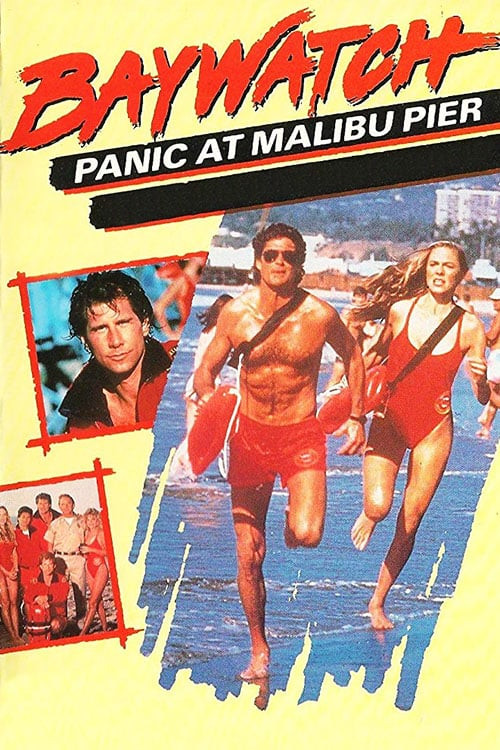
Retro Television Review: Baywatch: Panic At Malibu Pier


Welcome to Retro Television Reviews, a feature where we review some of our favorite and least favorite shows of the past!  On Saturdays, I will be reviewing Baywatch, which ran on NBC and then in syndication from 1989 to 2001.  The entire show can be purchased on Tubi.

Today, I start a new series of reviews.  Since I already did Baywatch Nights, it just made sense to go ahead and do Baywatch.  All together, this show ran for 11 and a movie so it should only take 241 weeks to finish up the series….

“Baywatch: Panic At Malibu Pier”

(Dir by Richard Compton, originally aired on April 29th, 1989)

It’s not easy being a lifeguard.

That would seem to be the main theme running through Panic at Malibu Pier, the two-hour movie that also served as a pilot for Baywatch.  Consider the drama:

Mitch Buchanan (David Hasselhoff) loves the beach and he loves getting in the water but it’s cost him his marriage and now, his ex-wife (Wendie Malick) is suing for sole custody of their young son, Hobie (Brandon Call).  Hobie doesn’t like going to school.  He doesn’t understand why he can’t just spend all day on the beach like his father.  Mitch, meanwhile, has been promoted to lieutenant of Baywatch and he’s now no longer supposed to do rescues.  He’s just supposed to supervise the other lifeguard.  His boss, Captain Thorpe (Monte Markham), is very insistent on that.  Mitch explains that he doesn’t even like wearing socks.  Ewwww.  You have to wear socks, Mitch!

Eddie Kramer (Billy Warlock) is a rookie lifeguard.  He finished at the top of his class but he’s also a tough kid from Philadelphia who grew up in the foster system.  Shauni (Erika Eleniak) is another rookie lifeguard who freezes up when she has to provide CPR to a drowned girl.  Her mentor, Jill (Shawn Weatherly), tells Shauni that it happens to every lifeguard.  I bet it’s never happened to Mitch.  Shauni seems to have a crush on Eddie and Eddie seems to be driven to prove himself.  Eddie has guts because he wears a Philadelphia t-shirt in California.

Al Gibson (Richard Jaeckel) is the veteran lifeguard who is reaching retirement age and who dies at the end of the episode and gets a big lifeguard funeral on the beach.

Trevor (Peter Phelps) is the Australian lifeguard who calls everyone “mate.”

Finally, Craig Pomeroy (Parker Stevenson) is the attorney who prefers to spend his time in his lifeguard tower.  Even when he should be at the office and working for his clients, Craig just hangs out at his tower.  He saves the life of a disturbed teenager named Laurie (Madchen Amick).  Laurie subsequently becomes obsessed with him.  When the married Craig tells her to stay out of his lifeguard tower and stop taking off all of her clothes, she accuses Craig of assaulting her.  Later, she tries to murder Craig’s wife (Gina Hecht).  This all could have been avoided if Craig had just gone to his office like he was supposed to.

This pilot film for Baywatch has everything that the show would make famous — stiff line deliveries from the supporting cast, red swimsuits, David Hasselhoff’s earnestly goofy sincerity, slow motion, and plenty of musical montages.  Amongst the guest cast, Madchen Amick stands out at the obsessive Laurie, showing an ability for handling melodrama that would be put to good use on Twin Peaks.  Take a drink every time Mitch says, “Rescue can,” and see how long you can go before passing out.  Unlike a lot of pilots that don’t really resemble the eventual show, Panic at Malibu Pier is unmistakably Baywatch.

And, watching it, you can see why the show eventually became a success.  The beach scenery is nice.  The men are athletic, the women are pretty, and the slow motion is cool the first time you see it.  Of course, the most important thing about the pilot — and the show itself — is that it doesn’t require a good deal of attention.  It’s one of those things where you can step away from the screen for a few minutes and then come back without having worry about having missed anything important.

Panic at Malibu Pier was a ratings hit.  Baywatch followed.  We’ll get into that next week.

Forever Knight – S1:E1 – “Dark Knight, Part I”


“He was brought across in 1228. Prayed on humans for their blood. 
Now, he wants to be mortal again. To repay society for his sins. 
To emerge from his World of Darkness. From his endless Forever Night.”

I stumbled onto Forever Knight late one early pre-dawn Sunday Morning, which would show up on a special “Crimetime After Primetime”. Although the cast was different (save for John Kapelos, still playing Don Schanke), it still had the flavor of the 1989 TV Film. It also ended up trading the streets of Los Angeles for Toronto, Canada, which meant that the production also had to include Canadian talent. The two part pilot, which aired in May of 1992, was just a beat for beat revamp of the TV film’s story. I’ll try to find a way to not make these so long as this progresses. 

In the prologue, we open in Paris in the year 1288. A young woman welcomes a man to the rest of his unlife, letting him know that while he’s now as eternal as the city, he must kill. This trio of vampires are our hero, Nicholas (Geraint Wyn Davies, Airwolf), his maker LaCroix (Nigel Bennett, HBO’s Gotti), and Janette (Deborah Duchene, TV’s Street Legal). Moving to the present day, the night watchman of a museum is murdered, and a jade cup stolen. 

At the crime scene, Schanke is still going wild with the camera, assisting the forensic crew. He and Nick have a few words before Nick interviews the assistant curator, Dr. Alyce Hunter (Christine Reeves) about the missing cup. Alyce seems somewhat fascinated about Knight’s knowledge of the history and the use of the jade cup in blood drinking rituals. There’s a moment of quiet between them as they consider what that could mean. 

Heading over to the morgue, we’re introduced to Natalie (Catherine Disher, who voiced Jean Grey in Fox’s X-Men and Val Cooper in Disney Plus’ X-Men ’97). She offers Nick some tea that he can’t quite stomach, but he’s making some progress in staying away from blood. The victim from the museum is one of three, all with large blood loss and some tell-tale puncture marks on their necks. “Nick, Is this something I should worry about?” she asks. Nick doesn’t have an answer. Back at the Precinct, the Captain (Gary Farmer, Tales From the Crypt: Demon Knight) is nervous about these murders and wants some results. A food order comes in, giving Nick three hamburgers that the Captain snarks over. “Skinny guy. Eats like a pig.” The Captain pairs Knight with Schanke, to Don’s delight and Nick’s aggravation. 

The 2 elderly hobos from the film are now 3 people. Dr. Dave (George Buza, the voice of Beast in both Fox’s X-Men and in X-Men ’97), Topper (Zack Ward, Transformers) and Jeannie (Deep Space Nine’s Nicole De Boer). Nick warns the three to spend their nights inside with the murders going around. Jeannie lets Nick know they’ll be careful. 

Nick heads home for the day, turning on the window shutters for the coming dawn. His fridge is stocked with bottles of the good stuff. He pours himself two glasses full of blood and drinks heartily. It’s been a long night, indeed. 

Knight regroups with Schanke the following night. Schanke asks about Nick’s Cadillac and Nick explains that it has some incredible trunk space (for daytime sleeping, though he doesn’t share that tidbit). While on patrol, Nick hears some commotion in a building and detours the car. When they arrive at a nearby building, a woman informs Nick in Mandarin that her daughter’s inside and someone has an Uzi. Running inside, Nick and Schanke stack up on the door to the perp’s room, kicking the door open. The response is a blaze of gunfire. Thankfully, Knight’s vision clearly picks up the enemy with the hostage and has Schanke hold in place while he heads around to the back. Nick floats up to the window and pulls the gunman through it, quickly dispatching him outside of Schanke’s view. 

Relaxing in a dark alley, Topper and Jeannie are arguing over what to do for the evening. Topper suggests that they could go to Nick’s Garage, where it’s much warmer, but Jeannie won’t want to have to owe him anything. Dr. Dave is no where to be found, but someone approaches the pair from the dark, attacking Topper causing Jeannie to scream. 

Nick takes flight, paying Alyce a late night visit. Just before he shows up, however, Alyce finds a picture of Nick in an old book on archeology. Unlike the film, this doesn’t bring any kind of questioning or curiosity about why he was in the picture. What we do get is a nice flirtatious moment between Nick and Alyce. She loves the dark, and he’s all about the dark. Nick gets a little too close with a kiss, nearly losing control of himself. He pulls away and leaves Alyce be, just in time for a guard to show up. The romance will have to wait for another night. At the same time, Schanke debriefs the Captain, relaying that the captured perp claimed a vampire attacked him. The Captain relays a legend about how burning scorpions attaches other ones from miles around, which spooks Schanke. The Captain reminds him it’s just a legend, like vampires, and he should focus on the real world. 

With Nick failing to check in the following morning, Natalie borrows his Caddy from the precinct and visits him at home. She finds him in a blood drunken self pitying stupor. With no fear of who or what she is, she lays into him for falling off the wagon. “You don’t want help, hey, I’m a dot on the horizon.”, she says. Their argument is interrupted by Alyce’s voice message, asking Nick to “talk about last night.” Nat, a little shaken by this, inquires what happened. Nick confesses that he kissed Alyce and then nearly killed her. Nat softens and asks him about the other vampires. Nick shares that the jade cup is part of a pair that could possibly cure vampirism. LaCroix has been keeping Nick away from both cup to ensure he stays immortal. Could he be the source of the current killings? 

The next day, Topper’s body is discovered in a barrel. According to Nat, he was hit by a blunt object and then had the neck incision done. Nick becomes livid that he lost Topper on his watch and that Jeannie is missing, though we get a major clue in that there was a blood mobile that recently visited the area. Nick snaps at Schanke and pays a visit to Jeanette to find LaCroix. She’s adjusted to modern times pretty well, owning her own vampire nightclub. They share a quick discussion in French, with Jeanette informing Nick that LaCroix is indeed very much around and is keeping his eyes on him. As he leaves the nightclub and drives away, we find Alyce trailing behind him. 

We end the episode with Nick turning on the car radio, hearing the voice of the Nightcrawler (LaCroix) who laments being in town and not having heard from his friend. The music station is still Metal, and yet the show still decides to play something different, this time a violin. “I am waiting.” LaCroix says to the microphone. 

Late Night Retro Television Review: Freddy’s Nightmares 1.11 “Do Dreams Bleed?”


Welcome to Late Night Retro Television Reviews, a feature where we review some of our favorite and least favorite shows of the past! On Fridays, I will be reviewing Freddy’s Nightmares, a horror anthology show which ran in syndication from 1988 to 1990. The entire series can be found on Plex!

This week, there’s a new threat in town!

Episode 1.11 “Do Dreams Bleed?”

(Dir by Dwight H. Little, originally aired on January 8th, 1989)

There’s a new serial killer in Springwood!

We don’t really learn much about the Chopper, other than he attacks people with an axe.  When the episode begins, high school football star John Warring (Damon Martin) is dealing with dual trauma of having not only found the Chopper’s latest victim but also being the number one suspect.  His grades start to slip.  (As was so often the case on this show, his parents are conveniently out-of-town.)  He fears that he’s going to lose his girlfriend, Roni (Sarah Buxton).  Not even John’s coach, Coach Gacey (Jeff McCarthy), is much help.  That’s probably because Coach Gacey actually is the Chopper, not that anyone figures that out.  Driven mad by his dreams, John finds himself being taken away to an asylum.

(Really?  Coach Gacey?  He should have been the number one suspect based on his name alone.)

The second half of the episode follows Ronni as she now starts to have nightmares.  She wants to believe that John is innocent but her dreams indicate that she has her doubts.  Eventually, John escapes from prison and is able to save Ronni from Coach Gacey.  However, when the police arrive, they just assume that Coach Gacey was trying to save Ronni and that John is the Chopper.  Ronni is so shaken by the entire experience that she no longer knows what’s true and what’s not.

Wow, that’s dark!

This was actually a pretty good episode.  For once the two stories had coherent plots, with Ronni’s story logically building off of John’s.  The dream sequences were effectively creepy, director Dwight Little kept the action moving at a good pace, and even the dark ending felt earned as opposed to forced on the narrative.  I would have liked to have heard Freddy’s thoughts on Springwood having a new serial killer (instead, during the host segments, Freddy just did his usual bad jokes) but otherwise, this was a surprisingly good episode.

Horror On TV: Hammer House Of Horror Episode #2: The Thirteenth Reunion (dir by Peter Sasdy)


In this episode of Hammer House of Horror, Julia Foster plays a tabloid reporter who is assigned to investigate an unconventional weight loss program.  Foster discovers that weight loss is actually the last thing that the clinic is concerned with.  This is an enjoyable macabre episode, one the features a particularly nasty twist.

The Thirteenth Reunion originally aired in the UK on September 20th, 1980.