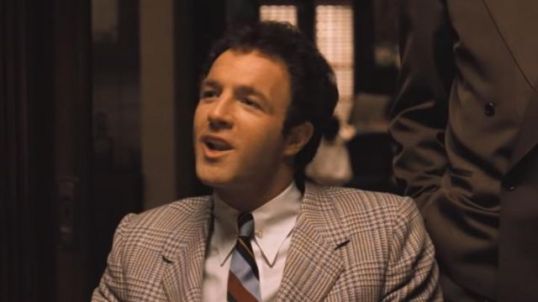
Scenes I Love: James Caan in The Godfather


James Caan has passed away, at the age of 82.  There are a lot of great James Caan performances to choose from and to highlight.  For me, though, he’ll always be Sonny Corleone, the temperamental son of the Don who remains oddly likable, even as he cheats on his wife and threatens to kill every other gangster in New York.  Sonny is a force of chaos, which ultimately leads to his untimely death.  But, at the same time, it also makes him someone who you definitely fighting for you instead of against you.

The scene below is mostly cited for Al Pacino’s quiet intensity as he reveals that he’s truly become a member of the family.  While Pacino’s great, Caan’s reaction is just as important.

In the scene below, Sonny discovers that Carol has been beating up Connie so Sonny beats up Carlo.  Carlo really deserved it.  Now this scene is often cited for featuring one shot where it’s clear that Caan didn’t actually hit Gianni Russo.  That’s fair.  But still, Caan actually did make contact enough times that Russo ended up with a broken rib.  Look past that one shot and you’ll see that, in this scene, Caan clearly shows why Sonny was such a feared figure.  Even more importantly, this scene shows how important his family was to Sonny.  Who doesn’t want someone who would beat someone up for them?

And finally, in this scene, Sonny tells off the FBI.  How can’t you love that?  Apparently, the smashing of the camera was something that Caan improvised on the spot.

That said, there was a lot more to Caan’s career than just The Godfather.  Watch all of his films.  He was one of the greats and perhaps the only celebrity who was actually worth following on twitter. RIP.

Scenes That I Love: Bo Hopkins and Richard Dreyfuss Flip A Cop Car in American Graffiti


I just read that the veteran actor Bo Hopkins has passed away at the age of 84.  The last movie of note that I saw Hopkins in was Hillbilly Elegy, where he had a small role as Glenn Close’s husband.  However, if you’re a fan of older films, you will probably recognize Bo Hopkins, even if you don’t know the name.  He was a handsome but weathered actor with a Texas accent and a reckless attitude.  He was a doomed member of a gang of old west bank robbers in The Wild Bunch.  In Midnight Express, he played a mysterious government agent who turned out to be not as benevolent as he originally seemed.

And, in the 1973 classic American Graffiti, he played the leader of the Pharaohs, the local gang of small town James Dean wannabes.  Even though Hopkins didn’t get a lot of screentime in American Graffiti, he definitely made an impression as the intimidating but ultimately friendly aspiring delinquent.  In the scene below, he and Richard Dreyfuss flip a cop car.

RIP, Bo Hopkins.

Ray Liotta, R.I.P.


I was stunned to just hear that Ray Liotta, that massively underrated actor who appeared in some truly great films and who always brought a dangerous but intriguing intensity to every role, died today.  He was 67 years old.

I’m going to share two scenes in honor of Ray, I’m sure that others will have more to say.  The first scene is from a favorite of Arleigh’s, Field of Dreams.  Ray doesn’t say much as Shoeless Joe Jackson but he’s already got that trademark intensity.  The second is the final scene from Goodfellas, which features Ray Liotta’s best work of the entire film.  The small moment when he briefly acknowledges the camera while getting his newspaper is brilliant.

RIP, Ray Liotta.

Great Moments In Television History #14: The Birth of Dr. Johnny Fever


Today’s great moment comes from the pilot episode of WKRP In Cincinnati.  This first aired on September 18th, 1978 and Johnny Carvaello allowing the spirit of rock and roll to turn him into Dr. Johnny Fever would forever be one of the show’s most famous moments.
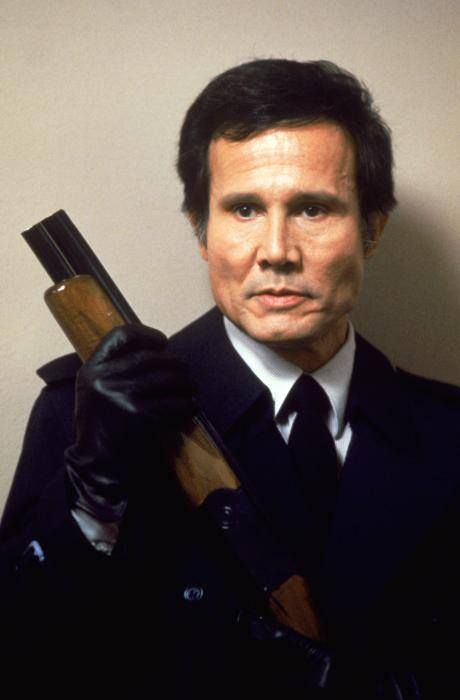
Rest in Peace, Howard Hesseman.

Previous Great Moments In Television History:

  1. Planet of the Apes The TV Series
  2. Lonely Water
  3. Ghostwatch Traumatizes The UK
  4. Frasier Meets The Candidate
  5. The Autons Terrify The UK
  6. Freedom’s Last Stand
  7. Bing Crosby and David Bowie Share A Duet
  8. Apaches Traumatizes the UK
  9. Doctor Who Begins Its 100th Serial
  10. First Night 2013 With Jamie Kennedy
  11. Elvis Sings With Sinatra
  12. NBC Airs Their First Football Game
  13. The A-Team Premieres

4 Shots From 4 Films: In Memory of Peter Bogdanovich


4 Or More Shots From 4 Or More Films is just what it says it is, 4 shots from 4 of our favorite films. As opposed to the reviews and recaps that we usually post, 4 Shots From 4 Films lets the visuals do the talking!

I just read that director Peter Bogdonavich passed away earlier today.  He was 82 years old.

Bogdanovich’s directorial career serves as both an inspiration and a cautionary tale.  He achieved the dream of many a film journalist by making the jump from writing about films to actually making them.  He went from interviewing Orson Welles to being declared the next Orson Welles.  His first film, Targets, allowed him to give Boris Karloff one final, great role.  His second film, The Last Picture Show, was nominated for Best Picture.  With his next film, Paper Moon, he directed Tatum O’Neal to an Oscar.  At a time when the so-called “movie brats” were rejecting the old ways of making films, Bogdonavich paid homage to the classic films of the past.  At his height, he made films that were both entertaining and, if you got all the references, educational.

Unfortunately, Bogdanovich’s later films were not as successful with critics or audiences.  Bogdanovich himself would later say that he underestimated just how much some of his former colleagues resented both his early success and his very public relationship with actress Cybil Shepherd.  In short, the critics were waiting for him to slip up and they attacked films like Daisy Miller and At Long Last Love like sharks in a feeding frenzy.  By the end of the 70s, he often found himself struggling to raise the money to make the movies that he wanted to make.  So determined was he to see that his film They All Laughed was released that he distributed it himself, at great financial cost.

Regardless of his later career struggles, Bogdanovich remained a tireless advocate for watching and appreciating the films that were produced during the the Golden Age of Hollywood and he was a regular fixture on TCM, where he would discuss the films of Welles, John Ford, John Huston, Howard Hawks, and others.  He oversaw the release of Orson Welles’s long-delayed The Other Side of the Wind, a film in which he co-starred with John Huston.  Along with directing, Bogdanovich was a reliable character actor and those who don’t know him as a director might know him as Dr. Melfi’s therapist on The Sopranos.

Finally, a lot of the Bogdanovich films that were initially dismissed have subsequently been positively reappraised.  Bogdanovich was correct when he said that many of his later films were unfairly criticized or dismissed.  If nothing else, Bogdanovich’s love of the movies came through in everything that he did.  He will be missed for film historians everywhere.

Here are….

4 Shots From 4 Peter Bogdanovich Films

Targets (1968, dir by Peter Bogdanovich, DP: Laszlo Kovacs)

The Last Picture Show (1971, dir by Peter Bogdanovich, DP: Bruce Surtees)

Paper Moon (1973, dir by Peter Bogdanovich, DP: Laszlo Kovacs)

The Thing Called Love (1993, dir by Peter Bogdanovich, DP: Peter James)

Norm MacDonald, R.I.P.


I’m still in shock about the news that Norm MacDonald died today, at the age of 61. He died of cancer, which he had been battling for nine years.

Norm MacDonald was the funniest man alive, though he often didn’t seem to get the appreciation that he truly deserved. There are so many comedians who claim not to care what people think about them and their jokes but, when it came to Norm, it was no act. He would joke about anything and anyone, delivering his punchlines with deadpan but savage nonchalance.

Like a lot of people, I first knew Norm MacDonald as the anchorman of SNL‘s Weekend Update. He was the last great Weekend Update anchor, which unfortunately led to him losing his job when NBC president Don Ohlmeyer took offense to his frequent jokes about OJ Simpson.

Personally, I liked Norm MacDonald’s takes on the movies:

After he was fired from Weekend Update, Norm MacDonald appeared on David Letterman’s show and said that he had been told that he would still be allowed to be a performer on Saturday Night Live and that he would still be doing celebrity impersonations but “I suck at that.” However, anyone who ever saw Norm MacDonald plays Burt Reynolds knows that MacDonald was being too modest.

After Saturday Night Live, Norm MacDonald continued to be a popular and beloved talk show guest. His appearances on Conan O’Brien were legendary.

My personal favorite Norm MacDonald talk show appearance was when he showed up on The Larry Sanders Show, along with special guest Henry Winkler. Though everyone on the show was concerned about a missing Hank Kingsely sex tape, Norm kept the audience laughing.

Norm MacDonald, Rest in Peace.

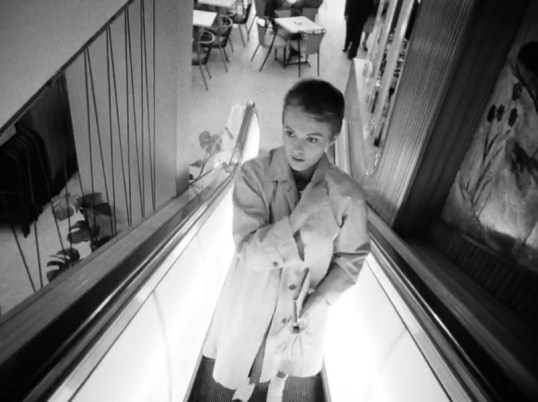
Scenes That I Love: The Ending of Breathless (R.I.P., Jean-Paul Belmondo)


I was saddened to learn of the death of French actor Jean-Paul Belmondo earlier today.  He was 88 years old and still an international icon of movie star charisma at the time of his death.

Belmondo spent the majority of his career in France, where he was one of the early faces of the New Wave and also a prominent action star, famed for doing his own very dangerous stunts.  In America, he was best-known for his starring turn in Jean-Luc Godard’s Breathless.  In Breathless, Belmondo was the perfect existential outlaw, living life day-by-day and obviously doomed but still so incredibly magnetic and stylish.

In tribute to Belmondo, here is a scene that I love, the final moments of Breathless.

Charlie Watts, R.I.P.


Charlie Watts, the drummer of the Rolling Stones, died today at the age of 80. He passed away peacefully in London, surrounded by his family.

This one is hitting me hard. Charlie Watts was one of my drumming heroes. He was also the underrated glue that held the Stones together, the steadying influence that controlled the chaos that Mick Jagger and Keith Richards released on stage. He was a key member of the band but, because he was so self-effacing, he was often underrated. In many ways, he was the perfect drummer. While the lead singer and the lead guitarist prowled the front of the stage, Watts stayed in the background and produced the beat that propelled the Stones’s best songs.

Not only was Charlie Watts one of the best drummer, he was also perhaps the best dressed drummer to ever grace the stage. By most accounts, Charlie Watts a gentlemen, through and through, one who stayed loyal to his wife despite the temptations of the road and who often viewed touring as member of the world’s most dangerous band with a bemused wit. Reportedly, he was the only member of the band to openly cry when they first learned that co-founder Brian Jones had drowned. In the documentary Gimme Shelter, while Mick Jagger remains detached while watching the Hell’s Angels kill Meredith Hunter while the Stones perform at the Altamont Free Concert, Watts is clearly upset by the violence unfolding on the monitors before him.

Charlie Watts, R.I.P. You shall be missed.

Sonny Chiba, R.I.P.


The news today is tragic.  COVID has claimed the life of Sonny Chiba.  Chiba was 82 years old.

Born Sadaho Maeda, he first entered films when he won a talent search that was sponsored by Toei Studios.  The CEO of Toei renamed him Shinichi Chiba.  He started his career largely appearing in crime dramas, playing police and gangsters.  He found international stardom when he started to play roles that took advantage of his mastery of the martial arts, which eventually led to him playing the lead role in 1974’s The Street Fighter.  With the success of that film, he also received a new name when the film’s U.S. distributor, New Line Cinema, advertised the film as starring “Sonny” Chiba.  At the time, The Street Fighter was notorious for being the first film to receive an X-rating due to violence.  Perhaps the MPAA was scandalized by the scene in which audiences were literally shown an x-ray of Chiba smashing open a man’s skull.

A good deal of Sonny Chiba’s appeal came from the fact that he actually was a skilled martial artist.  He wasn’t faking it through camera trickery or fancy editing.  His film fight were exciting because it was obvious that Chiba could do the same things in real life that he was doing in the movies.  He was also a good actor, one who had an imposing screen presence and who was legitimately menacing when he scowled at an opponent.  Before his death, Bruce Lee hoped to make a movie with Sonny Chiba and George Lazenby.  Unfortunately, the day that Chiba arrived in Hong Kong to discuss the film was the same day that Lee died.

Quentin Tarantino was a fan, casting Sonny Chiba in the Kill Bill films.  He was also beloved by the stoners who named a strain of potent cannabis after him.  In Japan, Chiba was a tireless advocate for raising the level of martial arts techniques used in film and television.  He worked up steadily from 1961 onward and he still has one more posthumous film, Bond of Justice: Kizu, set to be released at some point in the future.  He held black belts in 6 different martials arts: Kyokushin, Ninjutsu, Gojo-ryu, Shorinji Kempo, Judo, and Kendo.

Sonny Chiba, R.I.P.