4 Shots From 4 Films: Special Robert Clouse Edition


4 Shots From 4 Films is just what it says it is, 4 shots from 4 of our favorite films. As opposed to the reviews and recaps that we usually post, 4 Shots From 4 Films lets the visuals do the talking!

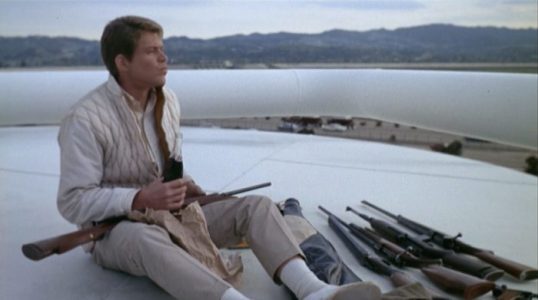
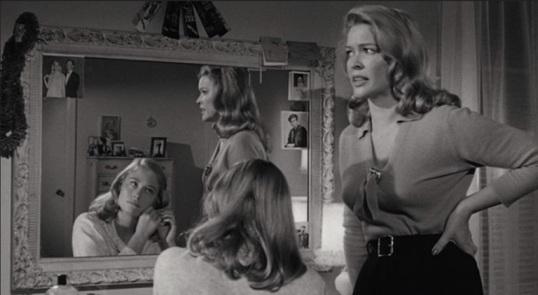
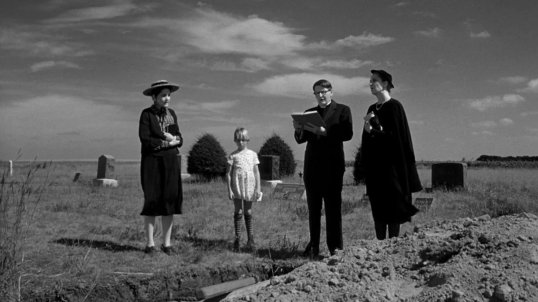
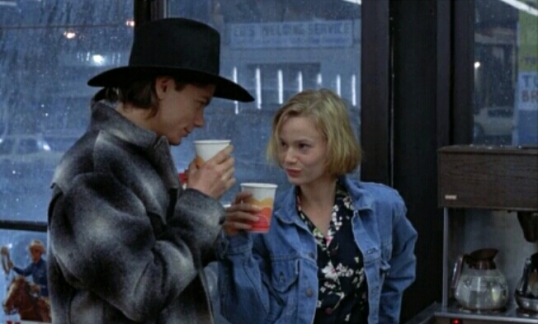
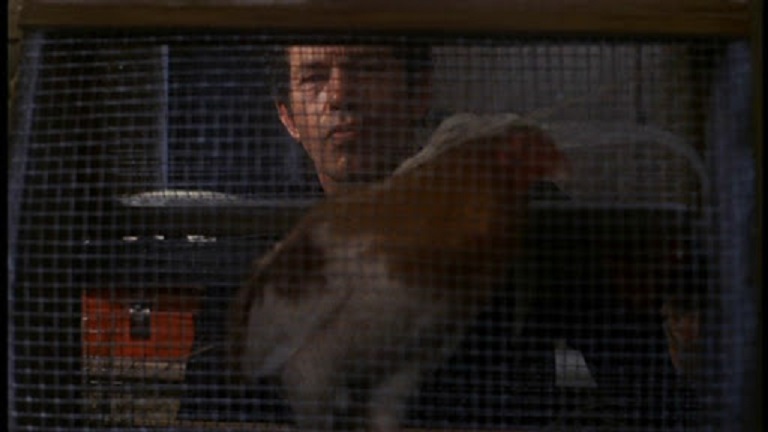
Today, we pay tribute to director Robert Clouse, who was born 92 years ago today.  Best-known for directing Bruce Lee’s biggest hit, Enter The Dragon, Clouse was responsible for some of the most memorable action films of the 70s and the 80s.  He was an action auteur who never got the respect that he deserved but we can pay tribute to him today.

4 Shots From 4 Films

Enter The Dragon (1973, directed by Robert Clouse)

Black Belt Jones (1974, directed by Robert Clouse)

The Ultimate Warrior (1975, directed by Robert Clouse)

Gymkata (1985, directed by Robert Clouse)

4 Shots From 4 Films: Executive Produced by George Harrison


4 Shots From 4 Films is just what it says it is, 4 shots from 4 of our favorite films. As opposed to the reviews and recaps that we usually post, 4 Shots From 4 Films lets the visuals do the talking!

Today would have been the 77th birthday of my favorite members of the Beatles (not to mention The Traveling Wilburys), George Harrison.  Harrison died far too young but he left behind a legacy of music that is celebrated to this day and will still be celebrated long after the rest of us have moved on.

While everyone knows George from his music, what is often forgotten is that Harrison is also often credited with helping to revive the British film industry.  After the break-up of the Beatles, Harrison partnered with Denis O’Brien and formed HandMade Films.  At a time when British cinema was struggling both financially and artistically, Harrison served as executive producer for some of the best films to come out of the British film industry.  Harrison championed many talented British directors and he used his clout to get many otherwise difficult project produced.  It’s fair to say that, if not for his support, the members of Monty Python would never have been able to make the then-controversial Life of Brian, which is now widely regarded as one of the best British comedies ever made.

Today, on his birthday, here are four shots of four films executive produced by George Harrison.

4 Shots From 4 Films

Monty Python’s Life of Brian (1979, directed by Terry Jones)

The Missionary (1982, directed by Richard Loncraine)

A Private Function (1984, directed by Malcolm Mowbray)

Withnail and I (1987, directed by Bruce Robinson)


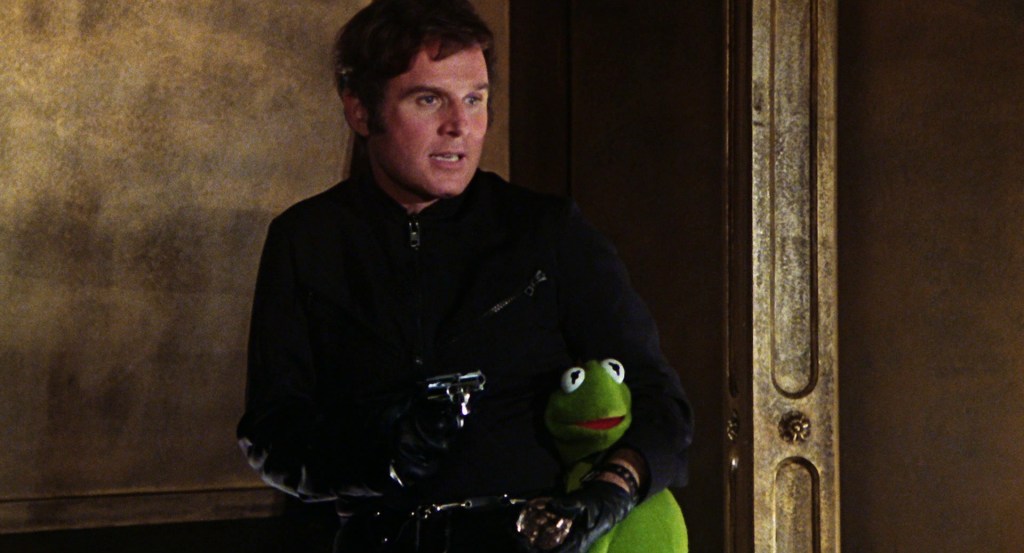
4 Shots From 4 Films: Special Sam Peckinpah Edition


4 Shots From 4 Films is just what it says it is, 4 shots from 4 of our favorite films. As opposed to the reviews and recaps that we usually post, 4 Shots From 4 Films lets the visuals do the talking!

95 years ago today, Sam Peckinpah was born in Fresno, California.  He went on to become one of the most influential and most self-destructive directors of all time.  Peckinpah was as legendary for his combative personality and his behind-the-scenes conflicts with the studios as he was for his talent.

Even after he revolutionized the western with The Wild Bunch, Peckinpah often struggled to get work and, when he died at the too young age of 59, it was after years of being neglected by the same industry that had once embraced him.  Fortunately, a new generation of filmmakers discovered and appreciated Peckinpah’s work and have kept Mad Sam’s legacy going today.  Directors like Quentin Tarantino and Robert Rodriguez owe a huge debt to him.  (Once Upon A Time In Hollywood particularly felt as if it was suffused with the spirit of Peckinpah.)  Whenever you see someone getting shot in slow motion or a group of old timers (whether they’re criminals or cowboys) getting ready to take a final stand, you’re seeing the influence of Sam Peckinpah.

In honor of Sam Peckinpah, here are:

4 Shots from 4 Films

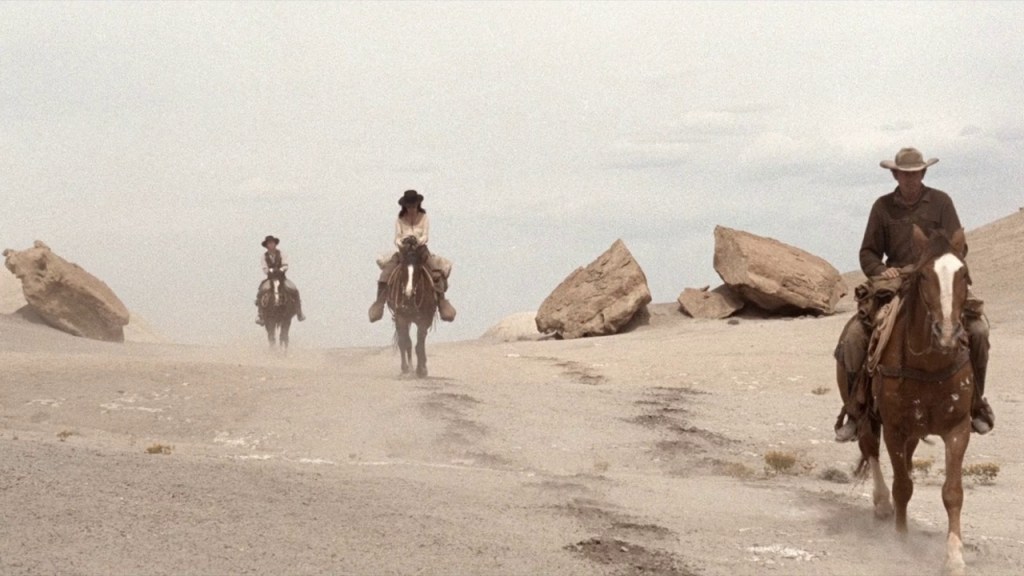
The Wild Bunch (1969, directed by Sam Peckinpah)

The Getaway (1972, directed by Sam Peckinpah)

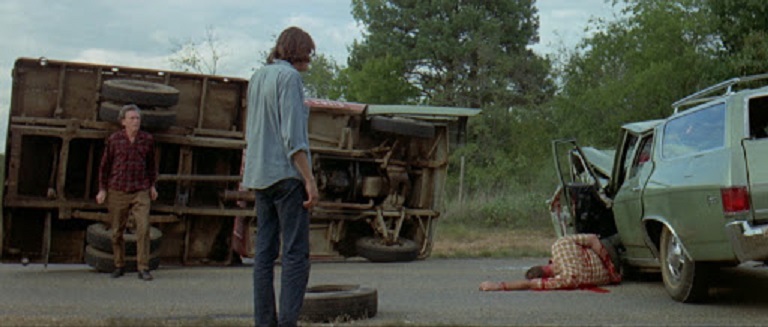
Cross of Iron (1977, directed by Sam Peckinpah)

The Osterman Weekend (1983, directed by Sam Peckinpah)

Kirk Douglas, R.I.P.


Kirk Douglas passed away today in Beverly Hills, California.  He was 103 years old.

Kirk Douglas was one of the last surviving stars of Hollywood’s Golden Age.  Douglas began his career in the 40s and he made his last film appearance in 2008.  Interestingly enough, that final appearance was in a film that was made for French television, called The Empire State Building Murders.  The film was meant to be a mockumentary and a tribute to old detective and crime films of the 40s.  It was full of archival footage of Douglas contemporaries like James Cagney, Edward G. Robinson, and Lauren Bacall.  Douglas played a character named Jim Kovalski.  As a result of a stroke that he suffered in 1996, Douglas did not speak in the film but his very presence was powerful just because he was Kirk Douglas and he was still with us.  Even though he was noticeably frail, Kirk Douglas remained an icon.

Indeed, if there was any Golden Age star that you would have expected to reach 100, it would have been Kirk Douglas.  Douglas played several different characters over the course of his career but almost all of them had one thing in common.  They were all tough.  On screen, Kirk Douglas always came across as someone who laughed at death.  One could imagine the Grim Reaper showing up at his front door and Douglas simply saying, “Get the Hell out of here.”  If anyone could bully Death into submission, it would have been Kirk Douglas.

Kirk Douglas was a survivor.  In several interviews, he described himself as being a “tough son of a bitch.”  Kirk Douglas was not the type to allow himself to be pushed around and the fact that he even had a career in Hollywood during the studio system is kind of amazing.  It wasn’t just that Douglas had a reputation for not suffering fools.  It’s also that Douglas was an actor who was willing to put his career on the line for what he believed in.  By not only hiring Dalton Trumbo to write the script for Spartacus but also giving him onscreen credit, Douglas has been credited with helping to bring the blacklist to an end.  At the height of his stardom, Douglas appeared in Stanley Kubrick’s antiwar film, Paths of Glory.  He stood up for the state of Israel and defended it against it’s most vehement critics, even rebuking his friend Jimmy Carter at one point.

What’s my favorite Kirk Douglas performance?  In Spartacus, Douglas made “I am Spartacus” a rallying cry for revolutionaries everywhere.  In Ace In the Hole, he was the perfect representation of an amoral journalist.  Playing a gangster, he was both charming and dangerous in the classic film noir, Out of the Past.  Lust for Life was an imperfect film but he gave a strong performance as Van Gogh.  Paths of Glory featured Douglas at his most compassionate and outraged.  Later in his career, he starred in the campy but entertaining Holocaust 2000.  That said, my favorite Kirk Douglas film remains The Bad and The Beautiful, which is one of the best films ever made about Hollywood.  Douglas played a real heel in The Bad and the Beautiful and, watching the film, you get the feeling he loved every minute of it.

Kirk Douglas’s death is not really a shock.  When he appeared at the Golden Globes in 2017, he was noticeably frail.  With his passing, though, we’ve lost a true icon of American cinema and one of the last living links to the Golden Age of Hollywood.

Kirk Douglas, R.I.P.

Terry Jones, RIP


I just heard the incredibly sad news that Terry Jones has died.  Jones, who was one of the founders of Monty Python and a respected medieval scholar, was 77 years old.  It was announced three years ago that Jones was suffering from a rare form of dementia so his death was not unexpected but it still hurts.

When I was a kid and I was watching Monty Python’s Flying Circus for the first time, I initially did not fully appreciated Terry Jones.  I liked him because I liked every member of Monty Python and every British comedy fan grows up wishing that they could have been a member of the group.  (My favorite was Eric Idle.)  But it was sometimes easy to overlook  Terry Jones’s performance on the show because his characters were rarely as flamboyant as some of the other ones.  He was never as grumpy as John Cleese nor was he as sarcastic as Eric Idle.  Michael Palin (who was Jones’s writing partner long before the two of them become members of Monty Python) cornered the market on both unctuous hosts and passive aggressive countermen.  Meanwhile, Graham Chapman played most of the upright authority figures and Terry Gilliam provided animation.  Terry Jones, meanwhile, often played screeching women and bobbies who said, “What’s all this then?”

It was only as I got older and I came to better appreciate the hard work that goes into being funny that I came to appreciate Terry Jones and his ability to always nail the perfect reaction to whatever lunacy was occurring around him.  It was also as I got older that I started to learn about the origins of Monty Python and what went on behind the scenes.  I learned that Terry Jones was a key player.  Along with writing some of Monty Python‘s most memorable material, he also directed or co-directed their films.  On the sets of Monty Python and the Holy Grail, Life of Brian, and The Meaning of Life, Jones provided the structure that kept those films from just devolving into a collection of skits.

Unlike the other members of Monty Python, Terry Jones never really went out of his way to establish an acting career outside of the group.  Instead, he wrote screenplays and serious books on both medieval history and Geoffrey Chaucer.  Appropriately, for a member of the troupe that changed the face of comedy, Jones often challenged the conventional views of history.  Terry Jones was the only man in Britain brave enough to defend the Barbarians.

On the last day of the ninth grade, my English teacher, Mr. Davis, rewarded us for our hard work by showing us what he said was the funniest scene in film history.  The scene that he showed us came from the Terry Jones-directed Monty Python’s The Meaning of Life and it featured Jones giving a literally explosive performance as Mr. Creosote.

With thanks to both Mr. Davis and Terry Jones:

Terry Jones, Rest in Peace.

4 Shots From 4 Films: Happy Birthday, Donald Cammell!


4 Shots From 4 Films is just what it says it is, 4 shots from 4 of our favorite films. As opposed to the reviews and recaps that we usually post, 4 Shots From 4 Films lets the visuals do the talking!

86 years ago, Donald Cammell was born in Edinburgh, Scotland.  The son of a friend and biographer of the infamous Aleister Crowley, Cammell grew up surrounded by bohemians, artists, and magicians.  After getting his start as a painter and establishing himself as a mainstay of “swinging London,” Cammell pursued a career as a screenwriter and director.

Cammell only completed a total of four films, all of which walked the very thin line between brilliance and pretension.  All four of them have since developed strong cult following but were considered to be financial and critical disappointments when first released.  As a result, Cammell had a difficult time getting anyone to back the majority of his projects.  Cammell also had the misfortune to get involved with Marlon Brando during the latter’s mercurial period.  Brando commissioned Cammell to write and direct at least two films for him before losing interest just before shooting was set to begin.  Frustrated with both his life and his career, Cammell shot himself in 1996.  He reportedly survived for 45-minutes after shooting himself and he spent that time recording his thoughts on life and dying.  Though Cammell died in relative obscurity, his films have since been rediscovered and reevaluated.  His legacy lives on.

4 Shots From 4 Films

Performance (1970, directed by Donald Cammell and Nicolas Roeg)

Demon Seed (1977, directed by Donald Cammell)

White of the Eye (1987, directed by Donald Cammell)

Wild Side (1995, directed by Donald Cammell)


4 Shots From 4 Films: Rest In Peace, Julie Strain


I just saw that it’s been announced that Julie Strain died yesterday.  She was only 57 years old but had been in poor health for a while.

Julie Strain was known as the Queen of the B-Movies and anyone who grew up watching late night Cinemax in the 90s knows that she deserved the title.  She was 6’1 and her natural athleticism made her a natural for playing strong women who knew how to throw a punch, swing a sword, or shoot a gun.  She always seemed to be having as much fun appearing in the movies as we were having watching them.  It was said that Ginger Rogers could do everything that Fred Astaire did while wearing heels.  Julie Strain could do everything Steven Seagal did while wearing a bikini and she could actually act as well!

Rest in peace, Julie Strain.  Thank you for being good even when the movies were sometimes bad.

4 Shots From 4 Films

Enemy Gold (1993, directed by Andy Sidaris)

The Unnamable II: The Statement of Randolph Carter (1993, directed by Jean-Paul Ouellette)

Bikini Hotel (1997, directed by Jeff Frey)

Guns of El Chupacabra (1997, directed by Donald G. Jackson)


Buck Henry, R.I.P.


I just heard that Buck Henry died tonight of a heart attack.  He was 89 years old.

It’s hard to know where to start with Buck Henry.  He did a little bit of everything.  He started out as a comedian in the 50s, appearing on talk shows and claiming to be G. Clifford Prout, the president of the Society for Indecency to Naked Animals (SINA).  SINA was an organization dedicated to clothing animals in order to prevent their “indecency.”  Buck Henry’s delivery was so deadpan that many people thought he actually was G. Clifford Prout and a some even tried to send him donations to help out his cause.  (The donations were always returned.)

Henry went on to work extensively in both television and film.  He wrote the script for The Graduate and played the helpful hotel clerk.  He co-created Get Smart with Mel Brooks.  With Warren Beatty, he co-directed Heaven Can Wait and received an Oscar nomination.  In Nicolas Roeg’s The Man Who Fell To Earth, he had a rare serious role as the gay patent lawyer who helps alien Thomas Jerome Newton set up his corporation and who ultimately gets tossed out of a window by government agents.

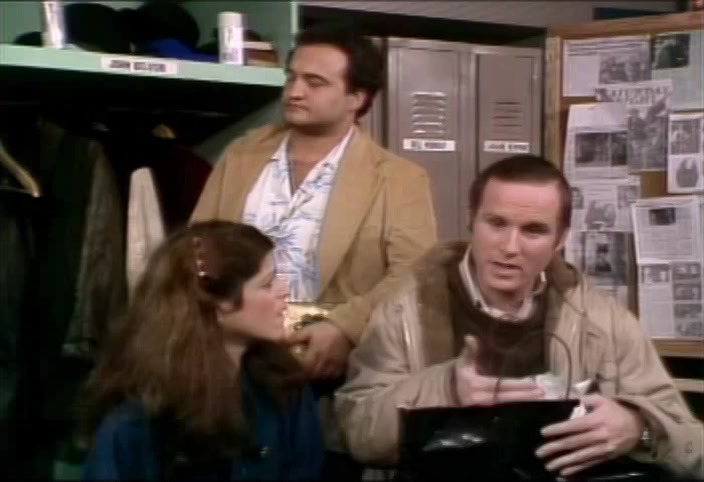
During the first few season of Saturday Night Live, Buck Henry hosted a total of ten times.  By many, he was considered to be an unofficial member of the cast.  He was a frequent foil to John Belushi’s samurai character.  Henry’s button-down persona provided the perfect contrast to Belushi’s frenetic performance.  During the October 30th, 1976 episode, Henry was accidentally struck by Belushi’s katana and he ended up with a deep cut on his forehead.  Henry not only continued the skit but he also hosted the rest of the show with a bandage on his forehead.  All of the other members of the cast put bandages on their foreheads as a show of solidarity.

Buck Henry kept working into the new century, appearing on shows like Will and Grace, The Daily Show, and 30 Rock.  He will be missed.

Buck Henry, R.I.P.


The Kid Stayed In The Picture: Robert Evans, R.I.P.


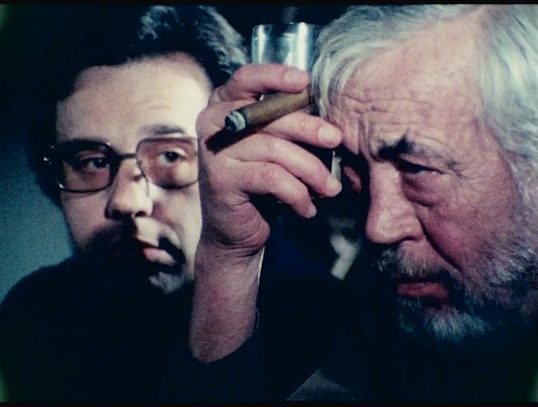
Robert Evans was a true Hollywood character and I think that, if he hadn’t existed, someone would have had to have created him.  He went from selling clothes to starring in B-movies to producing blockbusters.  He made and lost and remade a fortune while marrying one of the most beautiful women in the world, Ali MacGraw.  Among his friends were Jack Nicholson, Warren Beatty, Henry Kissinger, and Robert Towne.  Among his enemies was occasionally Francis Ford Coppola, who never would have directed The Godfather if not for Evans’s insistence that he be given the job.  Dustin Hoffman was nominated for an Oscar for playing Evans in Wag The Dog.  In Orson Welles’s The Other Side of the Wind, Geoffrey Land played “Max David,” a studio executive who was obviously meant to be Evans.

Bob Evans’s lows were almost as intense as his highs.  Forced out of his position at Paramount, Evans went independent and produced Chinatown.  Evans married Ali MacGraw, just to lose her to Steve McQueen.  He was arrested for cocaine possession and then went on to produce one of the great pop cultural moments of the 80s, the anti-drug tv special, Get High On Yourself.  He lost a fortune on The Cotton Club but made a comeback in the 90s.

In 1994, He also wrote on the greatest Hollywood memoirs of all time, The Kid Stays In The Picture.  Written in Evans’s trademark mix of cynicism and sentiment, The Kid Stays In The Picture tells a warts-and-all story of fast times and big talent in Hollywood.  With both the book and a subsequent documentary of the same name, Robert Evans let the world know who he was and that he wasn’t going to apologize for a damn thing.

Robert Evans died on Saturday, in Beverly Hills.  He was 89 years old and with his passing, an amazing story of Hollywood comes to a close.

Rest in Peace, Bob Evans.

Scenes I Love: Robert Forster in El Camino


Today, I’m taking a break from sharing horror movie scenes that I can pay tribute to the great actor, Robert Forster.

Forster passed away on Friday, shortly after his final film — El Camino — dropped on Netflix.  Forster had a small but pivotal role in the film, reprising the Breaking Bad character of Ed.  Ed may look like a vacuum cleaner repairman but he’s actually the guy you want to see if you need to start a new life far away from New Mexico.

Admittedly, Forster doesn’t say a lot in the scene below.  Aaron Paul’s the one who does most of the talking but then again, Forster wasn’t an actor who needed a lot of lines to make an impression.  Forster excelled at playing down-to-Earth men who may not have said much but who still meant every word that they said.  Forster does so much with just his eyes and his taciturn expression here.  And when he does speak, the lines are killer.

Obviously, this scene is going to count as a spoiler if you haven’t seen El Camino yet.

Robert Forster, R.I.P.  He was one of the greats.