On this Labor Day, our song of the day is dedicated to all of the independents out there. Convoy is usually described (somewhat dismissively) as being either a one-hit wonder or a novelty song but seriously, “We just ain’t gonna pay no toll,” is one of the greatest lyrics ever written and, in this post-COVID era, it’s a reminder that the human spirit was never meant to be regulated.
Someone tell the authoritarians. Someone warn the bureaucrats. Someone alert anyone who thinks they have the right to tell other people how to live their lives. We’ve got a mighty convoy and it’s a beautiful sight.
Ah, breaker one-nine, this here’s the Rubber Duck. You gotta copy on me, Pig Pen, c’mon? Ah, yeah, 10-4, Pig Pen, fer shure, fer shure. By golly, it’s clean clear to Flag Town, c’mon. Yeah, that’s a big 10-4 there, Pig Pen, yeah, we definitely got the front door, good buddy. Mercy sakes alive, looks like we got us a convoy…
Was the dark of the moon on the sixth of June In a Kenworth pullin’ logs Cab-over Pete with a reefer on And a Jimmy haulin’ hogs
We is headin’ for bear on I-10 ‘Bout a mile outta Shaky Town I says, “Pig Pen, this here’s the Rubber Duck” “And I’m about to put the hammer down”
‘Cause we got a little convoy Rockin’ through the night Yeah, we got a little convoy Ain’t she a beautiful sight?
Come on and join our convoy Ain’t nothin’ gonna get in our way We gonna roll this truckin’ convoy ‘Cross the USA, convoy
Ah, breaker, Pig Pen, this here’s the Duck. And, you wanna back off them hogs? Yeah, 10-4, ’bout five mile or so. Ten, roger. Them hogs is gettin’ in-tense up here
By the time we got into Tulsa Town We had eighty-five trucks in all But they’s a roadblock up on the cloverleaf And them bears was wall-to-wall
Yeah, them smokies is thick as bugs on a bumper They even had a bear in the air I says, “Callin’ all trucks, this here’s the Duck We about to go a-huntin’ bear”
‘Cause we got a great big convoy Rockin’ through the night Yeah, we got a great big convoy Ain’t she a beautiful sight?
Come on and join our convoy Ain’t nothin’ gonna get in our way We gonna roll this truckin’ convoy ‘Cross the USA, convoy
Ah, you wanna give me a 10-9 on that, Pig Pen? Negatory, Pig Pen; you’re still too close. Yeah, them hogs is startin’ to close up my sinuses. Mercy sakes, you better back off another ten
Well, we rolled up Interstate 44 Like a rocket sled on rails We tore up all of our swindle sheets And left ’em settin’ on the scales
By the time we hit that Chi-town Them bears was a-gettin’ smart They’d brought up some reinforcements From the Illinois National Guard
There’s armored cars and tanks and jeeps And rigs of ev’ry size Yeah, them chicken coops was full’a bears And choppers filled the skies
Well, we shot the line and we went for broke With a thousand screamin’ trucks An’ eleven long-haired Friends a’ Jesus In a chartreuse micra-bus
Ah, Rubber Duck to Sodbuster, come over. Yeah, 10-4, Sodbuster? Lissen, you wanna put that micra-bus right behind that suicide jockey? Yeah, he’s haulin’ dynamite, and he needs all the help he can get
Well, we laid a strip for the Jersey shore And prepared to cross the line I could see the bridge was lined with bears But I didn’t have a dog-goned dime
I says, “Pig Pen, this here’s the Rubber Duck We just ain’t a-gonna pay no toll” So we crashed the gate doing ninety-eight I says “Let them truckers roll, 10-4”
‘Cause we got a mighty convoy Rockin’ through the night Yeah, we got a mighty convoy Ain’t she a beautiful sight?
Come on and join our convoy Ain’t nothin’ gonna get in our way We gonna roll this truckin’ convoy ‘Cross the USA
Convoy! Ah, 10-4, Pig Pen, what’s your twenty? Convoy! Omaha? Well, they oughta know what to do with them hogs out there fer shure. Well, mercy Convoy! sakes, good buddy, we gonna back on outta here, so keep the bugs off your glass and the bears off your… Convoy! tail. We’ll catch you on the flip-flop. This here’s the Rubber Duck on the side Convoy! We gone. ‘Bye,’bye
Here’s a music video for anyone who is working hard on Labor Day.
In a 1984 interview, Dire Straits guitarist Mark Knopfler had this to say about the song that would not only become the band’s biggest hit but also one of the best known videos from the early years of MTV:
The lead character in “Money for Nothing” is a guy who works in the hardware department in a television/custom kitchen/refrigerator/microwave appliance store. He’s singing the song. I wrote the song when I was actually in the store. I borrowed a bit of paper and started to write the song down in the store. I wanted to use a lot of the language that the real guy actually used when I heard him, because it was more real….
According to Knopfler, he was in a New York appliance store when he heard a man who worked there complaining about all of the TVs in the shop being tuned to MTV. (Urban legend has it that the man was watching a Motley Crue video.) Knopfler wrote down the man’s exact words, which included the famous line about “money for nothing and chicks for free,” and later set them to music. (Knopfler also included the man’s controversial description of a rock star as being “that little faggot with the earring and the makeup.” In 2011, 26 years after the song’s initial release, that line would lead to the Canadian Broadcast Standards Council banning the song from being played on Canadian radio stations.) After hearing the band’s initial recording of the song, Sting suggested the “I want my MTV” line and was rewarded with a co-writer credit.
The ground-breaking music video was one of the first to feature computer animation. Under the direction of Steve Barron, Ian Pearson and Gavin Blair (who later founded Rainmaker Studios) created the animation using a Bosch FGS-4000 CGI system and a Quantel Paintbox system.
Money for Nothing spent 3 weeks as the number one single in the United States and the video was named Video of the Year at the 3rd Annual MTV Music Awards.
Eddie was born in Brooklyn. His father was a cop. His grandfather was a cop. His brother was a cop. It was expected that Eddie would become a cop too. Even while he was pursuing a career in music, Eddie joined the NYPD. However, while he was still in training, Eddie was told that he would not be allowed to wear his hair long if he was a member of the NYPD. That was the last straw for Eddie, who later said that he could not imagine spending the next 20 years of his life with short hair. He left the force and returned to music. Unfortunately, the band he was in suspected that he was an undercover narc and kicked him out. Meanwhile, his father tore down and destroyed every Jimi Hendrix poster that Eddie had hanging in his room. Perhaps realizing that New York was no longer going to be a friendly place to live, Eddie headed for California and the rest, as they say, is history.
In this video, though, Eddie is back in New York and working out the of the 18th precinct. While he investigates crimes on the streets, a runaway is sucked into a dangerous lifestyle. Eddie has longish hair in the video so he finally got to be a cop without having to cut his hair.
This video was directed by Martin Kahan, who also did videos for KISS, Scandal, Michael Bolton, and a lot of other people who probably would never have made it as a member of the NYPD.
Rob Halford has said that this song is about “freedom.” Once you are on the highway, you can go anywhere you want. With it being Labor Day weekend, a lot of people are going to be taking advantage of that freedom today.
This video was one of the man to be directed by Julien Temple. Temple will probably always be best known for his work with the Sex Pistols.
I used to think that this song was called Borderline. I thought the chorus was “Borderline! Love isn’t always unkind!” Of course, the song actually goes, “Hold the line! Love isn’t always on time!,” which makes more sense.
When this song was recorded, “Hold the line” meant to stay in place. In this case, the lyrics were directed at a girl who was waiting for the lead singer to commit. Back in the days of landline phones, it was also something that you said to someone before putting them on hold so you could take another call. This song became Toto’s first hits and remains one of the band’s signature songs. When guitarist Steve Lukather finally disbanded Toto in 2009, he said it was because he no longer felt that he could continue to sing Hold the Line with a straight face.
Even before MTV actually became a thing, Toto was doing music videos. Their video for Hold the Line is a simple performance piece. It may not have cost much money but it still helped to bring the song to an audience that might have otherwise missed it.
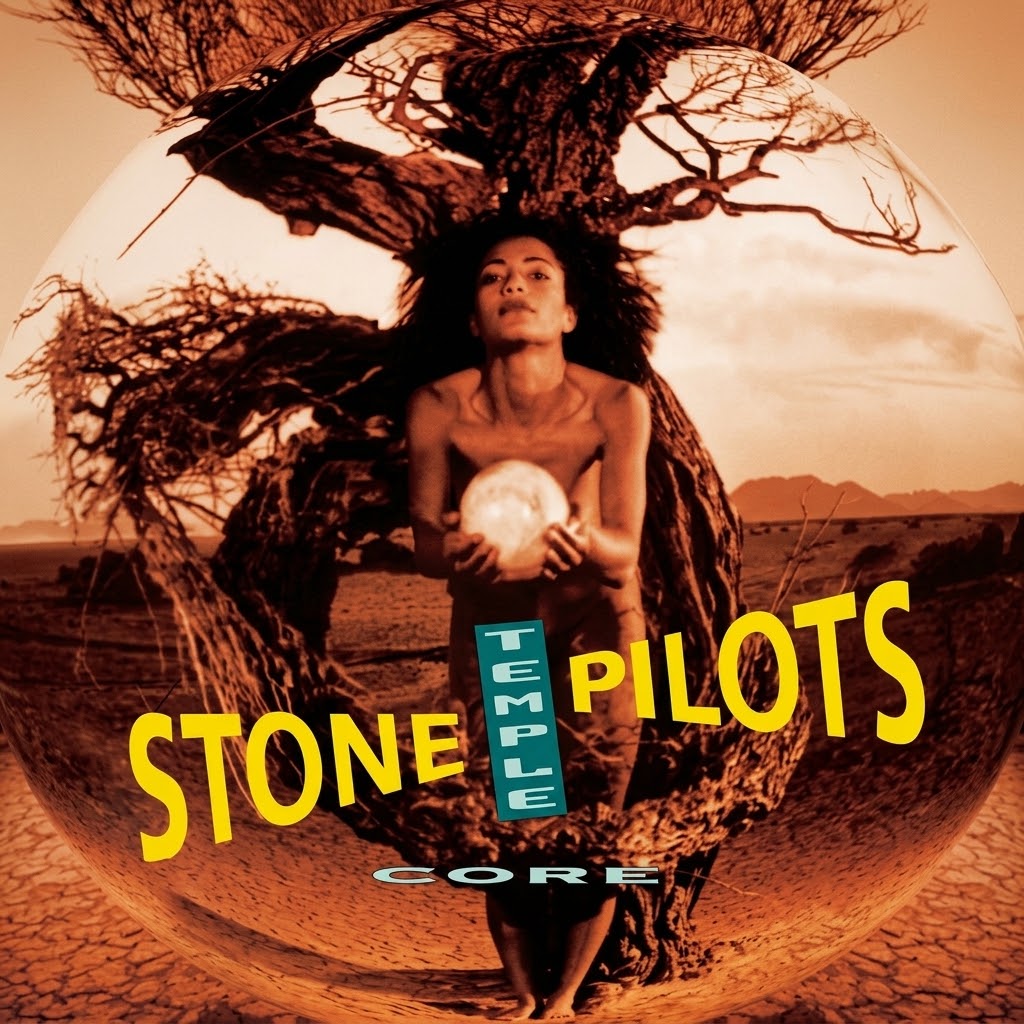
Core is one of those debut albums that has spent decades being celebrated, dismissed, rediscovered, and reassessed. Released in 1992, Stone Temple Pilots’ first full-length album arrived at the exact moment alternative rock stopped being a subcultural phenomenon and became the dominant sound on rock radio, MTV, and mainstream youth culture. Nirvana had already detonated the commercial landscape with Nevermind, while Soundgarden were about to reach even greater heights with Superunknown. Along with those records, Core became part of the broad grunge trifecta that dominated the airwaves in the early 1990s: Nirvana’s Nevermind, Soundgarden’s Superunknown, and Stone Temple Pilots’ Core. The comparison was never perfectly tidy—Stone Temple Pilots came from Southern California, not Seattle—but these albums were all central to the era’s hard-rock mainstream.
That success also made Stone Temple Pilots an easy target. A number of critics at the time treated the band as grunge followers rather than innovators, accusing them of chasing the sound popularized by Pearl Jam, Alice in Chains, Nirvana, and Soundgarden. On a superficial level, it is easy to see why. Core has the huge distorted riffs, brooding low end, emotionally damaged lyrics, and intense vocals that became closely associated with early-1990s alternative rock. But that criticism overlooks what the record actually does. Stone Temple Pilots were never just a watered-down version of one Seattle band. They drew from classic blues-based hard rock, psychedelic rock, punk, glam, funk, and metal, then pushed those influences through the darker, heavier sensibility of the grunge era.
The opening track, Dead & Bloated, immediately establishes that mixture. Dean DeLeo’s guitar entrance has a bluesy, muscular character, but its heaviness gives the song a sinister edge. Scott Weiland comes in sounding low, theatrical, and almost predatory, stretching out phrases as if he is trying to make every line uncomfortable. It is a grimy introduction, but the song also has a groove that prevents it from becoming merely blunt-force aggression. Robert DeLeo’s bass is especially important here. Rather than simply following the guitar, it moves around the riff and gives the track an elastic, almost funky pulse. Eric Kretz’s drumming locks the entire thing together with a direct, powerful attack.
That chemistry is one of the best things about Core. Scott Weiland was a magnetic frontman, but Stone Temple Pilots were not a band built around one personality. The DeLeo brothers and Kretz give the album its body. Robert DeLeo’s bass lines are melodic, active, and frequently more adventurous than the average early-1990s hard-rock bass part. Dean DeLeo’s guitar playing is equally crucial. He had a knack for writing riffs that were heavy without being generic and melodic without becoming soft. His parts tend to have little twists in their chord voicings, transitions, and lead flourishes, making even the album’s most familiar songs sound more carefully constructed than they first appear.
Wicked Garden is an early showcase for those strengths. Its riff is dark, heavy, and dirty, but the arrangement has a memorable swing rather than the mechanical stomp of conventional metal. Weiland’s vocal melody is catchy even when the lyrics feel vague and unsettling, and that contrast is a big part of the song’s appeal. Stone Temple Pilots could make music that sounded menacing while still understanding the value of a hook. Wicked Garden has enough weight to satisfy listeners looking for something aggressive, but it also has the kind of melodic shape that made the band a natural fit for radio.
Then comes Plush, the song that turned Stone Temple Pilots into a major rock band. Its opening guitar figure remains one of the defining sounds of the decade, and the song’s slow-burning verse-to-chorus escalation is nearly flawless. Plush was played so constantly in the 1990s that it can be easy to forget just how strong it is as a piece of songwriting. The track is built with real patience: the verses maintain a tense, shadowy mood, then the chorus opens up without feeling like a cheap attempt at a sing-along payoff. Weiland’s vocal is wounded, seductive, ragged, and emotionally distant all at once. It feels personal without being overly specific, which helped give the song its strange staying power.
Plush captures much of what made Core commercially successful. It has the heaviness of grunge, the accessibility of classic hard rock, and a melodic sophistication that suggested Stone Temple Pilots were capable of more than simply riding a trend. Still, Core is more interesting when it moves away from the songs that became permanent radio staples. Creep, for example, offers a softer and more vulnerable side of the band. Its acoustic-led arrangement, restrained rhythm, and melancholy vocal give the song room to breathe. It is less immediate than Plush, but it reveals that Stone Temple Pilots could create atmosphere without relying on volume or distortion.
Sex Type Thing is the album’s most confrontational track and remains one of its most complicated. Musically, it is built around a massive, stomping riff and an aggressive rhythm section that makes it feel almost physically hostile. Weiland’s voice is harsh, snarling, and deliberately ugly. The song was often misunderstood as a celebration of sexual aggression, but its perspective is more accurately read as an embodiment of predatory entitlement. The narrator is not meant to come across as admirable; he is meant to sound grotesque. That distinction did not always register in the way the song was marketed or consumed, especially when it became a rock-radio staple, but the ugliness in the performance is central to its effect.
While many listeners understandably gravitated toward the popular tracks—Plush, Creep, and Sex Type Thing—the best song on Core, to my ears, is Where the River Goes. Those singles each represent an essential piece of the album’s appeal: Plush is the enormous melodic breakthrough, Creep is its most reflective and vulnerable moment, and Sex Type Thing is its rawest burst of aggression. But Where the River Goes feels like the point where Stone Temple Pilots’ full musical identity comes into focus. It is less obviously designed for radio, more ambitious in shape, and more revealing of the different traditions the band could pull together.
What makes Where the River Goes so effective is how naturally it meshes the bluesy hard-rock language of the 1970s with a slowed-down, heavier form of late-1970s and early-1980s punk influence, then adds the metallic force of the mid-to-late 1980s. Its punk element is not expressed through the kind of frantic speed or high-energy attack usually associated with punk. Instead, the song takes punk’s tension, stripped-down bluntness, and confrontational edge, then slows it into a thick, stalking groove. The result has classic-rock swagger, but it never settles into a simple blues-rock pattern. It moves with a deliberate, coiled sense of pressure, as though it is always preparing to lunge rather than simply racing ahead.
That slowed-down punk influence gives the track much of its personality. Dean DeLeo’s guitar work has the weight and tonal density associated with heavier 1980s metal, but the arrangement retains punk’s refusal to become too polished or self-indulgent. The song is forceful without drifting into flashy excess. Robert DeLeo and Eric Kretz keep the groove grounded, creating a push-and-pull between the track’s lumbering heaviness and its underlying nervous energy. Weiland’s vocal performance fits that mood perfectly. Rather than singing it as a conventional hard-rock anthem, he moves through the song with restraint, weariness, and mounting desperation, making the shifts in the music feel emotionally connected rather than merely technical.
This is also where Core most clearly distinguishes itself from Nevermind and Superunknown. All three records were enormously important in defining what rock music sounded like in the early 1990s, but their strengths came from different places. Nevermind is driven by punk directness, explosive loud-quiet dynamics, and Kurt Cobain’s raw emotional immediacy. Superunknown is defined by Soundgarden’s colossal riffs, psychedelic unease, unconventional rhythms, and Chris Cornell’s larger-than-life vocal performances. Core shares some of the heaviness, alienation, and darkness of those albums, but Where the River Goes highlights Stone Temple Pilots’ ability to draw from several generations of rock music without sounding locked into any one of them.
The song does not make Core better than Nevermind or Superunknown, nor does it need to. What it does is show why Stone Temple Pilots deserved to be considered more than an imitation of the bands surrounding them. Where the River Goes feels like a mission statement hidden near the end of the record. It contains 1970s hard-rock blues, a slower, more menacing version of punk’s attitude and stripped-down attack, and 1980s metal weight, all filtered through the DeLeo brothers’ melodic instincts and Weiland’s unpredictable vocal presence. It is a song that makes the band’s supposed “grunge” identity feel much too narrow.
The rest of the album reinforces that point. Piece of Pie is noisy, sarcastic, and built around a riff that sounds like a reaction to the music-business machinery Stone Temple Pilots were suddenly becoming part of. Naked Sunday has a lurching rhythm and an odd, slightly off-balance quality that makes it more interesting than a standard deep cut. Sin brings back the darker, abrasive energy of the first half, while Crackerman combines a punchy hard-rock structure with a sense of creeping unease. Even when the band lean into familiar grunge-era textures, they rarely sound entirely comfortable staying in one lane.
Core is big and polished, but it does not feel sterile. The guitars are thick, the bass has real presence, the drums hit hard, and Weiland’s vocals sit clearly at the center without overwhelming the rest of the band. It is an album designed to sound powerful on loud speakers, whether it is blasting from an old car stereo, playing at a packed party, or coming through a pair of headphones decades later. The production gives the songs enough punch for radio, but it also lets the small details in the arrangements survive.
In retrospect, Core may not have been as disruptive as Nevermind or as expansive and bizarre as Superunknown, but it absolutely belongs in the conversation around the albums that defined early-1990s rock. Nirvana brought punk volatility and exposed emotional rawness into the mainstream. Soundgarden brought heaviness, psychedelic ambition, and complexity. Stone Temple Pilots brought a bruised but stylish blend of hard-rock muscle, melodic craft, and damaged glamour. Their sound fit the grunge moment, but it also carried the DNA of older rock traditions and hinted at the stylistic range they would explore on later albums.
That is why Core has outlived the old accusations that it was merely derivative. There are certainly echoes of its era throughout the record, and nobody should pretend otherwise. But the album’s best material endures because of the band’s chemistry: Dean DeLeo’s sharp, inventive riffs, Robert DeLeo’s constantly moving bass, Eric Kretz’s sturdy but responsive drumming, and Scott Weiland’s ability to make every song feel like a damaged little drama. Core is rough around the edges, occasionally blunt, and unmistakably rooted in 1992. It is also loud, catchy, moody, and packed with the musical personality that made Stone Temple Pilots more than a footnote to the grunge boom.
Angus and Malcolm Young reportedly wrote this song in just 15 minutes, after they were asked to come up with one more track for the Back in Black album. As was always the case with AC/DC, the music video for Rock And Roll Ain’t Noise Pollution is simple and to the point. AC/DC was never a band that needed gimmicks to make itself heard.