Horror Film Review: Curse of the Stone Hand (dir by Jerry Warren, Carlos Hugh Christensen, and Carlos Schlieper)


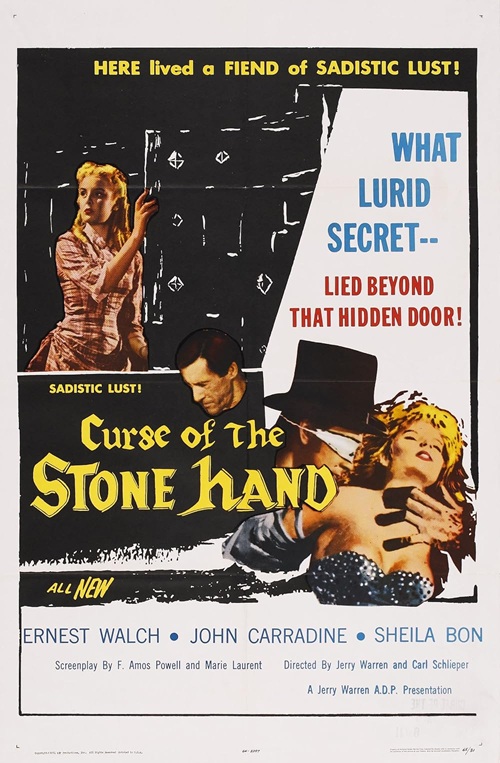
In 1965’s Curse of the Stone Hand, a dilapidated mansion sits deserted. Two men explore the grounds of the estate and one of them mentions that this house was once the finest in “Kent” but now the locals feel that it is cursed. There are mysterious stone sculptures of hands throughout the house. Some inhabitants think that the hands are the source of the curse. The first inhabitant of the house was a degenerate gambler named Robert Braun (Carlos Cores), who gambled himself into debt and, as a result, joined the Suicide Club as a way to try to win back his money. The hands, we are told, are somehow to blame for this, though it sounds like it’s more of a case of Robert needing to join Gamblers Anonymous. Once Robert was no longer in the house, the estate was claimed by another rich family. The family’s son was a sadist who had the power of hypnotism, which he used to torment his sister’s fiancé. Again, in my opinion, it’s open to debate as to whether or not the hands are to blame. To me, it seems more likely that the hypnotist is just a spoiled wastrel who wasn’t properly raised by his parents. The message seems to be less “Beware of the hands” and more “Don’t let your child grow up to be a hypnotist.”

If all of this sounds disjointed, that’s because it is. American film distributor Jerry Warren purchased two Chilean films and then edited them together to form what would become Curse of the Stone Hand. He dubbed over the dialogue to create some false connections between the two films and then he shot a few extra scenes with Katherine Victor and John Carradine. Victor and Carradine served to provide exposition, filling in the blanks that had been created by Warren’s mash-up. John Carradine’s character is especially interesting because he’s credited as being “The Old Drunk” but his character doesn’t ever appear to be drunk. Instead, he appears to just be one of the many people who works on the estate and who has opinions about the family that lives there. Carradine only has about two minutes of screen time. (Of course, Jerry Warren gave him top billing.) He’s not onscreen long enough to really give a performance that could be considered either good or bad. That said, it’s impossible not to smile whenever John Carradine shows up in one of these films. It’s always a little amusing how John Carradine effortlessly went back and forth from working with John Ford to working with people like Jerry Warren. Before there was Eric Roberts, there was John Carradine.

Curse of the Stone Hand is pretty much an incoherent film. It’s possible that the original Chilean films were good. Some of the shots do feature a bit of atmosphere. But, ultimately, it’s impossible to tell while watching this film, with its dubbed dialogue and its incomprehensible plot. That said, I’ll always have a spot in my heart for the shamelessness of filmmakers like Jerry Warren. Warren knew that you could get a lot out of a melodramatic title and a cameo from a name performer. Curse of the Stone Hand stands as a tribute to his never give up, never surrender spirit.


Bonus Horror On The Lens: Night Tide (dir by Curtis Harrington)


First released in 1961 and directed by Curtis Harrington, Night Tide stars a young Dennis Hopper as Johnny, an awkward sailor.  Johnny meets Mora (Linda Lawson), who works as a “mermaid” on the pier.  For Johnny, it’s love at first sight.  However, the more that Johnny pursues her, the more he learns about both her mysterious past and the dark fate of her previous boyfriends.

Night Tide is low-key and atmospheric gem of a movie, one that serve as an inspiration for low-budget filmmakers every where.  Lawson is perfectly cast as the enigmatic Mora but the film really belongs to Dennis Hopper.  Hopper’s naturally off-key presence made him perfect for the role of Johnny.

Night Tide is one of those low-budget movies that, because it’s in the public domain,  has been released on DVD (often in inferior form) by dozens of different companies.  Often times, films like this turn out to be fairly forgettable.  Night Tide, however, is an exception.

Horror On The Lens: Mazes and Monsters (dir by Steven Hilliard Stern)


Based on a best-seller by Rona Jaffe, 1982’s Mazes and Monsters tell the story of some college students who enjoy playing a game called…. well, Mazes and Monsters.  Now, I realize that Mazes and Monsters may sound a lot like Dungeons and Dragons but they are actually two separate games.  One game takes place in a dungeon.  The other takes place in maze, got it?

When the players decide to play the game in some nearby caves, it causes the newest member of the group (Tom Hanks — yes, Tom Hanks) to snap and become his character.  Convinced that he’s living in a world full of monsters and wizard, Hanks runs away to New York.  How does that go?  During a moment of clarity, Hanks calls his friends and wails, “There’s blood on my knife!”

It’s all fairly silly.  There was a moral panic going on about role playing games when this film was made and this film definitely leans into the panic.  But, in its own over-the-top way, it works.  If you’ve ever wanted to see Tom Hanks battle a big green lizard, this is the film for you.  And I defy anyone not to tear up a little during the final scene!

From 1982, here is Mazes and Monsters!   

Horror Scenes That I Love: Lon Chaney Transforms Into The Wolfman


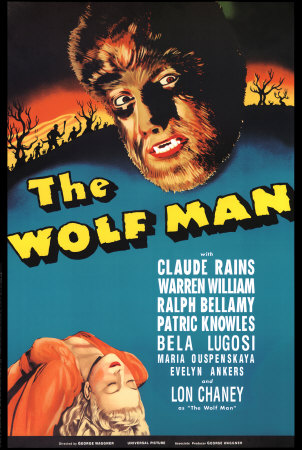
Today’s horror scene that I love comes from 1941’s The Wolf Man.  Watch as poor Larry Talbot transforms, for the first time, into The Wolf Man!  I’ll be the first to admit that, in the past, I’ve been pretty critical of Larry as a character and Lon Chaney, Jr.’s performance in the role.  But, in this scene, Chaney does an excellent job of capturing Larry’s helplessness as the curse takes effect for the first time.

4 Shots From 4 Horror Films: October 27th


4 Or More Shots From 4 Or More Films is just what it says it is, 4 shots from 4 of our favorite films. As opposed to the reviews and recaps that we usually post, 4 Shots From 4 Films lets the visuals do the talking!

4 Shots From 4 Horror Films

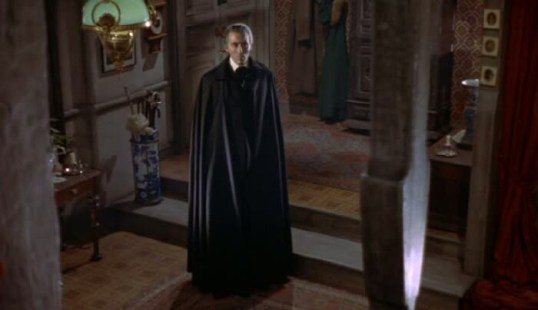
The Horror of Dracula (1958, dir by Terence Fisher, DP: Jack Asher)

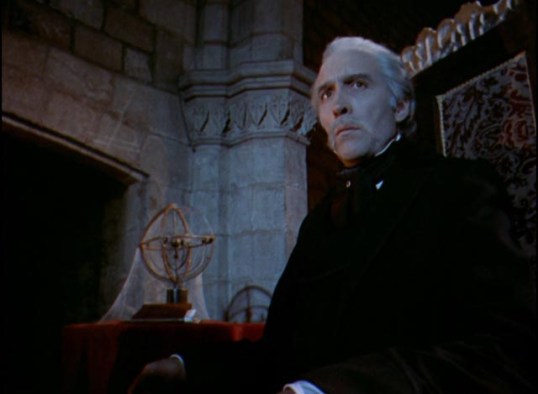
Count Dracula (1970, dir by Jess Franco, DP: Manuel Merino and Luciano Trasatti)

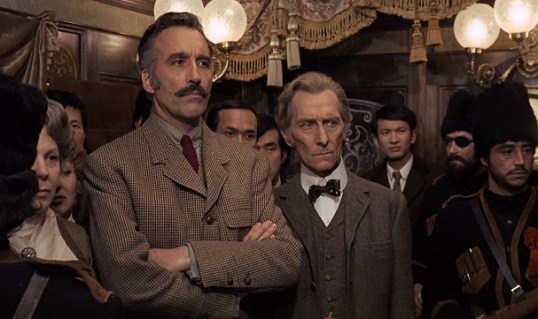
Horror Express (1972, dir by Eugenio Martin, DP: Alejandro Ulloa)

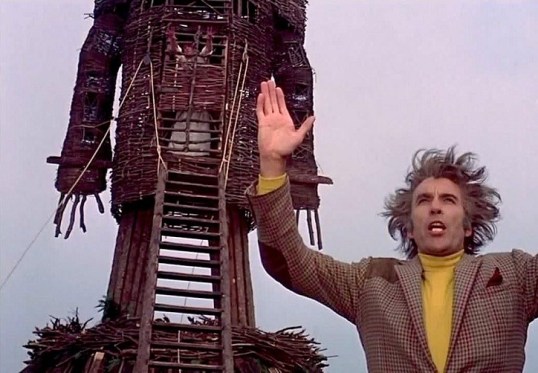
The Wicker Man (1973, dir by Robert Hardy. DP: Harry Waxman)

Stall, Short Film Review by Case Wright


I was not able to relate too much to this film because I don’t spend a lot of time in bathrooms. In this film, women are in the bathroom, try to leave, and are confronted by a demon; so, they hide in the stall, which works … I guess?

All I can write is that this was a film that was made…on purpose. You must have better things to do than watch this.

Music Video of the Day: It’s A Sin by The Pet Shop Boys (1987, directed by Derek Jarman)


For all the analysis that has been dedicated to this song and Neil Tennant’s reasons for writing it, Tennant himself has said that the song itself isn’t as a serious as everyone makes it out to be.  As he explained it in a 2009 interview with Andrew Sullivan:

“People took it really seriously; the song was written in about 15 minutes, and was intended as a camp joke and it wasn’t something I consciously took very seriously. Sometimes I wonder if there was more to it then I thought at the time. But the local parish priest in Newcastle delivered a sermon on it, and reflected on how the Church changed from the promise of a ghastly hell to the message of love.”

Not surprisingly, the video is full of religious imagery, along with representations of the seven deadly sins.  In the video, Tennant’s fellow Pet Shop Boy, Chris Lowe, plays Tennant’s jailer while the judge is played by the distinguished British actor Ron Moody.  An Oscar nominee for playing Fagin in 1968’s Oliver!, Ron Moody also came very close to being cast as the Third Doctor on Doctor Who.  Though the role was offered to him, Moody turned it down to focus on his film career.  Instead, Moody’s friend, Jon Pertwee, received the role and Moody would often later say that the decision to turn down Doctor Who was one of his biggest mistakes.

This video was directed by Derek Jarman, the experimental British director who is perhaps best known for his adaptation of Christopher Marlowe’s Edward II.  A political activist and a pioneer in the British gay rights movement, Jarman would sadly pass away just seven years after directing the video but he left behind a body of work that continues to be influential to this day.  Along with directing Laurence Olivier in his final performance (in War Requiem), Jarman is also often credited with having “discovered” Tilda Swinton.

It’s A Sin was one of the Pet Shops Boys’s biggest hits.  Would it have been a hit without this video?  Probably.  But the video definitely didn’t hurt.

Enjoy!