Horror Film Review: Tony Manero (dir by Pablo Larrain)


Pablo Larraín’s 2008 film Tony Manero tells the story of an odd man named Raúl (Alfredo Castro). At the height of the Pinochet dictatorship, Raúl lives in a dilapidated boarding house with his girlfriend’s family. The boarding house has a small stage for putting on shows, and Raúl uses it to choreograph dances that pay tribute to his favorite movie, Saturday Night Fever, and his favorite character, Tony Manero. Raúl is a quiet man who comes to life whenever he imitates John Travolta’s dance moves. He goes to see Saturday Night Fever on a daily basis and can recite all of the dialogue by heart. A Chilean TV show is hosting a Tony Manero look-alike contest, and Raúl is determined to win. He even gets a white suit and looks forward to becoming a star instead of just a poor nobody.

That may sound like the setup for a heartwarming, crowd-pleasing movie, but it is not. Raúl is a bitter and paranoid man in his 50s. He’s on the short side. Despite owning a white suit and being able to do all the moves, he really doesn’t look much like Tony Manero. Throughout the film, he goes out of his way to find the secret to becoming Tony Manero. (He becomes obsessed with making the boarding house stage light up just like the disco dance floor in the movie.) But the truth of the matter is that he is not Tony Manero. He is not a charismatic young man trying to find himself in Brooklyn. He is a rather creepy and obnoxious middle-aged man living under a dictatorship. The film turns into a full horror film as it becomes obvious how far Raúl will go to accomplish his dream. When the kindly theater owners swap out Saturday Night Fever for Grease, Raúl is not pleased.

There is a humorous scene early in the film in which Raúl shows up at the television studio in his Tony Manero costume, only to discover that he has gotten the date wrong and has shown up a week early. Everyone in the studio is dressed up to look like Chuck Norris. At the same time, the subtext is very serious. Director Pablo Larraín is showing the influence of American culture on Chile and commenting on American involvement in helping Pinochet take power in 1973. While Raúl tries to turn himself into Tony Manero, people are informing on their neighbors and dissidents are being executed in the streets. Raúl is indifferent to the violence around him. (When he witnesses an execution, his response is to loot the body.) While his girlfriend’s son gets involved with the anti-Pinochet underground, Raúl focuses on trying to transform himself into Tony Manero. In Saturday Night Fever, Tony Manero can escape his oppressive home life by riding the train to a different borough. Raúl doesn’t have that option.

Seen from today’s perspective, Tony Manero’s portrayal of Pinochet’s Chile brings to mind what a lot of people wanted America to become during the COVID era, complete with secret police, neighborhood informants, and the rich getting to flout the rules while the poor were expected to be happy with whatever crumbs were left over. If Raúl survived the Pinochet years, it is easy to imagine him in his 90s, reporting his neighbors for not wearing a face mask and then settling in to watch Saturday Night Fever for the thousandth time.

Lifetime For October: Nightmare PTA Moms (dir by Dave Thomas)


At the start of 2022’s Nightmare PTA Moms, Gayle (Brianna Cohen) and Rick (Jonathan Stoddard) have just relocated to Florida.  Rick is the new regional manager for everyone’s favorite chic retail outfit, Jackie Z.  Gayle is looking forward to reopening her bakery, Gayle’s Goodies.  (If there’s anything that I’ve learned from watching Lifetime movies, it’s that there’s apparently nothing easier than opening up a bakery in a new town.)  Gayle and Rick’s teenage daughter, Chloe (Madison Paige), will soon be starting at her new high school.  When Gayle meets PTA president Vanessa VanDeBerg (Alison Filoramo), she’s invited to join.  Gayle accepts.

Gayle has no idea what she’s getting into.

Under the velvet glove of Vanessa, the PTA has become a cult.  No husbands are allowed at the after-meeting parties.  They would ruin the mood as Vanessa hands out tequila shots and invites a male stripper into the house.  Don’t tell, Vanessa orders, largely so she can seek revenge against anyone who does tell.  Vanessa enjoys being PTA president and she’s not going to let anyone take that joy away from her.  Of course, the only reason that Vanessa is president is because the woman who actually won the election, Lexie Wilson, supposedly committed suicide a month after his victory.  And then Vanessa’s husband mysteriously fell to his death.  “Vanessa doesn’t like to talk about that,” another member of the PTA warns Gayle.

Meanwhile, Chloe has befriended Vanessa’s daughter, Serena (Gracie Silva).  Yay!  Whenever you’re starting a new chapter in your life — whether it’s a new school or a new job — you should always befriend the most popular people around.  However, Serena is soon taking advantage of Chloe’s friendship.  Serena insists that Chloe use her Jackie Z discount card to pay for Serena’s purchases.  Serena also steals a pair of sunglasses.  I don’t really blame Serena.  Those sunglasses were pretty cute.

Soon, Gayle is asking questions about all of the deaths surrounding the PTA and Vanessa is vamping it up whenever she stops by Jackie Z.  Gayle worries that Rick is going to cheat.  Rick worries that Gayle is going to get hurt if she doesn’t stop poking around the PTA.  Chloe worries that she’s going to be friendless.  The only person who doesn’t seem to be all that worried is Vanessa.  That’s what makes her a great character.  As played by Alison Filoramo, Vanessa is an unapologetic manipulator.  She’s the epitome of the mean girl grown up, delivering every passive aggressive line with just the right amount of snarky menace.  It’s not just that Vanessa’s bad.  It’s that she has so much fun being bad.  Gayle may be the hero but Vanessa is the character that most viewers are going to enjoy watching.

Nightmare PTA Moms is a delight, an unapologetically over-the-top film that is fully willing to embrace the melodrama.  That said, there’s definitely an element of truth to the film’s portrayal of self-important, self-absorbed, affluent people who have joined the PTA not because they care about their children’s education but instead because they just love to wield even the smallest amout of power.  As campy as the film may have been, it worked because there was just enough reality to make the film relatable.  After living through the COVID lockdowns, it’s not longer a shock to see a movie about an entitled sociopath who thinks that she has the right to tell other people what to do, what to think and what to say.

In the end, the nightmare becomes reality.


Horror Film Review: The Mist (dir by Frank Darabont)


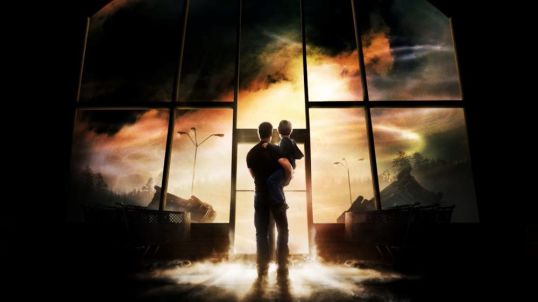
Based on a novella by Stephen King, The Mist opens the morning after a sudden thunderstorm in Maine. Artist David Drayton (Thomas Jane) steps outside and sees that a tree has crashed through one of his front windows. Meanwhile, his neighbor, attorney Brent Norton (Andre Braugher), stares at the tree that has crushed his car. Though David and Brent are not exactly on friendly terms, the storm briefly brings them together. When David says that he’s going into town to pick up supplies, Norton asks if he can come with him. David’s wife stays back at the house while David drives his son (Nathan Gamble) and Brent to the local grocery store. Before David leaves, he notices a thick mist moving over a nearby lake.

The entire town is without power and the grocery store is crowded. Three soldiers, who are picking up supplies before going on leave, are told that the leave has been abruptly canceled. Once the mist surrounds the store, it soon becomes obvious why that is. There are monsters in the mist and David, Norton, and several others find themselves trapped in the store. Going outside, as some insist on doing, only leads to death at the hands of the Lovecraftian monsters that inhabit the mist.

The Mist was first released in 2007 and I have to admit that I didn’t care much for it the first time that I saw it. I thought that some of the performances were a bit too histrionic and the film’s dark ending was almost too portentous to be credible. When I first saw it, I thought the film was almost trying too hard with the tragic conclusion. However, when I recently rewatched the film, I discovered that it had grown on me. I was better able to appreciate the fact that the monsters were both ludicrous and deadly at the same time. Performances that once seemed over-the-top in 2007 now seemed almost subtle when compared to how I’ve seen people actually behave in the real world over the past ten years. Once you’ve been yelled at for not wearing a mask while jogging, it’s a lot easier to buy the idea of a bunch of people in a grocery store losing their collective minds. Even the film’s dark ending now seemed like the only honest way the film could have ended.

The Mist is a film that plays much differently in a post-COVID world. The idea of innocent people losing their lives because of an accident at a government lab no longer seems all that unbelievable. The argument about whether or not to leave the store mirrored many of the same arguments that I heard during the COVID lockdowns. If Mrs. Carmody (Marcia Gay Harden) and her followers originally seemed like standard Stephen King religious fanatics, Carmody now brings to mind the loathsome Randi Weingarten and her insistence that the only way to defeat COVID was to sacrifice the future of the young. Even the film’s final moments of self-destruction reflected the attitude that many had in 2020, that the situation was hopeless and that there was no escape beyond waiting for the world to end. The final image of one man, driven mad and screaming, brings to mind both the fate of the typical Lovecraftian explorer and also the excesses of the COVID era. That Stephen King continues to be one of the major defenders of these excesses brings a wonderful irony to the film’s subtext.

The Mist has definitely grown on me. It still has its flaws but those flaws are less of a problem now than they were in 2007. In 2007, The Mist seemed overlong. In 2026, that 2-hour running time feels like a relief from the slow-moving miniseries that have become a signature part of the streaming age. Even Thomas Jane’s performance, which seemed rather stiff when I first saw the movie, has improved in hindsight. His tight-jawed stoicism makes his eventual breakdown all the more effective. Everyone reaches the limit, the film seems to be saying.

The Mist is a film that has aged well. It’s one of the better Stephen King adaptations, one that largely stays true to the source material while still having the courage to develop its own identity. The first time I saw it, I was wrong about The Mist. It’s a film that deserves to be remembered as one of the most relevant horror films of the past 20 years.

Horror On The Lens: Planet of the Vampires (dir by Mario Bava)


Today’s horror on the lens is a true classic, 1965’s Planet of the Vampires!

Directed by the great Mario Bava, Planet of the Vampires follows a space expedition that lands on a seemingly dead planet.  The members of the expedition soon discover that the undead aren’t just an Earth phenomenon.  This atmospheric mix of horror and science fiction was later acknowledged as being a major inspiration for Alien.

Enjoy this classic from Mario Bava!


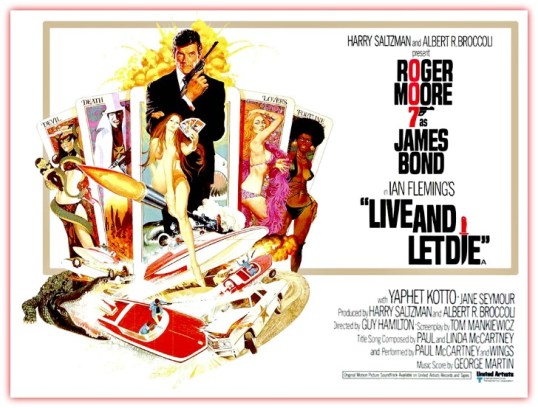
Live Tweet Alert: Join #FridayNightFlix for Live and Let Die!


As some of our regular readers undoubtedly know, I am involved in a few weekly watch parties.  On Twitter, I host #FridayNightFlix every Friday and I co-host #ScarySocial on Saturday.  On Mastodon, I am one of the five hosts of #MondayActionMovie!  Every week, we get together.  We watch a movie.  We tweet our way through it.

Tonight, at 10 pm et, I will be hosting #FridayNightFlix!  We will be welcoming October with a mix of James Bond and voodoo!  Join us for Live and Let Die!

If you want to join us this Friday, just hop onto twitter, find Live and Let Die on Prime, start the movie at 10 pm et, and use the #FridayNightFlix hashtag!  I’ll be there happily tweeting.  It’s a friendly group and welcoming of newcomers so don’t be shy.

See you there!


Horror Song of the Day: Willow’s Song by Magnet


Today’s song of the day comes from the soundtrack of 1973’s The Wicker Man.

Composed by Paul Giovanni, Willow’s Song was based on several songs that screenwriter Anthony Shaffer claimed to have heard at various spring pagan festivals.  Magnet, who is credited with performing the song, was a band of sessions players that were brought together specifically to record the film’s score.  According to Giovanni, the woman singing was Rachel Verney and not, as some people claimed, jazz performer Annie Ross.

Horror Scene of the Day: “Chop Chop” from The Wicker Man


Today would have been the 97th birthday of British director Robin Hardy.

Hardy was best-known for directing the original The Wicker Man.  Indeed, his subsequent films — including the long-delayed sequel — achieved nowhere near the acclaim as 1973’s Wicker Man.  A film in which a Christian detective (Edward Woodward) is lured to an island so that he can be tricked into becoming a pagan sacrifice, The Wicker Man is remembered for Christopher Lee’s chilling performance of Lord Summerisle and, of course, the burning man.

At the risk of being accused of heresy, I’ve always found The Wicker Man to be good but a bit overrated.  Woodward’s detective is portrayed as being such a fool that the film’s ending is nowhere near as shocking as it should be.  (The Wicker Man was written by Anthony Shaffer who, just as he would later do with 1978’s Absolution, lets his own issues with religion bleed a bit too heavily into the film.)  That said, the film is full of wonderfully creepy scenes, like the one below.

“Chop!  Chop!” the villagers say and it may seem like it’s all good fun but the look of relief on some of the people’s faces clue us into the fact that the blades have not always remained motionless.  It’s the supreme act of trust on an island where no one really has any reason to trust anyone.

4 Shots From 4 Horror Films: October 2nd


4 Or More Shots From 4 Or More Films is just what it says it is, 4 shots from 4 of our favorite films. As opposed to the reviews and recaps that we usually post, 4 Shots From 4 Films lets the visuals do the talking!

4 Shots From 4 Horror Films

The Wicker Man (1973, dir by Robin Hardy, DP: Harry Waxman)

Ticket to Heaven (1981, dir by Ralph L. Thomas, DP: Richard Lieterman)

Split Image (1982. dir by Ted Kotcheff, DP: Robert C. Jessup)

Midsommar (2019, dir by Ari Aster, DP: Pawel Pogorzelski)


Horror Film Review: The Bells (dir by James Young)


A silent film from 1926, The Bells stars Lionel Barrymore as Mathias, a businessman who lives in a small Austrian village during the 19th Century.

Mathias is the owner of the inn, the bar, and the local mill.  He’s a popular man around town, specifically because he gives away drinks and meals on credit but he rarely bothers to collect.  He’s hoping that his generosity will lead to him being elected burgomaster.  Instead, it’s left him in debt to Frantz (Gustav von Seyffertitz), who threatens to take away everything that Mathias owns unless Mathias agrees to allow Frantz to marry his daughter, Annette (Lola Todd).  Annette, however, is in love with Christian (Eddie Phillips).

On one snowy Christmas night, a traveler from Poland (E. Alyn Warren) enters the bar.  Mathias befriends the man but, when he sees that the man is carrying a lot of gold, Mathias’s desperation takes over.  He follows the man outside and stabs him.  As the man dies, he shakes a set of horse bells at the man.

Mathias is soon out-of-debt and he is also elected burgomaster.  His daughter is free to marry Christian.  However, Mathias finds himself consumed with guilt.  The ghost of the dead man continually appears to him and stares at him without saying a word.  Mathias is haunted by the sound of the ringing bells.  Soon, the man’s identical twin brother arrives in town, looking for the murderer.  Accompanying him is a mesmerist (Boris Karloff) who claims that he can always get the guilty to confess.

The Bells is a surprisingly effective film.  It’s a silent film so we don’t actually hear the sound of the bells.  But we do see Mathias reacting to what he hears and we see him seeing the bells ringing and what we imagine is undoubtedly scarier than anything that a sound film could recreate.  Meanwhile, the silence of the dead man’s ghost is far more ominous than if the ghost had spoken accusingly.  Because the ghost does not speak, Mathias doesn’t know what it wants and neither do we.  The Ghost itself never reacts to Mathias’s words.  Instead, it just stares at him.  We’re left to wonder if the ghost is real or if Mathias’s guilt-stricken mind is playing tricks on him.  It’s also impossible not to notice that, though Frantz was the one who was causing Mathias so much worry, Mathias take his anger out on a stranger, on someone who he probably presumed wouldn’t be missed.  In the film, it’s made clear that the traveler was also Jewish.  He was an outsider, a Jew who came to an inn on Christmas and was murdered because someone else wanted to take his possessions.  The film is not just about the guilt of one man but it’s also a portrait of the institutional anti-Semitism that has historically defined so much of Europe.

Lionel Barrymore gives a strong performance as Mathias.  Since the film was made at a time when actors could not be heard, Barrymore uses his eyes and the tilt of his head to show us what Mathias is thinking and he does a great job showing us Mathias growing increasingly more and more desperate.  Mathias is never portrayed as being a simple villain.  Instead, he’s a man who lost control for one terrible moment and now has to live with the consequences of his actions.  The film also makes good use of Boris Karloff’s imposing physical presence.  Just as with the ghost, the film leaves it up to the viewer to decide whether the mesmerist has any powers or not.  Karloff plays him as being a intimidating enigma.

Considering the limits of the era in which it wad made, The Bells holds up well.  Director James Young emphasizes the story’s ominous atmosphere.  His direction of the snowstorm and the murder is especially impressive.  The sight of the victim’s blood falling onto the snow remains a haunting one.  One hundred years after it was released, The Bells remains a memorable look at the haunting power of guilt.

6 Trailers From October 2nd


Every Horrorthon, I like to bring out an old favorite of mine.  Lisa Marie’s Favorite Grindhouse and Exploitation Film Trailers used to be a regular feature here on the Shattered Lens.  Every week, I would share some of my favorite grindhouse and exploitation film trailers.  Unfortunately, it turned out that YouTube only had a limited amount of good trailers and I soon found myself having to reuse trailers to keep the series going.  As a result, this feature went from being a weekly thing to a holiday thing.

Well, it’s the holidays!

Here are six of my favorite horror trailers!  I will definitely be watching all six of these this October!

(Be warned, some of the trailers are not safe for work and feature quite a bit of blood and violence.)

  1. I Drink Your Blood (1971)

2. Messiah of Evil (1974)

3. Dawn of the Dead (1978)

4. Shock (1977)

5. Zombi 2 (1979)

6. Inferno (1980)

What do you think, Trailer Kitties?