Today’s horror scene that I love comes from 1984’s A Nightmare on Elm Street. Directed by the great Wes Craven, A Nightmare on Elm Street remains a frightening and creepy masterpiece. It’s ability to scare its audience has not been diminished by countless sequels and rip-offs.
In today’s scene, Nancy (Heather Langenkamp) discovers that she’s not even safe from Freddy (Robert Englund) at school.
Released in 1999, Godzilla 2000 introduces viewers to The Godzilla Protect Network, a group of people who keep track of Godzilla landfalls and do their best to try to predict where he’ll show up next. They’re a bit like the storm watchers from Twisters. The way some people keep an eye on the weather, they keep an eye on everyone’s favorite radioactive lizard.
And it doesn’t take long for Godzilla to show up! Released a year after Roland Emmerich’s version of Godzilla, Toho used Godzilla 2000 to reclaim the character for themselves and for Japan. As such, the film waste no time in getting the original Godzilla on screen and allowing him to go on one of his trademark rampages. Every time that Godzilla breathes radioactive fire and lets loose its trademark shrill cry, it’s as if the film is saying, “Hey, America, this Godzilla!”
As for the plot, it’s not really that important. A group of scientists discover that an alien spaceship has been buried deep in the ocean for millions of years. The UFO is reawakened by Godzilla and it turns out that the spirits of the aliens basically want to absorb Godzilla’s regenerative powers so that they can come back to life and conquer the world. Godzilla doesn’t want to give away his regenerative powers so, naturally, he battles both the UFO and the eventual monsters that the UFO sends out to do its bidding. Once again, Godzilla is defending humanity, albeit unintentionally. For the most part, one gets the feeling that Godzilla just wants to be left alone.
Unfortunately, the military wants to destroy Godzilla and they keep getting in his way while he’s tying to battle the aliens. Seriously, Godzilla is like a wasp. He won’t destroy you as long as you don’t bother him. I mean, it’s true that Godzilla had a really bad temper back in the 50s but, for the most part, he just now wants to enjoy his retirement and step on a few cities. But the humans and the aliens and all the other monsters just won’t leave him alone!
Godzilla 2000 is an entertaining film. Probably because it was made as a direct rebuke to Emmerich’s film, Godzilla 2000 feels like one of the old school Godzilla films, with the emphasis on Godzilla fighting other monsters while people stand on rooftops and point. It has a fun retro feel to it. Basically, with this film, Toho reminded viewers what Godzilla was supposed to be all about.
4 Shots From 4 Films is just what it says it is, 4 shots from 4 of our favorite films. As opposed to the reviews and recaps that we usually post, 4 Shots From 4 Films is all about letting the visuals do the talking.
Today’s director is the great Wes Craven!
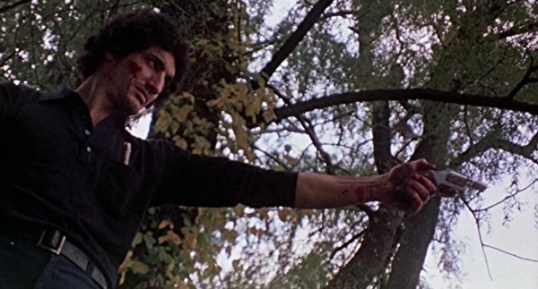
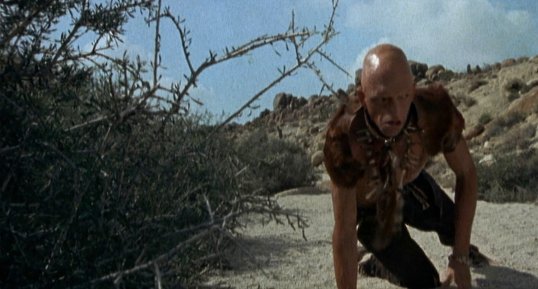
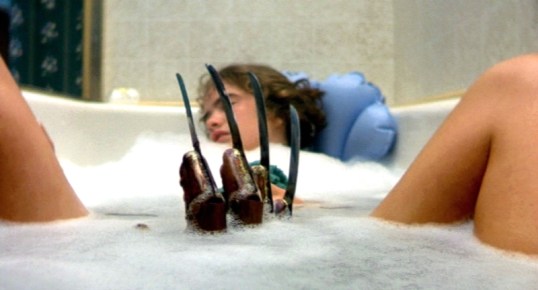
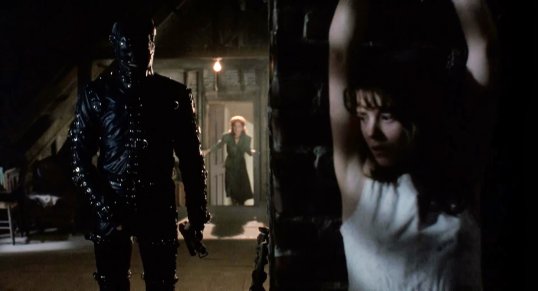
4 Shots From 4 Wes Craven Films
The Last House On The Left (1972, dir by Wes Craven, DP: Victor Hurwitz)
The Hills Have Eyes (1977, dir by Wes Craven, DP: Eric Saarinen)
A Nightmare on Elm Street (1984, dir. by Wes Craven, DP: Jacques Haitkin)
The People Under The Stairs (1991, dir by Wes Craven, DP: Sandi Sissel)
Yeah, whatever, dude. Seriously, how am I supposed to take seriously a film that features several scenes of people singing that song?
2024’s They Turned Us Into Killers is a film about vigilante justice. After her boyfriend gets her addicted to drugs and then rapes her with his brothers, Karma (Lauren Francesca) kills herself. Fortunately, she leaves behind an extremely long and detailed suicide note that allows her best friend Star (Scout Taylor-Compton) to know that she needs to track down and kill BJ (Bryce Draper) and his moronic brothers. Star recruits Zion (Brian Anthony Williams) to help her, because Zion’s mother was raped and murdered by BJ’s father (Kane Hodder). Zion later got revenge on BJ’s father and now, he’s going to help Star get revenge on BJ.
So, here’s the thing. This story actually had potential. Seriously, who doesn’t want to watch a bunch of rapists get tortured for their crimes? Unfortunately, the film’s execution is an absolute mess. This is one of those films that jumps around in time, so you’re never quite sure if you’re watching something that’s happening in the film’s present or if you’re watching yet another flashback. One gets the feeling that this was done to try to disguise just how simplistic the film’s story actually is but the end result is more likely to induce a headache than anything else. The film pretty much begins with Star explaining that Karma get hooked on drugs and killed herself. Therefore, there’s nothing really to be gained by then segueing into a lengthy flashback of Karma doing what we just heard that she did. We already know what happened to Karma. Flashbacks are only necessary if they add something new to the story. When all they do is show us what we already know, they feel more like padding. In this case, it feels like rather exploitive padding.
The film is more of a vigilante film than a true horror film. That said, horror icons like Kane Hodder, Bill Moseley, and Michael Berryman all make brief appearances and the scenes where Star stalks her victims definitely owe a bit to the old school slasher films. When the film isn’t busy with the flashbacks, it’s largely made up of scenes of Star taunting her victims while they’re tied down to a table. The torture scenes tend to go on forever, to the point where they again feel more like padding than anything else. And while the film’s victims certainly deserve their fate, Star isn’t particularly likable either. Perhaps if Karma had been her sister, I would have had more sympathy for her. Instead, Karma is just a friend to whom Star wasn’t even close enough to know that she was struggling until she committed suicide.
(On another note, naming the character Karma is way too cutesy. Sorry, movie.)
Vigilante films are always a bit of a mixed bag. Charles Bronson was an effective vigilante, usually because he was trying to either protect or avenge his family. Clint Eastwood was an effective vigilante because most of his vigilante films took place in the old west, at a time when people really had no choice but to take the law into their own hands. I will always cheer Camille Keaton getting revenge on those four rednecks in the original I Spit On Your Gave and yes, that includes that dumbass Matthew. I think the lesson here is that it takes a star with a lot of screen presence and a director who knows how to properly pace a film to make a vigilante film work. They Turned Us Into Killers …. well, it just doesn’t work.
AGCK! That’s a scary title that just brings to mind all sorts of disturbing images. And this 1973 made-for-television film does get off to a rather disturbing start, with Carol Enders (Meredith Baxter) and her boyfriend, Adam Reston (Christopher Connelly), getting attacked in the park by a random criminal. Carol falls and strikes her head. She is rushed to the hospital in a coma and is not expected to survive.
Meanwhile, Diana Bernard (Sally Kemp) has an argument with her former lover (John Karlen) and then goes for a drive in the rain. When the car crashes, Diana is rushed to the same hospital as Carol. Ironically, it’s the same hospital where her husband, Peter (Charles Aidman), works. Like Carol, Diana is not expected to survive.
Diana and Carol both appear to die at the same time. Except Carol doesn’t actually die. Instead, she has a miraculous recovery. She comes out of her coma and she is remarkably articulate for someone who has just suffered serious brain damage. However, there is one problem. Carol swears that she’s never seen Adam before, that she’s married to Peter, and that her name is Diana!
That’s the invasion of Carol Enders. When Diana died, her spirit moved into Carol’s body and took control. Diana is convinced that her car accident was not actually an accident. She thinks that she was set up by her ex and she sets out to try to prove that the accident was actually attempted murder. (Actually, it’s only attempted from Diana’s point of view. As far as the rest of the world is concerned, Diana is dead.) While Adam tries to help Diana solve her murder out of a hope that she’ll go away and allow Carol to once again be in control of her own body, Diana runs off to her husband. However, it turns out that there’s a lot more going on than even Diana realizes.
This is a bit of an odd made-for-TV movie, even by the standards of the 70s. It’s only 69 minutes long and it was shot on video tape, giving the whole thing the look of an old daytime drama. It’s easy to watch this movie and imagine that it’s just a supernaturally-tinged episode of General Hospital or Days Of Our Lives. Both the acting and the plot add to the daytime drama feel of the production. This is a movie that fully embraces the melodrama.
I think the most interesting thing about this film is that everyone is very quick to accept that Diana has somehow willed her spirit into Carol’s body. There’s very little hesitation about accepting Diana/Carol at her word and no one even thinks to suggest that maybe Carol is having some sort of mental episode as a result of the attack. Adam hears that his girlfriend has been possessed and he immediately gets to work helping out the woman who has possessed her. I mean, good for Adam. I like a man who is willing to do whatever has to be done. Still, everyone acts as if possession happens every day.
This is kind of a silly movie, which is probably why I enjoyed it. It’s short, it’s simple, and it embraces the melodrama. What’s not to enjoy?
In 1964’s The Masque of the Red Death, Vincent Price stars as Prospero.
Prospero is a nobleman in medieval Italy, a decadent tyrant who rules his villages with an iron hand and who proudly and openly worships Satan. When an old woman in one of the villages dies of the plague, Prospero orders the village to be burned to the ground. He returns to his castle where, with his mistress (Hazel Court), he plans to throw a masquerade for the local nobility. His plan is for everyone to hide out in the castle until Death has passed. The problem, of course, is keeping Death from sneaking into the castle and claiming everyone within.
Prospero also abducts three villagers, Ludovico (Nigel Green), his daughter Francesca (Jane Asher), and Francesca’s boyfriend, Gino (David Weston). The three villagers find themselves in a decadent world, where Prospero and his attendants are motivated by their own greed and petty jealousies. Keeping Death from entering the castle would probably be a lot easier if the people in the castle would stop trying to kill each other. It’s an odd atmosphere within the castle. Everyone fears Death and yet, everyone seems to be doing all that they can do invite it in with them. Can anyone, even a worshipper of the Damned liked Prospero, truly escape Death?
The Masque of the Red Death is not only the best of Roger Corman’s Edgar Allan Poe adaptations but it’s also the best film that Corman ever directed. Working with cinematographer Nicolas Roeg (who was himself destined to have quite a career as a director of enigmatic films), Corman fills the screen with vivid colors and scenes of medieval decadence. Price gives one of his best performances, playing Prospero as someone who is in love with his own amoral nature but whose arrogance quickly gives way to fear when he starts to suspect the Death has somehow managed to enter the castle. The inhabitants of the castle are all memorably eccentric and, in many cases, evil. A man in an ape costume is burned to death and hardly anyone seems to notice or care. Prospero and his nobles think that they’re above death because of their wealth and their place in society but, of course, no one can escape Death.
David Weston and Jane Asher are both well-cast as the two lovers, though Asher is clearly more a product of the swinging sixties than medieval Italy. Patrick Magee and Skip Martin are both memorable as members of Prospero’s court, with Skip Martin giving an especially diabolical performance as a murderous court jester. In the end, though, this film truly belongs to Price, Corman, and Roeg. Roeg’s cinematography is dazzling, with the use of red foreshadowing his later film, Don’t Look Now. Corman’s direction puts the viewer right in the center of Prospero’s court. And Vincent Price gives one of his best performances as the self-amused but unashamedly evil Prospero. The Masque of the Red Death remains a classic of 60s pop art and the best of Corman’s many films.
In the 18th century, the inhabitants of Arkham, Massachusetts yank Joseph Curwen (Vincent Price) out of his mansion and tie him to a tree. They accuse Curwen of being a warlock who is in league with the devil and who has been bringing young women to his “palace,” and putting them in a trance. They burn Curwen alive but, before the flames are lit, they also give Curwen a chance to speak and curse both them and their descendants.
You really do have to wonder about the logic behind witch (and warlock) burnings. They seem counter-productive because they always give the accused just enough time to cast one final curse before being burned to a crisp. Indeed, you have to wonder why witches and warlock were allowed any final words to begin with. I mean, at some point, you would think everyone would notice that the final words were always a curse.
Anyway. 110 years later, Joseph Curwen’s descendant, Charles Dexter Ward (Vincent Price, again) rides into town with his wife, Anne (Debra Paget). He is stunned to see that Arkham has apparently fallen on hard times, with many of the town’s people being horribly disfigured. It’s explain to him that the disfigurements and the poverty are all a result of his ancestor’s curse. That’s going to make things a bit awkward, considering that Charles Dexter Ward has not only inherited the Palace but he’s also inherited a copy of Necronomicon and a legacy of messing with Cthulhu. The townspeople don’t want Ward around but he and Anne decide to spend the night in the Place regardless.
Of course, it doesn’t take long for Curwen’s spirit to possess Charles. Soon, Charles is trying to resurrect Curwen’s mistress, Hester (Cathie Merchant) and pursuing Curwen’s goals of breeding a race of super humans by forcing the women of the town to mate with the fearsome Yog-Sothoth. Charles also seeks vengeance on the descendants of those who burned Curwen at the stake, as if all of the poverty and the deformities aren’t punishment enough. Again, this is why you don’t give warlocks and witches a chance to get out one last curse before being executed.
Though The Haunted Palace is usually considered to be a part of Roger Corman’s Edgar Allan Poe cycle, the story itself is actually based on H.P. Lovecraft’s The Case of Charles Dexter Ward. (In Lovecraft’s novella, Ward seeks out his evil ancestor whereas, in the film, Ward is more or less an innocent victim.) The film’s title comes from a Poe poem, which is recited at both the beginning and the end of the film. But the film itself, with its references to the Cthulhu mythos and its hideous New England setting, is definitely a work of Lovecraftian horror.
Fortunately, it’s an effective work of Lovecraftian horror, one that captures the feeling of people unwisely trying to control a force of evil that they cannot begin to comprehend. Roger Corman keeps the action moving quickly and creates a gothic atmosphere of impending doom. Vincent Price, toning down his usual theatrics, is chillingly evil as Curwen and sympathetic as Charles. The film’s strongest performance, however, comes from Debra Paget, who desperately tries to free her husband from Curwen’s control. Any woman who has suddenly felt as if she can no longer recognize the man who she once loved will be able to relate to Paget’s performance.
The Haunted Palace is a strong entry in the films of Roger Corman and Vincent Price and one of the better adaptations of the work of H.P. Lovecraft.
Watching The Creeping Terror is an October tradition here at the Shattered Lens. How could anyone resist a film about a killer carpet, especially one that features a random dance party? This film was directed by an enigmatic figure named Vic Savage. No one is really sure who he actually was. No one is sure what happened to him after The Creeping Terror was finally released. But what we do know is that he made a film unlike any other.
Today’s horror song of the day comes from the 1979 film, Beyond The Darkness.
This film’s soundtrack, courtesy of Goblin, was so acclaimed that it later turned up in several other Italian horror film, usually without anyone bothering to ask Goblin ahead of time.