My kids love Ghibli, but not every Ghibli film is suitable for kids. As pre-screenings evolved into a month-long binge of every film in the studio’s catalogue, I committed to ranking them. I mean hey, who doesn’t love a big dumb list? But let’s be real up front. These are the works of two of the all-time greatest masters of animated story-telling and their closest collaborators. Room for armchair criticism runs dry pretty early into the charts. I just want to share some films I’ve been passionate about lately, and ranking them is a fun way to go about it.
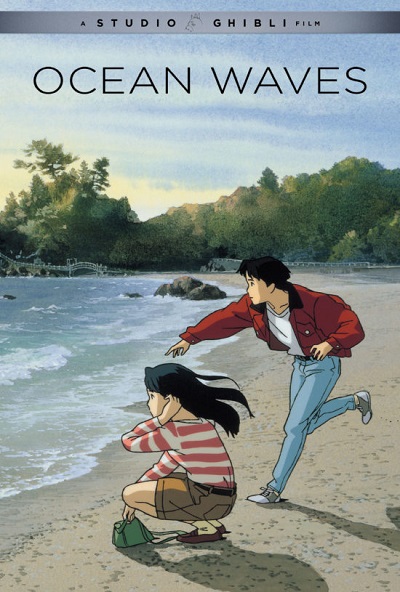
22. Ocean Waves (Tomomi Mochizuki, 1993)
Times watched: 1
Ocean Waves was never intended to be a masterpiece. This made-for-tv anime was a training project for younger staff in the studio, and a lot of reviews I see give it a positive nudge for accomplishing anything at all in this context. I’m not going to pretend to like it. The animation itself is decent enough for a straight-shooting high school romance, but the plot hedges on downright unpleasant. Rikako Muto, the only character with a distinct and memorable personality, is a devious narcissist bent on exploiting anyone who offers her a helping hand. Of course she has a tragic past that justifies it all. Of course she just needs a strong man and her issues will wash away. Of course our generic protagonist Taku sees her inner beauty and falls ever deeper in love the more she treats him like crap. Of course they chance into each other at a train station at the end and Taku embraces his hormones as we fade to credits, our lead characters now destined to live their probably really crappy lives together. It’s dull, cliche, and foregoes any sort of meaningful progression on Rikako and Taku’s rocky, manipulative bond in favor of a half-hearted happy ending.
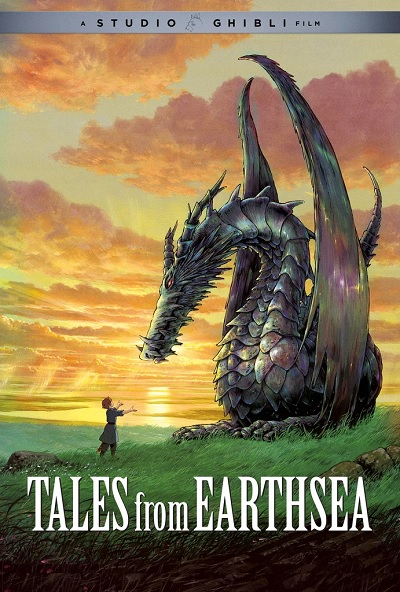
21. Tales from Earthsea (Goro Miyazaki, 2006)
Times watched: 1
Tales from Earthsea is so universally panned that I feel like I’m beating a dead horse to point any of it out, but in brief, the plot is an incoherent mess that necessitates awareness of the novel series its based on to get the slightest grip of what’s going on. The dialogue is comically trite. The characters are hollow facades of Hayao’s visions, with Hare in particular feeling like a chaotic evil caricature of Nausicaä‘s endearing antagonist Kurotowa. The story telling is devoid of vision, jumping around in a haphazard rush to cram in sequences that seem pre-determined, like Goro sat down thinking from the outset that these 100 things have to happen and just crammed them all together without evolution. Yeah, Tales from Earthsea is bad, but unless this is the first write-up you’ve read, you probably knew that.
So let’s talk a little about what it does right. The music! Tamiya Terashima’s score is solid, lending a lush and imaginative soundscape to a world in desperate need of spirit. Some of the landscapes are very tastefully drawn, with Hort Town in particular presenting a number of striking backdrops. While the only villain type Goro seems to grasp is one-dimensional chaotic evil, Cob presents as a legitimately creepy lead antagonist. And lastly, there’s an interesting story to be told outside of the movie itself. Hayao was strongly opposed to allowing his son Goro to direct this film. He knew Goro wasn’t ready, wanted him to start with smaller projects and gain more experience. His concerns were thoroughly legitimized, but Earthsea was not Goro’s final effort. There’s a tale of redemption to it all; the son of a master biting off more than he can chew, failing hard but rebounding to create something entirely decent in its wake.
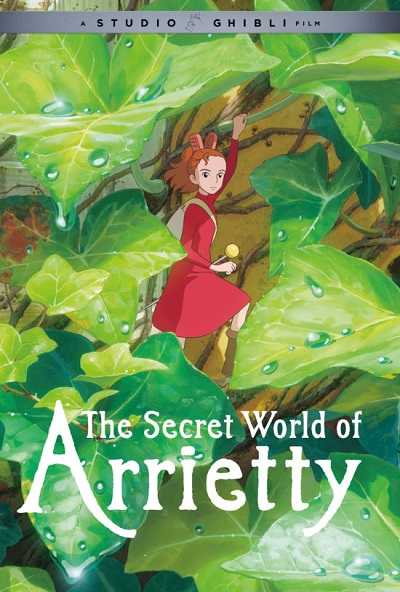
20. Arrietty (Hiromasa Yonebayashi, 2010)
Times watched: 2
Arrietty is a film based on The Borrowers, telling the story of little people living secretly in the walls and how one came to befriend a human ‘bean’. Arrietty’s travels through the house and garden from a mouse-sized perspective are imaginative and compelling both visually and musically. It’s got an awful lot of potential.
Unfortunately, the story telling and character development just aren’t there. Sho is a self-loathing dolt I think I’m supposed to feel bad for but just end up despising, and the emotional rejuvenation he experiences by way of befriending Arrietty feels forced and cliche. Haru might be the worst antagonist in the entire Ghibli catalogue, inconsistently projected as a caring if harsh caretaker, an imbecile injected for comic relief, and a downright sadistic villain. Spiller’s presentation as a stereotypical cave man, pronoun deficiency and all, might serve a purpose in the book–I haven’t read it–but feels completely random and pointless in its film setting. Ultimately Arrietty is a fun, adventurous movie for kids with a pleasant atmosphere, but it tumbles into an abyss at the threshold of the character realism I expect from a Ghibli film.
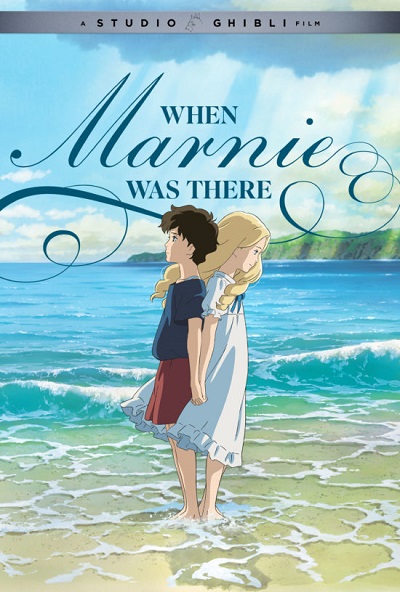
19. When Marnie Was There (Hiromasa Yonebayashi, 2014)
Times watched: 1
When Marnie Was There takes a notable leap from the bottom three, with a carefully crafted protagonist who feels entirely human cast into a world that’s legitimately mysterious. Anna is unlikable for all the right reasons, and sympathy was developed in me gradually and naturally, not forced down my throat like with the equally unpleasant Rikako of Ocean Waves. Marnie has this air of a pre-school siren, innocent in motive but certainly not considerate of Anna’s safety either, and Anna is finely tailored to feel believable as she abandons herself into Marnie’s world. I knew it was going to have a happy ending, but that never fully resolved the twitch in the back of my head that this could turn into a horror film very quickly. And while the plot twist is ultimately predictable, it was sufficiently creative to leave me satisfied.
I’m not sure the story couldn’t have been conveyed better visually. The characters are presented more through color than detail, leaving a glossy feel that didn’t resonate quite so harmoniously with the broader ambience as the lush palettes of say, Arrietty or Ponyo. A grittier look and feel may have done this one well, but at #19 we’re already into movies I enjoyed.
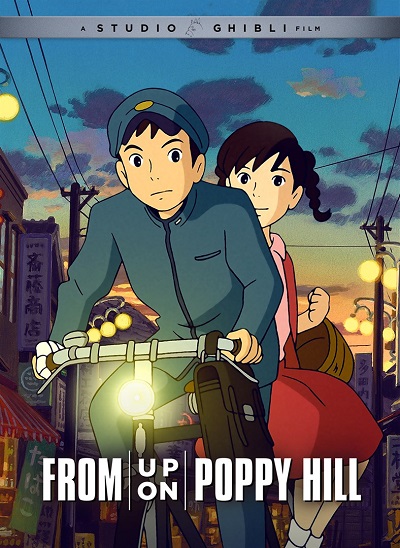
18. From Up on Poppy Hill (Goro Miyazaki, 2011)
Times watched: 1
Or Goro’s redemption, if that’s how you care to think about it. From Up on Poppy Hill is a light comedy that never tries too hard but accomplishes everything it aims for. It felt at risk of the same one-dimensionality as Earthsea at first, but I stopped caring about that when the characters proved to be enjoyable for their simplicity. Umi and Shun’s embodiment of the ultimate made-for-each-other extrovert protagonist couple ends up driving a lot of the humor, and in that sense Goro really flipped one of his major weaknesses in Earthsea on its head and used it to his advantage. It also offers a snappy seaside soundtrack that suits the mood of the movie beautifully. Satoshi Takebe did an outstanding job here; maybe the most well-placed Ghibli score not composed by Joe Hisaishi.
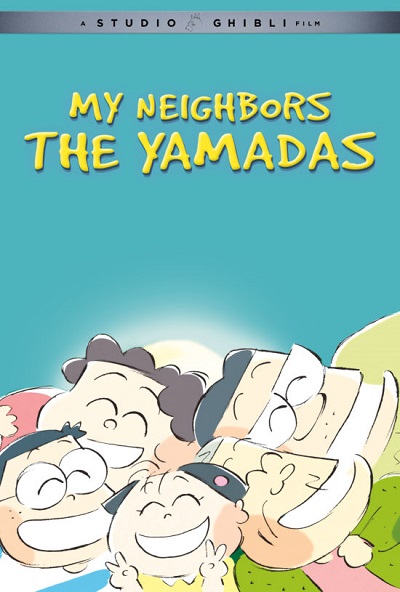
17. My Neighbors the Yamadas (Isao Takahata, 1999)
Times watched: 1
My Neighbors the Yamadas is a collection of light comedy sketches about daily family life reminiscent of classic American sitcoms. The kids fight, mom is lazy, dad comes home drunk, grandma complains about everything. There’s no unfamiliar territory here. But the most central theme throughout is that they all sincerely love each other, and that’s portrayed without ever being forced. For a ‘movie’ that rarely goes ten minutes without a hard break to the next episode, there’s a persistent warmth to it. The most stereotypical gags never feel superficial. Takahata understands people, and I can really pick up on that here. Unfortunately from a ranking standpoint, it barely qualifies as a film and could have just as easily been released for tv as a season of episodes. The minimalistic animation is appropriate but hard to compare in a studio famous for its stunning artwork. It’s an easy one to rank low, but My Neighbors the Yamadas is grand in its humility.
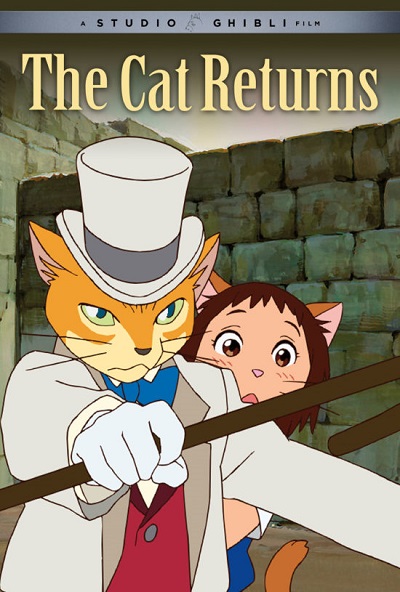
16. The Cat Returns (Hiroyuki Morita, 2002)
Times watched: 3+
This was the hardest movie to rank for me, personally. The Cat Returns is hands down, without question, the most poorly animated film in the Studio Ghibli library. It’s not a remotely introspective or thought-provoking film, either. But wow, what a weird, Alice in Wonderland-esque adventure. My 5 year old son’s favorite Ghibli movie, The Cat Returns is an outwardly innocent romp through a secret world of anthropomorphic felines. The plot is pretty simple from a kid’s perspective. The human protagonist Haru gets stuck in cat land, the bad cats try to keep her there, and the good cats help her escape. Basic.
But there are so many dark undertones to this film. The Cat King is an inbred nutjob who makes his court humiliate themselves for his entertainment and will execute on a whim. His servant Natoru is ever smiling and humbly debasing himself while carrying out the king’s dirty work, pulling creepy stunts like trying to get a character to eat himself to death. The anthropomorphism is twisted; the cats are still cats to the fullest, and they walk about on two legs with all the stagger and imbalance that a real cat might. The entire cat kingdom is warped and unnatural, and it’s all presented with such superficial innocence that I feel completely at ease letting my kids watch it. It’s a real trip and I strongly recommend it. The animation quality is just so poor and the plot so basic that it’s hard for me to juxtapose this to a Takahata or Miyazaki work and call it ‘better’ with a straight face. In terms of raw enjoyment, you’ve got to check this one out.
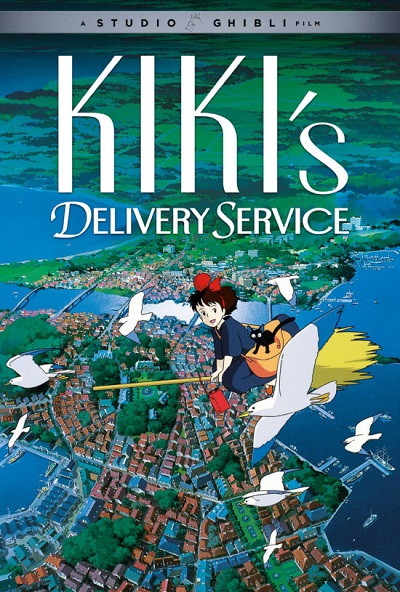
15. Kiki’s Delivery Service (Hayao Miyazaki, 1989)
Times watched: 3+
The most controversial placement on my list was necessarily going to be whichever Hayao film I ranked lowest. Well, here you have it. Kiki’s Delivery Service is a great movie, no doubt about it. But looking back over the collection of Hayao Miyazaki’s works, I just find it to have the least distinguishing character. That is, everything I like about this movie–and I like it quite a lot–I feel like he’s done better since in one form or another. If I really want to get at the root of why this one comes in last though, I think it’s this:
Miyazaki and Takahata are masters of character realism. Of all the things that make Studio Ghibli films so compelling, I think character portrayal carries the day. To take a world as bizarre and foreign as Princess Mononoko and make the characters feel so utterly human… That’s the glue that holds so many other amazing talents on the table here together. Some of these films are focused on deep, complicated subjects. Others are innocent, kid-friendly worlds. Kiki’s Delivery Service is very much a kid’s movie, and her coming of age tale is cast in pure innocence. But she’s going it alone and independently, with a capacity for self-confidence that just doesn’t resonate well as our world spirals back into a dark age that may have felt behind us in the 1980s. Even Hisaishi’s soundtrack has an air of carefree independence about it that’s harder for me to embrace than most of their collaborations. It’s a tale for more confident times. I read a quote by Miyazaki himself along these lines when I was digging for alternative opinions on this film, and I thought “that’s it.”
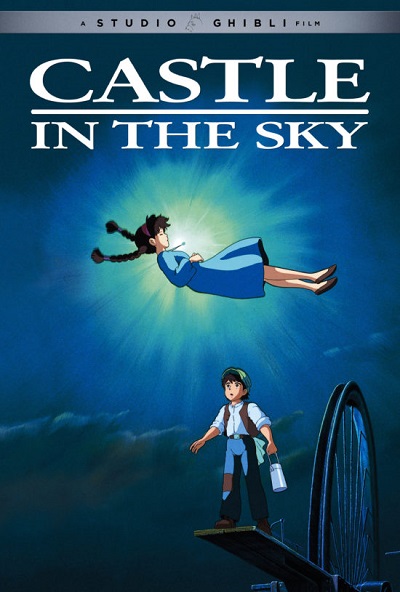
14. Castle in the Sky (Hayao Miyazaki, 1986)
Times watched: 2
Castle in the Sky, also known as Laputa, has a lot of historical value in the evolution of anime, but I’m not enough of a buff to put weight into that. It’s ambitious in a way I think only a younger Miyazaki could be, attempting to fit every expected element of a high fantasy steampunk action film into one package. Towards that end, he does a hell of a job. Laputa is absolutely a classic, but it feels like one. It’s almost like this is the film where he thoroughly proved himself as a master of the traditional and freed himself to delve into his pure artistic sensibilities without any further pressure to create some pre-defined thing.
I have to say, the Dola gang is up there with Calcifer and Donald Curtis for Miyazaki’s most endearing comic relief, but I think on the whole this movie strives too hard to be great at everything to fully perfect any one thing. Colonel Muska in particular is Miyazaki’s most shallow antagonist–and arguably the last time he ever attempted to employ a pure unconditional bad guy. The climax is weak for its binary portrayal of good and evil. And–no fault of Miyazaki–I think Disney gave it a really low effort dub job compared to the top notch voice acting of his other works. Still a fabulous film that I recommend. Everything is relative.
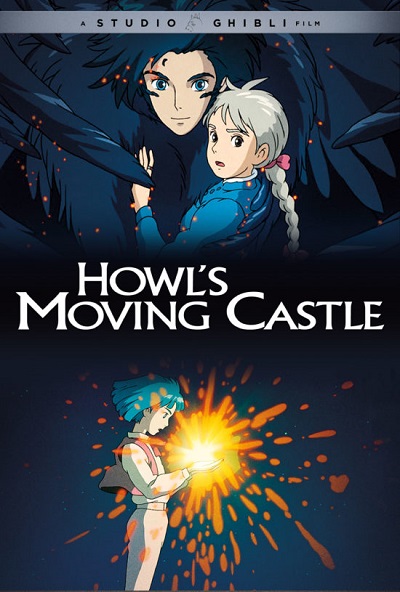
13. Howl’s Moving Castle (Hayao Miyazaki, 2004)
Times watched: 3+
The only Miyazaki film that leaves me conflicted, Howl’s Moving Castle is visually stunning, beautifully animated, highly imaginative, and offers two of the most enjoyable secondary characters of the Ghibli universe in Calcifer and the Witch of the Waste. The world it’s set to is disordered and ill-defined, and knowing that Miyazaki was aware of this and chose to roll with it anyway doesn’t resolve the fact that half the time I really have no clue what’s going on. Howl himself is a hot mess, and Sophie falling for him is a hard sell from a director famous for character development.
Howl’s Moving Castle is filled with compelling scenes and some of Miyazaki’s best animation ever. The way the castle moves and breathes is just fascinating to behold. I’ll never get tired of watching the sequences. Yet out of Miyazaki’s 10 major works, this one leaves me with the least sense of a clear vision. I enjoy it in the moment, but I don’t carry it with me days and weeks later the way I do with many of his other works.
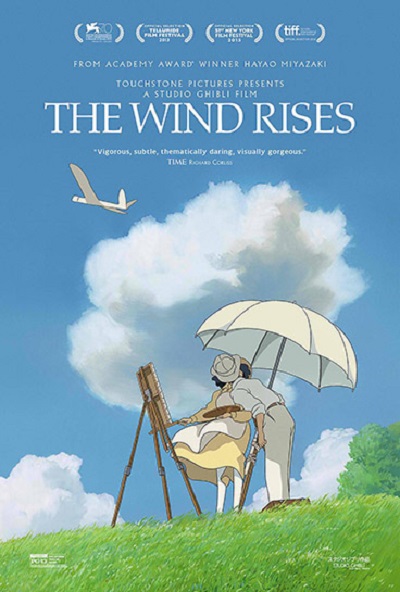
12. The Wind Rises (Hayao Miyazaki, 2013)
Times watched: 1
The Wind Rises is Miyazaki’s final film pending the potential completion of How Do You Live?, and it’s definitely his most subdued. A two hour slow roll through the fictionalized life of Japanese World War II aircraft engineer Jiro Horikoshi, action is mostly limited to a few dream sequences. The movie gets off to an incredibly strong start. The airplanes of Jiro’s childhood dreams, not restricted by physics, are an imaginative thrill. Miyakazi makes great use of sentient sound effects to bring the 1923 Great Kanto earthquake to life. Scene after scene he finds ways to imbue motion into a movie that is ultimately about a guy sitting in front of a desk all day.
But by the mid point, The Wind Rises starts to lose some of its charm for me. The narrative is lost for a moment as the passage of time becomes unclear. Is this failed test flight another dream or an actual event? Have we advanced a day or two years since the last scene? It’s not the sort of transition where the vagueness reflects some internal point; it just seems like a brief lapse in focus. When things come together for me again, Jiro is pursuing a family, and the remainder of the film is told mostly in small rooms and conversations: things that certainly can be portrayed through animation, but don’t facilitate an advantage over live acting; stories that have been told before. Somewhere down the line, the Miyazaki magic was lost to me. Not a flaw per say, just a bit of unfulfilled potential. I still thoroughly enjoyed it.
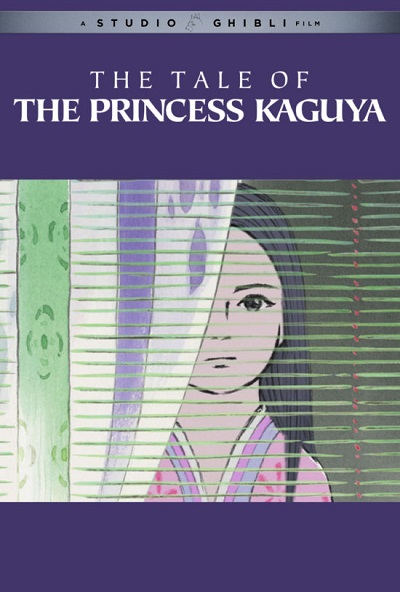
11. The Tale of Princess Kaguya (Isao Takahata, 2013)
Times watched: 1
This one’s hard. I don’t think I’ll ever watch it again. A lot of people say that about Grave of the Fireflies, but for me Takahata’s most difficult film is his final one, The Tale of Princess Kaguya. This is the story of a simple girl living a simple life and loving it with all the innocent fascination of a child until her parents, given the opportunity, force her to pursue a jaded adult’s perception of a ‘better life’. What follows is two hours of superficially well-intended child abuse, as her father, indulging his self-serving vision of a perfect life for her, strips away everything she holds dear. It’s heartbreaking and highly relatable despite being set in a classic Japanese world far removed from modern life, and Takahata takes intriguing liberties with the animation to portray Kaguya’s emotions through varying degrees of visual refinement.
As the film nears its end, it’s hard for me to escape the desire for her to just murder her father and run away forever, but she stays faithful to the end. There’s no forced commentary on whether her obedience is a virtue. It just leaves me to think, rather unpleasantly but not without purpose. At 137 minutes with no action and the narrative fully defined within the first half hour, it does drag, and drag, and drag some more. I could argue that even that plays a meaningful role in casting the viewer into Kaguya’s world. It’s the sort of movie I’ll never find a true fault with because it’s not intended to be pleasant. But I have to draw a line somewhere on the roster between evocative power and evoking emotions I actually want to feel. Don’t be a jerk to your kids. Moving on.
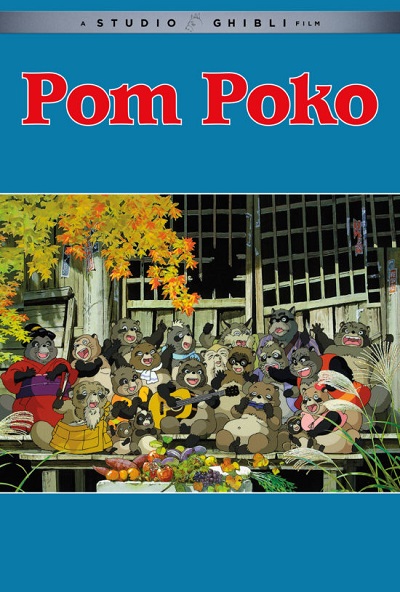
10. Pom Poko (Isao Takahata, 1994)
Times watched: 1
Pom Poko is very serious drama about magical anthropomorphic raccoon testicles. Ok well, raccoon dog testicles. Raccoon dogs are an Asian species most closely related to foxes, but they look like a cross between… you guessed it. Talk about a cultural barrier; the MPAA must have had a field day figuring out how to rate this one. It ultimately got a PG for “thematic elements”. Heh heh.
Anyway, Pom Poko. What a film. Magic raccoon balls actually have a place in Japanese folklore–Takahata didn’t just make this up–but it’s thoroughly self-aware of its outlandishness. Pom Poko is an adult cartoon in the truest sense, with characters reminiscent of the original Teenage Mutant Ninja Turtles animations facing very real starvation and extermination from human encroachment. Slapstick comedy really shouldn’t be able to deliver a socially conscious message, but Takahata finds a way. For better or worse, I’m not going to find another movie like this one. Not in Studio Ghibli. Not anywhere. I loved it.
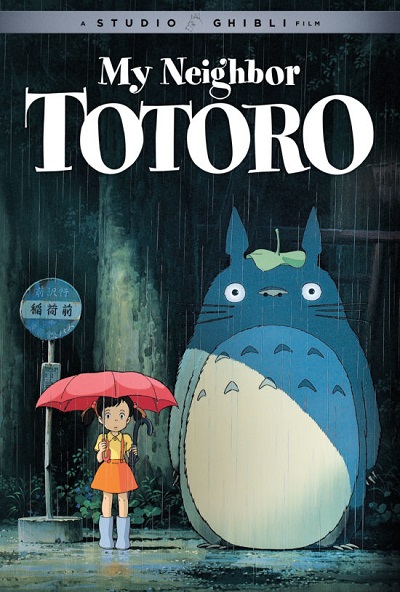
9. My Neighbor Totoro (Hayao Miyazaki, 1988)
Times watched: 3+
My Neighbor Totoro was Studio Ghibli’s first children’s film, and while it’s not half as famous as Spirited Away in the west, you’ll probably recognize the eponymous character. The heartwarming tale of two girls recruiting a forest spirit to help their mother recover from illness stands apart from Miyazaki’s other works in being thoroughly grounded, literally. It’s his only work that lacks a persistent theme of air or water. That might sound trivial, but it gives the movie a really unique texture to me. Something in its landlocked landscape vis a vis the rest of his works makes the world feel smaller, warmer. Independently of that and Joe Hisaishi’s arguably finest score, I’m not sure the movie would do terribly much for me. Satsuki and Mei are adorable, Tatsuo and Granny are endearing, but Miyazaki continued to improve on his character development for decades beyond this film. There are side characters in Spirited Away that develop more personality than Totoro or Catbus in five minutes of screen time. Even the soot spirits, novel for their day, find much more refined character in their second appearance. It’s an early work, and that’s evident. I’m not bound to it for sentimental reasons the way longer-term fans may be.
But the music and setting fit so snugly around it that I can’t help but feel completely at ease every time I put this one on. If you want to talk about a holistic vision, Miyazaki absolutely had one walking into this film and captured it to his fullest potential at the time. The end result is a film that, despite feeling less refined in plot and character development than his later works, emits a constant warmth beyond the scale of any given scene.
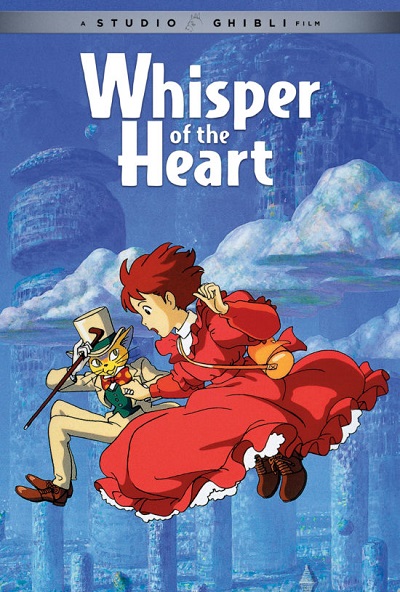
8. Whisper of the Heart (Yoshifumi Kondo, 1995)
Times watched: 2
Kondo’s only director role at Ghibli before his untimely death is one of my favorites. What a beautiful film. Despite the box art, Whisper of the Heart is set in reality. ‘High school romance’ is about the most generic description you can slap on an anime, and it’s not out of place here, but this one is just so endearing and true to itself. At 35, I’m pretty far removed from any age of self-discovery, and I didn’t exactly grow up in a world anything like Shizuku’s, but the film makes it so easy to slip into Shizuku’s life and go through the experience with her. It’s not just her, but the whole supporting cast. Sugimura’s rejection and the way he reacts to her through the rest of the film, the subtle expressions and gestures between the characters, there’s so much attention to detail in bringing all of their emotions to life. When Shizuku’s singing and Nishi and his friends come down the stairs… I don’t know, one of my childhood friends had a musical family, and there wasn’t a romantic factor but I can absolutely relate to that completely non-judgmental, beautiful emergence of sound out of one person picking up an instrument and letting their spirit take them. Maybe it’s not as direct for everybody, but this film evoked so many memories of my childhood in spite of its foreign setting that I have to imagine anyone can find an intimate connection somewhere in it.
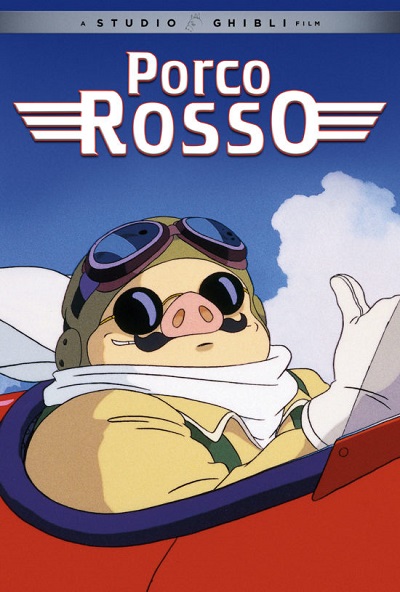
7. Porco Rosso (Hayao Miyazaki, 1992)
Times watched: 2
Something about swine noir, gets to me every time. Well, Porco Rosso is an entirely kid-friendly movie on the surface, complete with an anthropomorphic pig protagonist, and in a lot of ways it’s more conforming to expectations for a kid’s movie than most. Marco is a stereotype anti-hero, the enemies are more like lovable hoodlums than legitimate villains, and even the main antagonist Curtis is among the most likeable characters in Miyazaki’s universe. It’s charming for all of that, and the final showdown between Marco and Curtis is absolutely delightful, but there’s a lot of depth to Porco Rosso beyond its cartoony face. Marco’s playful vigilante policing of the Adriatic serves as the backdrop for exploring his less admirable past as a World War I fighter. There’s a lot of death behind the scenes that a kid wouldn’t readily pick up on. Secret police are hunting him down for desertion. His entire transformation in an otherwise human world is never explained beyond the simple quip that war turns men into pigs. Porco Rosso feels simple and straight-forward relative to Miyazaki’s other works, but it meets me half way whatever level I want to engage it on.
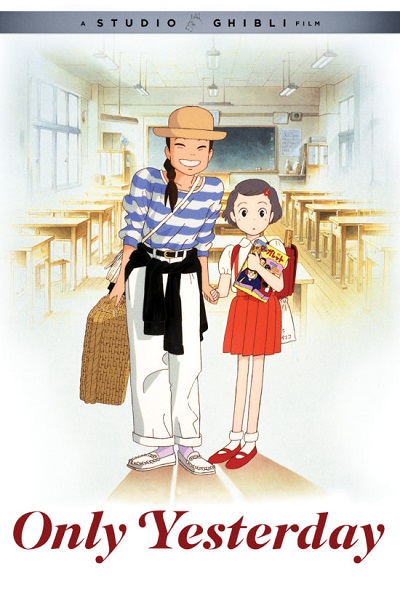
6. Only Yesterday (Isao Takahata, 1991)
Times watched: 1
Before Takahata was exploring the intricacies of how to animate raccoon dog scrotums, he was directing one of Studio Ghibli’s most grounded works. Only Yesterday is the story of a woman in her late 20s reflecting on her inner city childhood during a vacation to her aunt’s farm. That’s it. Nothing magic, nothing tragic, just a straight-forward character portrayal set to the real modern world. The heroine is homely. Her childhood is normal. The choice she is faced with in the end, if life-changing, is hardly extraordinary. It’s just a two hour display of humanity with no frills attached.
Takahata’s mastery for depicting people as they are stands strong through all of his films, but it might be the boldest here. There’s simply nothing else in play. The entire movie is propped up by and dependent on the portrayal of Taeko as a piece of non-fiction. Its broader simplicity allows Takahata the room to focus in on the complexity of the basic human experience, with all its intricate interwoven emotions. Taeko comes to life in an identifiable and immersive way that stuck with me for days. Only Yesterday keeps sneaking further up my list the longer I dwell on it. It’s beautiful, and I definitely intend to watch it again.
The soundtrack also bizarrely features Muzsikás, a Hungarian folk ensemble that I’m pretty sure I featured when I was doing music write-ups for this site a decade ago. Small world eh?
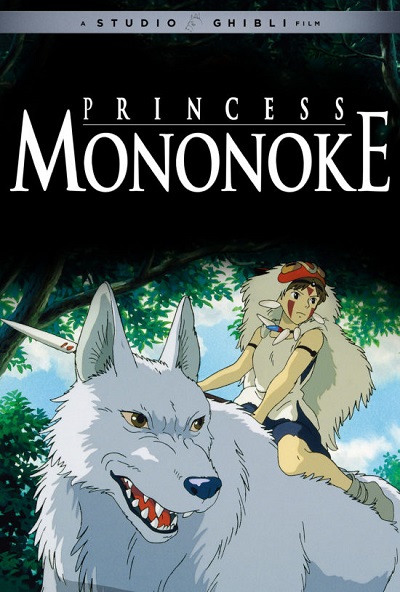
5. Princess Mononoke (Hayao Miyazaki, 1997)
Times watched: 2
This is… a difficult call, and a lot of people would argue for Princess Mononoke as #1. It definitely left me with a lot to process, so much so that it’s probably the Ghibli movie I thought about the most after watching it. Miyazaki’s distinct way of animating fluid motion hits some surreal high points in this film. I don’t know that I’ll ever forget the demon boar’s flesh withering away. So many other-worldly images etched into my mind. San’s mask. The forest spirit’s face. It’s a visually unprecedented film. It’s also Miyazaki’s most adult film, in the sense that it’s grim and tragic from start to finish.
So why only #5? Maybe that bleakness. Just like it took a lot of introspection to not tank The Tale of Princess Kaguya, Princess Mononoke had to grow on me. It didn’t exactly leave the best taste in my mouth. It takes some stewing around to discover that it’s not meant to; to find value in that negative experience. Ashitaka is a strong lead but hardly relatable. San’s desire to kill resonates stronger, and there’s no clear resolution that she or Eboshi or anyone else wins out in the end. There are no winners. That’s part of the point. I mean, the most likeable character in the film to me was Jigo, and he’s the closest thing to a true antagonist Miyazaki’s introduced since Dola’s generic role in Laputa. It leaves a lot to chew on. Perhaps it deserves a higher placement for that, but again, appreciation and enjoyment only coalesce so far. I certainly do love the film.

4. Nausicaä of the Valley of the Wind (Hayao Miyazaki, 1984)
Times watched: 2
Despite that Nausicaä predates Laputa and pursues a similar style, I feel like there’s no comparison. This movie is absolutely wild and offers better character development to boot. Nausicaä‘s world is entirely Miyazaki’s creation, the film being based on his own manga. The insect forests are surreal on a level I didn’t see again until Princess Mononoko. Nausicaä and Ashitaka are very similar characters, but Nausicaä’s given a lot more room to develop through interactions with friends and family where Ashitaka stagnates in isolation. The village legend is vague enough to manifest without feeling forced. The giant warriors fill the same role as the robots in Laputa but with all the amorphous mystique of Mononoko‘s night walker. Joe Hisaishi’s soundtrack is out of this world, and the abrupt audio transitions throughout the film are jarring in a positive way. The English dubbing dodges all of Laputa‘s shortcomings, with Patrick Stewart really stealing the show.
Yeah, video quality looks like it was ripped from a VCR tape, but I can live with that. I love the emotional range this movie projects. Nausicaä has a tangible bond to the people in her village. The insects are at once bestial and more empathetic than many of the humans fighting them. Kurotowa might not be developed to the same extent as Jigo, but he effectively doubles as light comic relief and a human face to an invading army in need of one. The way they lure the ohms is downright disturbing. Nausicaä’s Biblical sacrifice and the giant warrior’s inglorious end… One thing that really stands out to me looking back now is how everything in the film is the catalyst for its own destruction. The Tolmekian capital is destroyed by Tolmekians. Kushana pushes her ambition to ruin. The ohms’ fury leads to suicide. Nausicaä’s own fate. One of Miyazaki’s major reoccurring themes is that there are no winners in war. Nausicaä does an interesting job of portraying that.
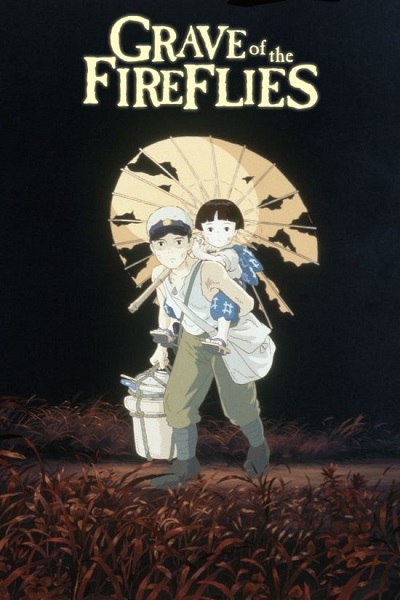
3. Grave of the Fireflies (Isao Takahata, 1988)
Times watched: 1
I’m not sure what to say about Grave of the Fireflies. Takahata’s strength is in portraying people as they are. This is a movie about World War II orphans. You get the picture. It’s more watchable for me than Princess Kaguya. From a step back, part of that is definitely rooted in the differing animation styles, the differing lengths, the more modern setting, the differing levels of action. This film is more engageable on its face. But one thing Seita and Setsuko have that Kaguya lacks is each other. Their tragedies are quite different. I can’t imagine much resistance if I said Seita and Setsuko’s tragedy is fundamentally worse. But they have each other. I think everyone should watch a couple films like this. Maybe the world would be a better place if we did. Love your kids. Moving on.
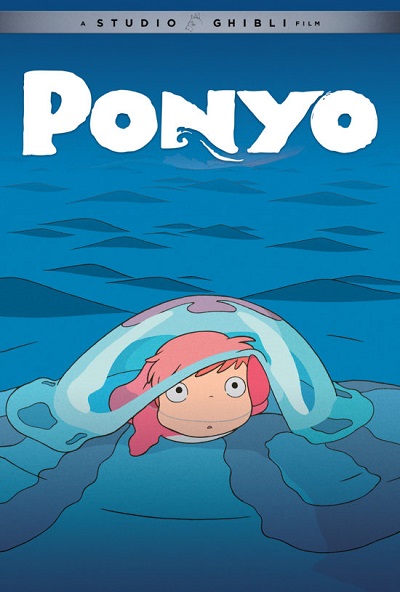
2. Ponyo (Hayao Miyazaki, 2008)
Times watched: 3+
Ponyo is a fantastic movie for kids, but I think it was made about them just as much as it was made for them. I see it trend low in a lot of lists like this, often quoting that two five year olds just don’t make for complex and compelling characters. I guess it depends on what you want out of the movie. Is Miyazaki creating a magical world for kids, or is he showing us, the adults, what a kid’s magical world looks like?
The supernatural mystery is appealing on its face. Fujimoto’s bizarre, unexplained duty to shoot colored lights at passing fish in the intro; the bubble windows of his sanctuary that hint at some rule for safe passage but never resolve on a consistent pattern; the well of life exploding into a stream of millions of half-formed sea creatures. It’s visually presented as no other animator can, and Hisaishi’s score is brilliant. The “Ponyo’s fish wave” sequence is just amazing to me–the way the music is choreographed for big booming percussion as the waves crash down onto the road; the way they phase back and forth between lifeless water and living creatures while Ponyo leaps back and forth. There’s a lot to enjoy here without digging deep, at least in the first half.
But the film gets more interesting to me when I look at how Miyazaki transforms the way Sosuke might experience life through a child’s eyes into the actual reality surrounding Lisa. Of course a kid’s going to think a simple fish can understand him, and sure enough, Ponyo comes to life. A tsunami sweeping away the village is thrilling with no awareness of the danger, and when it calms we see that everything is perfectly intact under water. Sosuke expresses no fear in the car. They’re going home. Home will be safe. So the raging sea comes to a halt at his doorstep. A fish trapped in a bottle, mom leaving for a few hours, those are the tangible sources of dread in Sosuke’s life. Rescuing Ponyo and finding Lisa then manifest as the two central plot directions of the film.
I see my children in Ponyo and Sosuke. I see a bit of myself in Lisa. (And I can’t help but think Koichi is meant to represent Miyazaki himself.) The uncompromising, innocent bond they share; the way Lisa dotes on Sosuke unconditionally while arguing with her husband; the way Lisa copes with her own bewilderment by setting the kids down, expressing herself on their level, and turning her focus onto caring for them–“Alright. Sosuke, Ponyo, life is mysterious and amazing, but we have work to do now.” It just resonates so authentically. On that note, I can’t speak for the Japanese original, but Tina Fey’s voice acting is outstanding throughout the film. The lack of action in the second half of the movie doesn’t bother me because by then I’m already so emotionally invested in the characters. Ponyo paints the big, fascinating mystery of a child’s small, isolated world directly, but the film is just as easily viewed through the eyes of the adults around them. It’s my daughter’s favorite movie, and I think it’s the single happiest thing I’ve ever watched.
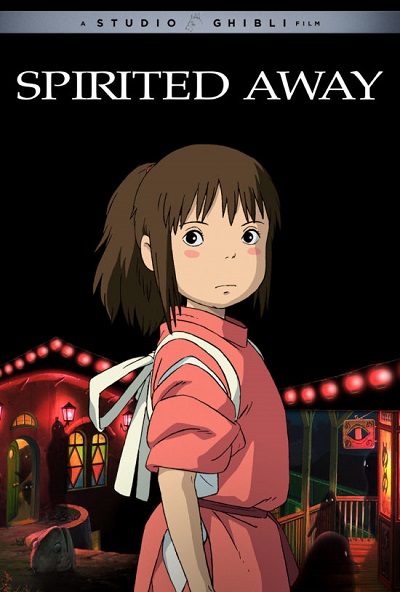
1. Spirited Away (Hayao Miyazaki, 2001)
Times watched: 3+
Where do I even begin with Spirited Away? It’s rare for ten seconds of this film to pass without some new bewildering oddity of Miyazaki’s imagination rearing its head. The bath house emits a glowing warmth that tethers the supernatural to a sense of comfort. The constant flowing water everywhere makes the world itself a reflection of the strange creatures within it. For me it’s not just about great characters, great music, a driving plot, an imaginative setting. I love how Miyazaki ties it all together with such careful attention to the surrounding ambience. I don’t think people will need much convincing to check out a film regarded as one of the greatest ever made, and there are so many brilliant components in play that no one of them makes or breaks it, but if I had to put my finger on one thing that stands out to me uniquely, it’s that constant motif of water and the bath house as a refuge from the amorphous, half-submerged world beyond. Is the bath house a safe space? Yes. No. Spirited Away doesn’t lend itself to simple black and white answers. Miyazaki poured too much life into it for that.
And there you have it. Great stuff. In summary, after mulling it over I wound up at:
1. Spirited Away
2. Ponyo
3. Grave of the Fireflies
4. Nausicaä of the Valley of the Wind
5. Princess Mononoke
6. Only Yesterday
7. Porco Rosso
8. Whisper of the Heart
9. My Neighbor Totoro
10. Pom Poko
11. The Tale of Princess Kaguya
12. The Wind Rises
13. Howl’s Moving Castle
14. Castle in the Sky
15. Kiki’s Delivery Service
16. The Cat Returns
17. My Neighbors the Yamadas
18. From Up on Poppy Hill
19. When Marnie was There
20. Arrietty
21. Tales from Earthsea
22. Ocean Waves
Hope you enjoyed. Cheers.