Here’s The Trailer For The Survivalist!


You know, everyone, the truth of the matter is that you just never know where John Malkovich is going to pop up nowadays.  He’s done the serious actor bit and now, he’s enjoying the career of a prestige actor who appears in action and direct-to-video films.  And you now what?  Good for him!

Seriously, the man deserves to make some of that Christopher Walken/Bruce Willis money.

Here’s John Malkovich in the trailer for The Survivalist!

Happy Friday the 13th From The Shattered Lens


Originally, Jeff and I were planning on going up to the lake this weekend.

It’s something that we’ve been wanting to do for a while, just to get away from everything for a day or two. It’s summer in Texas, which means that it’s incredibly hot right now. The lake is awfully inviting in the summer. Originally, we thought we might go last week but I ended up getting sick and spending almost the entire week in bed. So, it made sense to just go this week, right?

Except …. well, did you happen to notice what day it is today?

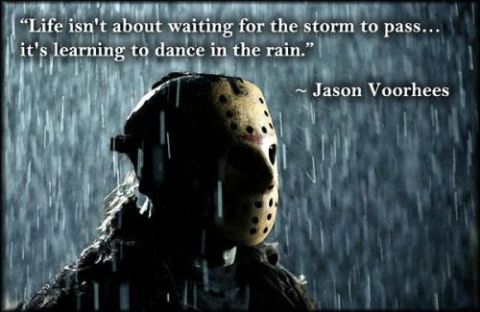
Listen, at heart, I’m a skeptical person. One reason why horror films don’t bother me is because I don’t believe in ghosts or witches or magic or zombies or death curses or any of that other stuff. I don’t even believe in aliens. I’m not a superstitious person and I have to admit that I always find myself a bit confused whenever I talk to anyone who is. And yet, even I know better than to tempt fate by going up to the lake on the weekend of Friday the 13th. That’s the power of the tale of Jason Voorhees, his mother, and a New Jersey camp called Crystal Lake. Even the most skeptical among us know better than to mess around with Jason. There’s a 99.9% chance that Jason doesn’t exist and, even if he did, he would be way up in New Jersey but still, just the fact that there’s a .1% chance that he might be out there somewhere …. that’s enough to keep me home for the weekend!

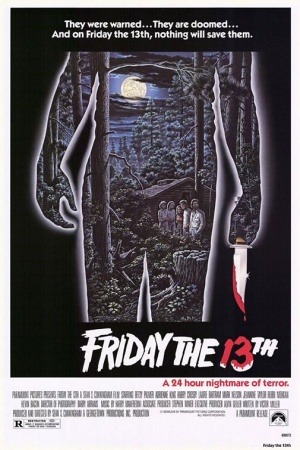
With that in mind, Happy Friday the 13th! I’m celebrating by watching the original films, the one that were produced by Paramount Pictures in the 80s. By that, I mean the films that came out before Jason Goes To Hell turned everyone’s favorite hockey masked serial killer into a space slug. Say what you will about these films, they are an undeniable part of our culture and they’re amongst the most influential movies ever made. Personally, I prefer the first film, the 2nd film, and the 4th film. I’ll also defend Friday The 13th: A New Beginning because I enjoy being a contrarian. At its best, the franchise was an American tribute to giallo. At its worst …. well, we’ve all seen Part 3, right?

However you celebrate, stay safe! And maybe we’ll see you up at the lake next week!

(And if you need something to do, be sure to check out this article, full of Friday the 13th trivia, that I wrote a few Friday the 13ths ago!)

Film Review: Falling (dir by Viggo Mortensen)


If you’re one of the many people who watched The Father and thought to yourself, “Good movie but I wonder what it would have been like if every character involved had been thoroughly unlikable and one-dimensional,” Falling might be for you.

I almost felt guilty writing that paragraph because Falling is the directorial debut of actor Viggo Mortensen and Mortensen has been very open about how several members of his family have struggled with dementia. He lost both his mother and his father to dementia and he served as his father’s caretaker during the last year of his life. As Falling is film about a man taking care of his father when the latter develops dementia, it’s easy to see that this film is a very personal one for Mortensen. Unfortunately, as both a director and a screenwriter, Mortensen basically leads his story straight into a dead end.

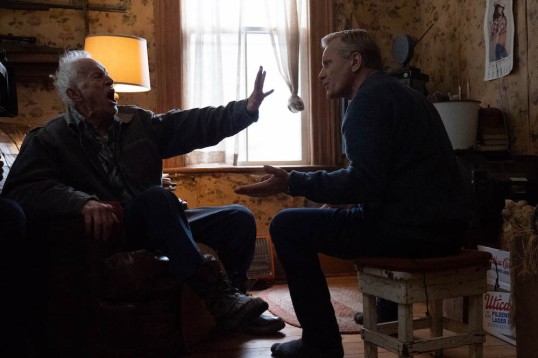
Lance Henriksen plays Willis Peterson, a bigoted and angry old farmer who is being taken care of by his estranged son, John (Viggo Mortensen) and John’s husband, Eric (Terry Chen). John hopes to find Willis a new and nearby place to live so that he and his sister, Sarah (Laura Linney), can check in on him. Willis is occasionally charming in a irascible old man way but, usually, he’s just abrasive, abusive, angry and a bit of a homophobe. He’s also losing his memory, continually forgetting that his wife is dead and talking about all of the ways that John and Sarah disappointed him when they were teenagers.

The film asks whether or not Willis was always an asshole or if he’s just asking like this because he’s suffering from dementia. That would be an interesting question if not for the fact that the film is also full of heavy-handed flashbacks that reveal that, without any doubt, Willis was always an asshole. The problem is that, once you realize that Willis was an unbearable young parent and an unbearable middle-aged crank, it becomes difficult to care much about him once he becomes an unbearable old man. If The Father showed how dementia changes one’s personality and way of looking at the world, the message of Falling seems to be that terrible things also happen to terrible people. And while that’s a certainly true statement, it doesn’t make for a particularly compelling narrative.

One does have to give Mortensen some credit for giving Lance Henriksen a leading role. Henriksen not only looks like he could conceivably by Viggo Mortensen’s father but he does what he can to suggest that, under all of the bluster and the anger and the hateful words, Willis is ultimately a man who is scared because the world is transforming into one that he’s not capable of understanding. That’s a idea that is present in the film almost solely due to Henriksen’s performance and the few scenes that are genuinely interesting to watch are almost all due to his efforts. There’s no winking at the audience during Willis’s many abrasive moments and Henriksen deserves credit for fearlessly and honestly playing a character that most viewers aren’t going to like.

Unfortunately, the rest of the film doesn’t live up to the promise of Henriksen’s performance. The script often feels repetitive and neither Mortensen nor Linney make much of an impression as Henriksen’s children. (Linney, as happens far too often, feels especially wasted, leaving viewers to wonder what happened to the actress who, long ago, gave such a fierce performance in Mystic River.) The scene where Henriksen meets Linney’s children is especially poorly-written and seems to go on forever. It becomes clear that, as a director, Mortensen has a good visual eye but no idea how to build or maintain narrative momentum with a story that centers on characters who are incapable of moving forward.. One watches the film and admires Mortesen’s intentions but emotionally, the whole production feels remote and overly studied. Falling underwhelms.

Scenes That I Love: Billy Jack Learns About The Three Levels In The Trial of Billy Jack


Monday would have been the 90th birthday of Tom Laughlin, the actor who revolutionized independent American cinema through his Billy Jack films.

In four films, Laughlin played Billy Jack, an American Navajo, a former Green Beret, a veteran of the Vietnam War, a hapkido master, and a man who just protects children and other living things.  When he first appeared in 1967’s The Born Losers, he was protecting a woman from bikers.  In 1971’s Billy Jack, he was protecting the Freedom School from ignorant townspeople.  In 1974’s The Trial of Billy Jack, he was …. well, in that film, Billy Jack did a little bit of everything but the National Guard still ended up destroying the Freedom School.  Finally, in 1977’s Billy Jack Goes To Washington, Billy was appointed to the United Stated Senate because what else are you going to do with someone who has killed a tremendous amount of people over the course of three films?

(Of course, in Senator Jack’s defense, they were all bad people.)

Laughlin not only starred as Billy Jack but he also directed all four of the films and, starting with Billy Jack, he also handled the distribution of them.  A huge box office hit, Billy Jack is considered to be a seminal counter culture film.  The other three films are a bit less acclaimed and Trial of Billy Jack is often cited as one of the most pretentious and self-indulgent films ever made.  But, regardless of their individual artistic merits, all of the Billy Jack films share an appealing mix of sincerity and silliness.  Laughlin was a good actor and, visually, he was a stronger director than he was often given credit for. Some of the shots in the original Billy Jack are breath-taking.  At a time when even self-styled progressive films still portrayed women in the most condescending and demeaning way possible (check out Getting Straight or R.P.M., if you dare), the Billy Jack films were as much about Jean (played by Delores Taylor, Laughlin’s wife and creative partner), the founder of the Freedom School, and her beliefs, as they were about Billy Jack and his struggles to accept pacifism.  If nothing else, the Billy Jack films featured actual conversations and debates about actual ideologies and philosophies, as opposed to the usual shallow Hollywood politics.  Unfortunately, Laughlin was also a heavy-handed storyteller and a terrible editor.  The Trial of Billy Jack goes on for three hours.

And yet, of all the Billy Jack films, The Trial of Billy Jack is my favorite.  It’s just so weird that it’s hard not to like it.  It’s a film that doesn’t really work but, at the same time, you can’t help but appreciate all the effort that was put into it.  Whatever else you might be able to say about him and his films, it’s obvious that Tom Laughlin truly did think that the movies could make a difference.  There’s an aching sincerity to Laughlin’s work that pretty much cannot be found in the majority of today’s films.

In honor of Laughlin’s birthday and his legacy, here’s a scene that I love from The Trial of Billy Jack.  In this scene, Billy goes on a vision quest and experiences the Three Levels.  I would be lying if I said I really followed much of the logic in the scene but at least we get to see Billy hit a hippie professor.  Billy also smacks Jesus, which isn’t cool but Jesus shows exactly how to handle that type of belligerence and hopefully, he provides a lesson for us all.

Learn about the Three Levels, with Billy Jack.  And be sure to spare a thought for the hard work of Tom Laughlin.

Film Review: Macho: The Hector Camacho Story (directed by Eric Drath)


It has been nearly ten years since Hector “Macho” Camacho was murdered in Puerto Rico.

He was shot while sitting in a parked car, by several gunmen who fired from a passing SUV.  The driver of the car, Camacho’s childhood friend Adrian Mojica Moreno, was also shot.  Moreno died at the scene.  Camacho died four days later.

Since then, there’s been a lot of speculation about who may have ordered a hit on Camacho.  At one time, Camacho was one of the world’s biggest celebrity athletes, a boxer who was both loved and hated by boxing fans.  He was also well-known for his struggles with addiction and his self-destructive behavior.  After he was shot, nine bags of cocaine were found in his car, leading many to suspect that the hit was the result of drug deal gone wrong.

However,  not even the details surrounding his death could overshadow Camacho’s accomplishments inside the ring.  His flamboyant antics and costumes may have driven purists crazy but Camacho was a fighter who could usually be trusted to back up his bluster once the fight began. From 1980 to 2010, he fought 88 professional fights and compiled a 79-6-3 record.  Along the way he won and lost multiple titles, went from being viewed as a scrappy underdog to a villain, and he fought everyone from Oscar De La Hoya to Julio Cesar Chavez to Sugar Ray Leonard, Roberto Duran, and Vinny Paziena.

The documentary Macho: The Hector Camacho Story takes a look back at Camacho’s career in the ring and his life outside of it.  While it doesn’t shy away from discussing his struggles (and the final thirty minutes are dominated by his murder), the best part of the documentary is the footage of Camacho in his prime, throwing punches and defeating opponent after opponent.  The film shows why Camacho was one of the best boxers of his era while also acknowledging why his success drove so many fight fans crazy.  This is a documentary that will be appreciated by those who remember what the sport of boxing once was, when the fighters could not only play to the stands but could throw a punch as well.  It’s both an exciting boxing film and a study of a fighter who could beat almost any opponent but not his own demons.

6 Shots From 6 Films: Special Wes Craven Edition


4 (or more) Shots From 4 (or more) Films is just what it says it is, 4 (or more) shots from 4 (or more) of our favorite films. As opposed to the reviews and recaps that we usually post, 4 (or more) Shots From 4 (or more) Films lets the visuals do the talking.

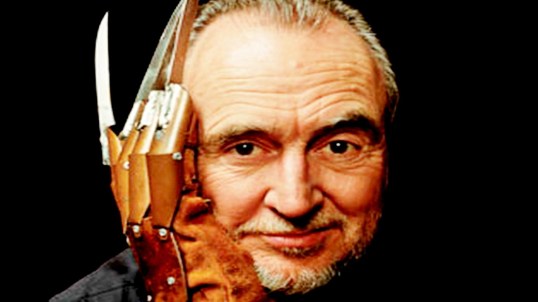
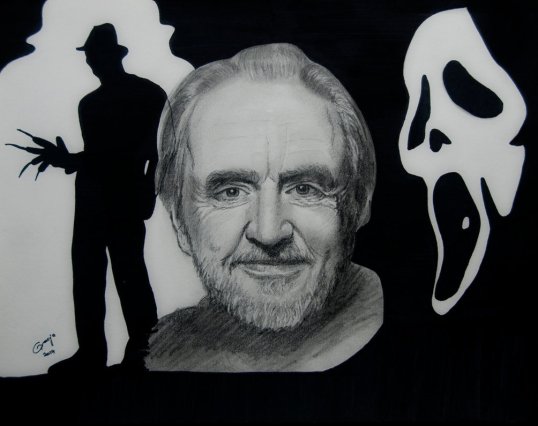
Today would have been Wes Craven’s 82nd birthday.  I have to admit that I was shocked to be reminded that Craven was 76 years old when he tragically passed away in 2015.  I always assumed that he was much younger, perhaps in his late 50s.  Perhaps that’s because Craven himself always seemed so energetic and enthusiastic about both horror and cinema.  He was one of the best ambassadors that the horror genre could have asked for.

Today, in honor of Wes Craven, we present to you….

6 Shots From 6 Wes Craven Films

The Hills Have Eyes (1977, dir by Wes Craven, DP: Eric Saarinen)

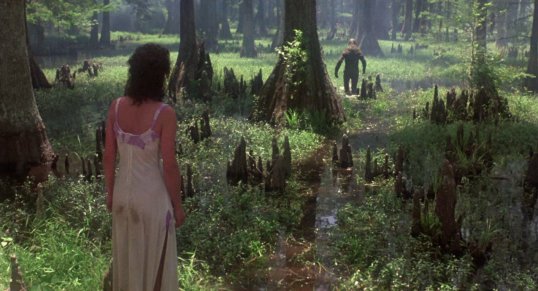
Swamp Thing (dir by Wes Craven, DP: Robbie Greenberg)

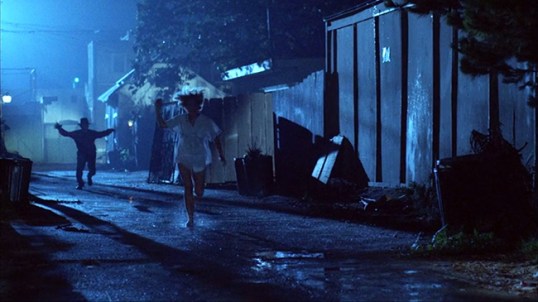
A Nightmare on Elm Street (1984, dir by Wes Craven, DP: Jacques Haitkin)

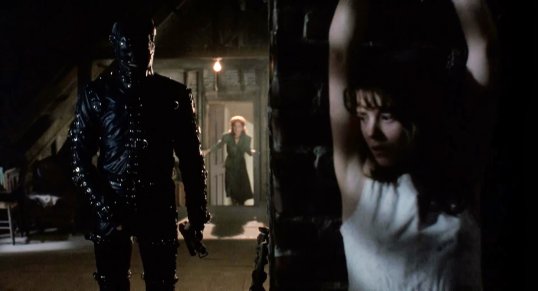
The People Under The Stairs (1991, dir by Wes Craven, DP: Sandi Sissel)

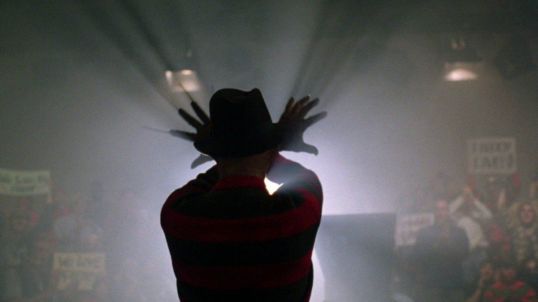
New Nightmare (1994, dir by Wes Craven, DP: Mark Irwin)

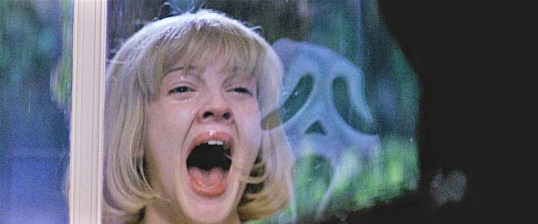
Scream (1996, dir by Wes Craven, DP: Mark Irwin)

Thank you for the cinematic memories, Wes Craven.

(Credit: Gracja Waniewska)


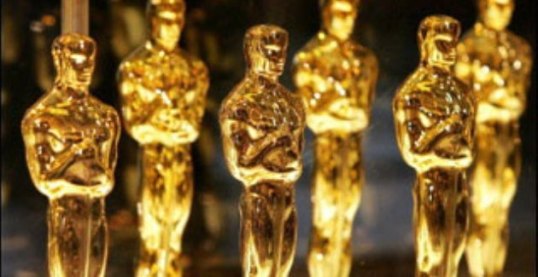
Lisa Marie’s Early Oscar Predictions For July


It’s that time of the month again!  It’s time for me to make my early Oscar predictions.

This year, the Cannes Film Festival really didn’t clear much up.  The French Dispatch was acclaimed but, in every review, there was an admission that, for everyone who absolutely loved it, there would probably be someone else who would absolutely hate it.  I did decided to include Red Rocket on my list of predictions, based on the Cannes reaction.  I’m still not a 100% convinced that it’s going to be a contender, of course.  But the idea of a Simon Rex movie being nominated for best picture was just too wonderfully strange for me to ignore.  That’s the same logic that led to me including Pig as a best picture nominee, by the way.

On the Ridely Scott front, the overacting in the trailer for House of Gucci really turned me off so I dropped it from all of my predictions.  The Last Duel looks like it might have a chance, however.

Anyway, the main thing to remember when looking at these predictions is that the majority of them are just random guesses, based on hunches and past Academy behavior.  So, as always, take them with several grains of salt.

If you’re curious to see how my thinking has developed, check out my predictions for March and April and May and June!

Best Picture

Belfast

A Journal For Jordan

The Last Duel

Nightmare Alley

Pig

The Power of the Dog

Red Rocket

Soggy Bottom

The Tragedy of MacBeth

West Side Story


Best Director

Pedro Almodovar for Parallel Mothers

Paul Thomas Anderson for Soggy Bottom

Jane Campion for The Power of the Dog

Guillermo Del Toro for Nightmare Alley

Denzel Washington for A Journal For Jordan

Best Actor

Nicolas Cage in Pig

Clifton Collins, Jr. in Jockey

Michael B. Jordan in A Journal For Jordan

Will Smith in King Richard

Denzel Washington in The Tragedy of MacBeth

Best Actress

Jessica Chastain in The Eyes of Tammy Faye

Penelope Cruz in Parallel Mothers

Jennifer Hudson in Respect

Nicole Kidman in Being The Ricardos

Tessa Thomspon in Passing

Best Supporting Actor

David Alvarez in West Side Story

Bradley Cooper in Soggy Bottom

Adam Driver in The Last Duel

Simon Helberg in Annette

Jesse Plemons in The Power of the Dog

Best Supporting Actress

Chante Adams in A Journal For Jordan

Ariana DeBose in West Side Story

Ann Dowd in Mass

Marlee Matlin in CODA

Ruth Negga in Passing
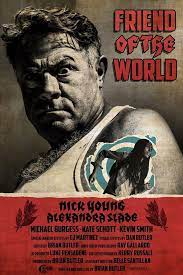
Film Review: Friend of the World (dir by Brian Patrick Butler)


At the start of 2020’s Friend of the World, we know that something bad has happened to the world but we don’t know what. An aspiring filmmaker named Diane (Alexandra Slade) wakes up in what appears to be a room in an underground bunker. Dead bodies surround her. When one turns out to be not quite dead, Diane shoots him in the head. Is it a mercy killing or is it an act of self-defense?

As we soon learn, Diane is not alone in the bunker. There’s a man named Gore (Nick Young), who appears to be some sort of military office and who, on occasion, even sound like he could be a direct descendant of Jack D. Ripper, the paranoid general played by Sterling Hayden in Dr. Strangelove. When we first see Gore, he’s standing directly over Diane, speaking as he shaves. Shaving cream falls from his face, down on Diane. Gore never apologizes, not for that or anything else. And while it quickly become clear that the world is no longer place where apologies and rudeness are anyone’s number one concern, it’s hard not to suspect that Gore probably wasn’t the apologizing type even before the world ended.

Gore leads Diane through the bunker, explaining how and why the world has ended and speaking rather ominously about how it’s going to fall to the survivors to repopulate the world. While Diane worries about the fate of her girlfriend, Gore smokes cigars and randomly fires guns. When they speak to each other, it’s often in somewhat bizarre cadences and phrases, the type that leave us to wonder if they’ve really just met or if we’re watching some sort of ritual develop.

We also discover that the two of them are not alone in the bunker. Others make brief appearances, as the situation grows more claustrophobic and more bizarre. One man bursts out of another, in a scene that will bring to mind the infamous chest bursters from Alien. Another mysterious figure shows up to repair a chair while moving in a herky-jerky fashion that almost suggests he might be an puppet on a string. When a more familiar figure shows up, Diane is forced to not only realize how much the world has changed but also consider her new role within it.

Clocking in at a little under an hour, Friend of the World is a surreal look at the end of the world, one that mixes the body horror of David Cronenberg with the dark humor and circular conversations of Samuel Beckett with just a hint of Kubrickian satire. For all the horror elements that are found in the film (and for all of the memorably gruesome special effects), the ultimate horror of Friend of the World comes from the knowledge that, should you survive the apocalypse, you’ll still have little control over who survives with you.

Director Brian Patrick Butler emphasizes the claustrophobic conditions of the bunker, a version of Hell from which there really is no exit. The scenes in the bunker are shot in harsh black-and-white while Diane’s memories of her girlfriend and a few scenes shot above ground are filmed in almost garish color, a simple technique that pays off surprisingly well. Both Alexandra Slade and Nick Young do a good job of bringing their enigmatic characters to life, with Slade especially capturing Diane’s mix of confusion, fear, and anger. As well, Kathryn Scott makes a strong impression with limited screen time in the small but key role of Diane’s girlfriend.

Friend of the World provides an intriguing look at the end of the world.

Here’s The Trailer for King Richard


After being delayed by the COVID pandemic, King Richard is finally coming out later this year. King Richard is a film about Richard Williams, the father and coach of tennis superstars Venus and Serena Williams. Richard Williams will be played by Will Smith and that seems like such perfect casting that a lot of forecasters are already predicting that this role might land Will Smith his third Oscar nomination.

Here’s the trailer for King Richard: