Retro Television Reviews: The Great Niagara (dir by William Hale)


Welcome to Retro Television Reviews, a feature where we review some of our favorite and least favorite shows of the past!  On Sundays, I will be reviewing the made-for-television movies that used to be a primetime mainstay.  Today’s film is 1974’s The Great Niagara!  It  can be viewed on YouTube!

The Great Niagara takes place during the Great Depression.

With the world mired in economic uncertainty and the threat of war right around the corner, people are more desperate than ever for entertainment.  One of the latest fads is attempting to conquer the Niagara by going over the falls in some sort of raft.  If done correctly, it can lead to fame and fortune.  But, if one mistake is made while trying to steer the raft against the rapids and the rocks, it can lead to death.  In fact, death is the usual outcome of most people’s efforts to conquer the Niagara.  It’s actually illegal to try to ride anything over the falls but people still try to do it and crowds still gather to watch the attempts.

Old Aaron Grant (Richard Boone) is obsessed with conquering the Niagara but, because he’s been injured in too many attempts, all he can do now is sponsor and try to help others who are willing to take the risk.  Aaron is the type who will look out at the Niagara and angrily shake his fist.  He hates the river and he hates the falls but they’re also the only thing that gives his life meaning.  After Aaron’s latest protegee, Ace Tully (Burt Young), fails in his attempt to go over the falls, Aaron starts to put pressure on his sons to make the attempt.  Lonnie Grant (Michael Sacks) knows that Aaron has allowed his obsession to drive him mad and he’s also promised his wife, Lois (Jennifer Salt), that he won’t go over the falls.  However, Carl Grant (Randy Quaid) is desperate for his father’s approval and it’s not long before he’s getting ready to enter the barrel and risk his life.

The Great Niagara is a short but interesting film.  It’s based on historical fact.  There’s been a long history of people risking their lives with stunts at Niagara Falls.  A few years ago, there was a live television broadcast of someone walking over the falls on a tightrope.  It was a huge rating success and it was, of course, sold as a tribute to the human spirit.  That said, it’s entirely believable that a good deal of the people watching were doing so because they were curious about what would happen if the guy fell off the wire.  By that same token, the crowds that we see in The Great Niagara are far more concerned with seeing someone go over the falls than they are with whether or not that person survives the experience.  Richard Boone gives an obsessive, half-mad performance as Aaron and Michael Saks does a good job as the voice of reason.  Randy Quaid gives a poignant performance as poor Carl, who is so desperate for his father’s approval that he’s willing to risk his life to try to get it.  That said, the true star of the film is the Niagara itself, which is beautiful but obviously dangerous.  When Aaron shakes his fist at the falls, it’s hard not to feel that the Niagara isn’t doing the same back at him.
May Positivity: Fenced Off (dir by Brad Wise)


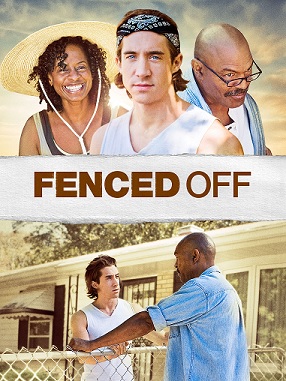
2011’s Fenced Off tells the story of Josh (Joshua Zirger) and George (Reggie Willis).

Josh is a young white social worker who has just moved onto a street where all of his neighbors are black.  His mother worries that Josh and his wife, Anne, are going to become crime statistics.  All of Josh’s friends tend to say things like, “Isn’t that neighborhood a little urban for you?”  Josh’s dumbass brother thinks that it would be a good idea to show up at Josh’s house wearing a durag and pouring a bottle of wine out on the driveway.  Josh is a nice guy but he sure does know a lot of dumb people.

Meanwhile, George (Reggie Willis) has lived on the block for 17 years.  He’s not at all happy when Josh shows up and he goes out of his way to avoid talking to his new white neighbors.  George’s best friend suggests that George might be a “bigot” but George denies it.  He says that he has a lot of reasons to not want to talk to Josh.  The fact that Josh is a dorky white guy is just one of them.

One week, while his wife is out of town, Josh’s life falls apart.  He offends a group of teenagers when he assumes that they’re approaching him because they want to mug him.  (Instead, they just want to return the $4.00 that he dropped while running.)  He freaks out when he hears a gunshot in the distance and, when George makes a joke about gangs in the area, Josh briefly worries that George might be a gang member.  Josh finds a white package on his property and automatically assumes that some drug dealers dropped a package of cocaine on his front lawn.  George grabs the package and reveals that it just a bag of  diapers.

It’s certainly a well-intentioned film and Josh and George are both portrayed as being complex characters who are sometimes right and sometimes wrong.  There’s actually a rather insightful scene in which Josh attempts to soothe things over with George by talking about how his family struggled financially when he was a kid just for George to call him out for assuming that George must be from a poor background.  When Josh argues that his best childhood friend was black, George wonders why every white guy claims to have had a black best friend who moved away in the 8th grade.  George has a point with both comments.  “I didn’t grow up rich” and “my best friend was/is black” are two of the most regularly repeated claims in white America today.

But, that said, Fenced Off doesn’t really work. Due to a lot of unnecesssary padding, the otherwise slight story unfolds a bit too slowly and the acting is often amateurish.  The actor who played Josh’s brother especially tended to overact.  (I’ve noticed that, when it comes to indie films like this one, it seems like there’s always at least one former theater kid who gets cast as a sidekick who proceeds to shout out all of his lines.)  Fenced Off has good intentions but the film is ultimately left down by its execution.

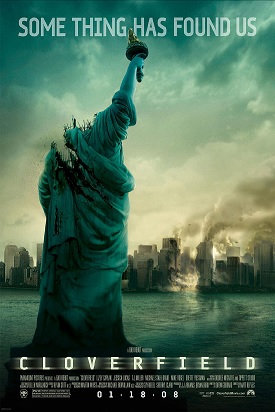
Live Tweet Alert: Watch Cloverfield with #ScarySocial


As some of our regular readers undoubtedly know, I am involved in a few weekly live tweets on twitter.  I host #FridayNightFlix every Friday, I co-host #ScarySocial on Saturday, and I am one of the five hosts of #MondayActionMovie!  Every week, we get together.  We watch a movie.  We tweet our way through it.

Tonight, for #ScarySocial, Deanna Dawn will be hosting 2008’s Cloverfield!

If you want to join us on Saturday night, just hop onto twitter, start the film at 9 pm et, and use the #ScarySocial hashtag!  The film is available on Prime.  I’ll probably be there and I imagine some other members of the TSL Crew will be there as well.  It’s a friendly group and welcoming of newcomers so don’t be shy.

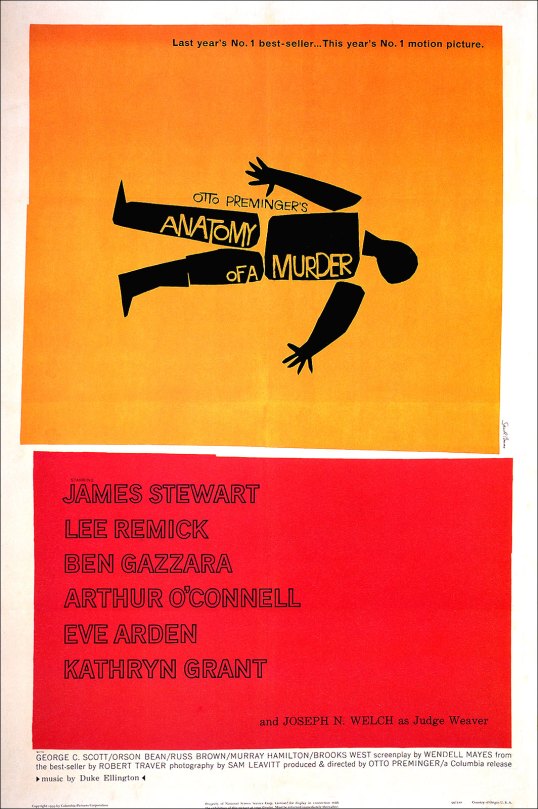
Scenes I Love: James Stewart Explains The Four Ways To Defend Murder In Anatomy of a Murder


On this date, in 1908, James Stewart was born in Pennsylvania.  Over the course of a long career that saw him become a favorite of every director from Frank Capra to John Ford to Alfred Hitchcock to Anthony Mann, Jimmy Stewart gave a series of amazing performances.  My favorite Stewart film is, of course, It’s A Wonderful Life.  But I also love Stewart’s performance in 1959’s Anatomy of a Murder.  Playing a somewhat cynical attorney, Stewart received his final Oscar nomination for Best Actor for his work in this classic and influential film.

In today’s scene that I love, James Stewart explains to his client (played by Ben Gazzara) that there are four ways that he can defend a murder charge.  The contrast between Stewart’s classic style and Gazzara’s intense method style makes for an intense scene between two very talented and unique actors.

Live Tweet Alert: Join #FridayNightFlix for Fletch!


As some of our regular readers undoubtedly know, I am involved in a few weekly live tweets on twitter.  I host #FridayNightFlix every Friday, I co-host #ScarySocial on Saturday, and I am one of the five hosts of #MondayActionMovie!  Every week, we get together.  We watch a movie.  We tweet our way through it.

Tonight, at 10 pm et, #FridayNightFlix has got 1985’s Fletch!

If you want to join us this Friday, just hop onto twitter, start the movie at 10 pm et, and use the #FridayNightFlix hashtag!  It’s a friendly group and welcoming of newcomers so don’t be shy.

Fletch is available on Prime!  See you there!

4 Shots From 4 Films: Special Albert Pyun Edition


4 Shots From 4 Films is just what it says it is, 4 shots from 4 of our favorite films. As opposed to the reviews and recaps that we usually post, 4 Shots From 4 Films lets the visuals do the talking!

Today, on what would have been his 70th birthday, we celebrate filmmaker Albert Pyun!

It’s time for….

4 Shots From 4 Albert Pyun Films

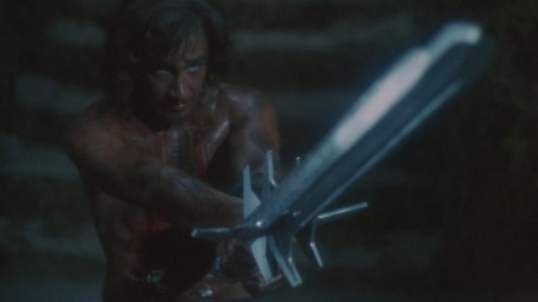
The Sword and the Sorcerer (1982, dir by Albert Pyun, DP: Joseph Margine)

Cyborg (1989, dir by Albert Pyun, DP: Philip Alan Waters)

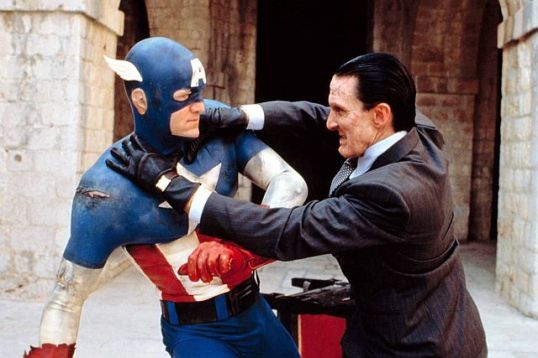
Captain America (1990, dir by Albert Pyun, DP: Philp Alan Waters)

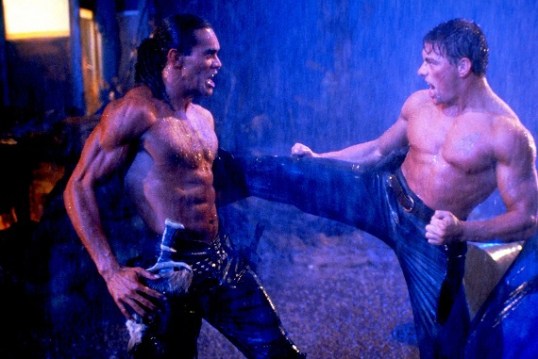
Kickboxer 2 (1991, dir by Albert Pyun, DP: George Mooradian)

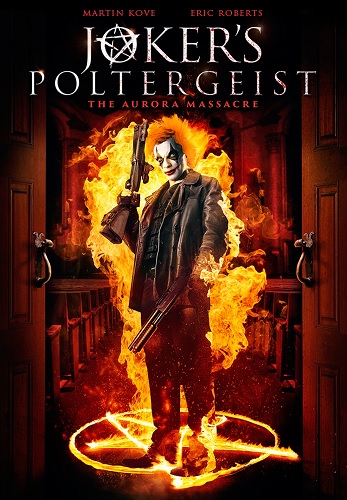
The Eric Roberts Collection: Joker’s Poltergeist (dir by Christopher S. Lind)


In 2020’s Joker’s Poltergeist (also known as Joker’s Wild), Eric Roberts plays James Jennings.  Jennings was a part-owner of the Palace Theater Chain until his partner, Rand Place (Martin Kove), forced him out and gave the business to his daughter, Aurora Place (Lacie Marie Meyer).  After apparently filming himself discussing how he is going to be starting a movement and how no one is ever going to forget him, James dresses up like a clown, goes down to the theater, and guns down the audience of a film called Joker’s Wild.  He also kills Rand before being shot himself by another theatergoer, William Remmington (Ari Boyland).

Clips of James’s final message are shown throughout Joker’s Poltergeist but we never actually see Roberts interacting with the rest of the cast.  (When James starts shooting people at the theater, he does so under a mask that he never removes and the end credits indicate that an actor other than Roberts played James in those scenes.)  This is obviously one of those films where Roberts filmed his scenes over the course of an hour or two, probably in his own office.  He certainly wasn’t on the set.  The same can be said of Martin Kove, who only appears as a part of a video message that Rand taped for Aurora before the shooting.  For that matter, Dustin Diamond appears for a few brief seconds and again, only as a part of a filmed message that Aurora watches.

Instead, the majority of the film takes place a year after the shooting.  Aurora is fighting to not only re-open her theater but to also keep concealed carry legal in her state.  She is now dating William and is a part of a support group made up of other survivors of the massacre.  From the moment Aurora reenters the old theater, she starts to have strange visions of killer clowns, demonic doctors, and sleazy politicians.  “You shouldn’t like guns….” the evil doctors chant at her.  At one point, she and her friends are trapped in the theater and being taunted by the spirits of the dead and, at another point, Aurora is suddenly in a hospital and being menaced by killer nurses.  Aurora struggles to figure out what is real and what is a dream, with the film suggesting that theater itself has become a separate dimension that is populated by James’s victims.  At its best, the film plays out like an unsettling nightmare, the type that doesn’t necessarily cause you to wake up screaming but which still remains fresh in your mind throughout the day.

On the one hand, the film is obviously based on the 2012 Dark Knight Rises shooting that it feels more than a little distasteful.  On the other hand, the film is intriguingly surreal and Lacie Marie Meyer gives a really good performance as Aurora.  (Yes, it would appear that she was named after Aurora, Colorado, which is one reason why the film feels so distasteful even though it has a handful of effective moments.)  The film does attempt to say something about guns, with Aurora being a proponent of the 2nd amendment and the gun-grabbing mayor and his wife being behind the efforts to tear down the theater.  It’s hard to really say which side the film comes down on, though I think it’s ultimately more pro-gun control than anything else.  That said, the film’s portrayal of the mayor and his wife as being vapid politicians who want to keep their own guns while taking away everyone else’s felt true to life.

Joker’s Poltergeist is ultimately a bit too icky and exploitive to really work but it still has its moments.  It’s a movie that keeps you guessing, if nothing else.

Previous Eric Roberts Films That We Have Reviewed:

  1. Star 80 (1983)
  2. Blood Red (1989)
  3. The Ambulance (1990)
  4. The Lost Capone (1990)
  5. Love, Cheat, & Steal (1993)
  6. Love Is A Gun (1994)
  7. Sensation (1994)
  8. Doctor Who (1996)
  9. Most Wanted (1997)
  10. Mr. Brightside (2004)
  11. Six: The Mark Unleased (2004)
  12. Hey You (2006)
  13. In The Blink of an Eye (2009)
  14. The Expendables (2010) 
  15. Sharktopus (2010)
  16. Deadline (2012)
  17. Miss Atomic Bomb (2012)
  18. Lovelace (2013)
  19. Self-Storage (2013)
  20. This Is Our Time (2013)
  21. Inherent Vice (2014)
  22. Road to the Open (2014)
  23. Rumors of War (2014)
  24. A Fatal Obsession (2015)
  25. Stalked By My Doctor (2015)
  26. Stalked By My Doctor: The Return (2016)
  27. The Wrong Roommate (2016)
  28. Stalked By My Doctor: Patient’s Revenge (2018)
  29. Monster Island (2019)
  30. Seven Deadly Sins (2019)
  31. Stalked By My Doctor: A Sleepwalker’s Nightmare (2019)
  32. The Wrong Mommy (2019)
  33. Free Lunch Express (2020)
  34. Her Deadly Groom (2020)
  35. Top Gunner (2020)
  36. Just What The Doctor Ordered (2021)
  37. Killer Advice (2021)
  38. The Poltergeist Diaries (2021)
  39. My Dinner With Eric (2022)

Can You Find The Wolves In This Picture? Here’s The Trailer for Martin Scorsese’s Killers of the Flower Moon!


There’s been a lot of controversy about the length of Martin Scorsese’s upcoming film, Killers of the Flower Moon, with many of the same people who regularly praise 150-minute comic book films complaining that Scorsese shouldn’t be allowed to devote over 3 hours and 26 minutes to telling the story of the Osage murders.  You can probably already guess from my tone that I have no problem with the idea of watching a 206-minute Martin Scorsese film.

The trailer for Killers of the Flower Moon was released earlier today.  (The film itself will be premiering at Cannes in just a few more days.)  The trailer looks great, with Robert De Niro and Leonardo DiCaprio appearing to be in fine form.  (Reportedly, the film’s hero is played by Jesse Plemons but he’s barely glimpsed in the trailer.  It makes sense, of course.  For a lot of people, one of the main attractions of Killers of the Flower Moon will be a chance to see Scorsese’s two regular leading men, DiCaprio and De Niro in the same film.  Yes, I know about This Boy’s Life but come on, that was Michael Caton-Jones.  This is Scorsese!)  Can you find the wolves in this picture?

Scenes That I Love: Senator Smith Tells Off The Establishment In Frank Capra’s Mr. Smith Goes To Washington


Today is Frank Capra’s birthday!  Capra was born 126 years ago, on this date, in Sicily.

Now, if you’ve been reading this site for a while, you should know that my favorite Capra film is It’s A Wonderful Life.  However, a close second is 1939’s Mr. Smith Goes To Washington.  In today’s scene that I love, Sen. Jefferson Smith (Jimmy Stewart) holds the Senate floor as he denounces the corruption that he sees all around him in Washington.  There’s a reason why Senator Smith is still held up as the ideal public servant.  It’s just a shame that he was a fictional character.

The TSL Grindhouse: Killing American Style (dir by Amir Shervan)


Filmed in 1988 but apparently not released until 1990, Killing American Style is a low-budget variation on The Desperate Hours.

The film opens with a ruthless criminal named Tony Stone (Robert Z’Dar, of Maniac Cop fame) leading a daring robbery of an ice cream truck depot.  All of the ice cream trucks have come back for the day and, when Tony and the boys show up, the money is still being counted.  Tony quickly takes control of the situation, intimidating everyone with both his weaponry and his amazing jawline.

Unfortunately, for Tony, the robbery is not as successful as he thought.  Yes, he gets away with a lot of money but the police quickly track him down to his home, where he’s in the process of having sex with his stepmother.  Tony is arrested and, in record time, sentenced to a maximum security prison.  (Seriously, the arrest, conviction, and sentencing all seem to happen on the same day.)  Tony is put on a prison bus but then the bus itself stops to help out a stranded motorist.  The motorist turns out to be Tony’s brother, Jesse (Bret Johnston).  In the resulting shootout, all of the guards are killed but Jesse is wounded.  Tony and his associate, Lynch (John Lynch …. hey, I wonder if that’s just coincidence?), take Jesse to a nearby ranch house.

The house belongs to John Morgan (Harold Diamond), who is a long-haired kickboxing champion.  When Tony arrives, John is out of the house and beating up the dad of a kid who bulled Morgan’s son, Brandon.  John is not happy to come home and discover Tony holding his entire family hostage.  For that matter, Morgan’s son isn’t amused by it either.

Because they are being pursued by a grim and determined police detective (played by Jim Brown …. yes, the same Jim Brown who starred in countless blaxploitation films in the 70s), Tony and his men do not want to run the risk of leaving the house to retrieve the loot from the robbery themselves.  So, they send Morgan out to pick up the suitcase from Tony’s stepmother.  I guess they assume that Morgan will be able to move around inconspicuously despite the fact that Morgan is a 6’1 kick boxer with long hair.  I mean, there’s no way that Morgan is going to be able to move around without being noticed by the cops.

Of course, before Morgan can get the money, he also has to get a doctor for Jesse.  Dr. Fuji (Joselito Rescober) agrees to help, despite the fact that he never seems to be quite sure what’s actually going on with all the angry men who keep pointing guns at each other.  When Dr. Fuji mentions that he wants to kill Tony “Japanese style,” Morgan promises that he’s going to kill Tony “American style.”  It’s never really made clear what the difference is between the two styles, though the American version does seem to involve a bit more kickboxing.

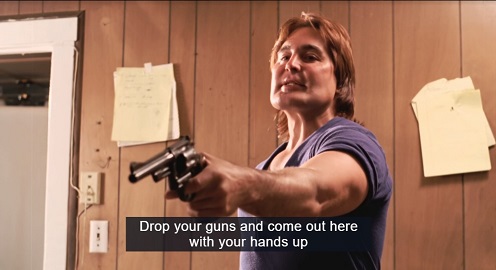
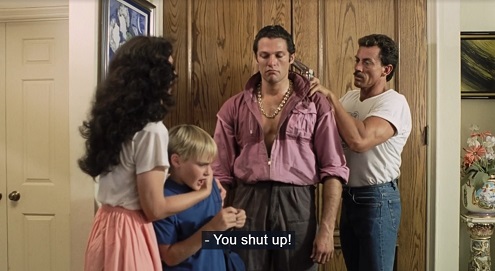
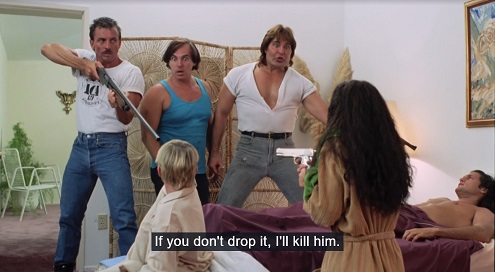
Anyway, this is an incredibly cheap and dumb movie but Robert Z’Dar seems like he’s having fun as Tony and …. well, to be honest, Robert Z’Dar is really the only reason to recommend this film.  He gives an enjoyably over-the-top performance, one that certainly contrasts with the more subdued performance of Harold Diamond.  (For his part, Diamond often seems to be struggling to stay awake.)  Hostage movies usually bore me to tears and this one had a lot of slow spots but it also had shots like the one below:

Eh.  Let’s call it even.