Rest in peace, Martin Landau.
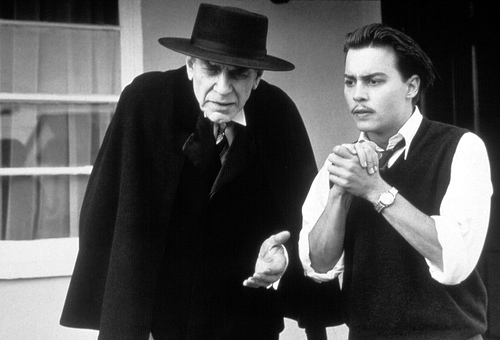
These scenes are from Tim Burton’s 1994 film, Ed Wood. Landau won an Oscar for playing Bela Lugosi. These scenes, among others, show why.
Rest in peace, Martin Landau.
These scenes are from Tim Burton’s 1994 film, Ed Wood. Landau won an Oscar for playing Bela Lugosi. These scenes, among others, show why.
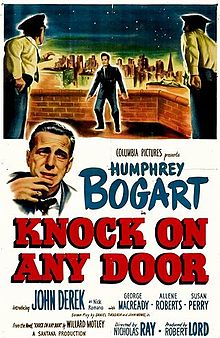 Knock On Any Door opens with the murder of a policeman in New York City. Nick Romano (John Derek) is arrested for the crime. Nick is a troubled young man who has grown up in the slums and is fond of saying that his goal is to “Live fast, die young, and leave a good-looking corpse.” Now on trial for his very life, Nick reaches out to lawyer Andrew Morton (Humphrey Bogart), who once unsuccessfully defended Nick’s father in a similar criminal trial. At first, Morton wants nothing to do with Nick but he changes his mind, partially out of guilt over Nick’s father and partially because Morton himself came from the same slums that produced Nick. Even as the district attorney (George Macready) goes for blood, Morton argues that Nick isn’t a menace but instead a victim of a society that left him with little choice but to become a criminal.
Knock Any Door is heavy-handed but, for fans of Humphrey Bogart and Nicholas Ray, this is an essential film. Bogart produced this film himself and the subject matter was very important to him. Bogart, the classic tough guy with a heart of gold, gives one of his best performances, delivering his closing statement with such conviction that it is impossible not to be moved. Though Ray’s direction is often heavy-handed and the courtroom scenes are sometimes too stagey, Knock On Any Door sees him exploring the same themes that he would later explore in Rebel Without a Cause and with the empathy that made that later film a classic.

George Romero has died, at the age of 77.
When I say “George Romero,” you probably immediately think of zombies. And why not? Night of the Living Dead is perhaps the best known zombie film ever made and Dawn of the Dead is perhaps the second best known. Day of the Dead and Land of the Dead both have their fervent admirers. Without the work of George Romero, there would be no Walking Dead. Without the zombie films of George Romero, countless children would have never grown up to become horror filmmakers. Without George Romero, there would have been no Italian zombie films, which means that I would never have fallen in love with Italian horror and I wouldn’t have been tweeting about it that day in 2010 when Arleigh asked me if I wanted to be a contributor to this website.
Though he had directed commercials and a few industrial films, 1968’s Night of the Living Dead was George Romero’s first feature film. His first! I cannot even imagine what it must feel like to totally change the face and history of cinema with your very first feature film. All modern horror films owe a debt not only to Night of the Living Dead but to all of Romero’s subsequent films as well.
Romero, himself, didn’t necessarily set out to be a horror film director. As he himself often said, the main reason that he and his associates made Night of the Living Dead was because they knew there was a market for cheap horror films. He followed up Night of the Living Dead with Touch of Vanilla, a hippie love story that few people saw. And while Romero eventually did accept that he would be forever known as a horror filmmaker, his films were always concerned with more than just scaring people. Whether intentional or not, Night of the Living Dead is a powerful allegory about prejudice and mankind’s inability to work together. (For all the zombies, the film’s scariest scene comes at the end when the African-American Ben is shot by a redneck deputy and casually tossed onto a pile of bodies.) The Dario Argento-produced Dawn of the Dead was a satire of consumerism while The Crazies suggested that people were already so crazy that it was hardly necessary for a chemical spill to bring out the worst in us. In Martin, Romero cast a weary eye on organized religion while Land of the Dead was perhaps Romero’s angriest film, taking on the state of post-911 America. With films like Creepshow and The Dark Half, Romero showed that he was one of the few directors who could successfully adapt the sometimes unwieldy prose of Stephen King to the screen. It’s a shame that his long-rumored adaptations of The Stand and The Dark Tower turned out to be just that, rumors.
Yes, George Romero was a great horror filmmaker but more than that, he was a great director period. He never sacrificed his independence, choosing to make some of his best-regarded movies in Philadelphia. He never compromised his message, offering up visions of the world that continued to grow bleaker and bleaker. Though he never received the awards that he deserved or, to be honest, the critical acclaim that he was owed, George Romero will be remembered as one of the most important American filmmakers of all time.
George Romero died, of lung cancer, surrounded by his loved ones. Reportedly, he died listening to The Quiet Man soundtrack.
Rest in peace, George.
 “Do you know what Strontium-90 is and what it does?”
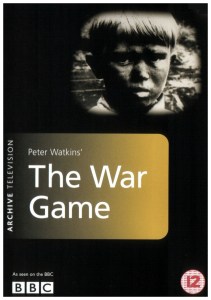
That question is asked as part of a man-on-the-street interview in The War Game. Despite a pledge by the Home Office to educate the British public on the possible effects of atomic war and nuclear fallout, the man being asked has no idea what Strontium-90 is. For that matter, I have no idea what Strontium-19 is. The War Game makes a good case that the only way anyone will ever understand that true horror of atomic conflict is to live through it but, by the point that we have no choice but to know what Strontium-90 is and what it does, it will be too late.
Clocking in at a brisk 50 minutes, The War Game is set up like documentary, though the majority of the film is staged. (That did not stop The War Game from winning an Oscar for best documentary feature.) Made at the height of the Cold War, The War Game suggested that not only was Britain not prepared for a possible nuclear attack but that the attack itself would be so devastating that was literally no way that it ever could be prepared. Opening with interviews with typical Britons expressing both their ignorance about the longterm effects of an atomic war, The War Game proceeds to visualize what would actually happen if the UK ever did find itself attacked. When the bomb falls, most people are nowhere near a shelter. (“Within this car,” the narrator says, “a family is buring alive.”) Even for those who get to safety, it turns out that there is no shelter strong enough to protect its inhabitants from both physical and psychological damage. The film ends with chilling scenes of London bobbies executing looters and British children saying that they never want to grow up.
The War Game was originally made for the BBC, which deemed the program to be to “upsetting,” refused to air it, and subsequently tried to bury it. This attempt at censorship had the opposite effect, earning The War Game a theatrical release and exposing it to an even larger audience than would have seen it originally. However, it would be another 20 years before the BBC allowed The War Game to air on television. Though, especially for media-savvy viewers, the staged nature of this “documentary” is sometimes too obvious, The War Game is still a powerful and bleakly disturbing vision of an all-too possible future.
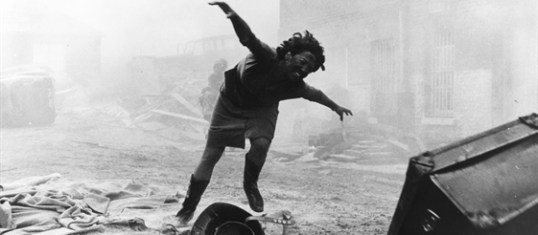

A solitary man is dragging a coffin through bleak, rocky terrain. He comes across a helpless female tied to posts, being whipped by a gang of banditos. A group of mercenaries, adorned in red scarves, shoot down the bandits. The group, members of ex-Confederate Major Jackson’s marauders, plan on burning the woman alive. The solitary man, watching all this, guns down her attackers with blinding speed, freeing her and offering protection. The man’s name is… DJANGO!
Any resemblance between Sergio Corbucci’s seminal 1966 Spaghetti Western and Sergio Leone’s 1964 A FISTFUL OF DOLLARS is not strictly coincidental. Both movies are uncredited adaptations of Akira Kurosawa’s 1961 YOJIMBO, though Corbucci’s version of the tale takes more liberties and he succeeds to out-Leone Leone with the brutal, unrelenting violence, making this a must-see film for fans of the genre.
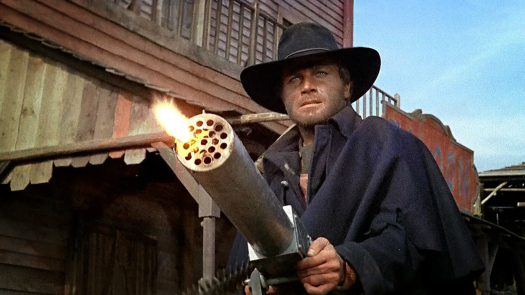
Django takes the woman, a half-Mexican named Maria, to a desolate ghost town inhabited only by saloon proprietor Nathaniel…
View original post 635 more words

When BONES rattle, BLOOD will flow
Lets get the technicals out of the way:
Stars:
Reggie Bannister, Elissa Dowling, Kelly Misek, Jr., Julia Cavanaugh, Devin Toft, Jamie Scott Gordon, Lawrence Wayne Curry, and Hannah Richter
Directed by: Brett DeJager
Written by: Keith Melcher
But on to the plot:
While transporting the legendary killer Bonejangles, a group of police break down in a town cursed with monsters, and must release him to survive!
Review:
I loved this adaptation, actually it took me in from the start. I completely get where Brett Dejager was going!
Would I recommend this movie?

It scuured me enough: Yep, if you wanna be scarred, this is a movie for you!
You can see the trailer here! COVER YOUR EYES FIRST!
Film information:
Studio: Wild Eye Releasing
Director: Brett DeJager
Cast : Reggie Bannister, Elissa Dowling
Bonejangles will be available on VOD on July 18, 2017
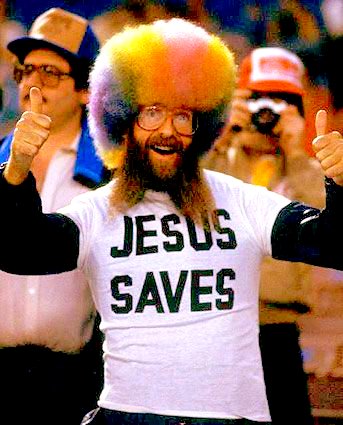 Who was Rollen Stewart?
Briefly, he was a celebrity. In the 1970s, he was inspired to start appearing at every sporting event that he could, wearing a leisure suit and a rainbow afro wig. As the Rainbow Man, Rollen became a familiar face on television, even getting to appear in a beer commercial. What no one knew was that, before he became the Rainbow Man, Rollen was the child of an abusive alcoholic and that he never emotionally recovered from the murder of his sister.
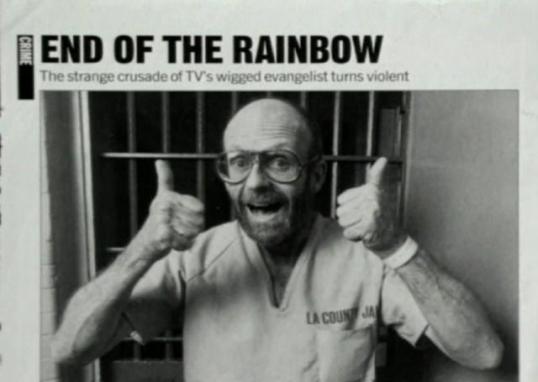
Rollen Stewart was also an aficionado of marijuana, which perhaps led to the next stage in his odd career. While possibly high, Stewart became a born again Christian and he traded in his disco lifestyle for a hand-made signs and t-shirts reading John 3:16. When his new religious persona proved to be far less popular than his Rainbow Man persona, Rollen decided that it was a sign that the end of not just his celebrity but also world itself was near. He started to leave stink bombs in various churches and Christian bookstores. (Because, according to him, “God thinks this stinks!”) In 1992, Rollen entered a motel room, lit a joint, covered the windows with religious placards, and then took a hotel maid hostage. He is currently serving a life sentence.
The Rainbow Man/John 3:16 is a documentary about the strange life and times of Rollen Stewart. Along with plenty of footage at Rollen at the height of his fame, the documentary also includes footage of a visibly unstable Rollen in prison. The documentary is 20 years old so I don’t know if Rollen still believes the world is about to end. He comes up for parole later this year.
The documentary is only 48 minutes long. I wish it had been longer because Rollen’s life was an interesting one. His greatest tragedy is that this attention-seeker became famous before the advent of reality TV. Today, he could have revived his career by appearing on Dancing With The Stars or I’m A Celebrity, Get Me Out Of Here. Instead, he is just another inmate at California’s Mule Creek Prison.
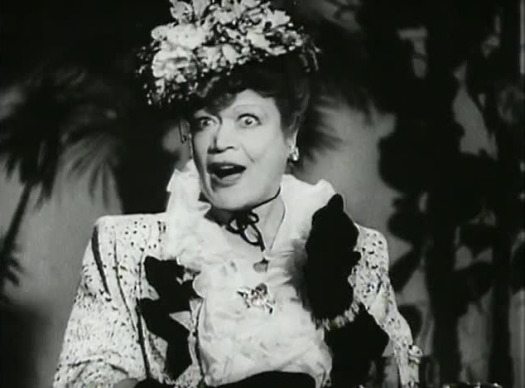
Esther Howard (1892-1965) graced the screen in over 100 appearances, but it’s her work in the shadowy world of film noir for which she’s best remembered. A deft comedienne, Esther was also a member in good standing of Preston Sturges’ stock company, cast in seven of his films. Her matronly looks and acting talent allowed her to play a rich, haughty dowager or drunken old floozy with equal aplomb. Esther may not have been a big star, but her presence gave a lift to any movie she was in, big or small.
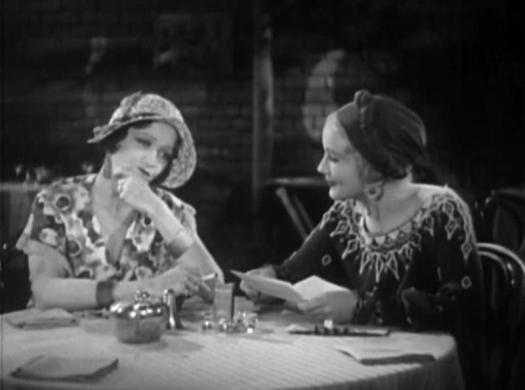 Esther in 1931’s “The Vice Squad” (w/Judith Wood)
She was already an established stage actress when she entered movies in 1930. Talkies were all the rage, and Esther began her screen career appearing in Vitaphone shorts opposite the likes of Franklin Pangborn. Her first feature was 1931’s THE VICE SQUAD, a Pre-Code drama starring Kay Francis and Paul Lukas…
View original post 534 more words
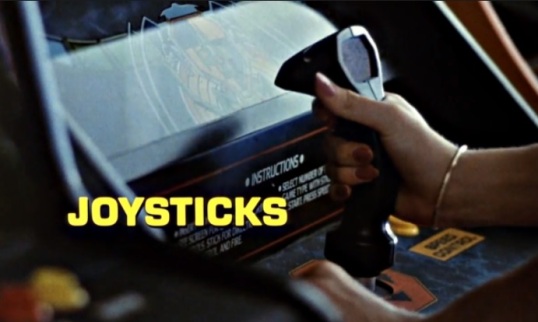
It’s Porky’s in an arcade!

Every gamer knows how accurate this is.
Jeff Bailey (Scott McGinnis) is the manager of the hottest (and only) arcade in town. His grandfather owns the place and Jeff is everyone’s friend but he does not play any of the games. When he was younger, he was caught getting it on with his girlfriend in an arcade. She was sent out of town and Jeff was left so traumatized that he swore he would never touch another joystick. However, he may have to go back on his pledge because the local evil businessman (Joe Don Baker) is determined to take over the arcade and he has recruited King Vidiot (Jon Gries) to help him do it. In between Jeff getting laid and King Vidiot scheming, there are all the usual teen sex comedy hijinks. Just like in real life, the arcade is perpetually full of hot, single girls wearing bikinis. A hot dog gets stuck between a pair of breasts. Pacman is played by a topless video game groupie. Inevitably it all leads to a training montage and a showdown between Jeff and King Vidiot, with whoever gets the highest score at Super Pacman winning control of the arcade.

King Vidiot was the height of 80s fashion.
Joysticks is as dumb as it sounds but it is also a lot of fun, especially if you want to see what life was like before everyone had internet access and their own home gaming console. The movie is full of classic games, from Pac-Man to Satan’s Hollow. The best thing about the arcade is that the final video game duel is played with giant, floor-mounted joysticks. I’m not sure they would work well in real life but they look extremely cool.

Check out those joysticks!
For those wondering, at no point does Joe Don Baker play Pacman during Joysticks. If he had, the end result would have been a classic for all time.

Grab that joystick, Joe Don. You know you want to.
Joysticks? I wonder if that title was supposed to have a double meaning.
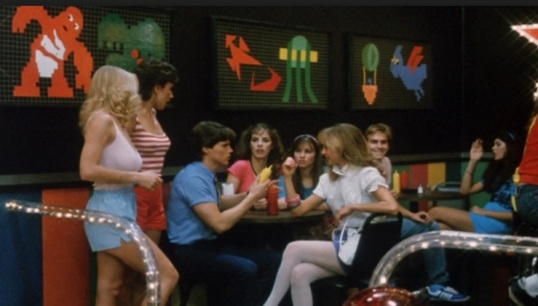
Arcade Life, 1983
I don’t care what Neil deGrasse Tyson says. Space is dangerous.
Just judging by what I’ve seen in the movies, it might be a good idea for humanity to stay earthbound. Seriously, it seems like every time a group of astronauts and scientists spend an extended period of time off of our planet, bad shit happens. They either end up leaving behind someone on Mars or sometimes they crash land on a planet inhabited by vampires. Occasionally, they end up with evil creatures bursting out of their chest and, if they’re not careful, they might even end up accidentally traveling all the way to Hell and back.
For that matter, it might be a good idea to also stop listening to Bill Nye. I’ve seen enough movies to know better than to trust science. Did you know that every time a revived corpse has gone on a killing spree, a scientist has been to blame? In the movies, science always says it’s going to make the world a better place but ultimately, it just seems to make things worse.
Consider Life, for instance.
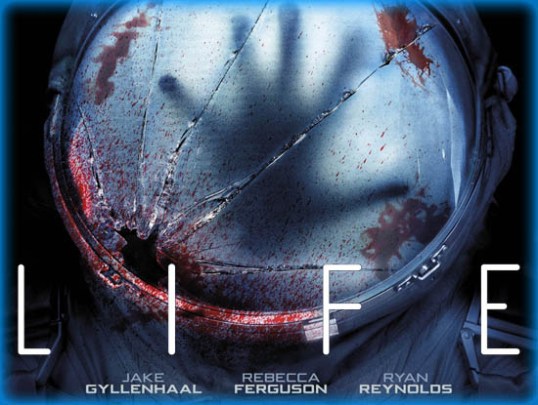
This science fiction film, which came out earlier this year and didn’t stick around in theaters for very long, opens with the crew of the International Space Station taking questions from a group of school children on Earth. Everyone is really excited because a probe has been picked up evidence that there was once extraterrestrial life on Mars. Starting from one cell, the scientists have managed to clone an alien organism. (Or something like that. Wisely, the movie doesn’t waste too much time on how all of this actually works.) The school kids name the organism Calvin.
Isn’t that cute?
But here’s the thing. Life is a science fiction/horror movie hybrid and, as a result, we already know that it was a mistake to bring that alien to life. We know that almost everyone in that space station is going to die a terrible death. It doesn’t matter that the scientists are played by people like Jake Gyllenhaal, Ryan Reynolds, and Rebecca Ferguson We know what is going to happen because we’ve all seen at least one movie in the Alien franchise. We know what’s going to happen and, when things start to fall apart, the entire audience nods and says, “I told you so.”
That’s not to say that Life doesn’t work. Life may be predictable but that’s actually a part of the film’s charm. This is the type of film that you need to watch with a group of your loudest and snarkiest friends. (I watched it with my sisters during the 4th of July weekend. We all love Jake. We all love Ryan. Things got a bit out of hand.) You don’t watch Life because you’re looking for an upbeat portrait of space exploration. You watch Life so that you can yell, “No, don’t bring Calvin to life! No, you idiot! Don’t go into space! Don’t lock yourself in the lab! HAVEN’T ANY OF YOU SCIENTISTS EVER SEEN A HORROR MOVIE BEFORE!?”
(Indeed, one of the unexpected pleasures of Life was seeing that even brilliant people will do stupid things when confronted by the unknown.)
That said, Life occasionally caught me off guard. It’s not that I was shocked to see the members of the cast being picked off one by one by Calvin. Instead, I was shocked by the film’s relentlessly dark and bleak vision. For a film called Life, it’s ultimately all about death. Just because a character is being played by a big star, that doesn’t mean they won’t end up with Calvin entering their body and graphically devouring them from the inside out. Calvin was a truly frightening creation and director Daniel Espinosa does a good job of capturing the claustrophobia and clutter of the space station. Even if they didn’t exactly break any new ground, Espinosa and screenwriters Rhett Reese and Paul Wernick deserve a lot of credit for pursuing the film to its dark conclusion. In space, they seem to suggest, there is no hope.
In conclusion, the main lesson of Life seems to be this: outer space is a terrible place and the worst thing that humanity can do is leave the planet. Science is going to be the death of us. Neil deGrasse Tyson has a lot to answer for.