Film Review: The Last Word (dir by Mark Pellington)


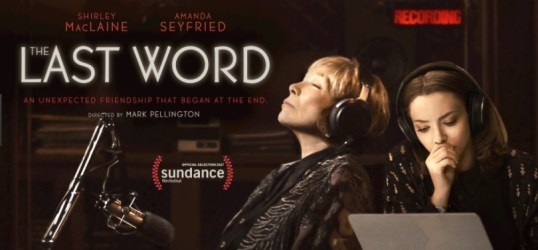
So, I watched The Last Word tonight.

It’s a film that premiered, earlier this year, at Sundance and then it got a very brief theatrical run.  It was directed by Mark Pellington, who is one of those odd directors who, for some reason, I always assume is more talented than he is.  Seriously, when I saw this was directed by Mark Pellington, I actually got excited.  I was like, “Mark Pellington!?  He’s great!”  Then I realized that I wasn’t really sure who Mark Pellington was.  I looked him up on Wikipedia and I realized that I was mistaking him for actor Mark Pellegrino.  Mark Pellegrino played Jacob on Lost and is an outspoken Libertarian.  Mark Pellington is some guy who started out in music videos and then eventually moved up to directing pedestrian films.

Anyway, the film stars Shirley MacClaine as this annoying old busybody who demands that Amanda Seyfried write her obituary because MacClaine wants to know what people are going to say about her after she’s dead.  When Seyfried discovers that everyone hates MacClaine, she writes a boring and very short obit.  “Everyone hates you,” she helpfully explains.  So, MacClaine sets out to do some great things so that her obituary will have a little more spark.  She’s going to set a fire of quirkiness, she is!  Of course, this leads to MacClaine adopting a little black orphan, getting a job as a DJ at the local radio station (she plays boring adult contemporary music, of course.  No EDM), and helping Seyfriend get a boyfriend.

To be honest, this film would probably be a lot more bearable if it was a prequel to Bernie, because then you would at least know that you could look forward to Jack Black showing up with a hunting rifle and putting everyone out of their misery.  Unfortunately, that doesn’t happen.  Instead, this is another one of those movies where a cranky old tyrant teaches all of us young folks how to better appreciate life.

Y’see, Shirley MacClaine is playing an oldster so she has a sharp tongue and she’s always putting people in their place.  Because she had to struggle, we’re supposed to ignore the fact that she spends most of her time making everyone around her miserable.

Amanda Seyfried, on the other hand, is a millennial so she puts her feet on her boss’s desk and has no direction in her life.  Why, she just needs some annoying, elderly busybody to come into her life and make her listen to smooth jazz.  She might even get a hipster boyfriend out of the deal!  (Of course, her potential hipster boyfriend is a 2008-style hipster as opposed to a 2017-style hipster.)

Meanwhile, AnnJewel Lee Dixon (as the little girl that MacClaine adopts) is a plot device so she doesn’t do anything unless the script specifically needs her to humanize the other characters.  She gets to dance towards the end of the film.

Oh, and then there’s Anne Heche.  She plays MacClaine’s estranged daughter.  The reunion between her and MacClaine is so overwritten and overperformed that some viewers will probably be inspired to rip out their hair while watching it.

Hey, did I mention that there’s a scene where MacClaine does something quirky and all of the supporting characters break out into applause?  I think we’re supposed to clap to but I think most members of the audience will be too busy ripping out their hair by the handful.

Fortunately, I really love my hair so I resisted the temptation to start plucking strands out of my head while watching the film.  It wasn’t easy, though.  To be honest, the pain of plucking a strand of hair is nothing compared to the pain of watching the first fifteen minutes of this film and realizing that you already know every thing that’s going to happen.  By the time that the priest showed up and started to cry while talking about a time that MacClaine’s character had been rude to him, I imagine that viewers with less self-control were halfway bald.  But, as I said, I love my hair too much to take my frustration out on it.  Instead, I just kicked the coffee table a few times.  Now, my foot hurts.  Ow.

Seeing as how Shirley MacClaine is one of the last of the truly great actresses from Hollywood’s Golden Age and she actually does give a pretty good performance (when the script allows her), it’s a shame that the rest of the movie is such a let down.  Then again, this film is full of talented people who are let down by an overwritten script and Mark Pellington’s painfully obvious direction.  This is one of those films that tries to hard to be profound that it forgets the importance of being entertaining.

As I watched this movie, I took a glance at Mark Pellington’s filmography.  Did you know that he directed The Mothman Prophecies?  The Last Word really could have used a visit from the Mothman.  Seriously, this film was crying out for a scene of MacClaine putting Mothman in his place.  The fact that Mothman did not appear leads me to wonder what exactly this film was hiding.

Seriously, why are the people behind The Last Word protecting the Mothman?

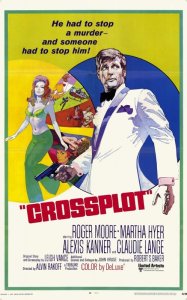
A Movie A Day #215: Crossplot (1969, directed by Alvin Rakoff)


In swinging London, Roger Moore is ordered by Bernard Lee to track down a model  who is connected to an international conspiracy.
If you think that sounds like a James Bond movie, you’re close.  In Crossplot, which was released four years before Roger Moore took over the role of 007 in Live and Let Die, Moore plays Gary Fenn and Bernard Lee is Mr. Chilmore.  Gary is a playboy and an advertising executive while Mr. Chilmore is his latest client.  Mr. Chilmore has ordered Gary to find a model who can serve as the new “Miss Swing,” but actually, the bad guys are using Gary to try track down a beautiful Hungarian named Marla Kugash (Claudie Lange).  Kugash, the ex-girlfriend of a radical political activist, has knowledge about a conspiracy to assassinate a visiting African president.  It leads to car chases, shoot outs, and a wedding that is ruined when Gary and Marla take refuge in a church.

Crossplot was an obvious attempt to cash in on the popularity of the James Bond films.  At the time that Crossplot came out, Moore was best known for playing The Saint on television.  Crossplot was the first film that Moore made after signing a three-movie contract with United Artists and, had the film been a success, Moore would have returned in the role of Gary Fenn and it is totally possible that he would not have been available to step into Sean Connery’s shoes when Connery announced that he was finished with the role of James Bond.

However, Crossplot was not a success and it is easy to see why.  The plot was overly convoluted and it’s emphasis on “swinging” London (complete with wacky hippies) probably made Crossplot seem dated before it was even released.  It is interesting today mostly as Moore’s “audition” for the role of Bond.  Moore gives a very Bondish performance, complete with arched eyebrows and one liners.  Moore is the best thing about the movie but it is also interesting to see Bernard Lee playing a character far less savory than M.  This was also one of the many 60s Bond rip-offs to feature the beautiful Claudie Lange.  Lange, who would have made a great Bond girl if she’d been given the opportunity, retired from acting in 1973, the same year that Moore appeared in Live and Let Die.

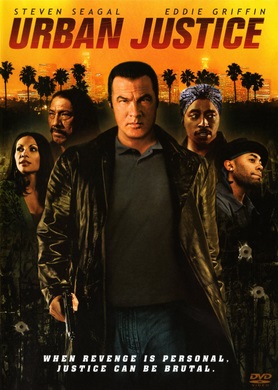
A Movie A Day #214: Urban Justice (2007, directed by Don E. FauntLeRoy)


Steven Seagal returns and this time, he’s out for justice!  Urban justice!
After his son, a beloved Los Angeles cop, is assassinated, Simon Ballister (Seagal, of course) comes out of retirement to get revenge.  Retirement from what?  Like most of Seagal’s characters, Simon has a deadly and legendary past.  Nearly everyone who meets him says something like, “So, you’re Simon.”  Everyone wants Simon Ballister to do something for them.  El Chivo (Danny Trejo!) wants Simon to help defeat his rival, Armand Tucker (Eddie Griffin).  Armand Tucker wants to be Scarface.  Simon just wants revenge.

Much like Elvis, Steven Seagal’s career can be divided into a thin and a fat period.  Thin Steven Seagal was all over movie screens in the 90s, making up for the fact that he could not act by convincingly beating people up.  Fat Steven Seagal appears almost exclusively in direct-to-video productions.  He does everything that Thin Seagal did but he sweats a lot more while doing it.  Unfortunately, Fat Seagal is an even worse actor than Thin Seagal.  Since Fat Seagal produces almost all of his own films, there is no one around to say, “Let’s cut away from Steve during this speech, he looks stupid.”

Urban Justice is peak Fat Seagal.  It actually features more fights than the typical Fat Seagal movie but they are all edited in such a way that it is obvious that most of the blows were delivered by a stuntman while Seagal undoubtedly stood in a corner, trying to catch his breath. Since Urban Justice features Seagal in what is supposed to be the ghetto, he calls everyone that he meets, “motherfucker.”  Fat Seagal has the same Clint Eastwood-style rasp that he had when he was Thin Seagal but he still sound stupid whenever he says, “I want the motherfucker who killed my son.”

Eddie Griffin is pretty good as Armand Tucker.  I don’t know if Eddie improvised all of his dialogue but it certainly seems like he did.  All of the movie’s best lines belong to Eddie Griffin.  Just one example: “Man, fuck Santa Claus!  He never gave me shit!  That’s why I sell dope!”  As for Danny Trejo, he doesn’t do much but he’s Danny Trejo.

Personally, looking over the career of Steven Seagal, I think he made a mistake by trying to be an action hero.  It is hard to think of any other actor with as unlikable a screen presence as Steven Seagal.  If Steve had made his career playing villains, he would probably still have a good career going.  People would gladly play money to see Steven Seagal get blown up at the end of a Jason Bourne sequel.  Instead, he insisted on playing the hero and his career is now made up of appearing in direct-to-video movies and threatening to run for governor of Arizona.

To quote Clint Eastwood, “a man’s got to know his limitations.”

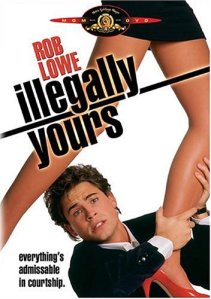
A Movie A Day #213: Illegally Yours (1988, directed by Peter Bogdanovich)


This is really bad.

Richard Dice (Rob Lowe, wearing glasses and running around like a speed freak) is a loser who lives at home with his mother (Jessica James), his younger brother (Ira Heiden), and his mother’s boyfriend (Harry Carey, Jr.).  When he gets called for jury duty, Richard thinks that he will be able to easily get out of it but then he discovers that the defendant is someone from his part, even if she does not remember a thing about him.  Ever since the first grade, Richard has been in love with Molly (Colleen Camp) and now she is on trial for murder.  Richard lies about knowing who she is and gets selected for the jury.  When it starts to look like Molly might be convicted, Richard starts to investigate the murder himself.  His investigation leads him to two teenage blackmail victims (played by Kim Myers and Bodganovich’s future wife, Louise Stratten) and a tape of the murder being committed.  Illegally Yours attempts to be a screwball comedy but it just comes across as being frantic, with Lowe especially going overboard.  The actors all speak quickly but that can not disguise how lame most of the dialogue is.  The movie also comes with a clunky narration, a sure sign of post production desperation.

Made at a time when Peter Bogdanovich was mired in an expensive lawsuit over changes made to his previous film, Mask, Bogdanovich has said that he solely did Illegally Yours because he needed the money.  Bogdanovich has accurately described Illegally Yours as being the worst film that he ever directed.  Coming from the director of At Long Last Love, Nickelodeon, and Texasville, that is saying something.

Oh my God! Here’s the Trailer for Mother!


Oh my God!

Okay, forget anything that I may have said about being reluctant to see Mother!, the latest film from Darren Aronofsky.  Forget anything that I may have said about suspecting that Jennifer Lawrence is no longer as interesting an actress as she was at the start of her career.

Seriously, this looks fucking brilliant!

Mother! opens on September 15th and I can’t wait to see it!

Here’s The Trailer For Goodbye, Christopher Robin!


Here’s the trailer for Goodbye, Christopher Robin!

For a while, I’ve been predicting that this film could be an Oscar nominee.  It’s a biopic.  It’s about British people.  And it’s about war.  With Dunkirk and Darkest Hour also probable contenders, it’s looking like next year’s Oscar telecast could very well be dominated by the British going to war.

This one opens on October 13th and it will provide some counter programming for all the ghost movies and found footage rip-offs.


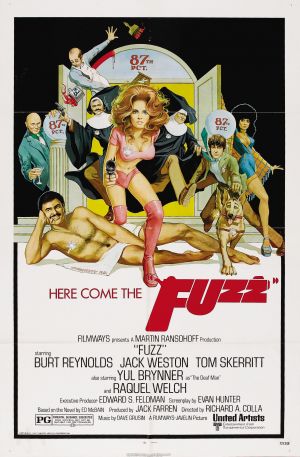
A Movie A Day #212: Fuzz (1972, directed by Richard A. Colla)


Detective Eileen McHenry (Raquel Welch) has just been given her new assignment and she is about to find out that there is never a dull day in the 87th Precinct.  How could there be when the precinct’s top detectives are played by Burt Reynolds, Tom Skerritt, and Jack Weston?  Or when Boston’s top criminal mastermind is played by Yul Brynner?  There is always something happening in the 8th Precinct.  Someone is stealing stuff from the precinct house.  Someone else is attacking the city’s homeless.  Even worse, Brynner is assassinating public officials and will not stop until he is paid a hefty ransom!
Based on the famous 87th Precinct novels that Evan Hunter wrote under the name Ed McBain, Fuzz has more in common with Robert Altman’s MASH than The French Connection.  (Skerritt and Bert Remsen, who plays a policeman in Fuzz, were both members of Altman’s stock company.)  Much like Altman’s best-regarded films, Fuzz is an ensemble piece, one that mixes comedy with tragedy and which features several different storylines playing out at once.  Scenes of homeless men being set on fire are mixed with scenes of Reynolds and Weston going undercover as nuns.  (Of course, Burt does not shave his mustache.)  Since it was written by Hunter, the film’s script comes close to duplicating the feel of the 87th Precinct novels.  Unfortunately, Richard A. Colla was a television director and Fuzz feels more like an extended episode of Police Story or Hill Street Blues than a movie.  Unlike Altman’s best films, Fuzz‘s constantly shifting tone and the mix of comedy and drama often feels awkward.  Fortunately, Fuzz does feature good performances from Reynolds, Westin, Skerritt, and Brynner, along with a great 70s score from Dave Grusin.  Raquel Welch is never believable as cop but she’s Raquel Welch so who cares?

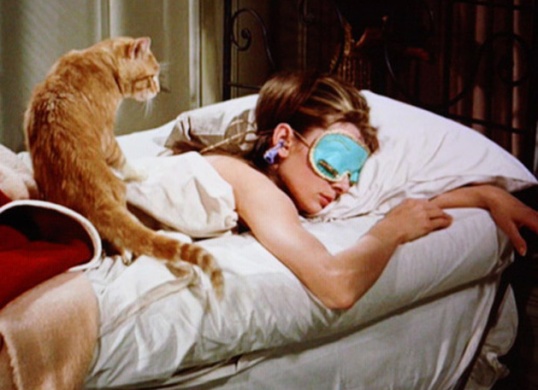
4 Shots From 4 Films: Breakfast at Tiffany’s, Inferno, Cat’s Eye, Sleepwalkers


Happy International Cat Day from the Shattered Lens!

4 Shots From 4 Films

Breakfast at Tiffany’s (1961, dir by Blake Edwards)

Inferno (1980, dir by Dario Argento)

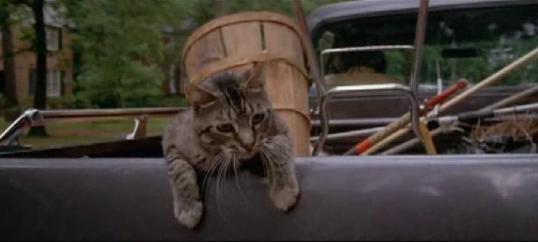
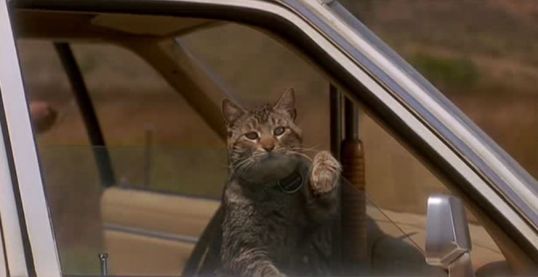
Cat’s Eye (1985, dir by Lewis Teague)

Sleepwalkers (1992, dir by Mick Garris)

Catnip party at my place!

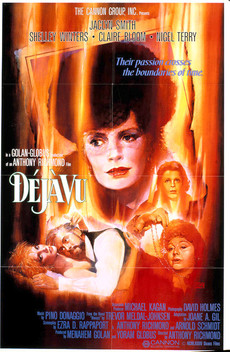
A Movie A Day #211: Deja Vu (1985, directed by Anthony B. Richmond)


Damn, son.  I’ve seen some bad movies before but Deja Vu is something else altogether.

Around the mid-80s, Menahem Golan and Yoram Globus decided to prove that Cannon Films was capable of doing more than making movies about Chuck Norris refighting the war in Vietnam.  Golan and Globus had already made money, now they wanted respect.  Teaming up with respected directors (Robert Altman directed an adaptation of Sam Shepard’s Fool For Love for them) and casting actors who had slightly more range than Chuck Norris or Reb Brown, Cannon tried to go the prestige route.  Some of the Cannon’s quality movies actually were good movies.  The same year that Deja Vu came out, Cannon’s Runaway Train scored several Oscar nominations.  However, Deja Vu is a far more representative example of a Cannon prestige film.  It may have had higher production values than Missing in Action but it was still a Golan/Globus production through and through.

Nigel Terry (best known for playing King Arthur in John Boorman’s Excalibur) plays Michael, a screenwriter who views a documentary about a famous and tragic ballerina and is shocked to discover that she looks just like his actress fiancée.  (Both roles are played by Jaclyn Smith.)  Michael is even more shocked when it turns out that he looks exactly like the ballerina’s husband.  Convinced that his girlfriend is the reincarnation of the ballerina, Michael researches her life and murder.  Meanwhile, his fiancée starts to act strangely.

Deja Vu starts out a merely mediocre, slowly paced and miscast.  (There is no chemistry whatsoever between Nigel Terry and Jaclyn Smith.)  But then Shelley Winters shows up, playing a Russian psychic named Olga Nabokova. As soon as Winters started to deliver her lines in one of the least convincing Russian accents that I have ever heard, Deja Vu made the leap from being merely bad to being a cinematic trainwreck.  While Terry and Smith sleepwalk through their roles, Winters and, later, Claire Bloom (cast as the ballerina’s mother) chew up every piece of scenery that they can get their hands on.  Though the plot may be so predictable that it will cause viewers to have deja vu of their own, it must be said that, eventually, Deja Vu becomes so bad and misjudged that it is impossible to look away.  Golan and Globus may have had Oscars in their eyes when they decided to produce this prestige pic but instead, they won the laughter of anyone who comes across it on TV.