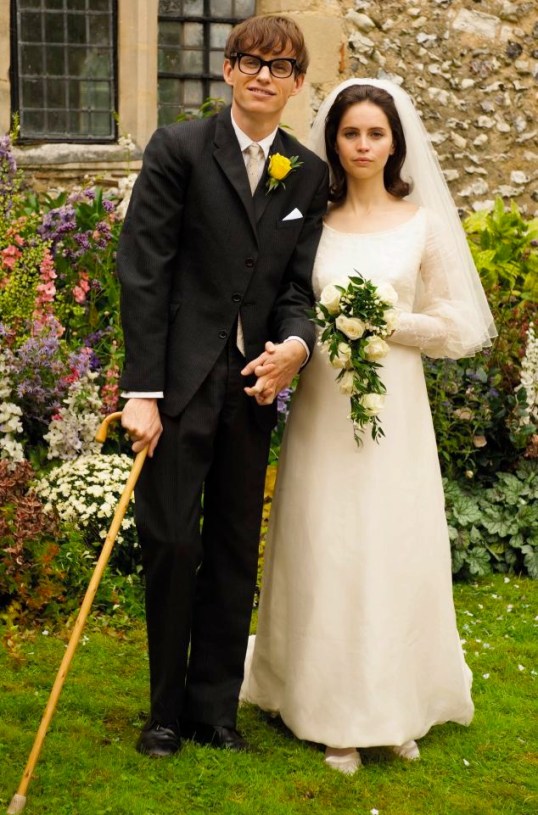
Film Review: The Theory of Everything (dir by James Marsh)


theory-of-everything-felicity-redmayne

Earlier this year, when I was sitting in the audience for the unfortunate Nicholas Sparks film The Best Of Me, I found myself staring at the sight of an oil rig worker (played by James Marsden) relaxing by reading Stephen Hawking’s A Brief History of Time.  And, before I could stop myself, I laughed out loud and I may have even loudly said something along the lines of, “Oh come on!”

At the time, I got a lot of dirty looks but I stand by my reaction.  It’s such a cliché.  Any movie character who is meant to be intelligent and soulful will be seen casually reading a copy of Hawking’s book and scrunching up his brow as he considers whatever it is that Hawking has to say.  It makes sense, of course.  If the current cult surrounding Neil deGrasse Tyson proves anything, it’s that it is currently in to pretend to be fascinated by science.

I have to admit, though — science has never been my subject.  The cold logic of it all bores me to tears and there’s no bigger turn-off then listening to someone brag about being a “rational thinker.”  (Rational thought is incredibly overrated.)  As long as things work like they’re supposed to, the how and the why don’t really concern me.  Whenever I hear someone complain that there are “too many unanswered questions,” I think to myself, “Good.”  I like unanswered questions.  I like irrational feelings.  I like mysteries that can never be solved.  They fuel imagination.  They inspire great art.  They make life interesting and unpredictable.

(Please understand, I am not anti-science.  I’m anti-pretending-to-care-when-I-don’t.)

With all that in mind, you might think that I would be bored by The Theory of Everything, the recently released biopic about Stephen Hawking (Eddie Redmayne) and his marriage to Jane Hawking (Felicity Jones).  And, I’ll be honest.  If not for the fact that the film has been pegged as being a certain Oscar contender, I might not have ever wanted to see The Theory of Everything.  However, seeing as how The Theory of Everything is a certain Oscar contender, I did want to see it.

And, up until the final 30 minutes of the film, I was surprised with just how much I liked The Theory of Everything.  I have to admit that the film’s science still went over my head.  As far as that was concerned, the only thing I really learned is that there’s a difference between General Relativity and Quantum Field Theory but don’t ask me to explain that difference.  (And, for the love of all that is good, please don’t try to explain it to me…)  But, to be honest, the exact details of Hawking’s theories aren’t really that important to The Theory of Everything.  Instead, the film is content to have supporting characters assure us that Hawking’s work is brilliant and important and that’s really all that it has to do.  After all, everyone in the audience already knows that Stephen Hawking is a genius.  The appeal of The Theory of Everything is not the science but instead the human behind the science.

The Theory of Everything works for two very old-fashioned reasons — it’s well-directed by James Marsh and it’s well-acted by Eddie Redmayne and Felicity Jones.  For all the time that the film devotes to people talking about how Hawking challenged the conventional view of the universe, The Theory of Everything is, in many ways, a conventional biopic.  But that’s not necessarily a bad thing.  A familiar story well-told is still a well-told story.

The film starts with Stephen as a student at Cambridge and we follow him as he awkwardly courts Jane and takes her on an amazingly well-filmed and soul-achingly romantic date.  Shortly after this, he’s diagnosed with motor neuron disease.  (As I discovered while doing some research for this review, Hawking was actually diagnosed before he even met Jane.)  Told he only has two years to live, Stephen’s first instinct is to isolate himself from the world but, largely as a result of Jane’s love and support, Stephen instead continues his work and becomes world famous.  The film suggests that it took a combination of Stephen’s logical (and skeptical) genius and Jane’s devout and unwavering faith (in both his genius and the God that Stephen doesn’t believe in) for him to eventually become the Stephen Hawking that we all recognize today.

And it’s all extremely well-done and touching, up until the final 30 minutes of the film.  Going into the film, I did not know much about Stephen Hawking but (thanks to Wikipedia), I did know that he eventually left Jane for another woman.  I have to admit that I did not expect the film to deal with this part of the story.  To the film’s credit, it does attempt to deal with the end of Stephen and Jane’s marriage but it does so in such an awkward way that it’s obvious that the filmmakers weren’t quite sure how they should handle the situation.

After all, the film had just spent 90 minutes presenting Jane as being an occasionally frustrated saint and Stephen as being idiosyncratic but likable.  And now, suddenly, Stephen is going to have to act like a jerk.  The film doesn’t know how to handle this and, as such, those final 30 minutes feel fake in a way that the rest of the film does not.  When Stephen tells Jane that he’s leaving her for another woman, it’s presented as being an almost mutual decision made by the two of them.  Tears are shed but there’s little visible anger, with the film going so far as to suggest that Stephen is leaving Jane because he wants her to be able to live the life that she put on hold to take care of him.  It’s even implied that Stephen was kind enough to pick out a new husband for her.

That new husband is played, quite well, by Charlie Cox.  When he first told Jane that he’s attracted to her, I assumed that the scene was included so that Jane could gently rebuff him and show us how devoted she is to Stephen.  However, thinking back on it now, it almost feels as if that scene was largely included so it could provide some cover for Stephen.  It’s as if the filmmakers are saying, “See?  Stephen wasn’t the only one tempted to end the marriage…”

And I have to admit that the way the film handled the end of Stephen and Jane’s marriage felt so false to me and the way Jane was treated and portrayed seemed so unfair that, as soon as I got home, I actually did the following google search: “Was The Theory Of Everything unfair to Jane Hawking?”

And the first result that came up was an article in The Guardian that essentially stated: “Yes, The Theory of Everything was unfair to Jane Hawking.”

Reading the article, I discovered that, according to Jane’s autobiography (upon which the film is ostensibly based), both her marriage to and divorce from Stephen Hawking was far more complex and intriguing than what was presented in the film.  For one thing, the marriage ended not with tears of acceptance but instead with a shouting match.  And trust me, if any actress could have done justice to Jane Hawking’s anger, it would be Felicity Jones.  By the time the film ends, both the character and the actress have earned the right to express their anger.  But neither one of them gets that opportunity, largely because that version of the Hawking marriage would also have been far less crowd pleasing.

And, if anything, The Theory of Everything is specifically designed to be a crowd pleaser.

And don’t get me wrong.  It’s a good film and it’s one that left me with tears in my eyes.  Do I recommend the film?  You bet I do.

I just wish that, during those final 30 minutes, the film could have been a little bit more honest with itself.  It’s a good film but it’s hard not to regret missing out on the film that it could have been.

theory-of-everything-new

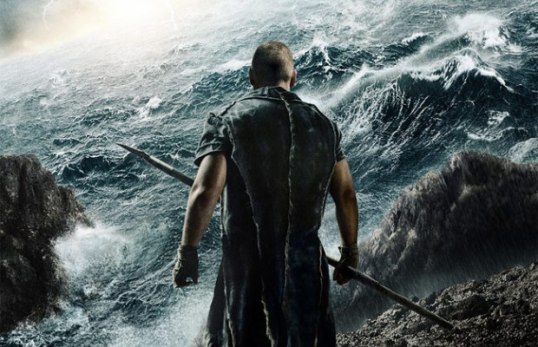
So, was Noah good or not?


Poster-Noah-Aronofsky

Was Noah a good movie or not?

That’s a question that was first asked way back in March.  At the time, the answer depended on who you asked.  For instance, Noah is one of Arleigh’s favorite films of the year.  My reaction, however, was far more mixed.  Noah was one of those movies that I thought I would review as soon as I watched it but that proved to be a lot more difficult than I expected.  As I found myself wondering what I should say in my review, it became very apparent to me that I wasn’t sure whether I liked the film or not.

By the time that I finally decided that I was, overall, disappointed by Darren Aronofsky’s controversial and spiritual-but-not-quite-biblical version of the Deluge, over a month had passed and we had all moved on to different movies.

And so that review remained unwritten.  And, at first, I thought it wouldn’t matter.  As much as I try to review every single movie that I see, I know that the world is not going to end if I miss a film or two.  After all, I’ve never specifically written down just how much I hated the latest Transformers movie and the world has yet to plunge into the sun…

And yet, for all of its flaws and the fact that it left me feeling underwhelmed, Noah has stuck in my mind in a way that many of the films that I saw this year have not.  It would be a struggle for me to remember much of anything about Dracula Untold but Noah … Noah has stayed with me.

Thinking back, it’s easy for me to say what did not work about Noah.

As opposed to Aronofsky’s best films (Requiem for A Dream, The Wrestler, and my beloved Black Swan), Noah felt oddly paced with certain scenes ending too quickly while other scenes seemed to drag on forever.

The film’s environmental message was delivered with such a heavy hand that it ultimately did not make much of a difference whether you agreed or not.  For a film that went out of its way to establish itself as not being a traditional biblical film, Noah was certainly preachy.

While the film deserves credit for not flinching in its portrait of a surly and self-righteous Noah, it still doesn’t change the fact that the movie was essentially 138 minutes spent with a very unlikable character.

Anthony Hopkins gave perhaps the worst performance of his career as Methuselah.  In the role of Tubal-Cain, Ray Winstone was such a one-dimensional villain that I half expected him to invent trains just so he could tie Emma Watson to the tracks.

And, of course, there were the Watchers — fallen angels who had been turned into sentient piles of stone by a vengeful God.  I know that some people loved the Watchers but to me, they looked ludicrous…

NoahWatchers

And yet, that’s the reason why we love Darren Aronofsky, isn’t it?

Obviously, it was a risk to portray the fallen angels as being a bunch of talking rocks.  It was also a risk to take a character who is mentioned only once in the book of Genesis — in this case, Tubal-Cain — and then use that character as a representation of everything that’s wrong with the human race.  It was a risk to make a “biblical” film that openly questioned both the existence and wisdom of God.  We expect and demand that directors take risks but, at the same time, we also want to ridicule and judge when those risks don’t work out.  That’s the issue that we, as film lovers, often face.  Do we celebrate and perhaps excuse a director for his intentions or do we solely judge him based on the results?

And the thing with Noah is that, as much as the movie did not work for me, it also did work for me.  For all of those flaws that I listed above, Noah is full of images that are so beautiful and so memorable that I can still visualize them as if I saw them yesterday:

Noah and his sons walk across a gray and blasted landscape, stopping just long enough to stare at a foreboding city in the distance.

Noah walks through a decadent settlement and briefly, this somber film is so full of bright colors and flamboyant characters that the viewer is almost as overwhelmed as Noah.

That Ark, looking small and isolated, floating across an endless blue ocean.

And finally, Noah talking about the horrors of humanity and briefly, we see that the shadows that he’s visualizing are dressed in modern clothing.

For all of my issues with Noah, it’s such a visually impressive film and takes so many risks that I can’t help but respect it.  I don’t consider it to be a great film but, after all this time, I can say that it’s a film that only a true artist could make.

And, considering the current state of American film, that’s one of the best compliments that one can give.

noah-banner222

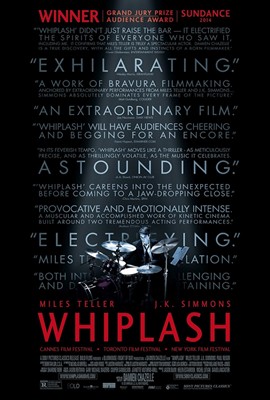
Film Review: Whiplash (dir by Damien Chazelle)


Whiplash_poster

I really only need five words to review Whiplash:

J. K. Simmons kicks ass.

He so seriously does.  The deep-voiced character actor, beloved by fans of Allstate Insurance, Spider-Man, Jason Reitman, and the Coen Brothers alike, has been memorable so many times in the past that it’s easy to take him for granted.  However, with Whiplash, he proves himself to be not just a distinctive screen presence but to be a brilliant actor as well.  There’s a lot of good things about Whiplash but, ultimately, it’s Simmons who makes the film something more than just another promising indie film.

Simmons plays Terrence Fletcher, the legendary and feared conductor of the Schaffer Conservatory jazz band.  (We’re told that Shaffer Conservatory is the best music school in the country.  Of course, in a real life, the best music school in the country is located at University of North Texas, where I studied Art History but still enjoyed occasionally listening to the One O’Clock Lab Band.)  As played by Simmons, Fletcher is both a genius and a sadist.  When he talks about music, he does so with a passion that makes it impossible not share his love for all that jazz.  When he conducts his band, he does so with a cruelty that makes you question if the music is worth the cost of the emotional stability of the people playing it.  When he hears that someone is out of tune, he responds by reducing a musician to tears.  When he says, “Not my tempo,” it’s both a critique and a threat.  The fact that he’s creative and quick-witted with his insults does nothing to lessen the pain that they cause.

Fletcher’s latest protegé/victim is a talented 19 year-old drummer named Andrew (Miles Teller).  Andrew shares Fletcher’s love for jazz but nothing can prepare him for the lengths that Fletcher will go to manipulate him.  Whether it means insulting Andrew’s father (Paul Reiser) or casually threatening to give Andrew’s spot away to another drummer, Fletcher’s nonstop and often viscous criticism makes Andrew a better drummer but also threatens to destroy his sanity.

Director and screenwriter Damien Chazelle understands that those of us in the audience have seen literally hundreds of films about intense teachers and the students that they teach.  Chazelle cleverly manipulates all of our expectations.  The minute that we expect Fletcher to say something encouraging or to reveal himself to actually be a compassionate mentor, Simmons instead barks out another insult or regards Andrew with a withering glare.  And, as we wait for Andrew to stand up to Fletcher or prove his mentor wrong, we are instead forced to admit that Fletcher’s approach does seem to be working.

When, towards the middle of the film, Andrew crashes his car while rushing to a jazz competition and then attempts to play the drums with both blood on his suit and a broken hand, you can’t help but both admire his determination and fear where that determination is going to take him.

As I said at the beginning of this review, there’s a lot of good things about Whiplash.  As you might expect for a film about jazz, it has a great soundtrack.  Miles Teller gives a great lead performance, one that may be overshadowed by J.K. Simmons but which — along with his work in The Spectacular Now — indicates that Teller is an actor to watch.  (We’ll just forget the fact that he was also in Project X.)  Some of the film’s best moments don’t even involve J.K. Simmons, instead they’re just scenes of Teller obsessively drumming until his hands are bloody.

But, ultimately, it is J.K. Simmons who truly elevates this film.  Simmons makes Fletcher into a truly fascinating villain, one who constantly leaves you guessing.  By the end of the film, you may not like Fletcher but you definitely can not get him out of your head.

Ultimately, the success of Whiplash stands as a tribute to the talent of J.K. Simmons.

Quick Review: ‘The Babadook’ (dir. Jennifer Kent)


The-Babadook-Poster

‘The Babadook’ is a truly effective horror film whose beautiful and twisted imagery – as well as complex and powerful explorations of grief and the bonds between a mother and her child – cut to the bone, managing to scare and move all at once. The film, which explores maternal affection, depression, grief – and a whole multitude of similar themes – is not just one of the best horror films of the past few years, but is also just simply one of the best films of the current year.

tumblr_nfegyrQCTm1s9q35fo7_1280

The film stars Essie Davis as Amelia, a widow living alone with her hyperactive son Sam (Noah Wiseman). Amelia loves her boy, but his presence is a constant reminder of the death of her husband – who died in a crash while driving Amelia to the hospital to give birth. The grief of the accident constantly lingers over them both. This is made all the worse for Amelia as Sam has become more of a burden as of late. Sam is beginning to more strongly deal with the absence of his father and expresses this in some unusual ways – including making up scary monsters and weapons to fight them with. Their strained relationship takes a dark turn when a mysterious pop-up book appears – the character in which is a spooky creature that awakens in Amelia fears and dark thoughts about her son that have long been hidden under the surface. She doesn’t know where the book came from or who this nightmarish Babadook is – but she can’t seem to escape it. The situation and Amelia’s mental state is exasperated by sleep deprivation, social pressures and growing depression as the anniversary of her husband’s death approaches. She is soon forced to confront a demon – both physical and psychological – that threatens to destroy her and Sam.

tumblr_nfqnk2dRRm1qd7v5ao1_1280

‘The Babadook’ very much reminded me of ‘Repulsion’ and ‘The Shining’ in its portrayal of a mental spiral into very dark places – as well as ‘The Orphanage’ in its handling of grief and loss. This is all packaged in a visually striking story – lots of blacks, greys and whites – with a creature that is sure to be an instant classic. What makes it all the better is the way in which it constantly subverts the expected in both genre tropes and what we are actually seeing on the screen. Is the Babadook real? Or is it simply a mental manifestation of the pain and grief that runs deeply through the story? Either way, the fears, doubts and terror it all elicits amount to more than just scares – it also moves with real and honest emotion. Take out the horror aspects and the film is still a moving portrait of a mother dealing with loss and the responsibility of mothering a troubled child. This is a shining example of the brilliance that the horror genre can achieve – how it can be emotionally affecting in ways no other genre can. Add to that a phenomenal performance by Essie Davis and the confident direction of Jennifer Kent and the result is a masterpiece of the genre – and easily one of the year’s best films.
*I discuss the ending in the comments. I say this to warn of spoilers below – as well as to continue my above analysis for those who have seen the film.*

———

Twitter.

Sorry, Enterntainment Weekly, Grumpy Cat’s Worst Christmas Ever Is Not The Worst Christmas Movie Ever


If you go over to Entertainment Weekly right now, you can read an article entitled Grumpy Cat’s Worst Christmas Ever Is The Worst Christmas Move Ever.  The author of the article, Samantha Highfill, claims that “Grumpy Cat would hate her movie.  Like hate-hate it.”

Well, of course, Grumpy Cat would have hated Grumpy Cat’s Worst Christmas Ever.  That was kind of the point of the whole damn movie.  The reason why Grumpy Cat has become such a popular meme is because her permanently sour face confirms what many of us suspect but often try to deny — i.e., that our cats are, for the most part, disgusted with us.  However — and this is why people like me cherish our cats — they all have one or two people who they love enough to set aside their natural disgust and allow to be a part of their life.

Cats aren’t like dogs.  A dog will love anyone.  A cat picks someone to love and then they do it despite all of their better instincts.  And because of that, cats will occasionally do stuff that they normally should hate.

Like starring in a holiday-themed film, for instance.

Grumpy Cat’s Worst Christmas Ever, which premiered on Lifetime last night and was watched by me and a thousand other cat lovers on twitter, works because it not only realizes that it should not exist but it also has no problem admitting that it should not exist.  In Entertainment Weekly, Grumpy Cat’s sarcastic narration and continual breaking of the fourth wall is described as being “oddly meta.”

Personally, I call it being clever, cute, and funny.

But, let’s be honest.  The majority of critics were never going to give a fair review to a film called Grumpy Cat’s Worst Christmas Ever.  (A fair review, by the way, would have been: “The story’s dumb, the film looks cheap, but the cat is cute and, seeing as that’s the only reason anyone’s watching, that’s all that matters.”)  Most critics probably had their review already written in their head before they even saw the movie.  Complain about the commercialization of Christmas.  Whine about how an internet meme now has her own movie while your coming-of-age screenplay remains unproduced.  Make a few snarky comments about Lifetime, in general.  Admit that Aubrey Plaza totally kicks ass as the voice of Grumpy Cat (because she so totally does).  End it by sadly predicting that Grumpy Cat’s Worst Christmas Ever will lead to a sequel.

Bleh.  Forget the other critics.  Speaking as the only critics who really matters, here’s what I think you need to know about Grumpy Cat’s Worst Christmas Ever:

If you own and like cats, you’ll find a lot to enjoy about Grumpy Cat’s Worst Christmas Ever.  Yes, the story is dumb.  Yes, the movie was obviously cheaply made and, in case there was any doubt, Grumpy Cat herself pops up to point out how cheap the movie was.  But Aubrey Plaza was born to be the voice of Grumpy Cat.  And Grumpy Cat herself is adorable in her grumpy way!  Along the way, we get to see Grumpy Cat drive a car and shoot a paintgun.  We also get to meet Grumpy Cat’s British equivalent.

And it’s all really, really cute.

And really, that’s all that matters.

Grumpy-Cat-drives-a-car

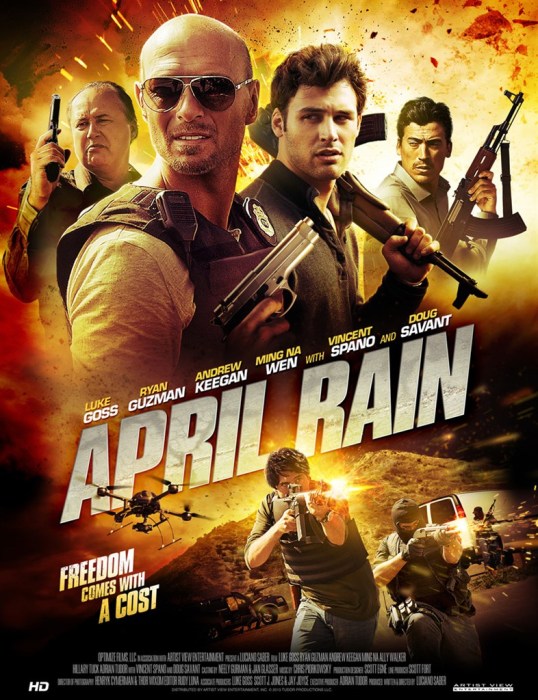
The Birdemic of Action Movies: April Rain (dir by Luciano Saber)


Birdemic 2 April Rain

Warning: Occasionally, film art can be deceptive.

I realize that is a big claim to make.  Birdemic, after all, is known for not only being one of the worst but also for being one of the most inept films ever made.  It’s a film that regularly appears on lists of the worst films ever made and, unlike the always entertaining The Room, Birdemic actually deserves the honor.

So, when you compare a movie to Birdemic, it’s kind of a big deal.

However, having now sat through April Rain on multiple occasions, I can say that April Rain totally deserves the comparison.

Imagine if your local community theater decided to put on a low-budget, theatrical adaptation of 24, with the director’s son playing Jack Bauer and a retired accountant playing the main villain and you might have some idea of what it’s like to watch April Rain.

The film opens with endless overhead shots of Los Angeles while stirring “epic” music plays in the background.  The movie uses these overhead shots in much the same way that Tommy Wiseau used the Golden Gate Bridge in The Room.  Whenever the scene needs to change, we get an aimless overhead shot of Los Angeles that rarely seems to have much to do with either the scene we just viewed or the one that we’re about to watch.  At first, it amused me to notice how many buildings had helicopter landing pads but then I realized that I was just looking at the same buildings over and over again.

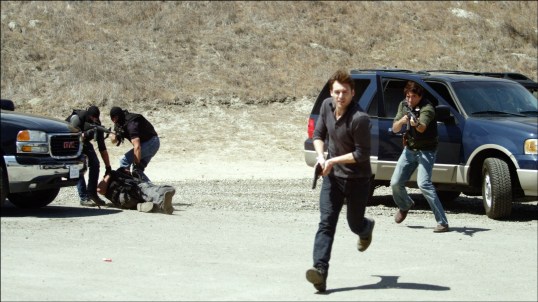
After we spend a while looking down on Los Angeles, we are immediately thrown into the middle of the action as six men have a fierce gun battle outside of a warehouse.  And by gun battle, I mean that each man stands about four feet away from the other, shoots a gun, and somehow manages to miss just as often as they hit.  It’s during this scene that we learn two important things about April Rain:

1) Nobody in this film dies without flailing around for a few minutes before hand.

2) Anyone firing a gun will be shown in slow motion.

As for why everyone is shooting at each other, it all comes down to weapons.  The group in the warehouse has a few crates full of weapons.  The people attacking the warehouse want the weapons so that they can sell them to a terrorist cell.

The people attacking the warehouse, incidentally, a members of the Russian mob.  I figured this out because they had names like Nikolai and Dimitri and not because any of them actually had a Russian accent or, in any other way, came across as being Russian.

Which is not to say that they don’t have accents.  Their boss, Kotov (Adrian L. Tutor), definitely has an accent.  Actually, he has several and they change from scene-to-scene.  Sometimes, he sounds like he’s from Italy and then other times he sounds like he’s from Scotland…

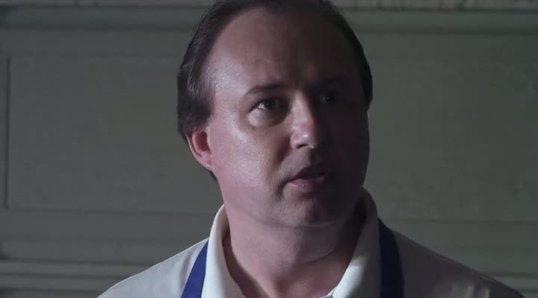
Anyway, when we first meet Kotov, he’s running around in circles in his suburban front yard while his two youngest daughters chase after him.  He’s wearing a dark blue apron that reads, in bright red letters, “World’s Greatest Dad.”

The face of the Russian Mafia

The face of the Russian Mafia

His oldest daughter, Katrina (Brittany Beery), would probably disagree with that.  She’s got a crush on the newest member of the mob, Alex (Ryan Guzman).  When Kotov drags Katrina to church, she gets out of it by saying, “I’m getting my period, dad!” and doing a massive eye roll.  (Interestingly enough, I used to do the exact same thing to get out of going to Mass.  Never underestimate the importance of the eye roll.)  What makes this scene especially memorable are the extras sitting on the pew directly behind Kotov and his family.  When Katrina explains why she has to leave church, they gasp and look like they’re about to faint from the shock.  They do this despite the fact that Katrina and Kotov are whispering and that their voices would undoubtedly have been drowned out by the church organ that is played throughout the entire scene.  Perhaps, at one point, the filmmakers were planning on including a subplot that hinged on super hearing…

ANYWAY — and watching April Rain is one of those films that will inspire you to say “anyway” quite a lot — it turns out that Alex has a secret of his own.  He’s not really a Russian mobster!  No, he’s a member of an elite division of the — well, to be honest, I’m not sure which agency he works for.  However, I do know that it’s top secret because it’s housed in a huge warehouse and everyone spends a lot of time talking about how it’s all top secret.

Along with Alex, the team includes:

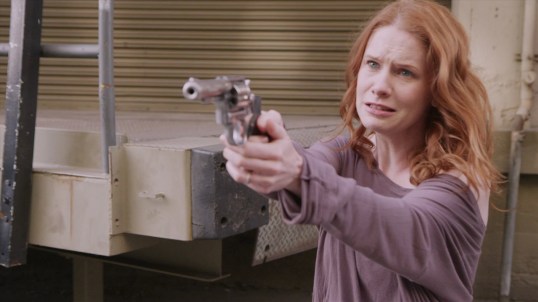
1) Sikes (Luke Goss), who is I guess is supposed to be in charge.  He’s a taciturn but fair man who is first seen disciplining his teenage son.  (“I can do what I want!” his son shouts, “In your face, old man!”)  Sikes spends a lot of time shouting things like, “I WANT HIM ALIVE!” just before then shooting a bad guy in the head.  (Incidentally, in April Rain, getting shot in the head means that a small splotch of red paint appears on your forehead.)

2) Rita (Miranda Frigon), who I liked because she’s a redheaded administrative assistant, just like me!  At one point, Rita gets a phone call from someone outside of the agency.  Sikes tells her that he needs her to be 100%.  Rita agrees.  The phone call is never mentioned again.

3) Kenny (Doug Savant), who doesn’t really have much of a personality.

4) Thomas (Vincent Spano), who is Kenny’s best friend and who, as a part of his job, is currently sleeping with Hellen (Anne Leighton) who works for Kotov.  At one point, Thomas’s wife (Hillary Tuck) shows up and points a gun at him and screams at him for cheating on her.  An exasperated Thomas yells back, “I work my ass off and you show up here and make me look like an ass in front of Kenny!”  And the scene goes on and on from there…

And finally,

5) Hillary Miller (Ming-Na Wen!) is apparently Sikes’s superior.  Thomas refers to her as being the Wicked Witch of West Los Angeles.  “She flies around on her broomstick with a strap-on and a jar of vaseline,” he informs Alex.  Ming-Na gets top billing but she’s actually only in a few minutes of the film and she spends most of that time yelling and glaring.  It’s almost as if she’s daring you to ask her how she ended up in a movie like April Rain.

Ming-Na in April Rain

Ming-Na dares you to ask her what she’s doing in April Rain.

ANYWAY — Kotov has been supplying terrorist leader Tariq (Deniz Akdeniz) with guns and Vespa motor scooters and you better believe that we eventually do get a chase scene where the bad guy is fleeing on a Vespa.  (And you also better believe that almost the entire chase scene is filmed in slow motion.)  

Before launching his terrorist scheme, Tariq becomes an American citizen.  The oath of citizenship is delivered by a judge who actually shows up on a Sunday to do so.  “It’s the least I can do, after all the work you’ve done on my house,” the judge helpfully explains.  Of course, as Tariq and the Judge enter the courthouse, the camera lingers on a security guard who views both of them with clear suspicion.

Upon returning to his apartment, Tariq and his family celebrate his new citizenship.  Then, his two neighbors arrives to congratulate him.  These two neighbors — well, they simply have to be seen and heard to be believed.  “Share the wealth!” one of them proclaims, “then maybe everyone won’t want to kill us…”  Another one drinks a toast to “education and the redistribution of wealth,” which I guess is the film’s way of letting us know that the only thing needed for the Tariqs of the world to succeed is for them to live next door to stereotypical California liberals.

What’s especially interesting about this film is that, for all the time devoted to the Judge, the security guard, and those two neighbors, none of them are all that important to the plot.  In fact, after their initial scenes, neither the judge nor the security guard are ever seen again.  As for the two neighbors, they’re kicked out of the apartment after Tariq is visited by Yusef, a jihadi who is also a pizza deliveryman…

(Just about every film has a few red herrings but few take it to the extreme of April Rain, a movie in which just about everyone in the cast is a red herring.)

Everyone's either a red herring or a redhead or both.

Everyone’s either a red herring or a redhead or both.

Much like Birdemic, The Room, and Troll 2, April Rain is such a uniquely bad film that it becomes oddly fascinating.  You watch and, with each moment, you can not help but wonder how much worse the film can get.  And, with each passing moment, you discover that it can get a lot worse.

You want a cast that alternates between catatonic underplaying and histrionic overacting?  April Rain has got you covered.  (In defense of the cast, it’s not that any of them are bad actors as much as the script doesn’t leave them much choice.  For instance, I thought Brittany Beery did the best that anyone possibly could with her role.  The same can be said of Ryan Guzman and Luke Goss.  As for Ming-Na — well, I imagine she probably just wanted to get her scenes over with.)

You want action scenes that essentially look like a bunch of kids making finger guns and going, “Bang!  Bang!” at each other?  April Rain is the film to see.

Do you want random scenes that come out of nowhere, make you go, “What the Hell?,” and are then promptly forgotten about in the movie’s grand narrative scheme?  April Rain will not disappoint.

Do you want pages and pages of dialogue that add up to nothing more than empty verbosity?  Might I suggest watching April Rain?

Do you want to see a movie that’s so bad that it’s good?  Well, I’d suggest watching The Room and then Troll 2 and then Birdemic.  But once you’ve got those three out of the way, definitely give April Rain a try!

April Rain

Bang! Bang!

Film Review: The Town That Dreaded Sundown (dir by Alfonso Gomez-Rejon)


The_Town_That_Dreaded_Sundown_(2014_film)_poster

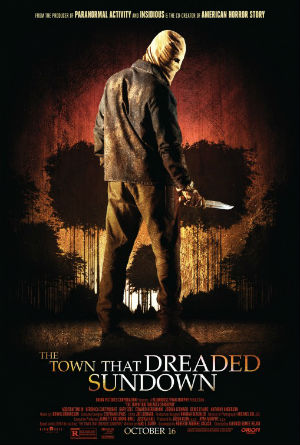
The Town That Dreaded Sundown is the latest classic horror remake.  In this case, it’s a remake of a 1976 docudrama about a real-life serial killer who, shortly after World War II, haunted the streets of my former hometown of Texarkana, Texas.  (You can read my review here.)  The original was a low-budget but effectively creepy little film that was shot on the streets of Texarkana and was full of authentic Texas atmosphere.  (It helped that it was directed by Charles B. Pierce, a Texarkana native, as opposed to some jerk from up north.)  What made the film all the more haunting was the fact that — in both the movie and in real life — the Phantom Killer was never captured.

So, how does the remake compare?

*Sigh*

(For the record, I’m not only signing but I’m also massively rolling my mismatched,  heterochromatic eyes.)

Listen, I will give this film credit for attempting to be something more than just your usual horror remake.  It actually does have a fairly clever premise.  Instead of retelling the original story, the remake of The Town That Dreaded Sundown begins with a bunch of people in present-day Texarkana sitting around and watching the original film.  There’s even an eccentric character named Charles B. Pierce, Jr. (Denis O’Hare) who we are told is the son of the original director.  It’s a clever idea, one that wisely acknowledges the effectiveness of the original film while also commenting on the continuing mystery surrounding both the identity and the fate of the Phantom Killer.

And, when someone dressed like the original Phantom Killer starts to murder young couples in Texarkana, we — just like the characters — are left to wonder whether it’s the spirit of the Phantom or if it’s someone imitating the murders from the original film or whether it’s something else altogether.

That’s certainly the question faced by Jami (Addison Timlin), who survives being attacked by this new Phantom but then grows obsessed with trying to discover who he is.  Addison Timlin gives a really good performance here.  She’s likable and sympathetic, the perfect “final girl.”

In fact, the entire film is well-cast.  Anthony Anderson is a lot of fun as a cocky Texas Ranger while Gary Cole and Joshua Leonard do good work as members of local law enforcement.  Denis O’Hare, who I will always think of as being Russell on True Blood, brings a certain dissipated nobility to his role.  The victims are all sympathetic and the killer is creepy.

But, with all that in mind, I was disappointed with the remake of The Town That Dreaded Sundown.  The reason the original film worked is because it was made by a member of the Texarkana community.  Charles B. Pierce knew the town and he understood why the Phantom Killer continued to haunt the citizens.  What his movie lacked in technical polish, it made up for in authenticity.

Though the remake features a narrator and duplicates the original’s obsession with letting us know whether each scene is taking place on the Texas-side or the Arkansas-side of the town, there’s still absolutely nothing authentic about it.  Whereas the original was filmed entirely on location, the remake was mostly filmed in Shreveport with only three days devoted to getting some location footage of downtown Texarkana.  As someone who has lived in both Shreveport and Texarkana, allow me to assure you that you can totally tell the difference.

The remake was produced by Ryan Murphy (of Glee and American Horror Story fame) and the film really does feel like a lesser season of American Horror Story.  It’s a film that has so little use for subtlety (just check out Edward Herrmann going totally overboard as a hypocritical preacher) that its creepy moments are totally smothered by all the heavy-handed cartoonishness that surrounds them.

Ultimately, the remake fails because it has no feel for or understanding for my homestate.  It was made by people who obviously know nothing about Texas or Arkansas beyond what they’ve seen in other movies produced, directed, and written by other northerners.

The 1976 Town That Dreaded Sundown worked because it was authentic.  Despite a few good ideas, the remake is just too generic to do justice to the original.


Film Review: Blood Ties (dir by Guillame Canet)


So, there’s this fucking movie called Blood Ties and it’s about a lot of fucking guys who live in fucking New York City in the fucking 70s and they’re all kind of a bunch of fuck-ups but they all know how to fucking use the word fuck as both an adjective and an adverb.  That’s the main impression that I took away from Blood Ties, a film that feels a lot like a mash-up of Place Beyond The Pines and every Martin Scorsese film ever made.

The year is 1974.  After serving several years on a murder conviction, 50 year-old Chris (Clive Owen) has been released from prison.  Chris’s transition back into society is a bumpy one.  For one thing, his ex-girlfriend (Marion Cotillard) is now a prostitute and refuses to let Chris see his children.  Though he gets a new girlfriend (Mila Kunis), he still finds himself struggling to hold down a job and he soon finds himself tempted to once again pursue a life of crime.

What might make that difficult for him is the fact that his younger brother, Frank (Billy Crudup), is now a cop with an old school porn star mustache.  Frank makes little secret of how much he resents his older brother and it isn’t long before the two of them are constantly fighting.  However, Frank has problems beyond Chris.  For one thing, he’s romantically pursuing Vanessa (Zoe Saldana), despite the fact that he earlier put her husband, Anthony (Matthias Schoenaerts), in prison.

In order to keep their dying father (James Caan) happy, Chris and Frank try to put aside their differences.  However, when Frank sees Chris fleeing from the scene of a robbery, it becomes harder and harder for him to ignore his brother’s activities.  Meanwhile, Chris has to decide whether or not to potentially sacrifice his freedom to keep his brother safe from a vengeful Anthony…

When Blood Ties was originally released at the beginning of the year, I considered seeing it but — for some reason — I ended up seeing The Legend of Hercules instead.  (Don’t you hate it when that happens!)  And I have to admit that I had forgotten about Blood Ties until I discovered that we were getting EPIX for free this holiday weekend.  Blood Ties is one of the films that’s currently showing on EPIX and, when I saw it was available, I thought to myself, “I can’t wait to see A Most Violent Year but until that opens up down here in Dallas, why not watch another violent New York period piece?”

And so I watched Blood Ties and … well, bleh.  Actually, bleh may be too harsh of a judgment.  The film is full of fun period details and Billy Crudup gives a really good performance as Frank.  There are some well done action scenes and I appreciated the fact that, for the most part, the film did not try to make violence look glamorous or fun.  The film has a great soundtrack though, for the most part, most of the songs here can also be heard in a countless number of superior Scorsese films.

But, ultimately, Blood Ties is never as good as you want it to be.  The film’s plot is about as predictable as can be and, far too often, scenes that start out interesting quickly degenerate to various characters standing around and yelling at each other.  And while that may often be what happens in real life, it still doesn’t make it particularly interesting to watch.  And then you’ve got poor Clive Owen, a good actor who is seriously miscast here.  Casting Clive Owen as a streetwise New York gangster is a bit like casting Ray Liotta as a member of the Queen’s Guard.  It just doesn’t work.

For those of us hoping for a great New York City crime epic — well, we’re just going to have to keep hoping that A Most Violent Year turns out to be just as good as everyone says it is…

Blood_Ties_poster


12 Things For Which I Am Thankful This Thanksgiving


bloodfreak8

Hello there and Happy Thanksgiving!  This is the time of year when we gather together, we look over the past few months, and we think about what we are thankful for.  A lot of people online have also suggested that Thanksgiving is the perfect time to argue with relatives who hold different political views from you.

And sure — if you want to ruin Thanksgiving for everyone, go ahead and be that person.  But for me, I’m just going to list 12 things that make me happy to be alive in 2014!

Dance1) Dancing Groot!  Actually, I’m thankful for all of the Guardians of the Galaxy but I’m especially happy that Groot is still around and he’s still dancing!

King of the Hill2) I’m thankful that Adult Swim is showing old Thanksgiving episodes of King of the Hill so that I’ll have an excuse not to watch any football games.

Mockingjay

3) I’m thankful for all of The Hunger Games films and I’m thankful for the strength and empowerment that Jennifer Lawrence brings to the role of Katniss Everdeen.

000144.0022649.tif

4) I’m thankful that everything is awesome!

Shailene

5) I’m thankful that this is the year that everyone else finally discovered that Shailene Woodley is one of the best actresses working today.

Chris Pratt

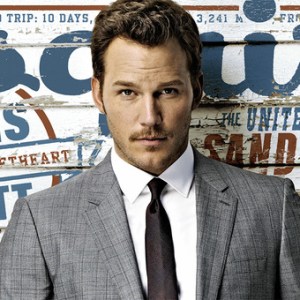
6) I’m thankful for Chris Pratt.  (Who isn’t?)

Golden Statuette

7) I am especially thankful for sites like Awards Watch and Awards Circuit.  These two sites provide some of the best Oscar coverage around and, unlike Awards Daily, they manage to do it while remaining fair, honest, and entertaining.

Tinseltown

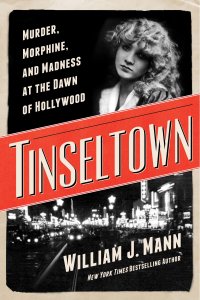
8) I’m thankful William J. Mann’s excellent book Tinseltown, a wonderful look back at the Hollywood of the 1920s and the unsolved murder of director William Desmond Taylor.

True Detective

9) I’m thankful for the haunting perfection of True Detective.

Veep

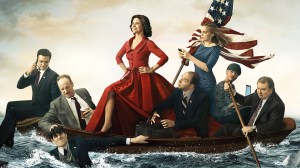
10) I’m thankful for the hilarious satire of Veep.  Meyer in 2016!

Boyhood Image

11) I’m thankful that Richard Linklater spent 12 years making Boyhood.

cat_reading

12) And, most importantly, I’m thankful for you!  Thank you for visiting this site!  Thank you for reading our reviews!  Thank you for leaving comments!  Thank you for making all of this worthwhile!

And, most of all, here’s hoping you had a Happy Thanksgiving!

Love you!

PDVD_051


6 Late Film Reviews: 300: Rise of Empire, About Last Night, Adult World, Jersey Boys, Ride Along, and Trust Me


Well, the year is coming to a close and I’ve got close to 50 films that I still need to review before I get around to making out my “Best of 2014” list.  (That’s not even counting the films that I still have left to see.  December is going to be a busy month.)  With that in mind, here are late reviews of 6 films that I saw earlier this year and had yet to get around to reviewing.

300_Rise_of_an_Empire

1) 300: Rise of an Empire (dir by Noam Munro)

Last night, I watched 300: Rise of an Empire for the second time and I still couldn’t figure out what exactly is going on for most of the film.  I know that there’s a lot of fighting and a lot of bare-chested men yelling and, whenever anyone swings a sword, they suddenly start moving in slow motion and dark blood spurts across the screen like Jackson Pollock decorating a previously blank canvas.  The style of 300 has been co-opted by so many other films that 300: Rise of an Empire feels more like an imitation than a continuation.

At the same time, I’m resisting the temptation to be too critical of 300: Rise of the Empire for two reasons.  First off, this movie wasn’t really made to appeal to me.  Instead, this is a total guy film and, much as I have every right to love Winter’s Tale, guys have every right to love their 300 movies.  Secondly, 300: Rise of an Empire features Eva Green as a warrior and she totally kicks ass.

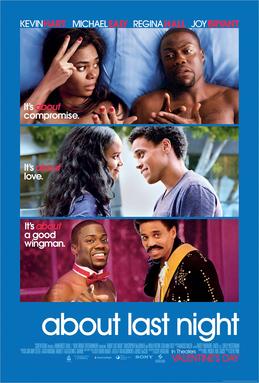
About_Last_Night_One_Sheet

2) About Last Night (dir by Steve Pink)

Obviously, I made a big mistake this Valentine’s Day by insisting that my boyfriend take me to see Endless Love.  (I still stand by my desire to see Winter’s Tale.)  I say this because I recently watched this year’s other big Valentine’s Day release, About Last Night, and I discovered that it’s a funny and, in its way, rather sweet romantic comedy.

About Last Night tells the story of two couples, Danny (Michael Ealy) and Debbie (Joy Bryant) and Bernie (Kevin Hart) and Joan (Regina Hall).  All four of the actors have a very real chemistry, with Hart and Hall bringing the laughs and Ealy and Bryant bringing the tears.  The film itself is ultimately predictable but very likable.

Adult_World

3) Adult World (dir by Scott Coffey)

In Adult World, Emma Roberts plays Amy Anderson, an aspiring author and recent college graduate.  Despite her own overwhelming faith in her own abilities, Amy struggles to find a job outside of college.  She is finally reduced to working at Adult World, a small adult bookstore.  Working at the store, she befriends the far more down-to-earth Alex (Evan Peters) and eventually discovers that one of her customers is also her idol, poet Rat Billings (John Cusack).  Amy proceeds to force her way into Rat’s life, volunteering to work as his assistant and declaring herself to be his protegé.  However, it turns out that Rat is far less altruistic than Amy originally thought (and with a name like Rat, are you surprised?).

Adult World is a flawed film but I still really enjoyed it.  The story has a few problems and the film never really takes full narrative advantage of Adult World as a setting but the entire film is so well-acted that you’re willing to forgive its flaws.  Cusack gives a surprisingly playful performance while Evan Peters is adorable in a Jesse Eisenberg-type of way.  Emma Roberts shows a lot of courage, playing a character who is both infuriating and relatable.

Jersey_Boys_Poster

4) Jersey Boys (dir by Clint Eastwood)

Clint Eastwood’s upcoming American Sniper has been getting so much attention as a potential Oscar contender that it’s easy to forget that, at the beginning of the year, everyone was expecting Jersey Boys to be Eastwood’s Oscar contender.  In fact, it’s easy to forget about Jersey Boys all together.  It’s just one of those films that, despite its best efforts, fails to make much of an impression.

Jersey Boys is based on one of the Broadway musicals that tourists always brag about seeing.  It tells the true story of how four kids from the “neighborhood” became the Four Seasons and recorded songs that have since gone on to appear on thousands of film soundtracks.  The period detail is a lot of fun, Christopher Walken, who has a small role as a local gangster, is always entertaining to watch, and the music sounds great but Eastwood’s direction is so old-fashioned and dramatically inert that you don’t really take much away from it.

Hopefully, American Sniper will be the work of the Eastwood who made Mystic River and not the Eastwood who did Jersey Boys.

Ride_Along_poster

5) Ride Along (dir by Tim Story)

School security guard Ben Barber (Kevin Hart) wants to marry Angela (Tiki Sumpter) but Angela’s tough cop brother James (Ice Cube) doesn’t approve.  In order to prove himself worth, Ben goes on a ride along with James and the results are just as generic as you might expect.  Probably the only really funny part of the film was the way that Hart delivered the line, “You’re white!  You don’t fight!” but we all saw that in the commercial so who cares?

On the plus side, Ice Cube has a lot of screen presence and is well-cast as James.  As for Kevin Hart — well, he should probably be thankful that About Last Night came out a month after Ride Along.

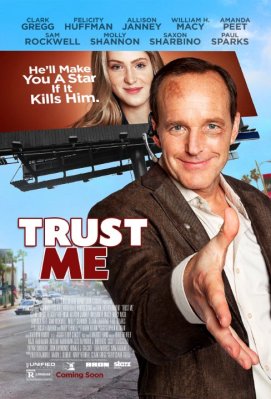
Trust Me

6) Trust Me (dir by Clark Gregg)

In Trust Me, Clark Gregg both directs and stars.  He plays Howard, a fast-talking but ultimately kind-hearted talent agent who mostly represents children.  After losing some of his most popular clients to rival agent Aldo (a hilariously sleazy Sam Rockwell), Howard meets Lydia (Saxon Sharbino), a 13 year-old actress.  Soon, Howard is representing Lydia and trying to land her a starring role in a major production.  Howard also finds the time to tentatively date his next door neighbor (Amanda Peet).  However, there’s more to Howard than meets the eye.  He is haunted by the death of one of his previous clients and his guilt leads him to become especially protective of Lydia.  When Howard concludes that Lydia is being sexually abused by her crude father (Paul Sparks), he attempts to protect her from both him and the Hollywood system that’s threatening to corrupt her.  It all leads to an oddly tragic conclusion…

I say “oddly tragic” because Trust Me is, in many ways, an odd film.  As a director, Gregg gets good performances from his cast but he never manages to find a consistent tone.  The film starts as a Hollywood satire and then it becomes a romantic comedy and then it turns into a legal drama before then becoming an all-0ut attack on the way the entertainment industry treats child actors and then finally, it settles on being a tragedy.  As a result, Trust Me is undeniably a bit of a mess.

And yet, it’s a compelling mess and the film itself is so heart-felt that you can’t help but forgive its flaws.  If nothing else, it proves that Clark Gregg is capable of more than just being Marvel’s Agent Coulson.