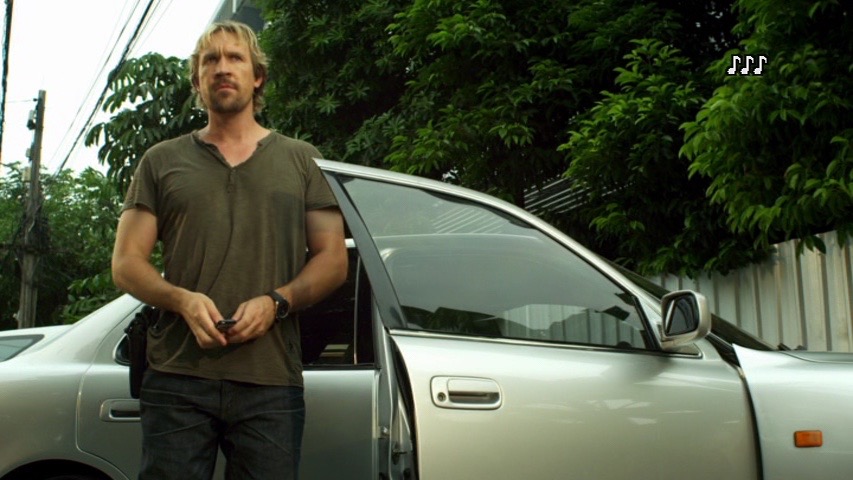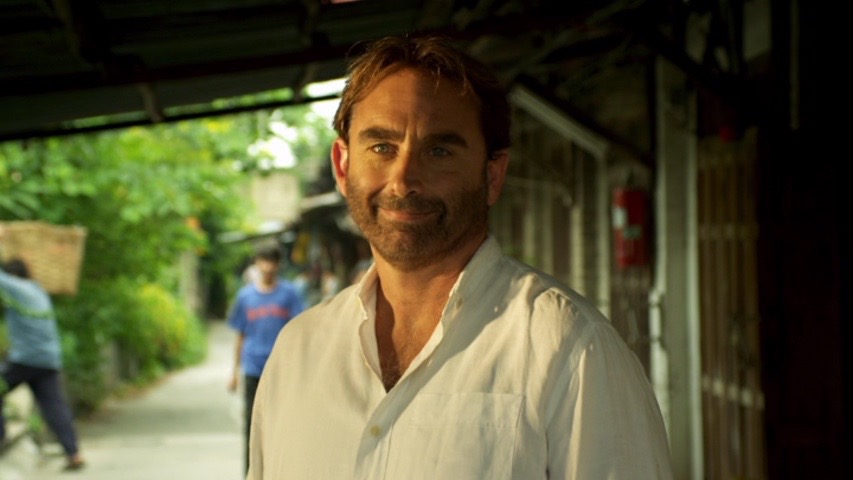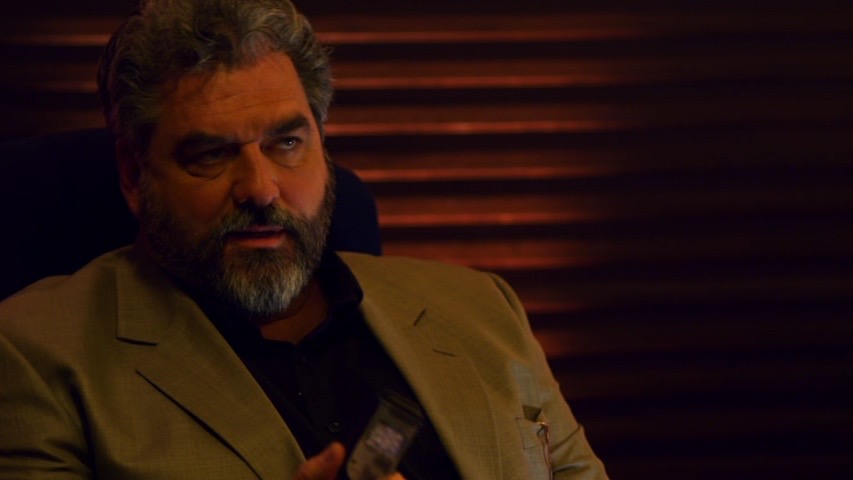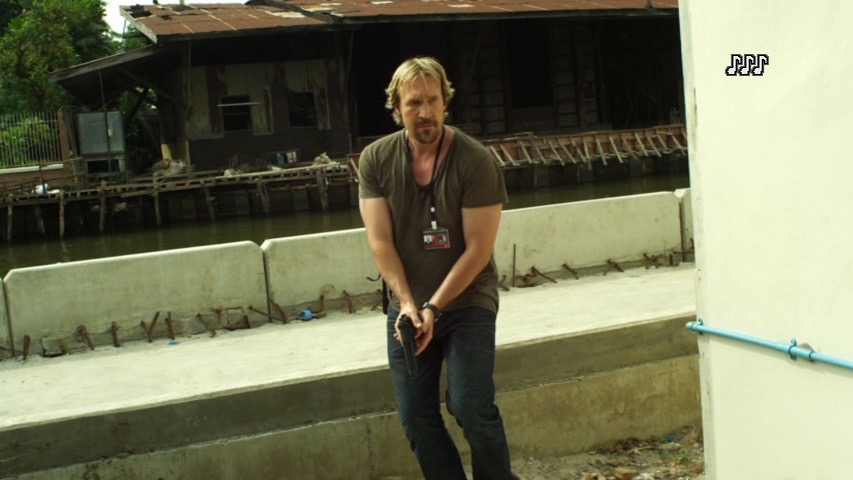
“THE GUILTY WILL BE PUNISHED!”: The Punisher (1989, directed by Mark Goldblatt)


The-Punisher“What the fuck do you call 125 murders in 5 years?”

“Work in progress.”

With that line, Dolph Lundgren claimed the role of Frank Castle as his own.

Who is Frank Castle?  A former cop, he was mistakenly believed to be dead after mobsters killed his wife and children.  He has spent five years waging a one man war on the Mafia.  When not killing the criminal element, he spends his time naked in the sewers and having conversations with God.

“Come on God,” he says, “answer me. For years I’m asking why, why are the innocent dead and the guilty alive? Where is justice? Where is punishment? Or have you already answered, have you already said to the world here is justice, here is punishment, here, in me.”

Everyone knows him as the Punisher.  Only his former partner, Detective Berkowtiz (Lou Gossett, Jr.) suspects that the Punisher is actually Frank Castle.

Frank has been so effective in his one-man war on crime that the Mafia is now permanently weakened.  Plotting to take over city’s underworld, the Yakuza arrives in New York City.  Their leader, Lady Tanaka (Kim Miyori), kidnaps the son of Gianni Franco (Jereon Krabbe) and threatens to kill him unless Franco turns his operation over to her.  The Punisher and Franco team up to rescue Franco’s son and to destroy the Yakuza.  Even as the two works together, the Punisher makes sure that Franco knows that he will be punished for being a criminal.

“There’s a limit to revenge, you know,” Franco says.

“I guess I haven’t reached mine yet,” The Punisher answers.

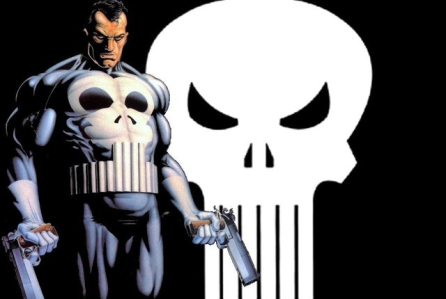
With the current popularity of the Marvel Cinematic Universe, it is easy to forget that, in the 80s and 90s, almost all Marvel movies were straight-to-video affairs like this one, made with budgets so low that they could not even afford a Stan Lee cameo.  The Punisher was one of the few halfway entertaining ones.  It may not be a great movie but when compared to the 1990 version of Captain America or the Roger Corman-produced Fantastic Four, The Punisher looks like a masterpiece.  When this movie was first released, The Punisher was one of the most popular of Marvel’s characters, starring in three separate titles.  While the movie embraces the Punisher’s violent methods and reactionary worldview, it also make some unnecessary chances to the character, not only tweaking his origin story by making Frank a former cop (instead of a grieving father whose family fell victim to random mob violence) but also doing away with The Punisher’s iconic skull shirt.

Marvel's Punisher

Marvel’s Punisher

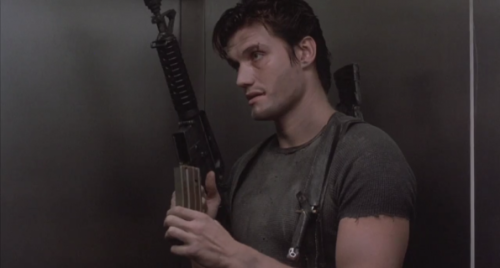
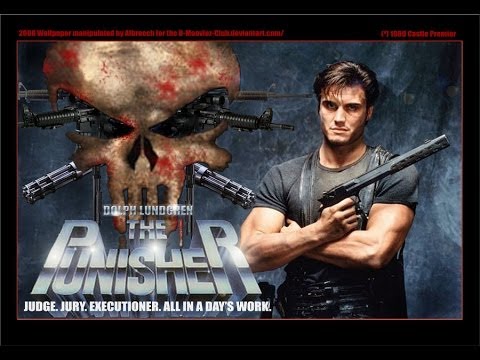
Dolph Lundgren's Punisher

Dolph Lundgren’s Punisher

Can a punisher without a skull still be The Punisher?

Surprisingly, he can.  Dolph Lundgren is not only physically right for the role but he is also believable as a psychologically damaged vigilante.  This Punisher could teach Deadpool a thing or two.  After the Punisher kills one gangster in front of the man’s terrified son, he tells him, “Stay a good boy and grow up to be a good man.  Because if you don’t, I’ll be waiting.”  When the boy aims his father’s gun at him, the Punisher places his forehead against the barrel and says, “Do it.”  When you consider that The Punisher was originally introduced, in the pages of The Amazing Spider-Man, as someone who would shoot jaywalkers because they had broken the law, you can see that Lundgren’s performance really gets to the twisted soul of the character.

Even without the skull, Lundgren’s Punisher is still far superior to the versions played by Tomas Jane and Ray Stevenson.  When Jon Bernthal plays the role in the second season of Daredevil (and officially brings the character into the MCU), he will hopefully have learned some lessons from watching Dolph Lundgren.

Punisher


Cleaning Out The DVR: Born Yesterday (dir by George Cukor)


Born_yesterday

After I watched Goodbye, Mr. Chips, I decided to watch one more film that I had recorded off of TCM.  The movie I chose was Born Yesterday.

This 1950 film was directed by George Cukor and stars three Academy Award winners.  The lead actor was William Holden, who would win best actor three years after the release of Born Yesterday.  The villain was played Broderick Crawford, just a year after playing his Oscar-winning role in All The King’s Men.  Finally, the true star of the film was Judy Holliday, recreating her Broadway role of “dumb intelligent blonde” Billie Dawn.  For playing Billie, Holliday would win the award for best actress of the year.

In Born Yesterday, Billie is the girlfriend of Harry Brock (Broderick Crawford).  The crude and not particularly intelligent Harry has made a fortune as a “junkman” and, though the film never comes out and explicitly says so, it is suggested that Harry may have ties to the Mafia.  Harry has come to Washington, convinced that he can buy his way into political power.  Harry’s lawyer (Howard St. John) suggests that Harry should marry Billie, specifically because a wife cannot be compelled to testify against her husband.

However, there’s a problem.  Billie is uneducated and lacks formal manners.  Of course, Harry is even worse but then again, Harry is a rich white guy and, therefore, he doesn’t have to be polite or know what he’s talking about  After Billie embarrasses him during a meeting with a congressman, Harry hires journalist Paul Verrall (William Holden) to teach Billie how to fit in with Washington society.  At first, Paul refuses but, ultimately, he takes the job because he needs the money.

As Paul teaches Billie, it quickly becomes apparent that Billie is not as dumb as everyone assumes.  In fact, she has an insatiable desire to learn.  When Paul takes her on a tour of Washington, Billie is excited to learn the story behind every monument and to take a look at every historical artifact.  (When Paul shows her the bill of rights, Billie immediately reads the 2nd Amendment and gets Paul to explain it to her.  As Paul explained that it meant that citizens had the right to bear arms, my sister walked through the room and said, “You got that right.”)  Judy Holliday perfectly captures Billie’s excitement as, for the first time in her life, she’s actually treated like someone with a brain.

Billie also starts to fall in love with Paul.  After reading one of Paul’s articles, an obviously impressed Billie tells him, “I think it’s the best thing I ever read.  I didn’t understand a word.”  At the same time, Paul starts to fall for Billie.

Meanwhile, Harry is not falling for anyone but himself.  He continues to bribe congressmen but now, Billie not only realizes what Harry is doing but also understands that it’s illegal and goes against everything that the authors of the Constitution envisioned.  After a rather nasty scene in which she is repeatedly slapped by Harry, Billie goes down to the Lincoln Memorial, hears the voice of old Abe himself, and is finally ready to stand up for herself, for Paul, and for the American way of life.

(“When you steal from the government, you steal from yourself, you dumb ox!” she yells at Harry.)

Born Yesterday was based on a stage play and, with the exception of the scenes where Paul and Billie explore D.C., the entire film takes place in Harry’s hotel suite.  The film never quite escapes its theatrical origins.  Broderick Crawford bellows his lines out to the last row and William Holden feels miscast.  (That same year, he gave a far more interesting performance in Sunset Boulevard.)

But ultimately, Born Yesterday is mostly designed to showcase Judy Holliday as Billie Dawn.  When the film first started, I have to admit that I had my doubts about Holliday’s performance.  Her character was so stereotypically ditzy and spoke in such a nasal whine of a voice that I found myself wishing that the film had been made with either Marilyn Monroe or even Jayne Mansfield in the Billie Dawn role.  But, as the film progresses, I started to better appreciate Holliday’s performance.  I started to notice the sadness and the insecurity lurking underneath the surface.  I discovered that there was unexpected nuance to both the character and the performance.  By the time she was running through the National Archives and asking Paul questions about George Washington, she had totally won me over.

Still, Holliday’s victory for best actress does seem a little strange.  After all, to win the Oscar, Holliday defeated All About Eve‘s Bette Davis and Anne Baxter and Sunset Boulevard‘s Gloria Swanson.  Holliday’s performance definitely deserved a nomination but it’s a bit more difficult to argue that it deserved the Oscar.  Of course, Davis and Baxter played two tough and sarcastic divas, neither one of whom depended on a man for their success.  Swanson, meanwhile, played an older woman who ends up murdering her much younger lover.  Billie, meanwhile, is never without a girlfriend and doesn’t murder anyone.  Perhaps it’s understandable that certain Academy voters would be more comfortable with Billie Dawn than they would with Norma Desmond or Margo Channing.

Born Yesterday was also nominated for best picture but it lost to All About Eve.

Cleaning Out The DVR: Goodbye, Mr. Chips (dir by Sam Wood)


220px-Goodbye,_Mr._Chips_(1939_film)_poster

After watching Yankee Doodle Dandy, I watched another old best picture nominee that was sitting on my DVR.  Goodbye, Mr. Chips was nominated for best picture of 1939, a year that many consider to be one of the best cinematic years on record.  Just consider some of the other films that were nominated in that year: Mr. Smith Goes To Washington, Dark Victory, Ninotchka, The Wizard of Oz, Stagecoach, Love Affair, Wuthering Heights, Of Mice and Men, and, of course, Gone With The Wind.  Goodbye, Mr. Chips may not have won best picture but its star, Robert Donat, did win the Oscar for Best Actor, defeating Clark Gable, Jimmy Stewart, Laurence Olivier, and Mickey Rooney.

Robert Donat plays the title character, a British teacher named Charles Edward Chipping (affectionately known as Mr. Chips).  The film follows Mr. Chips over the course of 63 years, from his arrival as a new Latin teacher to the last night of his life.  When he first starts to work at Brookfield Public School, the young and inexperienced Mr. Chips proves himself to be a strict teacher, the type who enforces discipline and may be respected but will never be loved by his students.  It’s only after he falls in love with the outspoken Kathy Bridges (Greer Garson) that Mr. Chips starts to truly enjoy life.

After marrying Kathy, Mr. Chips relaxes.  He becomes a better teacher, one who is capable of inspiring his students as well as teaching them.  After Kathy dies in childbirth, Mr. Chips deals with his sadness by devoting all of his time to his many pupils.

While Mr. Chips deals with both new students and headmasters who view him as being too old-fashioned, the world marches off to war.  When World War I breaks out and there is a shortage of teachers, the elderly Mr. Chips serves as headmaster.  Each Sunday, in the chapel, he reads the names of former students (many of whom he taught) who have been killed in the war.  In perhaps the film’s best scene, he teaches a class while German bombs fall nearby, keeping his students calm and positive by having them translate Julius Caesar’s account of his own battle against the Germans.

The bombing scene is interesting for another reason.  Mr. Chips was filmed and released in 1939, shortly before Britain declared war on Nazi Germany.  Goodbye, Mr. Chips is not just a sentimental tribute to a teacher.  It’s also a tribute to the strength and resilience of the British people.  With the world on the verge of a second great war, Goodbye, Mr. Chips said that it was going to be tough, it was going to be scary, and there was going to be much loss but that the British would survive and ultimately be victorious.

And, as we all know, the film was right.

While the Oscar definitely should have gone to Jimmy Stewart for his performance in Mr. Smith Goes To Washington, Robert Donat still gives a sweet and touching performance as Mr. Chips.  And the film’s ending brought very real tears to my mismatched eyes.  Goodbye, Mr. Chips may be sentimental but it’s sentimental in the best possible way.

Film Review: The Encounter: Paradise Lost (2012, dir. David A.R. White)


vlcsnap-2016-02-22-17h39m12s843

Update: I don’t like to change my old reviews because good or bad, they reflect where I was at the time. However, since writing this review, I have been assured by Sean Paul Murphy who wrote and edited the film, that it was not directed by David A.R. White. He has told me that it is a pseudonym, but just not for White. It was a DGA issue. I’m going to take his word for it unless something else comes up, in which case I will obviously update this again.

You may have noticed that I credit this film as being directed by David A.R. White instead of Bobby Smyth as it is listed on IMDb. I have looked at numerous reviews and I can’t find anyone else that seems to have noticed this is an obvious pseudonym for David A.R. White. Let me explain.

David A.R. White is credited as directing the first Encounter movie. Do you really think he would entrust the sequel to someone who has absolutely no other credits to their name?

Screen Shot 2016-02-27 at 11.46.30 AM (3)

Of course he wouldn’t. He would helm it himself, or maybe co-direct it the same way he did with Me Again (2012).

The next bit is the name itself. The last name Smyth sure sounded familiar to me. It should sound familiar if you are a Baptist or have studied religion. John Smyth was one of the founders of the Baptists churches. He is also particularly noted for reconciling with the Mennonites near the end of his life.

Screen Shot 2016-02-27 at 12.09.44 PM (1)

According to the bio for David A.R. White, written by his own company Pure Flix Entertainment on IMDb, he grew up in a small Mennonite farming community outside of Dodge City, Kansas. Also, Smyth is a variation on Smith. The infamous pseudonym used over the years by many people is Alan Smithee.

The Bobby part is probably two-fold. First, it’s not Alan, which would be way too obvious. Second, the real star of this movie is an actor named Robert Miano. Miano has been in numerous Pure Flix films. That’s most likely where he got Bobby from.

Another thing takes us back to the movie Me Again. In that film, Bruce McGill plays a character named Big Earl. Big Earl is an anagram for Gabriel. As in the archangel Gabriel. So this kind of thing is in David A.R. White’s wheelhouse.

Finally, the movie has the same problems as The Encounter as well as another David A.R. White film called Redeemed (2014). It has his signature on this movie, which is especially noticeable because The Encounter and this film had different cinematographers. To me that says the director told them to shoot it this way, which means a common director between the two movies. There are also other little things as well. Unless someone actually called Bobby Smyth turns up, then it’s a pseudonym for who I can only conclude must have been White himself.

With that out of the way, let’s talk about the film.

vlcsnap-2016-02-22-17h30m57s248

vlcsnap-2016-02-22-17h31m03s262

Before giving us the title card, the movie gives us a little background information on the 2004 tsunami. This is another reason I’m sure it’s a pseudonym. The Mennonite’s have a thing called the Mennonite Central Committee. They responded to the tsunami by sending millions of dollars in aid. That tsunami is sort of a thing in the movie. Kind of. Just a minor plot point, but important enough that it gets a couple of title cards at the start.

Now we have to explain a little more. This is a bit like a Godfrey Ho movie. There is a Movie A and a Movie B that are spliced together. Not clumsily like Ho would do, but it is enough that it really is appropriate to discuss them as if they are two separate films.

Movie A:
vlcsnap-2016-02-22-17h50m36s387

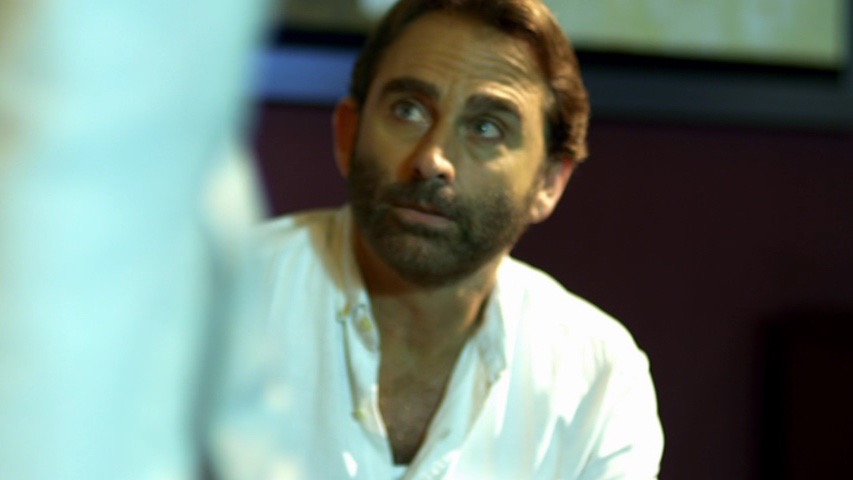
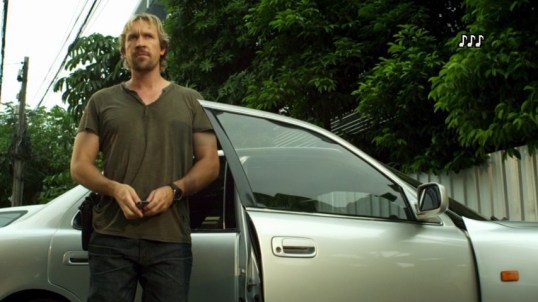
Movie A opens up with DEA Agent Rik Caperna (David A.R. White) showing up in Thailand 7 years after the tsunami hit the region. He is itching to take down a drug kingpin named Bruno Mingarelli (Robert Miano).
vlcsnap-2016-02-22-17h51m55s950

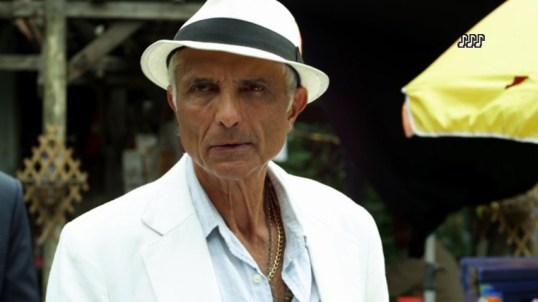
Luckily, he spots him just as he pulls up in his car and Rik calls his boss. Since Bruno isn’t actually holding any suitcases or anything that could be holding drugs, his boss says to hold back. Rik doesn’t like that at all. He is given orders to stay in his car, which is exactly why he leaves his car to follow Bruno.

Now one of the parts that sort of connects the two stories together happens.
vlcsnap-2016-02-22-17h52m00s455

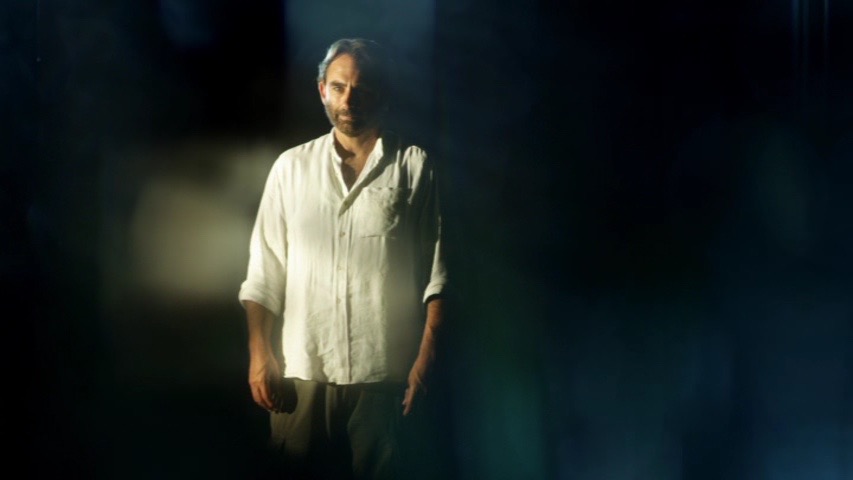
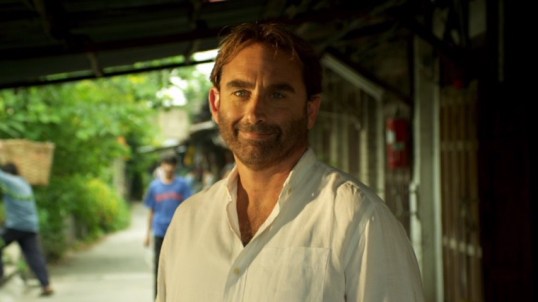
Jesus, played by Bruce Marchiano, appears, looks at Bruno, then disappears. To be honest, it’s a little weird. It’s something you would expect a slasher movie character to do before he finally gets down to the killing. Of course, that is exactly what Jesus is doing here except he is making these brief appearances to allude that Movie B is eventually going to happen.
vlcsnap-2016-02-22-17h52m24s170

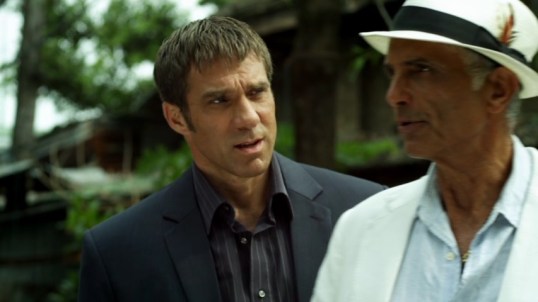
Bruno has a bodyguard of sorts named Charlie Doles played by Gary Daniels.

Now we get a strange flashback that isn’t clear it’s a flashback. It’s of a little girl that we will find out later is, or represents, Rik’s sister who died when he was a kid because of drugs. It’s this lousy indication of when something is real or a flashback that was also present in Redeemed, which David A.R. White is explicitly credited as having directed.

Next we meet Bruno’s boss, and guess who?
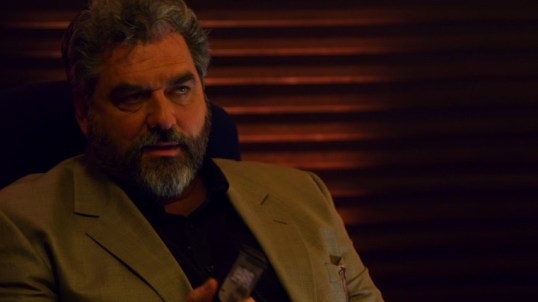
vlcsnap-2016-02-22-17h53m44s816

It’s Kass Connors here to make barely an appearance just to let you know the Devil is around here somewhere.

Bruno is here to tell him that this will be his last shipment, but soon Rik is spotted outside, and the chase is on.
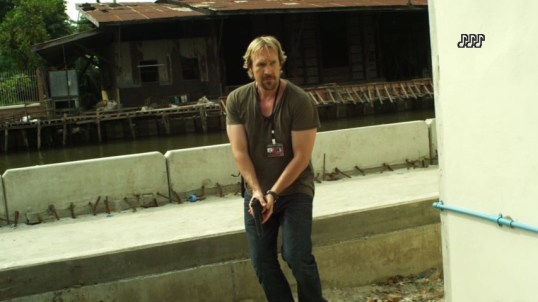
vlcsnap-2016-02-22-17h56m46s756

These scenes are actually shot reasonably well. Almost as if White is familiar with these kinds of movies so he had an idea of how to shoot these properly. These action oriented outdoor scenes are not a part of Movie B, and weren’t in the first film. Movie B and the first film are all close quarters dialogue heavy films. In other words, films like My Dinner With Andre (1981), Persona (1966), and the dialogue heavy works of Eric Rohmer. Or to put it even simpler, they are foreign films, but shot like they were done by someone who isn’t exactly familiar with those kinds of movies.

Getting back to the story of Movie A now, Rik catches up with Bruno and takes him into custody. One problem, he actually has no evidence whatsoever. As a result, the police show up and let Bruno go. Then Rik flips out, attacks the cops, and is taken into custody himself.

vlcsnap-2016-02-22-18h08m27s597

Now we go to meet Bruno’s drug addicted wife Mimi Mingarelli (Ammy Chanicha). Think of her as the nice girl who picked up the runaway from the first movie, except she’s a drug addict in this one.
vlcsnap-2016-02-22-18h09m08s400

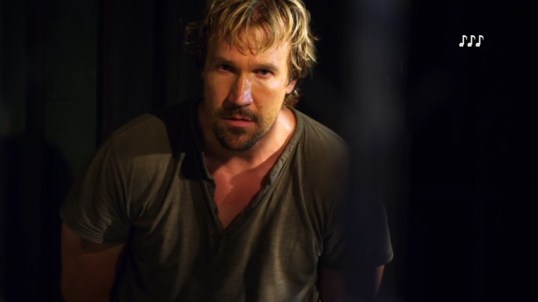
Now we cut back to Rik in jail, and hey Rik!
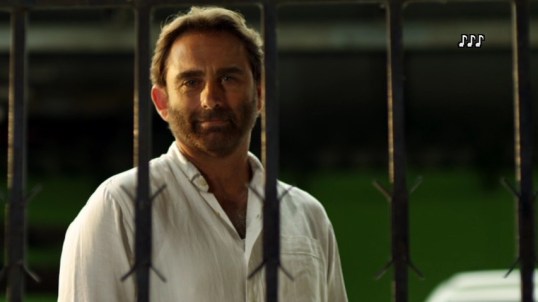
vlcsnap-2016-02-22-18h09m16s576

Jesus, Man!

Look, if David wasn’t going to put in that priceless one-liner somewhere, than I had too. If you don’t know what that’s from, then here’s The Cinema Snob review of Second Glance (1992), which David A.R. White was in.

Now what you expect happens. By that, I mean Rik is let out of jail by his boss, and immediately goes to see the Devil.
vlcsnap-2016-02-22-18h13m36s896

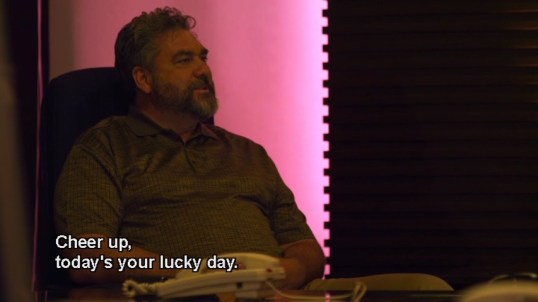
After passing him a copy of the script for God’s Not Dead (2014), the Devil also gives him a gun and tells him to go after Bruno with his blessing.
vlcsnap-2016-02-22-18h14m23s363

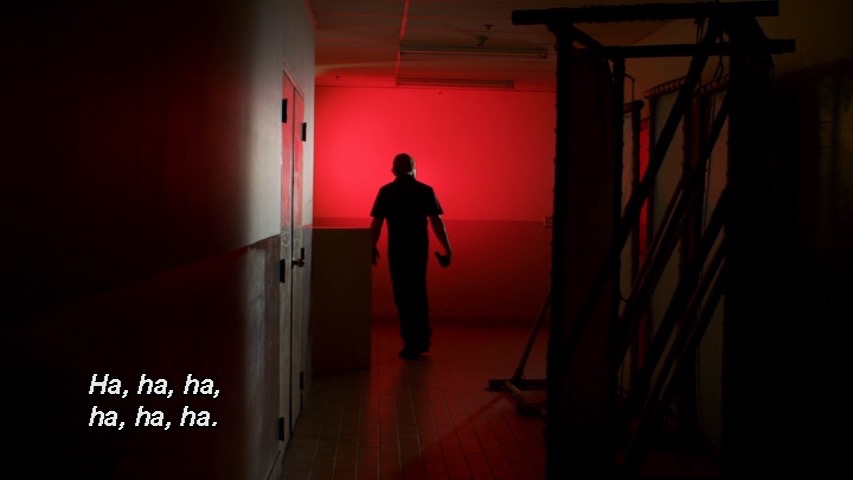
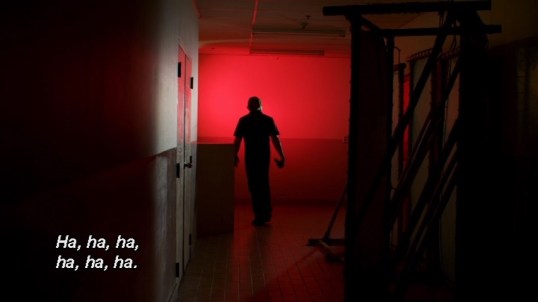
I have no idea how he knew exactly where the Devil was. One minute he’s in jail being told he’s suspended by his boss, then he’s suddenly walking into the conveniently lit with red hallway to the room where the Devil is waiting.

Now the Devil places a call to Charlie telling him to let Rik kill Bruno, then to kill Rik.

vlcsnap-2016-02-22-19h30m55s267

Oh, and Jesus is out there in the ocean standing on the water. You know, as you do. Actually, I am glad they put some of these things in after the first film. I mean you have a character that is literally supposed to be Jesus. Let the man do his thing.
vlcsnap-2016-02-22-19h40m20s197

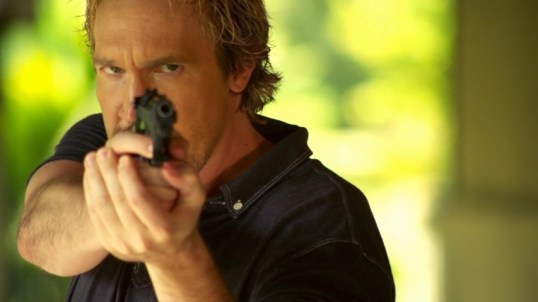
Rik catches up with Charlie, Bruno, and Mimi. He engages in a gun battle, but is taken hostage. Rik eventually breaks free, and Bruno is killed in the crossfire between Rik and Charlie.

vlcsnap-2016-02-22-21h56m44s626

Rik chases down Charlie and fights him. Rik nearly drowns Charlie to death, but decides not to, and instead bring him in properly so he can be tried for his crimes.
vlcsnap-2016-02-22-21h57m15s645

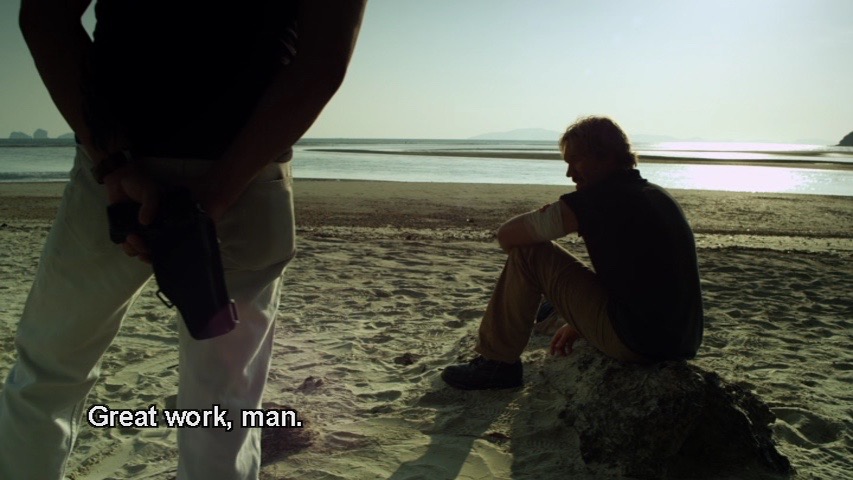
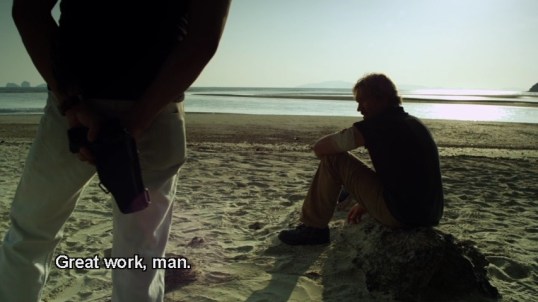
The last we see of Rik is him sitting on a beach being told by his boss that Bruno kept good records so they are going to be busy for a long time.

Movie A has come to an end. Time for Movie B!

Movie B:

Movie B opens up in 2004 with a black couple and their son Timothy (Steven Clarke). They are kind of like the black couple from the first one in that they are married, black, and the wife will end up wanting a divorce, but that’s really all they have in common with them. The wife wanting a divorce was ambiguous and kind of offensive in the first film. Here, we completely understand. She (Shelley Robertson) has every reason for wanting out of this situation the husband (Rif Hutton) has dug himself into and doesn’t appear to be emerging from anytime soon no matter what she does. The couple runs a resort in Thailand. Now Dad goes to sit down and talk with his son.
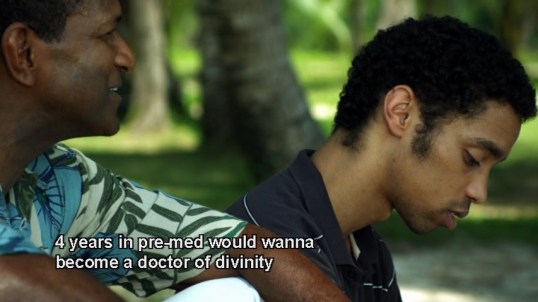
vlcsnap-2016-02-22-17h45m53s176

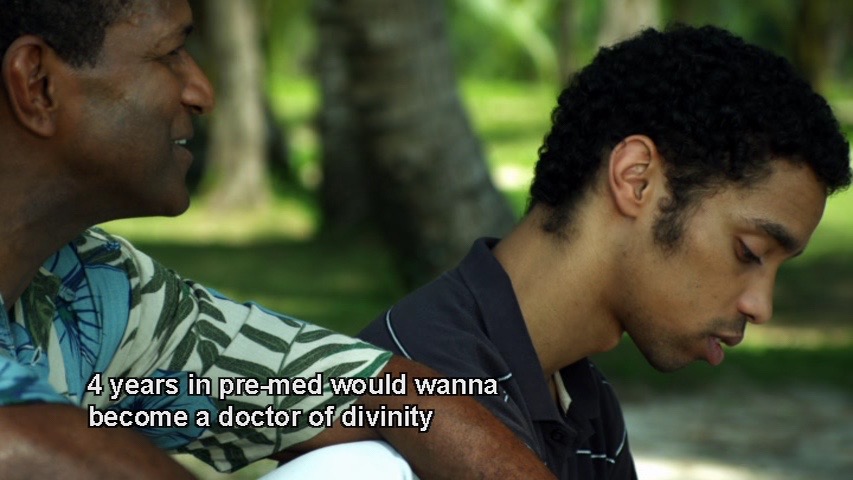
His son spent 4 years in pre-med, then decided to abandon it to become what they call a “doctor of divinity”. It’s kind of a wishy washy honorary theology type degree. The point is, he wants to help people by actually being a Christian and what they are supposed to embody. The father is a little perplexed as I would be myself. That is a lot of work to be tossed aside. Also, being a real medical doctor doesn’t preclude doing what he wants to do. In fact, he could do even more good being an MD that is willing to do things like Doctors Without Borders and Christian type aid programs. However, of course it’s his decision to make. His father seems to respect it even if he doesn’t completely understand it. Sadly, the son is killed by a 24 style countdown and a title card.

vlcsnap-2016-02-22-17h50m00s122

Next we see the father 7 years later ruminating about his son’s death. He also talks to him like he’s there, which he is because this is a Christian movie.
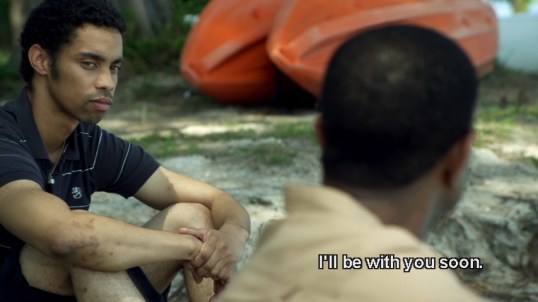
vlcsnap-2016-02-22-18h16m06s133

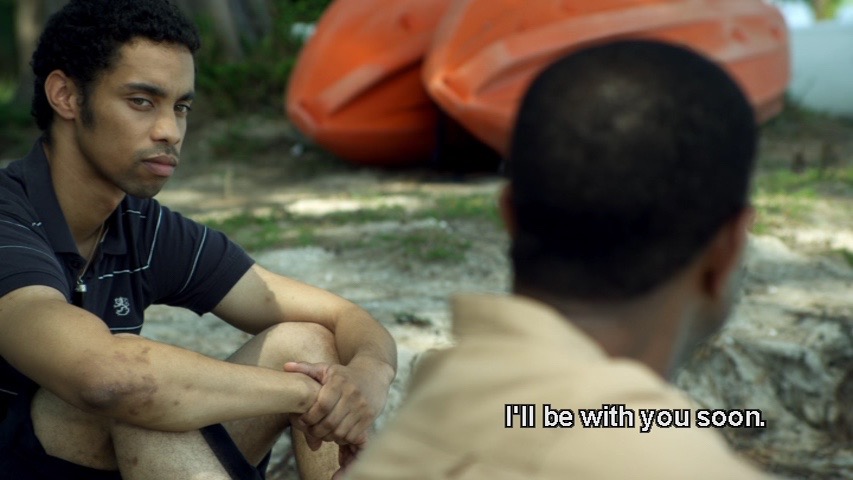
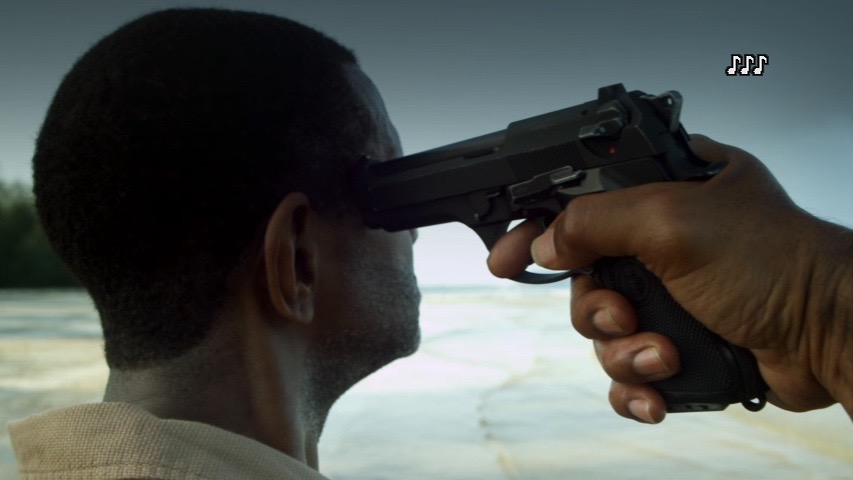
You can tell by the stink eye his son is giving him that he isn’t too happy with his Dad’s plan here. Neither is his wife happy with his inability to move on instead of not only digging a hole so deep that he’ll never get out but also dragging her into it as well. He is also so far gone that he doesn’t even want to evacuate as a new storm is approaching. That’s when Dad walks out into the water so David can try and fix the gun clip goof from the first Encounter movie.

vlcsnap-2016-02-22-18h22m03s459

In the first Encounter movie Jesus recounts a tale of how he saved the runaway girl from killing herself. He caused her abusive father to stumble so he would take the clip out of the gun he was carrying. The point being that when she picked up the gun it wouldn’t have any bullets in it. The problem was that the father set the clip right next to the gun, but then it disappeared when the camera cut to her coming into the room. That left me saying, “Thanks Jesus, but who moved the clip?” I’m sure I wasn’t the only one who noticed that mistake in the film. This is basically a repeat of that scene except you can see that the red dot is on indicating the safety is off. That isn’t just one quick shot either. They really make sure you get a good look at that gun to make sure you see the dot. It’s also there to build up some tension till Jesus tells him to put down the gun. Think that scene is going to go anywhere? Nope!
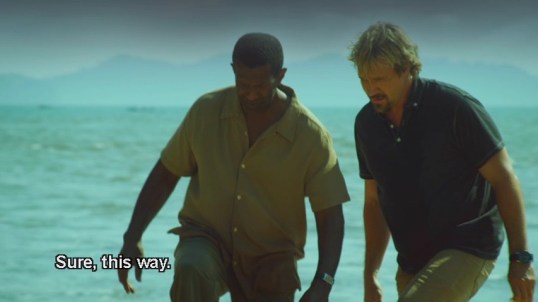
vlcsnap-2016-02-22-19h32m52s706

The next thing we see is Rik pulling up in a boat, the father putting the gun in his belt, and then Dad taking Rik away to show him the place. Now the gun battle breaks out and everyone in the story is taken hostage by Bruno and Charlie. That means the drug addicted wife, the married couple, and Rik tied to a chair in a room at the resort. Thus begins the Encounter as Jesus appears outside their window.
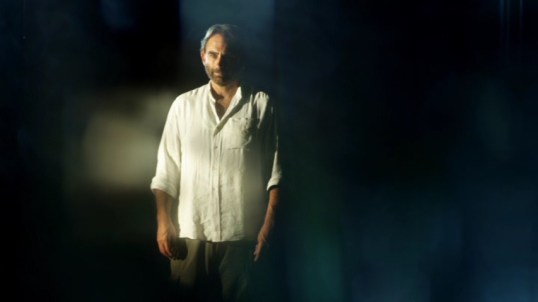
vlcsnap-2016-02-22-19h50m56s825

I must be right up front and say that despite the problems in this part of the film, Jesus is way more like Jesus than he was in the first film. In that one he was like someone selling a time share in Heaven or damnation just down the road. That said, let’s take a look at this part.

vlcsnap-2016-02-22-19h51m53s317

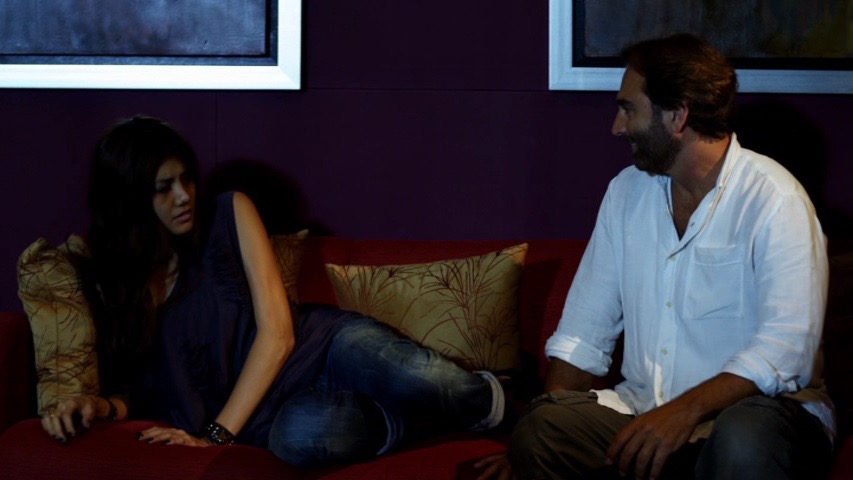
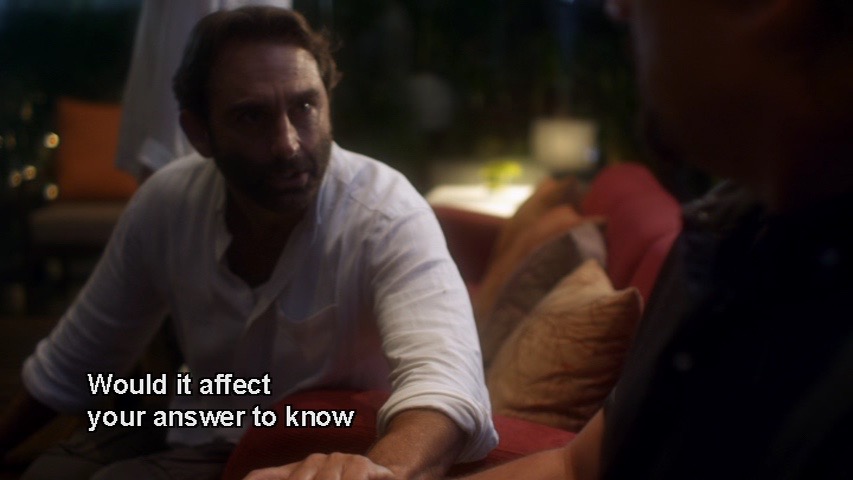
Jesus sits down next to the drug addicted wife. Of course he knows everyone’s name. They ask him what his name is and he doesn’t just come right out with Jesus. Again, he’s much more like a kind person in this then in the first movie. He doesn’t immediately dump the Jesus and believe in me stuff on them. He tends to talk to them like he’s just a person there who wants to defuse this otherwise deadly situation. In fact, he doesn’t say his name until he is explicitly asked by Bruno.

In this situation you can think of Charlie as the businessman in the first film. However, as Movie A shows, he isn’t sent to eternal damnation. He is given a chance to pay for his crimes in prison. Much better than the first film in this regard.

The next part that is worth mentioning is when Jesus takes some potshots at Buddhism. Mimi grew up in a monastery before ending up becoming addicted to drugs. She was then bought by Bruno who couldn’t stand seeing her the way she was, but also fell in love with her on sight. I could have done without that. It’s that whole teams thing. It’s not necessary in religion any more than gender. In fact, it’s not needed anywhere, but in sports where we emphasize having good sportsmanship.

She is the first person he tries to help. You can say he preys on her because she’s the weakest point. There’s something to that, but it also makes sense to start with her since she’s the easiest to fix. It also makes sense to start with her because aside from the married couple, the other’s lives revolve around victims like herself. Still, instead of working through her pre-existing religion, he tries to directly contradict it and convert her.

Throughout this there are problems with focus and other camera issues. Here’s an example.
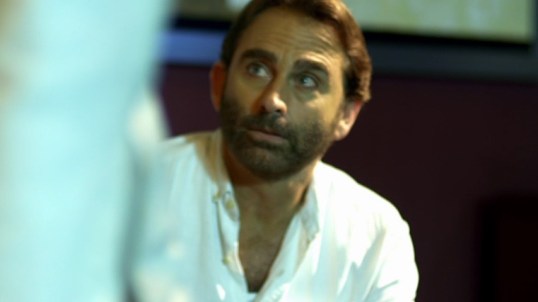
vlcsnap-2016-02-22-20h33m00s179

The camera really doesn’t seem to know where to focus, tries to focus on Jesus after Bruno passes in front of him, then just quickly cuts away. There was a similar shot in the first film where the camera was changing from a background character to one in the foreground, but then just suddenly cut away.

Here’s another example.

vlcsnap-2016-02-22-21h47m54s813

Late in Movie B, Jesus reaches out and takes Rik by the hand. The focus, framing, and who is talking don’t come together properly in the shot. The hand holding is too low to really be a focal point. The focus leaves just about everything out of focus, but the hands. Yet, despite the hands being in focus, Jesus is the one doing the talking and is all blurry. This is the kind of thing that needed some work.

The next major plot point is that we find out the husband did some shady business deals to buy the hotel in the paradise of Thailand. Also, that while the mother never really believed her son was gone forever, he did, and his wife taking comfort in her beliefs drove him to the brink of suicide.

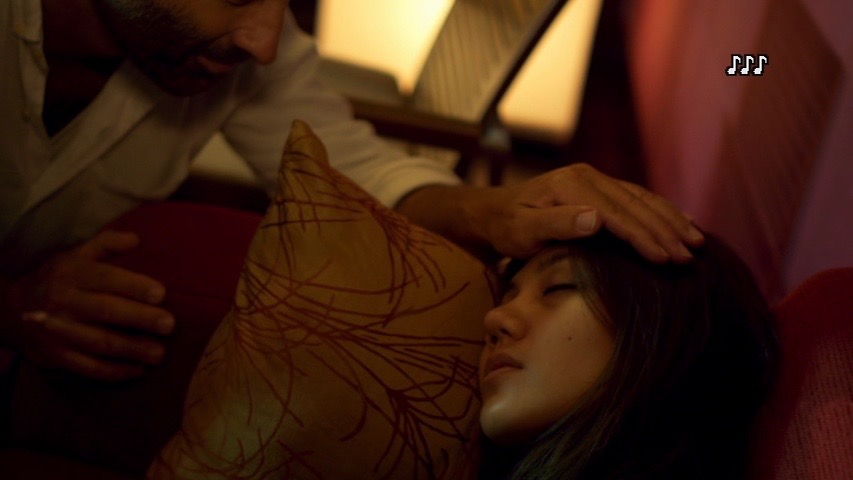
Oh, and then he heals Mimi.
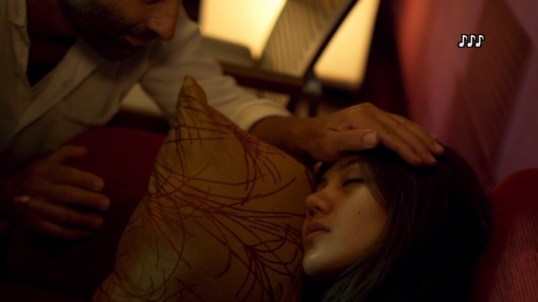
vlcsnap-2016-02-22-21h03m46s791

Again, while Jesus does have his “join me” lines, he really is more like a good psychologist who just wants to help. Can’t tell you how refreshing that was after the first film, which was arduous to sit through, much less write about.

Another problem is that some times the camera spends so much time with a couple of the characters that the suspension of disbelief that all of the actors are actually in the room begins to wear thin. I don’t remember feeling that in the first film. This time around, I kept wondering if David A.R. White as Rik or Gary Daniels as Charlie were even around anymore. You’ll also see this shot…
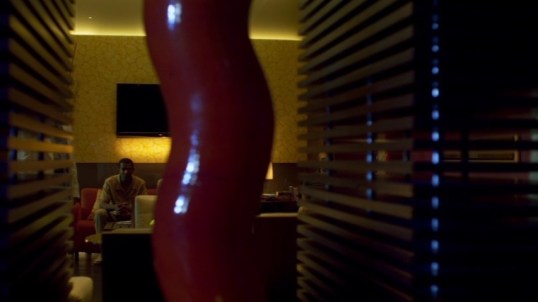
vlcsnap-2016-02-22-19h51m08s589

several times where the camera pans as if to remind the audience of who is there and the layout of the room. That shouldn’t have had to be done if there was better camerawork that didn’t explicitly need this kind reorientation.

Oh, and just like several other elements are recycled from the first film, we get the equivalent of the two ladies in the bathroom scene. This time around, they are in the kitchen.

Let’s cut to the chase now. Jesus heals Mimi literally. Jesus brings the married couple around. Rik breaks free. Rik tries to shoot Charlie, but Bruno jumps in front of him to die for Charlie’s, or all of their sins if you will. That’s when Jesus opens the imaging chamber door…
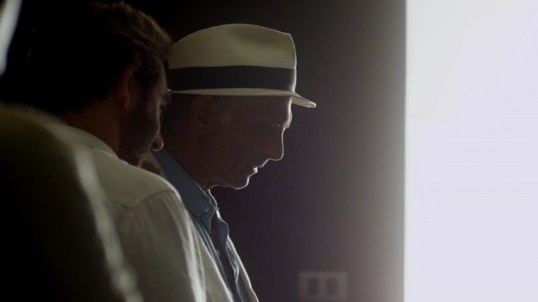
vlcsnap-2016-02-22-21h52m52s931

and the two of them leave.

That’s where movie A picks up.

Oh, there is one final bit.
vlcsnap-2016-02-22-21h58m15s623

vlcsnap-2016-02-22-21h58m45s603

You didn’t really think you’d get away without some sequel baiting, did you? They did it at the end of the first film too. They are talking about Rik here who is sitting on the beach near them.

My final thoughts on this are that it feels like an aborted experiment. It feels like the movie was supposed to be about Rik and his journey while Jesus and the Devil fight for how he will deal with Bruno and Charlie. All the while, the two of them also fighting for the hearts and minds of Bruno and Charlie. However, for whatever reason, they had to toss that idea out the window after certain footage was already filmed and just go with a far less preachy and contradiction filled version of the first film. Too bad. I might have enjoyed that film better than I did this one. If you must see one of the Encounter films, then this is the better of the two. I doubt we will get another sequel till the God’s Not Dead gravy train ends for Pure Flix. Then they’ll probably take another crack at this franchise.

Cleaning Out The DVR: Yankee Doodle Dandy (dir by Michael Curtiz)


Yankee_Doodle_Dandy_poster

So, today, I got off work so that I could vote in Texas’s Super Tuesday primary.  After I cast my vote (and don’t ask me who I voted for because it’s a secret ballot for a reason!), I came home and I turned on the TV and I discovered that, as a result of spending February recording countless films off of Lifetime and TCM, I only had 9 hours of space left on my DVR.  As a result, the DVR was threatening to erase my recordings of Bend It Like Beckham, Jesus Christ Superstar, American Anthem, an episode of The Bachelor from 2011, and the entire series of Saved By The Bell: The College Years.

“Acgk!” I exclaimed in terror.
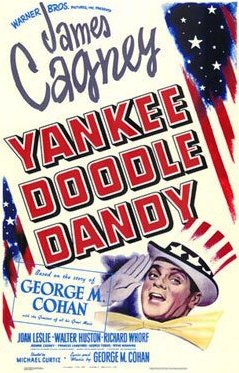
So, I immediately sat down and started the process of cleaning out the DVR.  I started things out by watching Yankee Doodle Dandy, a film from 1942.

Yankee Doodle Dandy is a biopic of a songwriter, signer, and dancer named George M. Cohan.  I have to admit, that when the film started, I had absolutely no idea who George M. Cohan was.  Imagine my surprise as I watched the film and I discovered that Cohan had written all of the old-fashioned patriotic songs that are played by the Richardson Symphony Orchestra whenever I go to see the 4th of July fireworks show at Breckenridge Park.  He wrote You’re A Grand Old Flag, The Yankee Doodle Boy, and Over There.  Though I may not have heard of him, Cohan was an American institution during the first half of the 20th Century.  Even if I hadn’t read that on Wikipedia, I would have been able to guess from watching Yankee Doodle Dandy, which, at times, seems to be making a case for sainthood.

And that’s not meant to be a complaint!  74 years after it was originally released, Yankee Doodle Dandy is still a terrifically entertaining film.  It opens with George (played by James Cagney) accepting a Congressional Gold Medal from President Franklin D. Roosevelt.  (We only see Roosevelt from behind and needless to say, the President did not play himself.  Instead, Captain Jack Young sat in a chair while FDR’s voice was provided by impressionist Art Gilmore.)  Cohan proceeds to tell Roosevelt his life story, starting with his birth on the 4th of July.  Cohan tells how he was born into a showbiz family and a major theme of the film is how Cohan took care of his family even after becoming famous.

The other major theme is patriotism.  As portrayed in this biopic, Cohan is perhaps the most patriotic man who ever lived.  That may sound corny but Cagney pulls it off.  When we see him sitting at the piano and coming up with the lyrics for another song extolling the greatness of America, we never doubt his sincerity.  In fact, he’s so sincere that he makes us believe as well.  Watching Yankee Doodle Dandy, I found myself regretting that I have to live in such an overwhelmingly cynical time.  If George M. Cohan was alive today, he’d punch out anyone who called this country “Murica.”

Yankee Doodle Dandy is an amazingly positive film.  There are a few scenes where Cohan has to deal with a few Broadway types who are jealous of his talent and his confidence but, otherwise, it’s pretty much one triumph after another for Cohan.  Normally, of course, there’s nothing more annoying than listening to someone talk about how great his life is but fortunately, Cohan is played by James Cagney and Cagney gives one of the best performance of all time in the role.

Cagney, of course, is best remembered for playing gangsters but he got his start as a dancer.  In Yankee Doodle Dandy, Cagney is so energetic and so happy and such a complete and totally showman that you can’t help but get caught up in his story.  When he says that, as a result of his success, things have never been better, you don’t resent him for it.  Instead, you’re happy for him because he’s amazingly talented and deserve the best!

Seriously, watch him below:

James Cagney won the Oscar for Best Actor for his performance here.  Yankee Doodle Dandy was also nominated for best picture but lost to Mrs. Miniver.

I’m really glad that I watched Yankee Doodle Dandy today.  In this time of overwhelming negativity, it was just what I needed!

Hallmark Review: Love’s Complicated (2016, dir. Jerry Ciccoritti)


IMG_4006

Last night at the Oscars we had a comedy bit where black actors were inserted into movies that were nominated for awards. They took somewhat humorous shots at The Martian and Joy. Then The Danish Girl came up. I haven’t seen it yet and I’ve heard it’s god awful. None of that matters. They inserted comedic actor Tracy Morgan into the movie, put him in a dress, then told us to laugh at him because he was a man in a dress who was being the black version of the trans woman from the film. Then for more shits and giggles, they actually had him eat a danish. That was vile and despicable. I have been laughed at for something as simple as wearing tights. I can’t possibly imagine walking outside in a dress right now, and have even less courage to do so after last night’s display of kicking an even smaller minority to the curb while supposedly trying to send a message about having another minority appear more often in films. While I seriously doubt she would have done it, having Laverne Cox of Orange Is The New Black fame, who is both black and trans, do that might have actually sent a positive message. Thank you very much Oscars for making it clear that not only was it worth dragging on the blacks in film thing so long that it started to feel like a joke itself, but for giving all trans women a punch in the face. Much appreciated.

That right there is an example of the central theme of this movie. Not avoiding conflict. That can be for a number of reasons. Not letting other people make decisions that should be yours since it is your life. Not being paralyzed by a fear of conflict when facing it could lead to a much needed reconciliation. Not letting other people treat you like trash, but standing up for yourself instead. It can also be something as simple as saying, “No, you have no right to do that. I want the refund I’m owed.” The book this movie is based on is even called My Life As A Doormat. So how the hell did this movie end up being called Love’s Complicated? I’m guessing Hallmark has a quota to meet of movies with “love” in the title. Honestly, love barely is a part of the movie.

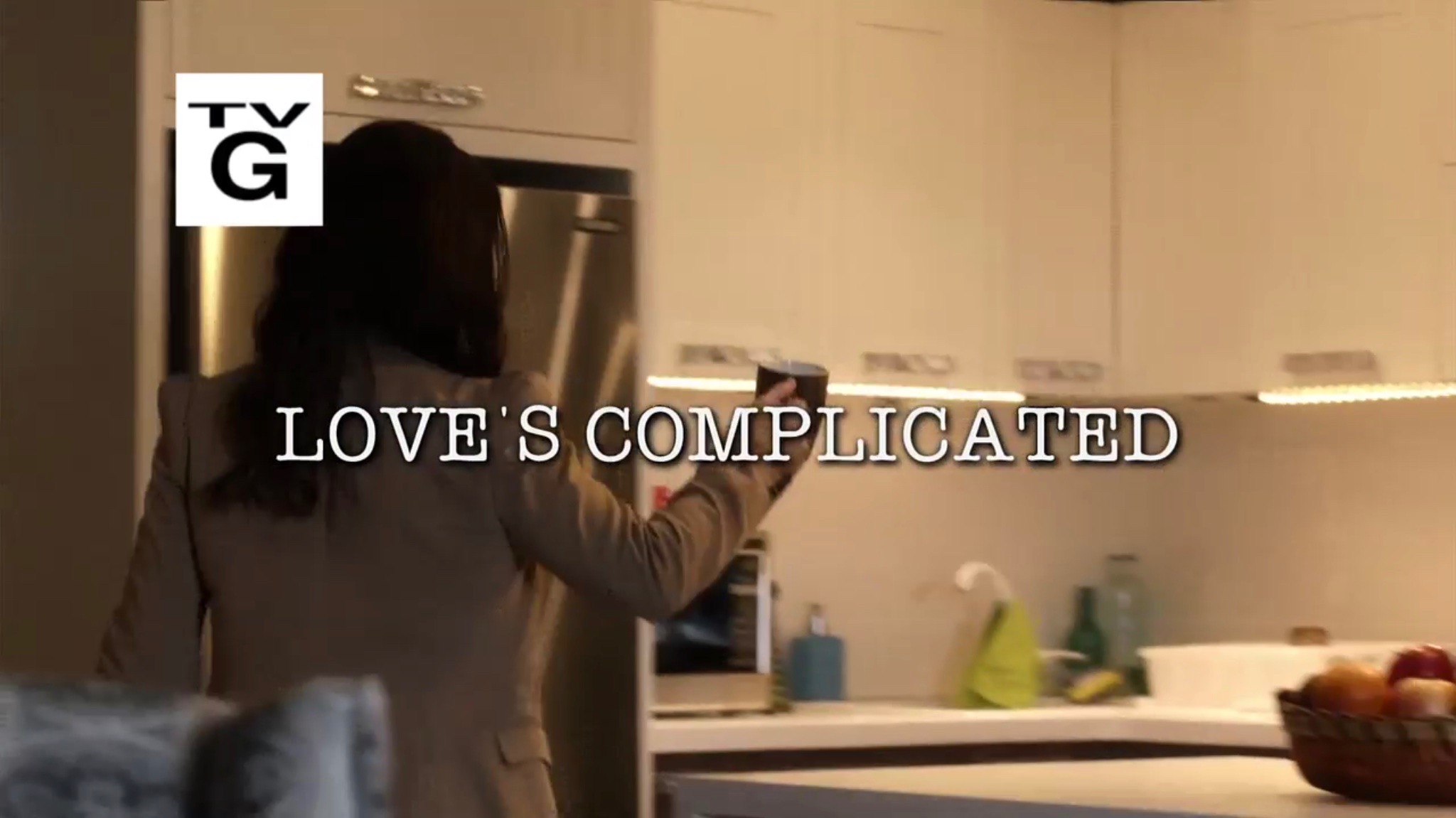
The movie begins by quickly showing us Leah (Holly Marie Combs), who is a writer, at home before cutting to a radio station to introduce us to Cinco (Ben Bass). He isn’t a shock jock or a woman hating radio personality. I think the best way to describe him is as a debater. He is someone who isn’t afraid to express his opinion, but we will get to his fear of conflict issue later. During this opening credit sequence it cuts back and forth between them. We find out one useful piece of information here, and that is that Leah isn’t a big fan of his. We’ll find out later that he didn’t give a favorable review to her last book. And segue!

IMG_4077

We are now with Leah and Catherine Disher from The Good Witch. Hmm…I think there’s an in-joke here. She is told her book needs serious work. Basically spice things up by adding some conflict. The very thing that is the Source of the problems in her life.

IMG_4095

I love that Leah has one of those keyboards similar to the old IBM keyboards. Those things are very satisfying to type on. It makes sense that a writer would have one. I could mention the roommate here, but she’s a minor character. She’s what I call a nudger character in Hallmark movies. A character who isn’t unimportant, but is really there to show up occasionally to nudge the main character in the right direction.

IMG_4150

Now we meet Leah’s boyfriend Edward (Randal Edwards). As you can see, it looks like Leah just wishes she could freeze him in place so she could get up without having to confront him. Anyways, the two of them soon go off to a party where she insists on wearing a red dress that he isn’t so happy with. Now for plot I guess, here’s Cinco just hanging out in the flowers to run into Leah at the party.

IMG_4269

He actually tells her to throw the wine in his face because of his bad review of her book. Of course her being non-confrontational means she doesn’t. Although, I bet she would have liked to make him explode if she could. She’ll come around eventually.

Phew! Three references to Charmed should be enough.

Next for reasons that are beyond me, Leah’s boyfriend gives her a coupon to a conflict management course. I’d say just for plot, but Edward is really odd in this so I buy that he gives this to her, and then doesn’t show up because he meant it to be just for her.

IMG_4456

She goes, and of course for again reasons, Cinco is there. There also are a few other people there including a married couple named Robert (Brad Borbridge) and Glenda (Precious Chong). Sorry, I wasn’t able to avoid that witch reference. It’s in the movie after all. Although, I’m still not sure why Catherine Disher’s character is named J.R. I’m really not sure what a reference to Dallas is doing here, but okay.

Believe it or not, that’s all the setup that’s necessary for this movie. She keeps going back to the group and never tells them Edward is a boyfriend till the end of the film. She does learn to not be afraid of conflict, which was systemic in her case. She helps Cinco in turn to take a chance and visit his father who he hasn’t spoken to in awhile. Instead of fearing a confrontation, he just gives him a hug. In his case it works. At the end of the film, he and his father, who both love to argue, are having a lively debate on the radio. The other people in the class come around too. In the end, she breaks it off with Edward, writes a book called My Life As A Doormat, and winds up with Cinco.

IMG_6584

As I hope you can tell, the love part is incidental to the story of overcoming a fear of conflict. I like that the film was clearly done on the cheap, but they told a story that didn’t require more money in order to tell. I appreciate it when a film molds itself to the production constraints rather than feeling like it’s running into money walls. That said, there are several times when it feels like the movie thinks we have spent more time with the characters than we actual have. I would give it a marginal recommendation.

Now since I feel better than when I wrote my last Hallmark review, here are the normal things you’ve come accustomed to seeing in my reviews.

IMG_6191

I actually like this fake computer screen. It’s cartoony sure, but it has the right elements.

IMG_5656

This shot tells us that at least this part was done in Sudbury, Ontario. I believe this is the first Hallmark movie I’ve seen shot there.

IMG_6284

This shot though, is from Minnesota.

However, the movie either doesn’t mention it at all, or makes very little fuss about where it’s supposed to take place. It’s not like so many Hallmark movies that really try to convince you it’s the US when it’s Canada.

Hallmark Review: Signed, Sealed, Delivered: From The Heart (2016, dir. Lynne Stopkewich)


IMG_1245

When I made that ordering of the best Valentine’s Day movies from Hallmark this year on my post for Appetite For Love, I was not aware the new Signed, Sealed, Delivered movie was also going to be part of their Valentine’s Day lineup. To put it bluntly, screw the other five, and watch this. I hope more Hallmark fans are tuning into their Movies & Mysteries Channel movies because the Signed, Sealed, Delivered films are the best ones Hallmark airs. Nothing else really compares. That said, this one needed some trimming. The main plot and a little furthering of the relationship between Norman (Geoff Gustafson) and Rita (Crystal Lowe) was all we really needed. The rest of the plots feel extraneous and just add more to follow without much payoff.

Interestingly, this is the first of the Signed, Sealed, Delivered movies to not be helmed by Kevin Fair. This time around they brought in October Kiss director Lynne Stopkewich. She has had an interesting career so far to say the least. She does a fine job here. I have no complaints about the directing.

Often we get the title card of a Hallmark movie almost immediately, but not this time. A fair amount of setup occurs before that happens.

IMG_1128

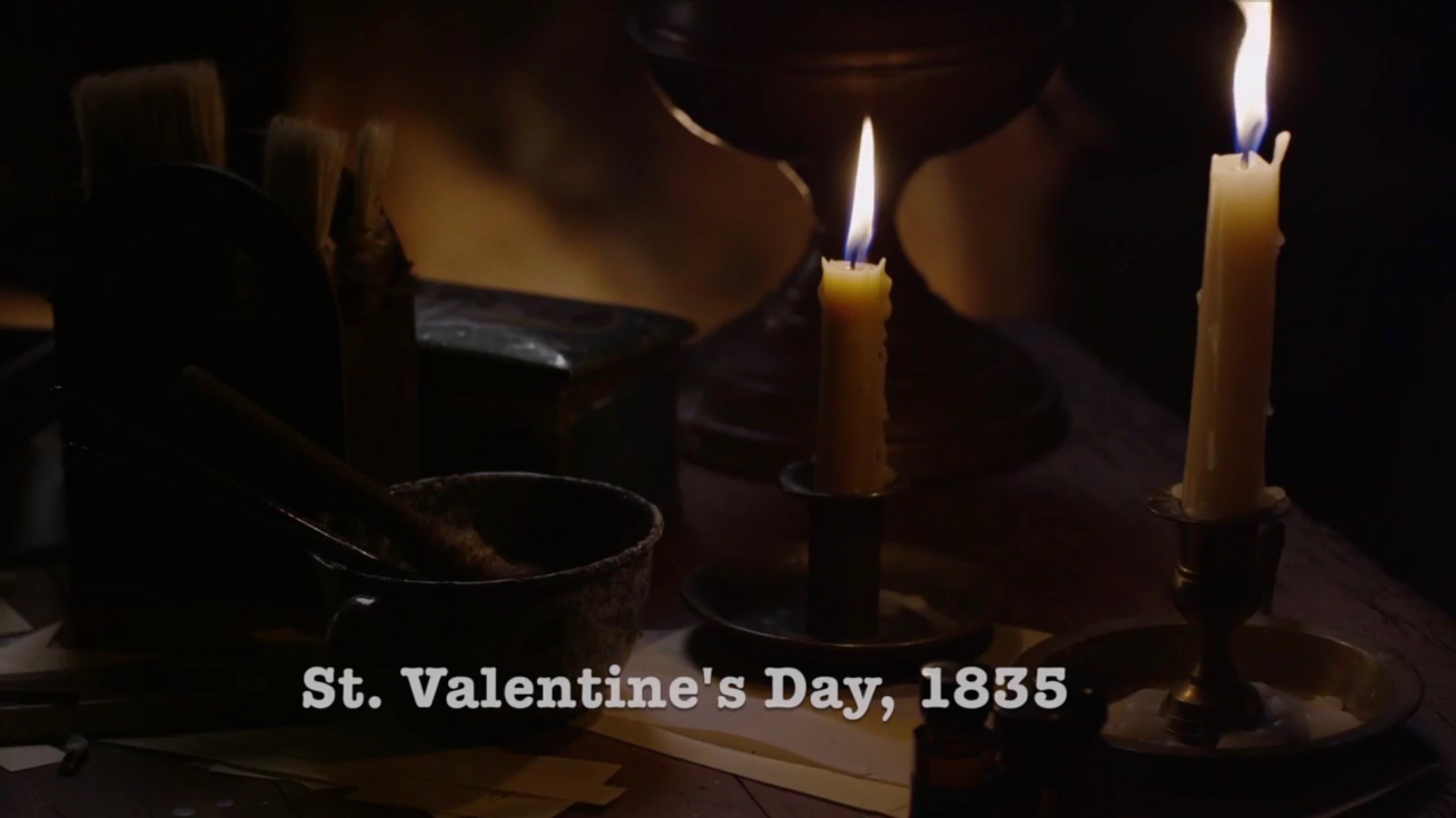
The movie begins back in 1835 with a woman making a Valentine for someone in America. We will eventually be told who the Valentine was meant for, which is kind of neat, but not really. It winds up in Norman’s hands, and it does serve a purpose for a scene with him near the end, but he didn’t need the letter for his lines to work just as well. This is a part that really could have been trimmed in my opinion. The movie already had enough plots going that it didn’t need this one thrown in as well.

IMG_1152

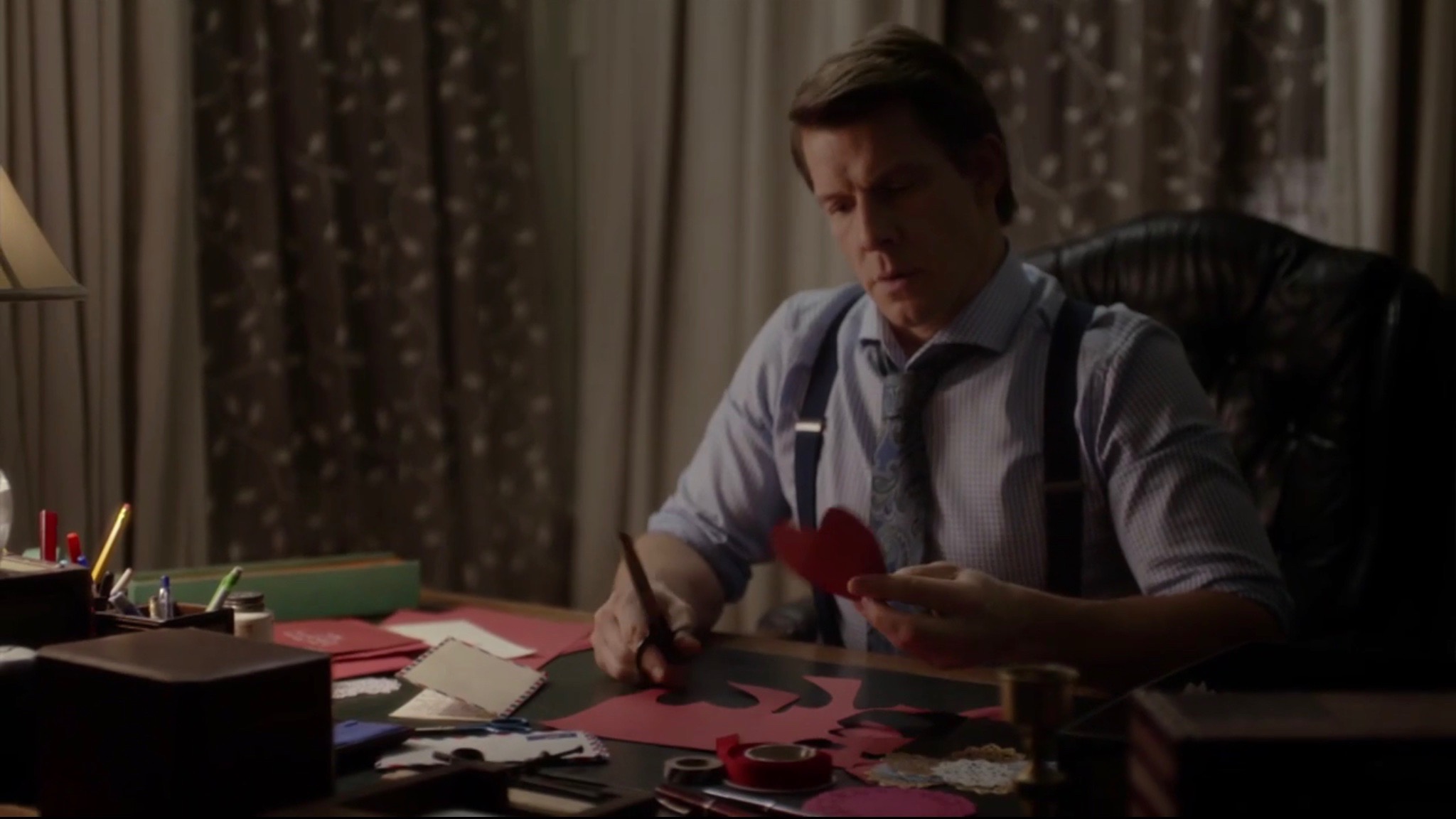
Then matching on the action of the 1835 handmade Valentine, we jump to present day and see Oliver (Eric Mabius) making his own Valentine for Shane (Kristin Booth). He then hands it off to be mailed to her instead of just giving it to her…for reasons? This is another part that could have been snipped. The letter will take the entire film to end up in Shane’s hands. It ends up in a box she doesn’t know has anything but Valentine decorations in it.

Now you’d think that title card might pop up now, but nope.

IMG_1185

The dead letter comes in, and Oliver instantly takes it to run off to a restaurant.

IMG_1232

We now go back 15 years to find a kid mailing that letter before asking a police officer where he needs to go to turn himself in.

Now we get the title card and title track of the series. It took awhile. I was wondering if it would ever show up. By the way, that 15 years earlier thing is the main plot of the film. Unlike previous Signed, Sealed, Delivered movies, this one does act more like a procedural rather than having the letter lead to a major revelation about the characters that moves them forward for the next film. I liked that. I’ve always wanted the tracking down the letter to truly be the center of attention instead of say Oliver discovering the truth about his father. There is a little bit of a blast from the past, literally, but it’s minor compared to previous installments.

Another plot is that Rita will get called in to be Miss Special Delivery because the people above her were disqualified in some manner. This goes nowhere really. It goes viral that Rita and Norman are an item and for no real reason she denies it during a press conference. Of course she ends up coming around in the end. I’m really not sure of any good reason for this plot to happen. Maybe a little reinforcement of their relationship since she certainly hurt Norman in the process. She must have been a little uncertain on her end. Otherwise, it just leads to some lines about how people share things today. Blah, blah, blah. People have been doing that sort of thing for a long time. Even as far back as the 1930’s, if not earlier. I’ve read stupid old newspaper stories telling us someone is leaving to go on vacation. I wouldn’t say this should have been snipped, but they could have found a better way to forward the Norman and Rita thing. Oh, and this happens to Norman at one point in the film.

IMG_3520

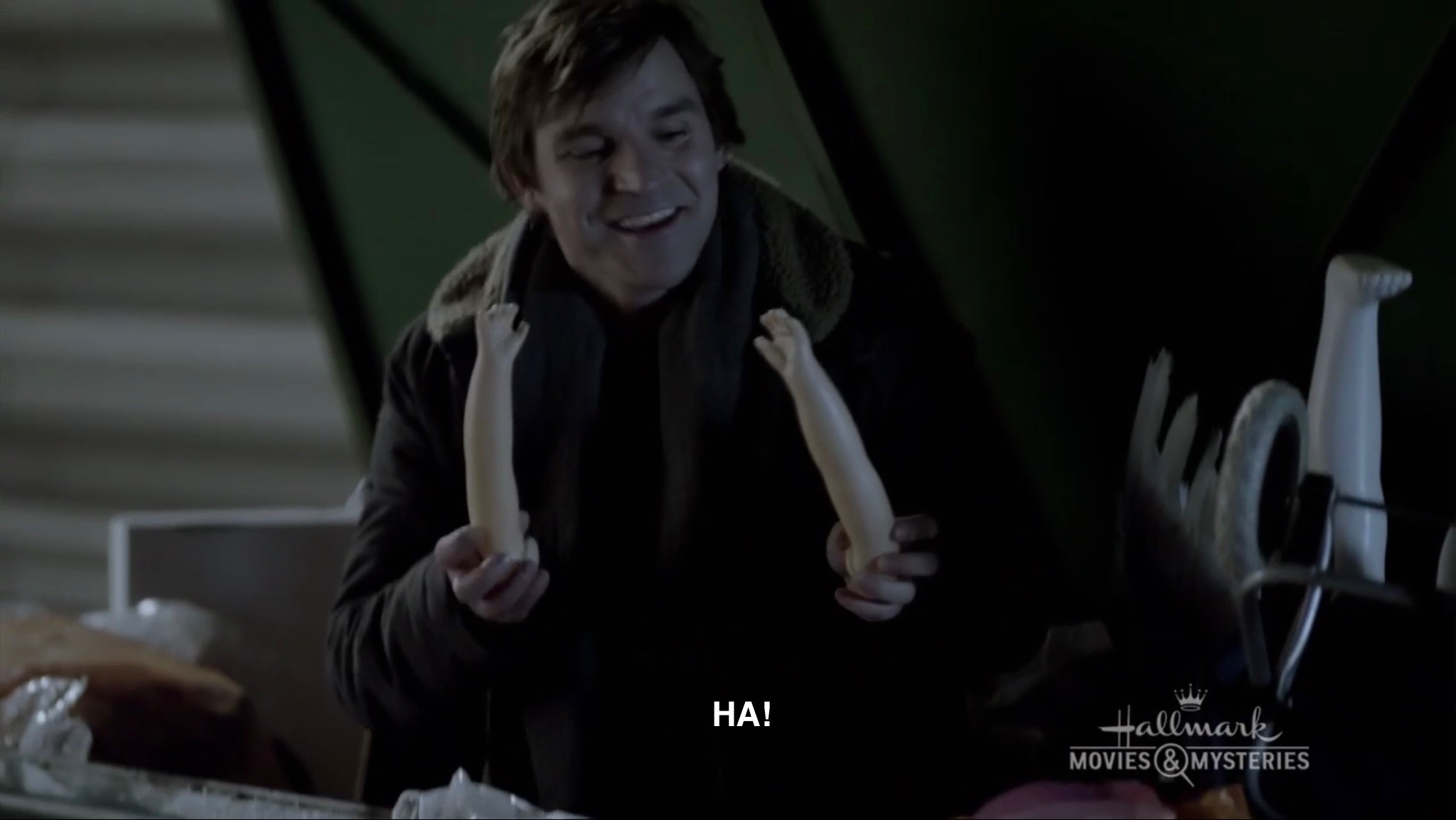
It’s the funniest part of the movie, and since I don’t intend to do this movie blow by blow, I had to stick it somewhere. After picking up two baby doll arms in a dumpster, Norman says, “You wake up in the morning, and you never really know how your day is going to end.”

IMG_1997

Here is the literal blast from the past. Back when Oliver was Cliff Clavin, he was going to pick up the mail from the mailbox where the kid dropped off the now dead letter. He decided to wait a little bit before he was supposed to pick up the letters because of a police officer who would be in the area that he liked. Since he waited a little bit, an actual clown showed up, and after a little accident with helium…KABOOM! Since Oliver really does take things seriously USPS wise, he never really forgave himself. As a result, he really wants to get this letter that was involved in the accident to its intended recipient.

You got all that? We have an 1835 Valentine that winds up in Norman’s hands that we don’t know who it’s for at first. We have Oliver’s Valentine for Shane going everywhere but her hands. We have the policewoman that Oliver likes. Oh yeah, that actually is a really tiny little plot in this too. We also have Rita and Norman needed to mend fences after she denies publicly that she is seeing him. Then finally, we have the main plot of the movie. All of these plots are affairs of the heart, which ties into the title, and the main plot, but it was a bit much.

IMG_1889

These two are the main plot. That’s Ryan (Nick Purcha) and Maddie (Mackenzie Cardwell) 15 years earlier. They meet because they are both on the debate team. She isn’t very charismatic, but is good with research. He is the opposite. He’s charismatic, but usually doesn’t have that much substance to back what he is saying. Their plot is the best part of the movie. It leads to tragedy, which is why he turned himself into the police at the beginning of the film. A little spoiler: he killed somebody. It will also jump the 15 year gap when the letter finds it’s way to the two of them when they are adults.

I know I normally take you through the whole film, but not this time. I haven’t felt well lately. Also, that would have me trying to juggle all these plot lines or try to tell each one separately. This isn’t a Godfrey Ho movie where telling the plot lines separate makes the film more coherent. This is like the first two Godfather films where you lose something by rearranging events into chronological order. There is a reason these plots are woven together the way they are.

Like I said at the start, forget the other Hallmark Valentine’s Day movies this year, and watch this one instead.

Lisa Watches An Oscar Nominee: Father of the Bride (dir by Vincente Minnelli)


FatheroftheBride1950

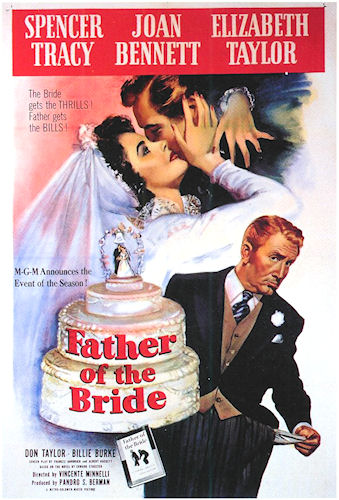
After I watched King Solomon’s Mines, I watched yet another 1950 best picture nominee, Father of the Bride.

In Father of the Bride, Spencer Tracy plays a lawyer named Stanley Banks.  As you might expect of any character played by Spencer Tracy, Stanley Banks is a no-nonsense type of guy.  He’s set in his ways and not particularly enthusiastic about the idea of change.  Stanley has worked hard to get a good job and a nice house in the suburbs.  He loves his wife, Ellie (Joan Bennett) and is a firm but good father to his two boys, Tommy (Russ Tamblyn) and Ben (Tom Irish).  If Stanley does have a soft spot, it’s for his daughter, Kay (17 year-old Elizabeth Taylor).  Stanley admits that he’s always given Kay everything that she’s ever wanted and that she is his favorite of all his children.

However, Kay has been acting strangely as of late.  She just seems to be so happy!  Stanley can tell that she’s in love, though he has no idea with whom.  (He is, however, happy that it’s probably not the bespectacled political radical who Kay apparently dated at some point in the past.)  Finally, during an otherwise typical family dinner, Kay announces that not only is she in love but she’s also engaged to be married!

His name is Buckley (Don Taylor, who would later direct Escape From The Planet of the Apes and Damien: Omen II) and, at first, Kay refuses to even introduce him to her parents.  Eventually, however, Stanley does meet Buckley and he’s happy to discover that not only does Buckley come from a wealthy family but he also owns a small business of his own.

However, just because Buckley is the perfect 1950 man, that doesn’t mean that the wedding is going to be easy.  As a befuddled Stanley watches, the wedding grows more and more elaborate (not to mention, expensive!).  All of the expected complications ensue: Buckley and Kay have a fight, a wedding planner makes things difficult, and Stanley does not immediately get along with Buckley’s parents.  But, for the most part, Father of the Bride is about Stanley struggling to accept that his daughter has grown up and is ready to start a life of her own.

Father of the Bride is a sweet little comedy, though it seems a bit out-of-place as a best picture nominee.  It’s definitely a film of its time.  For all of the scenes of Stanley worrying about the extravagance of modern weddings, there’s not a subversive moment to be found in Father of the Bride.  (One can only imagine what Nicholas Ray or Douglas Sirk would have done with the material.)

Fortunately, this is also a Spencer Tracy film and whatever gravitas that the film may have comes from Tracy’s honest and straight forward performance.  Tracy never begs for laughs but he gets them anyway, because of the honesty that he brings to the character.  Perhaps his best moment comes after Buckley and Kay have had a fight.  After comforting his daughter, Stanley discovers that Buckley is at the front door.  At first, the protective Stanley tells Buckley that Kay doesn’t want to see him.  Suddenly, Kay comes running down stairs and embraces Buckley.  Between sobs and kisses, Buckley and Kay dramatically swear to each other that they will never fight again.  The camera pans over to Stanley, standing a little to the side and listening.  At first, Stanley seems befuddled by how overdramatic the two of them are acting over a relatively minor fight but there’s also just a hint of sadness in Stanley’s eyes as he realizes that his daughter truly has moved on.

Father of the Bride was nominated for best picture but it lost to the far more subversive All About Eve.

Lisa Reviews An Oscar Nominee: King Solomon’s Mines (dir by Compton Bennett and Andrew Marton)


Kingsolomonsmines1950

So, this is a weird one.

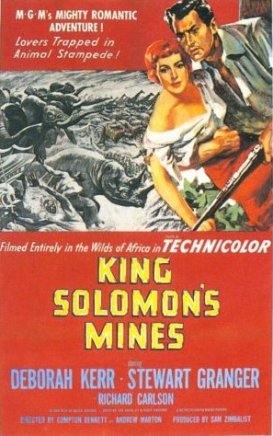
As we all know, today is Oscar Sunday!  As I wait for the big show to begin, I’ve been watching some of the Oscar-nominated films that I have collected on the DVR over the past month.  For instance, this morning, I watched 1950’s King Solomon’s Mines.

King Solomon’s Mines was nominated for best picture of the year and watching it … well, you really have to wonder why.  It’s an adventure film, one that was shot on location in Africa and it features a lot of footage of wild animals.  It also features several scenes that were shot in actual African villages and a good deal of time is devoted to documenting tribal rituals.  It’s true that the film has a plot but, for the most part, it’s a travelogue.  One gets the feeling that it was mostly sold as a chance for American and European audiences to see a part of the world that, up until that point, they had only read about.  Not only would they get to experience Africa from the safety of the neighborhood movie theater but they’d get to see it in a color as well!

(Seriously, it’s difficult to watch the nature footage in King Solomon’s Mines without imagining a serious voiced narrator saying, “However, one gazelle has strayed too far from its mother.  The lion cubs will eat tonight…”)

As for the plot, King Solomon’s Mines is based on a novel by British adventure enthusiast H. Rider Haggard.  Allan Quartermain (Stewart Granger) is an experienced guide and hunter.  When we first meet him, he’s helping two rich Englishmen hunt an elephant.  It’s a disturbing scene, largely because it’s obvious the footage of the elephant dying is real.  Allan prevents his clients from killing more than one elephant and later talks about how much he hates his job but still, it’s pretty much to impossible to really like him after watching that elephant die.

Anyway, Allan gets hired by Elizabeth Curtis (Deborah Kerr) and her brother John (Richard Carlson).  It seems that Elizabeth’s husband disappeared in Africa while searching for a legendary treasure.  Allan tells Elizabeth that her husband is probably dead.  Elizabeth still insists on searching for him…

…and, from that point on, you can pretty much predict everything that is going to happen.  Though the footage of Africa looks great, it’s just not a very interesting film.  Playing the type of role that would probably be played by Gerard Butler if the movie was made today, Stewart Granger comes across as being bored with it all.  For that matter, even the great Deborah Kerr seems as if she’d rather be hanging out with Robert Mitchum.

Still, it is interesting to note that Hugo Haas shows up as a villain.  Who is Hugo Haas?  He was a Hungarian actor who, after playing a bad guy here, went on to direct several idiosyncratic B-movies, like Hold Back Tomorrow, The Girl On The Bridge, Bait, and One Girl’s Confession.  If nothing else, watching King Solomon’s Mines has inspired me to, someday, do a little Hugo Haas film festival here on the Lens.

King Solomon’s Mines seems like an odd best picture nominee.  Its triumphs are largely technical and even those successes no longer seem that special.  It was, however, a big hit at the box office and I imagine that probably has something to do with its nomination.  However, when the Oscars were awarded, best picture went to All About Eve.

Stewart Granger was no match for Bette Davis.

Film Review: Suicide Note (dir by Jake Helgren)


(While this review is meant to be a rather breezy look at a minor Lifetime movie, it’s totally possible that you may have come across this review because you’re feeling suicidal yourself.  Maybe you googled, “suicide note.”  Please, if that is the case, consider calling the following numbers: Call 24/7: 800-SUICIDE (784-2433) 800-273-TALK (8255) Text Telephone 800-799-4TTY (4889) Trans Lifeline 877-565-8860.)

sn

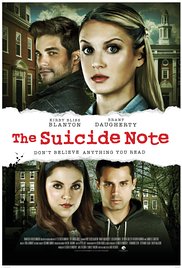
On Saturday night, I watched and live tweeted the latest Lifetime original film.  Unfortunately, I ran into a small problem.  The title of the movie was The Suicide Note and, as a result, I ended up posting a few hundred tweets with the hashtag #SuicideNote.  Apparently, some people were not aware that I was watching a Lifetime film and they actually thought I was spending two hours tweeting out an actual suicide note.  One tweet in particular seemed to worry people:

Well, allow me to assure everyone: I was just talking about the movie.  Adam is a character in the movie and he’s played by Stephen Colletti.  Adam is a pre-med student with a temper.  When his girlfriend, Emma (Kristen Ray), plunges to her death from the rooftop of her dorm, Adam is an immediate suspect.  And why not?  Before Emma died, she was seen having a drunken argument with Adam.  A later search of Emma’s phone reveals threatening text messages from Adam.  Adam is the logical suspect, except for the fact that Emma left behind a suicide note.

What does the note read?

The note reads, “I was not murdered so please don’t suspect my boyfriend.”

No, actually, it doesn’t.  Instead it says, “I’m sorry, please forgive me,” or words to that effect.  Nobody is sure whether or not the handwriting on the note is Emma’s but, since it’s the only evidence that the police have, they decided that Emma must have committed suicide.

However, Emma’s roommate, Molly (Kirby Bliss Blanton), doesn’t believe that Emma committed suicide.  That’s because Molly once tried to kill herself and didn’t see any signs that Emma was suicidal.  With the help of her painter boyfriend, Brady (Brant Daugherty), and her sarcastic best friend, Irene (Lexi Giovagnoli), Molly sets out to solve the crime.  At first, she suspects that Adam is the murderer but this is Lifetime and that solution is way too easy.  As Molly investigates, she discovers that there are all sorts of secrets waiting to be uncovered.

Suicide Note is pretty much a standard Lifetime mystery.  It takes place on one of those Lifetime movie college campuses where there’s only ten students and they all keep running into each other.  Molly also has a mentor, a professor played by Gabrielle Carteris (who, my friend Holly tells me, was on the original 90210.)  My favorite scene was when Molly and Brady were walking across campus, just to be confronted by a jogging and shirtless Adam.  Adam yells that he didn’t kill Emma and then Prof. 90210 shows up and snaps, “GO TO CLASS!”  I wanted Adam to ask whether or not he could at least go get a shirt before going to class but instead, he just jogged off.

One of the things that I did like about The Suicide Note is that it featured some genuinely creepy dream sequences.  Molly has several dreams where she sees Emma’s ghost and several other unsettling things.  The dreams are all very well-shot and brings a jolt of life to the film.

As I said before, Suicide Note is pretty much your typical Lifetime affair.  If you’re not into Lifetime, the film will probably seem pretty silly to you.  But, if you are into Lifetime, you’ll appreciate Suicide Note for what it is.  Just be careful about hashtagging the title.