4 Shots From 4 Films is just what it says it is, 4 shots from 4 of our favorite films. As opposed to the reviews and recaps that we usually post, 4 Shots From 4 Films is all about letting the visuals do the talking.
The year is 1953. The place is Croydon. Derek Bentley (Christopher Eccleston) is 19 years old but has the mental capability of an 11 year-old. Unable to hold down a job and judged unfit for the national service, Derek drifts into a gang led by 16 year-old Christopher Craig (Paul Reynolds). When Derek and Craig are caught burglarizing a warehouse, it leads to a tense rooftop confrontation between Craig and the police. Derek has already been captured by the time that the police demand that Craig hand over his gun. Bentley shouts, “Let him have it, Chris!” Craig opens fire, killing one officer.
Because he’s a minor, Craig is only facing a prison sentence for killing the police officer. But, as a legal (if not mental) adult, Derek will be hung if he’s found guilty. Under the common purpose doctrine, it doesn’t matter that Derek didn’t actually shoot the gun. The only thing that matters is what Derek meant when he said, “Let him have it, Chris!” Derek says that he was telling Craig to hand over his gun. The Crown says that Derek was ordering Craig to open fire.
Let Him Have It is based on a true story. The case of Derek Bentley was one of the many cases that eventually led to the death penalty being abolished in the UK. Let Him Have It was released at the height of a long campaign to secure a pardon for Derek. That pardon was finally issued in 1998, though it was too late to help Derek Bentley.
Let Him Have It is a powerful and angry docudrama, one that reveals in searing detail how Derek was railroaded by the British legal system. In his film debut, Eccleston gives a powerful performance as Derek and he is ably supported by both Paul Reynolds and, in the role of Derek’s father, Tom Courtenay. Let Him Have It leaves little doubt as to why the case of Derek Bentley remained a cause célèbre for 45 years after his initial trial.
I’m not just sharing this because it’s one of the best things that I’ve ever tweeted. I’m also sharing it because it’s a beyond perfect description of Jerry (played, in an Oscar-winning performance, by Norma Shearer), the lead character in The Divorcee. (Whenever you tweet something that is beyond perfect, you’ve earned the right to make sure everyone else knows it.) The Divorcee came out in 1930 so, needless to say, it’s a bit dated but I totally related to the character of Jerry and that’s perhaps the main reason why I enjoyed this film.
The Divorcee tells the type of story that, today, would probably make for a memorable Lifetime film. It’s a film that follows four friends over several years. They are the idle rich, the type who go to parties, dance on tables, and cheerfully ignore the ban on liquor. Jerry (Norma Shearer) loves Ted (Chester Morris). Dorothy (Helen Johnson) loves Paul (Conrad Nagel). However, Paul loves Jerry and when Jerry announces that she and Ted are engaged to be married, Paul doesn’t handle it well. In fact, Paul gets drunk, Paul drives a car with Dorothy in the passenger’s seat, and eventually Paul crashes the car, leaving Dorothy so disfigured that she spends the rest of the movie wearing a black veil.
The years pass. In order to make up for horribly disfiguring her, Paul agrees to marry Dorothy. Jerry marries Ted. They’re happy until they’re not. On the day of their third anniversary, Jerry discovers that Ted has been cheating on her. So, Jerry cheats on Ted. When Ted gets upset, they file for divorce.
Suddenly, Jerry is …. (dramatic music cue) … THE DIVORCEE!
Ted becomes an alcoholic, the type who makes scenes at parties and destroys ornate wedding cakes. In the past, I assume Jerry would have been forced to wear a scarlet D and she would have made it work because there’s nothing that Jerry can’t do. However, since this film takes place in the 1920s, Jerry spends her time flirting and plotting to steal Paul away from Dorothy.
And it would have worked too if not for the fact that Dorothy is a complete and total saint…
Drinking, sex, adultery, disfigurement, and Norma Shearer!? That’s right, this is a pre-code film! The Divorcee is actually a pretty typical example of a type of film that was very popular during the 1930s and actually remains rather popular today. This is a film where rich people do stupid things but look good doing it. When an audience watches a film like this, they can both look down on the rich and vicariously experience their lifestyle. No wonder these movies are so popular!
Anyway, I liked The Divorcee. It’s an incredibly silly little film but it’s hard for me not to enjoy something this melodramatic. Chester Morris and Conrad Nagel are stuck playing heels and Helen Johnson is a bit to saintly but it doesn’t matter because the film is pretty much designed to be a showcase for Norma Shearer, the most underrated of all of the Golden Age actresses. (Far too often, Shearer is dismissed as simply being Irving Thalberg’s wife.) Shearer gives a great performance. She seems to be having the time of her life and it’s fun to watch.
The Divorcee was nominated for best picture but it lost to a far different picture, All Quiet On The Western Front.
It’s been a while since I’ve shared any old educational films here on the Shattered Lens but I figured now might be the perfect time to share an old movie from 1951, What To Do On A Date. Produced by the good (or so I assume) people at Coronet Films, What To Do On A Date is … well, the plot is pretty much in the title.
Now, to be honest, this could have just as easily been called What To Do On A Date If You Want To Make Sure That Lisa Never Agrees To A Second Date. Seriously, this is totally squaresville. Like real Melvin. But you know what? I’m notoriously hard to please and, with Valentine’s Day coming up, this may be helpful to someone.
I don’t know who, exactly. But hey, it’s on YouTube and that’s the important thing.
(I’m all about helping. You know that.)
If you still need help after What To Do On A Date, you can watch 1949’s Dating Do’s and Don’ts. It was directed by the same guy who did What To Do On A Date. People in the 1940s were notorious for knowing what to do on dates. The Baby Boom didn’t just happen, y’know.
(Apparently, the version of Dating Do’s and Don’ts uploaded to YouTube is incomplete. But you’ll get the general point.)
In 1978, low-level mob associate Jimmy Burke (Donald Sutherland) is released after serving a six years in prison. As soon as he arrives home, he discovers that his son, Frank (Jamie Harris), has failed to keep up with the family business and that the Burke Crew is close to becoming a joke. Looking for a big score, Jimmy masterminds a robbery at John F. Kennedy International Airport. The so-called Lufthansa Heist becomes the largest cash robbery committed on American soil at that time. Growing paranoid, Burke decides it would be easier to just kill all the members of his crew than to give them their cut of the robbery. What Burke doesn’t realize is that his closest associates are destined to be his downfall. Tommy DeSimone (Rocco Sisto) has offended John Gotti (Steven Randazzo) while Henry Hill (Nick Sandow) has become hooked on drugs and is considering turning informant.
If all this sounds familiar, that’s because part of this story was already told in Goodfellas. The Big Heist was made for TNT and, because it focuses exclusively on the robbery, it goes into far more detail than Martin Scorsese’s film. For instance, the character of Frank Burke was entirely left out of Goodfellas and it’s interesting to see how much more negatively Henry Hill is portrayed in The Big Heist. Since it’s told from the viewpoint of Jimmy Burke instead of Henry Hill, The Big Heist makes for an interesting companion piece to Goodfellas but, at the same time, it never escapes the shadow of the other film. With both movies employing voice over narration and frequent freeze frames, it’s impossible to watch The Big Heist without comparing it to Goodfellas. Since Goodfellas was made by Martin Scorsese and The Big Heist was made for TNT, the former comes out on top.
It’s also hard to watch Donald Sutherland as Jimmy Burke without comparing his performance to Robert De Niro’s Jimmy Conway. Though he never reaches the heights of De Niro’s performance, Sutherland is convincing as a sociopathic criminal mastermind. Less convincing are Rocco Sisto and Nick Sandow, who both struggle to make an impression in roles previously made famous by Joe Pesci and Ray Liotta.
If you’re a regular reader of this site, it will not take you by surprise to learn that the 1933 Best Picture Nominee, 42nd Street, is one of my favorite films of all time.
I mean, how couldn’t it be? Not only is it a pre-Code film (and we all know that pre-Code films were the best) and one the features both Ginger Rogers and Dick Powell in early roles but it’s also a film that depicts the backstage world of a stage musical with such a combination of love and snark that it will be familiar to everyone from community theater nerds to Broadway veterans. 42nd Street is a classic musical, though I have to admit that I think the majority of the songs are a bit overrated. Even more importantly, 42nd Street is the ultimate dance film. The film’s big production number, choreographed and filmed in the brilliant and flamboyant Busby Berkeley style, is such an iconic moment that it’s still being imitated and lovingly parodied to this day.
Every dance movie owes a debt to 42nd Street but few have come close to matching it. Remember how much we all hated Smash? There were a lot of reasons to hate Smash but the main reason was because it tried to be 42nd Street and it failed. There can only be one 42nd Street.
It’s hard to estimate the number of show business clichés that currently exist as a result of 42nd Street. Then again, it can be argued that they were clichés before they showed up in 42nd Street but 42nd Street handled them in such an expert fashion that they were transformed from being urban legends to immortal mythology.
42nd Street takes place in the backstage world, following the production of a Broadway musical through casting to rehearsals to opening night. It’s an ensemble piece, one populated by all the usual suspects. Julian Marsh (Warner Baxter) is the down-on-his-luck producer who desperately needs a hit. Dorothy Brock (Bebe Daniels) is the celebrated star who is dating a rich, older man (Guy Kibbee, who made quite the career out playing rich, older men) while secretly seeing her ex, a down-on-his-luck Vaudevillian (George Brent). From the minute that we first see Dorothy, we know that she’s eventually going to end up with a boken ankle. It’s just a question of which chorus girl will be promoted to take her place. Will it be “Anytime” Annie (Ginger Rogers) or will it be the naive and wholesome Peggy (Ruby Keeler)? You already know the answer but it’s still fun to watch.
If you had any doubts that this was a pre-code film, the fact that Ginger Rogers is playing a character named “Anytime” Annie should answer them. 42nd Street is often described as being a light-hearted camp spectacle but there’s a cynicism to the film, a cynicism that could only be expressed during the pre-code era. The dialogue is full of lines that, just a few years later, would never have gotten past the censors.
(This is the film where it’s said that Anytime Annie “only said no once and then she didn’t hear the question!” This is also the film where Guy Kibbee cheerfully tells Annie that what he does for her will depend on what she does for him. Just try to get away with openly acknowleding the casting couch in 1936!)
The menacing shadow of the Great Depression looms over every glossy production number. Julian needs a hit because he lost all of his money when the Stock Market crashed and if the show is not a hit, everyone involved in the production will be out on the streets. The chorus isn’t just dancing because it’s their job. They’re dancing because it’s an escape from the grim reality of the Great Depression and, for the audience watching, the production numbers provided a similar escape. 42nd Street said, “Yes, life is tough. But sometimes life is fun. Sometimes life is sexy. Sometimes, life is worth the trouble.” Someday, 42nd Street promises, all the misery will be worth it.
Ultimately, 42nd Street is all about that iconic, 20-minute production number:
42nd Street was nominated for best picture but it lost to the nearly forgotten Cavalcade.
I just finished watching the latest Lifetime original film, From Straight A’s to XXX.
Like many Lifetime films, it’s based on a true story. In this case, it tells the story of Miriam Weeks (Haley Pullos), who briefly became notorious for paying her tuition to Duke University by appearing in adult films under the name Belle Knox. Her story became notorious because it touched on almost every important cultural issue of the past twenty years. Stuffy pundits acted as if Belle Knox was somehow a sign of the collapse of civilization. The story was regularly held up as a sign that my generation was spoiled and entitled, which was interesting since Miriam wouldn’t have ever made her first movie if college was actually affordable. That’s one issue that, interestingly enough, was rarely brought up in all the discussions about the Duke porn star. If students are having to do pornography to pay for college, shouldn’t the question be why it costs so much to get an education?
As for Belle Knox herself, she became a media celebrity. She was interviewed by people like Piers Morgan and she proved herself to be quite adroit at putting that windbag in his place. Rather than asking for sympathy, Belle defended herself and asked a very important question: why was the stigma of porn on her, as opposed to the men who watched her?
From Straight A’s to XXX does a good job telling Belle’s story. Interestingly enough, it actually goes out of its way to be fair and evenhanded. While the film is on Belle’s side, it doesn’t dismiss those who had concerns about how she was paying her way through college. While Belle is shown defending herself to the media and explaining how her career has empowered her, the film also makes a point to show that not every porn actress is Belle Knox. At one convention, she’s confronted by two veteran porn actresses who point out that they work just as hard as she does but, unlike her, they will never be invited to appear on CNN, suggesting that the only reason anyone cares about her or what she thinks is because of the novelty of her being a student at Duke. And while this may be the most pro-porn film to ever appear on Lifetime, it doesn’t shy away from the dark side of the industry. Belle’s first job is a genuinely disturbing nightmare of abuse and serves as a valuable warning. Make sure you know who you’re working with before you show up for the job. As a producer later explains to Belle, there are professionals and unprofessionals in every industry and porn is no different.
As for Duke University — well, let’s just say that Duke doesn’t come across as looking all that good by the end of From Straight A’s to XXX. With a few notable exceptions, all of the students are portrayed as being rich snobs. When Belle’s secret life is discovered, she finds herself harassed by every man on campus. In one particularly disturbing scene, she returns to her dorm room just to discover that her door has been defaced. When she tries to sleep, drunk frat boys try to break into her room. When she reports that she’s being harassed, she gets little help. Her roommate remains supportive throughout the entire film but otherwise, Duke does not come across well.
From Straight A’s to XXX is well-directed by Vanessa Parise, who has also directed such Lifetime films as Perfect High and The Unauthorized Beverly Hills 90210 Story. Much like The Unauthorized Beverly Hills 90210 Story, From Straight A’s to XXX is a tribute to a strong woman who was ultimately punished for being stronger than others were comfortable with. (That From Straight A’s to XXX was written and directed by women goes a long way to keeping potentially salacious material from becoming sordid.) Haley Pullos is sympathetic as Miriam/Belle and a bearded Judd Nelson does a good job in the role of a porn producer who shows the difference between professionals and unprofessionals in the industry.
Finally, From Straight A’s to XXX ends with Belle becoming a Libertarian activist and that fact alone makes this one of the best Lifetime films of the year so far! You can’t go wrong with any film that ends with a Libertarian political rally.
Danny O’Brien (Chuck Fucking Norris!) is a tough Los Angeles cop who has been nicknamed Hero. Danny hates it when people call him “Hero.” Maybe if Danny knew what people usually call cops, he would not complain so much about his nickname. Three years ago, Danny captured Simon Moon (Jack O’Halloran), a neck-breaking serial killer nicknamed “The Terror.” After he was captured, The Terror faked his own death and disappeared. He ended up living in a deserted theater and not bothering anyone until the Mayor of Los Angeles (Ron O’Neal, Superfly himself!) decides to tear down his new home. The Terror does not take kindly to urban renewal and goes on another killing spree. Can Hero track down and beat the The Terror while also making it to the hospital in time to see his girlfriend give birth to their baby?
Not surprisingly, Hero and the Terror is one of the films that Chuck made for Cannon Films in the late 80s and, along with Chuck and Ron O’Neal, it features Cannon regulars Steve James and Billy Drago. (Billy Drago actually plays a good guy, for a change.) It’s obvious that Chuck was trying to broaden his horizons with Hero and the Terror: with the exception of the final confrontation between Hero and the Terror, there’s less kung fu action than in his previous films and a lot of the movie is dedicated to his relationship with his girlfriend and his struggle to handle her pregnancy. That’s all good and well and the Chuck Norris of Hero and The Terror is a much better actor than the Chuck Norris who could barely deliver his lines in Breaker, Breaker but, ultimately, a Chuck Norris movie with more human interest and less roundhouse kicks just feels wrong.
(On Netflix, there’s a whole documentary about how Chuck Norris’s roundhouse kicks led to the collapse of Nicolae Ceaușescu’s communist dictatorship in Romania. It’s called Chuck Norris vs. Communism. Communism didn’t have a chance. Hopefully, Chuck will never turn against capitalism because, if he does, it’ll probably lead to another stock market crash.)
I once read an interview with Gene Hackman, in which he was asked to name his least favorite of the movies that he had made. Hackman selected March or Die. “I can’t believe I was in something called March or Die,” Hackman said. If he thought March or Die was a bad title, he should be happy that he didn’t end up in Hero and The Terror. Give Chuck Norris credit. Even if he’s not Gene Hackman and even if the movie does not really work, he is the only actor who could credibly star in something called Hero and the Terror.
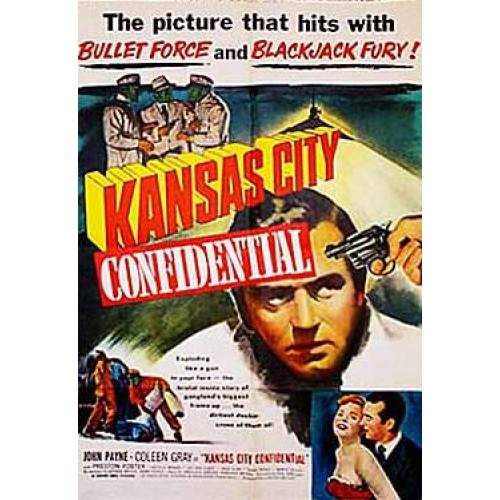
My friend Rob suggested I review KANSAS CITY CONFIDENTIAL awhile back, and I’m sorry I waited so long. This is a film noir lover’s delight, packed with tension, violence, double-crosses, and a head-turning performance by John Payne in the lead. Made on an economical budget like the same year’s THE NARROW MARGIN , director Phil Karlson and George Diskant create a shadowy, claustrophobic atmosphere brimming with danger at every turn.
I knew Payne mainly from his 40’s musicals and his idealistic lawyer opposite Maureen O’Hara in MIRACLE ON 34TH STREET, but he’s a revelation here as Joe Rolfe, a florist truck driver who’s set up as a patsy by a gang of armored car robbers. He can dish out (and take) beatings with the best them, and delivers the tough-talking dialog with aplomb. KANSAS CITY CONFIDENTIAL helped Payne shed his lightweight image, and he went on to do other dark crime films and rugged…
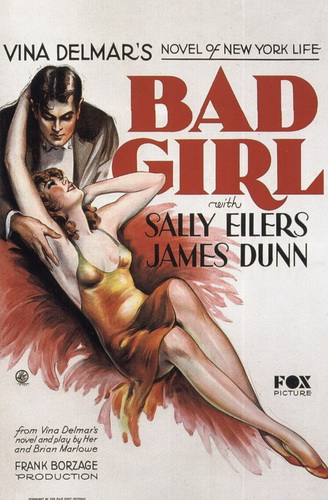
Seeing as how I started this day by watching Fifty Shades Darker, it seemed appropriate to end the day by watching yet another film about the difficulty of finding love and commitment. This film came out a little bit earlier than Fifty Shades of Grey. In fact, it even predates the whole concept of fan fiction. This film came out in 1931 and it would probably be totally forgotten today if not for the fact that, 85 years ago, it was nominated for Best Picture.
Of course, that’s not to say that Bad Girl is particularly well-known. Until I came across it on my list of best picture nominees, I didn’t know that it even existed. According to Wikipedia, it was based on a novel and a play and it did rather well at the box office. The Academy apparently liked it, awarding it Oscars for both Best Director and Best Adapted Screenplay. It’s currently available on YouTube. That’s where I saw it. But, despite all of that, it definitely appears to be one of the more obscure films to have ever been nominated for best picture.
Bad Girl opens with Dorothy Hailey (Sally Eilers) in a wedding gown. However, she’s not getting married. Instead, she’s a store model and, in a rather surreal little sequence, Dorothy and her co-workers walk through the store in their bridal gowns while sleazy men leer at them. As Dorothy complains to her best friend, Edna Diggs (Minna Gombell), men are “only interested in one thing.” When Dorothy’s boss propositions her, Dorothy claims to have a prizefighter husband waiting for her at home. In truthfulness, Dorothy lives with her overprotective brother (William Pawley), a judgmental brute who accuses her of being a tramp if she stays out too late.
At Coney Island, Edna makes a bet that Dorothy won’t be able to get surly Eddie Collins (James Dunn) to talk to her. Dorothy takes the bet and then proceeds to go over to Eddie and play a ukulele, until Eddie gets annoyed enough to tell her to be quiet. Eddie claims to not like women and he accuses Dorothy of being a tease. “Listen, sister,” he tells her, “if you don’t want guys to salute, take down the flag.”
Wow, Eddie sure does seem to be a jerk, doesn’t he?
Well, don’t worry. It turns out that Eddie isn’t as bad as he seems, it’s just that he’s often in a bad mood because he doesn’t have much money and he wants to open up his own radio store. However, Eddie and Dorothy quickly fall in love and soon, they’re married…
But, of course, things never go that smoothly. It turns out that Eddie is proud and stubborn. Fortunately, he’s played by a charming actor named James Dunn because, without Dunn’s considerable working class charm, Eddie would probably be insufferable. Dorothy, meanwhile, fears letting Eddie know that she’s pregnant…
And you know what?
I liked Bad Girl.
On the one hand, Bad Girl is definitely a dated film. Any film released in 1931 is going to seem dated when watched in 2017. But, at the same time, that also means that Bad Girl works as a nice little time capsule. Watching Bad Girl was like stepping into a time machine. And it turns out that the 1930s weren’t that bad! Everyone wore nice clothes and talked like James Cagney.
But, dated it may be, there is also an almost timeless quality to Bad Girl. Even decades after the film was originally released, the likable chemistry between James Dunn and Sally Eilers feels real and you really do care about what happens to them. You feel like they belong together and it’s hard not to worry when they fight or when they misunderstand each other’s intentions. (This happens rather frequently.) Furthermore, Bad Girl is a film about people who, often times, are struggling just to make ends meet. That’s something to which everyone can still relate. It certainly sets it apart from a lot of the other films made both then and today.
Bad Girl was nominated for best picture but it lost to a film that was almost its total opposite, Grand Hotel. Unlike most of the other old best picture nominees, I have never seen Bad Girl on TCM but it is on YouTube and you can watch it below!


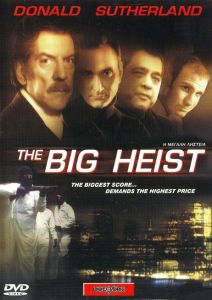 In 1978, low-level mob associate Jimmy Burke (Donald Sutherland) is released after serving a six years in prison. As soon as he arrives home, he discovers that his son, Frank (Jamie Harris), has failed to keep up with the family business and that the Burke Crew is close to becoming a joke. Looking for a big score, Jimmy masterminds a robbery at John F. Kennedy International Airport. The so-called Lufthansa Heist becomes the largest cash robbery committed on American soil at that time. Growing paranoid, Burke decides it would be easier to just kill all the members of his crew than to give them their cut of the robbery. What Burke doesn’t realize is that his closest associates are destined to be his downfall. Tommy DeSimone (Rocco Sisto) has offended John Gotti (Steven Randazzo) while Henry Hill (Nick Sandow) has become hooked on drugs and is considering turning informant.

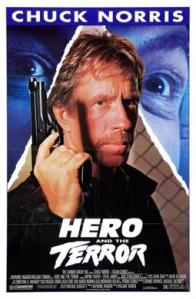 Danny O’Brien (Chuck Fucking Norris!) is a tough Los Angeles cop who has been nicknamed Hero. Danny hates it when people call him “Hero.” Maybe if Danny knew what people usually call cops, he would not complain so much about his nickname. Three years ago, Danny captured Simon Moon (Jack O’Halloran), a neck-breaking serial killer nicknamed “The Terror.” After he was captured, The Terror faked his own death and disappeared. He ended up living in a deserted theater and not bothering anyone until the Mayor of Los Angeles (Ron O’Neal, Superfly himself!) decides to tear down his new home. The Terror does not take kindly to urban renewal and goes on another killing spree. Can Hero track down and beat the The Terror while also making it to the hospital in time to see his girlfriend give birth to their baby?
 Through the Shattered Lens