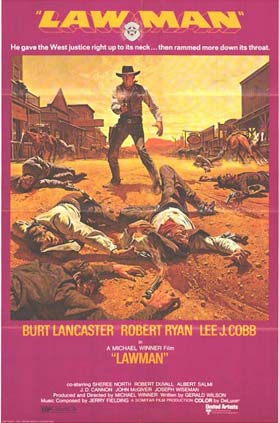
 In the 1880s, Jared Maddox (Burt Lancaster) is the marshal of the town of Bannock. After a night of drinking and carousing leads to the accidental shooting of an old man, warrants are issued for the arrest of six ranch hands. Maddox is determined to execute the arrest warrants but the problem is that the six men live in Sabbath, another town. They all work for a wealthy rancher (Lee J. Cobb) and the marshal of Sabbath, Cotton Ryan (Robert Ryan), does not see the point in causing trouble when all of the men are likely to be acquitted anyway. Maddox doesn’t care. The law is the law and he does not intend to leave Sabbath until he has the six men.
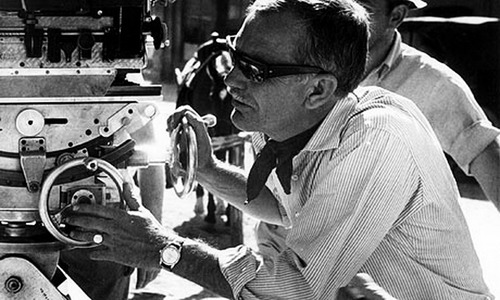
Lawman starts out like a standard western, with a stranger riding into town, but then it quickly turns the western traditions on their head by portraying Marshal Maddox as being a rigid fanatic and the wealthy rancher as a morally conflicted man who does not want to resort to violence and who continually tries and fails to convince Maddox to leave. In the tradition of Sergio Leone and Sam Peckinpah, there are no real heroes to be found in Lawman and, even when Maddox starts to reconsider his strict adherence to the law and refusal to compromise, it is too late to prevent the movie from ending in a bloody massacre. Since Lawman was made in 1971, I initially assumed it was meant to be an allegory about the Vietnam War but then I saw that it was directed by Michael Winner, a director who specialized in tricking audiences into believing that his violent movie were deeper than they actually were.
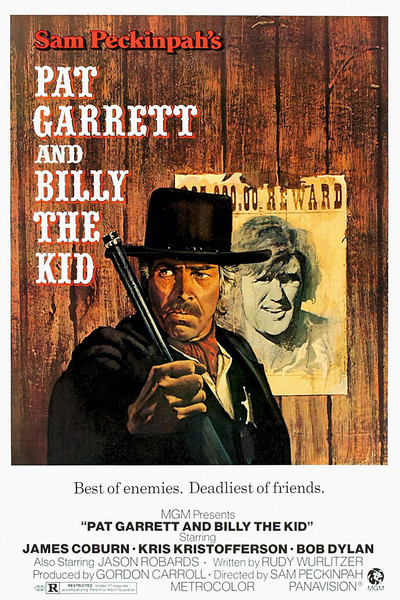
Even if Lawman never reaches the heights of a revisionist western classic like Pat Garrett and Billy the Kid, it is still pretty good, with old pros Lancaster, Ryan, Cobb, and Albert Salmi all giving excellent performances. The cast is full of familiar faces, with everyone from Robert Duvall to Richard Jordan to Ralph Waite to Joseph Wiseman to John Beck showing up in small roles. In America, Winner is best remembered for his frequent collaborations with Charles Bronson. Chuck is not in Lawman, though it seems like he should have been and Lee J. Cobb’s rancher is named Vincent Bronson. Winner would not make his first film with Charles Bronson until a year later, when he directed him in Chato’s Land.
 It’s Die Hard in a school!

 Though it is sometimes hard to remember, there more on late night Cinemax than just Shannon Tweed films like
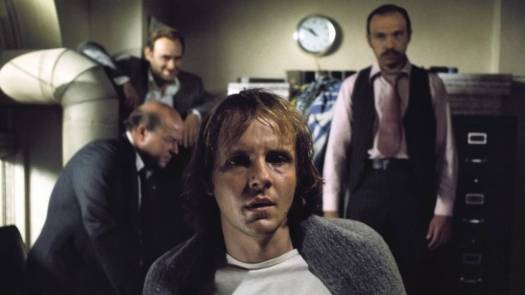
 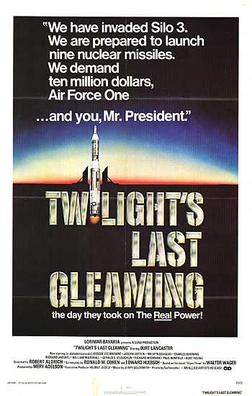 In Montana, four men have infiltrated and taken over a top-secret ICBM complex. Three of the men, Hoxey (William Smith), Garvas (Burt Young), and Powell (Paul Winfield) are considered to be common criminals but their leader is something much different. Until he was court-martialed and sentenced to a military prison, Lawrence Dell (Burt Lancaster) was a respected Air Force general. He even designed the complex that he has now taken over. Dell calls the White House and makes his demands known: he wants ten million dollars and for the President (Charles Durning) to go on television and read the contents of top secret dossier, one that reveals the real reason behind the war in Vietnam. Dell also demands that the President surrender himself so that he can be used as a human shield while Dell and his men make their escape.
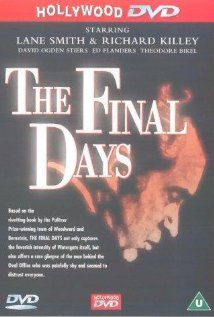 Since yesterday’s entry in movie a day featured Philip Baker Hall playing Richard Nixon in
 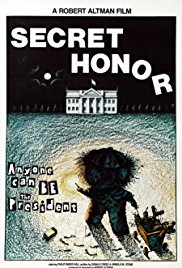 Disgraced former President Richard M. Nixon (Philip Baker Hall) sits alone in his study. He has a bottle of Scotch, a loaded gun, and a tape recorder. He is surrounded by security monitors and paintings. All but one of the paintings are portraits of former presidents, all of whom are destined to be more fondly remembered than Nixon. The only non-presidential painting is a portrait of Henry Kissinger. Over the course of one long night, Nixon drinks and talks. He talks about his Quaker upbringing and his early political campaigns. He rails against all of his perceived enemies: Eishenhower, the Kennedys, the liberals, the conservatives, and everyone in between. As he gets drunker, he starts to talk about the real story behind Watergate and why his resignation actually shielded the country from a greater scandal. As Nixon explains it, his resignation was his greatest act of patriotism, his secret honor.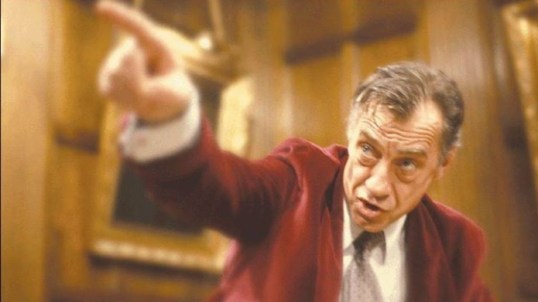
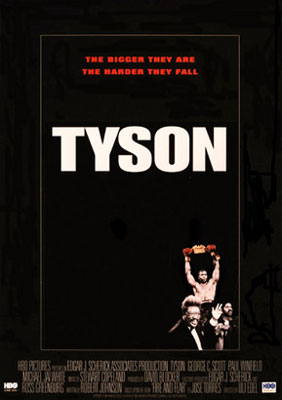 If any heavyweight champion from the post-Ali era of boxing has lived a life that seems like it should be ready-made for the biopic treatment, it is “Iron Mike” Tyson. In 1995, HBO stepped up to provide just such a film.