4 Of My Favorite Fictional Oscar Winners!


For 9 decades, the Oscars have been an important part of American life.  As I’ve said on this site many times, Oscar Sunday is as much of an unofficial holiday as Super Bowl Sunday.  For many of us, the new year doesn’t even begin until the morning after the Oscars.

However, some of the most memorable Oscar winners didn’t even exist!  The Academy Awards have been used as a plot device in any number of movies.  Here are four of my favorite fictional Oscar winners:

  1. Johnny Fontane (Al Martino) in The Godfather (1972)

Oh, Johnny Fontane.  He had such a good singing career going until he started to lose his voice.  But, fortunately, there was a part for him in an upcoming picture.  As Johnny explained it, the part was a guy just like him.  “I wouldn’t even have to act.”  The only problem was that studio head Jack Woltz didn’t want to give him that role.

It’s a good thing that Johnny had a Godfather like Vito Corleone.  And it’s a good thing that the Godfather had a lawyer like Tom Hagen, a lawyer who didn’t mind arranging for a horse to be beheaded.  Khartoun may not have survived but Johnny Fontane got his part and his Oscar.

(Johnny’s adventures at the Oscars are detailed in all their loving glory in Mario Puzo’s novel.  Perhaps not wanting to harm its own Oscar chances, the film left out the majority of Johnny’s Hollywood adventures.)

2. Margaret Elliott (Bette Davis) in The Star (1953)

“C’mon, Oscar!  Let’s get drunk!”

Listen, you may think that winning an Oscar means that you’re set for life but often, the exact opposite is true.  Winning an Oscar has killed many a career.  They even have a name for it: The Oscar Curse.

Take Margaret Elliott for instance.  She won an Oscar.  And now, just a few years later, she’s broke, drunk, and deeply in denial.  Can her daughter (Natalie Wood) convince Margaret that it’s time to stop drinking and admit that fame is a hideous bitch goddess?  Or will Margaret continue to get drunk with her Oscar staring at her in judgment?

3. Vicki Lester (Judy Garland) in A Star is Born (1954)

Sadly, Vicki is better remembered for what happened during her acceptance speech than for the speech itself.  When her husband, notorious alcoholic Norman Maine (James Mason), took the stage and struck his wife while drunkenly motioning, it shocked Oscar watchers everywhere.  But Vicki never stopped loving him and, after his tragic death, she let the world know that, “This is Mrs. Norman Maine.”

4. Jerilee Randall (Pia Zadora) in The Lonely Lady (1983)

“I don’t suppose I’m the only one whose had to fuck her way to the top.”

Greatest fake Oscar acceptance speech ever!
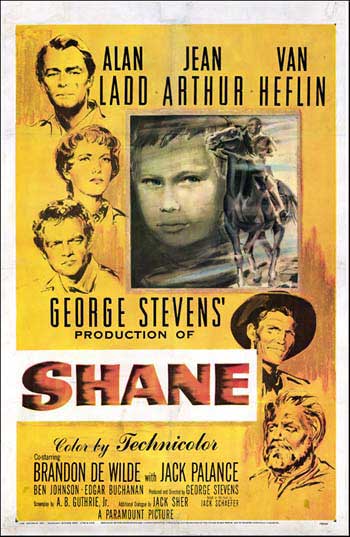
Lisa Reviews An Oscar Nominee: Shane (dir by George Stevens)


“Hey, Shane!  Come back, Shane!”

There’s a few ways in which you can view the 1953 film, Shane.

The more popular view is that it’s a Western about a man named Shane (Alan Ladd) who rides into town and gets a job working for the Starretts, Joe (Van Heflin) and Marian (Jean Arthur).  Joe is a farmer who is determined to hold onto his land, despite the efforts of cattle baron Rufus Ryker (Emile Meyer) to force him off of it.  While we don’t learn much about Shane’s background, it becomes apparent that he’s a man who can fight.  That comes in handy when Ryker brings in a sinister gunfighter named Wilson (Jack Palance).

Another view is that Shane is the story of a man who just wants to settle down but, instead, finds himself continually hounded by an annoying little kid, to the extent that he finally gets involved in a gun battle just so he’ll have an excuse to leave town and get away from the little brat.  Little Joey Starrett (Brandon deWilde) idolizes Shane from the minute that he comes riding up.  When he hears that Shane refused to get into a fight at the local saloon, Joey demands to know whether it was true.  He tells his mom that he loves Shane almost as much as he loves his father.  When Shane does get into a brawl with all of Ryker’s men, Joey stands in the corner and eats candy.  And then, when Shane tries to leave town, Joey runs behind him shouting, “Come back, Shane!  Come back!”

Myself, I think of it as being the story of Frank Torrey (Elisha Cook, Jr.).  Frank is the farmer that’s been nicknamed “Stonewall,” due to his status as a former Confederate and his quick temper.  Stonewall may be smaller than the other farmers but he’s usually the quickest to take offense.  Still, it’s impossible not to like him, largely because he’s played by Elisha Cook, Jr.  When Wilson feels the need to put the farmers in their place, he does so by picking a fight with Torrey.  Standing on a porch in the rain, looking down on the smaller man, Wilson starts to insult both him and the South.  When Torrey finally starts to reach for his gun, Wilson shoots him dead.  While Torrey lies in the mud, Wilson smirks.  It’s a shocking scene, all the more so for being shown in a long shot.  (By forcing those of us in the audience to keep our distance from the shooting, the film makes us feel as powerless as the farmers.)  If you didn’t already hate Wilson and Ryker, you certainly will after this scene.

Shane is a deceptively simple film, one in which many of the details are left open for interpretation.  We never learn anything about Shane’s background.  He’s a man who shows up, tries to make a life for himself, and then leaves.  He’s a marksman and an obviously experienced brawler but, unlike Ryker’s men, he never specifically looks for violence.  In fact, he often seems to avoid it.  Why?  The film doesn’t tell us but there are hints that Shane is haunted by his past.  Shane seems to want a chance to have a life like the Starretts but, once he’s forced to again draw his gun, he knows that possibility no longer exists.

Is Shane in love with Marian Starrett?  It certainly seems so but, again, the film never specifically tells us.  Instead, it all depends on how one interprets the often terse dialogue and the occasional glances that Marian and Shane exchance.  When Shane and Joe get into a fist fight to determine who will face Ryker and Wilson, is Shane really trying to protect Joe or is it that he knows Marian will be heart-broken if her husband is killed?

One thing’s for sure.  Little Joey sure does love Shane.  “Come back, Shane!”  Little Joey follows Shane everywhere, with a wide-eyed look on his face.  To be honest, it didn’t take too long for me to get sick of Little Joey.  Whenever director George Stevens needed a reaction shot, he would cut to Joey looking dumb-founded.  Brandon deWilde was 11 years when he appeared in Shane and he was nominated for an Oscar but he’s actually pretty annoying in the role.  Elisha Cook, Jr. was far more impressive and deserving of a nomination.

I know that many people consider Shane to be a classic.  I thought it was good, as long as the action was focused on the adults.  Alan Ladd plays Shane like a man who is afraid to get too comfortable in any situation and the film works best when it compares his reticence to Wilson’s cocky confidence.  Whenever Joey took center stage, I found myself wanting to cover my ears.

Shane was nominated for Best Picture but lost to From Here To Eternity.

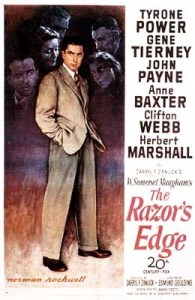
Lisa Reviews An Oscar Nominee: The Razor’s Edge (dir by Edmund Goulding)


Oh, 1919!  What a year.  The Great War had ended, leaving much of Europe devastated.  American soldiers were coming home and, scarred by the horrors they had experienced, becoming members of a lost generation.  The Spanish Flu was infecting millions, on the way to eventually wiping out 3% of the world’s population.  It was a grim time so it’s no surprise that many chose to close their eyes and pretend like everything was fine.  Only a few people were willing to look at the world and say, “There has to be something more.”

The 1946 film The Razor’s Edge tells the story of one such man.  Before the war, Larry Darrell (Tyrone Power, Jr.) was like most of his friends back in Chicago.  He was carefree.  He was wealthy.  He was engaged to marry the beautiful but self-centered Isabel (Gene Tierney).  But then he went off to fight in World War I and the experience changed him.  On the final day of the war, another soldier sacrificed his life to save Larry and Larry is now haunted by that man’s death.  No longer sure about his place in the world, Larry announces that he’s rejecting his former life.

Of course, that’s an easy thing to do when you’re rich.  Larry is lucky enough to have an inheritance that he can live off for a few years.  All of his former friends think that Larry’s just struggling to adjust to being back home and they expect that he’ll get over it soon enough.  Isabel’s uncle, Elliott (Clifton Webb), thinks that Larry’s acting like a total fool.  For Larry’s part, he no longer cares what any of them think.  He’s going to travel the world, seeking enlightenment.

While Larry’s searching, life goes on without him.  Isabel ends up marrying one of Larry’s friends, Gray Maturin (John Payne).  Larry’s best friend from childhood, Sophie (Anne Baxter), suffers a personal tragedy of her own and, when Larry next meets her, she’s living as a drunk on the streets of Paris.  Larry keeps searching for the meaning of it all.  He works in a coal mine.  He discusses philosophy with a defrocked priest.  Eventually, he ends up in the Himalayas, where he studies under a Holy Man (Cecil Humphreys).

It’s an intriguing idea and still a relevant one.  Unfortunately, the movie doesn’t really work because Larry tends to come across as being a little bit full of himself.  I could imagine someone like Henry Fonda working wonders with the role but Tyrone Power seems totally miscast as Larry.  When you look at Power, you find it hard to believe that he’s ever had a bad day, much less a need to spend months hiding in the Himalayas.  He comes across as the last person you would necessarily want to take spiritual advice from.  The fact that Webb, Tierney, Payne, and Baxter are all perfectly cast only serves to enforce just how miscast Power is.  It’s a well-intentioned film with nice production values but it’s never quite compelling.

The Razor’s Edge was based on a novel by W. Somerset Maugham.  Interestingly, the film features Maugham as a character, played by Herbert Marshall.  Even more interesting is the fact that the film was apparently remade in 1984, with Bill Murray cast as Larry Darrell.  I’ve never seen the remake so I have no idea if Murray is an improvement on Power.

(Also, since I’ve been pretty critical of Power in this review, let me recommend Witness For The Prosecution, in which Power is much better cast.)

The Razor’s Edge was nominated for Best Picture but lost to another film about returning vets, The Best Years of Our Lives.

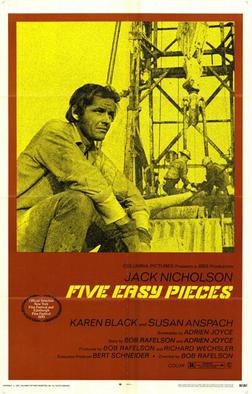
Lisa Reviews An Oscar Nominee: Five Easy Pieces (dir by Bob Rafelson)


First released in 1970, Five Easy Pieces tells the story of a lost man named Bobby Dupea (Jack Nicholson).

When we first meet Bobby, he’s working at a California oil field.  He likes to go bowling.  He has a girlfriend named Rayette (Karen Black), who is a country music-obsessed waitress.  His best friend is Elton (Billy “Green” Bush), a friendly redneck with a memorable laugh.  Bobby may have a girlfriend and Elton may be married but that doesn’t stop either one of them from going out at night, getting drunk, and trying to pick up women.

Bobby seems to be just another blue-collar guy with a grudge against the bosses but it doesn’t take long to realize that there’s something different about him.  Bobby may be friends with Elton but it’s obvious that the two of them come from very different background.  No matter how much he tries to hide it, Bobby is smarter than everyone else around him.  When he and Elton get stuck in a traffic jam, Bobby spots a piano sitting on the back of a pickup truck.  Getting out of his car, Bobby yells at everyone who is honking and then climbs up to the piano.  He sits down, he puts his fingers to the keys and he starts to play.  Knowing Bobby, you’re expecting him to just bang the keys and make noise.  Instead, he plays beautiful music.

Later, Bobby steps into a recording studio.  Paritia (Lois Smith), a neurotic woman, is playing the piano.  The recording engineers joke about her lack of talent.  Bobby glares at them, annoyed.  It quickly becomes apparent why Bobby is so protective.  Paritia is Bobby’s sister.

Bobby, it turns out, comes from a wealthy family of musicians.  Everyone in the family has dealt with the pressure to succeed differently.  Paritia continues to play, despite not having much talent.  Bobby’s older brother, the buffoonish Carl (Ralph Waite), plays violin and has staid home with their father (William Challee).  Bobby, on the other hand, ran away from home.  He’s spent his entire life trying to escape from both his talent and his family.  However, when Paritia explains that their father has suffered from two strokes and might not live much longer, Bobby reluctantly decides to return home and try to make some sort of peace with his father.

It’s not as easy a journey as Bobby would have liked.  For one thing, Rayette demands to go with him.  On the drive up to Washington, they pick up two hitchhikers (Helena Kallionetes and Toni Basil), one of whom is obsessed with filth.  In the film’s most famous scene, an attempt to get a simple lunch order modified leads to Bobby losing control.

See, that’s the thing with Bobby.  In many ways, he’s a jerk.  He treats Rayette terribly.  While his family is hardly perfect, the film doesn’t hide from the fact that Bobby isn’t always the easiest person to deal with.  And yet, you can’t help but sympathize with Bobby.  If he seems permanently annoyed with the world … well, that’s because the world’s annoying.  And, to Bobby’s credit, he’s a bit more self-aware than the typical rebel without a cause.  When one of the hitchhikers praises his temper tantrum at the diner, Bobby points out that, after all of that, he still didn’t get the order that he wanted.

In Washington, Bobby tells Rayette to stay at a motel and then goes to see his family.  Bobby seems as out-of-place among his wealthy family as he did hanging out in the oil fields with Elton.  He ends up cheating on Rayette with Carl’s fiancee, a pianist named Catherine van Oost (Susan Anspach).

And then Rayette shows up for dinner…

Five Easy Pieces is a sometimes funny and often poignant character study of a man who seems to be destined to always feel lost in the world.  Bobby spends the whole movie trying to find a place where he can find happiness and every time, reality interferes with his plans.  Nicholson gives a brilliant performance, playing Bobby as a talented guy who doesn’t really like himself that much.  Bobby’s search for happiness leads to a rather haunting ending, one that suggests that some people are just meant to spend their entire life wandering.

Five Easy Pieces was nominated for Best Picture but lost to Patton.

8 Sure Shot Best Picture Nominees That Were Not


Let’s be honest.

Predicting the Oscar nominees is not an exact science.  The fact of the matter is that a lot of it is guesswork, especially in the early months of the year.

“Oh, Scorsese has a movie coming out?  Well, Martin Scorsese’s movies are always nominated!”

“Last year’s best seller is being adapted into a movie?  The Academy loves best sellers!”

“David Fincher’s directing High School Musical 4?  I LOVE DAVID FINCHER!  Best Picture for sure!”

That’s why, every year, there are films that seem like they’re guaranteed to reap Oscar glory.  These are the films that, in July, are listed on all of the awards sites as probable best picture nominees.  And every year, several of those sure shots turn out to actually be long shots.

Since Arleigh founded Through the Shattered Lens back in 2009, there’s been many guaranteed Best Picture contenders that, when the nominations were announced, were nowhere to be found.  Here are just 8 examples:

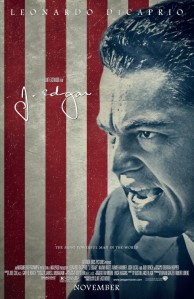
1. J. Edgar (dir by Clint Eastwood)

Remember how Leonardo DiCaprio was going finally win his first Oscar for playing J. Edgar Hoover in the 2011 Oscar biopic?  There was also some speculation that Armie Hammer would pick a supporting nod and, of course, the film was going to be a best picture nominee.  Then the movie came out, fell flat, and received not a single Oscar nomination.

2. The Dark Knight Rises (dir by Christopher Nolan)

I was not as big of a fan of this movie as some people who write for this site.  In fact, I thought it was kind of a mess.  Still, back in 2012, a lot of people assumed the Academy would make up for not nominating The Dark Knight by nominating the sequel.  (In a particular noxious example of fanboy culture, Christy Lemire was attacked online when she gave The Dark Knight Rises its first negative review.)  For all of the hyper and controversy, The Dark Knight Rises was totally ignored when the 2012 Oscar nominations were announced.

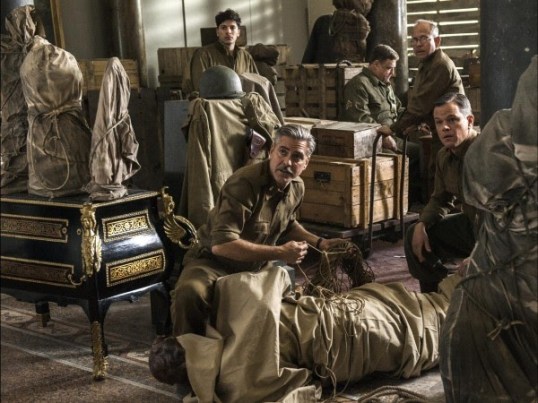
3. The Monuments Men (dir by George Clooney)

As strange as it may seem today, this now-forgotten World War II film was originally considered to be a surefire Oscar contender.  Throughout most of 2013, the majority of the experts on Gold Derby listed The Monuments Men as their number one prediction for Best Picture.  The logic was that it was based on an interesting true story, it featured Bill Murray in a serious role, and it was directed by George Clooney.  Then, suddenly, the release date was pushed back to 2014.  That was the first sign of trouble.  Then the movie came out and it turned out to be a complete mess, one that underused Murray and which reminded us that, regardless of his skill as an actor, George Clooney is a remarkably dull director.

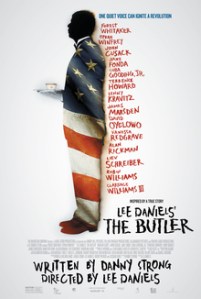
4. Lee Daniel’s The Butler (dir by Lee Daniels)

From 2013, this is a good example of a film that tried so hard to be an Oscar contender that it basically knocked itself right out of contention.  Between the blind and dated worship of JFK and John Cusack’s performance as Richard Nixon, this film almost seemed like a parody of a bad Oscar contender.

5. Interstellar (dir by Christopher Nolan)

Personally, I liked 2014’s Interstellar more than I liked The Dark Knight Rises but ultimately, this turned out to be just another Christopher Nolan film that didn’t get much of a reaction from the Academy.  (Despite the nominations given to both Dunkirk and Inception, it’s hard not to feel that the Academy will always resent Nolan for being both successful and ambitious.)

6. Joy (dir by David O. Russell)

Many of us thought it would be one of the films to be nominated for best picture of 2015.  That was until we actually saw the damn thing.  David O. Russell’s worst movie still managed to net Jennifer Lawrence a nomination but not much else.

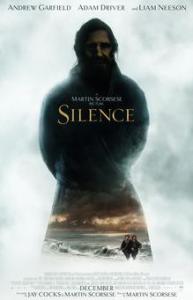
7. Silence (dir by Martin Scrosese)

Martin Scrosese’s 2016 passion product was expected to be a major contender and, on many sites, it was listed as a probable winner all the way through December.  However, when the nominations were announced, Silence only received one nomination, for cinematography.

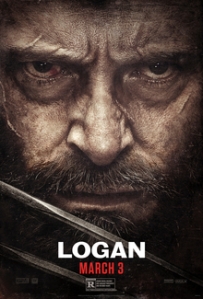
8. Logan (dir by James Mangold)

At the start of 2017, a lot of critics stated that Logan might be the first comic book movie ever nominated for Best Picture.  For a month or two, I certainly thought it would be.  Ultimately, though, it only picked up a nomination for adapted screenplay.

Which 2018 sure short will turn into a long shot?  We’ll find out next year!

Lisa Reviews An Oscar Nominee: 49th Parallel (dir by Michael Powell)


Hello and welcome to the TSL’s continuing coverage of Oscar Sunday!  Today, along with some other Oscar-related things, I’m going to post reviews of some of the films that have been nominated for best picture over the years!  Let’s start things off with the 1941 Best Picture nominee, 49th Parallel!

Before anything, I should clear up some confusion about this film.  This is a British film about Nazis trying to reach the border between Canada and the U.S.  When it was first released in the UK, it was named after the coordinates of the border.  However, in the actual film, the Nazis never actually go to the 49th Parallel.  Instead, the film concludes at Niagara Falls.  However, it was probably reasonable assume that British audiences would not necessarily know or care whether Niagara Falls was actually located on the 49th Parallel.  Considering that they were currently at war with Germany, they had more important things to concern themselves with.

However, it was apparently felt that American audiences would notice that Niagara Falls wasn’t actually located on the 49th Parallel.  (Personally, I think the British may have been giving us too much credit.)  So, when the film was released in the United States, the title was changed to The Invaders.  When the film was subsequently nominated for Best Picture, it was nominated under the name The Invaders.  I’ve actually come across some online sources that claim that The Invaders and 49th Parallel are two separate films.  No, they’re the same film, it’s just that the film in question has two different titles.  Out of respect to the people who actually made the movie, I’ve decided to use the original title in this review.

When watching 49th Parallel (it’s available on YouTube), it helps to know something about history.  Today, there’s a tendency to overlook the fact that World War II had already been raging for nearly two years before the United States got involved.  Though the U.S. was an ally to Britain, it remained officially neutral until the Japanese bombed Pearl Harbor.  Up until that moment, many prominent Americans were isolationists and took the attitude that the war was Europe’s problem.  (On the other hand, Canada, as a Dominion of the British Empire, followed Britain into the war in 1939.)  Though the 49th Parallel may have been a British film that was largely set in Canada, it was also meant to frighten Americans and hopefully bring them over to the British side.

(When interviewed about the film, screenwriter Emeric Pressbruger said, “”Goebbels considered himself an expert on propaganda, but I thought I’d show him a thing or two.”)

Directed by Michael Powell, 49th Parallel opens with a German U-boat creeping into the waters around Canada.  The Nazis are hoping to disrupt shipping operations but it turns out that they’re no match for the Royal Canadian Navy.  (GO CANADA!)  When the U-boat sinks into the Hudson Bay, only six Nazis manage to survive.  Led by the arrogant Lt. Hirth (Eric Portman), the Nazis attempt to make their way to the border and to the safety of America.

Of course, it doesn’t turn out to be an easy journey.  Not only are the Germans in an unfamiliar country but they also keep running into Canadians.  Without fail, nearly every Canadian they meet is polite but willing to fight and die for his country.  The Canadians themselves are played by actors who, in the 40s, would have been familiar faces.  Laurence Olivier plays a fur trapper, getting top-billing for his cameo appearance.  Raymond Massey, who was best known for playing Abraham Lincoln, shows up as a Canadian solider.  Leslie Howard is the writer who discovers that Nazis have no respect for art.  Anton Walbrook is a German-Canadian farmer who rejects the attempts of Lt. Hirth to bring him over to the Nazi side.  The Canadians are so sympathetic that one of the Nazis is even moved to reject the Third Reich and is promptly executed by his compatriots, showing the audience the foolishness of hoping that the “good Germans” would ever be able to overthrow the bad ones.

It’s pure propaganda but it’s anti-Nazi propaganda so that’s not really a problem.  Powell keeps the story moving at a steady pace and all of the actors get impassioned performances.  You can tell this movie was more than just a job for them.  Instead, it was their way of fighting for their country and hopefully inspiring others to join in the battle against Hitler.  The film is both a love letter to Canada and a plea to the United States to renounce neutrality.  (Interestingly enough, by the time 49th Parallel made it to U.S. screens, America had finally declared war on the Axis Powers.)

49th Parallel was nominated for best picture but it lost to another World War II propaganda film, Mrs. Miniver.

Scenes That I Love: Tony Bennett Has A Meltdown in The Oscar


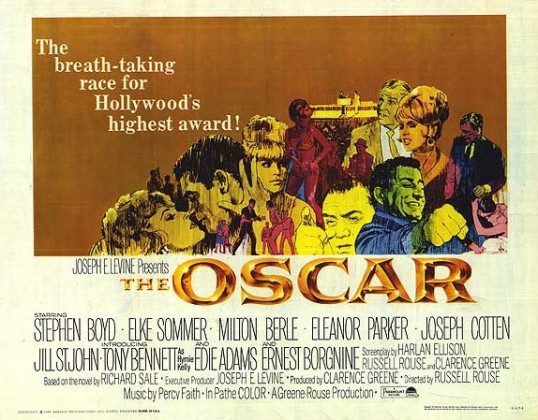
Have you ever wondered what it takes to win an Oscar?  The 1966 film, The Oscar, revealed to audiences just how sleazy a world Hollywood can be.  Frankie Fane (Stephen Boyd) does everything he can to win an Oscar and he doesn’t care who he hurts!

But fear not — Hollywood may not be perfect but it has no room for someone like Frankie Fane!  At the end of the movie, a man named Frank does win the Oscar but his last name is Sinatra and Frankie Fane is left humiliated.  That’ll teach him to try to take advantage of Hollywood!

Yes, The Oscar is an incredibly silly film but it’s also a lot of fun.  In this scene that I love, Frankie’s best friend — played by Tony Bennett of all people — confronts Frankie about the type of star that he’s become.

Six Other Films From Crown International Pictures That Deserved An Oscar Nomination!


An hour ago, I told you about the only Oscar nomination that was ever received by Crown International Pictures, one of the most prolific B-movie distributors of the 70s and 80s.  That nomination was for Best Original Song for Crown’s 1972 film, The Stepmother.

Here are 6 more films from Crown International Pictures that I think deserved some Oscar consideration:

The Teacher (1974)

“She corrupted the youthful morality of the entire school!” the poster screamed but actually, The Teacher was a surprisingly sensitive coming-of-age story about a relationship between a younger man and an older woman.  Jay North and Angel Tompkins both give excellent performances and Anthony James shows why he was one of the busiest character actors of the 70s.

2. The Sister In Law (1974)

John Savage has been acting for several decades.  He’s appeared in a number of acclaimed films but he’s never received an Oscar nomination.  One of his best performances was in this melancholy look at love, betrayal, and ennui in the early 70s.

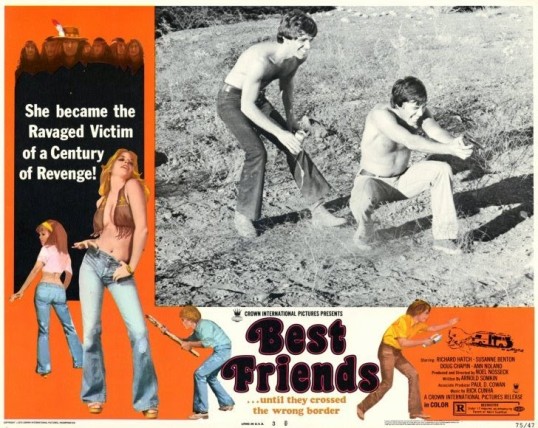
3. Best Friends (1975)

One of the strangest films ever released by Crown International, Best Friends is also one of the best.  A road trip between two old friends goes terribly wrong when one of the friends turns out to be a total psycho.  This well-acted and rather sad film definitely deserves to be better-known than it is.

4. Trip With The Teacher (1975)

Zalman King for Best Supporting Actor?  Hell yeah!

5. Malibu High (1979)

Surely Kim Bentley’s performance as a high school student-turned-professional assassin deserved some sort of consideration!

6. Don’t Answer The Phone (1980)

Don’t Answer The Phone is not a particularly good movie but it certainly is effective.  It made me want to go out and get a derringer or some other cute little gun that I could carry in my purse.  That’s largely because of the performance of Nicholas Worth.  Worth plays one of the most perverse and frightening murderers of all time and Worth throws himself into the role.  It’s one of the best psycho performances of all time and certainly worthy of a Best Supporting Actor nomination.

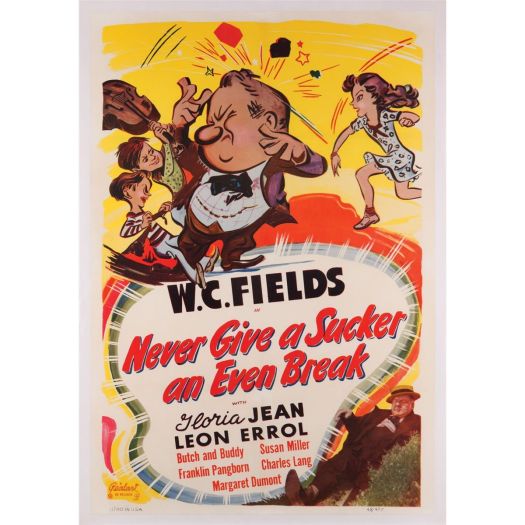
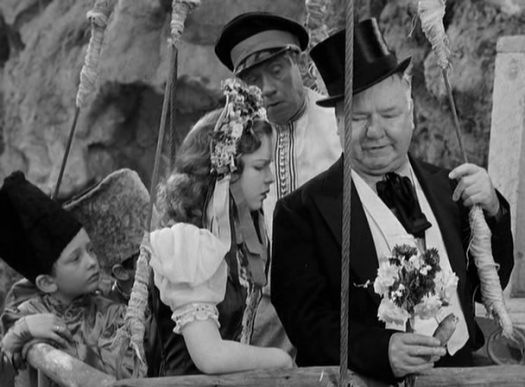
A Flask of Fields: W.C. Fields in NEVER GIVE A SUCKER AN EVEN BREAK (Universal 1941)


gary loggins's avatarcracked rear viewer

I’ve professed my love for W.C. Fields before on this blog , and NEVER GIVE A SUCKER AN EVEN BREAK is undoubtedly my favorite Fields flick. This inspired piece of lunacy is The Great Man’s commentary on getting films made in Hollywood his way. In fact, Fields wanted to title the movie “The Great Man”, but Universal execs nixed the idea, instead using a line from POPPY, his stage and screen hit. The change caused Fields much consternation, quipping that the movie’s overlong title would be boiled down on movie marquees to “Fields – Sucker”!!

Universal starlet Gloria Jean with “Uncle Bill”

The film’s plot (and I use that term as loosely as possible!) has Fields playing himself, delivering his latest script to Esoteric Pictures head Franklin Pangborn . The story he’s concocted may have the long-suffering Pangborn rolling his eyes, but it’ll have you the viewer rolling on the…

View original post 628 more words

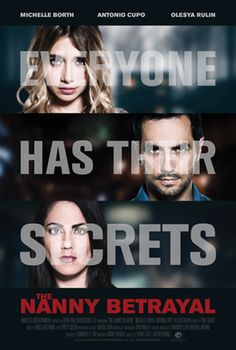
What Lisa Watched Last Night #175: Devious Nanny (dir by Devon Downs and Kenny Gage)


Last night, I turned over to the Lifetime Movie Network and I watched Devious Nanny!

Why Was I Watching It?

I’ve got a long history with Lifetime nanny films.  I’ve watched films about Bad Nannys, Betrayed Nannys, Nightmare Nannys, Evil Nannys, Killer Nannys, and Dangerous Nannys.  So, how could I resist something called Devious Nanny?

(Actually, it was apparently also called both The Nanny Betrayal and The Au Pair.  Devious Nanny, though is an improvement on both of those.)

What Was It About?

Elise (Michelle Borth) and Brian (Antonio Cupo) have it all.  Elise works at an art gallery.  Brian works in … well, I think it was advertising but I could be wrong.  All I know is that he worked in an office and he was worried about landing a big account and he wore a suit to work.  Isn’t that what they do in advertising?  Anyway, it’s a good job.  Brian and Elise have a nice house and an adorable son.  All they need to complete the picture is … an au pair!

Enter Amber (Olesya Rulin), who appears to be the perfect nanny.  She loves kids and she’s even okay with cleaning up around the house!  Of course, Amber did lie a little to get her job.  And she didn’t tell her new employers that she grew up in the foster system and that she has a history of mental instability.  Soon, Brian and Amber are exchanging lustful glances and people are turning up dead.

But here’s the thing.  I’ve seen enough killer nanny films that I immediately realized that it was probably significant that the film never actually showed Amber killing anyone.  So, is Amber the murderer or is it someone else?  The film is full of suspects!

What Worked?

It all worked.  This was the type of Lifetime movie that made me fall in love with the unique Lifetime aesthetic in the first place.  Well-acted and full of snarky lines, Devious Nanny also featured a rather clever last-minute plot twist.  The end of the film also features a line of dialogue that is perhaps the coldest sentiment over to be offered up in a Lifetime film.

Needless to say, this was a fun movie to live tweet.  Those of us on twitter last night had a blast trying to figure out who the killer was and who was going to be the next victim.

All in all, it was a very entertaining movie.

What Did Not Work?

It all worked!  At first, I was worried that the film would turn out to be just another Lifetime Nanny film but the script, by Adam Rockoff, was full of unexpected plot twists.  I’m going to guess that Rockoff has seen enough nanny films that he knew exactly what most people would be expecting and he very skillfully manipulated those expectations.

In fact, my only issue is that Lifetime aired this on Friday night and it didn’t really seem like they made much of an effort to publicize it.  Sometimes, I think Lifetime doesn’t truly understand just how many people love watching their movies.  They’ll promote the Hell out of some forgettable (and often regrettable) celebrity biopic but entertaining thrillers, like this one, rarely get the fanfare that they deserve.

“Oh my God!  Just like me!” Moments

I’ve been lucky, in that I’ve never had to work as an au pair.  I’ve also never been suspected of murder.  I guess I’ve just lived a sheltered life.  However, if any of that did happen to me, I would hope, when it was all over, that I could be as snarky about it as Amber.

Lessons Learned

Life’s not easy when you’re a nanny.