The Haunting of Sharon Tate is a frustrating film to review.
On the one hand, it’s an undeniably well-made horror film. It’s surprisingly well-paced. It creates an atmosphere of nonstop dread. It’s the type of movie that makes you keep an eye on the shadows in the room. This is the type of movie that makes your heart race and leaves you uneasy about every unexpected noise that you hear. It’s a dark and disturbing horror film and it features an excellent lead performance from Hillary Duff in the title role. While watching the film, you care about her and you don’t want anything bad to happen to her. That makes the film’s shocks and scares all the more frightening.
On the other hand, though, The Haunting of Sharon Tate features a premise that will leave even the most dedicated grindhouse horror fan feeling more than a bit icky.
The Haunting of Sharon Tate is hardly the first horror film to be based on the infamous Manson murders. In fact, it’s not even the only one to be released this year. We’re approaching the 50th anniversary of the Tate murders so last May saw the release of Charlie Says and Quentin Tarantino’s highly-anticipated Once Upon A Time In Hollywood is set to be released in July. What sets The Haunting of Sharon Tate apart from the other Manson films is that it’s told totally from the point-of-view of Manson’s victims. Manson is only seen briefly and the other members of his so-called “Family” wander through the movie like dead-eyed zombies. This is the rare Manson film that doesn’t try to portray that grubby little racist hippie as being some sort of outlaw folk hero and, regardless of what you think of the rest of the film, that’s definitely a good thing.
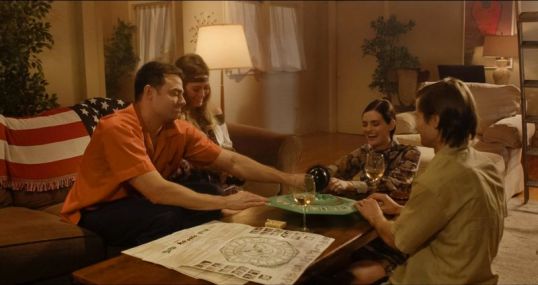
Instead, this movie focuses on Sharon Tate. The film opens with a black-and-white recreation of an interview that Sharon gave a year before her murder, in which she discusses whether or not dreams can tell the future. We then jump forward to August of 1969. Sharon is 8-months pregnant and staying at 10050 Cielo Drive. Her husband, Roman Polanski (who is kept off-screen for the entire movie), is in Europe. Staying with Sharon is her ex-boyfriend, Jay Sebring (Jonathan Bennett) and her friends, heiress Abigail Folger (played by real-life heiress Lydia Hearst) and Abigail’s boyfriend, Wojciech Frykowsky (Pawel Szajda). Also on the property is caretaker Steve Parent (Ryan Cargill), who is staying in a trailer and enjoys working on electronics.
(For the most part, the film sticks to the generally established facts when it comes to depicting the friendship between Sharon, Jay, Abigail, and Fykowsky. However, it takes a lot of liberties with its portrayal of Steve Parent. As opposed to how he’s portrayed in the film, Parent was actually an 18 year-old friend of the property’s caretaker who, because he was in the wrong place at the wrong time, became the first victim of the Tate murders. By most accounts, he never met Sharon or any of the other inhabitants of the main house.)
In the film, Sharon is haunted by premonitions. She has dreams in which she sees her friends being murdered by feral human beings. She gets disturbing phone calls and she hears weird voices talking about someone named Charlie. Her friends keep telling her that the nightmares are just a result of the stress that she’s under but Sharon is convinced that they’re a warning. (Oddly, some of the scenes in which her friends dismiss her concerns are reminiscent of Polanski’s Rosemary’s Baby.) After an hour of build up, the Family finally arrives at Ceilo Drive and, because of her dreams, Sharon is ready for them and able to fight back. Or is she? Can history be changed? the film asks, Or has our fate already been determined?

So, here’s the good thing about The Haunting of Sharon Tate: It’s clearly on Sharon’s side. It doesn’t glorify Manson and his family. Hilary Duff gives a touching and, at times, heart-breaking performance as Sharon Tate and the film holds her up as a symbol of hope, optimism, kindness, and everything else that was lost as a result of Manson’s crimes. The film itself is well-directed and genuinely scary and the final shot is haunting.
Here’s the bad thing about The Haunting of Sharon Tate: It may be well-made but it’s still exploiting a real-life tragedy, one in which six people lost their lives. (That’s not counting all of the other murders that Manson ordered.) To be honest, if the film was called The Haunting of Jessica Smith, I probably wouldn’t have any reservations about recommending it to horror fans. Instead, it’s called The Haunting of Sharon Tate and that makes it very hard to watch the film with a clear conscience. Do the film’s technical strengths make up for the film’s inherent ickiness? That’s the question that every viewer will have to ask and answer for themselves.
I will say this: I do think that The Haunting of Sharon Tate is a thousand times better than something like Wolves At The Door, in which Sharon was portrayed with all the depth of a Friday the 13th summer camp counselor. The Haunting of Sharon Tate left me feeling feeling frightened, disturbed, and, because of my struggle to reconcile the film’s technical strengths with its morally dubious premise, more than a little annoyed. It also left me mourning for Sharon Tate and every other victim of Manson and his brainwashed gang of zombies. Is the film a tribute to Sharon or a crass exploitation of her memory? At times, it seems to be both which is one reason why it’s such a frustrating film.
Well-made and problematic to the extreme, The Haunting of Sharon Tate is as close to a modern grindhouse film as we’re going to get in today’s antiseptic age. Whether or not that’s a good enough reason to sit through it is a question that each viewer will have to decide for themselves.


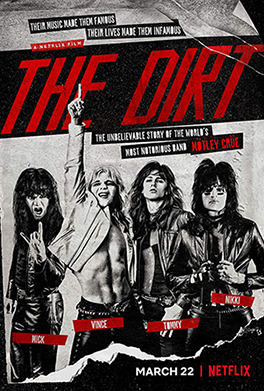 If you want to experience the sex, drugs, and rock and roll lifestyle, you could start a band, play some clubs, get signed to a record deal, go on tour, and eventually burn yourself out. Of course, if that’s too much trouble or if you’re already older than 30, I guess you can just watch The Dirt on Netflix.

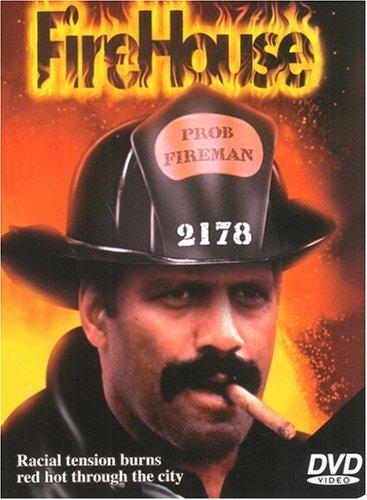
 When San Francisco-based private investigator Michael Brennen (O.J. Simpson) gives a ride to Joey Crawford (John Spencer) on Christmas Eve, he doesn’t know that it’s going to lead to the biggest case of his career. When Joey asks Michael to help him track down his ex-girlfriend, Michael assumes that Joey would never be able to pay for his investigative services. But one week later, Michael gets something in the mail from Joey. Inside the envelope, there’s a picture of both Joey’s ex and a thousand dollar bill. Ever after he discovers that Joey was mysteriously killed the night before, Michael decides to take on the case. His investigation will take him not only to Joey’s ex but it will also lead to him uncovering a drug ring that involves one of San Francisco’s most prominent families.
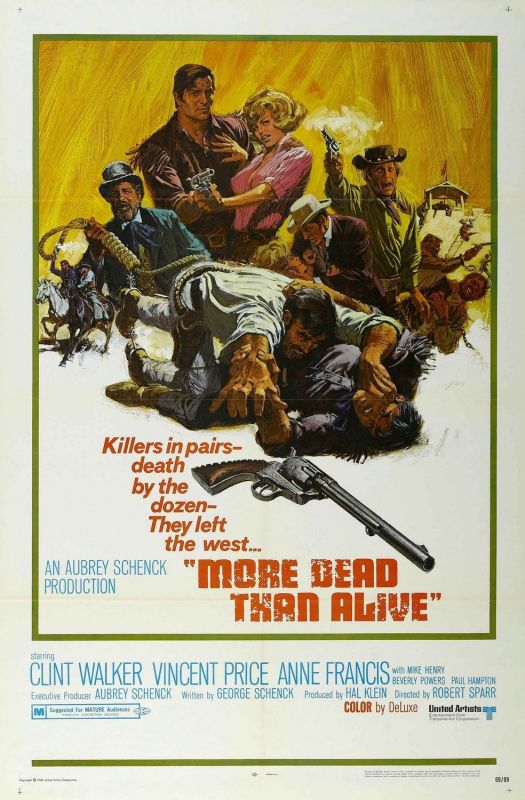
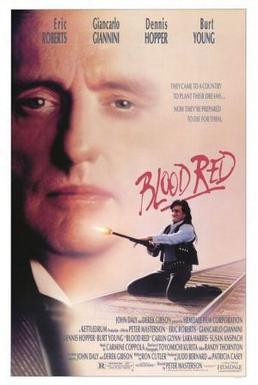 The time is the 1890s. The place is California. Sicilian immigrant Sebastian Collogero (Giancarlo Giannini) has just been sworn in as an American citizen and owns his own vineyard. When Irish immigrant William Bradford Berrigan (Dennis Hopper) demands that Sebastian give up his land so Berrigan run a railroad through it, Sebastian refuses. Berrigan hires a group of thugs led by Andrews (Burt Young) to make Sebastian see the error of his ways. When Sebastian ends up dead, his wayward son, Marco (Eric Roberts), takes up arms and seeks revenge.

