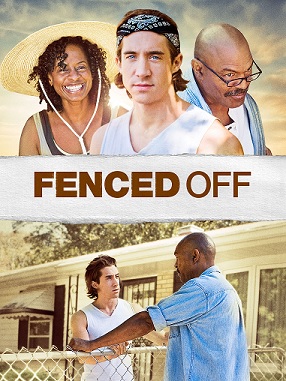
May Positivity: Fenced Off (dir by Brad Wise)


2011’s Fenced Off tells the story of Josh (Joshua Zirger) and George (Reggie Willis).

Josh is a young white social worker who has just moved onto a street where all of his neighbors are black.  His mother worries that Josh and his wife, Anne, are going to become crime statistics.  All of Josh’s friends tend to say things like, “Isn’t that neighborhood a little urban for you?”  Josh’s dumbass brother thinks that it would be a good idea to show up at Josh’s house wearing a durag and pouring a bottle of wine out on the driveway.  Josh is a nice guy but he sure does know a lot of dumb people.

Meanwhile, George (Reggie Willis) has lived on the block for 17 years.  He’s not at all happy when Josh shows up and he goes out of his way to avoid talking to his new white neighbors.  George’s best friend suggests that George might be a “bigot” but George denies it.  He says that he has a lot of reasons to not want to talk to Josh.  The fact that Josh is a dorky white guy is just one of them.

One week, while his wife is out of town, Josh’s life falls apart.  He offends a group of teenagers when he assumes that they’re approaching him because they want to mug him.  (Instead, they just want to return the $4.00 that he dropped while running.)  He freaks out when he hears a gunshot in the distance and, when George makes a joke about gangs in the area, Josh briefly worries that George might be a gang member.  Josh finds a white package on his property and automatically assumes that some drug dealers dropped a package of cocaine on his front lawn.  George grabs the package and reveals that it just a bag of  diapers.

It’s certainly a well-intentioned film and Josh and George are both portrayed as being complex characters who are sometimes right and sometimes wrong.  There’s actually a rather insightful scene in which Josh attempts to soothe things over with George by talking about how his family struggled financially when he was a kid just for George to call him out for assuming that George must be from a poor background.  When Josh argues that his best childhood friend was black, George wonders why every white guy claims to have had a black best friend who moved away in the 8th grade.  George has a point with both comments.  “I didn’t grow up rich” and “my best friend was/is black” are two of the most regularly repeated claims in white America today.

But, that said, Fenced Off doesn’t really work. Due to a lot of unnecesssary padding, the otherwise slight story unfolds a bit too slowly and the acting is often amateurish.  The actor who played Josh’s brother especially tended to overact.  (I’ve noticed that, when it comes to indie films like this one, it seems like there’s always at least one former theater kid who gets cast as a sidekick who proceeds to shout out all of his lines.)  Fenced Off has good intentions but the film is ultimately left down by its execution.
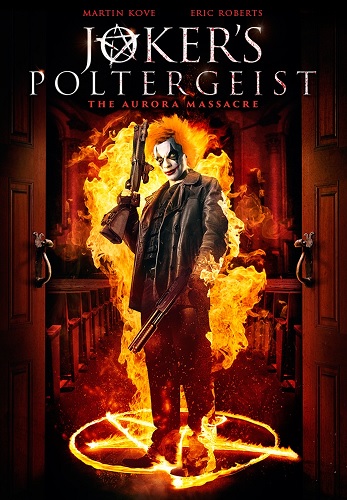
The Eric Roberts Collection: Joker’s Poltergeist (dir by Christopher S. Lind)


In 2020’s Joker’s Poltergeist (also known as Joker’s Wild), Eric Roberts plays James Jennings.  Jennings was a part-owner of the Palace Theater Chain until his partner, Rand Place (Martin Kove), forced him out and gave the business to his daughter, Aurora Place (Lacie Marie Meyer).  After apparently filming himself discussing how he is going to be starting a movement and how no one is ever going to forget him, James dresses up like a clown, goes down to the theater, and guns down the audience of a film called Joker’s Wild.  He also kills Rand before being shot himself by another theatergoer, William Remmington (Ari Boyland).

Clips of James’s final message are shown throughout Joker’s Poltergeist but we never actually see Roberts interacting with the rest of the cast.  (When James starts shooting people at the theater, he does so under a mask that he never removes and the end credits indicate that an actor other than Roberts played James in those scenes.)  This is obviously one of those films where Roberts filmed his scenes over the course of an hour or two, probably in his own office.  He certainly wasn’t on the set.  The same can be said of Martin Kove, who only appears as a part of a video message that Rand taped for Aurora before the shooting.  For that matter, Dustin Diamond appears for a few brief seconds and again, only as a part of a filmed message that Aurora watches.

Instead, the majority of the film takes place a year after the shooting.  Aurora is fighting to not only re-open her theater but to also keep concealed carry legal in her state.  She is now dating William and is a part of a support group made up of other survivors of the massacre.  From the moment Aurora reenters the old theater, she starts to have strange visions of killer clowns, demonic doctors, and sleazy politicians.  “You shouldn’t like guns….” the evil doctors chant at her.  At one point, she and her friends are trapped in the theater and being taunted by the spirits of the dead and, at another point, Aurora is suddenly in a hospital and being menaced by killer nurses.  Aurora struggles to figure out what is real and what is a dream, with the film suggesting that theater itself has become a separate dimension that is populated by James’s victims.  At its best, the film plays out like an unsettling nightmare, the type that doesn’t necessarily cause you to wake up screaming but which still remains fresh in your mind throughout the day.

On the one hand, the film is obviously based on the 2012 Dark Knight Rises shooting that it feels more than a little distasteful.  On the other hand, the film is intriguingly surreal and Lacie Marie Meyer gives a really good performance as Aurora.  (Yes, it would appear that she was named after Aurora, Colorado, which is one reason why the film feels so distasteful even though it has a handful of effective moments.)  The film does attempt to say something about guns, with Aurora being a proponent of the 2nd amendment and the gun-grabbing mayor and his wife being behind the efforts to tear down the theater.  It’s hard to really say which side the film comes down on, though I think it’s ultimately more pro-gun control than anything else.  That said, the film’s portrayal of the mayor and his wife as being vapid politicians who want to keep their own guns while taking away everyone else’s felt true to life.

Joker’s Poltergeist is ultimately a bit too icky and exploitive to really work but it still has its moments.  It’s a movie that keeps you guessing, if nothing else.

Previous Eric Roberts Films That We Have Reviewed:

  1. Star 80 (1983)
  2. Blood Red (1989)
  3. The Ambulance (1990)
  4. The Lost Capone (1990)
  5. Love, Cheat, & Steal (1993)
  6. Love Is A Gun (1994)
  7. Sensation (1994)
  8. Doctor Who (1996)
  9. Most Wanted (1997)
  10. Mr. Brightside (2004)
  11. Six: The Mark Unleased (2004)
  12. Hey You (2006)
  13. In The Blink of an Eye (2009)
  14. The Expendables (2010) 
  15. Sharktopus (2010)
  16. Deadline (2012)
  17. Miss Atomic Bomb (2012)
  18. Lovelace (2013)
  19. Self-Storage (2013)
  20. This Is Our Time (2013)
  21. Inherent Vice (2014)
  22. Road to the Open (2014)
  23. Rumors of War (2014)
  24. A Fatal Obsession (2015)
  25. Stalked By My Doctor (2015)
  26. Stalked By My Doctor: The Return (2016)
  27. The Wrong Roommate (2016)
  28. Stalked By My Doctor: Patient’s Revenge (2018)
  29. Monster Island (2019)
  30. Seven Deadly Sins (2019)
  31. Stalked By My Doctor: A Sleepwalker’s Nightmare (2019)
  32. The Wrong Mommy (2019)
  33. Free Lunch Express (2020)
  34. Her Deadly Groom (2020)
  35. Top Gunner (2020)
  36. Just What The Doctor Ordered (2021)
  37. Killer Advice (2021)
  38. The Poltergeist Diaries (2021)
  39. My Dinner With Eric (2022)

The TSL Grindhouse: Killing American Style (dir by Amir Shervan)


Filmed in 1988 but apparently not released until 1990, Killing American Style is a low-budget variation on The Desperate Hours.

The film opens with a ruthless criminal named Tony Stone (Robert Z’Dar, of Maniac Cop fame) leading a daring robbery of an ice cream truck depot.  All of the ice cream trucks have come back for the day and, when Tony and the boys show up, the money is still being counted.  Tony quickly takes control of the situation, intimidating everyone with both his weaponry and his amazing jawline.

Unfortunately, for Tony, the robbery is not as successful as he thought.  Yes, he gets away with a lot of money but the police quickly track him down to his home, where he’s in the process of having sex with his stepmother.  Tony is arrested and, in record time, sentenced to a maximum security prison.  (Seriously, the arrest, conviction, and sentencing all seem to happen on the same day.)  Tony is put on a prison bus but then the bus itself stops to help out a stranded motorist.  The motorist turns out to be Tony’s brother, Jesse (Bret Johnston).  In the resulting shootout, all of the guards are killed but Jesse is wounded.  Tony and his associate, Lynch (John Lynch …. hey, I wonder if that’s just coincidence?), take Jesse to a nearby ranch house.

The house belongs to John Morgan (Harold Diamond), who is a long-haired kickboxing champion.  When Tony arrives, John is out of the house and beating up the dad of a kid who bulled Morgan’s son, Brandon.  John is not happy to come home and discover Tony holding his entire family hostage.  For that matter, Morgan’s son isn’t amused by it either.

Because they are being pursued by a grim and determined police detective (played by Jim Brown …. yes, the same Jim Brown who starred in countless blaxploitation films in the 70s), Tony and his men do not want to run the risk of leaving the house to retrieve the loot from the robbery themselves.  So, they send Morgan out to pick up the suitcase from Tony’s stepmother.  I guess they assume that Morgan will be able to move around inconspicuously despite the fact that Morgan is a 6’1 kick boxer with long hair.  I mean, there’s no way that Morgan is going to be able to move around without being noticed by the cops.

Of course, before Morgan can get the money, he also has to get a doctor for Jesse.  Dr. Fuji (Joselito Rescober) agrees to help, despite the fact that he never seems to be quite sure what’s actually going on with all the angry men who keep pointing guns at each other.  When Dr. Fuji mentions that he wants to kill Tony “Japanese style,” Morgan promises that he’s going to kill Tony “American style.”  It’s never really made clear what the difference is between the two styles, though the American version does seem to involve a bit more kickboxing.

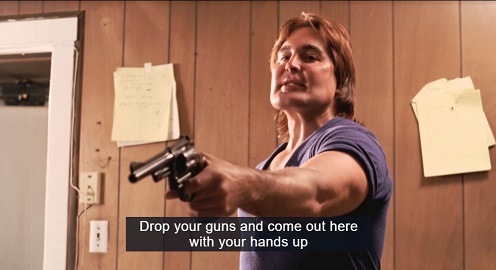
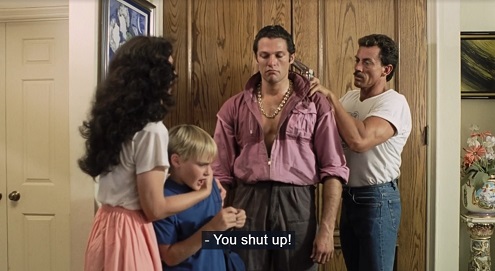
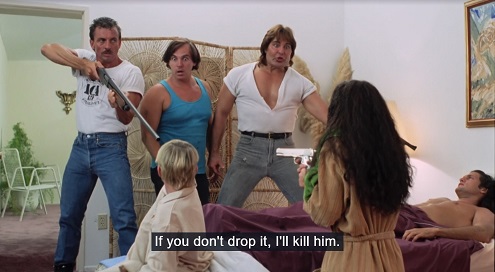
Anyway, this is an incredibly cheap and dumb movie but Robert Z’Dar seems like he’s having fun as Tony and …. well, to be honest, Robert Z’Dar is really the only reason to recommend this film.  He gives an enjoyably over-the-top performance, one that certainly contrasts with the more subdued performance of Harold Diamond.  (For his part, Diamond often seems to be struggling to stay awake.)  Hostage movies usually bore me to tears and this one had a lot of slow spots but it also had shots like the one below:

Eh.  Let’s call it even.

Forbidden Trails (1941, directed by Robert N. Bradbury)


Marshal Buck Roberts (Buck Jones) has finally retired after a long and a legendary career.  Two men who Buck arrested are not planning on allowing him to enjoy his retirement.  Having served their sentence for robbing a stagecoach, Fulton (Charles King) and Howard (Bud Osborne) are released from prison and head to Yucca City, Arizona.  They try to recruit their old partner, Jim Cramer (Dave O’Brien), into helping them get revenge on Buck but Cramer wants nothing to do with it.  He’s gone straight and is running his own general store with his fiancée, Mary (Christine McIntyre).  Cramer considers Buck to be a friend because Buck looked after Cramer’s children while Cramer was serving his sentence.

Fulton and Howard ambush Buck and nearly kill him.  With the help of his horse, Silver (of Lone Ranger fame), Buck is able to escape but he’s seriously injured.  His two fellow rough riders, Sandy Hopkins (Raymond Hatton) and Tim McCall (Tim McCoy), head down to Arizona to bring Fulton and Howard to justice.  (Sandy even rides away from his own wedding when he hears that Buck has been injured.)  While the Rough Riders search for Fulton and Howard, saloon owner Ed Nelson (Tris Coffin) works with the outlaws to steal a shipment of goods.

The third of the Rough Riders film, Forbidden Trails is memorable for acknowledging that the three Rough Riders were older than the most of the other contemporary western stars.  Buck Jones, Tim McCoy, and Raymond Hatton were all veteran stars who began their careers during the silent era and who transitioned to B-movies in the sound era.  At a time when their contemporaries were retiring, they were still appearing before the camera and riding the range.  Like the actor playing him, Buck Howard has reached the age when most people retire but he cannot escape his past.  Neither can Jim Cramer, who can’t live the law-abiding life that he desires as long as Fulton and Howard are free.  While Cramer has to escape from his former friends, Buck is lucky to have friends like McCall and Hopkins.  The movie showcases their loyalty and their friendship together and leaves no doubt that will never change, no matter how old the Rough Riders get.  Along with showcasing the friendship of its three stars, the movie is full of chases and gunfights.  The scene where Buck is ambushed is exiting and there’s also a good saloon shootout.  Jones and McCoy are as authentically western as ever.

Dave O’Brien and Christine McIntyre both appeared in the previous Rough Riders film but they’re playing different characters here.  Tris Coffin also played a similar crooked businessman in the first Rough Riders film, Arizona Bound.

Previous Rough Rider Reviews:

  1. Arizona Bound
  2. The Gunman From Bodie

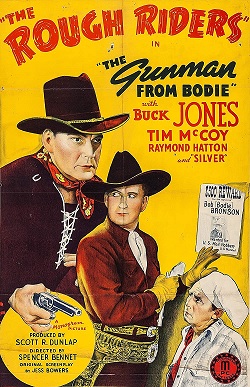
The Gunman From Bodie (1941, directed by Spencer Gordon Bennett)


The second of the Rough Riders films opens with Bob “Bodie” Bronson (played by Buck Jones) seeking shelter from a storm and coming upon a house.  Brodie enters the house, just to discover two dead bodies, a crying baby, and a note that says that the house was attacked by rustlers.  After the storm passes, Bodie takes the baby to a ranch owned by Alice Boden (Christine McIntyre) and her boyfriend, Joe (David O’Brien).  Alice and Joe agree to look after the baby while Bodie heads into town.

Anyone who has seen Arizona Bound or any of the Rough Riders films that  came out after The Gunman From Bodie will know that Boodie Bronson is actually Marshal Buck Roberts and that he’s working undercover.  His partner, Marshal Sandy Hopkins (Raymond Hatton), is already working as a cook at the ranch.  Soon, the third rough rider, Marshal Tim McCall (Tim McCoy), shows up with a wanted poster for Bodie.  It’s all a plan, of course, to help Bodie ingratiate himself with the actual rustlers.

The Gunman From Bodie is considerably darker than Arizona Bound.  Because of the murder of the baby’s parents, the Rough Riders aren’t just looking to uphold the law.  They’re looking to avenge a terrible crime and to dispense some frontier justice.  Buck Jones and Tim McCoy both give grim and determined performances that leave you with no doubt that you don’t want to get on their bad side.  While Alice and Joe tug at the audience’s heartstrings by becoming parents to the orphaned child, the Rough Riders do what they have to do to prevent any more children from losing their parents.  I especially liked the scene where Marshal McCall graphically described what happens when someone is executed by hanging, describing each detail until the actual murderer freaks out and reveals himself.  The Gunman From Bodie is quick-moving western for adults that features Buck Jones, Tim McCoy, and Raymond Hatton at their best.

Previous Rough Rider Reviews:

  1. Arizona Bound

Film Review: Your Place or Mine (dir by Aline Brosh McKenna)


Your Place or Mine asks the eternal question: Can a woman and man be best friends without also being lovers?

The answer to that is that of course they can.  It happens all the time.  The more important question is whether or not to physically attractive people can be friends without eventually falling love.  The answer there is of course not.  Being the most attractive person in your social circle means that you eventually have no choice but to pursue a relationship with the second most attractive person around.  That’s just the way it works.

Your Place or Mine opens in 2003, with two attractive 20 somethings named Peter and Debbie having sex for the first and what they initially believe will be the final time.  The action than jumps forward to 2023.  Peter (Ashton Kutcher) lives in New York City and has seemingly given up his dream of being a writer.  Instead, he makes a lot of money doing …. well, I’m not really sure what Peter’s job was.  It had something to do with banking and it allowed him to afford a really big apartment.  Meanwhile, Debbie (Reese Witherspoon) lives in Los Angeles.  Recently divorced, she is the overprotective mother of 13 year-old Jack (Wesley Kimmel) and she is a teacher.  Apparently she’s not supposed to be as rich as Jack but, for a teacher, she has a surprisingly big house.  She also has eccentric neighbor, played by Steve Zahn and an eccentric co-worker played by Tig Notaro.  Everyone was so eccentric that it made me miss the days when the lockdowns gave me an excuse not to talk to anyone.

Peter and Debbie are still best friends, even though they haven’t actually been in the same room together since 2008.  Still, that’s about to change.  Debbie’s coming to New York so that she can complete an accounting program and get a better job.  (Ha!  Take that, teachers!)  However, when her eccentric babysitter is cast in a movie, it looks like Debbie will have to cancel because there won’t be anyone around to keep Jack from accidentally eating something with nuts in it.  Peter, who has recently been dumped by his eccentric girlfriend and who is having a bit of a midlife crisis, volunteers to come to Los Angeles to look after Jack while Debbie goes to New York and stays in his apartment while taking her super-exciting accounting class.

Okay, let’s pause while I catch my breath.  This is one of those comedies where it takes way too long to set up the central premise.  Sometimes, it’s best to keep things simple.

Anyway, Peter bonds with Jack and helps him to find some confidence.  Living in Debbie’s house, Peter realizes that he has always loved Debbie.  Meanwhile, Debbie goes to New York, bonds with Peter’s eccentric ex-girlfriend (Zoe Chao), and discovers that Peter has written a novel!  Debbie takes it upon herself to read the novel.  She takes manuscript out of Peter’s apartment and is seen reading it at various New York locations.  I found myself cringing as I worried that a sudden gust of wind would blow the pages away or maybe someone would spill coffee on it.  (For all of Debbie’s happiness to discover that Peter is still writing, she’s not particularly careful with his manuscript.)  Without talking to Peter, Debbie gives the manuscript to an eccentric publisher named Theo Martin (Jesse Williams) and explains that the story is about a 13 year-old boy who can’t go out in the sun.  It sounds like an extremely dreary read but Theo is impressed with both the manuscript and with Debbie.

I usually enjoy romantic comedies and I like Reese Whitherspoon and I’m coming around on accepting the idea of Ashton Kutcher being a movie star (especially after his excellent performance in Vengeance) so I was really hoping that I would enjoy Your Place or Mine.  Unfortunately, the film itself suffered from what I call the Apatow Syndrome, in that every character had to be quirky, every joke had to be repeated ad nauseum, and there was a deliberate awkwardness to the dialogue that got old pretty quickly.  As individuals, Witherspoon and Kutcher were likable but I never really bought them as lifelong friends, much less a romantic couple.  They just didn’t have the right spark.  Unfortunately, Your Place or Mine just didn’t work for me.

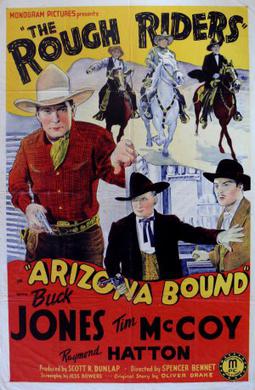
Arizona Bound (1941, directed by Spencer Gordon Bennett)


The town of Mesa City, Arizona has a problem.  A gang of thieves are holding up stagecoaches and shooting the drivers.  Stagecoach lines are removing Mesa City from their list of destinations and the town is having to depend on the services of corrupt businessman Steve Taggert (Tristram Coffin).  After the death of her father and the shooting of her boyfriend, Ruth Masters (Launa Walters) takes over her family’s stagecoach line and is determined to keep it running.  But who will drive her coaches?

Cattle salesman and former marshal Buck Roberts (Buck Jones) rides into town and volunteers to drive the next stagecoach.  Because the stagecoach is carrying a gold shipment, everyone suspects that it will probably be targeted by the thieves.  Volunteering to help Buck is another cattleman named Sandy Hopkins (Raymond Hatton) and the town’s newly arrived preacher, Parson McCall (Tim McCoy).  McCall has already run afoul Taggert because of his crusade to close down Taggert’s saloon.  What Taggert and the other citizens of Mesa City don’t know is that Buck, Hopkins, and McCall are the Rough Riders, undercover government agents who have a plan to both protect the gold and to reveal the identities of the culprits.

Arizona Bound was the first of seven films about the Rough Riders.  While the plots were never anything special, these films stood out because they paired Buck Jones and Tim McCoy, two B-western mainstays who had been active since the silent era and who both brought a good deal of authentic toughness to their performances.  In Arizona Bound, both Jones and McCoy don’t hesitate to show that they’re not going to put up with any nonsense from Taggert and his men.  There’s a great scene where McCoy proves that even a preacher can outdraw and intimidate an entire saloon full of roughnecks.  Jones, McCoy, and Hatton made a good team, though world events would come together to prevent the Rough Riders from having too many adventures.  After the U.S. entered World War II, McCoy volunteered for active duty.  Meanwhile, Jones died in a tragic night club fire.  Raymond Hatton continued to play Sandy Hopkins in other films but none with the original Rough Riders.

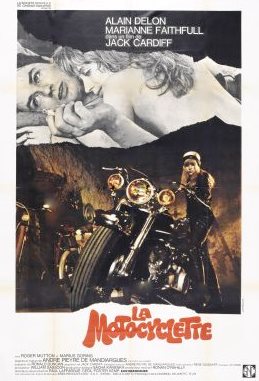
Film Review: The Girl On A Motorcycle (dir by Jack Cardiff)


Who would have guessed that a film from 1968, starring Marianne Faithfull and Alain Delon, would be a little bit pretentious?  I’m as shocked, as anyone.

The Girl On A Motorcycle is Rebecca (Marianne Faithfull), the wife of Raymond (Roger Mutton).  One day, Rebecca wakes up, puts on a black leather jumpsuit, and gets on her motorcycle.  Abandoning her husband and her home, she rides through France and eventually reaches Germany.  Along the way, she thinks about how the motorcycle represents freedom and how no one is truly free unless they’re doing what they want to do.  We hear her inner monologue and it’s hard not to notice that, for someone riding a motorcycle across two countries, she often doesn’t seem to be paying that much attention to the road.  Rebecca has more important things to think about, like free love and Vietnam.  She watches as a transport of soldiers drive past her and she silently tells them not to look at her.  She drives through a city and starts to laugh while shouting “Bastard!” at the top of her lungs.  Pedestrians, all of whom are unhappy and middle-aged, stare at her in shock.

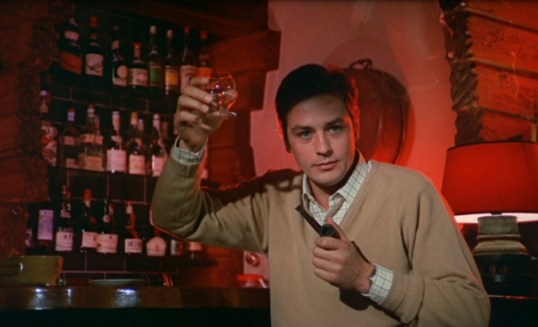
Along the way, Rebecca thinks about her life.  She’s married to Roger, who is a mild-mannered teacher who is so ridiculed by his students that even the local gas station attendant mentions how little respect anyone has for him.  However, Rebecca is haunted by memories of Daniel (Alain Delon), who is very, very French.

How French? This French.

Rebecca first met Daniel while working in her father’s bookstore and they had a passionate affair, despite the fact that Rebecca was already engaged to boring old Raymond.  Daniel even taught her how to ride a motorcycle.  When Rebecca got married, Daniel sent her the motorcycle that she is now riding as a wedding gift.  Rebecca is racing through Germany to be reunited Daniel, though it’s never quite clear if she’s truly leaving her husband or if she just wants to have a quick tryst before returning home.  Will Rebecca make it or will the unpredictable whims of fate intervene?

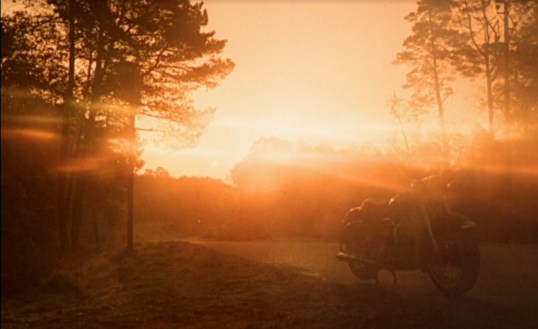
The Girl on a Motorcycle was directed by Jack Cardiff, a veteran cinematographer who first found acclaim working with directors like Michael Powell, Alfred Hitchcock, and John Huston.  Not surprisingly, the film is full of striking shots.  Unfortunately, Cardiff was 54 when he directed The Girl On A Motorcycle and he had been involved in the film industry since he was a child.  Watching the film, one gets the feeling that Cardiff was trying a bit too had to appeal to a young counterculture audience that he didn’t really have much of a natural affinity for.  As such, Cardiff drags out every psychedelic trick in the book.  Do you want excessive use of the zoom lens, ludicrously skewed camera angles, pointlessly surreal flashbacks, portentous narration, extreme close-ups, retina-burning solarization effects, and an ending that feels like it was stolen from Godard?  The Girl On A Motorcycle has all of them!  For every impressive shot of Rebecca riding on her motorcycle, there are several more shots that feel as if they were filmed in migrainevision.

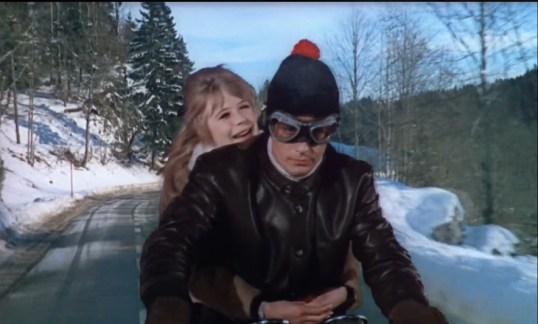
There’s also quite a few shots that make remarkably poor use of rear projection.

The Girl On A Motorcycle is definitely a film of its time.  To give credit where credit is due, Alain Delon is handsome and charismatic as the enigmatic Daniel.  The viewer gets the feeling that Rebecca is probably idealizing him and assuming that he has more depth than he actually does but it’s still easy to understand why she would not be able to resist the temptation.  Marianne Faithfull seems a bit lost as Rebecca.  She smiles a lot and she laughs a lot but her inner monologue is flatly delivered and, as a result, the character comes across as being vapid.  The ideal Rebecca probably would have been a young Helen Mirren.

As it is, The Girl On A Motorcycle is a time capsule of the 60s aesthetic (albeit an aesthetic translated through the lens of a director who seems to be trying too hard to remain relevant).  Due to a few flashes of nudity and some sex scenes that are so psychedelic that they’re nearly impossible to watch, Girl On A Motorcycle was the first film to be slapped with an X rating in the United States.  It seems rather tame today.

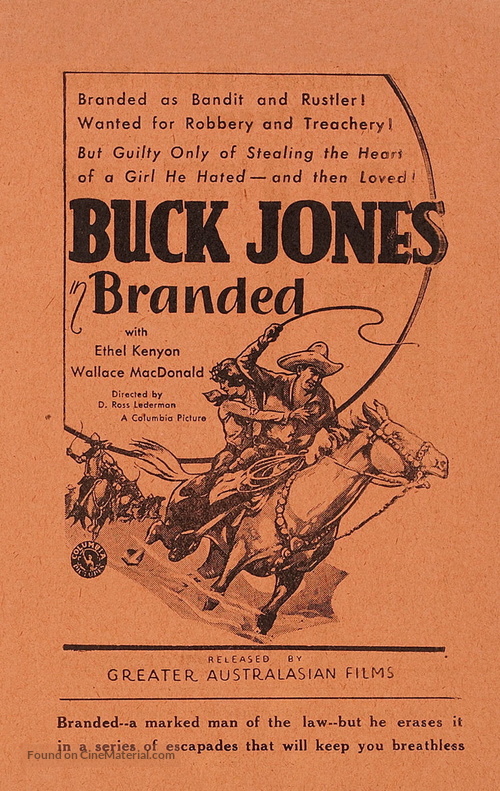
Branded (1931, directed by D. Ross Lederman)


Tom Dale (Buck Jones) and his employee, Swede (John Oscar), come across a stage coach robbery.  Though the robber gets away, Tom and Swede recover a stolen mailbag.  Tom finds a letter to himself and it is revealed that his real name is Cuthbert Chauncey Dale.  After explaining that he goes by Tom because that was his uncle’s name, Tom says that he’ll shoot anyone who calls him Cuthbert and he’s the movie’s hero!

When the local posse comes upon Tom and Swede, they accuse them of having robbed the stagecoach.  Tom and Swede manage to escape from jail during the dead of night and ride to a neighboring town, where Tom has inherited his uncle’s ranch.  Tom and Swede work on the ranch, building fences and branding cattle.  Tom starts to fall for Lou Preston (Ethel Kenyon), earing him the enmity of Joe Moore (Albert J. Smith), who is also in love with Lou.  Joe frames Tom and Swede for cattle rustling.  Tom and Swede attempt to clear their names with the help of their new friend, the same man (Wallace MacDonald) who previously robbed the stage coach!

This short but complicated B-western has its share of gunfights and chases on horseback but it still has some slow spots.  There are a lot of scenes of Tom and Swede working around the ranch.  When you’re ready for another gunfight, Tom and Swede have to go work on the fence.  Still, fans of early westerns will probably enjoy Branded.  Wallace MacDonald is a likable rouge as the Stagecoach Robber and the movie ends on a little more of a serious note than the typical poverty row western.  Buck Jones was an authentic cowboy before he went into the movies and he’s believable whenever he’s riding a horse, shooting a gun, or just walking around his ranch.  Just don’t call him Cuthbert!

Retro Television Reviews: Call Her Mom (dir by Jerry Paris)


Welcome to Retro Television Reviews, a feature where we review some of our favorite and least favorite shows of the past!  On Sundays, I will be reviewing the made-for-television movies that used to be a primetime mainstay.  Today’s film is 1972’s Call Her Mom!  It  can be viewed on YouTube!

While all of the other college campuses across America are in turmoil with protests and student walk-outs, Beardsley College remains at peace.  It’s a place where the 50s never ended.  Everyone is perfectly behaved.  No one is into politics.  Fraternity Row is a peaceful place, largely due to the elderly housemothers who keep the frats in order.

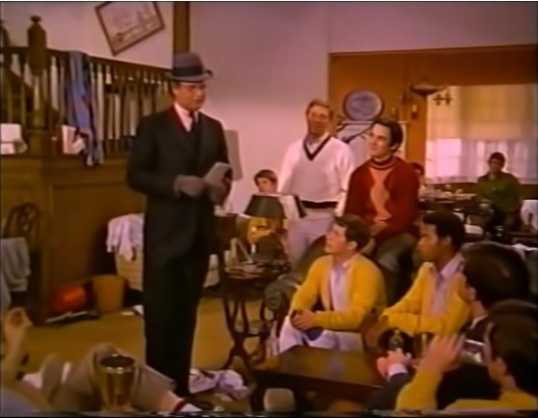
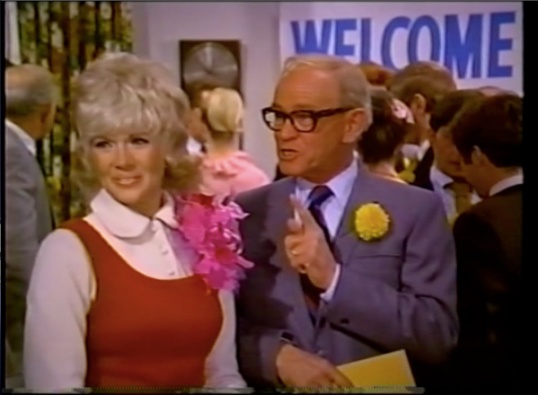
Except for Alpha Phi Epsilon, that is.  The A.P.E. House is known for being the wildest house on campus and every housemother that they get walks out on them.  If they can’t find a new housemother, they’ll lose their charter.  President Chester Hardgrove (Van Johnson) and Assistant Dean Walden (Charles Nelson Reilly) are practically salivating at the possibility of kicking A.P.E. off of campus.  And who can blame them?  Take a look at how wild these guys are:

These guys are crazy!  They wear yellow sweaters!  They play tennis indoors!  Occasionally, they leave a towel or two hanging on the bannister.  A.P.E. is out of control!

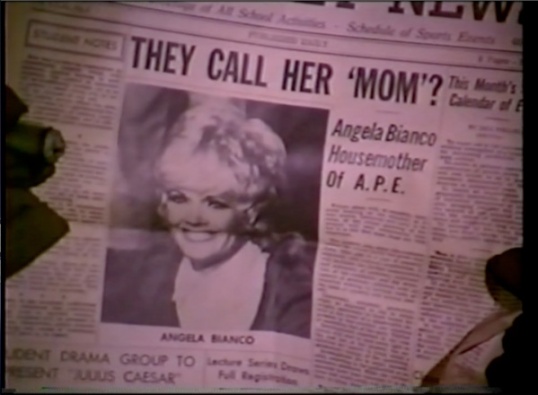
A.P.E. tries to find a new housemother but the word is out that A.P.E. is no good.  Not a single elderly woman in town is willing to work with them.  However, when the members of the frat realize that there’s not actually an age requirement for housemothers, they offer the job to Angie Bianco (Connie Stevens), who works as a waitress at the local pizza place.  Angie accepts the job.

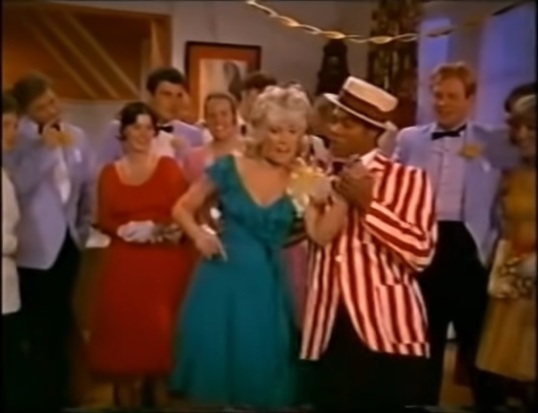
It’s a scandal!  All of the older folks say that Angie is too young and too attractive to be trusted as the housemother for A.P.E.  Angie, however, proves herself to be a lot tougher than anyone was expecting.  The members of the frat soon come to respect her.  However, President Hardgrove is determined to force her out of the job and off of the campus.  Rumor has it that she’s encouraging the A.P.E. brothers to hold rollicking 20s style parties and she’s also allowing them to dance!

Check out this decadence!

The attempts to force Angie out of her job makes national news.  Soon, Angie and the frat brothers are featured in Time Magazine.  President Hardgrove points out that he’s never appeared in Time Magazine.  While an group of middle-aged women march outside of the A.P.E. House and demand that Angie be fired, the younger female students rally to Angie’s side.  Suddenly, Beardsley College is home to a protest!  (The protest is about as a wild as the 20s dance party at the A.P.E. House.)  President Hardgrove realizes that keeping Angie at the A.P.E. House will actually lead to the college getting more donations but Angie has decided that she has to quit.  Not only is she in love with A.P.E.’s sponsor, Prof. Calder (Jim Hutton), but a member of the fraternity has decided that he’s in love with her and he’s going to drop out of school to be with her.

Can A.P.E. convince Angie to come back?

Call Her Mom is a silly movie that was obviously meant to serve as a pilot for a television show, one in which I imagine Angie would have solved the fraternity’s problems on a weekly basis.  Seen today, it’s mostly memorable for its thoroughly innocent portrayal of college life.  A.P.E. House is the wildest frat on campus but no one is ever seen drinking.  Certainly no one is indulging in anything stronger than perhaps a Coke or a Pepsi.  I imagine this show was an accurate portrayal of what most parents hoped college was like.  That said, Connie Stevens and Jim Hutton made for a cute couple.  Hopefully, there were many good times in the future for the residents of A.P.E. House.