Catching Up With The Films Of 2025: Ella McCay (dir by James L. Brooks)


The Winter Olympics have begun and, waking up this morning, I did what any American celebrating the 250th birthday of her country would do.  I watched curling.  I watched as Team USA defeated Team Switzerland.  I enjoyed not only watching America notch up a victory but I also enjoyed the contrast between the super-intense, super-shriekey Swiss team and the relatively mellow American team.  Watching the Americans laugh and joke while the Swiss couple yelled at each other left me feeling very patriotic and hopeful.

In fact, it left me in such a good mood that I decided it was finally time to watch Ella McCay.

It’s easy to forget now what a big deal it was when the trailer for Ella McCay was first released in August of 2025.  It was the trailer for James L. Brooks’s first film in 15 years, a political comedy for adults.  It was full of familiar faces and it looked absolutely awful.  Seriously, the trailer was so unappealing that I became rather fascinated by it.  Even the worst films can usually scrounge together enough good material to at least come up with a passable trailer.  Watching the trailer for Ella McCay, I could only wonder who was responsible for putting it together.  Who thought it was a good idea to lead off with that lengthy Woody Harrelson scene?  Who thought the wedding scene didn’t look weird?  Who didn’t take the time to do something about Spike Fearn’s hair?

There were some who said that Ella McCay shouldn’t be judged based solely on its trailer.  They pointed out that director James L. Brooks directed three films that were nominated for Best Picture, two of which were actually good.  They pointed out that Ella, her brother, and her husband were all played by British actors who had appeared on niche television shows.  Soon, there was a mini-civil war being fought on twitter between those who dismissed Ella McCay based on the trailer and those who promised that they would love the film once it was released.

Then, on December 12, the film was released, the reviews were uniformly terrible, and it tanked at the box office.  It took the film a little less than two months to go from the theater to streaming online.

Having now watched Ella McCay, I can say that …. well, yeah, it’s pretty bad.

It’s not necessarily bad for the reasons that I thought it would be.  Watching the trailer, I thought the film’s downfall would be the performances of Woody Harrelson and Jamie Lee Curtis.  Both of them looked to be acting up a storm.  Having now seen the film, I can say that both of them actually do probably about as good a job as could be expected to do with the material that they were given.  Neither one is particularly memorable but they’re not terrible either.  For that matter, Albert Brooks is amusing as Ella’s boss and mentor, Governor Bill.

Instead, the main problem with the film is that Ella McCay is not a particularly interesting or even likable character, not matter how much the film’s narrator insists otherwise.  A policy wonk from a broken home who, at the age of 34, has become lieutenant governor of some nameless state up north, Ella is boring, humorless, and ultimately more than a little annoying.  She’s the girl in elementary school who always told on the kids who talked while the teacher was out of the room.  She’s your high school classmate who got all judgey if you wore a short skirt.  She’s your self-absorbed college roommate who always had to remind you that, no matter what you were going through, her father was a philanderer and her mom was dead.  She’s the colleague who voluntarily does all the work on your group project without being asked and then complains that no one helped her.  She’s the person who insists that she can change the world but who is still so emotionally stunted and immature that, at 34, she needs her aunt to teach her primal scream therapy.  Emma Mackey gives a disjointed performance as Ella, speaking with bland intensity whenever Ella is being serious and then overacting whenever Ella has to be flustered.

As bad as Mackey was, though, she was nowhere near as bad Spike Fearn, who plays Ella’s agoraphobic younger brother, Casey.  For some reason, Casey gets a huge subplot that doesn’t really seem to go anywhere.  We’re told that Casey hasn’t left his apartment in over a year and we repeatedly see that Casey struggles to communicate with people.  The film treats most of this as being a joke and Spike Fearn gives such a twitchy performance that Casey comes across as being far more creepy than he probably should.  We’re meant to cheer when Casey reconnects with his ex but I wasn’t silently yelling at her to run as far aways as possible.  We spend so much time with Casey that it’s hard not to wonder if maybe the filmmakers themselves realized that Ella wasn’t very interesting but Casey is hardly an appealing alternative.

There’s a lot about Ella McCay that doesn’t work.  Just the fact that the film features what appears to be hastily written narration from Ella’s secretary (Julie Kavner) would seem to reveal that someone understood that the film’s mix of tones and incidents really didn’t gel.  (Having Kavner actually say, “Hi, I’m the narrator,” is a touch that is more than a bit too cutesy.)  Ella’s husband (Jack Lowden) is such an obvious and odious villain that it was hard not to feel that Ella had to have been an idiot to marry him in the first place.  There’s a weird plotline involving Ella’s state troopers trying to get overtime.  Ella gets involved in one of the most jejune scandals of all time and the film ends with on a note that leaves you wondering how the 80-something Brooks can be so naive about politics.

But really, the main problem with the film is that it never convinces me that I should want Ella McCay to be governor.  To quote Karen Black in Nashville, she can’t even comb her hair.

 

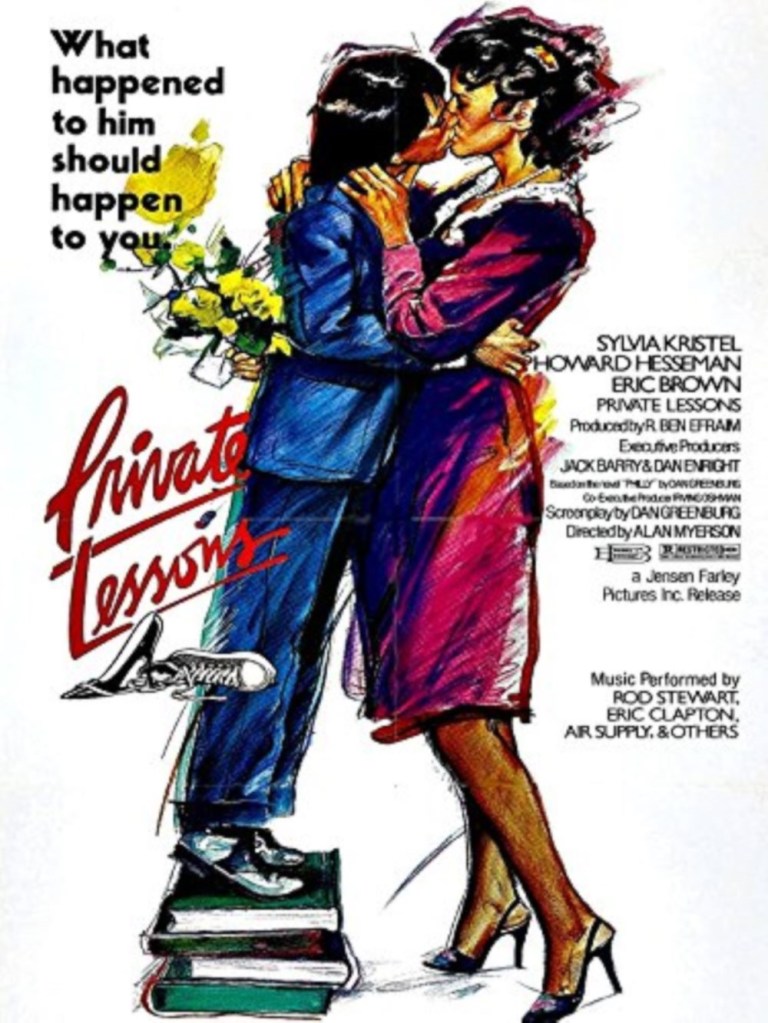
Guilty Pleasure No. 103: Private Lessons (dir. by Alan Myerson)


Private Lessons is that kind of early ’80s sex comedy that feels like a time capsule from when movies could get away with stuff that would never fly today. It’s got this awkward charm mixed with some seriously questionable choices, centering on a horny teenager named Philly who gets schooled in the ways of love by his family’s sultry French housekeeper. The film tries to play it all for laughs and titillation, but it lands somewhere between guilty pleasure and uncomfortable relic.

Philly, played by Eric Brown, is your classic 15-year-old rich kid left home alone for the summer in a sprawling Albuquerque mansion while his dad jets off on business. Dad hires Nicole, this alluring European housekeeper portrayed by Sylvia Kristel—yeah, the Emmanuelle star herself—to keep an eye on things, along with the sleazy chauffeur Lester, brought to life by Howard Hesseman in full sleazeball mode. From the jump, Philly’s got a massive crush on Nicole; he’s peeping through keyholes and fumbling over his words whenever she’s around. It’s all very American Pie before American Pie existed, but with a Euro-sex vibe courtesy of Kristel’s effortless sensuality. She catches him spying one night, strips down without a care, and invites him to touch—Philly bolts like his pants are on fire. You can’t help but chuckle at his panic; Brown’s wide-eyed innocence sells it without overplaying the hand.

The setup builds slowly, which is both a strength and a drag. Philly spills the beans to his buddy Sherman, played with manic energy by Patrick Piccininni, who turns every conversation into a roast session about Philly’s virginity. Their banter is some of the film’s highlights—raw, boyish ribbing that feels authentic to awkward teen friendships. Nicole keeps pushing the envelope: a steamy makeout in a dark movie theater, a goodnight kiss that nearly melts the screen, and finally, a fancy French dinner date where they seal the deal back home. Kristel owns these scenes; her Nicole isn’t just a seductress, she’s got this playful confidence that makes the slow seduction believable. The sex scene itself is tame by today’s standards—soft-focus, lots of sighs—but it’s handled with a wink, pretending to be shocking while delivering the era’s softcore goods.

But here’s where Private Lessons swerves into darker territory and kinda loses its footing. Midway through their romp, Nicole fakes a heart attack and “dies” right on top of Philly. Freaked out, he confesses to Lester, who smells opportunity. Turns out, the chauffeur’s been blackmailing Nicole over her immigration status and hatches a scheme to pin her “murder” on Philly, forcing the kid to cough up a chunk of his trust fund to cover it up. They bury a dummy in the desert, and Lester plays the concerned adult while pocketing the cash. It’s a twist that amps up the stakes, but it also shifts the tone from fluffy comedy to something creepier, leaning hard into moral panic territory. Hesseman chews the scenery as Lester, all smarmy grins and side-eye; he’s the perfect villain you love to hate, but the plot machinations feel forced, like the writers ran out of seduction gags and needed conflict.

Nicole, developing real feelings for Philly amid the con, has a change of heart and spills the truth. Together, they rope in Philly’s tennis coach—Ed Begley Jr. in a quick but fun bit—to impersonate a cop and scare Lester straight. The bad guy panics, gets nabbed trying to flee with the money, and everyone agrees to a truce: no one rats anyone out. Nicole’s “child molestation” (the film’s own loaded term for her role in seducing a minor) and immigration issues stay buried, Lester technically keeps his job, and Nicole splits before Dad returns. It’s a tidy wrap-up that dodges real consequences, which fits the film’s escapist fantasy but leaves a sour taste ethically. The romance fizzles without much payoff; you half-expect a heartfelt goodbye, but it’s more pragmatic than emotional.

Tonally, Private Lessons is all over the map. The first half thrives on its lighthearted horniness—Philly’s fumbling advances, Nicole’s teasing allure, and a very of-its-time soundtrack that pumps up the montages. It’s got that innocent raunchiness of films like Porky’s, where sex is the big mystery and everyone’s in on the joke. Brown holds his own as the lead; at 15, he’s convincingly flustered yet game, making Philly relatable rather than cartoonish. Kristel brings actual star power, turning what could be a one-note vixen into someone with hints of depth—her chemistry with Brown sparks genuine warmth amid the sleaze. Hesseman leans into Lester’s slimeball energy, turning every scene with him into a mix of funny and gross.

That said, the film’s not without flaws, and they’re glaring by modern eyes. The premise is straight-up predatory: a grown woman systematically grooming an underage boy, played for comedy without much self-awareness. It’s the male version of Lolita, but without any critique—instead of examining the situation, it just sort of grins and shrugs. The blackmail plot tries to add intrigue but mostly undermines the fun, turning Nicole from free spirit to reluctant crook. Pacing drags in spots; the relatively short runtime still feels stretched when the seduction stalls so the script can set up the con. And the ending? It papers over everything with a shrug, letting all parties walk free like it’s no big deal. The whole thing feels very much like a product of a moment when taboo could be turned into box-office bait without much pushback.

Visually, it’s a product of its time: glossy ’80s cinematography, plenty of skin but no hardcore edge, and that mansion setting screaming wealth fantasy. Director Alan Myerson keeps it breezy, never letting the comedy get too mean-spirited until Lester’s scheme really kicks in. The score and song choices nail the vibe—upbeat for the flirtations, a bit more tense for the con, always keeping things light even when the story goes to shadier places. It very much feels like something that would play late at night on cable and stick in your memory more as a vibe than as a fully coherent film.

Does it hold up? Kind of, if you’re in a nostalgic mood or digging for ’80s cheese. It’s honest about teen lust without being judgmental, and the performances carry the silly plot. But the power imbalance and the underage angle make it tough to fully endorse—watch with that lens, and it’s more cringe than chuckle. Still, for what it is—a raunchy romp with a surprisingly soft center—Private Lessons delivers just enough to warrant a spin on a bored night. Eric Brown and Sylvia Kristel do a lot of heavy lifting; without their chemistry, this would be forgettable smut instead of a strangely endearing, if deeply problematic, relic. If you’re into retro sex comedies like My Tutor or Zapped!, this one sits comfortably in that same dusty corner of the genre, flaws and all, as a snapshot of looser times that’s best taken with a big grain of salt.

Previous Guilty Pleasures

  1. Half-Baked
  2. Save The Last Dance
  3. Every Rose Has Its Thorns
  4. The Jeremy Kyle Show
  5. Invasion USA
  6. The Golden Child
  7. Final Destination 2
  8. Paparazzi
  9. The Principal
  10. The Substitute
  11. Terror In The Family
  12. Pandorum
  13. Lambada
  14. Fear
  15. Cocktail
  16. Keep Off The Grass
  17. Girls, Girls, Girls
  18. Class
  19. Tart
  20. King Kong vs. Godzilla
  21. Hawk the Slayer
  22. Battle Beyond the Stars
  23. Meridian
  24. Walk of Shame
  25. From Justin To Kelly
  26. Project Greenlight
  27. Sex Decoy: Love Stings
  28. Swimfan
  29. On the Line
  30. Wolfen
  31. Hail Caesar!
  32. It’s So Cold In The D
  33. In the Mix
  34. Healed By Grace
  35. Valley of the Dolls
  36. The Legend of Billie Jean
  37. Death Wish
  38. Shipping Wars
  39. Ghost Whisperer
  40. Parking Wars
  41. The Dead Are After Me
  42. Harper’s Island
  43. The Resurrection of Gavin Stone
  44. Paranormal State
  45. Utopia
  46. Bar Rescue
  47. The Powers of Matthew Star
  48. Spiker
  49. Heavenly Bodies
  50. Maid in Manhattan
  51. Rage and Honor
  52. Saved By The Bell 3. 21 “No Hope With Dope”
  53. Happy Gilmore
  54. Solarbabies
  55. The Dawn of Correction
  56. Once You Understand
  57. The Voyeurs 
  58. Robot Jox
  59. Teen Wolf
  60. The Running Man
  61. Double Dragon
  62. Backtrack
  63. Julie and Jack
  64. Karate Warrior
  65. Invaders From Mars
  66. Cloverfield
  67. Aerobicide 
  68. Blood Harvest
  69. Shocking Dark
  70. Face The Truth
  71. Submerged
  72. The Canyons
  73. Days of Thunder
  74. Van Helsing
  75. The Night Comes for Us
  76. Code of Silence
  77. Captain Ron
  78. Armageddon
  79. Kate’s Secret
  80. Point Break
  81. The Replacements
  82. The Shadow
  83. Meteor
  84. Last Action Hero
  85. Attack of the Killer Tomatoes
  86. The Horror at 37,000 Feet
  87. The ‘Burbs
  88. Lifeforce
  89. Highschool of the Dead
  90. Ice Station Zebra
  91. No One Lives
  92. Brewster’s Millions
  93. Porky’s
  94. Revenge of the Nerds
  95. The Delta Force
  96. The Hidden
  97. Roller Boogie
  98. Raw Deal
  99. Death Merchant Series
  100. Ski Patrol
  101. The Executioner Series
  102. The Destroyer Series

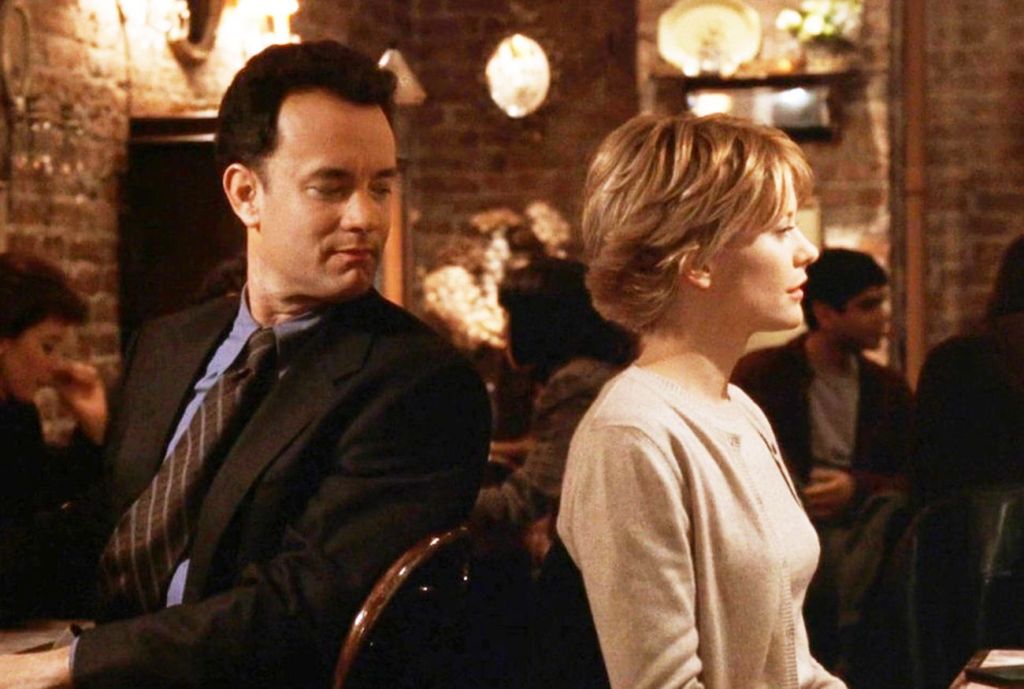
Brad reviews YOU’VE GOT MAIL (1998), starring Tom Hanks and Meg Ryan!


Kathleen Kelly (Meg Ryan) owns a children’s bookstore in New York City named “The Shop Around the Corner.” It’s a small, cozy store that she inherited from her dear mother, and it’s part of the lifeblood of who she is as a person, as well as the community itself. Joe Fox (Tom Hanks), on the other hand, is the heir to a major bookstore chain, Fox Books (think Barnes & Noble), that threatens to wipe places like Kathleen’s off the map. As fate would have it, the two meet anonymously online where they trade their hopes, dreams and insecurities through daily e-mails, with both excitedly opening their computers each night hoping to hear those three little words, “You’ve Got Mail.” Things begin to get interesting when Joe plans to open up a Fox Books Superstore just around the corner from Kathleen’s place with neither knowing that they’re real-life business adversaries. When will they find out that they’re enemies in the business world? Can true love find a way in the most difficult of circumstances? And isn’t that why we watch these kinds of movies in the first place?!

I’ll start off by saying that Meg Ryan is operating at the top of her “America’s sweetheart” phase here… she’s cute, sincere, nostalgic, slightly neurotic, and ultimately quite believable as a person who romanticizes her world and truly believes there will always be a place for her small store and the gigantic superstores! I grew up and still live in the state where Wal-Mart started so I definitely know how hard it is for the “mom and pop” stores to compete. Tom Hanks walks a bit more of a tightrope as Joe Fox. He’s likable enough that you want him to be able to win her heart, but he’s also just arrogant enough that you understand why Kathleen resents everything he stands for. Ultimately, Hanks is able to pull it off with enough charm that you still root for him even when he can be a little bit of a jerk at times.

What’s really strange about revisiting YOU’VE GOT MAIL at this point in my life is the fact that it takes me back to the late 90’s when the internet was something new to me and it seemed like something magical. In this movie, the internet connects two souls, and when we hear “you’ve got mail” as they fire up their computers, the movie expects you to feel genuine excitement, without a hint of irony. Compare that with where the world is today with almost any kind of online activity, especially social media. While there are still a lot of positives to be found, it’s sad that going online now is often exhausting, hateful, and stressful! In 1998, though, it was still possible to believe that logging on could lead to something incredible!

Nora Ephron, who directed the film and co-wrote the screenplay, does a good job of presenting a sad reality of the real world underneath this romantic comedy’s love story. “Progress” can be cruel, and it seems like it just can’t be stopped no matter what! I spend a lot of time talking about the wonderful hours I spent in the video stores of my youth. Those stores are all gone now and have been for decades. The stores that replaced them are mostly gone now, and almost all of my movie viewing is now done through online streaming. In YOU’VE GOT MAIL, Fox Books certainly isn’t better than Kathleen’s Shop Around the Corner. As a matter of fact, it’s not nearly as educational or personal. What it is, however, is bigger, cheaper, and more efficient, and that’s what seems to win in the end, just like it did with the local video stores and Wal-Mart. This is where Ephron does her strongest balancing act. Joe Fox and Kathleen Kelly still fall in love despite the fact that the realities of the world around them take their realistic and natural course. A true human connection is made in the most difficult and painful of circumstances, and that ultimately means more than anything else in the film.

Revisiting YOU’VE GOT MAIL now doesn’t feel that much different than revisiting the film that inspired it, 1940’s THE SHOP AROUND THE CORNER, starring Jimmy Stewart and Margaret Sullavan. Both films are time capsules of a world that no longer really exists. However, both films ultimately realize the time-tested truth that it’s our relationships with other people that provides the most meaning to our lives. That’s a truth that won’t change whether we’re writing letters, sending e-mails, exchanging texts or whatever “progress” the human race achieves in communication in the future! I find some comfort in that.

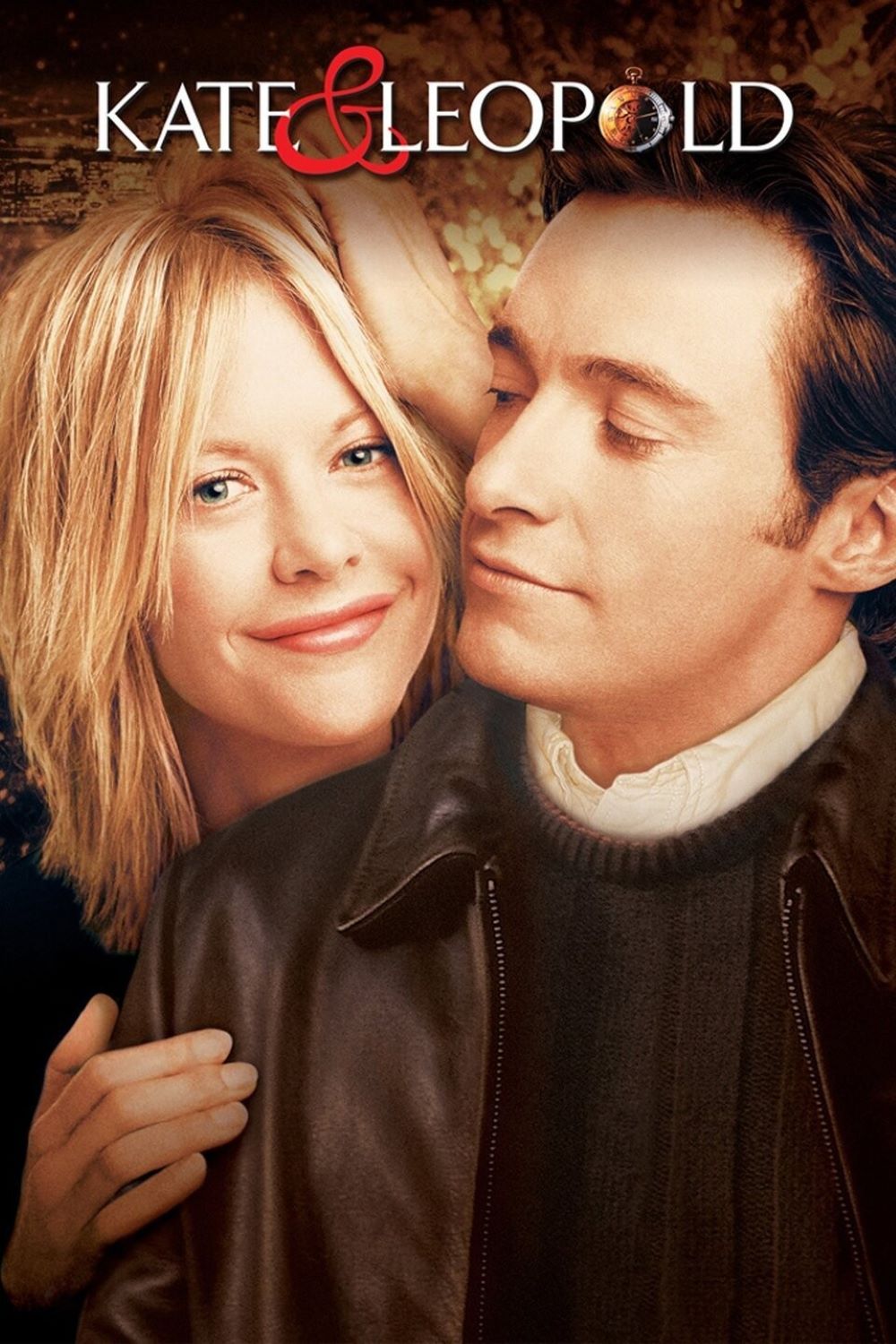
Review: Kate & Leopold (dir. by James Mangold)


“What has happened to the world? You have every convenience and comfort, yet no time for integrity.” — Leopold

Kate & Leopold is one of those romantic comedies that sneaks up on you with its old-school charm, even if it doesn’t always stick the landing. Released in 2001, it catches Hugh Jackman right after his breakout as Wolverine in the first X-Men film, during that early stretch of hits leading toward epics like The Fountain, giving him a chance to shine in pure rom-com mode before the superhero world fully claimed him. It’s a time-travel tale starring Jackman as a 19th-century duke and Meg Ryan as a modern-day exec, and while it’s predictable in spots, it delivers some genuinely sweet moments amid the silliness, boosted by his fresh, pre-typecast appeal.

The setup is pure fantasy fodder. Leopold, the third Duke of Albany, lives in 1876 New York, tinkering with an elevator prototype that accidentally rips a hole in time. His descendant Stuart, a bumbling scientist played by Liev Schreiber, drags him to the present day. Leopold lands in modern Manhattan, bewildered by cars, skyscrapers, and people who don’t stand when a lady enters the room. Enter Kate McKay, Meg Ryan in full quirky career-woman mode, who’s too busy chasing a promotion to notice the fish-out-of-water nobleman crashing at her place. Her roommate Charlie, a slacker pianist, thinks Leopold’s a method actor at first, leading to some fun roommate hijinks.

What works best is Hugh Jackman’s effortless charisma as Leopold. He nails the role with wide-eyed wonder and impeccable manners, riding a horse through Central Park to chase a mugger, whipping up gourmet meals from sparse ingredients, and delivering lines about life’s simple pleasures—like how food must taste good to nourish the soul—with total sincerity. It’s disarming. Leopold isn’t just a pretty face; he’s a walking critique of 21st-century rudeness. When he calls out advertisers for peddling tasteless margarine or marvels at how folks wolf down burgers without savoring them, you can’t help but chuckle. His old-world chivalry clashes hilariously with New York’s hustle, like when he stands every time Kate leaves the table, leaving her exasperated but secretly charmed.

Meg Ryan holds up her end too, bringing that familiar rom-com energy she perfected in the ’90s. Kate’s a high-powered market researcher obsessed with a big pitch for some farmer’s butter spread—ironic, given Leopold’s later meltdown on set. She’s jaded from a recent breakup with Stuart, prioritizing work over everything, but Leopold slowly cracks her shell. Their first real connection comes over a picnic where he waltzes her around a rooftop to a hired violinist, and yeah, it’s corny, but Jackman sells it. Ryan’s got great chemistry with him; you buy their spark even when the script strains. Liev Schreiber steals scenes as Stuart, evolving from jealous ex to unlikely matchmaker, while Breckin Meyer adds comic relief as Charlie, who learns to woo his crush by channeling Leopold’s authenticity.

The fish-out-of-water gags land most of the laughs. Leopold navigating subways, elevators (his invention, after all), and TV commercials feels fresh enough, especially since the movie leans into his culture shock without overdoing slapstick. There’s a memorable bit where he tours modern New York, gaping at the Brooklyn Bridge and declaring it a marvel, only to learn it’s named after his investment. Director James Mangold keeps things light, blending screwball elements with a touch of Somewhere in Time nostalgia. The score swells romantically, and the production design pops—Leopold’s Victorian tux against neon signs is a nice visual contrast. Early 2000s rom-coms loved these fish-out-of-water tales—like The Holiday or Two Weeks Notice—but this one stands out for its sincere take on manners as a cure for modern cynicism.

But let’s be honest: Kate & Leopold has flaws that keep it from greatness. The time-travel rules are fuzzy at best. Leopold has to return to 1876 or the timeline implodes—elevators stop working, chaos ensues—but it’s hand-waved with vague portal talk. Stuart’s asylum stint feels mean-spirited, and the third act rushes into melodrama. Some supporting bits drag, like the endless ad pitch subplot, and the pacing dips mid-film when everyone’s just hanging out. The plot’s contrived overall, with that bridge-jump climax feeling abrupt, but the earnest vibe carries through.

Still, the romance earns its payoff. Kate and Leopold aren’t insta-lovers; they bicker over integrity versus ambition, with Leopold pushing her to taste life fully and Kate grounding his idealism. Their Central Park chase and final ball scene in 1876 deliver genuine swoon factor. It’s not subversive—Kate ditches her career for corsets, after all—but it celebrates courtesy and heart in a cynical world. Compared to edgier rom-coms like When Harry Met Sally, this one’s softer, more fairy tale than reality check. Ryan’s quirky energy bounces off Jackman’s poise, creating sparks that feel earned, even if the career sacrifice lands a bit dated now.

For a 2001 release, it holds up surprisingly well. No cell phones dominate every scene, letting face-to-face charm shine. Jackman’s glow makes Leopold believable as a duke who’d invent the elevator, and Ryan reminds us why she was America’s sweetheart. It’s PG-13 for mild language and innuendo—nothing racy, safe for date night or family viewing. Critics were mixed; some praised the manners humor but called the plot preposterous, which nails it. Watch it today, and it’s a charming time capsule, as out-of-step as Leopold in a subway.

Review: Send Help (dir. by Sam Raimi)


“We’re not in the office anymore, Bradley.” — Linda Liddle

Sam Raimi’s Send Help is a nasty, funny, and surprisingly romantic little pressure cooker that strands two archetypes—the mousy doormat and the smug rich kid—on a desert island and then slowly turns the screws until the film’s “eat the rich” satire curdles into genuine horror. It is neither the triumphant, all‑timer comeback some fans might crave nor a lazy retread, but a confident mid‑budget horror‑comedy from a director who still knows exactly how to make an audience wince and cackle in the same breath.

Raimi and writers Damian Shannon and Mark Swift build Send Help on a simple but potent premise: Linda Liddle (Rachel McAdams), a meek corporate strategist and survival‑show obsessive, has been promised a promotion by her former boss, only for the new CEO—his son Bradley Preston (Dylan O’Brien)—to hand the job to his frat‑bro buddy Donovan and try to shuffle Linda into a dead‑end role. He finds her embarrassing and even comments on her smell; she swallows the humiliation until a company plane trip to a business summit ends in a violent crash, leaving Linda and Bradley as the only known survivors on a remote island in the Gulf of Thailand. Out here, Linda’s years of reality‑TV survival fandom and wilderness prepper skills suddenly matter, while Bradley’s only proven talents—golf, networking, and cruelty—are exposed as useless.

The first act, set in the office and on the doomed flight, plays as Raimi’s version of workplace horror, pitched somewhere between Drag Me to Hell’s moral fable and a nastier episode of The Office. McAdams leans into Linda’s awkwardness without turning her into a caricature, sketching a woman who has internalized decades of minor humiliations and found solace in parasocial survival fantasies. O’Brien, meanwhile, riffs on the archetype of the tech‑adjacent finance bro, weaponizing charm into something brittle and mean so that every “joke” lands like a micro‑aggression. Raimi shoots these early scenes with brisk, unfussy energy, reserving his more flamboyant camera moves for moments when Linda’s resentment starts to spike; the tonal hint is clear that the island will be where his signature style truly erupts.

Once the plane goes down, Send Help shifts into a survival thriller that gradually becomes a duel, and this is where the film finds its most compelling rhythm. Linda wakes up, builds a shelter, secures water, and—crucially—chooses to help the injured Bradley despite every reason not to, only to be met with the same entitled barking as in the office. She abandons him for days to bake in the sun and dehydrate, only to return at the brink and ration out water on her terms, turning what could have been a straightforward revenge fantasy into a looping series of power reversals. Raimi milks the island setting for physical comedy—failed fire‑starting, slapstick injuries, disgusting food gags—before undercutting the laughs with sudden spikes of cruelty and violence that remind you someone could easily die out here.

Raimi’s direction is where Send Help most clearly announces itself as his homecoming to horror. Even without demons or supernatural curses, he brings back the aggressive visual language: lunging crash zooms, canted angles that seem to tilt with Linda’s shifting moral compass, and kinetic tracking shots that whip around the camp as arguments turn into physical scuffles. The gore is heightened but not constant—geysers of blood appear at key turning points, functioning as exclamation marks on the escalating class war rather than wall‑to‑wall splatter. You can still feel the Three Stooges in the staging; even the nastiest beats often end on a punchline built around bodily fluids, improvised weapons, or the absurd indignity of almost dying because you slipped on a fish.

Tonally, the film walks a provocative tightrope between screwball rom‑com and survival horror, and your mileage will depend on how much whiplash you are willing to embrace. There are scenes that play almost like a twisted date movie—Linda cooking up makeshift dinners, trying to build a semblance of “home,” Bradley begrudgingly softening—only for the dynamic to swerve back into emotional manipulation or outright brutality. The film clearly flirts with the tradition of 1930s battle‑of‑the‑sexes comedies, but here the gender and class politics are sharper, and the potential for lethal violence never disappears. For some viewers, this constant oscillation will feel thrillingly unstable; for others, it may make the film’s ultimate stance on these characters’ relationship and culpability feel muddier than intended.

Narratively, Send Help borrows its class‑flipped survival template from the kind of satirical, wealth‑skewering stories where workers suddenly control the only skills that matter. The formerly “lowly” employee—in this case Linda rather than a bathroom janitor or ship’s cleaner—suddenly dictates the terms of existence, upending the old hierarchy once the corporate infrastructure is gone. Where broader ensemble satires linger on systemic critique, Raimi narrows the focus to a two‑hander and uses genre excess to explore how vengeance, desire, and survival blur together when the rules are erased. This narrower scope sometimes makes the class commentary feel schematic—you can spot each new reversal coming like a story beat in a screenwriting manual—but it also gives McAdams and O’Brien ample room to shade their roles.

Performance‑wise, McAdams is the film’s anchor and secret weapon. She charts Linda’s evolution from shy, apologetic office drone to ruthless island operator without losing sight of the character’s essential decency, so that her darker choices land as both cathartic and unsettling. O’Brien has the flashier arc in some ways, modulating Bradley from cartoonish jerk to scared, dependent man‑child and, eventually, something more morally ambiguous as he learns how to play the island power game himself. Their chemistry thrives on friction; the film is at its best when it lets them volley insults, bargains, and threats in long, increasingly twisted negotiations over food, shelter, and the possibility of rescue.

Where Send Help falters is largely in its final stretch, where Raimi has to decide just how far he’s willing to push the “eat the rich” fantasy and what that means for Linda’s soul. Without spoiling specifics, the climax leans into brutal spectacle and a last‑minute moral turn that some may read as a cop‑out and others as a necessary corrective to pure revenge porn. The thematic through‑line—that capitalism warps everyone it touches and that power corrupts even the formerly powerless—is coherent enough, but a few late plot contrivances and cameo‑style appearances from supporting players feel more functional than organic.

Ultimately, Send Help plays like a spiritual cousin to Drag Me to Hell: a small, mean moral tale about how a single workplace injustice can metastasize into something monstrous once the trappings of civilization fall away. It may not reinvent survival horror or class satire, and viewers hoping for the wild supernatural invention of Evil Dead II or the operatic sweep of Spider‑Man 2 might find it comparatively contained. But as a brisk, roughly 100‑minute showcase for Raimi’s enduring flair, anchored by a terrific McAdams performance and a gleefully ugly sense of humor, it is a welcome return to the genre that made his name—and a reminder that sometimes the scariest demons are just your coworkers, stripped of HR and given a machete.

Film Review: The Eagle Has Landed (dir by John Sturges)


The 1976 film, The Eagle Has Landed, takes place during World War II.

The year is 1943 and, with the war turning against Germany, Heinrich Himmler (Donald Pleasence, in a chilling turn) orders Colonel Max Radl (Robert Duvall) to come up with a plan to kidnap Winston Churchill.  When Radl learns that Churchill is scheduled to visit a small, coastal British village, he recruits a cynical member of the IRA, Liam Devlin (Donald Sutherland), to travel to the village and make contact with a Nazi sleeper agent, Joanna Grey (Jean Marsh).  While Devlin sets up the operation in Britain and falls in love with Molly Prior (Jenny Agutter), Radl recruits disillusioned Colonel Kurt Steiner (Michael Caine) to lead the mission to kidnap Churchill.

At first the village is welcoming to Steiner and his men, who are disguised as being Polish paratroopers.  However, it doesn’t take long for the plan to fall apart.  Soon, Steiner and his men are holding the villagers hostage in a church while battling a group of American soldiers led by the incompetent Colonel Clarence Pitts (Larry Hagman) and Captain Harry Clark (Treat Williams).  Meanwhile, in Germany, Radl learns that Hitler did not actually authorize the mission to kidnap Churchill and that he has been set up as the scapegoat in case the mission fails.

The Eagle Has Landed can seem like a bit of an odd film.  For a film that was released in the same year as Network, All The President’s Men, and Taxi Driver, The Eagle Has Landed feels rather old-fashioned and almost quaint in its storytelling.  This was the final film to be directed by John Sturges, a director who started his career in the 1940s and whose best-known films included The Magnificent Seven and The Great Escape.  Sturges’s direction is efficient but not at all flashy.  (It’s a film that feel like its very much a product of the mid-60s as opposed to the mid-70s.)  The story plays out at a deliberate pace, one that leaves no doubt that the film was based on a novel.  In fact, it sometimes feels as if the film itself should have chapter headings.  The film holds your interest but it’s hard not to feel that a film that should have been an epic action film has instead been turned into something far less ambitious.

Sturges works with an ensemble cast, with no one member of the cast really dominating over the other.  (I guess if the film has a main character, it would be Donald Sutherland’s Liam Devlin but, for all the time that’s devoted to him, he actually doesn’t do that much once the action starts.)  The cast is full of good actors, though a few of them are miscast.  Neither Michael Caine nor Robert Duvall make much of attempt to sound German.  As a member of the IRA, Donald Sutherland sounds as Canadian as ever.  Fortunately, Caine, Duvall, and Sutherland are all strong-enough actors that they can make an impression even with somewhat distracting accents.  Treat Williams is a bit bland as the heroic American but Larry Hagman generates a few chuckles as Williams’s amazingly dumb commanding officer.  The important thing is that ensemble is strong enough to hold the viewer’s attention.

The Eagle Has Landed is an old-fashioned but still entertaining film.  The actors are fun to watch, the action scenes are fairly exciting, and it ends with a clever twist, one that was apparently historically accurate.  It’s a well-done historical melodrama, even if it’s never quite as epic as it aspires to be.

I Watched Perry Mason: The Case of the Killer Kiss (1993, Dir. by Christian I. Nyby II)


On the set of a popular soap opera, actor Mark Stanton (Sean Kanan) dies after he films a kiss with co-star Kris Buckner (Genie Francis).  Kris is accused of intentionally poisoning Mark to get back at him for trying to force her off the show but Kris says she’s innocent.  Fortunately, Kris is the goddaughter of Perry Mason (Raymond Burr).

This movie was the last time that Raymond Burr played Perry Mason and it actually aired a few weeks after his death.  There are scenes that are hard to watch because it is clear that Burr was not doing well during filming.  He rarely stands and when he does, he still leans against the table for support.  He’s still great when he’s asking questions and making objections but physically, it’s obvious that he was struggling.  He still lights whenever he’s talking to Della, though.  The best scenes in the movie are just Raymond Burr and Barbara Hale being Perry and Della.  Their affection for each other shines through in every scene.  The mystery is routine but the guest cast is full of daytime drama royalty like Stuart Damon, Linda Dano, and Genie Francis.

As I said when I started reviewing these movies at the start of the month, my Aunt Kate loved watching these movies.  I know she watched them when they first aired and later, when they started re-airing them on Hallmark or MeTV, she loved rewatching them even though she already knew who the murderer was going to be.  I would watch with her sometimes.  We agreed that Perry and Della were in love and that Paul Drake, Jr. was Della’s son, even if he didn’t know it.

Rewatching all of the movies this month, what struck me is that most of them are still a lot of fun.  Sure, there’s a few clunkers.  But the majority of the 27 Perry Mason films are still entertaining to watch.  Raymond Burr as Perry Mason and Barbara Hale as Della Street?  Nobody did it better.


Review: Sneakers (dir. by Phil Alden Robinson)


“The world isn’t run by weapons anymore, or energy, or money. It’s run by little ones and zeroes, little bits of data. It’s all just electrons.” — Cosmo

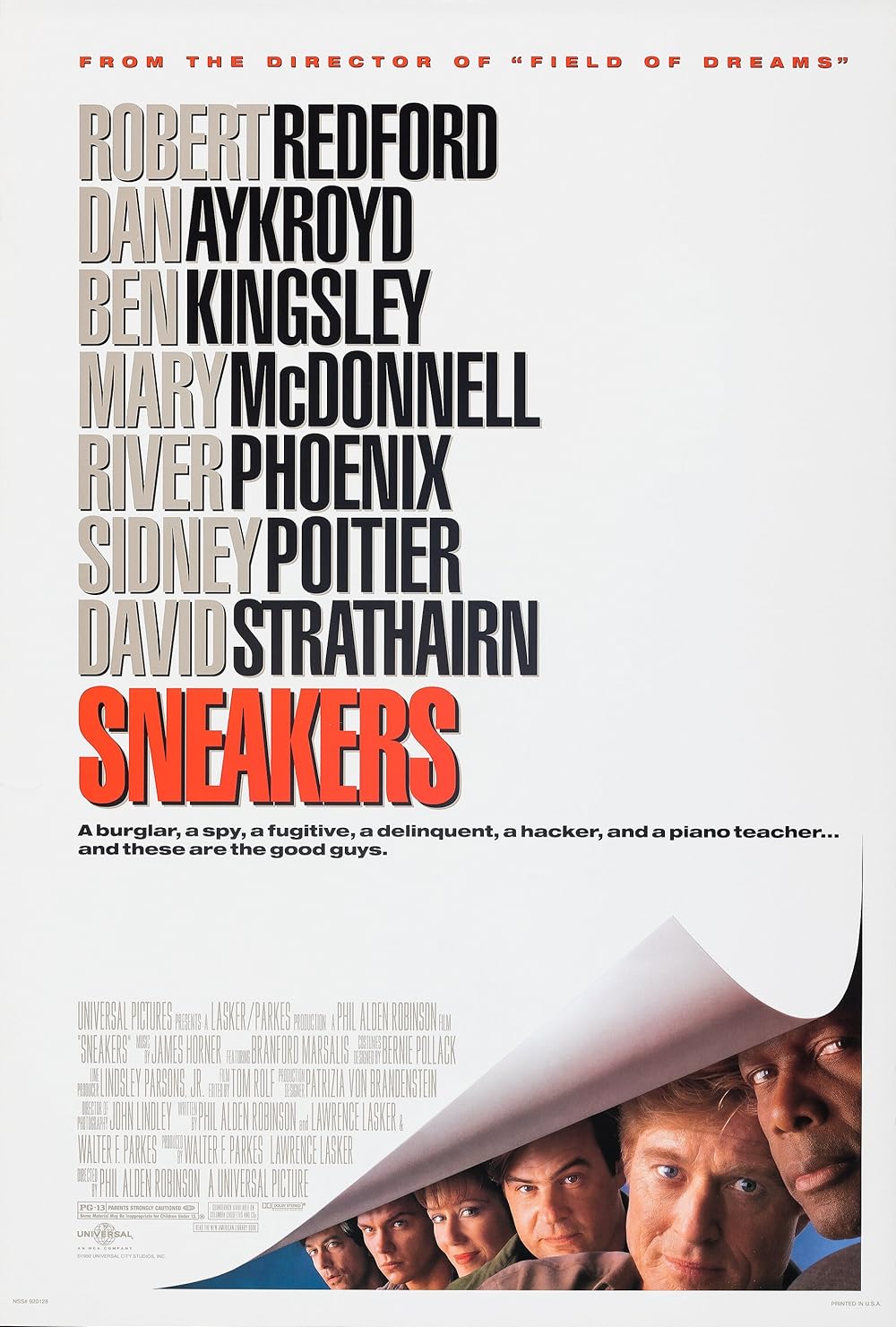
Sneakers is one of those early-’90s studio thrillers that feels oddly cozy for a movie about global surveillance and information control. It plays like a hangout movie that just happens to revolve around a world-breaking black box, and whether that balance works for you will pretty much decide how much you click with it.

Set in San Francisco, Sneakers follows Martin Bishop (Robert Redford), a one-time radical hacker now leading a boutique team that gets paid to break into banks and corporations to test their security. When a pair of supposed NSA agents lean on him about a skeleton in his past, they strong-arm him into stealing a mysterious “black box” from a mathematician, which turns out to be a codebreaker capable of cracking pretty much any system on Earth. From there, the crew gets pulled into a bigger conspiracy involving shady figures and high stakes, with Martin confronting echoes from his activist days.

The first thing that jumps out about Sneakers is the cast, which is frankly stacked even by modern standards. Redford brings an easy, weathered charm to Bishop; there’s a low-key joke baked into the movie that this legendary leading man is now playing a guy who looks like he spends more time worrying about his back pain than saving the world, and it works. He’s surrounded by a motley crew: Sidney Poitier’s ex-CIA operative Crease, Dan Aykroyd’s conspiracy-addled tech nut Mother, David Strathairn’s blind audio savant Whistler, and River Phoenix’s eager young hacker Carl. Mary McDonnell rounds things out as Liz, Martin’s ex, who gets roped back into his orbit and ends up doing some of the film’s most memorable social-engineering work.

What makes this lineup click—and really shine—is how effortlessly the ensemble works together, especially with Robert Redford and Sidney Poitier anchoring it as the team’s leaders. Redford’s Bishop is the steady, pragmatic brain, always one step ahead but grounded by his regrets, while Poitier’s Crease brings that sharp-edged authority from his CIA days, barking orders with a mix of gruffness and loyalty that keeps everyone in line. Their dynamic is electric: you get these moments where Bishop’s quiet scheming bounces off Crease’s no-nonsense intensity, like when they’re coordinating a break-in and trading barbs mid-scheme, and it sells the years of trust they’ve built. It elevates the whole group, giving the younger or quirkier members—Mother’s wild theories, Whistler’s uncanny ears, Carl’s fresh energy—a solid foundation to riff off, turning what could be chaos into a tight, believable unit. Phil Alden Robinson directs the film almost like an ensemble comedy interrupted by bursts of espionage, so the banter and the little grace notes between jobs end up being as memorable as the heists themselves. There’s a looseness to the way the team bickers, teases, and riffs on each other that sells the idea they’ve been doing this for years, long before the plot kicked in. You feel that especially in scenes where they’re all huddled around some piece of tech or puzzling out a clue; the script allows them to overlap, crack side jokes, and be fallible instead of treating them like slick super-spies who never misstep.

Tonally, the movie walks an interesting line. On one hand, this is very much a tech thriller about the power of information, with the ominous “Setec Astronomy” anagram (“too many secrets”) tying it all together. On the other, this is a film where an extended sequence revolves around tricking a socially awkward engineer on a date so they can steal his voice patterns and credentials, and the whole thing plays like a romantic caper more than anything. Robinson leans hard into suspense in key stretches—most notably toward the end, where tension builds through clever set pieces involving motion sensors, improvised skills, and closing threats—but even then the movie never loses its sense of mischief.

That playfulness can be both a strength and a limitation. The upside is obvious: Sneakers is fun. It’s easy to watch, easy to rewatch, and it rarely drowns you in jargon for the sake of sounding smart. Instead, it abstracts the tech into clear stakes—this box breaks codes, this system controls money and power—so you always understand the “why” behind every scheme even if you don’t follow every “how.” The downside is that, for a movie nominally about the terrifying implications of a universal decryption key, it doesn’t dig as deeply into the horror of that idea as it could. It gestures at themes of privacy, state overreach, and the weaponization of data, but it’s more interested in using those ideas as a playground than as something to rigorously interrogate.

Viewed from 2026, the tech is obviously dated—landlines, old terminals, magnetic cards—but that almost works in the film’s favor now. There’s a retro-futurist charm to seeing characters talk about “ones and zeroes” and the power of information as if they’re whispering forbidden knowledge, when today that conversation is basically the nightly news. At the time, the film was praised for being ahead of the curve on the idea that whoever controls data controls everything, and you can still feel that prescience. The irony is that what was once cutting-edge has softened into a kind of warm nostalgia, which might be why the movie has quietly settled into cult-favorite status rather than staying in the mainstream conversation.

On a craft level, the movie is sturdy across the board. John Lindley’s cinematography keeps things bright and clean rather than shadow-saturated, which reinforces that lighter tone; San Francisco looks lived-in and slightly mundane, not like a glossy cyber-noir playground. James Horner’s score is a big asset: a jazz-inflected, airy sound that gives scenes a sense of cool rather than danger, which again nudges things toward caper more than hard thriller. It’s the kind of soundtrack that sneaks into your head and quietly sets the mood without demanding too much attention, and a lot of fans single it out as one of his more underappreciated efforts.

If there’s a major weak spot, it’s probably in how the film handles its big ideas and antagonists. The central conflict draws on ideological clashes from the characters’ pasts, but it mostly serves as a charismatic foil rather than a fully fleshed-out debate. The story doesn’t push too hard on challenging cautious pragmatism versus radical change, or probe deeply into who benefits from the status quo. For a tale built on “too many secrets,” the moral landing feels predictable rather than revelatory.

The film also shows its age in how it uses certain characters, especially Liz and Carl. McDonnell gets moments to shine—her date with Werner Brandes is a highlight—but Liz is often pushed to the side once the plot machinery gets going, which is a shame given the sparks between her and Redford. River Phoenix’s Carl is similarly underused; he’s the young blood in a team of older pros, and you can see hints of a more emotionally grounded arc there, but the film keeps him mostly in comic-relief mode. It doesn’t derail the movie, but it does contribute to the sense that Sneakers is more interested in being a breezy ensemble hang than in fully developing everyone it introduces.

Still, it’s hard to deny the movie’s overall charm. The central heist beats are cleanly staged, the reversals are satisfying without being overcomplicated, and the script gives almost every member of the team at least one clutch contribution so it feels like a true group effort. The later stretches cleverly tie together the tech setup and character dynamics, ending on a light coda that underscores the film’s affection for its quirky crew over global intrigue.

As for how it holds up, Sneakers isn’t an untouchable classic, but it’s a very easy film to recommend if you have any affection for ’90s thrillers, ensemble casts, or tech-adjacent stories that don’t drown you in circuitry diagrams. Some of its politics feel glib, some of its gadgets are charmingly antique, and its big questions about Information Age ethics are more backdrop than deep dive. But the film’s mix of laid-back humor, light suspense, and grounded, slightly rumpled characters gives it a distinct flavor that a lot of modern, hyper-slick hacker movies lack.

If you go in wanting a serious, hard-edged exploration of cyber-warfare and state power, Sneakers will probably feel like it’s only skimming the surface. If you’re in the mood for a smart, lightly twisty caper that lets you spend two hours with a killer cast tossing around clever dialogue amid escalating capers, it’s still a very satisfying watch.

Brad reviews THE GHOST AND MR. CHICKEN (1966), starring Don Knotts.


I love Don Knotts. I’m one of those people who have watched every episode of THE ANDY GRIFFITH SHOW (1960-1968) multiple times. And while it’s true that there are good episodes in the last three seasons, the series was at its best when Sheriff Andy Taylor and his sidekick Barney Fife were serving the townsfolk of Mayberry, North Carolina during the first five seasons. In Barney Fife, Don Knotts created one of the best characters in television history, earning five Emmy Awards in the process. When Don Knotts left the series at the height of its popularity, the first movie he made was THE GHOST AND MR. CHICKEN!  

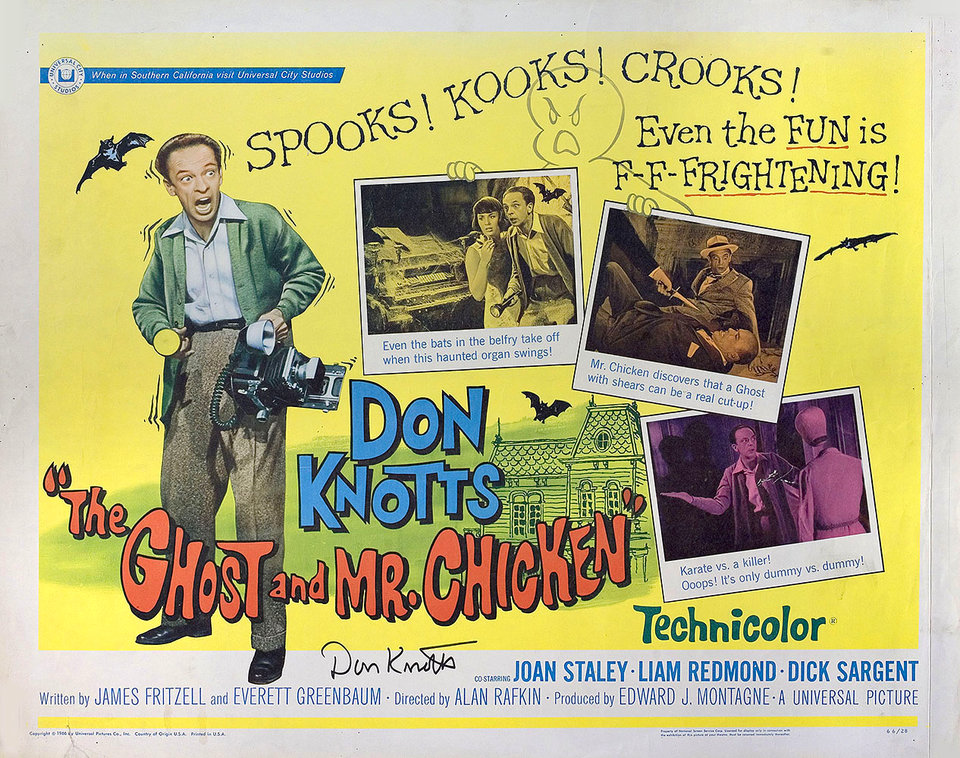
In THE GHOST AND MR. CHICKEN, Knotts plays Luther Heggs, a meek typesetter at a small-town newspaper in Rachel, Kansas, who dreams of being a serious reporter but is treated like a joke by nearly everyone around him. When the town prepares for the 20-year anniversary of an unsolved murder at the supposedly haunted Simmons Mansion, Luther unexpectedly gets a chance to prove himself. He volunteers to spend the night alone in the mansion to see if it really is haunted. As you might expect, Luther is scared out of his mind as he hears banging on the walls, discovers secret passageways, and observes blood-stained organs playing themselves. The night culminates with Luther seeing a portrait of poor Mrs. Simmons with gardening shears piercing her throat! By surviving the night, and then telling the truth about what he experienced, Luther just may uncover a real crime being committed behind all of this “supernatural” activity!

Since Don Knotts left THE ANDY GRIFFITH SHOW to pursue a movie career, I’m glad to report that his decision to star in THE GHOST AND MR. CHICKEN was a really good choice. His performance is a masterpiece of physical comedy. Sure, Knotts trembles, shakes and delivers his lines in his awkward, nervous way for a lot of laughs, but he also provides a vulnerability that really makes you root for him. Knotts knew how to play lovable losers in a way that shows a quiet decency. He may actually be scared, and he may seem like a real pushover, but he also finds the courage to do the right thing even when it’s not easy. This was true for Barney Fife, and it’s also true for Luther Heggs in THE GHOST AND MR. CHICKEN.

Aside from Don Knotts, THE GHOST AND MR. CHICKEN has a solid supporting cast! Joan Staley is very beautiful as Luther’s love interest, Alma. Staley was a Playboy Playmate in 1958, so I can definitely see why Luther is in love. I like the fact that her Alma is more than just a pretty face. Rather, she’s one of the few people who sees Luther as more than a joke, which makes her even more appealing. Meanwhile, Luther’s newsroom boss (Dick Sargent) and office rival (Skip Homeier) never miss an opportunity to be condescending. The director Alan Rafkin directed 27 episodes of THE ANDY GRIFFITH SHOW, so he definitely knows how to get the best comedy out of Knotts and the rest of his cast. He also keeps the tone light, with the haunted house set pieces playing out like gentle, kid-friendly chills rather than anything truly scary. The blood-stained organ / garden shears sequence in the mansion is especially effective, with Don Knotts perfectly walking the line between raging fear and slapstick comedy. Signaling that there was a big audience for Don Knotts in the movies, THE GHOST AND MR. CHICKEN proved to be a box office hit, taking the number one spot during its first week of release, and grossing about eight times its budget!  

Ultimately, THE GHOST AND MR. CHICKEN endures because it understands the special qualities of its star. Don Knotts is funny, and he’s also human. He may be scared out of his mind, but he also has decency and an ability to find courage when he must. In that way, it’s a comfort movie, a should-be Halloween staple, and finally, a reminder that sometimes the bravest person in the room is the one who can’t quit shaking.