My sister asked me to watch and review this one. I’ll have to remember to thank her for that.
A group of cheerleaders go to a cheerleading camp for the summer. In between all of the usual camp shenanigans, someone is killing the cheerleaders. Alison (Betsy Russell) seems like the likeliest suspect because she keeps having weird dreams and is really possessive of her unfaithful boyfriend, Brent (Leif Garrett). Is Alison the murderer or is she being set up? Cheerleading is a cut-throat business so anything is possible.
As a former cheerleader, there were a few scenes that I could relate to. Alison has the same nightmare that I used to have all through high school, where you show up for the game late, you have to put on your uniform in such a rush that you don’t even have time to put on a bra, and then you run out on the field and no one’s there. I had that dream a hundred times. And the movie was right about everyone making fun of the mascot. I felt bad for Cory (Lucinda Dickey).
Overall, the movie left me with some questions. The main one was whether or not these were supposed to be high school or college cheerleaders. Some of them looked really old to still be in high school. Brent had a receding hairline. I also wondered why there was a pervy fat guy on Alison’s cheerleading squad. There’s nothing wrong with male cheerleaders but I would not be comfortable with a male cheerleader who kept trying to see all of the other cheerleaders naked. Finally, I wondered how everyone at the camp could be so stupid. Why would anyone stay after the first dead body is found? I liked Alison but even I groaned when she picked up a bloody meat cleaver. Girl, that’s evidence! Don’t get your fingerprints on that! I also figured out who the murderer was after the first fifteen minutes. It was pretty obvious.
I enjoyed cheering but I’m glad I never went to that cheerleader camp. Most of the routines were awful and everyone ended up dead. It’s not worth it.
The sad truth of the matter is that the Friday the 13th films haven’t done much for the New Jersey summer camp industry.
Seriously, Crystal Lake is such a pretty location. The lake looks beautiful with the sun rising over it and the water literally beckons you to toss off all your clothes and go for a swim. The woods feature green trees and are full of animals and mysterious shacks. The nearby town is home to people like Enos the Truck Driver, Ralph the Prophet, and a countless number of waitresses who will give you directions and gossip if you ask politely. And then you’ve got Camp Crystal Lake, which has cabins and a generator and an archery range and a lot of outdoor showers. Seriously, Camp Crystal Lake encompasses the natural beauty that New Jersey was once known for.
Unfortunately, none of that matters. A few stupid camp counselors managed to get themselves killed by Betsy Palmer and now, no one wants to go to New Jersey anymore. Before Friday the 13th, New Jersey was a state for the entire family. After Friday the 13th, it became a state for a different sort of family. My point is that the Friday the 13th films are directly responsible for the Mafia taking over New Jersey. I don’t care how much they blame Lucky Luciano. Jason Voorhees is responsible for organized crime.
Anyway, that’s my long-winded explanation for why no one wants to vacation at Camp Crystal Lake anymore. It’s now known as Camp Blood and no one wants to hang out at a place where they might get killed or, even worse, get lost in the Pine Barrens. Instead, people decide to vacation at much safer locations …. like Camp Murder!
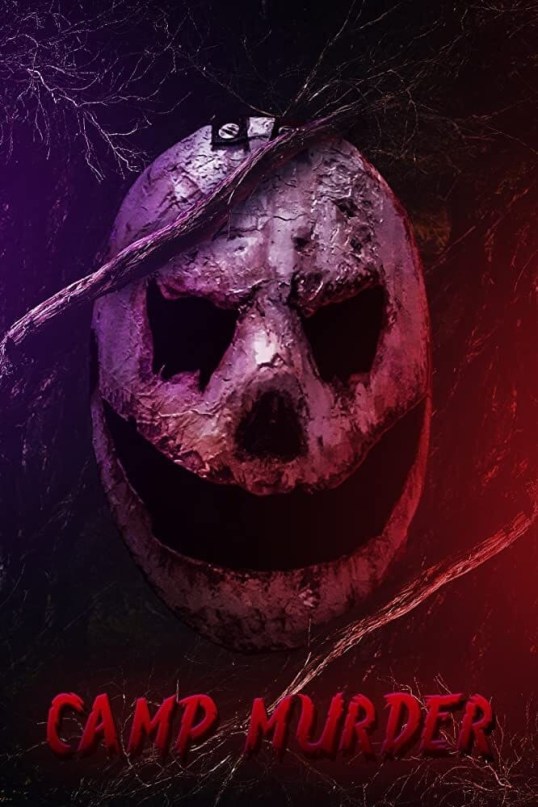
2020’s Camp Murder takes place at the camp of the same nickname. Throughout the film, everyone talks about what a dump Camp Murder is but, from what we see of it, it looks perfectly pleasant. It might be a little isolated and a little neglected but it hardly seems like the Hellhole that everyone keeps describing. A group of people are vacationing at Camp Murder, secure in the knowledge that infamous murderer “Terrible” Tommy Heller (Jeff Kirkendall) has been safely locked away from 25 years. Except — uh oh! — Tommy’s escaped! Dr. Lewis (Noyes J. Lawton) is searching for him but will he be able to find him before Tommy has wiped out the majority of the cast?
Camp Murder is one of Mark Polonia’s cheerfully low-budget horror films. Polonia specializes in horror-on-budget. His films aren’t exactly good but they’re made and often performed with such enthusiasm that it’s easier to forgive their flaws than certain other low-budget entries in the genre. When it comes to a Polonia film, you know what you’re going to get so I’m going to focus on two positive aspects of the film.
First off, Terrible Tommy is actually a pretty effective villain. His mask is genuinely disturbing and Jeff Kirkendall is properly menacing and relentless in the role.
Second, there’s a shot of two women walking towards a deserted barn that is actually effectively creepy.
As for the rest of the film, the pace is slow and the acting is often amateurish. Some of the gore effects work. It’s a shot-on-video slasher film. You know what you’re getting into when you starting watching it. The tourism industry will survive Camp Murder and that’s a good thing.
In 1984’s The Initiation, Daphne Zuniga plays Kelly Fairchild, a college student who is haunted by a recurring nightmare in which she, as a child, watches a man get burned alive in her childhood home. Kelly, who can’t remember anything about her life before the age of ten, signs up for sleep study but her mother, Francesca (Vera Miles), strictly forbids it. Kelly is far too busy and far too rich to have her dreams analyzed.
And really, Kelly does have a lot going on in her life at the moment. She’s a student at SMU. She’s pledging to a sorority. Her father (Clu Gulager) owns one of Dallas’s biggest department stores and Kelly has the key so that the sorority pledges can spend the night inside the “deserted” building. Sure, a patient with extensive burn scars has recently escaped from a mental hospital but what could that possibly have to do with Kelly and her disturbing dreams?
The Initiation is a film that takes a while to really get going. The film spends a lot of time on just Kelly walking around the SMU campus and visiting her parents in Highland Park. Eventually, though, Kelly, Marcia (Marilyn Kagan), and Alison (Hunter Tylo) spend the night in that store, which is not quite as deserted as they were told. Not only is the president of the sorority there to play pranks but she’s invited along three goofy guys to add to the fun. Of course, there’s also the mysterious killer who proceeds to start picking everyone off, one-by-one.
The Initiation is a film that I like for a couple of reasons. One of them is that, whenever I watch this movie, I find myself shouting, “I’ve been there!” This film was set and filmed in Dallas and it accomplishes the near-impossible task of actually making the SMU campus look vaguely interesting. (SMU may be a top college but the campus has always been a bit on the dull side.) SMU is a college that I once wanted to go to, at least until I saw how much it would cost and my guidance counselor saw how unimpressive my grades were in high school. Instead, I went to UNT but I still spent a lot of time around the SMU campus because it was right next do to my favorite movie theater, the Dallas Angelika.
Meanwhile, the department store is played by Dallas Market Center. I can only imagine that trouble that the production went through to get permission to shoot there. That said, I have to admit that I found the “Vendors only” signs that appeared on several doors to be distracting. (The Dallas Market Center is largely used for trade shows.) Still, it was a good and atmospheric location for the slasher mayhem.
While it does take a while for that mayhem to start, the kills are all memorably nasty and bloody and actually rather frightening. I’ve always felt that, if you’re going to make a movie like this, you should go all out. There should just be blood and guts everywhere and The Initiation doesn’t shy away from that. The fact that the victims are largely played by likable actors only makes the deaths more effective.
Finally, The Initiation ends with one of those totally out-there twists that a viewer like me just can’t help but love. It’s a totally ludicrous twist but it’s just so weird and random that it was impossible not to enjoy.
Now, to be clear, The Initiation is not a lost classic. As I mentioned earlier, it takes a while for the action to really get started and there are a few early scenes that definitely drag. The film’s original director was fired after shooting began and, as a result, the film itself feels a bit disjointed. It’s obvious that the original director had a much different vision than the director who replaced him. But, even with all that taken into account, The Initiation is still a hundred times more effective than it probably has any right to be. It’s ultimately an effective and memorable slasher film.
1984’s Silent Madness opens in a mental hospital in New Jersey. In order to cut down on costs, the hospital’s administrators have been giving early release to some of their patients. Dr. Joan Gilmore (Belinda Montgomery) has only been on staff for a few months but even she knows that there’s a risk that a truly dangerous patient could be released. Dr. Gilmore’s worries come true when a homicidal patient named Howard Johns (Solly Marx) disappears from the hospital. Apparently, a computer errors led to Howard being released instead of a patient with a similar name.
Oh, someone screwed up big time!
Or, at least, that’s what Joan believes. In a scene that has to be seen to be believed, the arrogant Dr. Kruger (Roderick Cook) attempts to convince Joan that Howard Johns actually died a while ago and that’s why he’s not in the hospital anymore. Joan demands to see a death certificate. Dr. Kruger is like, “Oh, I don’t know where it is. We’ll have to look for it.” Yeah, that’s the same thing I used to say in college whenever I was running behind on my paying my credit card. “Really? I never received that bill. Can you send it again?”
Knowing that Howard was imprisoned after committing several murders at a sorority house in upstate New York, Joan theorizes that he’s heading back to the college so that he can pick up where he left off. Pretending to be a former member of the sorority, Joan meets the aging house mother, Mrs. Collins (Viveca Lindfors). Mrs. Collins — who often refers to younger women as being “whores” — tells a story of how a hazing ritual gone wrong led to handyman Howard grabbing a nail gun and wiping out a pledge class. When Joan actually spots Howard on campus, she tries to get the sheriff (Sydney Lassick) to do something about it. The sheriff replies that Joan must be seeing things because the hospital called and reported that Howard is deceased. The sheriff than has a beer because he’s the best character in the entire film.
Howard, needless to say, is not dead. He’s hiding out in the sorority house and he’s continuing in his murderous ways. We don’t really learn much about Howard. As the title suggests, he’s a silent killer. That works to the film’s advantage. A silent killer is far more intimidating than one who spends all of his time coming up with bad puns. Because Silent Madness was originally filmed in 3D, Howard enjoys throwing axes and firing nail guns, often straight at the camera.
Silent Madness is a thoroughly ludicrous film but it’s enjoyable as a product of its time. It’s hard not to smile at the thought of a theatrical audience ducking as Howard throws an axe at the camera in 3D. Howard is a properly intimidating killer but the film is totally stolen by Roderick Cook, Viveca Lindfors, and Sydney Lassick, three veteran actors who knew better than to even try to be subtle while appearing in a film like this. Lassick’s performance as the cowardly sheriff is especially enjoyable. We all know that law enforcement is useless in a slasher film. Lassick’s sheriff seems to understand this as well. He’d rather just stay in his office and who can blame him?
Silent Madness is silly and kind of dumb but it’s undeniably entertaining.
Since today is Friday the 13th, I decided to review a film called Scream….
No, not thatScream.
This Scream came out in 1981. It’s a slasher film but instead of featuring the usual collection of teenage victims, the victims in Scream are largely a collection of middle-aged tourists who are played a motely collection of former sitcom stars and western veterans. Even Ethan Wayne, the son of John Wayne, makes an appearance, playing a potential victim named Stan.
The film imagines what would happen if a bunch of tourists who were exploring the Rio Grande decided to spend the night in an apparently deserted ghost town. Speaking for myself, I would have never decided to sleep in a deserted town, especially one that isn’t even on a map. I mean, those places are called ghost towns for a reason. Even if they’re not haunted by ghosts, they are probably home to snakes, spiders, and all sorts of bugs. Considering that these people have camping gear with them, I’m not sure why they decided it would be smart to just sleep in an abandoned building. This is where the film’s use of adult victims really backfires. It’s easier to accept teenagers and 20-something doing something stupid. When it’s a bunch of people heading towards 40 and 50 (and even older in some cases), you can’t help but feel that they have no one but themselves to blame.
The murders begin on the first night. Needless to say, the survivors decide to find somewhere else to sleep but they discover that their rafts have been cut apart. They’re trapped in the town. Some of them leave to try to find a nearby ranch. Everyone else stays in the town and tries not to fall victim to the unseen killer.
And then Woody Strode shows up.
Oh, poor Woody Strode. Woody Strode was in his late 60 when he appeared in this film. In his youth, he was one of the first black men to play in the NFL. When he went into acting, he became a favorite of John Ford’s. In The Man Who Shot Liberty Valance, he was John Wayne’s best friend. In Sergeant Ruteledge, he had a rare lead role as man falsely accused of murdering a white woman. In Stanley Kubrick’s Spartacus, he was the gladiator whose defiant death sparked Spartacus’s rebellion. In Sergio Leone’s Once Upon A Time In The West, he was one of he gunmen waiting for Charles Bronson at the train station. Woody Strode had a long career and he broke a lot of barriers.
In Scream, Woody Strode plays Charlie, who claims that he’s spent forty years searching for the invisible killer who is currently terrorizing the tourists. It must be said that Strode gives the best performance in the film. He delivers his dialogue with a natural authority and, if you needed someone to defend you from an invisible killer with a scythe, Charlie is definitely who you would want to call. That said, Charlie wanders off for a good deal of the film. We never really find out where Charlie went off to. He returns eventually but not before the remaining survivors have managed to do several stupid things.
Scream is a pretty dull film, one that doesn’t even take advantage of its potentially atmospheric location. Watching it, one gets the feeling that everyone involved just made it up as they went along. It’s interesting to see a slasher film in which the victims are not a bunch of teenagers or camp counselors but otherwise, Scream is nothing to scream about.
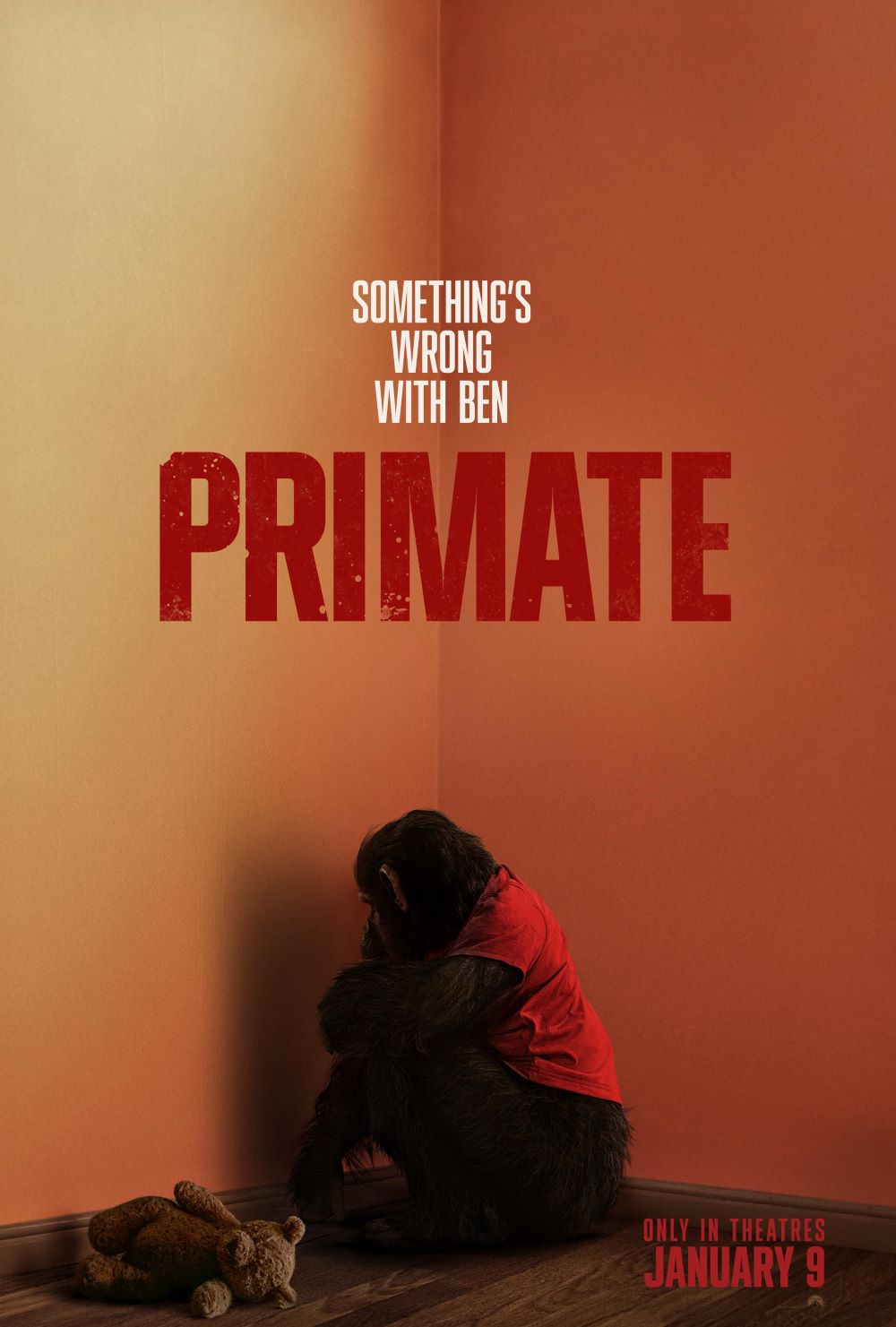
“There’s something wrong with Ben.” — Lucy Pinborough
Primate is the kind of nasty little horror movie that knows exactly what it is: a killer-chimp siege flick with a mean streak, a surprising amount of craft, and just enough emotional texture to keep it from feeling like pure junk food. It is also, very unapologetically, a January-release bloodbath built around one simple promise: you came to watch a chimp rip people apart, and the film is absolutely going to deliver on that.
Set on a remote, luxury house carved into a Hawaiian cliffside, Primate follows Lucy, a college student returning home to her deaf father Adam, younger sister Erin, and Ben—their adopted chimpanzee, who has been taught to communicate using a custom soundboard. The setup leans a bit into family melodrama and awkward-friends-on-vacation vibes: Lucy brings her buddies Kate and Nick, Kate drags along wildcard Hannah, and a pair of party bros, Drew and Brad, orbit the group on the way to a weekend of drinking by the infinity pool. Things tilt into horror when Ben is bitten by a rabid mongoose, starts behaving erratically, and eventually tears the face off the local vet before busting out of his enclosure and turning the house into a kill zone. From there, the movie pretty much drops the pretense of being about anything except survival, creative carnage, and the miserable logistics of trying to outrun a furious primate on a cliff.
Director Johannes Roberts, who previously did 47 Meters Down and The Strangers: Prey at Night, brings that same B-movie efficiency here—minimal fat, fast escalation, and a willingness to lean into the ridiculous without winking too hard. Once Ben escapes, the film basically becomes a series of tightly staged, high-tension set pieces: kids trapped in a pool while a chimp stalks the edge, frantic dashes through glass corridors, and messy, up-close attacks where you really feel the weight and speed of the animal. The pool sequence in particular is a great example of Roberts finding one strong visual idea—humans stranded in water because the predator can’t swim—and milking it for all the dread he can. It’s simple, almost old-fashioned monster-movie blocking, but it works because the geography is clear and the danger feels immediate rather than abstract.
Visually, the film is punching above what you might expect from “rabid chimp horror.” The cliffside house setting gives Roberts and his team a lot to play with: long glass walls, sharp drops, tight stairwells, and that infinity pool hanging over nothing. The camera favors clean, legible compositions instead of frantic shaky-cam, which means when the violence happens, you actually see it—and the movie is proud of that. There’s a grimy 80s-video-store energy to the way kills are framed and lingered on just long enough to be uncomfortable, but not so long that they turn into camp. Adrian Johnston’s synth-heavy score leans into that retro horror vibe too; it buzzes and screeches like someone let a demon loose on a cheap keyboard, and it matches the film’s mix of nasty and playful pretty well.
The real secret weapon here is Ben himself. Rather than going full CGI or trying to work with a real chimp, the production uses a combination of suit performance, animatronics, and careful staging, with Miguel Torres Umba giving the creature its physical personality. The result is surprisingly convincing; there are stretches where it feels like you’re watching a real animal charge people on stairs or slam into doors, which makes the violence land harder. You can tell the effects team put in serious work on the costume and facial mechanics—Ben’s expressions shift from confused, childlike attachment to full-on feral rage, and that emotional readability helps sell him as a character instead of just a prop. Importantly, the film avoids the “PS3 cutscene” problem of bad CG animals, which would have killed the tension immediately.
Performance-wise, this is very much “do your job and don’t get in the way” acting, and that’s mostly a compliment. Johnny Sequoyah makes Lucy feel grounded enough that you buy her as both final girl and guilty older sister who’s been away too long. Troy Kotsur, as Adam, is probably the standout human presence; his scenes use sign language not as a gimmick, but as part of how the family actually lives, and his mixture of vulnerability and stubbornness gives the movie a little heart. The rest of the cast—Jessica Alexander, Victoria Wyant, Gia Hunter, Benjamin Cheng, and the cannon-fodder guys—do what’s asked: they feel like actual young adults rather than complete idiots, which helps when the film needs you to invest in whether they make it out. Nobody is delivering awards-caliber work, but nobody is embarrassing themselves either, and in a film where a chimp tears someone’s jaw off, that’s honestly the sweet spot.
Tonally, Primate walks a line between brutal and darkly funny, and your mileage will depend on how much you enjoy mean-spirited genre films. This is not a movie that’s precious about its characters; the script makes it clear that almost anyone can get obliterated at any moment, and the kill scenes are loud, wet, and often abrupt. There’s a streak of black comedy in how casually some of the deaths happen—a rock to the head here, a shovel to the face there—but Roberts never tips fully into self-parody. At the same time, the film does gesture at something sadder in the idea of a beloved family member suddenly turning dangerous because of a disease, and in the way Lucy has to reconcile her childhood bond with Ben with the reality of what he’s become. The movie doesn’t dig into that theme deeply, but it’s present enough to keep things from feeling completely hollow.
Where Primate stumbles is mostly in its limitations, and whether those feel like flaws or just genre boundaries will depend on what you’re looking for. The script is extremely straightforward: characters have clear, basic motivations, relationships are sketched in a few lines, and then everyone gets funneled into the survival engine. If you want layered character work, subtext about animal ethics, or a big commentary on captivity and communication, this is not that movie, even though the setup with a sign-literate chimp and a linguist mother hints at richer territory. The film also indulges in the usual horror conveniences—texts ignored, warnings missed, people splitting up when they probably shouldn’t—though to its credit, the characters generally behave less stupidly once they understand the situation. And as gnarly as the gore is, the movie’s reliance on shock and escalation can make the back half feel a bit repetitive: Ben appears, someone gets mauled, survivors scramble, repeat.
From an honesty standpoint, Primate is absolutely worth watching if you have a soft spot for creature-features, killer-animal movies, or throwback 80s-style horror that doesn’t pretend to be more than a vicious good time. It’s tightly paced, well shot, and anchored by a genuinely impressive creature performance that justifies the whole exercise. If you’re squeamish about animal violence, or you want your horror to come with metaphor, political commentary, or emotional catharsis, you’ll probably bounce off this pretty quickly. But if you can meet it on its own trashy, committed wavelength, there’s something satisfying about watching a studio-backed film go this hard, this graphically, on such a simple premise. It feels like the kind of bloody, fast-moving B-movie you’d have rented on VHS for a sleepover, only now it’s playing in theaters with a slicker finish and a killer chimp named Ben waiting to wreck your night.
After her sister falls off of the top her dorm, Maisy (Joelle Farrow) transfers to Vanderton University and takes her place on the cheerleading squad. Maisy thinks her sister was murdered and is determined to find out why. She discovers that several of the cheerleaders are also working as webcam girls, some of them against their will.
My main thought while watching this movie was that maybe if the squad had been any good, they wouldn’t have had to make extra money as webcam girls. This movie had some of the worst cheer routines that I have ever seen and none of the cheerleaders seemed like they really had much spirit. Their cheers were awful. “Are you ready to play/G0 Sharks/It’s your big day!” Whoever wrote that should be ashamed. Hearing that’s not going to give the Sharks the extra encouragement they need to win!
When Maisy gets too close to the truth, another cheerleader spikes her water right before a big media event. Drugged Maisy loses one of her pom-poms in the middle of a routine and she has to crawl across the floor to get it. When I was cheering in high school, that happened to me in practice a few times and I wasn’t even drugged! Afterwards, Maisy’s coach says that if Maisy is on drugs, they can’t kick her off the squad because that will make it appear as if the cheerleaders weren’t willing to help her. I can’t think of a cheerleading coach in the world who would follow that logic.
Watching this movie made me glad that I stopped cheering after high school. Cheerleading in high school was fun, even though I was always worried that the people in the stands would notice that I always had bruises from falling during practice. Eventually, I figured out that no one in high school cared as long as you smiled and looked cute in the uniform. In college, though, they make you become a webcam girl and throw you off a building if you refuse! It’s a whole other world!
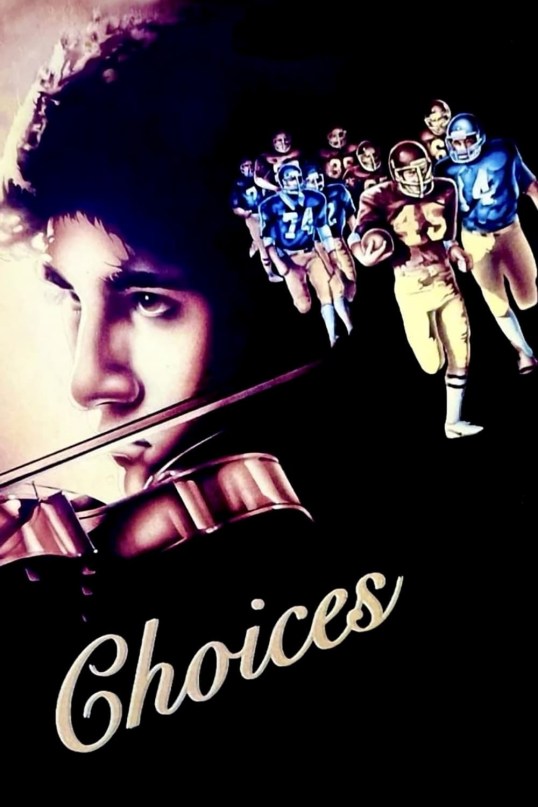
John Carluccio (Paul Carafotes) is the star running back on his high school football team until the district’s new chief doctor (Dennis Patrick) rules that John can no longer play because he’s partially deaf and wears a hearing aid. Coach Rizzo (Val Avery) protests but John is off the team. John stops hanging out with his squeaky clean best friend (William R. Moses) and instead becomes friends with the school delinquent (Stephen Nichols). John starts smoking pot and gets a bad attitude. Whenever anyone tries to help him or suggests that he can live a productive life even without football, John gets angry. Can his new girlfriend (Demi Moore) turn his life around?
I really wanted to feel bad for John and cheer him on as he fought to be allowed to play football but he was such a mopey character that it was hard. He acted like the rest of the team should have refused to play until he was allowed to rejoin them. It didn’t help that the new running back was just as good as John ever was. Eventually, John discovered that he loved music and Demi Moore but even all of that felt like it came out of nowhere. I know a lot of people who have had setbacks as bad as John’s who managed to get through them without treating everyone around them terribly.
Demi Moore is the big “name” here but she’s only in the movie for a few minutes. I recognized a few of the other actors. William R. Moses later played Ken Malansky in the Perry Mason movies and Stephen Nichols will always be Patch on Days of our Lives.
If you’re looking for football action, you won’t find it here. My choice, if I could do it again? Don’t watch.
The Blues Brothers! They’re on a mission from God.
Jake (John Belushi) and Elwood Blues (Dan Aykroyd) are two Chicago orphans who love the blues and committing crime. After Jake is paroled from Joliet Prison, he’s picked up by Elwood in an old police car. Elwood traded the original Bluesmobile for a microphone. Jake understands, even if he still doesn’t like being seen in a police car. When they visit the orphanage where they were raised, Sister Mary Stigmata (Kathleen Freeman) beats them with a ruler and tells them that the orphanage is going to close if she can’t pay a $5,000 tax bill. Jake and Elwood set out to reform their band, raise $5,000, and save the orphanage. Jake and Elwood may be two career criminals who never take off their dark glasses but they’re on a mission from God.
Along the way to putting the band together and raising $5,000, Jake and Elwood meet characters played by everyone from James Brown to Ray Charles to Aretha Franklin. You never know when a big production number might break out. Jake and Elwood also step on a few toes. Soon, the Blues Brothers being chased by the police, the national guard, Jake’s parole officer (John Candy), Charles Napier’s country-western band, and a group of Illinois Nazis (led by Henry Gibson). There’s also a mysterious woman (Carrie Fisher) who wants to kill them. She has an impressive array of weapons but terrible aim.
The Blues Brothers was the first comedy to be based on a Saturday Night Live bit. Unlike most other SNL movies, The Blue Brothers develops its plot far beyond what was originally seen on television. Jake and Elwood get a full backstory and they also get personalities that go beyond the black suits and the dark eyewear. The Blues Brothers features Belushi at his most energetic but it’s also one of the few films to actually know what to do with Dan Aykroyd’s eccentric screen presence. If Belushi’s Jake is all about earthly pleasures, Aykroyd’s Elwood almost seems like a visitor for another world. Aykroyd’s performance of the Rawhide theme song is one of the film’s highlight.
The Blues Brothers has its share of funny lines and its famous for the amount of pointless destruction that it manages to fit into its storyline (with the “unnecessary violence” being authorized by the Chicago police to stop the Blues Brothers) but it’s also as surprisingly sincere tribute to the blues. It’s a movie that can balance Ray Charles shooting at a shoplifter and a massively destructive car chase in a suburban mall with Cab Calloway playfully performing Minnie the Moocher and Aretha Franklin bringing down the house (or diner, as the case may be). The movie can feature both a jump over an open drawbridge and Steven Spielberg as the clerk at the tax office. It’s one of the strangest comedies ever made and it features all the excesses that would bring an end to 70s Hollywood but when Jake and Elwood say they’re on a mission from God, you believe them.
Because today is the birthday of the great actress Jennifer Jason Leigh, I decided to rewatch the 1991 film, Rush.
Loosely based on a true story, Rush takes place on the outskirts of Houston, Texas in the 70s. Jack Raynor (Jason Patric) is a veteran undercover narcotics officer who is determined to take down a local drug lord named Gaines (Gregg Allman). Raynor takes his new partner, Kristen Cates (Jennifer Jason Leigh), under his wing and trains her on how to work undercover. He tests her joint-rolling abilities. He has her fire a gun at cans out by the quarry. He teaches her how to shoot-up drugs. As he explains it, if she is going to get the local drug dealers to trust her, she is going to have to shoot up drugs in front of them. Raynor and Cates work well together, quickly becoming lovers in real life as well as undercover life. They manage to force one dealer, a likable but unlucky clod named Walker (Max Perlich), to turn informant. However, their efforts to get to Gaines are threatened by their own growing addictions and Raynor’s erratic behavior. Chief Nettle (Tony Frank) and Captain Dodd (Sam Elliott) want results but will the results be worth the cost?
(Are they ever?)
I’ve watched Rush a few times. I have to admit that I always remember it as being better than it actually is. Rush was the only feature film to be directed by producer Lili Fini Zanuck and it definitely has its problems. The pace, especially during the film’s second half, is often too slow. Visually, there a few good location shots but the film often feels rather static. As Jack Raynor, Jason Patric gives a performance that is all method intensity with little actual depth. Patric looks good with his long hair, his beard, and his intense eyes but there’s not much depth overall to Jack Raynor.
And yet, when the film works, it really does work. Whatever other flaws might be present in her direction, Zanuck does capture the anything-goes, slightly ominous atmosphere that one often finds in the small towns on the carcinogenic coast. While there’s nothing about his performance here that suggests he was a particularly talented actor, Gregg Allman is still very convincing as the menacing Gaines. (One sign of Gaines’s power is that he never speaks unless absolutely necessary.) Character actor Max Perlich gives a strong and poignant performance as Walker, a well-meaning goof who finds himself being manipulated by both sides in the war on drugs. Though the soundtrack is probably best-known for its use of Eric Clapton’s Tears In Heaven, the rest of it is full of classic Southern rock. Some of the choices are a bit obvious. Free Bird coming on the radio just as Raynor explains that he does things his way? That’s a lucky coincidence! It works, though. It’s a cool song.
Ultimately, what truly makes the film work is the performance of Jennifer Jason Leigh, who always manages to find the truth of her character even when the film sometimes seems to be determined to let her down. While Patric gets to have the showy breakdowns, Leigh shows the audience what it’s like for someone to be trapped by not only her job but also her relationship. The scenes between her and Walker are the strongest in the film because even though Walker is a criminal and Cates is a cop, they’re both stuck in a situation that they didn’t create. Gaines wants the money and the power that comes from being a drug lord. Chief Nettle wants the publicity and acclaim that comes from busting a major dealer. If they have to sacrifice Walker and Cates to get what they want, that’s what they’re going to do. Walker, Cates, and Raynor ultimately become pawns in a game where the victor ultimately wins very little. If Gaines escapes justice, someone else will just come after him. If Gaines goes down, someone else will inevitably replace him.
Rush is not a perfect film but it is a film that shows just how great a talent Jennifer Jason Leigh was and is.


 Through the Shattered Lens