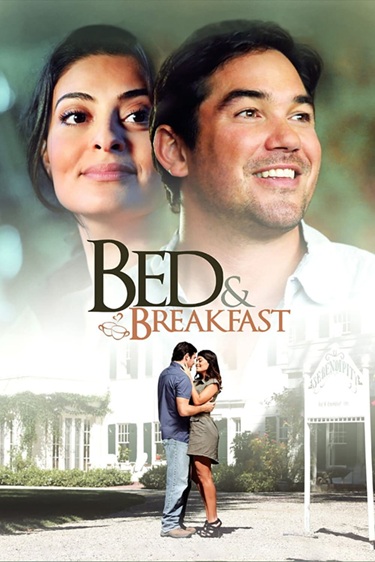
The Eric Roberts Collection: Bed & Breakfast (dir by Marcio Garcia)


2010’s Bed & Breakfast is one of those Hallmark-y films that takes place at a B&B in a quaint little town.

Having recently been left by his actress wife, Jake (Dean Cain) is trying to open up a bed and breakfast, using a house that was left to him by a former employer.  Helping Jake out is his brother, Peter (Jake Engvall), a member of law enforcement who not only enjoys drinking beer but also enjoys talking about beer as well.  Juliana Paes plays Ana, the niece of the original owner of the house.  Ana is from Brazil and she wants to sell the house because her brother is in debt to some local mobsters.  But then Ana meets the handsome and single Jake and …. well, you already know what’s going to happen.  This is one of those films where the familiarity is the point.  You watch it because you know that Jake and Ana are going to fall in love and you know exactly how long it’s going to take for that to happen.  Dean Cain is rugged.  Juliana Paes is pretty.  The town is lovely.  It’s a sweet little film that you’ll forget about a few minutes after it ends.

Of course, these films always require a cameo or two.  John Savage and Julia Duffy show up as a couple who stay at the B&B and who share a dance at the end of the film.  Ted Lange is the judge who settles the issue of who actually owns the house.  Eric Roberts shows up as a reviewer who stays at the B&B and decides that it’s a wonderful place that more than deserves a good review.  Yay!  I will say that it’s always interesting to see Roberts playing someone who is just a nice, polite guy.  He doesn’t get to do it all that often.  Eric Roberts doesn’t have much screentime in this film but he gets to be pleasant the entire time.  It’s a nice change of pace.

Previous Eric Roberts Films That We Have Reviewed:

  1. Star 80 (1983)
  2. Runaway Train (1985)
  3. Blood Red (1989)
  4. The Ambulance (1990)
  5. The Lost Capone (1990)
  6. Love, Cheat, & Steal (1993)
  7. Voyage (1993)
  8. Love Is A Gun (1994)
  9. Sensation (1994)
  10. Dark Angel (1996)
  11. Doctor Who (1996)
  12. Most Wanted (1997)
  13. Mercy Streets (2000)
  14. Wolves of Wall Street (2002)
  15. Mr. Brightside (2004)
  16. Six: The Mark Unleased (2004)
  17. Hey You (2006)
  18. Amazing Racer (2009)
  19. In The Blink of an Eye (2009)
  20. Enemies Among Us (2010)
  21. The Expendables (2010) 
  22. Sharktopus (2010)
  23. Beyond The Trophy (2012)
  24. The Dead Want Women (2012)
  25. Deadline (2012)
  26. The Mark (2012)
  27. Miss Atomic Bomb (2012)
  28. Bonnie And Clyde: Justified (2013)
  29. Lovelace (2013)
  30. The Mark: Redemption (2013)
  31. Self-Storage (2013)
  32. A Talking Cat!?! (2013)
  33. This Is Our Time (2013)
  34. Inherent Vice (2014)
  35. Road to the Open (2014)
  36. Rumors of War (2014)
  37. Amityville Death House (2015)
  38. A Fatal Obsession (2015)
  39. Stalked By My Doctor (2015)
  40. Enemy Within (2016)
  41. Joker’s Poltergeist (2016)
  42. Prayer Never Fails (2016)
  43. Stalked By My Doctor: The Return (2016)
  44. The Wrong Roommate (2016)
  45. Dark Image (2017)
  46. Black Wake (2018)
  47. Frank and Ava (2018)
  48. Stalked By My Doctor: Patient’s Revenge (2018)
  49. Clinton Island (2019)
  50. Monster Island (2019)
  51. The Reliant (2019)
  52. The Savant (2019)
  53. Seven Deadly Sins (2019)
  54. Stalked By My Doctor: A Sleepwalker’s Nightmare (2019)
  55. The Wrong Mommy (2019)
  56. Exodus of a Prodigal Son (2020)
  57. Free Lunch Express (2020)
  58. Her Deadly Groom (2020)
  59. Top Gunner (2020)
  60. Deadly Nightshade (2021)
  61. The Elevator (2021)
  62. Just What The Doctor Ordered (2021)
  63. Killer Advice (2021)
  64. The Poltergeist Diaries (2021)
  65. The Rebels of PT-218 (2021)
  66. A Town Called Parable (2021)
  67. Bleach (2022)
  68. My Dinner With Eric (2022)
  69. Aftermath (2024)
  70. Devil’s Knight (2024)
  71. The Wrong Life Coach (2024)
  72. When It Rains In L.A. (2025)

Love On The Shattered Lens: At First Sight (dir by Irwin Winkler)


1999’s At First Sight tells the story of Amy (Mira Sorvino) and her boyfriend, Virgil (Val Kilmer).

Virgil seems to be just about perfect.  He’s intelligent.  He’s sensitive.  He knows just what to say when Amy’s crying.  He’s a masseuse and who doesn’t want to come home to a nice massage?  He loves hockey.  He’s a great guy to go for a walk with and he’s someone who always has his own individual way of interpreting the world.  However, Virgil is blind.  He’s been blind since he was three years old.  When Amy comes across an article about a doctor named Charles Aaron (Bruce Davison), who has developed an operation that could restore Virgil’s sight, Amy pushes Virgil to get operation.  In fact, Amy pushes him maybe just a bit too much.  Virgil regains his sight but struggles to adjust to being able to see the world around him.

For instance, he has no idea how to read Amy’s facial expressions.  He struggles with his depth perception and, at one point, even walks into a glass door.  He’s seeing the world for the first time and a lot of the things that amaze him are things that Amy takes for granted.  Virgil getting back his sight totally changes the dynamic of his relationship with Amy and soon, despite their best efforts, the two of them find themselves drifting apart.  Amy is even tempted by her ex (Steven Weber).  Meanwhile, Dr. Aaron suggests that Virgil talk to a therapist who can help him adjust to his new life.  Seize every experience, Phil Webster (Nathan Lane) suggests.  Really?  That’s the great advice?  I could have come up with that!

However, Virgil has a secret that he has been keeping from Amy.  There were no guarantees when it came to the operation and now, Virgil’s sight is starting to grow dim.  He’s just gained the ability to see the world but now, he’s about to lose it again.  Will he make it to one final hockey game before he loses his eyesight?  Will he finally discover what “fluffy” thing he was looking at before he went blind at the age of three?  And will Amy ever realize that it was kind of wrong for her to push him into getting an experimental operation that he didn’t even want?

At First Sight has its flaws, as you may have guessed.  The plot is often predictable.  The message of “seizing the day” and “enjoying every moment” has been delivered by countless other films.  (The movie seems to think we won’t notice the message is a cliche as long as it’s delivered by Nathan Lane.)  As directed by Irwin Winkler (who was better-known as a producer than as a director), the film moves at a slow pace and the two-hour plus running time feels excessive.  But it almost doesn’t matter when you’ve got stars as attractive and charismatic as Val Kilmer and Mira Sorvino.  Whatever other flaws the film may have, it doesn’t lack chemistry between the two leads and I actually found myself very much caring about these characters and their relationship.  When it comes to romance, good chemistry can make up for a lot!

It was hard not to feel a bit sad while watching the film’s stars act opposite each other.  After the film was released, Mira Sorvino was blacklisted by Harvey Weinstein and her career has yet to really recover.  With his health struggles and his own reputation for being eccentric, Val Kilmer struggled to get good roles during the latter half of his career.  It was nice, though, to see them in At First Sight, looking young and happy and hopeful.  That’s one wonderful thing about the movies.  They save the moment.

Gamera Review: Gamera vs Barugon (dir by Shigeo Tanaka)


1966’s Gamera vs Barugon opens six months after the end of Gamera, The Giant Monster.

Everyone’s favorite atomic turtle has been exiled into space, sent on a rocket to a distant planet and ordered to never attack Japan again.  However, when a meteorite collides with the rocket, Gamera is set free.  He promptly returns to Earth and attacks Japan again.  Seriously, Japan really can’t catch a break!  While it’s true that Gamera and Godzilla don’t exist in the same cinematic universe, it’s still hard not to wonder why Japan is the only country that ever seems to get attacked by the giant monsters.

(The obvious answer, of course, is that both Gamera and Godzilla, with their fiery breath and their relentless need to destroy everything in their path, are metaphors for the atomic bombs that were dropped on Hiroshima and Nagasaki.  Blame Truman.)

However, Gamera is not Japan’s only problem.  They’re also having to deal with Barugon, a monster who hatches out of an opal that a group of bumbling adventurers have recently retrieved from New Guinea.  Barugon is a lizard, one that grows from being tiny to gigantic in just a manner of days.  Barugon creates rainbows that not only serve as a shield for him but which also destroy just about anything that they touch.  Gamera, though perhaps not intentionally, becomes the champion of the same humans that previously tired to exile him into space.

There’s an interesting subtext to Gamera vs Barugon.  The opal was originally discovered by a soldier during World War II.  He hid the opal in New Guinea, not realizing that it was actually an egg.  Years later, he’s the one who hires the men who retrieve the opal.  In its way, the opal is a symbol of the past, of what Japan was before the American occupation and what Japan could have been if it had been victorious in the war.  Of course, bringing the opal to Japan and allowing it to open leads to the deaths of hundreds of innocent people and it nearly destroys the country.  If the opal had remained where it had been abandoned and if the old soldier had been willing to move on from the past, Barugon would never have been born.  Then again, if Barugon hadn’t been born then Gamera wouldn’t have had a chance to redeem himself in the eyes of the public.  For every bad thing (like Barugon) that happens, there’s also a good thing to consider.  Then again, maybe I’m reading too much into it.

Quickly paced and featuring enough giant monster action to hold the interest of even the most jaded of viewers, Gamera vs Barugon is a lot of fun.  With its colorful visuals, cute but angry monsters, and random rainbows, it’s definitely a work of pop art.  Seriously, how can you not love a giant turtle that spins around and shoots fire?  And how can you not love a lizard like Barugon, with his rainbow destruction and his cheerful facial expressions?  One thing I enjoy about the Gamera films is that Gamera always seems to be doing his best.  He’s determined to win!  Sometimes, Godzilla can seem like he’s just phoning it in.  But Gamera always gives 110%!  Yay, Gamera!

Previous Gamera Reviews:

  1. Gamera, The Giant Monster (1965)
  2. Gamera vs. Jiger (1970)

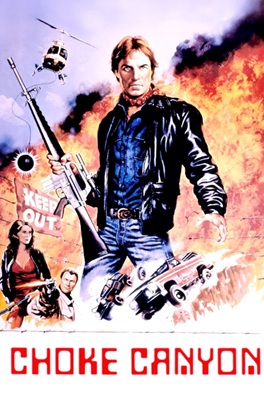
Choke Canyon (1986, directed by Chuck Bail)


Evil businessman John Pilgrim (Nicholas Pryor) and his assistant Brooke Alistair (Lance Henriksen) want to turn Utah’s Choke Canyon into a dumping ground for toxic waste.  The only problem is that Dr. David Lowell (Stephen Collins), a cowboy scientist, has signed a 99-year lease and is using the canyon as a place to conduct experiments that are designed to turn the soundwaves from Halley’s Comet into an alternative energy source.  Pilgrim sends pilot Oliver Parkside (Bo Svenson) to get Lowell out of the canyon by any means necessary.  However, Pilgrim’s rebellious daughter, Vanessa (Janet Julian), has also gone to the canyon because she finds Dr. Lowell to be intriguing.  Lowell’s reaction is to kidnap Vanessa and hold her hostage but, of course, they fall in love while trying to fly a giant ball of toxic waste out of the canyon.

Directed by the legendary stuntman Charles Bail, Choke Canyon is at its best when it focuses on Parkisde using his plane to chase Lowell’s helicopter.  Some of the aerial sequences are really exciting, even if they don’t make much sense.  (Surely, someone as powerful and rich as John Pilgrim could have afforded to send more than three guys and a cropduster to take care of Lowell.)  Stephen Collins, years before his career would collapse after he admitted to inappropriately touching three minor-aged girls, is as personable and bland here as he was in the first Star Trek movie.  The idea of a cowboy scientist is interesting but Collins really didn’t have the screen presence to pull it off.  It doesn’t help that Collins was having to act opposite a certifiable badass like Bo Svenson.  This is one of the rare movies where I wanted the bad guys to win because they were just so much cooler than the hero.

Some of the stunts are impressive, as they should be with Chuck Bail behind the camera.  Stephen Collins is boring and Janet Julian feels miscast.  (She would give a much better performance as Christopher Walken’s lawyer and girlfriend in King of New York.)  I don’t understand how a power source based on Halley’s Comet would work.  It might have worked for a few months in 1986 but what are they going to for energy until 2061 rolls around?

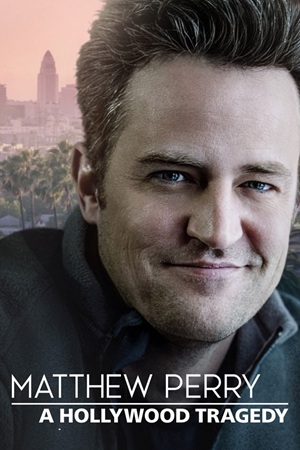
Documentary Review: Matthew Perry: A Hollywood Tragedy (dir by Robert Palumbo)


It’s rare that I ever feel like I should apologize for having watched a documentary but that was the feeling I had after watching Matthew Perry: A Hollywood Tragedy.

This documentary examined the career and death of actor Matthew Perry, with most of the emphasis being put on Perry’s struggle with addiction.  Excerpts were read from his book.  Lots of clips were shared from Friends.  People in the industry talked about what a charming actor Perry was and they also talked about how hard it is to free oneself from addiction.  This is especially true when you’re rich enough to have a bunch of people around you who will literally respond to your every whim and not take a second to ask, “Are you sure?”  One of the worst things about celebrity culture is that we tend to root for the worst until it actually happens.  When an actor is publicly struggling with addiction or their mental health, it’s treated as entertainment  It’s only after that actor dies that we talk about how tragic it was and people hop on social media to talk about how addiction is a disease and no one should be shamed for their struggle.

And that brings me to documentaries like this one.  There’s something really hypocritical about these documentaries that take a real life tragedy and turn it into entertainment while pretending to be a tribute or a serious examination of the addiction crisis in America.  For instance, this documentary tells you absolutely nothing that you didn’t already know about Matthew Perry and his tragic death and it really doesn’t do a good job of paying tribute to him as an actor either.  Those clips from Friends are the same clips that you’ve seen on every other special about the life of Matthew Perry.  There’s really no reason for this documentary to exist, other than to appeal to the desire of viewers to learn something sordid about a well-known figure.  It’s a documentary that exploits Perry’s death while claiming to mourn it.

And I’m not saying anything that you haven’t already heard or which hasn’t been said by hundred other people.  Nearly every review that I’ve read of this documentary says basically the same thing that I just said.  It’s exploitive and doesn’t have much to add to our overall understanding of how someone with so much talent and so many fans could also be so self-destructive.  And yet, while we all criticize documentaries like this, many of us still watch them.  I still watch them.  I watched this one.  I learned absolutely nothing new and I felt fairly guilty afterwards.  Matthew Perry’s death was a tragedy and a cautionary tale and, at the same time, it should take nothing away from the happiness that he brought his fans.  He deserved better than this.  For that matter, he deserved better than all of the speculative stories that came out after his appearance on the Friends Reunion Special.

But I can’t get self-righteous or too quick to condemn.  Because I did watch this.  I was bored, I saw that it was streaming, and I watched it.  And I’ll probably watch the next trashy celebrity documentary that come out.  I won’t feel good about it but I’ll probably do it.  I doubt I’ll be alone.

The TSL Grindhouse: The Wild Angels (dir by Roger Corman)


“What is it exactly that you want?” a preacher (Frank Maxwell) asks a congregation of leather-clad bikers.

“We want to get loaded!” Heavenly Blues (Peter Fonda) replies, “And we want to have a good time!”

And have a good time, they proceed to have.  Of course, it’s a good time for them.  Everyone else who meets the bikers at the center of 1966’s The Wild Angels are horrified by this collection of rebellious and violent outsiders.  Sure, Heavenly Blues might actually be a soulful guy who mistakenly believes that he can control the gang’s more excessive tendencies.  His girlfriend, Mike (Nancy Sinatra), actually seems rather reserved and conservative when compared to the rest of the gang.  But make no mistake about it, the majority of the members of the gang are into violence for its own sake.  They are bullies who couldn’t make the football team so, instead, they hopped on a motorcycle and formed their own society.  They’re self-styled rebels  but what are they rebelling against?  What have you got?

I know, I know.  That famous line comes from Marlon Brando and it was uttered in The Wild One.  Peter Fonda, to put it lightly, was no Marlon Brando and, as directed by Roger Corman, The Wild Angels doesn’t have the societal concerns that lay at the hear of The Wild One.  As Corman was often the first to admit, his main concern when it came to making movies was to make money.  Corman wasn’t necessarily against message films.  He often stated that, as a director, 1962’s The Intruder was the film in which he took the most pride.  The Intruder took a firm stand against racism and it let everyone know where Corman stood on when it came to the Civil Rights Movement.  It was also one of his few films to lose money.  The Wild Angels celebrates rebellion but one gets the feeling that celebration is motivated by the fact that younger filmgoers would be happy to pay to see a movie about a bunch of “youngish” people telling the old folks to shut up and get out of the way.  The Wild Angels themselves don’t seem to be motivated by any sort of grand ideology.  Heavenly Blues preaches about getting loaded and having a good time and celebrating freedom but he also allows the members of the gang to drape a Nazi flag over a casket.  What does Heavenly Blues actually believe in?

Heavenly Blues believes in loyalty to his friends.  For all the fights and the orgies and the scenes of motorcycles roaring down country roads, this is ultimately just a film about a guy who wants to give his best friend a decent burial.  The Loser (Bruce Dern) dies about halfway through the film and one gets the feeling that he probably would have lived if the gang hadn’t kidnapped him from the hospital.  Heavenly Blues wants to give The Loser the type of wild funeral that Blues thinks he would have wanted though I think The Loser probably would have been happier not have been killed by the actions of his idiot friends.  Diane Ladd, who was married to Bruce Dern at the time and who has said Laura Dern was conceived during the filming of The Wild Angels, is heart-breaking as The Loser’s girlfriend, Gaysh.  Gaysh wants to mourn her boyfriend while the rest of the gang is more concerned with figuring out who her next boyfriend is going to be.

Does Heavenly Blues ever realize that he’s traveling with a bunch of animals?  He does but one gets the feeling that he’s accepted his fate.  There’s no going back.  The past can’t change and the future cannot be controlled so Heavenly Blues is content to live in the present.  All he can do is try to give his friend a decent burial while the sirens of cops shriek in the distance.

The Wild Angels was a controversial film when it was first released.  It also made a lot of money and led to a whole cycle of outlaw biker films, culminating with Easy Rider.  Seen today, it’s a portrait of a society coming apart, with the establishment and the bikers not even willing to stop fighting long enough to allow for a simple burial.  It’s definitely a time capsule film, one of those productions that epitomizes an era.  There’s not much going on underneath the surface and most of the film’s bikers really are awful people but there is something touching about Blues giving it all up just to try to give his friend a decent burial.

The Eric Roberts Collection: Devil’s Knight (dir by Adam Werth)


2024’s Devil’s Knight opens in the kingdom of Veroka.  A group of thieves all discuss what they’ve stolen over the course of the day.  The leader of the thieves is named Orwell.  Another thief — played by Daniel Baldwin — is named Camus.  The group is joined by as stranger named Sigurd (John Wells), a man who has only one eye.  He tells them the story of how he and his friends — The Lost Blades — were hired to vanquish the fearsome Bone Devil….

Yep, it’s one of those type of movies.  There’s a lot of sword fights.  There’s a lot of monsters.  There’s a hint of sorcery, though not as much as you might expect from a movie like this.  The thieves are named after philosophers.  The huge cast is full of streaming stars and a handful of actors who are known for appearing in just about anything.  Kevin Sorbo plays Baldur, the noble head of the king’s guards.  Angie Everhart plays the Duchess who speaks French despite living in a mythical kingdom.  Eric Roberts shows up as Lord Sussex.  He only onscreen for a few minutes, though he does get a few funny lines.  Sadly, Roberts doesn’t even get to fight a monster.  At least Sorbo gets a big battle scene.

Here’s the thing, though.  Taken on its own terms, Devil’s Knight is a lot of fun.  You can tell it was made by people who have a genuine love for the sword and sorcery genre and there’s enough intentional humor to keep things interesting.  With the exception of some blood splatter, there’s also a definite lack of CGI.  The monsters are played by actual actors wearing costumes and under makeup and it’s surprisingly effective.  The film’s plot is not always easy to follow.  In the tradition of many medeival legends, the film’s story really is just one random incident after another, the majority of which lead to a fight and at least a few deaths.  The cast is huge but few of the characters are still alive by the end of the movie.  Monsters aren’t something to mess with and I actually appreciated that the film was willing to even kill off the characters who usually survive a film like this.  It really did create the feeling that anyone could die if they ran into a monster in a hallway.  (Even the stereotypical princess-who-wants-to-be-a-warrior character was taken in a surprising direction.)  The film moves quickly with a lot of energy and enthusiasm.  I enjoyed it.

Previous Eric Roberts Films That We Have Reviewed:

  1. Star 80 (1983)
  2. Runaway Train (1985)
  3. Blood Red (1989)
  4. The Ambulance (1990)
  5. The Lost Capone (1990)
  6. Love, Cheat, & Steal (1993)
  7. Voyage (1993)
  8. Love Is A Gun (1994)
  9. Sensation (1994)
  10. Dark Angel (1996)
  11. Doctor Who (1996)
  12. Most Wanted (1997)
  13. Mercy Streets (2000)
  14. Wolves of Wall Street (2002)
  15. Mr. Brightside (2004)
  16. Six: The Mark Unleased (2004)
  17. Hey You (2006)
  18. Amazing Racer (2009)
  19. In The Blink of an Eye (2009)
  20. Enemies Among Us (2010)
  21. The Expendables (2010) 
  22. Sharktopus (2010)
  23. Beyond The Trophy (2012)
  24. The Dead Want Women (2012)
  25. Deadline (2012)
  26. The Mark (2012)
  27. Miss Atomic Bomb (2012)
  28. Bonnie And Clyde: Justified (2013)
  29. Lovelace (2013)
  30. The Mark: Redemption (2013)
  31. Self-Storage (2013)
  32. A Talking Cat!?! (2013)
  33. This Is Our Time (2013)
  34. Inherent Vice (2014)
  35. Road to the Open (2014)
  36. Rumors of War (2014)
  37. Amityville Death House (2015)
  38. A Fatal Obsession (2015)
  39. Stalked By My Doctor (2015)
  40. Enemy Within (2016)
  41. Joker’s Poltergeist (2016)
  42. Prayer Never Fails (2016)
  43. Stalked By My Doctor: The Return (2016)
  44. The Wrong Roommate (2016)
  45. Dark Image (2017)
  46. Black Wake (2018)
  47. Frank and Ava (2018)
  48. Stalked By My Doctor: Patient’s Revenge (2018)
  49. Clinton Island (2019)
  50. Monster Island (2019)
  51. The Reliant (2019)
  52. The Savant (2019)
  53. Seven Deadly Sins (2019)
  54. Stalked By My Doctor: A Sleepwalker’s Nightmare (2019)
  55. The Wrong Mommy (2019)
  56. Exodus of a Prodigal Son (2020)
  57. Free Lunch Express (2020)
  58. Her Deadly Groom (2020)
  59. Top Gunner (2020)
  60. Deadly Nightshade (2021)
  61. The Elevator (2021)
  62. Just What The Doctor Ordered (2021)
  63. Killer Advice (2021)
  64. The Poltergeist Diaries (2021)
  65. The Rebels of PT-218 (2021)
  66. A Town Called Parable (2021)
  67. Bleach (2022)
  68. My Dinner With Eric (2022)
  69. Aftermath (2024)
  70. The Wrong Life Coach (2024)
  71. When It Rains In L.A. (2025)

Shattered Politics: The Front Runner (dir by Jason Reitman)


Based (loosely, I assume) on a true story, 2018’s The Front Runner tells the story of a politician named Gary Hart (played by Hugh Jackman).

The year is 1987 and former U.S. Sen. Gary Hart is preparing to announce that he will be seeking the Democratic nomination for the Presidency of the greatest nation of all time, the United States!  (YAY!)  Hart is widely seen as the front runner, for both the nomination and the general election.  He’s got the youth vote sewn up.  He’s energetic.  He’s supposed to be intelligent.  We are told that he is handsome and charismatic.  (I say “told” because, in this film, they seem to be informed attributes as Hugh Jackman is given a truly terrible haircut and his performance here is a bit on the dull side.)  Hart announced his candidacy while standing in the Rocky Mountains.  His wife (Vera Farmiga) is behind him, even if she chooses not to join him on the campaign trail.  His campaign manager (J.K. Simmons) is welcoming new and idealistic volunteers to the campaign headquarters and encouraging them to remember that all of the difficulties of the campaign will be worth it after Gary Hart is elected president.  As for the press, they’re investigating long-standing rumors that Hart is a womanizer.  “Follow me around, you’ll get bored,” Hart says.  So, two reporters from the Miami Herald (Bill Burr and Steve Zissis) do just that they catch a young woman named Donna Rice (Sara Paxton) apparently staying over at Gary Hart’s Florida townhouse.

“It’s nobody’s business!” Hart snaps, when asked about his private life and it’s obvious that the film expects us to take Hart’s side.  The problem, as Hart’s campaign manager points out, is that a lot of people are volunteering for Hart’s campaign and have sacrificed a lot to help him out and now, if Hart doesn’t figure out some way to deal with the story, it looks like it was all for nothing.  Even if Hart didn’t cheat with Rice, he still showed remarkably poor judgment in spending time alone with her in Florida while his wife was back in Colorado.  The film argues that the press went overboard pursuing the story and perhaps they did.  The press tends to do that and really, no politician has any excuse not to realize that.  But, even if we accept the argument that the press acted unethically, that doesn’t exactly exonerate Gary Hart, though this film certainly seems to think that it does.  To a certain extent, this film reminded me a bit of James Vanderbilt’s Truth, in which it was assumed we would be so outraged that Cate Blanchett’s Mary Mapes was fired for producing a story about George W. Bush’s time in the National Guard that we would overlook that Mapes and CBS news tried to build a major story around a bunch of obviously forged documents.

(Of course, if Hart had been running today, I doubt the scandal would have ended his campaign.  If anything, Donald Trump’s personal scandals seemed to play to his advantage when he ran in 2016 and 2024.  To a find a 21st Century equivalent to Hart’s scandal, you’d probably have to go all the way back to John Edwards in 2008.  Of course, Edwards was cheating on his wife while she was dying of breast cancer, which makes Edwards a special type of sleaze.)

As for the film itself, director Jason Reitman tries to take a Altmanesque approach, full of overlapping dialogue and deceptively casual camera moments.  There are a few moments when Reitman’s approach work.  The start of the film, in which the camera glided over hundreds of journalists reporting from outside the 1984 Democratic Convention, was so well-handled that I briefly had hope for the rest of the film.  Reitman gets good performances from dependable veterans like J.K. Simmons and Alfred Molina.  But, at the heart of the film, there’s a massive blank as Hugh Jackman gives an oddly listless performance as Hart.  The film expects us to take it for granted that Gary Hart would have been a good President but there’s nothing about Jackman’s performance to back that up.  It’s odd because, typically, Hugh Jackman is one of the most charismatic actors around.  But, as Gary Hart, he comes across as being petulant and a bit whiny.

It’s an interesting story but ultimately, The Front Runner doesn’t do it justice.


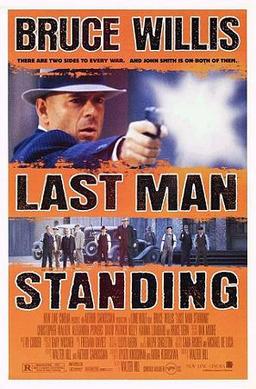
Last Man Standing (1996, directed by Walter Hill)


During the 1920s, at the height of prohibition, a mysterious man named John Smith (Bruce Willis) arrives in the dusty town of Jericho.  Jericho sits on the border, between Texas and Mexico, and it is the site of a gang war.  The Italian mob, led by Fred Strozzi (Ned Eisenberg) and Giorgio Carmote (Michael Imperioli), is trying to move in on the Irish mob, led by Doyle (David Patrick Kelly) and his fearsome gunman, Hickey (Christopher Walken).  After the members of the Irish mob destroy his car and leave him stranded in town, Smith offers his services as a gunman to the Italians.  Strozzi hires him but it turns out that Smith has his own agenda and soon, he is manipulating both gangs against each other.

Last Man Standing was Walter Hill’s remake of Yojimbo, with Bruce Willis playing an Americanized version of Toshiro Minfune’s wandering ronin.  (Hill does the right thing and gives Kurosawa credit for the film’s story.)  Now, it should be understood that this is in no way a realistic film.  It makes no sense for two Chicago-style gangs to be fighting over a ghost town in Texas.  Even when it came to smuggling in liquor during the prohibition era, most of it came over the Canadian border rather than the Texas border.  But Walter Hill has always been more about filming the legend than worrying about realism.  He’s the ultimate stylist, creating movies the come together to create an American mythology.  Last Man Standing is a work of pure style, a combination western/gangster movie that pays tribute to the ultimate samurai film.  Gangsters meeting in the desert while tumbleweed rolls past may not make sense but Hill knows a good visual when he sees one and he makes it work.  The plot is taken from Yojimbo.  The western setting is taken from A Fistful of Dollars.  And the gangsters are pure Americana.

Willis, back in his action star heyday, is quick with a gun and a quip and he gets a few scenes that show that, while he may be bad, he’s not as bad as the gangsters in charge of the town.  Hill surrounds Willis with a cast of great character actors, including Bruce Dern as the cowardly sheriff and William Sanderson as the owner of the hotel.  Though he might not be as well-known as some members of the cast, I especially liked Ken Jenkins as the Texas Ranger who informs Willis that he has ten days to finish up his business before the Rangers come to town and kill whoever is still standing.  And then you’ve got Walken, in one of his best villainous roles.  Hickey doesn’t show up until pretty late in the movie but we’ve spent so much time hearing about him that we already know he’s the most dangerous man in Texas and Walken gives a performance that lives up to the hype.

Unappreciated when it was first released, Last Man Standing has stood the test of time as one of Walter Hill’s best.

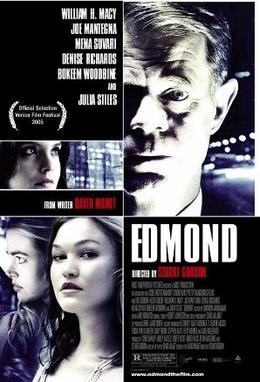
Days of Paranoia: Edmond (dir by Stuart Gordon)


Based on a one-act play by David Mamet, 2005’s Edmond tells the story of Edmond Burke (William H. Macy).

Edmond shares his name (if not the actual spelling) with the philosopher Edmund Burke.  Edmund Burke was a strong believer that society had to put value in good manners to survive and that religious and moral institutions played an important role in promoting the idea of people treating each other with respect and decency.  Edmund Burke knew what he believes and his writings continue to influence thinks to this day.  Edmond Burke, on the other hand, doesn’t know what he believes.  He doesn’t know who he wants to be.  All he knows is that he doesn’t feel like he’s accomplished anything with his life.  “I don’t feel like a man,” he says at one point to a racist bar patron (played by Joe Mantegna) who replies that Edmond needs to get laid.

On a whim, Edmond steps into the shop of a fortune teller (Frances Bay), who flips a few Tarot cards and then tells Edmond that “You’re not where you’re supposed to be.”  Edmond takes her words to heart.  He starts the night by telling his wife (played by Mamet’s wife, Rebecca Pidgeon) that he’s leaving their apartment and he won’t be coming back.  He goes to the bar, where he discusses his marriage with Mantegna.  He goes to a strip club where he’s kicked out after he refuses to pay $100 for a drink.  He goes to a peep show where he’s frustrated by the glass between him and the stripper and the stripper’s constant demand that he expose himself.  He gets beaten in an alley by three men who were running a three-card monte scam.  Edmond’s problem is that he left home without much cash and each encounter leads to him having less and less money.  If he can’t pay, no one wants to help him, regardless of how much Edmond argues for a little kindness.  He pawns his wedding ring for $120 but apparently, he just turns around and uses that money to buy a knife.  An alley-way fight with a pimp leads to Edmond committing his first murder.  A one-night stand with a waitress (a heart-breaking Julia Stiles) leads to a second murder after a conversation about whether or not the waitress is actually an actress leads to a sudden burst of violence.  Edmond ends up eventually in prison, getting raped by his cellmate (Bookem Woodbine) and being told, “It happens.”  Unable to accept that his actions have, in one night, led him from being a businessman to a prisoner, Edmond says, “I’m ready to go home now.”  By the end of the film, Edmond realizes that perhaps he is now where he was meant to be.

It’s a disturbing film, all the more so because Edmond is played by the likable William H. Macy and watching Macy go from being a somewhat frustrated but mild-mannered businessman to becoming a blood-drenched, racial slur-shouting murderer is not a pleasant experience.  Both the play and the film have generated a lot of controversy due to just how far Edmond goes.  I don’t see either production as being an endorsement of Edmond or his actions.  Instead, I see Edmond as a portrait of someone who, after a lifetime of being willfully blind to the world around him, ends up embracing all of the ugliness that he suddenly discovers around him.  He’s driven mad by discovering, over the course of one night, that the world that is not as kind and well-mannered as he assumed that it was and it all hits him so suddenly that he can’t handle it.  He discovers that he’s not special and that the world is largely indifferent to his feelings.  He gets overwhelmed and, until he gets his hands on that knife, he feels powerless and emasculated.  (The knife is an obvious phallic symbol.)  It’s not until the film’s final scene that Edmond truly understands what he’s done and who he has become.

Edmond is not always an easy film to watch.  The second murder scene is truly nightmarish, all the more so because the camera remains on Edmond as he’s drenched in blood.  This is one of William H. Macy’s best performances and also one of his most disturbing characters.  That said, it’s a play and a film that continues to be relevant today.  There’s undoubtedly a lot of Edmonds out there.